Wiener Schnitzel
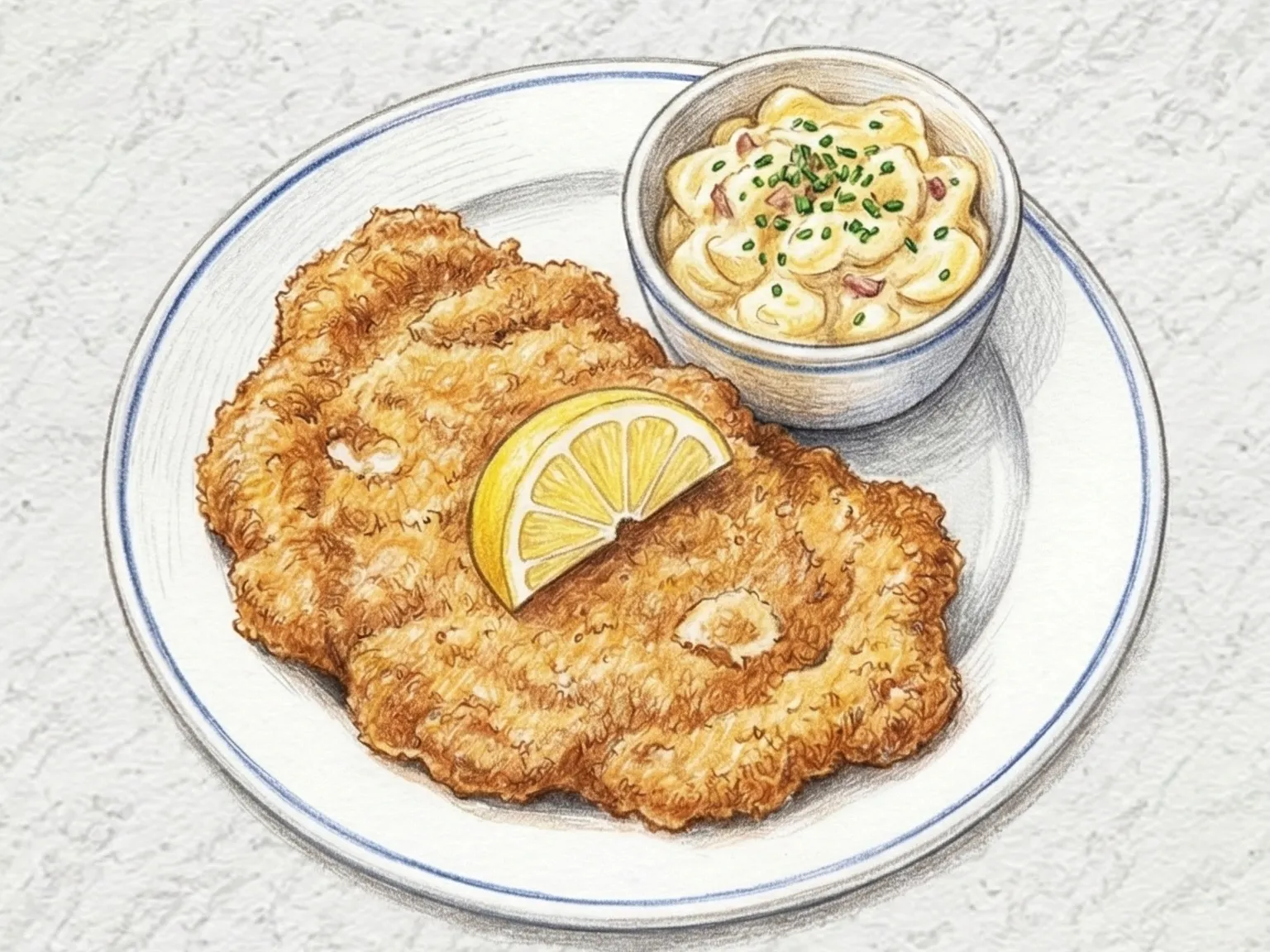
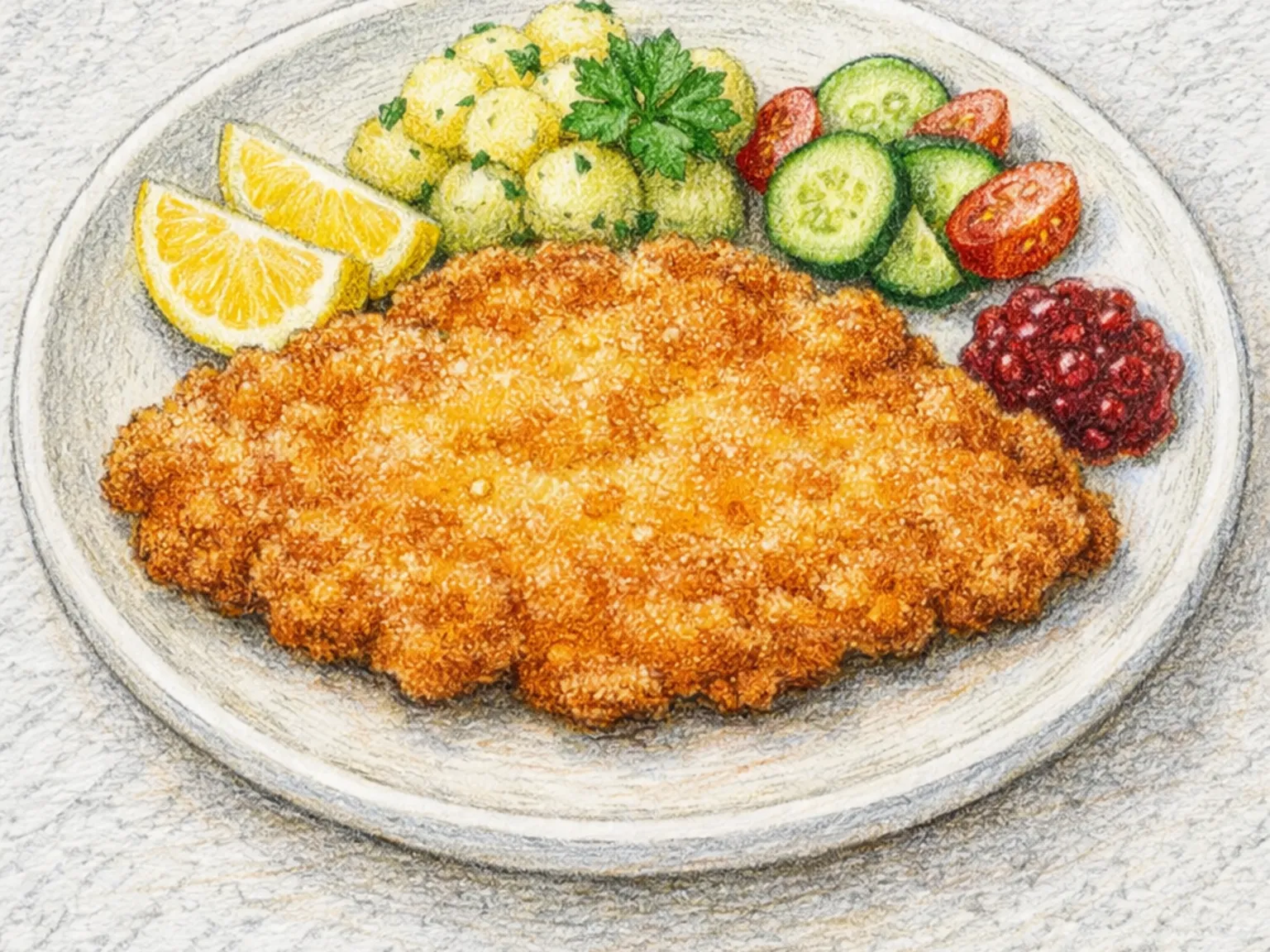
Classic Viennese dish of veal cutlet pounded thin, breaded in flour, egg, and breadcrumbs, pan-fried golden in butter.
Adjust Servings
Instructions
- 1
Halve veal, cover with plastic wrap and pound to 3mm thickness.
- 2
Season, then coat in flour, dip in beaten egg, and coat in breadcrumbs.
- 3
Gently press breadcrumbs to adhere and rest for 10 minutes.
- 4
Fry in generous butter 2 minutes per side until golden.
- 5
Drain briefly and serve with lemon wedges.
As an Amazon Associate, we may earn from qualifying purchases.
Tips
Nutrition (per serving)
More Recipes

Pork Schnitzel
Pork Schnitzel is a definitive cutlet dish from Germany and Austria, made by pounding pork loin thin and even with a mallet, then coating it in flour, beaten egg, and breadcrumbs before frying in oil. The meat must be pounded to five millimeters or thinner so it cooks through quickly without the breading burning, and the hallmark of a proper schnitzel is a crust that puffs away from the meat rather than clinging flat. Achieving this requires generous oil - enough to submerge the cutlet halfway - and gently shaking the pan so oil flows beneath the breading to lift it. Fine breadcrumbs produce a delicate, even crust, and they should be pressed on lightly rather than compacted to maintain crispness over time. Paprika mixed into the flour adds a faint smoky warmth, and a fresh squeeze of lemon over the finished schnitzel cuts through the richness with bright acidity.

Linzer Torte (Almond Lattice Tart with Raspberry Jam)
An Austrian tart made with a nut-enriched dough, a generous layer of raspberry jam, and a lattice top that reveals the jewel-red filling beneath. Combining almond flour with wheat flour gives the pastry a short, sandy texture that crumbles gently and melts into the smooth jam on the palate. The butter-heavy dough must be thoroughly chilled before being rolled and cut into strips; warm dough tears and loses definition. Raspberry jam provides a sharp, fruity acidity that stands out against the mellow, nutty backdrop of the crust, while a touch of lemon zest lifts the overall aroma with a bright finish. Baking at 180 degrees Celsius for 30 to 35 minutes brings the jam to a gentle boil, intensifying its color and flavor, while the lattice strips turn golden and slightly crisped at the edges. Resting the tart overnight allows the jam's moisture to soften the boundary between filling and crust, creating a more cohesive slice where pastry and fruit feel unified rather than separate.

Sacher Torte (Viennese Dark Chocolate Apricot Cake)
Sacher torte is Vienna's most celebrated cake - a dense, intensely chocolatey sponge split horizontally and filled with a thin layer of apricot jam, then enrobed in a glossy dark chocolate glaze. The batter contains a higher ratio of melted chocolate and butter than a typical chocolate cake, which makes the crumb rich and moist rather than light and airy. Whipped egg whites folded into the chocolate base introduce just enough lift to keep the texture from becoming leaden, while the apricot jam provides a tart, fruity counterpoint that prevents the chocolate from overwhelming the palate. The glaze is made by heating heavy cream and pouring it over chopped dark chocolate, stirring until smooth, then pouring it over the cake in a single motion for a mirror-like finish. Warming the jam slightly before spreading ensures an even, thin coat that does not tear the delicate sponge. Once the glaze has set completely, slicing with a knife dipped in hot water produces the cleanest cross-section, revealing the dark cake, the amber jam line, and the shiny chocolate shell.

Chicken Cacciatore
Chicken cacciatore is an Italian countryside dish where chicken pieces are seared in olive oil until deeply browned, then braised for forty minutes over low heat with onion, garlic, canned tomatoes, black olives, capers, red wine, and thyme. The initial hard sear triggers a Maillard reaction on the chicken skin, and those browned flavors dissolve into the sauce as it simmers. Red wine is added and reduced for two minutes to cook off the alcohol, leaving behind its acidity and fruit notes, which add a layer of complexity to the tomato base. The olives contribute a briny saltiness and the capers a tart, floral sharpness that balance the natural sweetness of the tomatoes. Thyme ties the components together with a quiet herbal note. This dish improves when reheated the next day, as the flavors penetrate deeper into the meat overnight.

Crab Cake
Crab cakes are a signature seafood dish of the American East Coast, made by gently folding crab meat with mayonnaise, Dijon mustard, egg, breadcrumbs, parsley, and lemon juice, then shaping the mixture into patties and pan-frying in butter until golden on each side. Mixing the crab meat with a light touch preserves the large flakes that give each bite its distinctive texture. Lemon juice brightens the flavor and tempers any fishiness. Chilling the formed patties for thirty minutes firms them enough to flip in the pan without breaking apart. The finished crab cake has a crisp, buttery exterior enclosing moist, sweet crab.

Bouillabaisse (Provencal Saffron Seafood Stew)
Bouillabaisse is a Provencal seafood stew originating from Marseille fishermen cooking their unsold catch, distinguished by saffron's golden color and subtle floral aroma threaded through the broth. Fennel and tomatoes are first sauteed in olive oil to build an aromatic base, then saffron-infused fish stock is poured in and brought to a simmer. Firm-fleshed fish go in first, with shrimp and mussels added last to preserve their texture - overcooked shellfish turns rubbery and loses its snap. The broth derives its complexity from the layered contribution of multiple seafood varieties, each releasing a different aspect of ocean flavor into the pot. Traditionally, grilled baguette spread with garlicky rouille sauce is dipped into the broth alongside the stew.