Xiaolongbao (Shanghai Pork Soup Dumplings)
Asian Hard

Xiaolongbao (Shanghai Pork Soup Dumplings)

Quick answer

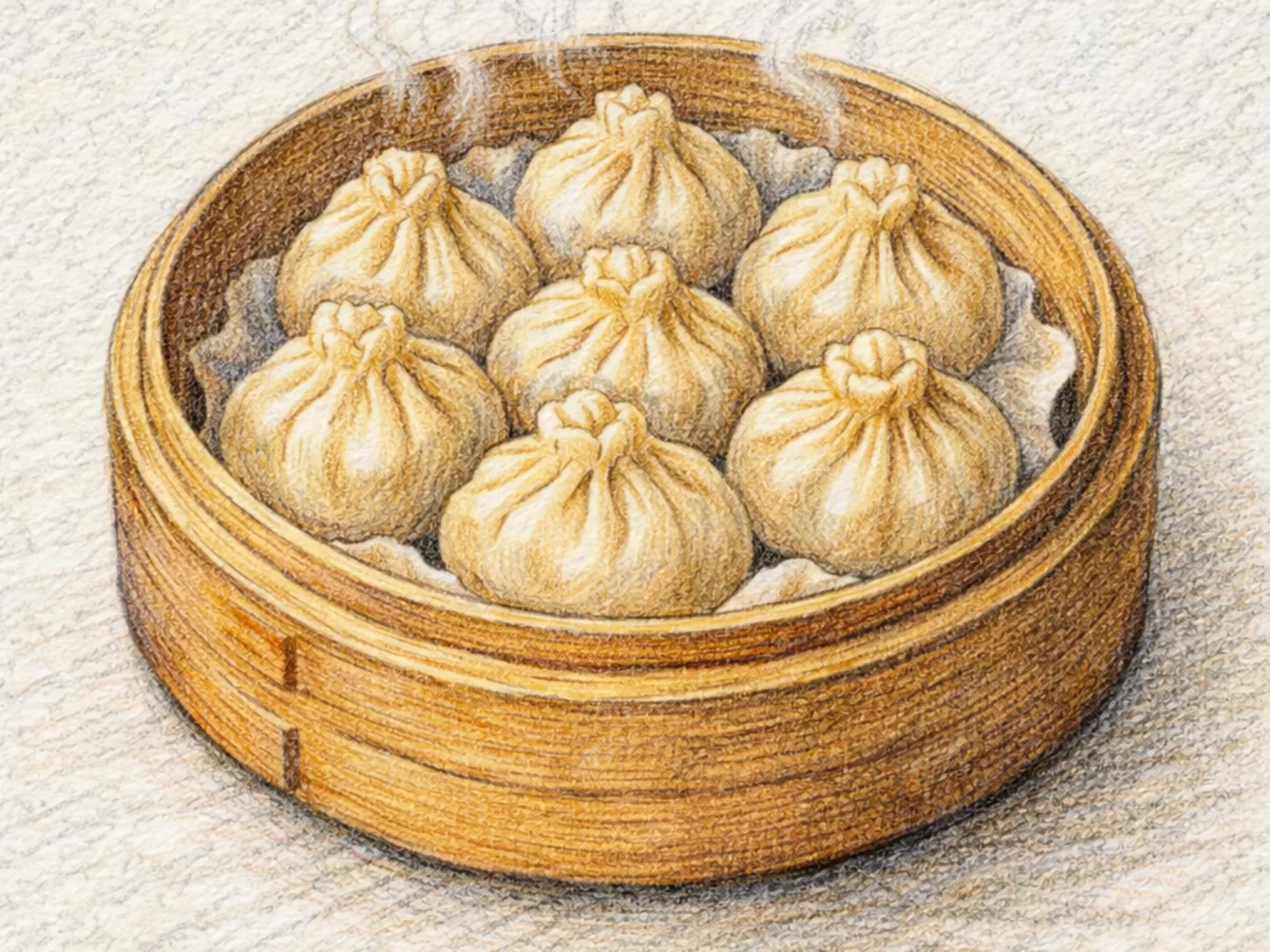
Xiaolongbao is a classic Shanghai-style soup dumpling characterized by its thin wrapper enclosing a pork filling and hot broth.

What makes this special

  • Xiaolongbao encloses a seasoned pork filling and hot savory broth within a delicate wheat wrapper.
  • Pork stock gelled solid then mixed into filling becomes hot soup when steamed
  • Rested high-gluten dough rolls thin enough to see through without tearing
Total time
135 min
Level
Hard
Servings
4 servings
Ingredients
8
Calories
380 kcal
Protein
18 g

Key ingredients

ground porkbread flourwatersoy saucesesame oil

Core cooking flow

  1. 1 Pour 100 ml hot water gradually into 200 g bread flour while stirring.
  2. 2 Finely mince 10 g ginger and 2 stalks green onion.
  3. 3 Cut 100 g pork broth gelatin into small pieces and add it last.

Xiaolongbao is a classic Shanghai-style soup dumpling characterized by its thin wrapper enclosing a pork filling and hot broth. The dough is prepared by mixing bread flour with hot water and resting it for thirty minutes, allowing the gluten to develop so the wrappers can be rolled thin without tearing during steaming. The filling combines ground pork, soy sauce, sesame oil, minced ginger, and scallions, which is mixed until sticky before folding in small pieces of pork broth gelatin. When steamed over medium-high heat, the gelatin melts to fill the dumpling with hot soup. To eat, place a dumpling on a spoon, pierce the wrapper to release and sip the hot broth, then season the remaining dumpling with black vinegar and shredded ginger, which balances the rich meat flavor.

Prep 120min Cook 15min 4 servings

Instructions

Read the steps as a cooking flow: prep, heat, seasoning, doneness control, and finish.

6 steps
  1. 1
    Control

    Pour 100 ml hot water gradually into 200 g bread flour while stirring.

    Knead until the dough feels smooth and no longer sticks heavily to your hands, then cover it and rest it for 30 minutes.

  2. 2
    Season

    Finely mince 10 g ginger and 2 stalks green onion.

    Add them to 300 g ground pork with 1 teaspoon soy sauce and 1 teaspoon sesame oil, then stir in one direction until the filling turns sticky.

  3. 3
    Prep

    Cut 100 g pork broth gelatin into small pieces and add it last.

    Fold it through the pork without crushing it hard, so the pieces stay distributed, then keep the filling cold until wrapping.

  4. 4
    Step

    Divide the rested dough into small pieces and roll each wrapper with thinner edges than the center.

    Add a modest amount of filling, pleat evenly, and pinch the top firmly so steam cannot open the seal.

  5. 5
    Control

    Line the steamer with parchment paper and set the dumplings apart so they do not stick together.

    Start timing only after the water boils and strong steam rises, then steam over medium-high heat for 8 minutes.

  6. 6
    Finish

    After steaming, let the dumplings sit for 1 minute so the wrappers settle slightly.

    Move them with a wide spatula, serve with black vinegar and shredded ginger, and tell diners to pierce the skin and sip the broth first.

After the steps

Pick a recipe that fits this dish.

Continue with shared ingredients, meal pairings, or a similar method.

Recipes That Go Well With This

More Asian →

Based on shared ingredients and meal pairing

Sesame Spicy Tantanmen (Chinese Creamy Sesame Chili Oil Noodle Soup)
Shared ingredient: ground pork Asian

Sesame Spicy Tantanmen (Chinese Creamy Sesame Chili Oil Noodle Soup)

Tantanmen is a noodle soup of Chinese origin that is defined by the combination of a creamy sesame-based broth and the sharp heat of chili oil. This pairing creates a bowl of noodles that features nutty, spicy, and savory characteristics all at once. The preparation of the broth starts with a base of chicken stock. To this base, sesame paste is added and whisked thoroughly until it has fully dissolved into the liquid. The result of this process is a thick, tan-colored soup base that emits a prominent fragrance of roasted nuts. The meat topping for the dish is prepared separately by frying ground pork with minced garlic and fresh ginger. During this cooking process, doubanjiang, which is a paste made from fermented chili beans, is stirred into the pork to add saltiness and depth. The meat is cooked until it is well-browned and has a crumbly consistency, after which it is spooned over the noodles to provide a rich component to the final assembly. To balance the density of the broth, bok choy is blanched and added to the bowl, offering a crisp and vegetal element that provides a contrast to the liquid. Just before serving, a final drizzle of chili oil is applied to the surface of the soup, where it gathers in small pools and releases its aroma with the heat. The noodles are generally cooked until they are just short of being fully done, which allows them to maintain a firm and chewy texture while they remain submerged in the hot liquid. Each individual ingredient, from the sesame and chili to the fermented beans and pork, contributes its own specific layer of flavor. As these different elements gradually merge together in the bowl, the taste of the soup continues to develop and change while the meal is consumed slowly.

Wonton Noodle Soup
Shared ingredient: ginger Noodles

Wonton Noodle Soup

Wonton noodle soup is a Cantonese classic that pairs thin egg noodles with shrimp-and-pork wontons in a clear pork bone broth. The broth is deliberately kept light and clean, relying on long simmering rather than heavy seasoning for its flavor. Each wonton has a thin wrapper that barely conceals a filling with noticeable shrimp texture. The egg noodles are springy and slightly alkaline, a hallmark of Hong Kong-style noodle making. Wrapping wontons from scratch adds about 30 minutes of prep, though pre-made wontons shorten the process significantly.

Lanzhou Beef Noodles (Clear Spiced Beef Shank Soup Noodles)
Serve together Noodles

Lanzhou Beef Noodles (Clear Spiced Beef Shank Soup Noodles)

Lanzhou beef noodles are a clear-broth noodle soup originating from Lanzhou in China's Gansu province. Beef shank is soaked in cold water for thirty minutes to draw out blood, blanched, then simmered for two hours with star anise, a cinnamon stick, ginger, and garlic. Diligent skimming during the early stages of simmering is what keeps the broth transparent despite its long cooking time. Daikon radish is added to the strained broth and simmered until translucent, and the seasoning is kept to soy sauce and salt. The cooked beef is sliced thin and arranged over noodles in the bowl, with green onion, cilantro, and a drizzle of chili oil on top. Traditional versions use hand-pulled noodles stretched to order, but store-bought Chinese wheat noodles work as a practical substitute at home. The long cook time yields a broth that is clear yet deeply savory, which is the defining quality of this noodle.

Hot and Sour Soup
Similar recipe Asian

Hot and Sour Soup

Hot and sour soup is among the most widely recognized Chinese soups, and its defining character comes not from chili but from two specific sources: black vinegar's sharp acidity and white pepper's slow, creeping heat. Chicken broth forms the base, simmered with cubed tofu, reconstituted wood ear mushrooms, and sliced shiitake. A cornstarch slurry is worked in gradually, small additions at a time, to build a lightly viscous consistency without tipping the broth into something gluey and heavy. Beaten egg is poured in a thin, steady stream while the soup is stirred, forming delicate ribbons that float throughout. Two timing rules matter: the slurry goes in slowly, and the vinegar goes in last, after the heat is reduced, because its volatile aroma dissipates quickly if boiled. Wood ear mushrooms provide a springy, almost cartilaginous chew that contrasts with the softness of the tofu and the wispy egg threads. The white pepper heat lingers and builds after each spoonful, arriving late rather than hitting immediately, which gives the soup its characteristic slow warmth.

Serve with this

Yu Sheng Prosperity Salad
Salads Hard

Yu Sheng Prosperity Salad

Yu sheng prosperity salad arranges thinly sliced sashimi-grade salmon and finely julienned daikon, carrot, and cucumber in a ring on a large platter, dressed with plum sauce, lemon juice, and sesame oil, then tossed vigorously just before eating. The salmon must be sashimi-grade for food safety, and patting it dry before slicing thin allows the sweet-tart plum sauce to cling more effectively to the fish surface. Cutting all vegetables as finely as possible maximizes the surface area in contact with the dressing, ensuring every chopstick-full carries the full spectrum of flavors. Keeping the prepared vegetables chilled maintains the freshness of the raw fish once assembled. Sesame seeds sprinkled on top add a nutty aroma that layers over the fruity plum sauce, completing the festive character of the dish.

🥗 Light & Healthy 🎉 Special Occasion
Prep 30min 4 servings
Tomato Egg Rice Bowl (Stir-fried Tomatoes with Soft Scrambled Eggs)
Rice Easy

Tomato Egg Rice Bowl (Stir-fried Tomatoes with Soft Scrambled Eggs)

Ripe tomatoes are cut into wedges and stir-fried over high heat until they release their juices and form a natural, tangy sauce. Beaten eggs are poured in and gently folded so they stay soft and barely set, mingling with the tomato pulp. A small amount of sugar and soy sauce brings the sweet-tart balance into focus. Spooned over hot rice, the sauce soaks into the grains and the whole bowl comes together in under ten minutes, drawing on the simplicity of Chinese home cooking. It can be served as a one-bowl meal, with simple accompaniments chosen to match the sauce, broth, or topping.

🏠 Everyday ⚡ Quick
Prep 10min Cook 12min 2 servings
Korean Ssanghwa Herbal Tea
Drinks Hard

Korean Ssanghwa Herbal Tea

Ssanghwa-cha is a traditional Korean tonic tea made by slow-simmering astragalus root, angelica root, cinnamon bark, licorice, and jujube in approximately 1800 ml of water over low heat for more than fifty minutes. The prolonged extraction coaxes layered complexity from each herb, producing a brew that is simultaneously bitter, sweet, and warmly aromatic with cinnamon woven through every sip. Jujubes added during the simmer soften the sharpest herbal edges while contributing a mild natural sweetness that rounds the overall profile. Honey is stirred in after straining to let each person adjust the sweetness to taste. The tea is poured hot into a ceramic cup and finished with a small cluster of pine nuts whose oil blooms on contact with the steaming surface, releasing a gentle, nutty fragrance. The deep medicinal warmth lingers in the throat long after each sip, making the drink a reliable remedy for fatigue and cold weather.

🍺 Bar Snacks 🎉 Special Occasion
Prep 10min Cook 60min 4 servings

Similar recipes

Yangchunmian (Shanghai Clear Soy Broth Noodle Soup)
Asian Easy

Yangchunmian (Shanghai Clear Soy Broth Noodle Soup)

Yangchunmian is a Shanghai noodle soup that focuses on a clear, soy-seasoned broth and fresh wheat noodles. The broth uses a chicken stock base seasoned with light soy sauce and sugar, heated gently to remain clear. Fresh wheat noodles are boiled until tender yet springy, while bok choy is blanched briefly in the same water to keep its green color and crisp texture. The noodles are placed in bowls, seasoned with white pepper for a clean aroma, and submerged in the hot broth. Thinly sliced scallions and the blanched bok choy are added as simple garnishes, finished with a drizzle of sesame oil to provide a layer of nutty warmth. Without heavy toppings, the dish relies on the clean flavor of the seasoned broth. It is served immediately while hot to prevent the noodles from softening.

🏠 Everyday 🌙 Late Night
Prep 10min Cook 12min 2 servings
Cantonese Har Gow Dumplings
Asian Hard

Cantonese Har Gow Dumplings

Har gow is the benchmark dumpling of Cantonese dim sum, and the translucent wrapper is what sets it apart from every other variety. Wheat starch and tapioca starch are mixed with boiling water, which instantly gelatinizes the starches and produces a pliable, springy dough with a silky chew that ordinary wheat flour simply cannot replicate. A small amount of oil kneaded in ensures the dough stays smooth and workable as you roll. The shrimp filling is deliberately chopped rather than minced fine, so each bite delivers a firm, snappy texture instead of a paste. Finely diced bamboo shoots add a subtle crunch that breaks the monotony. Seasoning is intentionally restrained, sesame oil, salt, and white pepper only, to let the natural sweetness of the shrimp carry the flavor. The dough firms up quickly as it cools, so the only practical approach is to work in small batches. Six to seven minutes over high steam is all it takes for the wrappers to turn glassy and the pink shrimp to show through. At a Hong Kong yum cha table, har gow is invariably among the first baskets ordered.

🎉 Special Occasion
Prep 35min Cook 12min 4 servings

Tips

First bite a small hole and sip out the broth before eating the dumpling.

Nutrition (per serving)

Calories
380
kcal
Protein
18
g
Carbs
44
g
Fat
14
g