Korean Vegetable Dumplings
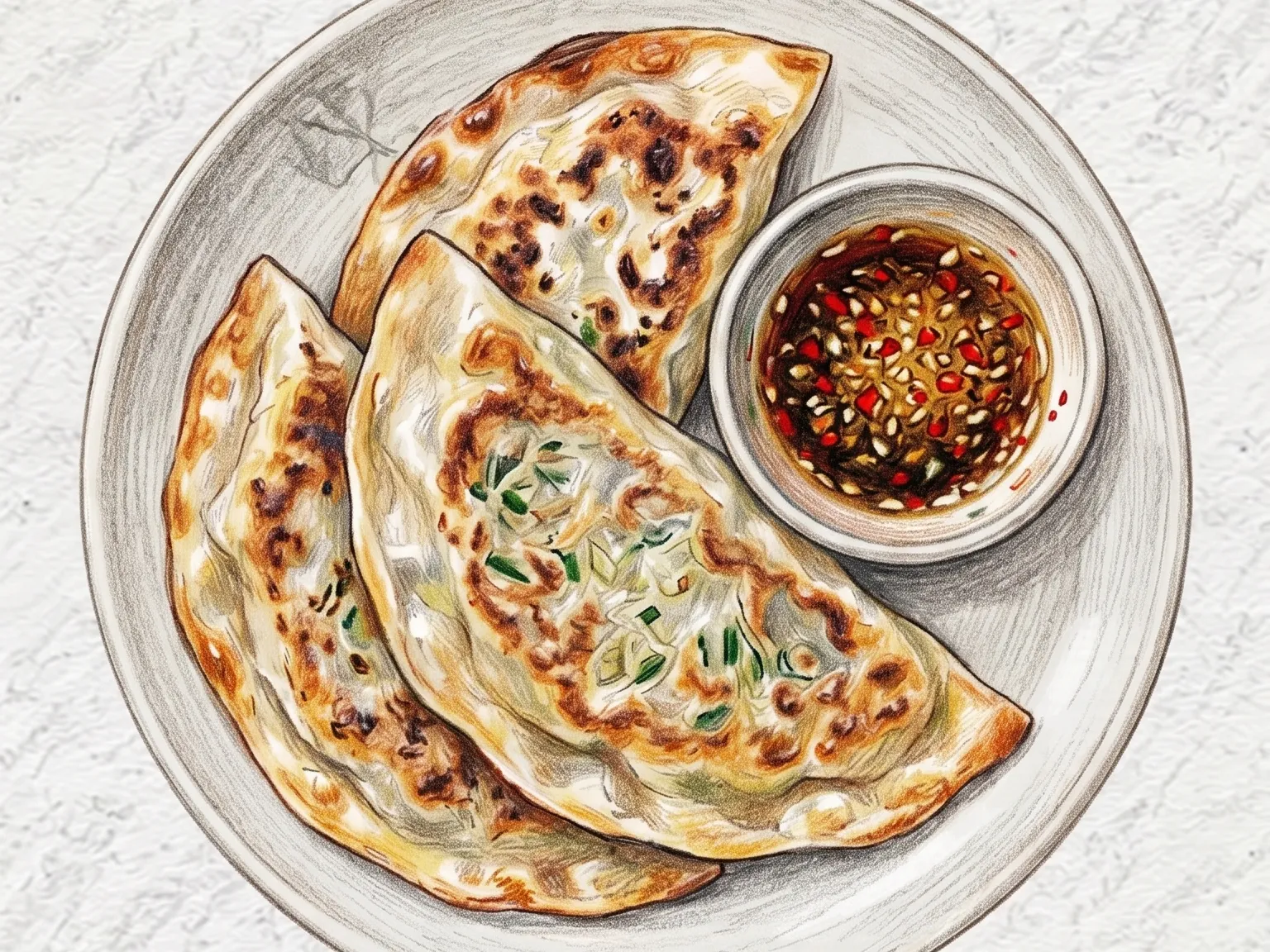
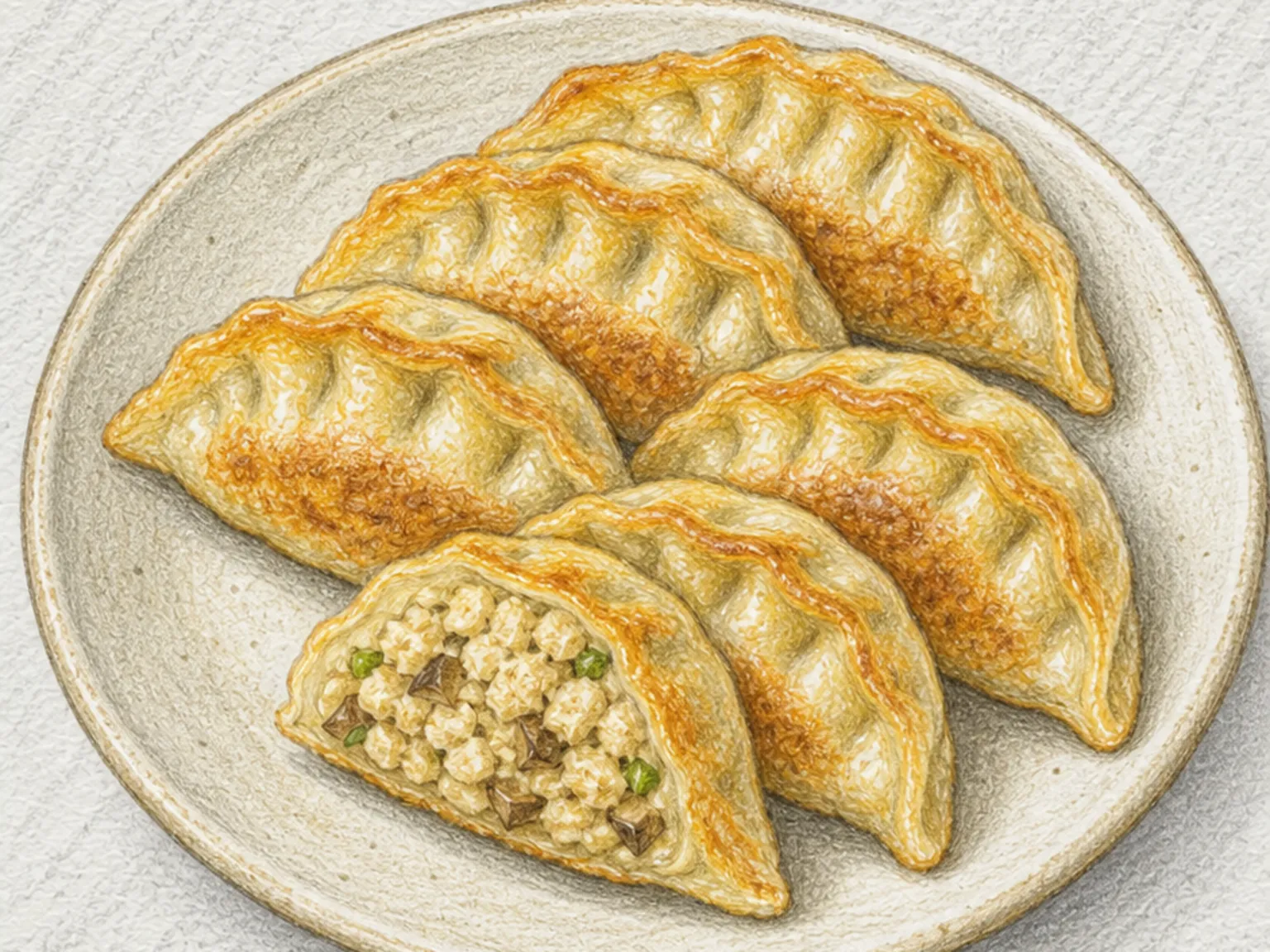
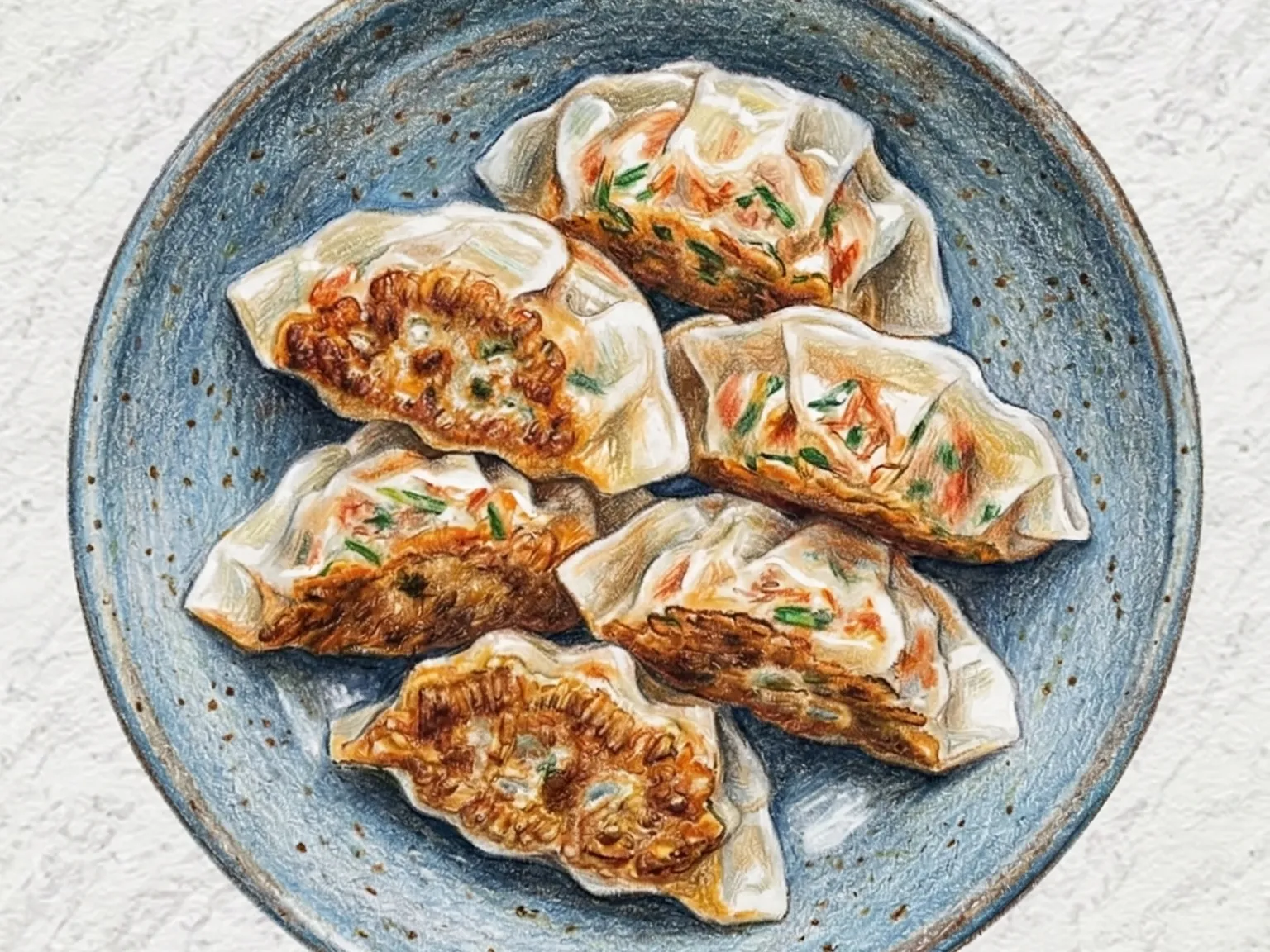
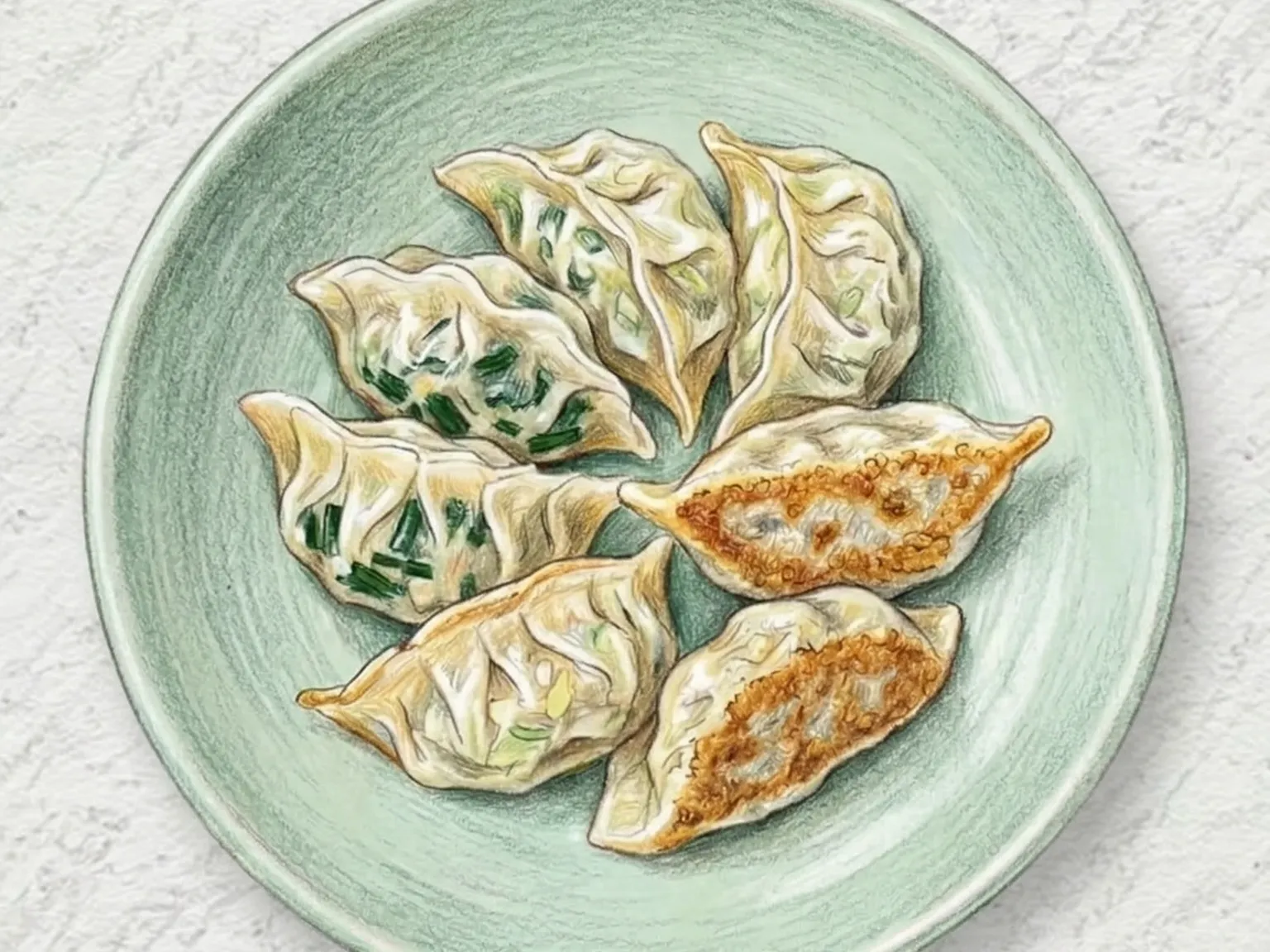
Yachae-mandu are Korean vegetable dumplings filled with a mixture of finely chopped cabbage, garlic chives, rehydrated glass noodles, and crumbled firm tofu, seasoned with soy sauce, sesame oil, and minced garlic. Squeezing out moisture from both the tofu and salted cabbage is critical to keeping the wrappers intact during cooking. The glass noodles, chopped short, distribute a springy chew evenly throughout the filling, while the garlic chives contribute a pungent, green aroma that stands in for meat-based richness. Pan-frying over medium heat creates a thin, golden crust on the bottom while the top half of each dumpling stays soft, giving every bite a contrast between crisp and tender.
Adjust Servings
Instructions
- 1
Boil glass noodles and chop finely; squeeze tofu to remove moisture.
- 2
Finely chop cabbage and chives, then mix with noodles and tofu.
- 3
Season filling with soy sauce, sesame oil, and garlic.
- 4
Place filling on wrappers, wet edges, and seal into half-moon shapes.
- 5
Pan-fry over medium heat for 5-6 minutes, turning until both sides are golden.
As an Amazon Associate, we may earn from qualifying purchases.
Tips
Nutrition (per serving)
More Recipes

Korean Meat Mandu (Pork and Beef Dumplings with Tofu Filling)
Gogi-mandu is a Korean meat dumpling filled with a mixture of ground pork, ground beef, squeezed tofu, onion, scallion, and garlic, seasoned with soy sauce and sesame oil. Kneading the filling in one direction develops protein bonds that create a sticky mass, which locks in moisture during steaming or pan-frying. The pork contributes fat and richness while the beef adds depth of flavor, and the tofu absorbs liquid to keep the filling soft rather than dense. These dumplings can be steamed for a clean taste or pan-fried with a splash of water and a lid for a crispy-bottomed finish.

Korean Steamed Mandu (Pork and Tofu Dumplings Steamed in Half-Moon Shape)
Jjin mandu are Korean steamed dumplings filled with a mixture of ground pork, squeezed tofu, soaked glass noodles, garlic chives, and onion seasoned with soy sauce and sesame oil, folded into half-moon shapes and steamed for 12 to 15 minutes. Cooking by steam rather than oil keeps the wrapper moist and supple while letting the filling's own flavors come through cleanly. Tofu absorbs excess moisture and softens the texture of the filling, while garlic chives add a pungent bite that tempers the pork. They are served with a dipping sauce of soy sauce, vinegar, and red chili flakes.

Korean Shrimp Mandu (Chunky Shrimp and Pork Dumplings)
Saeu-mandu are Korean dumplings filled with coarsely chopped shrimp, ground pork, garlic chives, and onion. The shrimp is intentionally left in chunky pieces so each bite delivers a distinct pop of texture alongside the pork. The filling is seasoned with sesame oil and garlic, keeping the flavor clean with a gentle seafood sweetness underneath. Steaming turns the wrappers translucent and lets the pink shrimp show through, while pan-frying gives a golden, crisp bottom that contrasts with the soft upper shell.

Korean Bulgogi Sandwich (Soy-Marinated Beef Toast with Mayo Lettuce)
Bulgogi sandwich layers soy-marinated, high-heat stir-fried beef onto lightly toasted bread with mayonnaise and lettuce. The beef marinates briefly in soy sauce, sugar, garlic, and sesame oil, and the quick sear over high heat caramelizes the surface for concentrated savory-sweet flavor. Crisp lettuce and a spread of mayonnaise add crunch and creaminess that contrast with the bold meat. Mixing ssamjang into the mayo intensifies the Korean character of the sandwich.

Korean Stir-fried Sundae with Vegetables
Sundae yachae bokkeum stir-fries Korean blood sausage with cabbage, onion, and scallion in a sauce of gochujang, soy sauce, and gochugaru. The vegetables go into the pan first to drive off excess water so the sauce clings better, while the sundae is added later to keep its casing intact and its filling dense and chewy. The combined seasoning creates a spicy-salty glaze that coats the sundae slices evenly. Compared to sundae-gopchang-bokkeum, this version skips the tripe and leans heavier on vegetables, making it a lighter take on the same street food flavor.

Korean Grilled Chicken Skewers
Dak-kkochi-gui is a Korean grilled chicken skewer inspired by street-stall cooking, made by threading bite-sized pieces of chicken breast or thigh onto bamboo sticks and brushing them with a sauce of gochujang, soy sauce, honey, and minced garlic. Thigh meat works best because its higher fat content resists drying out over direct heat, and applying the glaze in two or three separate coats builds up a thick, sticky, caramelized layer. Cutting the chicken into uniform cubes ensures every piece finishes cooking at the same time, and alternating with slices of green onion or bell pepper between the meat adds moisture and color. The interplay of gochujang's fermented heat and honey's sweetness against charcoal smoke captures the unmistakable flavor of Korean street food.