Yaki Onigiri (Japanese Soy-Glazed Grilled Rice Balls)

Yaki Onigiri (Japanese Soy-Glazed Grilled Rice Balls)

Quick answer

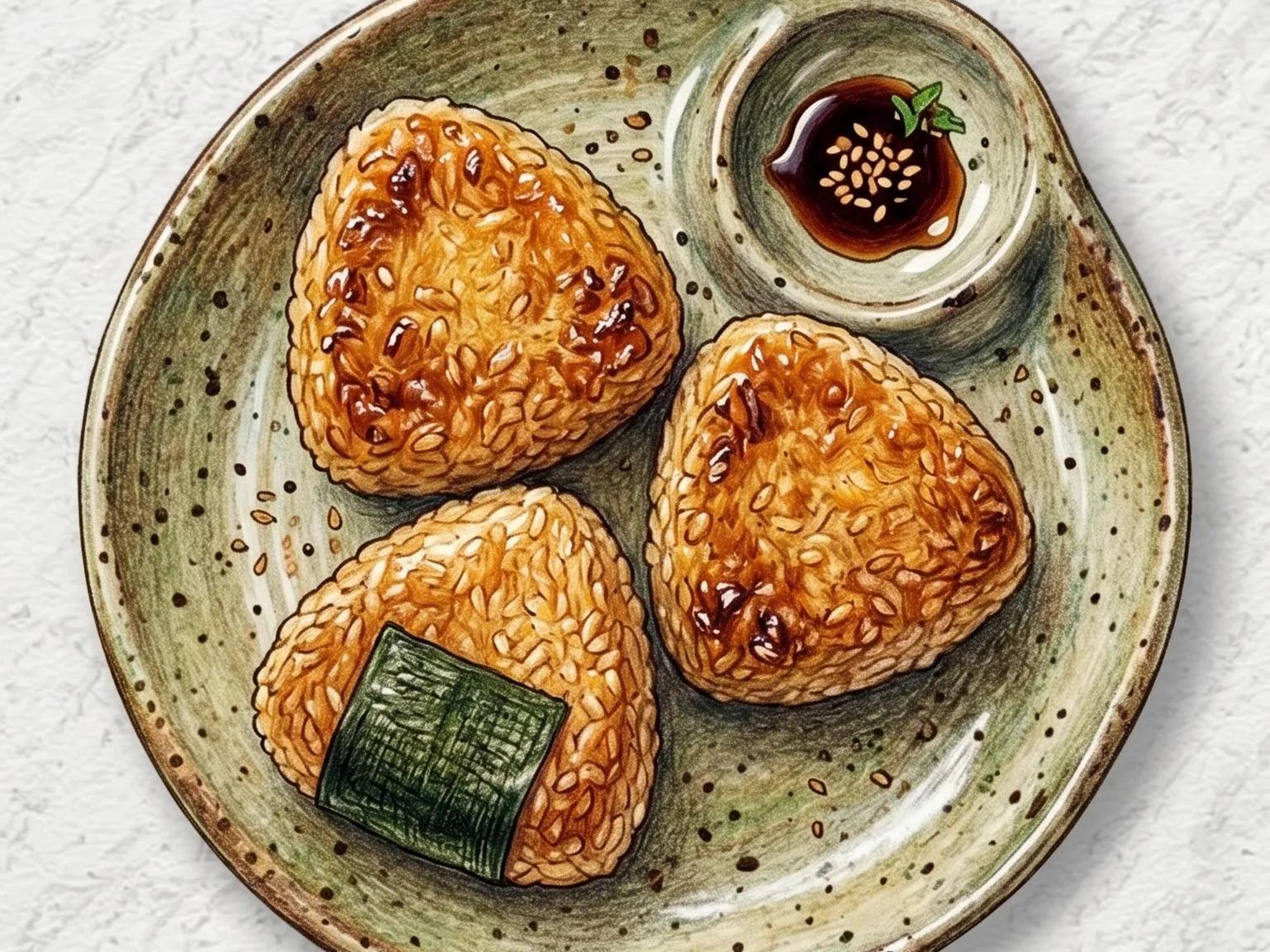
Yaki onigiri are Japanese grilled rice balls prepared using freshly cooked rice that has been lightly seasoned with salt.

What makes this special

  • Soy-glazed grilled rice triangles featuring a savory, caramelised crust from a slow sear.
  • Three to four minutes undisturbed on medium-low lets starch caramelize into a thin crust
  • Soy-mirin glaze brushed in thin layers each flip builds lacquered depth
Total time
24 min
Level
Easy
Servings
2 servings
Ingredients
7
Calories
340 kcal
Protein
6 g

Key ingredients

cooked ricesoy saucemirinsugarsesame oil

Core cooking flow

  1. 1 Mix 2 cups of warm cooked rice evenly with 0.2 teaspoon salt.
  2. 2 Stir 1.5 tablespoons soy sauce, 1 tablespoon mirin, and 0.5 teaspoon sugar until the sugar dissolves.
  3. 3 Spread 1 teaspoon sesame oil in a very thin film and preheat the pan over medium-low heat.

Yaki onigiri are Japanese grilled rice balls prepared using freshly cooked rice that has been lightly seasoned with salt. The rice grains are shaped into triangles or rounds while they remain warm and pliable, as the grains lose their natural binding ability once they cool and lose their moisture. During the shaping process, pressure must be applied with even distribution across the rice to prevent the grains from becoming a dense and compacted mass. This careful handling ensures that the interior of the rice ball maintains a soft texture with each individual grain remaining distinct after the grilling process is complete. The cooking method involves pan-grilling the rice balls using a small amount of sesame oil over a medium-low flame. This specific heat level is necessary to allow the starch on the surface of the rice to caramelize at a slow pace, resulting in a thin and crackling crust while the center of the onigiri remains moist. It is important to let the rice balls sit undisturbed in the pan for three to four minutes on each side before they are turned. This waiting period allows the outer layer to set properly and prevents the rice from tearing or sticking to the pan when it is time to flip them. A glaze made from a combination of soy sauce, mirin, and sugar is applied to the surface in several thin coats. Brushing the glaze on in multiple light passes, rather than applying a large amount of the liquid at the start, prevents the sugar content from burning or charring. This technique creates a deep savory flavor and a lacquered sheen on the exterior of the rice. The finished onigiri have a savory and slightly sweet profile, with edges that become chewy where the glaze has concentrated during the cooking process. A narrow strip of nori seaweed is often wrapped around the base of the rice ball to provide a salty element that balances the glazed exterior. When served with miso soup and pickled radish, these grilled rice balls function as a light meal.

Prep 12min Cook 12min 2 servings

Instructions

Read the steps as a cooking flow: prep, heat, seasoning, doneness control, and finish.

6 steps
  1. 1
    Season

    Mix 2 cups of warm cooked rice evenly with 0.2 teaspoon salt.

    Shape it into triangles or rounds while the grains are still moist, pressing evenly so the rice holds together without becoming dense.

  2. 2
    Season

    Stir 1.5 tablespoons soy sauce, 1 tablespoon mirin, and 0.5 teaspoon sugar until the sugar dissolves.

    Cut the nori sheet into narrow strips that can wrap around the base of each rice ball.

  3. 3
    Control

    Spread 1 teaspoon sesame oil in a very thin film and preheat the pan over medium-low heat.

    Add the rice balls and cook for 3 to 4 minutes without moving them, until the underside feels set.

  4. 4
    Heat

    Flip only when the underside is golden and releases easily from the pan.

    Brush a thin coat of glaze on the cooked side, then cook the second side undisturbed for another 3 to 4 minutes.

  5. 5
    Season

    Turn the rice balls once or twice more, brushing on very thin layers of glaze each time.

    If the sugar darkens too quickly, lower the heat and continue until the surface is glossy and crisp.

  6. 6
    Finish

    Check that the edges are slightly chewy and the center is warm.

    Wrap a nori strip around the base of each rice ball, then serve right away, with miso soup or pickled radish if desired.

After the steps

Pick a recipe that fits this dish.

Continue with shared ingredients, meal pairings, or a similar method.

Recipes That Go Well With This

More Street food →

Based on shared ingredients and meal pairing

Pork Rice Bowl (Sweet-Salty Glazed Pork over Rice)
Shared ingredient: cooked short-grain rice Rice

Pork Rice Bowl (Sweet-Salty Glazed Pork over Rice)

Butadon is a Japanese pork rice bowl that originated in Obihiro, Hokkaido, where thin slices of pork belly or shoulder are simmered with onion in a glaze of soy sauce, mirin, and sugar, then laid over a bowl of steamed rice. The soy salt and sugar sweetness balance precisely as the meat absorbs the sauce, while the onion dissolves gradually into the cooking liquid, contributing a natural sweetness that deepens the glaze. Where the pork meets the pan, the edges caramelize into a slightly charred coating that adds a roasted dimension to the otherwise clean, saucy topping. Hokkaido pork, with its firm texture and higher fat content, is traditional, though any well-marbled cut works. The preparation is genuinely simple - one pan, one sauce, no elaborate knife work - which is exactly why it became a staple weeknight meal across Japan.

Yakitori Rice Bowl (Soy-Mirin Glazed Grilled Chicken over Rice)
Shared ingredient: cooked short-grain rice Rice

Yakitori Rice Bowl (Soy-Mirin Glazed Grilled Chicken over Rice)

Direct heat and a repetitive glazing process define the preparation of this chicken skewer bowl. Small pieces of chicken thigh are secured onto skewers and grilled over a flame while a mixture of soy sauce, mirin, and sugar is applied in thin, sequential layers. This technique builds a lacquered surface through caramelization, which directs the sweet and salty flavors to the exterior of the meat. Applying the sauce too heavily in a single pass often leads to burning and an uneven crust. Because chicken thigh contains natural fats, the meat remains moist and tender even under high temperatures. When the cooked pieces are removed from the skewers and placed onto the rice, the excess glaze permeates the grains to provide sufficient seasoning. Sprinkling shichimi togarashi or sansho powder introduces a sharp or citrus-like contrast to the sweetness of the chicken. While chicken breast serves as a leaner alternative, it requires a longer marinating period and a shorter time on the grill to prevent the meat from drying out. The tare sauce can be prepared in advance and stored in the refrigerator for several weeks. Adding a halved soft-boiled egg or sliced scallions provides different textures and prevents the meal from feeling repetitive.

Yuzu Cold Soba (Chilled Buckwheat Noodles with Citrus Dipping Sauce)
Serve together Noodles

Yuzu Cold Soba (Chilled Buckwheat Noodles with Citrus Dipping Sauce)

Yuzu memil soba is a cold buckwheat noodle dish served with a citrus-infused dipping sauce made from tsuyu, cold water, and yuzu marmalade. The soba must be rinsed at least three times in cold water after boiling to strip off surface starch, which prevents clumping and gives each strand a clean bite. A brief dip in ice water firms the texture further. The yuzu marmalade lifts the salty-savory tsuyu with bright citrus fragrance, while freshly grated daikon radish adds a peppery, cooling sharpness. Shredded seaweed contributes a subtle ocean note, and wasabi provides a nasal heat that cuts through the nuttiness of the buckwheat.

Pork Cutlet Sandwich
Similar recipe Street food

Pork Cutlet Sandwich

Katsu sando is a Japanese sandwich built around a thick pork loin cutlet breaded in flour, egg, and panko, then deep-fried at 170C until the exterior turns a deep, even gold. The cutlet rests on soft milk bread generously spread with tonkatsu sauce, and a layer of shredded cabbage dressed in mayonnaise goes in between. The contrast between the cutlet's rigid panko crust and the yielding bread is what defines the sandwich, while the mayo-dressed cabbage absorbs some of the richness and keeps the whole thing from feeling heavy. Wrapping the assembled sandwich firmly in plastic wrap and resting it for three minutes gives the sauce time to soak into the bread, producing a clean cross-section when cut. Draining the cutlet upright for a minute after frying removes surface oil and prevents the bread from going soggy. Using fine-ground fresh panko rather than dried gives the crust a slightly denser, more refined texture.

Serve with this

Korean Sweet Spicy Pollock Floss Stir-fry
Side dishes Easy

Korean Sweet Spicy Pollock Floss Stir-fry

Myeongyeopchae-bokkeum stir-fries finely shredded dried pollock floss in gochujang and oligosaccharide syrup until each fiber strand is evenly coated and moist. Myeongyeopchae is thinner and softer-fibered than hwangtaechae, the wider dried pollock strips, arriving in a dense cotton-like bundle that must be loosened strand by strand before cooking. Running your fingers along the grain separates the fibers cleanly, allowing the seasoning to penetrate evenly and preventing the finished banchan from clumping together in the mouth. A dry toast of thirty seconds in an oil-free pan drives off residual moisture and coaxes out a toasted fish aroma before gochujang, gochugaru, oligosaccharide syrup, soy sauce, and minced garlic go in over the lowest heat for a rapid coating. The fine fibers absorb the sauce almost immediately and turn pliant and glistening, but heat held too long draws the moisture back out, leaving them tough and stiff, so the entire stir-fry must be completed within two minutes. A finishing drizzle of sesame oil and a scatter of sesame seeds deepen the nutty aroma. The resulting banchan occupies a middle ground between the chewier, more aggressively seasoned hwangtaechae-muchim and the bolder jinmichae-bokkeum, its mild sweet-spicy profile approachable enough for children. The relatively dry finish means the seasoning does not bleed into adjacent items in a lunchbox, and stored in an airtight container in the refrigerator the flavor holds well for up to five days.

🏠 Everyday 🧒 Kid-Friendly
Prep 5min Cook 7min 4 servings
Korean Dalgona Coffee (Whipped Instant Coffee Foam Milk)
Drinks Easy

Korean Dalgona Coffee (Whipped Instant Coffee Foam Milk)

Dalgona coffee is made by whipping equal parts instant coffee, sugar, and hot water with a hand mixer for three to five minutes until stiff, caramel-colored peaks form, then spooning the foam over iced milk. The whipped layer carries a concentrated, bittersweet coffee flavor that gradually blends into the cold, neutral milk below as you stir. A light dusting of cocoa powder on top introduces a faint chocolate note, and increasing the sugar slightly helps the whipped cream hold its stiff structure longer.

🍺 Bar Snacks 🧒 Kid-Friendly
Prep 8min 2 servings
Milk Shaved Ice with Red Beans
Desserts Easy

Milk Shaved Ice with Red Beans

Uyu patbingsu is a traditional Korean cold dessert centered around milk that has been frozen solid and then shaved into a very fine, light texture resembling freshly fallen snow. This specific preparation method differs from versions using plain water ice because the fat and protein content in the milk create a texture that is notably smoother, creamier, and more opaque as it melts. To build the dish, the shaved milk is gathered into a tall mound and layered with several distinct components, primarily a portion of red beans that have been boiled with sugar until they achieve a soft, starchy consistency. Small, bite-sized rice cakes are distributed across the ice to provide a dense and chewy element that contrasts with the temperature of the milk. A fine dusting of multigrain powder and roasted soybean flour adds an earthy, toasty flavor profile to the base, which helps to balance the sweetness of the other toppings. For additional texture and flavor, sliced almonds are included to provide a consistent crunch, while pieces of fresh strawberry are added to introduce a sharp, acidic fruit brightness. The overall richness of the assembly is typically increased by drizzling condensed milk over the surface, allowing the thick liquid to seep down into the porous layers of ice. Historical documentation from the Joseon dynasty indicates that the practice of serving ice with red beans during the summer months was already established by the 19th century, with palace records showing that ice was retrieved from stone-lined underground icehouses for royal consumption. While the combination of milk and sweetened beans remains the traditional standard, contemporary versions of the dessert frequently incorporate a wide variety of other ingredients including mango, matcha, and injeolmi.

🧒 Kid-Friendly ⚡ Quick
Prep 15min Cook 5min 2 servings

Similar recipes

Kimchi Octopus Balls (Korean-Style Takoyaki with Fermented Kimchi)
Street food Medium

Kimchi Octopus Balls (Korean-Style Takoyaki with Fermented Kimchi)

Kimchi takoyaki fills a takoyaki pan with a thin batter of takoyaki flour, water, and egg, then drops boiled octopus, drained kimchi, and chopped scallion into each well before rotating the rounds with a skewer as they set. The exterior crisps into a thin, golden shell while the inside stays loose and creamy, and the octopus's springy resistance meets the kimchi's tangy heat within the mild, savory batter. Squeezing the kimchi thoroughly dry before adding it is essential - residual liquid thins the batter and prevents clean browning. Leaving the balls untouched for a full minute allows the bottom to set before any turning begins. Finished with takoyaki sauce, mayonnaise, and a flutter of bonito flakes on top, each piece delivers a layered combination of salty, rich, and umami.

🧒 Kid-Friendly 🏠 Everyday
Prep 18min Cook 15min 2 servings
Yakisoba Pan (Noodle Bread)
Street food Easy

Yakisoba Pan (Noodle Bread)

A staple of Japanese street food culture, Yakisoba-pan combines a toasted, buttered hot dog bun with a filling of stir-fried egg noodles seasoned with yakisoba and soy sauce. Shredded cabbage, onions, and carrots start in the pan over high heat for exactly two minutes before the noodles are added. This timing ensures the vegetables remain crisp and provide a textural contrast to the soft noodles rather than becoming limp during the cooking process. As the yakisoba sauce hits the hot metal, it caramelizes quickly to wrap every noodle strand in a glossy, sweet-savory glaze. The act of spreading butter on the interior of the bun and giving it a quick toast serves a functional purpose beyond flavor. This butter layer acts as a moisture barrier, preventing the sauce from soaking into the bread and keeping the bun from turning soggy as it sits. The subtle richness of the butter bridges the gap between the savory noodle filling and the soft crumb of the bun. Sprinkling dried parsley over the top introduces a mild herbal scent that balances the heavy, concentrated sauce. For a burst of acidity, a small amount of beni shoga pickled ginger is tucked into the noodles to cleanse the palate. Spreading a layer of Japanese mayonnaise inside the bun alongside the butter creates an additional creamy texture. Softening the noodles in hot water before they hit the pan prevents clumping and allows for easier separation during the stir-frying stage.

🧒 Kid-Friendly ⚡ Quick
Prep 12min Cook 10min 2 servings
Japanese Ginger Soy Braised Chicken
Stir-fry Easy

Japanese Ginger Soy Braised Chicken

Toriniku shigureni is a Japanese-style simmered dish of ground chicken cooked down with julienned ginger, soy sauce, mirin, and sugar until most of the liquid evaporates. The chicken is browned first over medium heat, then ginger is added for its sharp bite before the braising liquid goes in. As the sauce reduces over six minutes, it concentrates into a sweet-salty glaze that clings to the meat. The ginger tames any gamey notes while adding warmth, making this a versatile topping for rice bowls or a compact side dish for packed lunches.

🏠 Everyday 🌙 Late Night
Prep 10min Cook 12min 2 servings

Tips

Use freshly cooked rice so the balls hold together.
Apply glaze in thin coats to prevent burning.

Nutrition (per serving)

Calories
340
kcal
Protein
6
g
Carbs
63
g
Fat
6
g