Japanese Stir-Fried Udon
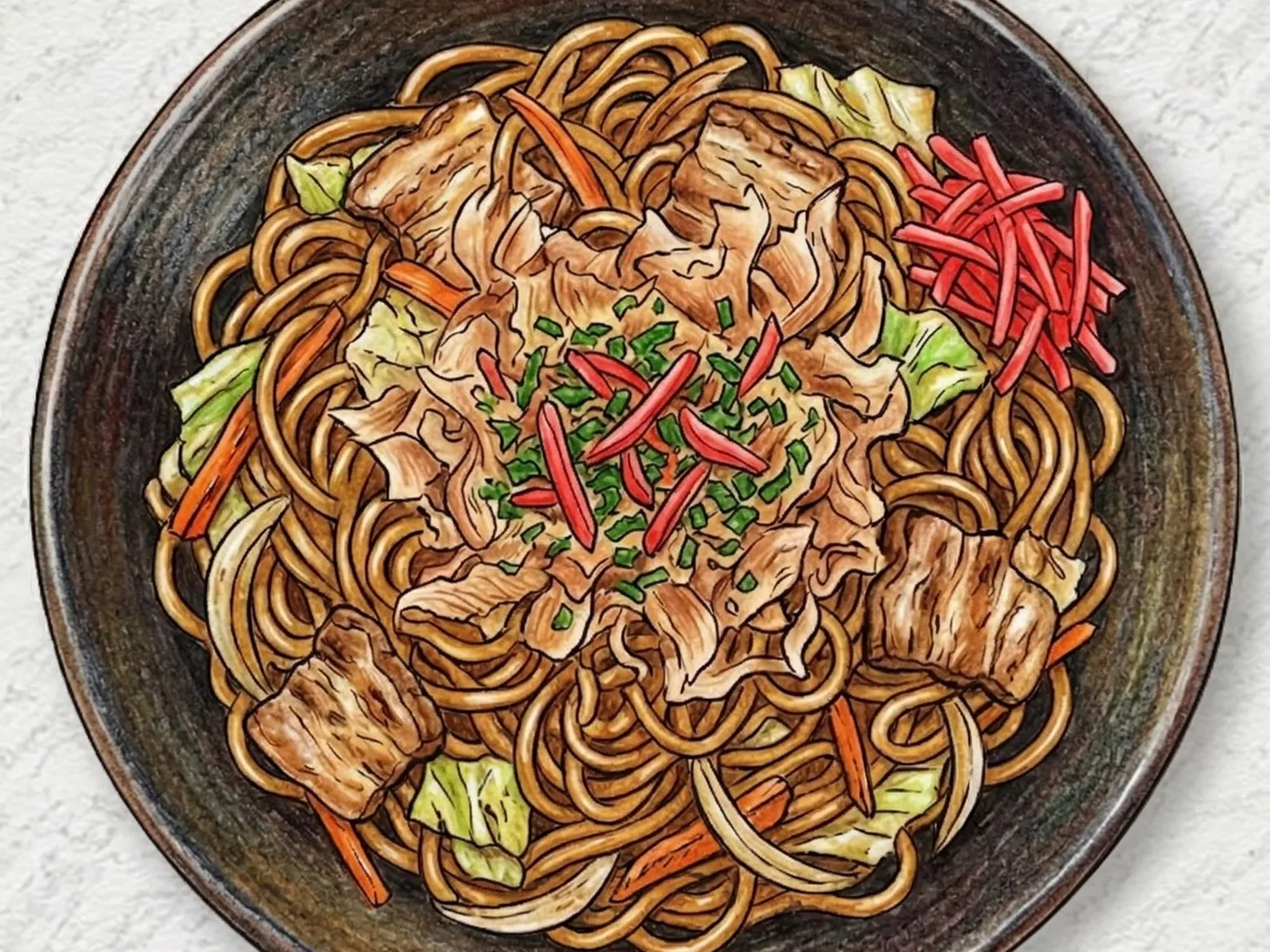
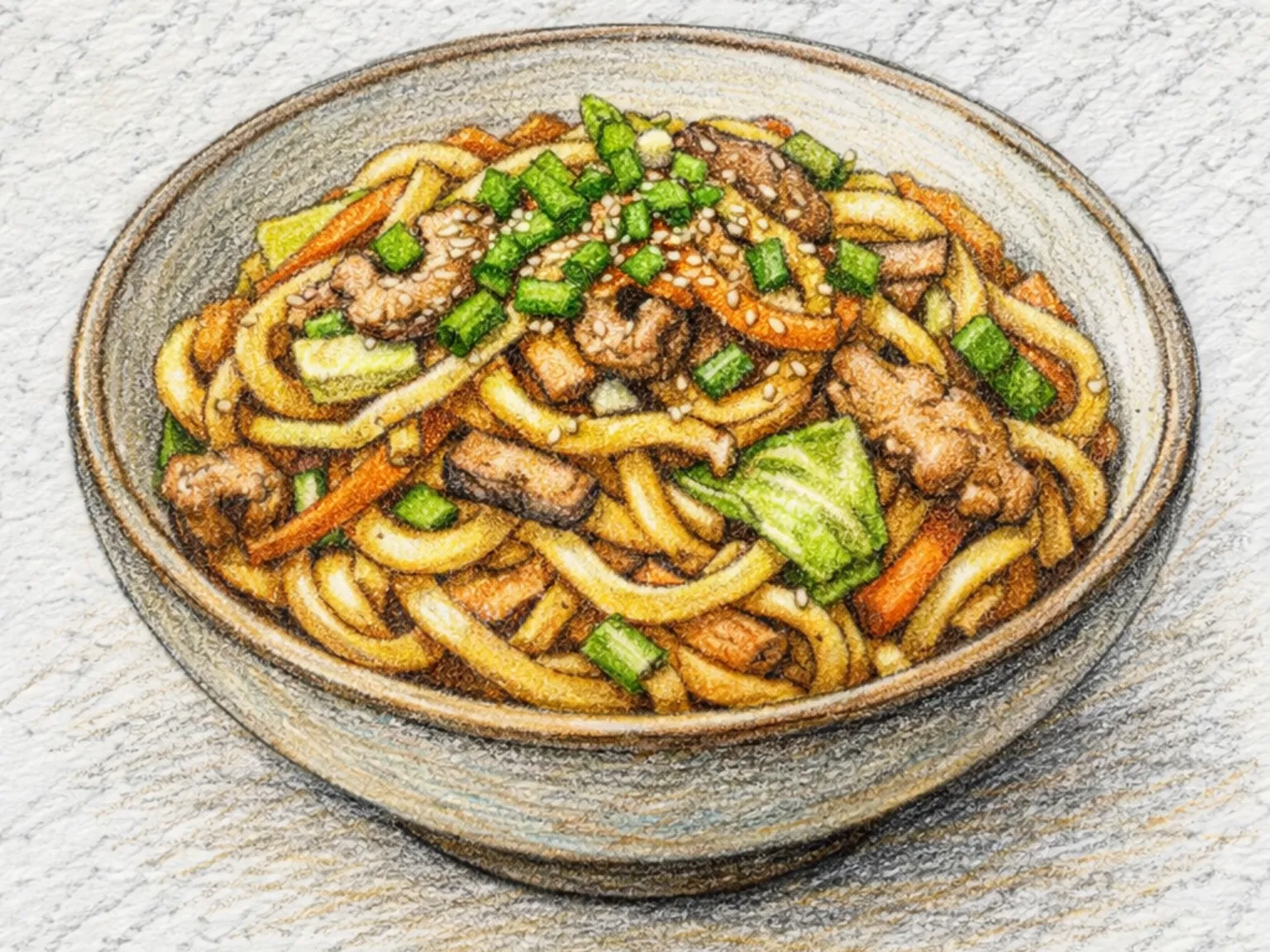
Yaki udon is a Japanese stir-fried noodle dish where thick udon noodles are tossed in a soy-based sauce over high heat with sliced pork or seafood and vegetables such as cabbage, carrot, and scallion. The high heat gives the noodles lightly charred edges while keeping their chewy center intact. Bonito flakes (katsuobushi) are often scattered on top just before serving, where they wave from the residual heat. The recipe takes about 25 minutes and depends on maintaining strong heat throughout the stir-fry to avoid steaming the noodles.
Adjust Servings
Instructions
- 1
Cut vegetables and pork into bite-sized pieces.
- 2
Stir-fry pork in oil, add vegetables and cook until softened.
- 3
Add udon noodles, soy sauce, oyster sauce, and mirin. Stir-fry everything together.
- 4
Top with bonito flakes and serve.
As an Amazon Associate, we may earn from qualifying purchases.
Tips
Nutrition (per serving)
More Recipes

Kimchi Stir-Fried Udon (Pork Belly Kimchi Wok-Fried Noodles)
Kimchi udon stir-fry is a quick, high-heat noodle dish that brings together thinly sliced pork belly, aged kimchi, and thick udon noodles. The pork belly is seared until its edges crisp, rendering enough fat to cook the onion and green onion that follow. Kimchi goes in next and stir-fries on high heat until its moisture evaporates and the flavor concentrates. A mixture of gochujang, soy sauce, and sugar forms the seasoning, and blanched udon noodles are tossed in to coat evenly. The entire stir-fry stays on high heat for a short time to keep the udon bouncy rather than soft. Adding a spoonful of kimchi juice during cooking deepens the umami without increasing the volume of sauce.

Kimchi Butter Udon (Tangy Kimchi Stir-Fried in Butter)
Kimchi butter udon is a fusion stir-fried noodle that pairs the tangy heat of aged kimchi with the richness of butter. Half the butter goes in first to saute onion and garlic, then chopped kimchi is stir-fried for two minutes to drive off moisture and deepen its flavor. Blanched udon noodles and soy sauce are tossed in on high heat until evenly coated, and the remaining butter is melted off-heat so its aroma stays vivid on the finished noodles. A soft-cooked egg placed on top breaks into a creamy sauce when mixed in, while seaweed flakes and sliced scallion add crunch and freshness. The whole dish comes together in about twelve minutes, making it a reliable quick lunch.

Udon with Seasoned Fried Tofu
Kitsune udon is a classic Japanese noodle soup topped with sweet-simmered fried tofu pouches. The aburaage is first blanched to remove excess oil, then braised in a mixture of water, soy sauce, mirin, and sugar for about six minutes until the seasoning penetrates through. The broth is made separately from dashi stock, seasoned with soy sauce, mirin, and a small amount of salt to keep it clean and transparent. Frozen udon noodles are warmed briefly in boiling water - just long enough to loosen them without overcooking - then placed in the bowl with hot broth ladled over. The simmered tofu sits on top, releasing its sweet-savory liquid into the surrounding broth as you eat. Chopped scallion and a pinch of shichimi pepper add brightness and mild heat to finish.

Mentaiko Yuzu Cream Udon
Myeongran yuja cream udon is a Japanese-style cream udon that layers salted pollock roe with yuzu marmalade in a sauce built from heavy cream, milk, and butter. Garlic is sauteed in butter first, then cream and milk simmer on low heat for two to three minutes to thicken before yuzu marmalade and black pepper are stirred in. Two-thirds of the roe goes in off heat so residual warmth cooks it gently without making it tough, while the remaining third is placed raw on top for bursts of briny texture. The yuzu is added gradually to control acidity, and its citrus fragrance lifts the heavy cream base, keeping the dish from feeling overly rich. Shredded nori on top provides a roasted, oceanic contrast.

Ebi Fry (Japanese Panko-Crusted Shrimp)
Ebi fry emerged during Japan's Meiji-era adoption of Western cuisine, evolving into a signature dish of yoshoku - the Japanese reinterpretation of European food. Preparation begins by snipping the tendons on the shrimp's belly side and pressing it flat so it holds a straight, elongated shape during frying rather than curling. The three-stage coating - flour, egg wash, then coarse panko breadcrumbs - is essential: panko's jagged, irregular flakes puff up in hot oil to create a golden, airy crunch distinctly lighter than fine Western breadcrumbs. Because the shrimp fries briefly at high temperature, the interior stays moist and springy, snapping cleanly when bitten. Tartar sauce, with its creamy acidity, counterbalances the richness of the fried coating, while tonkatsu sauce offers a sweeter, fruitier alternative dip. Ebi fry appears in bento boxes, perched atop curry rice as ebi fry curry, or tucked into soft bread as an ebi katsu sando - a versatility that makes it one of Japan's most enduring yoshoku dishes.

Osaka Kitsune Udon (Thick Noodles with Sweet Fried Tofu in Dashi)
Kitsune udon is Osaka's signature noodle bowl, defined by sweet simmered fried tofu draped over thick wheat noodles in a clear dashi broth. The broth is made from kombu and bonito flakes, seasoned with light soy sauce in the Kansai tradition - pale in color but full in umami. The aburaage tofu is simmered separately in a mixture of dashi, soy sauce, mirin, and sugar until it swells with sweet braising liquid, releasing a burst of flavor with each bite. Thick, chewy udon noodles sit in the steaming broth, their neutral wheat taste serving as a canvas for the delicate soup. A scattering of sliced green onion adds freshness and a mild bite. In Osaka, kitsune udon is eaten at all hours - a quick breakfast before work, a light lunch, or a late-night bowl after drinks - and every neighborhood udon shop has its own version of the sweet tofu recipe.