Yakisoba Pan (Noodle Bread)

Yakisoba Pan (Noodle Bread)

Quick answer

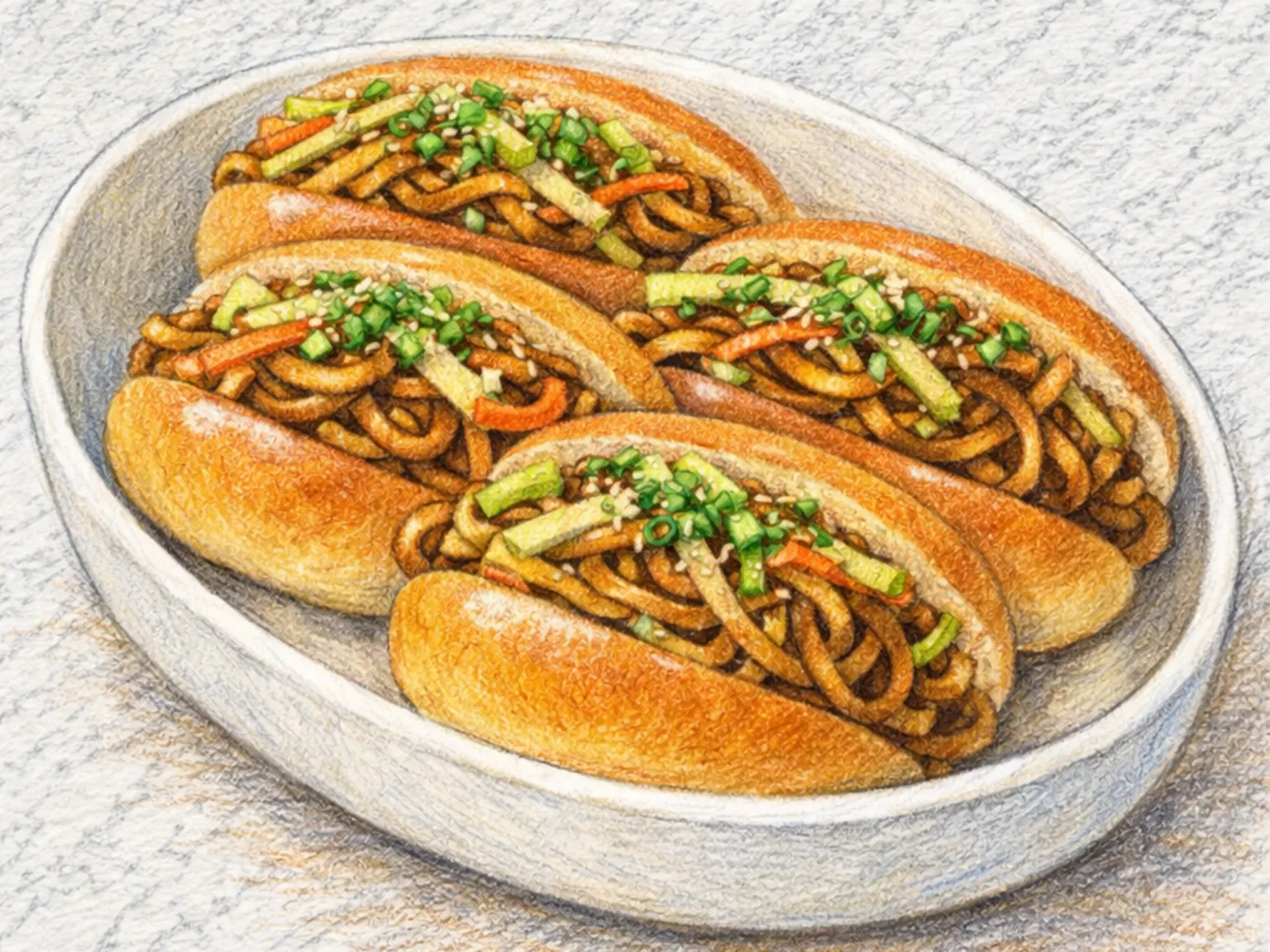
A staple of Japanese street food culture, Yakisoba-pan combines a toasted, buttered hot dog bun with a filling of stir-fried egg noodles seasoned with yakisoba and soy sauce.

What makes this special

  • Stir-fried egg noodles seasoned with yakisoba sauce served inside a toasted hot dog bun.
  • Buttering and toasting the bun interior forms a barrier against soggy noodle sauce
  • Two-minute high-heat stir-fry keeps vegetables crisp before adding noodles
Total time
22 min
Level
Easy
Servings
2 servings
Ingredients
10
Calories
498 kcal
Protein
12 g

Key ingredients

hot dog bunsyakisoba noodlescabbageonioncarrot

Core cooking flow

  1. 1 Thinly slice 90 g cabbage, 50 g onion, and 30 g carrot so they cook quickly.
  2. 2 Heat the pan until very hot, add 1 tablespoon cooking oil, and stir-fry the...
  3. 3 Add the drained noodles and lift them with chopsticks or tongs while stir-frying for 2 more minutes.

A staple of Japanese street food culture, Yakisoba-pan combines a toasted, buttered hot dog bun with a filling of stir-fried egg noodles seasoned with yakisoba and soy sauce. Shredded cabbage, onions, and carrots start in the pan over high heat for exactly two minutes before the noodles are added. This timing ensures the vegetables remain crisp and provide a textural contrast to the soft noodles rather than becoming limp during the cooking process. As the yakisoba sauce hits the hot metal, it caramelizes quickly to wrap every noodle strand in a glossy, sweet-savory glaze. The act of spreading butter on the interior of the bun and giving it a quick toast serves a functional purpose beyond flavor. This butter layer acts as a moisture barrier, preventing the sauce from soaking into the bread and keeping the bun from turning soggy as it sits. The subtle richness of the butter bridges the gap between the savory noodle filling and the soft crumb of the bun. Sprinkling dried parsley over the top introduces a mild herbal scent that balances the heavy, concentrated sauce. For a burst of acidity, a small amount of beni shoga pickled ginger is tucked into the noodles to cleanse the palate. Spreading a layer of Japanese mayonnaise inside the bun alongside the butter creates an additional creamy texture. Softening the noodles in hot water before they hit the pan prevents clumping and allows for easier separation during the stir-frying stage.

Prep 12min Cook 10min 2 servings

Instructions

Read the steps as a cooking flow: prep, heat, seasoning, doneness control, and finish.

6 steps
  1. 1
    Heat

    Thinly slice 90 g cabbage, 50 g onion, and 30 g carrot so they cook quickly.

    Loosen 220 g yakisoba noodles briefly in hot water, then drain well so they separate in the pan.

  2. 2
    Control

    Heat the pan until very hot, add 1 tablespoon cooking oil, and stir-fry the vegetables over high heat for 2 minutes.

    Stop while they still look bright and slightly crisp, before they soften too much.

  3. 3
    Season

    Add the drained noodles and lift them with chopsticks or tongs while stir-frying for 2 more minutes.

    If the noodles start sticking to the bottom, lower the heat slightly instead of adding extra sauce.

  4. 4
    Season

    Pour in 2.5 tablespoons yakisoba sauce and 1 teaspoon soy sauce, then toss quickly so the hot pan coats the noodles evenly.

    Turn off the heat as soon as the noodles look glossy.

  5. 5
    Season

    Split 2 hot dog buns lengthwise and spread 10 g butter across the cut sides.

    Toast them in a pan or toaster for about 1 minute so the inside forms a light barrier against the sauced noodles.

  6. 6
    Finish

    Fill the warm buns generously with the hot stir-fried noodles, but do not press them down hard or the bread may tear.

    Sprinkle with 1 teaspoon dried parsley and serve right away while the texture holds.

After the steps

Pick a recipe that fits this dish.

Continue with shared ingredients, meal pairings, or a similar method.

Recipes That Go Well With This

More Street food →

Based on shared ingredients and meal pairing

Japanese Napolitan Spaghetti
Shared ingredient: onion Noodles

Japanese Napolitan Spaghetti

Napolitan spaghetti is a Japanese yoshoku pasta stir-fried with ketchup, sausage, onion, and green bell pepper that traces its origins to postwar Japan, when imported ingredients were scarce and cooks adapted Western techniques with locally available pantry staples. Cooking the ketchup in the pan first drives off moisture and concentrates its tomato sweetness, transforming it from a condiment into a sauce base with genuine depth. Worcestershire sauce adds a layer of fermented complexity that ketchup alone cannot provide. The sausage goes in first to render its fat and build flavor, followed by onion and pepper stir-fried quickly over high heat to retain their texture. Spaghetti cooked al dente with a quarter cup of pasta water reserved helps the sauce cling to the noodles when tossed together in the pan. A knob of butter stirred in at the end rounds off the ketchup's acidity and gives the finished dish a glossy, sweet-savory character that has made napolitan a beloved nostalgic dish in Japanese home cooking.

Kimchi Butter Udon (Tangy Kimchi Stir-Fried in Butter)
Shared ingredient: onion Noodles

Kimchi Butter Udon (Tangy Kimchi Stir-Fried in Butter)

Kimchi butter udon is a fusion stir-fried noodle that pairs the tangy, spicy acidity of well-fermented kimchi with the deep richness of butter. The first half of the butter goes into the pan to saute onion and garlic until they release their sweetness, then chopped kimchi is added and stir-fried for two minutes to cook off the moisture, which concentrates the flavor and mellows the sharp sourness. Blanched udon noodles and soy sauce are tossed in over high heat so the seasoning coats every strand evenly, and the remaining butter is added off-heat immediately after, keeping its aroma intact while lending a glossy sheen and fuller depth to the noodles. A soft-cooked egg placed on top breaks into a creamy sauce when stirred in, while seaweed flakes and sliced scallion contribute crunch and a fresh herbal lift. If the kimchi leans salty, reducing the soy sauce to one tablespoon keeps the balance in check. The whole dish, including prep, comes together in about twelve minutes.

Mushroom Memil Soba (Warm Buckwheat Noodles in Mushroom Dashi)
Serve together Noodles

Mushroom Memil Soba (Warm Buckwheat Noodles in Mushroom Dashi)

Beoseot memil soba is a warm buckwheat noodle soup built on dashi stock seasoned with soy sauce and mirin, with shiitake and oyster mushrooms simmered for five minutes so their concentrated woodsy depth moves fully into the broth. Dried shiitake contributes far more umami than fresh, and oyster mushrooms torn along the grain absorb more liquid than sliced. The soba noodles are cooked separately and rinsed in cold water to strip off surface starch, which keeps the broth clear and prevents the noodles from turning soft. A small curl of yuzu zest placed on top just before serving sends a sharp citrus note across the broth's earthy weight, lifting the finish without overpowering it. Green onion scattered on top adds a layer of fresh aroma and color.

Kimchi Octopus Balls (Korean-Style Takoyaki with Fermented Kimchi)
Similar recipe Street food

Kimchi Octopus Balls (Korean-Style Takoyaki with Fermented Kimchi)

Kimchi takoyaki fills a takoyaki pan with a thin batter of takoyaki flour, water, and egg, then drops boiled octopus, drained kimchi, and chopped scallion into each well before rotating the rounds with a skewer as they set. The exterior crisps into a thin, golden shell while the inside stays loose and creamy, and the octopus's springy resistance meets the kimchi's tangy heat within the mild, savory batter. Squeezing the kimchi thoroughly dry before adding it is essential - residual liquid thins the batter and prevents clean browning. Leaving the balls untouched for a full minute allows the bottom to set before any turning begins. Finished with takoyaki sauce, mayonnaise, and a flutter of bonito flakes on top, each piece delivers a layered combination of salty, rich, and umami.

Serve with this

Korean Rolled Omelette (Layered Vegetable Egg Roll)
Side dishes Easy

Korean Rolled Omelette (Layered Vegetable Egg Roll)

Gyeran-mari - Korean rolled omelette - is a staple of Korean lunchboxes and dinner tables, a dish every Korean home cook masters early. Finely diced carrot, onion, and scallion are mixed into beaten eggs and poured in a thin stream across a lightly oiled rectangular pan. When the egg layer is half-set, it is rolled from one side to the other, then more egg mixture is poured beside the roll and the process repeats three to four times, building concentric yellow layers visible when sliced. Air trapped between the thin sheets gives the omelette its characteristic pillowy softness. Temperature control is critical - too hot and the egg browns; too cool and the layers will not bond. After cooking, wrapping the roll in a bamboo mat or kitchen towel for two minutes sets its shape into a clean cylinder. Found in school cafeterias, picnic bento boxes, and family dinners across Korea.

🏠 Everyday 🧒 Kid-Friendly
Prep 10min Cook 8min 2 servings
Korean Dalgona Milk (Caramel Puffed Sugar Candy Milk)
Drinks Medium

Korean Dalgona Milk (Caramel Puffed Sugar Candy Milk)

Dalgona milk starts with melting sugar in a small pan over low heat until it reaches a deep amber color, then adding baking soda, which causes the hot caramel to foam and aerate instantly into a honeycomb-like structure. Once cooled, the puffed candy is crushed and dissolved into cold milk. The baking soda reaction is what gives dalgona its distinctive lightness: instead of a dense, hard caramel, the aerated structure makes it brittle and easy to break while also helping it dissolve quickly in the milk. The caramelized sugar delivers a deep, toasty sweetness with a slight bitterness at the edges, similar to butterscotch, that spreads through the milk as the pieces melt. A small amount of vanilla extract sharpens the flavor and a pinch of salt rounds it out. Keeping some crushed dalgona pieces separate and dropping them on top of the finished drink as a garnish adds a crunchy contrast to the creamy liquid beneath.

🍺 Bar Snacks 🧒 Kid-Friendly
Prep 6min Cook 4min 2 servings
Misugaru Grain Ice Cream
Desserts Easy

Misugaru Grain Ice Cream

Misugaru Grain Ice Cream is a frozen dessert made by blending roasted multi-grain powder with milk and heavy cream. The misugaru is whisked into milk to dissolve any lumps before honey, condensed milk, and a pinch of salt are added to establish a sweet, nutty base. Separately, heavy cream is whipped to soft peaks and gently folded into the mixture using J-shaped strokes to maintain aeration. The mixture is placed in a shallow container to freeze. To achieve a smooth texture, the surface is scraped with a fork every hour for three hours, breaking up ice crystals. Using black bean grain powder provides a richer taste, and topping the ice cream with chopped nuts adds a crunchy contrast to the creamy texture.

🔥 Trending Now ⚡ Quick
Prep 15min 4 servings

Similar recipes

Pork Cutlet Sandwich
Street food Medium

Pork Cutlet Sandwich

Katsu sando is a Japanese sandwich built around a thick pork loin cutlet breaded in flour, egg, and panko, then deep-fried at 170C until the exterior turns a deep, even gold. The cutlet rests on soft milk bread generously spread with tonkatsu sauce, and a layer of shredded cabbage dressed in mayonnaise goes in between. The contrast between the cutlet's rigid panko crust and the yielding bread is what defines the sandwich, while the mayo-dressed cabbage absorbs some of the richness and keeps the whole thing from feeling heavy. Wrapping the assembled sandwich firmly in plastic wrap and resting it for three minutes gives the sauce time to soak into the bread, producing a clean cross-section when cut. Draining the cutlet upright for a minute after frying removes surface oil and prevents the bread from going soggy. Using fine-ground fresh panko rather than dried gives the crust a slightly denser, more refined texture.

🧒 Kid-Friendly 🌙 Late Night
Prep 20min Cook 18min 2 servings
Yaki Onigiri (Japanese Soy-Glazed Grilled Rice Balls)
Street food Easy

Yaki Onigiri (Japanese Soy-Glazed Grilled Rice Balls)

Yaki onigiri are Japanese grilled rice balls prepared using freshly cooked rice that has been lightly seasoned with salt. The rice grains are shaped into triangles or rounds while they remain warm and pliable, as the grains lose their natural binding ability once they cool and lose their moisture. During the shaping process, pressure must be applied with even distribution across the rice to prevent the grains from becoming a dense and compacted mass. This careful handling ensures that the interior of the rice ball maintains a soft texture with each individual grain remaining distinct after the grilling process is complete. The cooking method involves pan-grilling the rice balls using a small amount of sesame oil over a medium-low flame. This specific heat level is necessary to allow the starch on the surface of the rice to caramelize at a slow pace, resulting in a thin and crackling crust while the center of the onigiri remains moist. It is important to let the rice balls sit undisturbed in the pan for three to four minutes on each side before they are turned. This waiting period allows the outer layer to set properly and prevents the rice from tearing or sticking to the pan when it is time to flip them. A glaze made from a combination of soy sauce, mirin, and sugar is applied to the surface in several thin coats. Brushing the glaze on in multiple light passes, rather than applying a large amount of the liquid at the start, prevents the sugar content from burning or charring. This technique creates a deep savory flavor and a lacquered sheen on the exterior of the rice. The finished onigiri have a savory and slightly sweet profile, with edges that become chewy where the glaze has concentrated during the cooking process. A narrow strip of nori seaweed is often wrapped around the base of the rice ball to provide a salty element that balances the glazed exterior. When served with miso soup and pickled radish, these grilled rice balls function as a light meal.

🧒 Kid-Friendly ⚡ Quick
Prep 12min Cook 12min 2 servings
Korean 10 Won Cheese Bread
Street food Medium

Korean 10 Won Cheese Bread

Sip-won-ppang is a Korean street snack baked in a coin-shaped mold from a batter of flour, egg, milk, and melted butter, filled with mozzarella cheese and corn kernels. The batter is layered around the cheese filling, then griddled on medium-low heat until both sides develop a thin, lightly crisp crust while the mozzarella inside melts into a stretchy pull. Each corn kernel bursts with sweetness against the salty cheese, creating a clear sweet-salty contrast. The embossed mold stamps a coin pattern onto the surface, giving it the signature look of a Korean ten-won coin.

🧒 Kid-Friendly 🏠 Everyday
Prep 15min Cook 18min 2 servings

Tips

Do not overcook noodles or they turn mushy in the bun.
Toasting buns first keeps texture even with sauce.

Nutrition (per serving)

Calories
498
kcal
Protein
12
g
Carbs
71
g
Fat
17
g