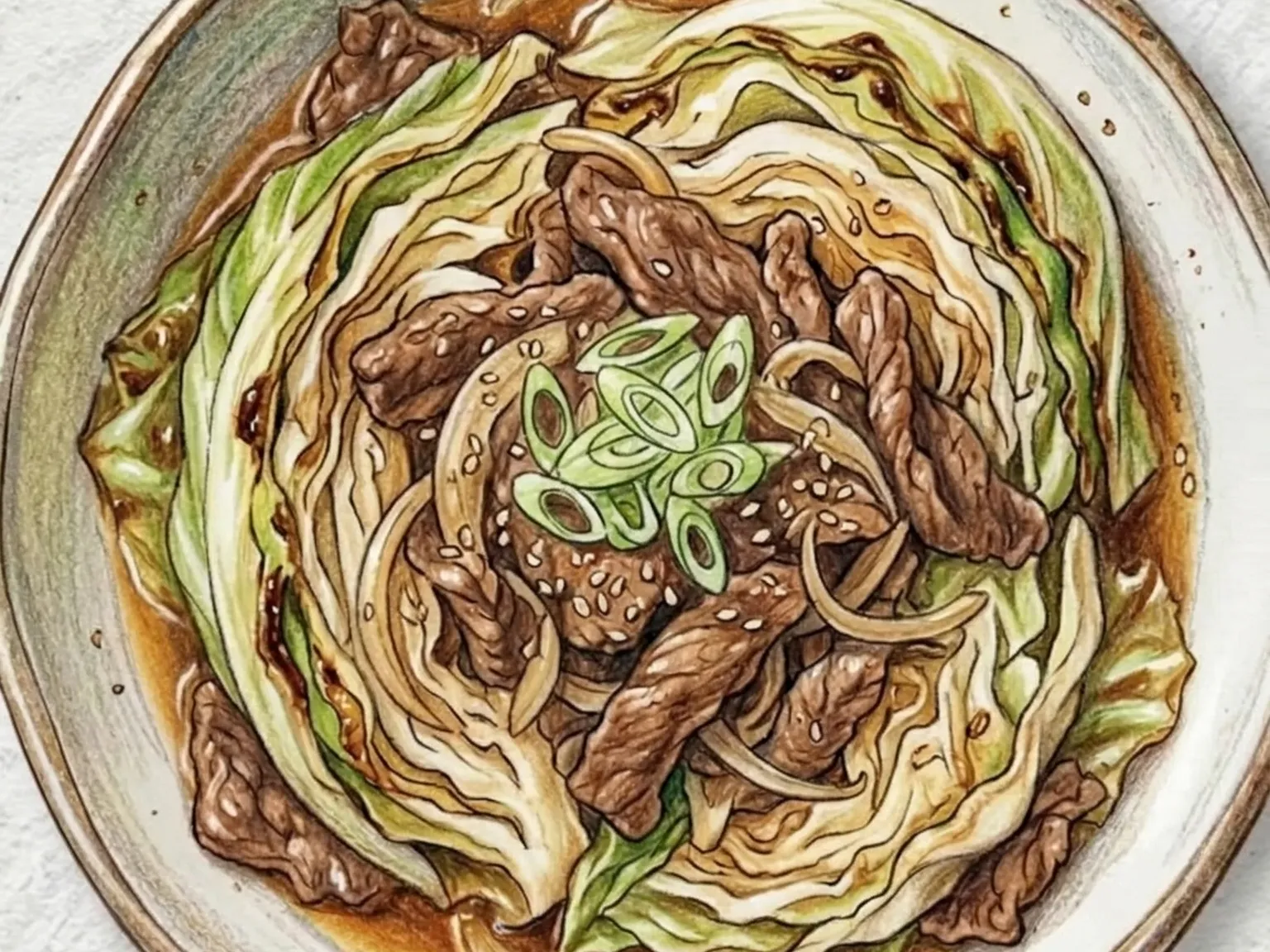
Korean Steamed Bulgogi with Cabbage
Yangbaechu bulgogi jjim is Korean steamed bulgogi with cabbage, where thin-sliced beef marinated in pear juice and soy sauce is layered with cabbage and onion, then steamed covered. The pear juice tenderizes the beef and adds a subtle fruit sweetness, while the cabbage absorbs the meat juices and turns soft and sweet. Soy sauce and sesame oil build a deep savory backbone, and green onion stirred in at the end provides an aromatic lift. The reduced braising liquid at the bottom is meant to be mixed with rice, pulling together the flavors of beef and vegetables into one cohesive bite.
Adjust Servings
Instructions
- 1
Marinate beef with soy sauce, pear juice, garlic, sugar, and pepper for 15 minutes.
- 2
Shred cabbage thickly and slice onion thinly.
- 3
Layer cabbage and onion on the bottom of a wide pot, then add water.
- 4
Spread marinated beef on top, cover, and steam over medium heat for 18 minutes.
- 5
Open the lid, gently mix beef and vegetables, and cook 7 more minutes.
- 6
Turn off heat, drizzle sesame oil, rest 1 minute, and serve.
As an Amazon Associate, we may earn from qualifying purchases.
Tips
Nutrition (per serving)
More Recipes

Korean Steamed Beef with Radish Greens
Mucheong sogogi jjim is a Korean braised beef dish where short rib meat is marinated in Korean pear juice and soy sauce, then slow-cooked with blanched radish greens and onion. The pear juice tenderizes the beef and lends a subtle fruit sweetness that deepens over the long braise. Radish greens are added near the end to preserve their earthy aroma and slight chew, bringing a rustic contrast to the soft meat. Ginger juice keeps the flavor clean, and sesame oil ties everything together with a toasted finish. The sauce reduces to a concentrated glaze meant to be spooned over rice.

Korean Beef & Lettuce Cabbage Stir-fry
Ssamchu soegogi-bokkeum stir-fries soy-and-pear-juice-marinated beef over high heat, then folds in ssamchu (Korean leafy cabbage) just long enough to barely wilt. Pear juice tenderizes the beef and lends a subtle sweetness, while soy sauce, garlic, and sesame oil form a glossy glaze as they hit the hot pan. The ssamchu stems go in a minute before the leaves and Cheongyang chili, preserving a mix of crunchy and soft textures in the finished dish. A final drizzle of sesame oil off the heat locks in the fragrance, making this a vibrant, lightly spicy beef-and-greens stir-fry.

Korean Steamed Duck with Chives
Ori-buchu-jjim is a Korean steamed duck dish where duck meat is marinated in soy sauce, cooking wine, garlic, and black pepper, then braised over a bed of onion with the lid on. During the thirty-minute cook, rendered duck fat is skimmed off to lighten the dish, and fresh garlic chives are stirred in only at the very end so they wilt just enough to release their sharp, grassy fragrance. The chive aroma cuts through the richness of the duck, keeping the overall flavor balanced. The soy-based sauce reduces to a thin glaze as the liquid evaporates, coating each piece of meat. This is a main course that delivers the nourishing qualities associated with duck while keeping the fat content in check.

Korean Steamed Zucchini with Salted Shrimp
This gentle braise belongs to a family of Korean jjim dishes where vegetables are steam-cooked in minimal liquid seasoned with fermented ingredients. Salted shrimp - saeujeot - is the sole seasoning base, minced and dissolved into water with garlic to create a light broth. Half-moon slices of zucchini cook covered on medium-low heat, absorbing the shrimp's briny umami as they turn translucent. The technique produces something between steaming and braising: the zucchini stays moist and intact, never waterlogged. A finish of perilla oil and sesame seeds off-heat adds a nutty fragrance. This banchan traces to Korean countryside kitchens where salted shrimp was the primary seasoning before soy sauce became widely available. It pairs naturally with steamed rice and a stronger-flavored main dish.

Korean Steamed Tofu with Soy Sauce
Dubu-jjim is firm tofu steamed and topped with a seasoning sauce of soy sauce, gochugaru, chopped green onion, garlic, and sesame oil. Cutting the tofu into thick slabs before steaming lets heat penetrate evenly, producing a surface with slight resistance and a silky interior. The soy-chili sauce drizzled on top seeps into the warm tofu, delivering salty and mildly spicy flavors in each bite. Sesame oil and seeds finish the dish with a toasted aroma. Cooked without any added oil, it is a clean, protein-rich banchan that works well on a vegetarian spread.

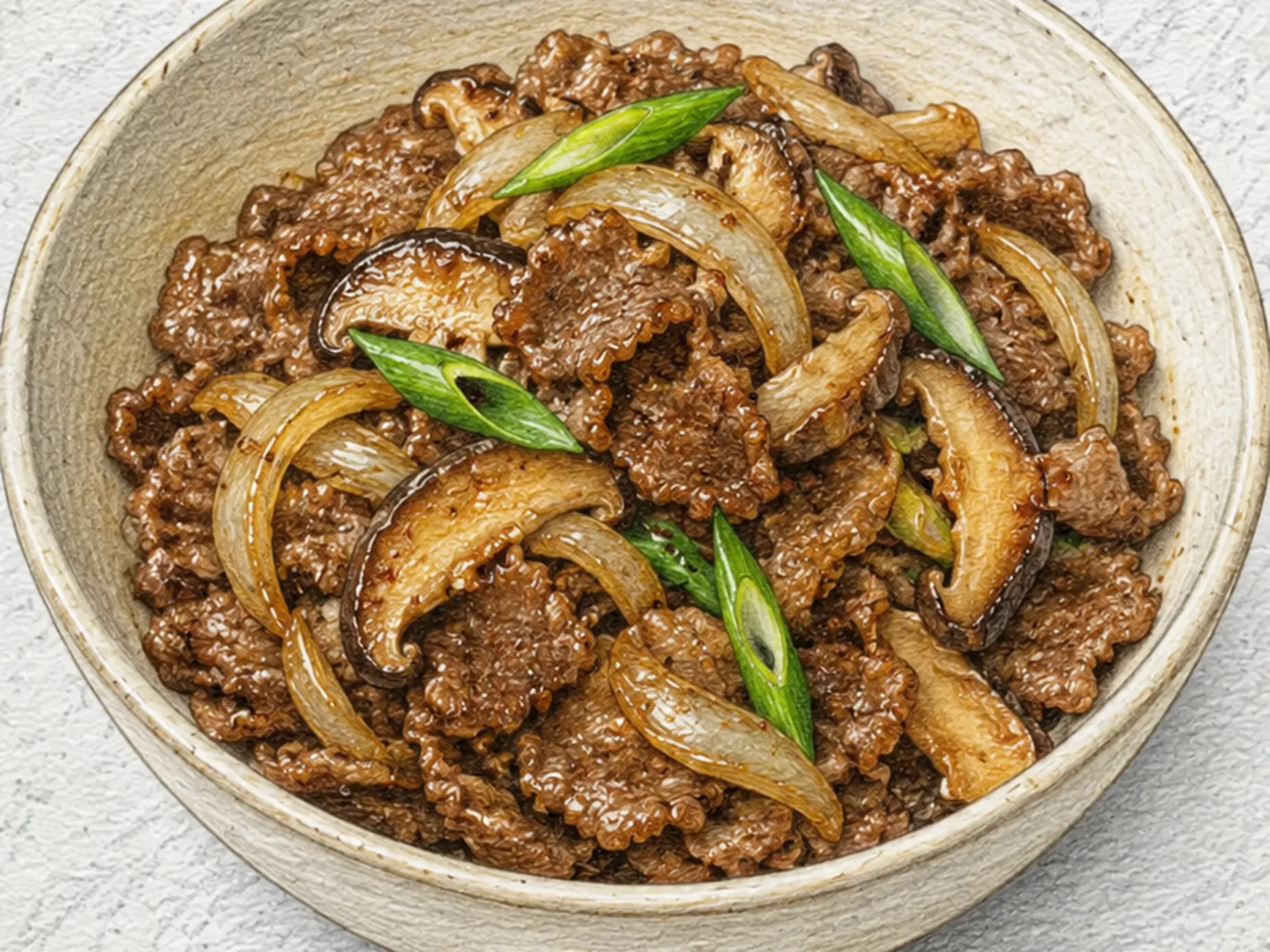
Korean Soy Bulgogi with Mushrooms
Thinly sliced beef is marinated in soy sauce, Korean pear juice, and sesame oil, then stir-fried over high heat together with shiitake and king oyster mushrooms. The pear juice tenderizes the protein and leaves a subtle fruit sweetness in the background, while the two mushroom varieties absorb the meat juices and contribute their own textures: shiitake with a firm, chewy bite and king oyster with a thick, clean meatiness. Spreading the ingredients across the pan rather than crowding them is critical; excess moisture needs to evaporate quickly so the marinade can reduce into a glossy coating instead of pooling into a broth. Green onion goes in during the final minute of cooking, adding a sharp, fresh note that cuts through the sweet soy richness and lifts the entire dish.