Korean Cabbage Tuna Jeon (Crispy Shredded Cabbage Tuna Pancake)

Korean Cabbage Tuna Jeon (Crispy Shredded Cabbage Tuna Pancake)

Quick answer

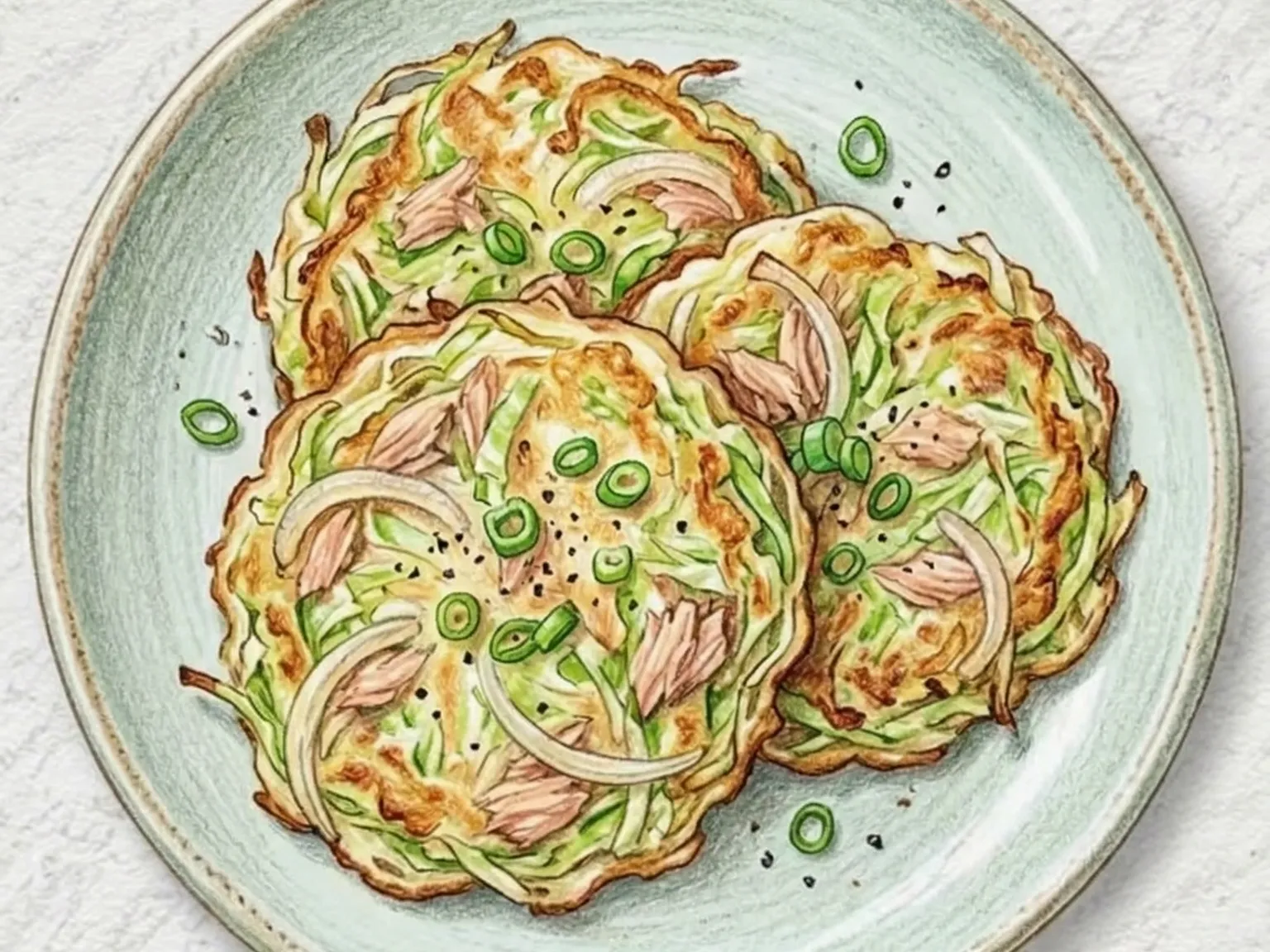
Finely shredded cabbage, drained canned tuna, and thinly sliced onion are folded into a light batter of Korean pancake mix, egg, and salt, then spread thin in an oiled pan.

What makes this special

  • Shredded cabbage in Yangbaechu-chamchi-jeon releases sugars that balance the savory tuna umami.
  • Shredded cabbage releases moisture under heat, concentrating its natural sweetness to balance tuna's umami
  • Thin spread crisps edges all the way through; small portions make flipping manageable
Total time
22 min
Level
Easy
Servings
2 servings
Ingredients
8
Calories
290 kcal
Protein
19 g

Key ingredients

cabbagecanned tunaeggKorean pancake mixonion

Core cooking flow

  1. 1 Finely shred 200 g cabbage and 40 g onion, then chop 20 g green onion.
  2. 2 Put 100 g canned tuna in a sieve and drain it very well.
  3. 3 In a bowl, whisk 2 eggs with 60 g pancake mix and 0.25 teaspoon salt first.

Finely shredded cabbage, drained canned tuna, and thinly sliced onion are folded into a light batter of Korean pancake mix, egg, and salt, then spread thin in an oiled pan. As the cabbage cooks, it releases moisture and develops a natural sweetness that balances the tuna's salty, savory character. Spreading the batter thin ensures crisp edges throughout, and making smaller pancakes simplifies flipping. High in protein and relatively low in calories, this jeon doubles as a quick standalone meal or a diet-friendly option, finished with a scattering of chopped green onion on top.

Prep 12min Cook 10min 2 servings
Recipes by ingredient → cabbage egg onion green onion

Instructions

Read the steps as a cooking flow: prep, heat, seasoning, doneness control, and finish.

6 steps
  1. 1
    Heat

    Finely shred 200 g cabbage and 40 g onion, then chop 20 g green onion.

    If any cabbage ribs are thick, slice or press them thinner so the pieces cook evenly in the pancake.

  2. 2
    Step

    Put 100 g canned tuna in a sieve and drain it very well.

    Press lightly with a spoon, because excess oil makes the batter loose and prevents the pancake from holding together cleanly.

  3. 3
    Season

    In a bowl, whisk 2 eggs with 60 g pancake mix and 0.25 teaspoon salt first.

    Mix only until the dry lumps become small, since overmixing makes the cooked jeon heavier.

  4. 4
    Step

    Add the cabbage, onion, green onion, and drained tuna, then fold from the bottom of the bowl.

    Stop when the vegetables are lightly coated, not buried in batter, for a crisper texture.

  5. 5
    Control

    Heat a pan over medium heat and add 1.5 tablespoons cooking oil.

    Spoon in small portions of batter, spread each one thinly, and cook for about 3 minutes until the edges look set and lightly browned.

  6. 6
    Heat

    When the edges turn crisp, flip each pancake with a wide spatula and cook about 2 minutes more.

    Remove them while the center is still moist and both sides are golden, so they do not dry out.

After the steps

Pick a recipe that fits this dish.

Continue with shared ingredients, meal pairings, or a similar method.

Recipes That Go Well With This

More Grilled →

Based on shared ingredients and meal pairing

Korean Tuna and Kimchi Pancake
Shared ingredient: egg Grilled

Korean Tuna and Kimchi Pancake

Chamchi-kimchi-jeon is a Korean pancake made from drained canned tuna and finely chopped aged kimchi mixed into a batter of Korean pancake flour, water, and egg. The tuna provides mild protein bulk while the fermented kimchi delivers tangy acidity and deep savory depth, and the minimal batter lets both flavors come through without being muted. Pressing the tuna firmly through a strainer right after opening the can removes most of its tinned odor, and a small splash of kimchi brine stirred into the batter deepens both the color and the overall savoriness. Using well-aged kimchi intensifies the sour depth that offsets the tuna's mildness, and the egg in the batter helps the pancake hold together during flipping. The whole pancake comes together in under ten minutes from pantry staples, making it one of the quickest jeon varieties for a casual meal or drinking snack.

Korean Tuna Stew
Shared ingredient: onion Stews

Korean Tuna Stew

Chamchi jjigae features canned tuna and fresh vegetables simmered into a spicy Korean soup. This recipe utilizes the oil from the tuna can directly in the pot, which builds a deep, savory broth without needing a separate anchovy or kelp stock. The tuna meat and oil simmer together with water before seasonings like gochugaru, soup soy sauce, and minced garlic are stirred in to create a spicy base. Slices of onion are simmered to release a subtle sweetness that tempers the initial heat of the chili flakes. Tofu slices and zucchini are cooked until tender, absorbing the salty stew broth to carry seasoning to their centers. Diagonally cut green onion and a sliced Cheongyang chili pepper are added at the end to provide a fresh, sharp finish. You can also add instant ramen noodles to create a filling one-pot meal.

Crispy Seaweed Chips
Serve together Side dishes

Crispy Seaweed Chips

Basak gim-bugak is a traditional Korean snack made of seaweed sheets coated with glutinous rice paste and fried until crispy. The process begins by cooking a thick mixture of water, glutinous rice flour, and salt. After cooling the paste, it is spread thinly onto half of a seaweed sheet. The sheet is folded in half and coated with another thin layer of paste to build a double-layer structure. Sesame seeds are scattered on top before drying. The sheets are dried in a dehydrator or an air fryer at 80 degrees Celsius until stiff and hard. Ensuring the seaweed is completely dry, especially at the edges, is crucial for a crisp outcome. The dried pieces are flash-fried in hot oil at 180 degrees Celsius for just two to three seconds. They puff up instantly and must be removed quickly to prevent burning.

Korean Shrimp Jeon (Egg-Battered Pan-Fried Shrimp Pancake)
Similar recipe Grilled

Korean Shrimp Jeon (Egg-Battered Pan-Fried Shrimp Pancake)

Saeu-jeon is a Korean shrimp pancake where peeled, deveined medium shrimp are butterflied, seasoned with salt and pepper, dredged in flour, dipped in beaten egg, and pan-fried for one to two minutes per side over medium heat. Butterflying flattens each shrimp so heat transfers evenly across the surface, and the flour layer between the shrimp and egg acts as adhesive that keeps the coating from sliding off. Shaking excess flour through a sieve before dipping ensures an even egg coat and uniform thickness across every piece, and medium heat is essential-too high and the egg scorches while the shrimp inside stays undercooked. The shrimp should be removed the moment the flesh turns pink; any additional time on the heat contracts the protein and turns the texture tough.

Serve with this

Korean Namhae-Style Clam Broth
Soups Medium

Korean Namhae-Style Clam Broth

Namhae-jogae-tang is a southern coastal Korean clam soup that relies on an abundance of clams and minimal interference to produce a broth of startling clarity and depth. The clams are purged in salted water, then cooked in water spiked with rice wine, which tempers any raw ocean smell. As the shells pop open, they release their natural liquor - briny, faintly sweet, and concentrated - which becomes the soup's defining flavor. Sliced green and red chilies add gentle heat and color without overwhelming the shellfish, while garlic and green onion contribute a quiet aromatic layer. Salt is added cautiously, since the clams themselves bring significant salinity. The result is a transparent, intensely flavored bowl that tastes like the sea distilled into its purest form, and it is traditionally enjoyed as both a drinking companion and a light meal.

🍺 Bar Snacks 🏠 Everyday
Prep 35min Cook 18min 2 servings
Korean Seafood Fried Rice
Rice Medium

Korean Seafood Fried Rice

Mixed seafood including shrimp, squid, and mussel meat is stir-fried together on high heat until a smoky wok char develops. Day-old cold rice works best because its lower moisture content lets the grains separate cleanly in the pan, and seasoning with soy sauce and oyster sauce layers additional depth on top of the seafood's own brininess. Cracking the eggs into the pan first and immediately tossing the rice on top coats each grain in a thin shell of egg, yielding a lightly crisp exterior. Sesame oil is drizzled only after the heat is off so its fragrance stays intact.

🏠 Everyday 🍱 Lunchbox
Prep 15min Cook 10min 2 servings
Korean Celery Jangajji (Blanched Soy Lemon Pickle)
Kimchi Easy

Korean Celery Jangajji (Blanched Soy Lemon Pickle)

Celery jangajji is a Korean soy pickle made by briefly blanching celery stalks to tame their fibrous exterior, then submerging them in a boiled brine of soy sauce, vinegar, and sugar. Peeling away the tough outer strings and cutting into five-centimeter lengths before a thirty-second blanch removes the raw grassy edge while leaving the celery's distinctive cool, herbal scent intact. Lemon slices and whole garlic cloves added to the jar contribute a gentle citrus brightness and mild pungency that build quietly as the pickle rests. After two days in the refrigerator the brine penetrates evenly, producing a crisp, tangy side dish that pairs particularly well with grilled or braised pork. By the fourth or fifth day the flavors deepen further, and even those put off by raw celery's sharpness tend to find the pickled version approachable.

🍱 Lunchbox 🏠 Everyday
Prep 15min Cook 8min 4 servings

Similar recipes

Korean Tofu Jeon (Golden Egg-Coated Pan-Fried Tofu)
Grilled Easy

Korean Tofu Jeon (Golden Egg-Coated Pan-Fried Tofu)

Dubu-jeon is a Korean pan-fried tofu dish and a standard side dish in everyday home cooking as well as a fixture on ancestral rite tables. Firm tofu is sliced to about 1 cm thickness, seasoned with salt and pepper, dusted in a thin layer of flour to help the coating adhere, dipped in beaten egg, then fried on each side in a lightly oiled pan until the exterior turns golden and set. Pressing the tofu before cooking is the most important preparatory step: wrapping the slices in paper towels and placing a heavy object on top for at least fifteen minutes removes enough moisture to prevent the oil from splattering and allows the egg coating to bond tightly to the surface. Three to four uninterrupted minutes per side over medium heat are needed to develop an even golden crust without burning the egg; turning the pieces too often strips the batter away and leaves patches of bare tofu. The fried tofu is mild and nutty on its own, but a dipping sauce of soy sauce mixed with a small amount of vinegar and red pepper flakes adds salt, acidity, and heat that transform the simple base into something more complex. Eaten hot, the egg coating is thin and slightly crisp; as it cools the exterior softens while the interior remains tender.

🍺 Bar Snacks 🏠 Everyday
Prep 12min Cook 8min 2 servings
Korean Kimchi Pancake
Grilled Easy

Korean Kimchi Pancake

Kimchi-jeon is a Korean savory pancake made by chopping well-fermented kimchi into small pieces, mixing it into a batter of pancake flour, kimchi brine, and chili flakes, then frying the batter in oil until both sides turn golden and crisp. Using kimchi brine instead of plain water is the central technique: the lactic acid from fermentation adds a tangy depth to the flour base that water simply cannot provide. The batter consistency varies with how wet the kimchi is, so the target is a texture that runs slowly rather than puddles, which usually requires less liquid than might seem necessary. Neutral cooking oil or perilla oil suits the flavor profile better than olive oil, preserving the characteristic savory aroma of Korean pan-fried foods. Four minutes on the first side over medium-high heat followed by three minutes after flipping produces a crust that is genuinely crisp at the surface while the inside stays moist from the kimchi's own liquid. Pressing lightly with a spatula before flipping helps confirm that the underside has set firmly enough to hold its shape. A pancake that is too thin burns before it develops flavor, and one that is too thick leaves the interior underdone. Kimchi-jeon is at its best immediately off the pan, but a brief return to a dry skillet restores most of the crispness when reheating leftovers.

🍺 Bar Snacks ⚡ Quick
Prep 10min Cook 12min 2 servings
Korean Selleri Sogogi Bokkeum (Celery Beef Stir-fry)
Stir-fry Medium

Korean Selleri Sogogi Bokkeum (Celery Beef Stir-fry)

Selleri sogogi-bokkeum stir-fries soy-marinated lean beef round with celery, onion, and bell pepper over high heat. The beef is seared first for about two and a half minutes then set aside, and the vegetables are cooked separately in the same pan to keep them crisp before everything is combined. Oyster sauce and soy sauce give the beef a deep umami character, while celery's herbal freshness and firm crunch lighten the overall dish. Adding celery leaves at the very end intensifies the aromatic, almost grassy fragrance.

🏠 Everyday 🍱 Lunchbox
Prep 16min Cook 9min 2 servings

Tips

Well-drained tuna keeps the flavor clean and texture firm.
Make smaller pancakes for easier flipping.

Nutrition (per serving)

Calories
290
kcal
Protein
19
g
Carbs
18
g
Fat
15
g