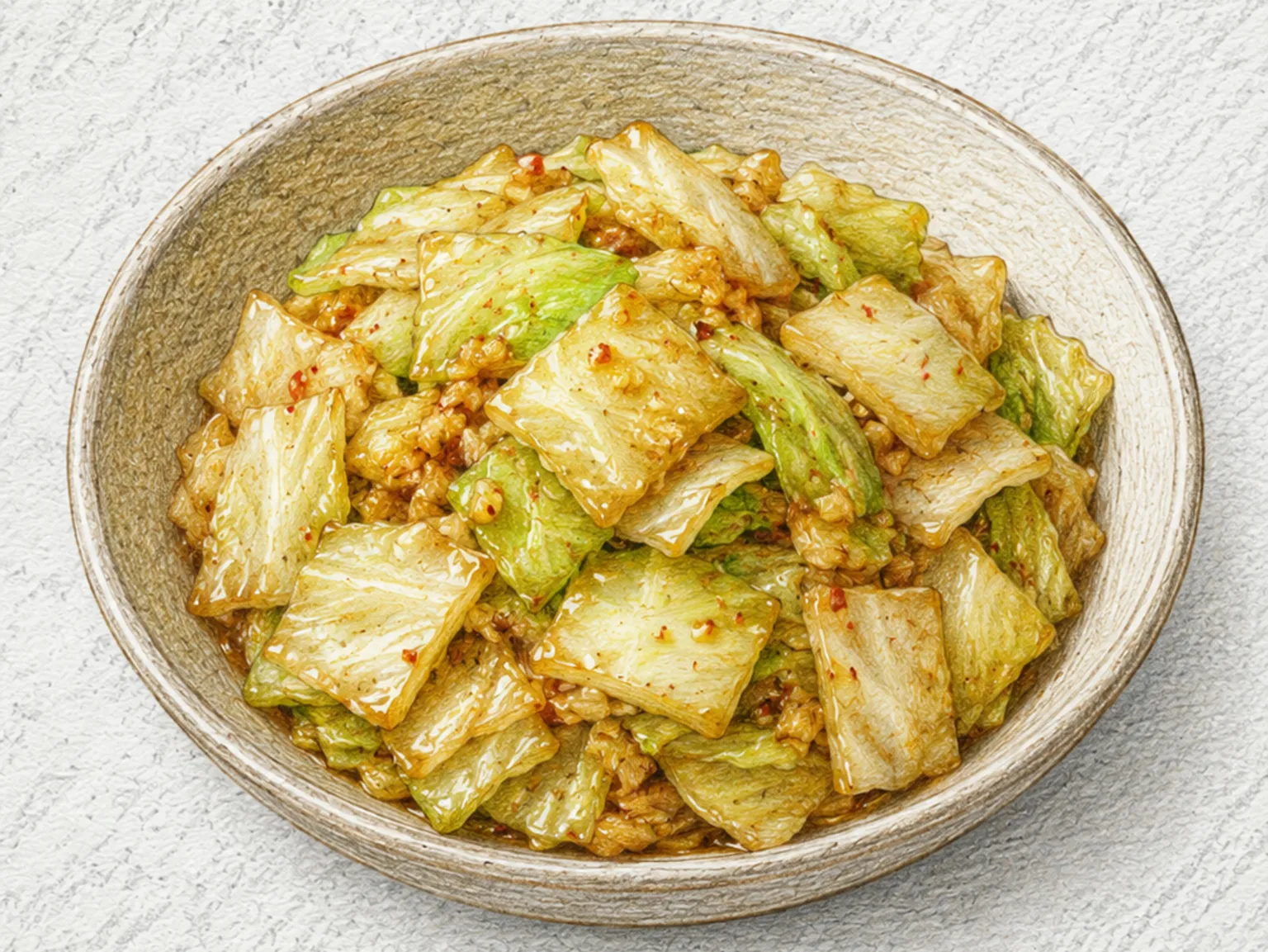
Korean Stir-fried Cabbage with Doenjang
Yangbaechu-doenjang-bokkeum stir-fries bite-size cabbage pieces with doenjang, gochugaru, and garlic over high heat. The doenjang is dissolved in a small amount of water to create an even sauce that coats the cabbage, and the heat is turned off before the cabbage fully wilts to preserve some crunch. The cabbage's natural sweetness intensifies with cooking and contrasts against the salty, fermented depth of the doenjang, while gochugaru adds a faint background heat. The entire dish comes together in under fifteen minutes, relying on doenjang alone to deliver concentrated flavor.
Adjust Servings
Instructions
- 1
Cut cabbage into bite-size pieces and slice onion.
- 2
Mix doenjang, chili flakes, and water for sauce.
- 3
Heat oil and stir-fry garlic and onion for 1 minute.
- 4
Add cabbage, stir-fry over high heat for 3 minutes, then add sauce.
- 5
Cook 1 more minute and finish with sesame oil.
As an Amazon Associate, we may earn from qualifying purchases.
Tips
Nutrition (per serving)
More Recipes

Korean Yangbaechu Kkae Bokkeum (Sesame Cabbage Stir-fry)
Shredded cabbage, onion, and carrot are stir-fried over high heat with soup soy sauce and finished with sesame oil and a generous handful of toasted sesame seeds. Cabbage benefits from fast, hot cooking: the edges char lightly and caramelize while the interior retains its crisp bite, and the heat unlocks a gentle natural sweetness hidden in the raw leaves. Soup soy sauce seasons the vegetables with depth while keeping the finished dish pale and clean-looking, and minced garlic stirred in early fills the pan with fragrance. Carrot goes into the pan first to draw out its sugar, and as the onion softens, its moisture deglazes the surface and adds another layer of mellow sweetness. Sesame oil drizzled off-heat coats the vegetables in a nutty sheen, and the sesame seeds scattered on top provide a crunchy, aromatic punctuation with every bite. The dish is lean and uncomplicated, relying on the quality of fresh vegetables and precise timing rather than heavy seasoning, making it a banchan suited to daily meals.

Korean Stir-fried Potato Strips
Gamja-bokkeum is a staple Korean side dish made by stir-frying julienned potatoes until they reach a satisfying tender-crisp texture. Soaking the potatoes beforehand removes excess starch, preventing them from clumping in the pan. A light seasoning of garlic and salt draws out the potato's natural mild flavor, while a finishing touch of sesame oil and seeds adds a warm nuttiness. It is a humble yet addictive banchan that pairs effortlessly with steamed rice.

Korean Stir-fried Fish Cake with Vegetables
Eomuk-yachae-bokkeum is a Korean stir-fry of fish cake sheets with onions, carrots, and bell peppers in a soy-based glaze. The chewy fish cake contrasts with the crisp vegetables, delivering varied textures in every bite. Soy sauce and oligosaccharide syrup create a lightly sweet and salty coating that clings to each piece. The entire dish cooks in under ten minutes, making it a go-to option for packed lunches or quick weeknight sides.

Korean Stir-Fried Kimchi (Caramelized Aged Kimchi Banchan)
Kimchi-bokkeum is the default way Korean households use up kimchi that has fermented past its fresh prime. Stir-frying tempers the sharp lactic acidity that over-ripe kimchi develops - the heat transforms the sourness into something mellower, sweeter, and more rounded. Onion goes in first and cooks until translucent, laying a sweet foundation before the kimchi and garlic join. Medium heat is essential: it drives off moisture gradually, yielding a thick, concentrated sauce rather than a watery stew. A small addition of gochugaru brightens the color, and a pinch of sugar balances the fermented tang. One tablespoon of kimchi brine amplifies the umami from the lactobacillus culture itself. The finished banchan is versatile enough to eat straight over rice, fold into fried rice, or pile on top of ramyeon.

Korean Stir-fried Radish with Perilla Powder
Mu-deulkkae-bokkeum is a mild Korean side dish of finely julienned radish stir-fried and then simmered with perilla seed powder. Garlic and scallion are sauteed first for aroma, then the radish goes in and cooks under a lid with water and soup soy sauce until translucent and soft. Perilla powder is stirred in at the end, melting into the radish's released moisture to form a creamy, nutty coating. The dish has no heat at all, making it a versatile banchan; winter radish yields a noticeably sweeter result.

Korean Tomato Dalgyal Bokkeum (Tomato Egg Stir-fry)
Tomato-dalgyal-bokkeum uses a two-stage cooking method: eggs are scrambled to about 70% doneness and set aside, then returned to the pan with seared tomatoes for a final quick toss. The tomatoes release a small amount of juice when cooked briefly with oyster sauce and sugar, and the partially set eggs absorb this liquid to stay soft and moist. Bright tomato acidity, mild egg richness, and oyster sauce umami layer together without any single flavor dominating. Sharing roots with Chinese tomato egg stir-fry (xihongshi chaodan), it crosses easily into Korean home cooking.