Korean Yangbaechu Kkae Bokkeum (Sesame Cabbage Stir-fry)
Quick answer
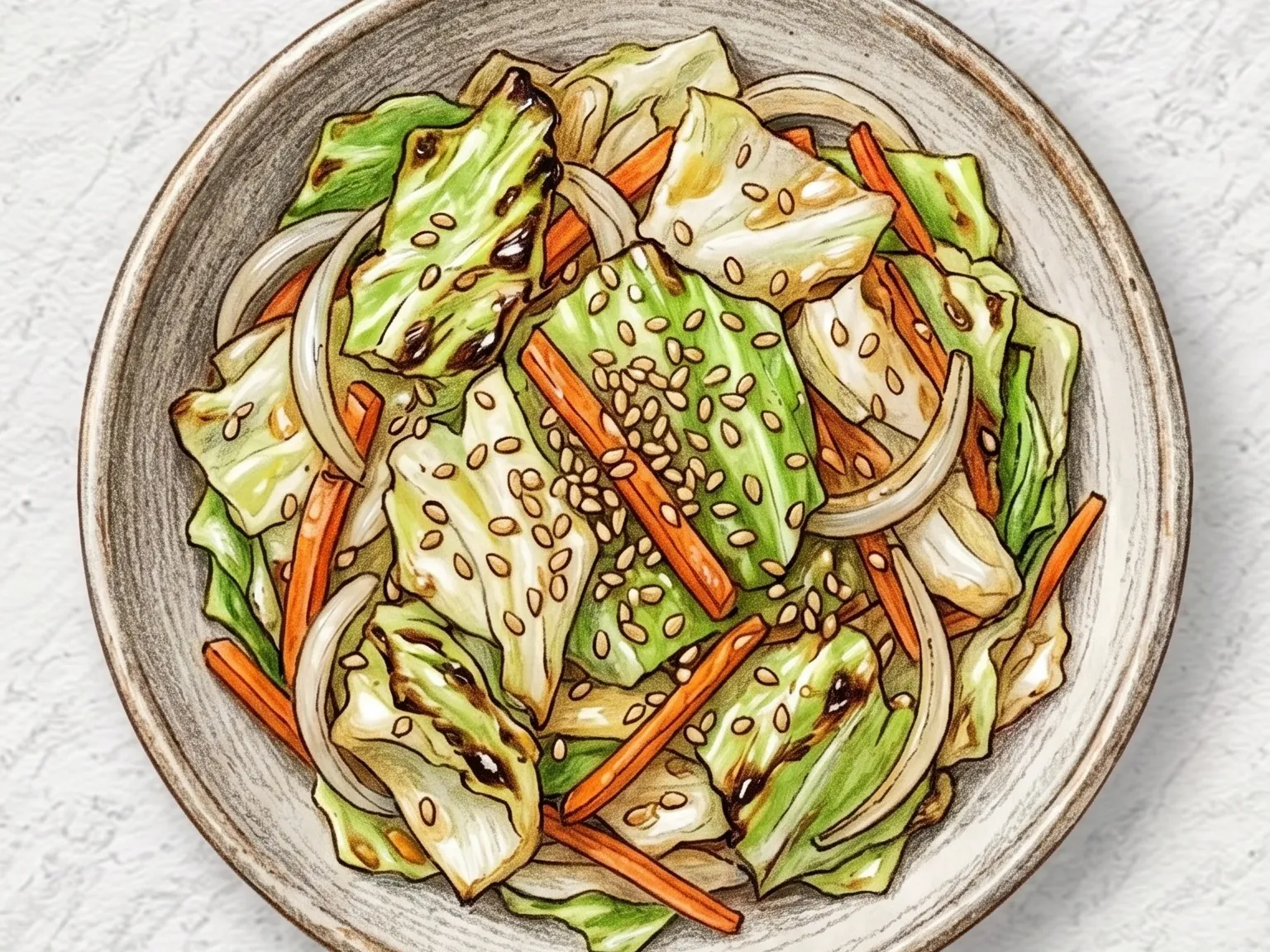
Shredded cabbage, onion, and carrot are stir-fried over high heat with soup soy sauce and finished with sesame oil and a generous handful of toasted sesame seeds.
What makes this special
- High-heat stir-frying chars the edges of shredded cabbage while keeping the center crisp and toasted.
- High heat short cook caramelizes the edges while keeping the centers crisp
- Light soy sauce keeps the color pale while adding umami without staining
Key ingredients
Core cooking flow
- 1 Cut 400 g green cabbage into 1 cm strips, then slice 80 g onion and 50 g carrot to a similar thickness.
- 2 Heat a wide pan over medium heat until the surface feels hot, then add 1 tablespoon sesame oil.
- 3 Add the carrot and onion first, then stir-fry over medium heat for 2 minutes.
Shredded cabbage, onion, and carrot are stir-fried over high heat with soup soy sauce and finished with sesame oil and a generous handful of toasted sesame seeds. Cabbage benefits from fast, hot cooking: the edges char lightly and caramelize while the interior retains its crisp bite, and the heat unlocks a gentle natural sweetness hidden in the raw leaves. Soup soy sauce seasons the vegetables with depth while keeping the finished dish pale and clean-looking, and minced garlic stirred in early fills the pan with fragrance. Carrot goes into the pan first to draw out its sugar, and as the onion softens, its moisture deglazes the surface and adds another layer of mellow sweetness. Sesame oil drizzled off-heat coats the vegetables in a nutty sheen, and the sesame seeds scattered on top provide a crunchy, aromatic punctuation with every bite. The dish is lean and uncomplicated, relying on the quality of fresh vegetables and precise timing rather than heavy seasoning, making it a banchan suited to daily meals.
Instructions
Read the steps as a cooking flow: prep, heat, seasoning, doneness control, and finish.
- 1Finish
Cut 400 g green cabbage into 1 cm strips, then slice 80 g onion and 50 g carrot to a similar thickness.
Lightly crush the toasted sesame seeds so their aroma releases quickly at the finish.
- 2Control
Heat a wide pan over medium heat until the surface feels hot, then add 1 tablespoon sesame oil.
Stir in 1 tablespoon minced garlic and cook for about 20 seconds, stopping before it browns.
- 3Control
Add the carrot and onion first, then stir-fry over medium heat for 2 minutes.
Cook until the onion turns slightly translucent and its moisture lifts the garlic aroma from the pan.
- 4Heat
Add the cabbage, raise the heat to high, and spread it across the pan before tossing.
Stir-fry for 1 to 2 minutes, just until the edges catch light color without steaming the cabbage soft.
- 5Season
Pour 1 tablespoon soup soy sauce and 1/4 teaspoon salt around the edge of the pan, then stir-fry for 2 more minutes.
Stop when the cabbage wilts slightly but the center still feels crisp.
- 6Step
Turn off the heat, add 1 teaspoon perilla oil and 1.5 tablespoons toasted sesame seeds, and toss with the residual heat.
Transfer immediately, serving it warm or letting it cool as a banchan.
After the steps
Pick a recipe that fits this dish.
Continue with shared ingredients, meal pairings, or a similar method.
Recipes That Go Well With This
More Side dishes →Based on shared ingredients and meal pairing
Korean Stir-fried Cabbage with Doenjang
Yangbaechu-doenjang-bokkeum stir-fries bite-size cabbage pieces with doenjang, gochugaru, and garlic over high heat. The doenjang is dissolved in a small amount of water to create an even sauce that coats the cabbage, and the heat is turned off before the cabbage fully wilts to preserve some crunch. The cabbage's natural sweetness intensifies with cooking and contrasts against the salty, fermented depth of the doenjang, while gochugaru adds a faint background heat. The entire dish comes together in under fifteen minutes, relying on doenjang alone to deliver concentrated flavor.
Korean Garlic Scape Bacon Stir-fry
Maneuljjong bacon bokkeum is a side dish built around rendered bacon fat. Bacon goes into the pan first over low heat until the white fat turns translucent and releases its fragrant, smoky oil, and that rendered fat then becomes the cooking medium for the garlic scapes and onion that follow. No additional cooking oil is needed, and the depth of flavor that results from this single step makes the dish taste far more complex than its short ingredient list suggests. Garlic scapes bring a sharp, grassy bite and a satisfying crunch that disappears quickly if they sit on the heat too long, so the pan temperature is turned up at the end for a fast, high-heat finish. Soy sauce sets the salty foundation, and a drizzle of oligosaccharide syrup coats every piece in a thin, glossy lacquer that softens the salt with restrained sweetness. Because bacon is already heavily seasoned, the soy sauce should be added gradually and tasted as you go rather than measured out in advance. A scatter of toasted sesame seeds over the finished dish adds one more layer of nutty fragrance.
Korean Roasted Seasoned Seaweed
Gim-gui is Korea's roasted seaweed side dish, prepared by brushing thin sheets of dried laver with a light coat of sesame oil, sprinkling fine salt over the surface, and toasting each side for no more than ten to fifteen seconds over low heat. The brief exposure to heat intensifies the sesame oil's nutty aroma while the seaweed's oceanic flavor concentrates into something deeper and more savory, and the result is a paper-thin, shatteringly crisp sheet that crumbles at the slightest pressure. The saltiness makes plain steamed rice deeply satisfying, which is why gim-gui is one of the most reliably consumed items in a Korean banchan spread. Timing is the single most demanding skill: seaweed moves from perfectly roasted to scorched within seconds, so the sheets must come off the heat the moment their color shifts from a deep, dark green to a lighter, almost translucent emerald. Too much oil causes the seaweed to absorb the fat and turn soft, so a minimal coating brushed with a pastry brush rather than poured on is strongly preferred. Roasted in batches and stored in an airtight container, properly made gim-gui retains its crunch for several days and works as a rice companion, lunchbox addition, or plain snack eaten on its own.
Korean Napa Cabbage Perilla Stir-fry
Two ingredients carry this dish: baby napa cabbage and ground perilla seeds. Perilla oil goes into the pan first, then cabbage over high heat until just wilted. A splash of water and a measure of soup soy sauce follow, with the lid on for two minutes more. The timing gap between leaf and stem matters here - stems retain a little bite while leaves turn soft, and that contrast is the point of the dish rather than an oversight. Ground perilla seeds go in just before turning off the heat: too early and the nutty fragrance dissipates in the steam; too late and they do not thicken the liquid properly. When done right, the seeds create a pale, creamy sauce that clings to the cabbage and soaks into rice underneath. Salt and pepper are the only other seasoning. It keeps well cold and travels without issue in a lunchbox.
Serve with this
Korean Steamed Soybean Sprouts
Kongnamul-jjim is a traditional Korean side dish centered on steamed soy bean sprouts. The preparation involves layering fresh bean sprouts with a mixture of red chili flakes, soy sauce, and finely minced garlic before placing them in a pot. A critical aspect of the cooking process is keeping the lid tightly closed from the beginning until the sprouts are fully cooked. This sealed environment creates a build-up of steam that is essential for maintaining the natural crispness of the sprouts while ensuring that the savory and spicy seasoning permeates each individual strand. The resulting flavor profile features a sharp heat from the red pepper that complements the clean and refreshing qualities of the bean sprouts, resulting in a light and clear finish. To finish the dish, a generous drizzle of sesame oil and a handful of sliced scallions are added to provide a fragrant, toasted aroma and a layer of savory depth. Because the primary ingredients are inexpensive and the entire process from preparation to plating takes less than fifteen minutes, this dish serves as a dependable addition to any meal when the table requires an extra side dish on short notice. For a different aromatic profile, perilla oil can be substituted for sesame oil to introduce an earthy and more herbaceous scent. Individuals seeking a more intense level of spice can add sliced Cheongyang chilies during the cooking stage to elevate the heat.
Korean Soy-Glazed Shrimp Stir-Fry
Ganjang saeu bokkeum coats plump shrimp in a sweet-savory soy glaze built on a base of melted butter and garlic. A single cheongyang chili adds a subtle kick that lifts the buttery richness without overpowering it. The key timing rule is to add the sauce the moment the shrimp turn pink: any longer and they become rubbery, but the glaze needs just enough heat to caramelize lightly and coat. Stir-frying the garlic in the butter before the shrimp go in lays a nutty base across the entire sauce. A final splash of soy sauce over high heat at the end creates the lacquered sheen that defines the finished dish. With only eight minutes of cooking time total, this works equally well as a quick banchan alongside rice or as an appetizer with drinks.
Kongnamul-guk (Bean Sprout Anchovy Soup)
Kongnamul-guk is a clear Korean soup built on bean sprouts, water, soup soy sauce, and garlic, and its central technique is boiling the sprouts with the lid firmly closed for seven minutes. The reason behind the closed lid is a long-standing Korean kitchen belief: the compounds responsible for the raw, beany smell in soybean sprouts are volatile, and if the lid is left open, they do not escape with the steam but instead condense back into the pot. Whether the chemistry fully supports this, keeping the lid closed has been the standard method for generations and consistently produces a clean-tasting broth. Green onion goes in at the very end to keep its bright, mild bite without overcooking. Trimming the fine root tails from each sprout improves the texture and presentation, though it does not change the flavor and is often skipped on weekdays. Adding chili flakes and a cracked egg transforms the soup into a spicy, restorative hangover version, and a handful of clams deepens the broth with extra umami. From start to finish the soup takes about fifteen minutes, which makes it one of the fastest soups in the Korean repertoire, and the directness of its flavor -- clean, cool, and vegetal -- is exactly what makes it worth returning to.
Similar recipes
Korean Kkaennip Gamja Bokkeum (Perilla Potato Stir-fry)
High heat and a well-preheated pan are the keys to achieving the distinct texture of these stir-fried potato matchsticks. Before cooking, soaking the cut potatoes in cold water is a critical step to remove surface starch, ensuring the pieces stay separate and do not stick to the pan. Once thoroughly dried to prevent oil splattering, the potatoes are tossed quickly until the edges become translucent while the centers retain a subtle firmness. Overcooking results in a mushy consistency that lacks the intended character of the dish. Pouring the soy sauce around the perimeter of the pan allows it to caramelize against the hot surface before it is incorporated into the vegetables, adding a layer of savory complexity. Fresh perilla leaves should be tossed in just before the heat is turned off to preserve their bright green color and herbal fragrance. A final drizzle of perilla oil complements the leaves with its toasted scent, and a sprinkle of sesame seeds provides a light crunch. Sliced Cheongyang chilies can be included during the initial sautéing for a gentle heat. This combination pairs the carbohydrates of potatoes with the vitamin K and calcium found in perilla leaves, creating a nutritionally rounded side dish that tastes even better the next day after the flavors have settled.
Korean Tomato Dalgyal Bokkeum (Tomato Egg Stir-fry)
Tomato-dalgyal-bokkeum uses a two-stage cooking method: eggs are scrambled to about 70% doneness and set aside, then returned to the pan with seared tomatoes for a final quick toss. The tomatoes release a small amount of juice when cooked briefly with oyster sauce and sugar, and the partially set eggs absorb this liquid to stay soft and moist. Bright tomato acidity, mild egg richness, and oyster sauce umami layer together without any single flavor dominating. Sharing roots with Chinese tomato egg stir-fry (xihongshi chaodan), it crosses easily into Korean home cooking.
Korean King Oyster Mushroom Stir-fry with Perilla
This stir-fry combines 250 grams of julienned king oyster mushrooms with onion, cooked rapidly over high heat in perilla oil and cooking oil to prevent the mushrooms from releasing too much water. Garlic is sauteed for 20 seconds first to infuse the oil, followed by onion for one minute to draw out its natural sweetness. The mushrooms then go in for a quick two-minute toss before soup soy sauce and a splash of water are added to create a light braising liquid. One and a half tablespoons of ground perilla seeds are stirred in during the final minute, thickening the sauce into a creamy coating without becoming pasty. Scallion is added off heat for a finishing touch of color and freshness.