Korean Iron Plate Onion and Meat Grill
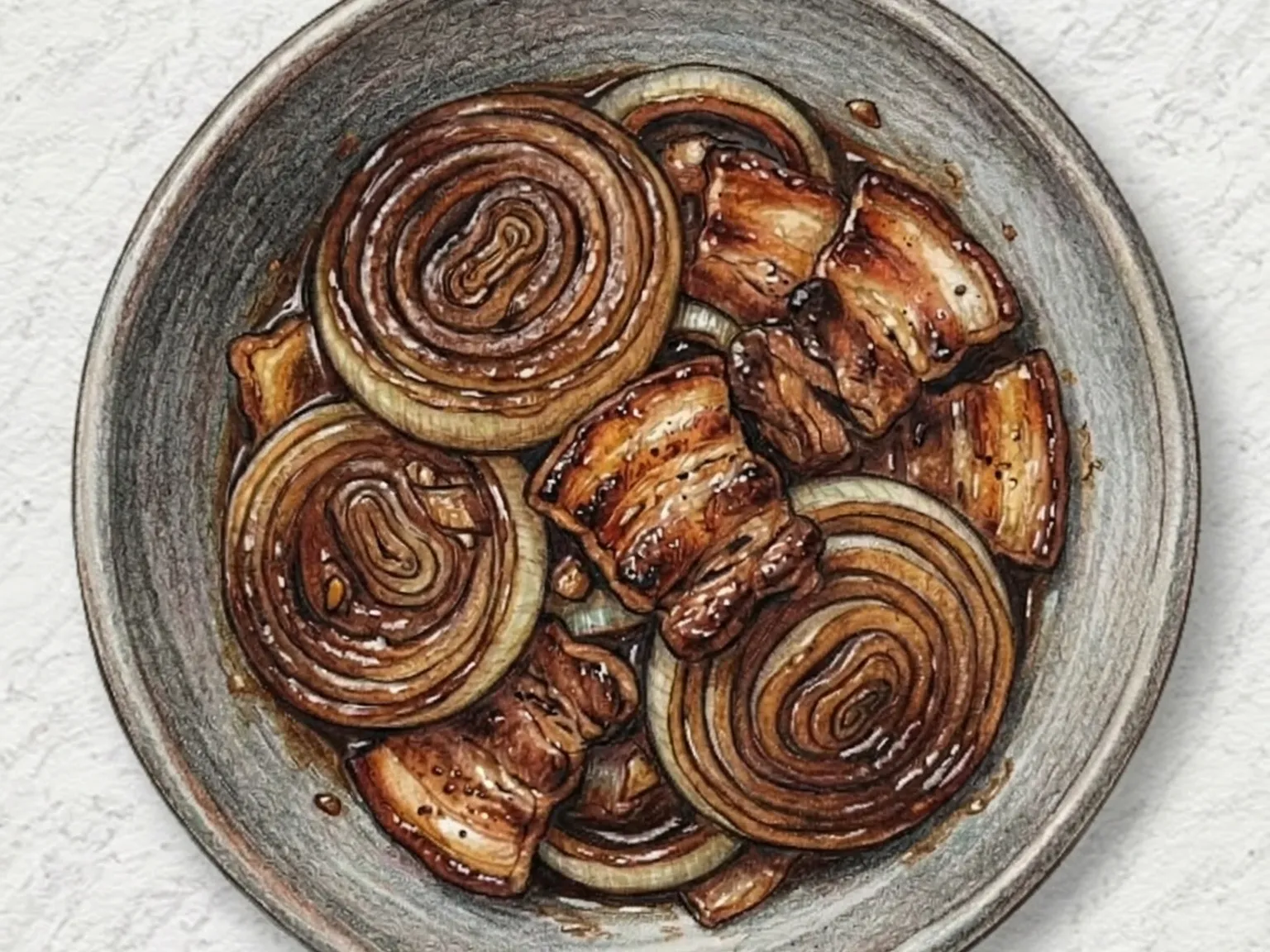
Thick onion rings and sliced pork belly are grilled together on a hot iron plate with melted butter. The onions cook slowly over medium heat, allowing their natural sugars to caramelize into deep sweetness, while rendered pork fat seeps into the onion layers and enriches their flavor. A drizzle of soy sauce at the end sizzles on the hot surface, distributing a salty accent evenly across both ingredients. The preparation relies on just six ingredients and zero marinade - the appeal lies entirely in the interplay of caramelized onion sweetness, smoky pork fat, and butter richness on a searing-hot plate.
Adjust Servings
Instructions
- 1
Slice onions into thick rings.
- 2
Heat iron plate or pan and melt butter.
- 3
Add onion rings and cook over medium heat until golden.
- 4
Grill pork alongside the onions.
- 5
Drizzle soy sauce at the end to finish.
As an Amazon Associate, we may earn from qualifying purchases.
Tips
Nutrition (per serving)
More Recipes

Korean Grilled Pork Skirt Meat
Galmaegisal-gui is grilled pork skirt meat from the diaphragm, lightly seasoned with soy sauce, garlic, and black pepper, then seared fast over charcoal or a screaming-hot pan. Each pig yields only 200 to 300 grams of this cut, making it a rare find that Korean barbecue enthusiasts seek out for its coarse grain, strong chew, and distinctive porky richness similar to beef skirt steak. The meat is thin enough that each side needs less than a minute over maximum heat-just long enough for the surface to caramelize while the center stays slightly pink, since overcooking toughens the fibers and destroys the springy texture. Dipping each piece immediately into a dish of sesame oil mixed with salt layers the smoky char with a warm, nutty richness.

Korean Grilled Squid and Pork
Osam-gui is a Korean mixed grill of squid and pork belly marinated together in a spicy sauce of gochujang, soy sauce, sugar, minced garlic, and sesame oil, then cooked on a pan or grill. As the pork belly renders its fat, it merges with the marinade to form a rich, savory-spicy sauce in the pan that the squid absorbs during cooking, producing a deeper flavor than either ingredient would achieve alone. The two proteins cook at very different rates, so the pork belly goes in first for five to six minutes to render its fat and partially cook through before the squid is added-squid toughens past three to four minutes of heat exposure. The gochujang paste scorches easily at high temperatures, so maintaining medium heat and turning the pieces frequently is necessary to build a glossy glaze without any burnt bitterness.

Korean Grilled Pork Cheek
Chewy, charred, and impossibly juicy - grilled pork cheek is one of Korean barbecue's best-kept secrets. Marinated in soy sauce, garlic, and ginger, then seared over high heat, each piece develops a crackling crust while staying springy inside thanks to the cheek's fine grain and abundant collagen. Alternating layers of fat and lean create varying richness in every bite. High-heat searing is critical: it triggers Maillard browning on the surface while locking in moisture, whereas slow cooking over low heat dissolves the collagen and turns the texture mushy. Grilling sliced onion and green onion alongside and eating them layered with the meat adds a sharp, pungent contrast to the pork's deep savoriness.

Korean Grilled Pork Belly
Samgyeopsal-gui is Korean grilled pork belly, the country's most iconic barbecue dish, where 400 grams of pork belly is cut into ten-centimeter lengths and grilled on a preheated pan or griddle over high heat without added oil-the alternating layers of fat and lean render enough grease to cook the meat in. Flipping only once, after four to five minutes per side, is critical because frequent turning lets juices escape before the fat has properly rendered and crisped. Once golden and cooked through, the meat is cut into bite-sized pieces with scissors, and thinly sliced garlic is toasted on the same surface until lightly browned. Each piece is eaten wrapped in lettuce with ssamjang, grilled garlic, and green onion, and an optional side of green onion oil dip-sesame oil mixed with salt and chopped scallion-adds nutty depth and a sharp allium kick on top of the pork fat's richness.

Korean Meat Mandu (Pork and Beef Dumplings with Tofu Filling)
Gogi-mandu is a Korean meat dumpling filled with a mixture of ground pork, ground beef, squeezed tofu, onion, scallion, and garlic, seasoned with soy sauce and sesame oil. Kneading the filling in one direction develops protein bonds that create a sticky mass, which locks in moisture during steaming or pan-frying. The pork contributes fat and richness while the beef adds depth of flavor, and the tofu absorbs liquid to keep the filling soft rather than dense. These dumplings can be steamed for a clean taste or pan-fried with a splash of water and a lid for a crispy-bottomed finish.

Korean Garlic Scape and Pork Rice Bowl
Crunchy garlic scapes and pork shoulder are stir-fried in a gochujang-based glaze and served over steamed rice. The scapes keep their distinctive pungent bite even after cooking, balancing the richness of the pork fat. A quick toss over high heat caramelizes the sauce into a glossy coating while preserving the snappy texture of the scapes. Spring-harvested garlic scapes are especially tender and aromatic, making this a seasonal favorite.