Yangchunmian (Shanghai Clear Soy Broth Noodle Soup)
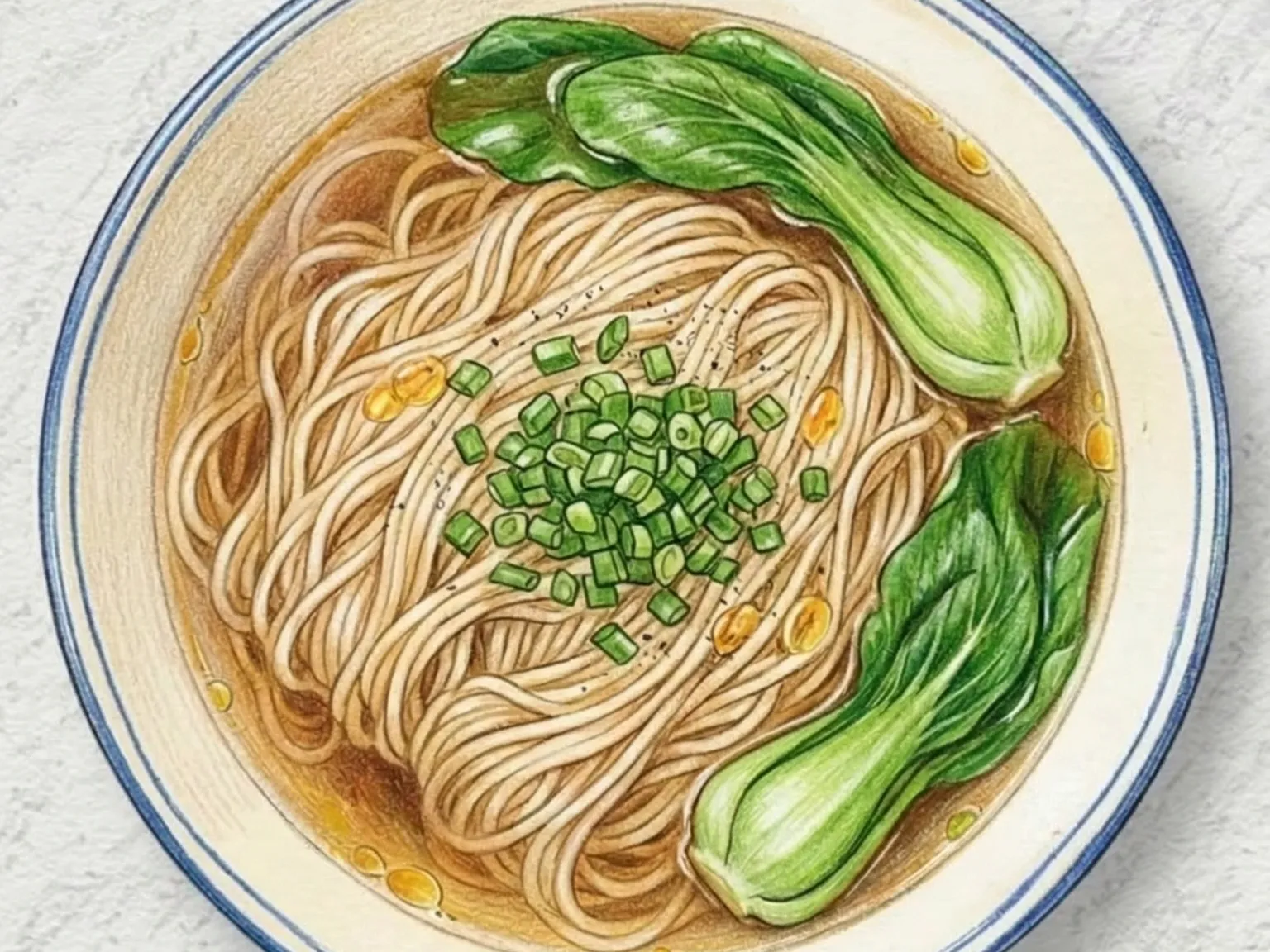
Yangchunmian is one of the most stripped-down noodle soups in Chinese cuisine, where a clear soy-seasoned broth and fresh wheat noodles are the entire focus. Chicken stock forms the base, seasoned with light soy sauce, a drizzle of sesame oil, and a dusting of white pepper. Chopped scallions float on top and blanched bok choy sits alongside the noodles - there is no meat, no elaborate garnish, nothing to distract from the broth itself. The critical finishing touch is a spoonful of scallion oil ladled over the surface, spreading an aromatic warmth across each bite. It has been a staple breakfast in Shanghai for generations.
Adjust Servings
Instructions
- 1
Simmer chicken stock with soy sauce and sugar over low heat.
- 2
Blanch bok choy for 30 seconds to keep it bright green.
- 3
Cook fresh noodles in the same pot until just tender, then drain.
- 4
Place noodles in bowls and pour over hot broth.
- 5
Top with bok choy and chopped scallion, then sprinkle white pepper.
- 6
Finish with a few drops of sesame oil for aroma.
As an Amazon Associate, we may earn from qualifying purchases.
Tips
Nutrition (per serving)
More Recipes

Sesame Spicy Tantanmen (Chinese Creamy Sesame Chili Oil Noodle Soup)
Tantanmen is a Chinese-origin noodle soup that combines a creamy sesame-based broth with the heat of chili oil to produce a bowl that is simultaneously nutty, spicy, and deeply savory. The broth begins with chicken stock into which sesame paste is whisked until fully dissolved, creating a thick, tan-colored liquid with a pronounced roasted-nut fragrance. Ground pork is fried separately with garlic, ginger, and doubanjiang-a fermented chili bean paste-until the meat is browned and crumbly, then spooned over the noodles as a rich, salty topping. Blanched bok choy adds a crisp, vegetal note that breaks up the heaviness of the broth, and a final drizzle of chili oil pools on the surface, releasing its fragrance with every sip. The noodles should be cooked just short of fully done so they maintain their chew in the hot liquid. Each component-sesame, chili, fermented bean, and pork-contributes a distinct layer of flavor, and the bowl rewards slow eating as they gradually merge.

Hokkien Lor Mee (Braised Gravy Noodles)
Hokkien lor mee is a thick-gravy noodle dish from the Chinese communities of Singapore and Malaysia, built on chicken stock seasoned with dark soy sauce and five-spice powder. The dark soy gives the broth its deep mahogany color and intense saltiness, while five-spice, with its blend of star anise and cinnamon, layers in aromatic complexity. A cornstarch slurry is added gradually to thicken the broth to a glossy, almost sauce-like consistency that coats the yellow noodles completely. Bean sprouts are blanched for just one minute to retain their crunch, and halved boiled eggs provide a creamy element. The traditional finishing touch is raw minced garlic and a splash of black vinegar, both of which cut through the heavy gravy and keep each spoonful from becoming monotonous.

Korean-Chinese Chicken Broth Noodles
Gis-myeon is a Korean-Chinese noodle soup where thin wheat noodles sit in a clear chicken broth with delicate egg ribbons floating on the surface. The broth is made by simmering chicken breast, which is then shredded fine and returned as a topping. Beaten egg poured in a thin stream into the boiling stock forms silk-like strands that add a soft, velvety layer to the liquid. Seasoning is kept to soup soy sauce and salt, preserving the broth's clean, light character. A small amount of starch slurry thickens the liquid just enough for it to cling to the noodles, giving each mouthful a gentle viscosity.

Hakka Noodles (Indo-Chinese Stir-Fried Noodles)
Hakka noodles belong to the Indo-Chinese tradition, a culinary fusion born in Kolkata's Chinese community that has since spread across India. Egg noodles are boiled just short of fully done, rinsed in cold water, and tossed with a little oil so they stay separate during stir-frying. The vegetables, julienned into matchstick-thin strips of cabbage, carrot, and bell pepper, are tossed in a smoking-hot wok for barely two minutes to keep their crunch. Seasoning is deliberately minimal: soy sauce for saltiness, rice vinegar for a faint tang, and black pepper for warmth. The speed of the cooking matters more than the ingredient list; the intense wok heat creates a smoky char on the noodles that no amount of seasoning can replicate at lower temperatures. Spring onions are stirred in only after the heat is off, keeping their bite and fresh aroma intact.

Guilin Rice Noodles (Silky Rice Noodles in Beef Brisket Broth)
Guilin rice noodles feature silky rice noodle strands in a clear, intensely flavored beef brisket broth seasoned with soy sauce. The broth draws its depth from long-simmered brisket, delivering a clean but concentrated beef flavor. Pickled radish contributes crunch and a vinegary tang that offsets the broth's richness, while a drizzle of chili oil introduces a warm, peppery heat. Fresh cilantro crowns the bowl with a bright, herbaceous aroma that ties the Southeast Asian-influenced flavors together.

Wonton Noodle Soup
Wonton noodle soup is a Cantonese classic that pairs thin egg noodles with shrimp-and-pork wontons in a clear pork bone broth. The broth is deliberately kept light and clean, relying on long simmering rather than heavy seasoning for its flavor. Each wonton has a thin wrapper that barely conceals a filling with noticeable shrimp texture. The egg noodles are springy and slightly alkaline, a hallmark of Hong Kong-style noodle making. Wrapping wontons from scratch adds about 30 minutes of prep, though pre-made wontons shorten the process significantly.