Korean Sweet Spicy Dakgangjeong
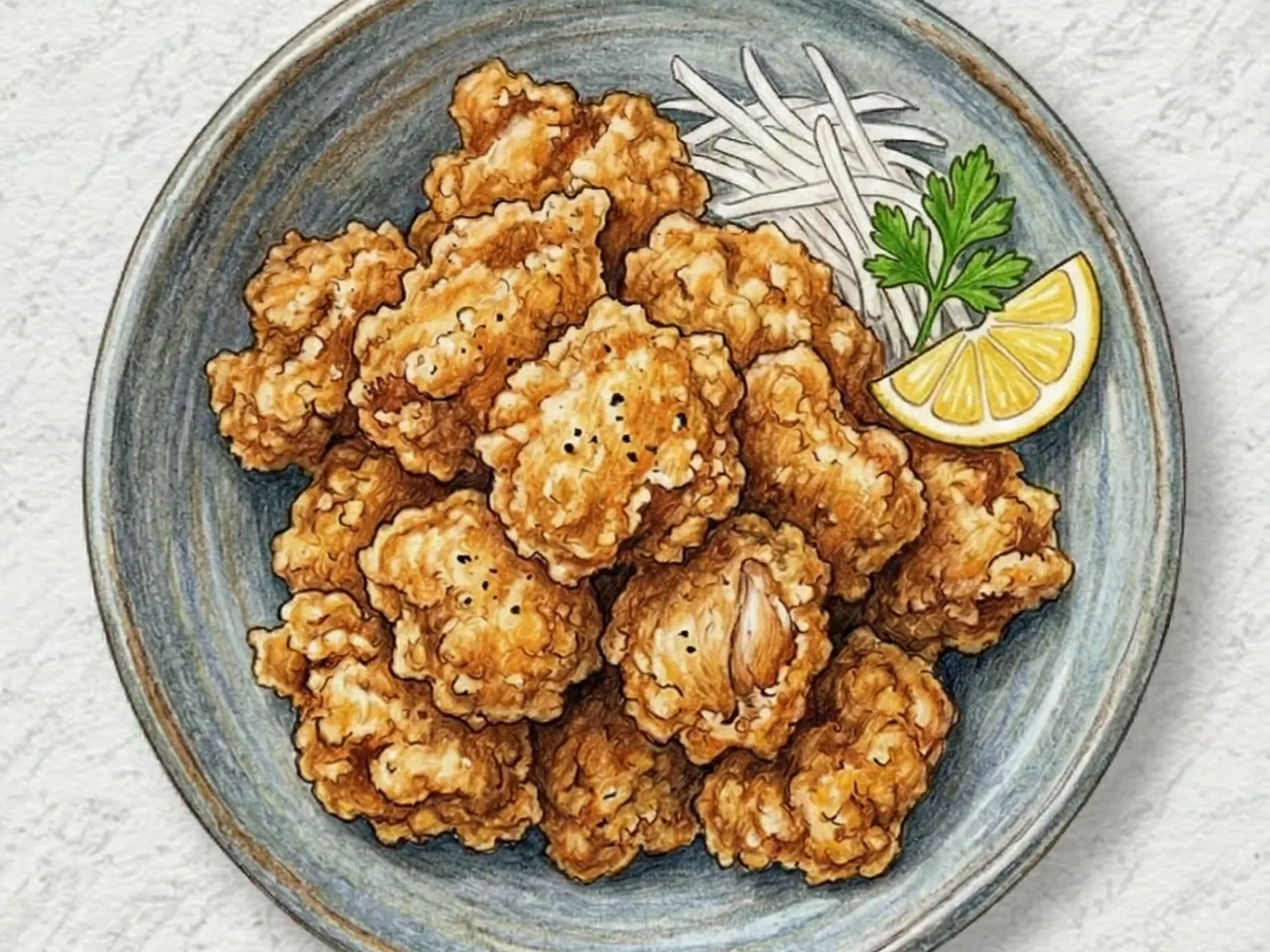
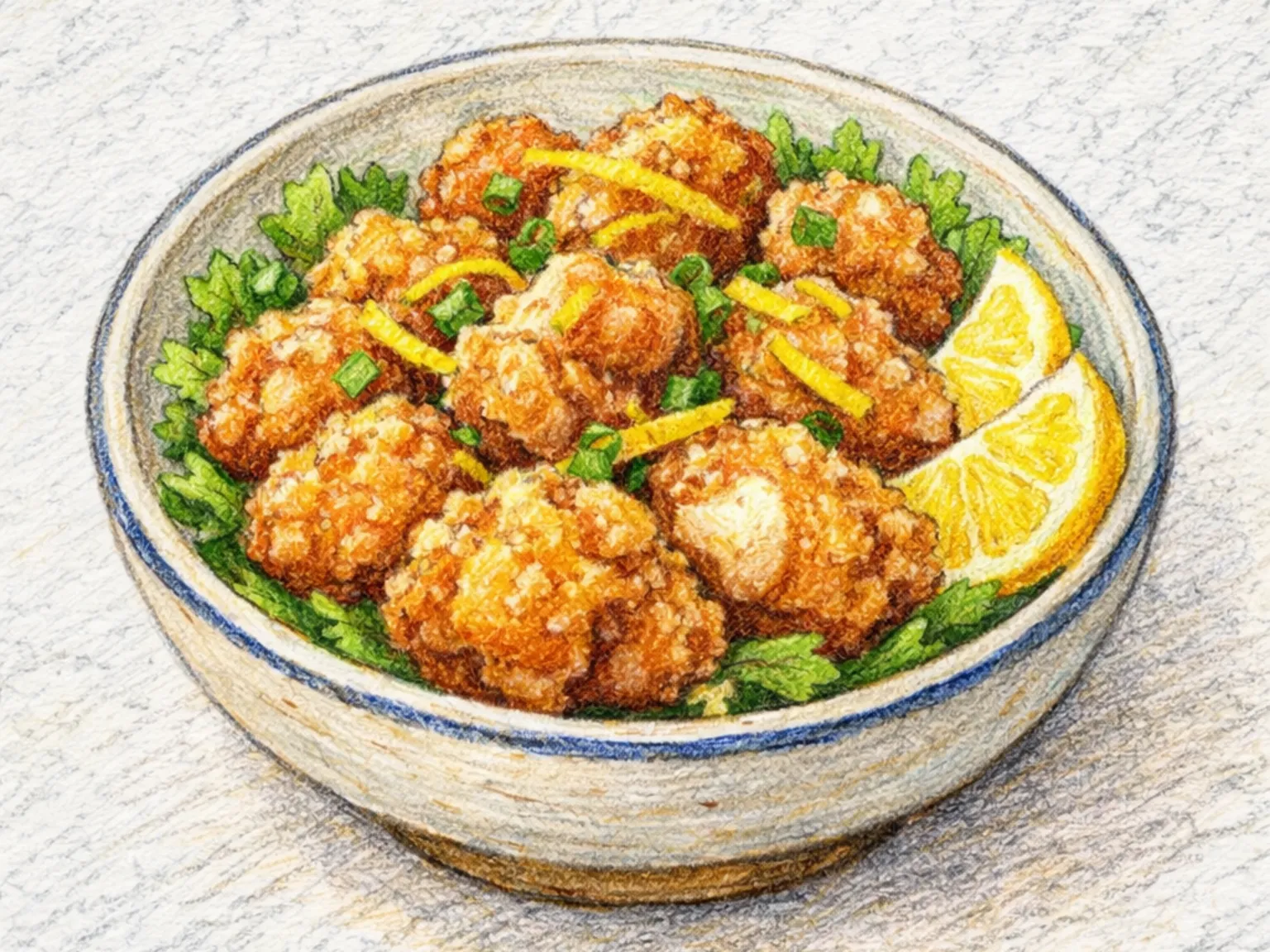
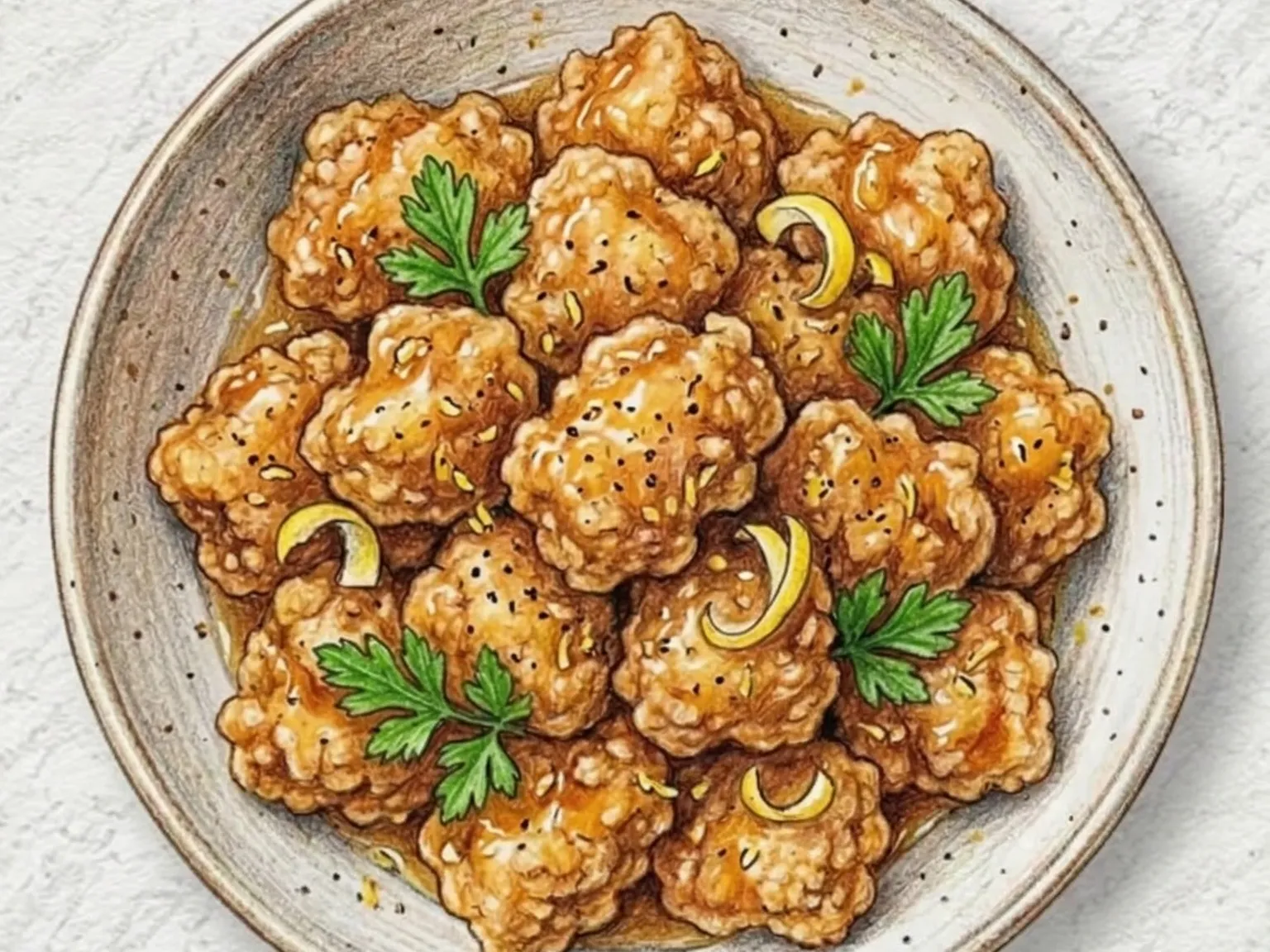
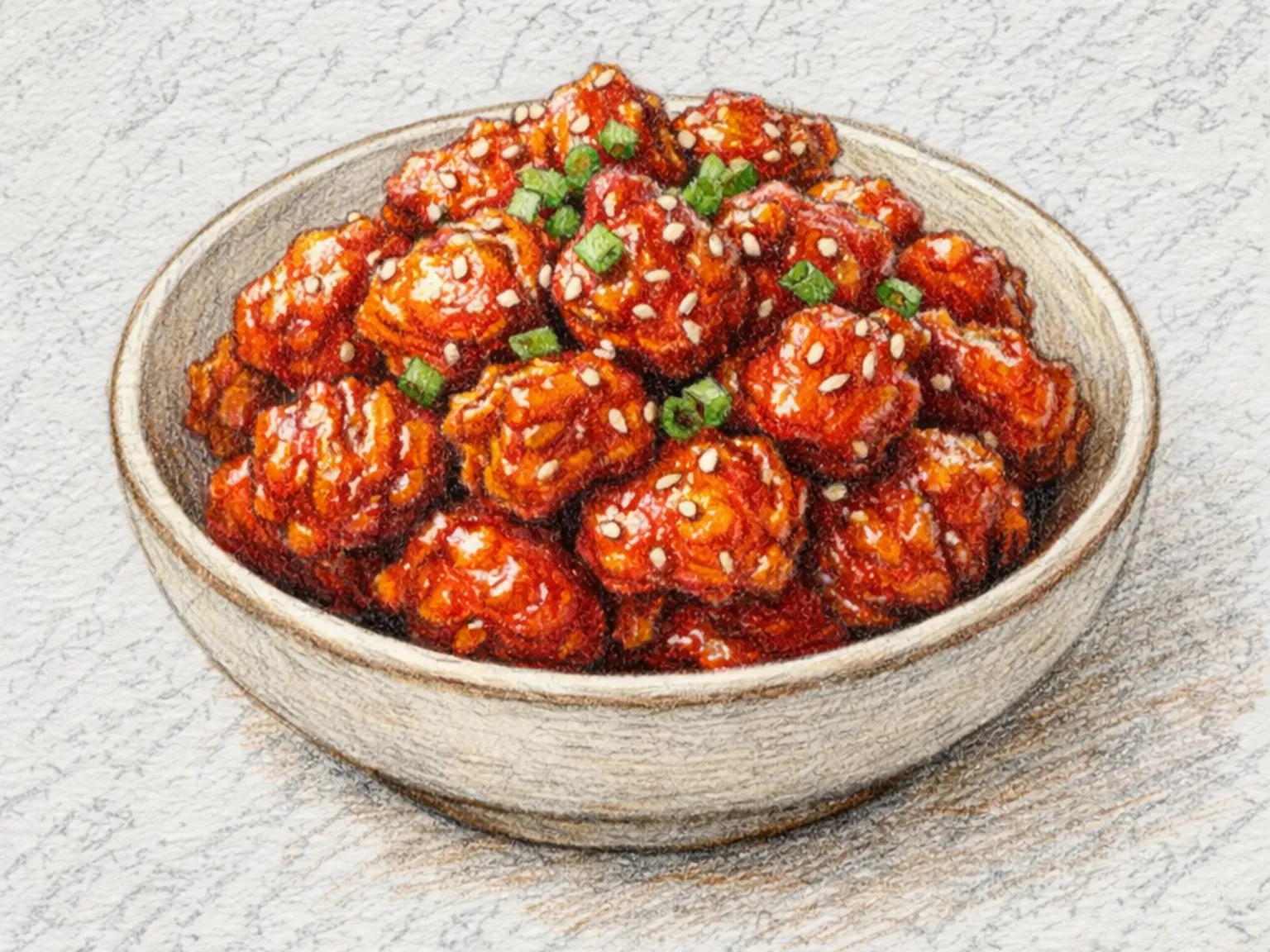
Yangnyeom dakgangjeong is Korean sweet-spicy fried chicken made by cutting boneless thigh meat into bite-sized pieces, coating them in potato starch, and double-frying: first at 170 degrees Celsius to cook through, then at 185 degrees for a second pass that drives off residual moisture and locks the crust. The glaze is a reduction of gochujang, gochugaru, corn syrup, and soy sauce simmered until thick enough to cling without dripping. Tossing the twice-fried chicken in the sauce must happen quickly, off the heat and within twenty seconds, to coat evenly while the crust is still intact. The result is a shell that stays audibly crunchy under a sticky, glossy layer of sweet-spicy glaze even after it cools.
Adjust Servings
Instructions
- 1
Cut chicken thigh into bite-size pieces and season with salt and pepper for 10 minutes.
- 2
Coat chicken evenly with potato starch.
- 3
Fry first at 170C for 4 minutes, then rest briefly.
- 4
Raise oil to 185C and fry again for 90 seconds for extra crispness.
- 5
Simmer gochujang, chili flakes, corn syrup, and soy sauce into a glaze.
- 6
Toss fried chicken quickly in the glaze until glossy.
As an Amazon Associate, we may earn from qualifying purchases.
Tips
Nutrition (per serving)
Variations
Gochujang Honey Dakgangjeong
Crispy fried chicken glazed with gochujang and honey. Spicy kick followed by gentle sweetness makes it highly addictive.
More Recipes

Korean Soy Garlic Dakgangjeong
Soy-garlic dakgangjeong is Korean fried chicken made from boneless thigh pieces coated in potato starch and double-fried, then tossed in a glossy sauce of soy sauce, minced garlic, oligosaccharide syrup, and vinegar. The first fry cooks the meat through while the second at higher temperature sets the crust hard enough to hold up under the wet glaze. The sauce is reduced only briefly to keep the saltiness in check, and vinegar cuts any greasiness while leaving a clean finish. A final sprinkle of sesame seeds adds a nutty aroma and textural accent against the lacquered surface.

Korean Gochujang Honey Dakgangjeong
Gochujang honey dakgangjeong starts with bite-sized boneless chicken thigh pieces coated in potato starch and double-fried - first at 170 degrees, then at 180 degrees - before being tossed in a glaze of gochujang, honey, soy sauce, and garlic. The two-stage frying builds a rigid starch shell that stays crunchy even after saucing, while the thigh meat's natural fat keeps the interior moist. The glaze balances gochujang's fermented heat against honey's dense sweetness, with soy sauce anchoring the saltiness and sesame seeds adding a finishing nuttiness. The sauce must be reduced quickly - under one minute on high heat - to achieve a glossy coat without burning.

Korean Mala Cup Tteokbokki
This cup-style tteokbokki combines gochujang with mala sauce to deliver both Korean chili heat and the numbing tingle of Sichuan peppercorn. Rice cakes and fish cake are simmered for six to seven minutes, stirring constantly, until the broth reduces into a thick, clinging glaze, then finished with sliced green onion. Because mala sauce saltiness varies widely between brands, starting with one tablespoon and adjusting upward is the safest approach.

Korean Fried Squid
Cleaned squid is cut into 1 cm-thick rings, dipped in a light batter of frying mix, cold water, and egg, then deep-fried at 170 degrees Celsius for three to four minutes. Mixing the batter loosely so a few lumps remain creates an uneven coating that fries up extra crispy. The contrast between the chewy squid and the thin, airy shell is the defining feature, and the rings are served with a sprinkle of salt or a soy-vinegar dip.

Korean Spicy Stir-fried Cartilage
Odolppyeo-bokkeum is a fiery Korean stir-fry of chicken cartilage marinated in a sauce of gochujang, gochugaru, soy sauce, garlic, and sugar, then cooked at maximum heat for a short burst. The cartilage delivers a distinctive crunch-then-chew that no other cut can replicate, and thorough drying with paper towels before marinating ensures the sauce clings directly to the surface. After ten minutes of marinating, the cartilage hits a ripping-hot oiled pan to pick up smoky wok char, followed by onion, green onion, and hot green chilies that are tossed until all moisture evaporates and the glaze turns glossy. Keeping the total stir-fry time brief is critical, since prolonged cooking turns the cartilage from pleasantly crunchy to unpleasantly tough.

Korean Sotteok-Sotteok Skewers
Cylinder-shaped rice cakes and mini sausages are skewered in alternating order, then pan-grilled for six to seven minutes until the surfaces turn golden. A glaze made from gochujang, ketchup, soy sauce, oligosaccharide syrup, and minced garlic is brushed on and cooked for two to three more minutes until glossy and sticky. Each skewer delivers a contrast between the dense chew of rice cake and the snappy bite of sausage, unified by the sweet-spicy coating. Originally a Korean street-food staple, sotteok-sotteok is also popular for camping trips and can be made quickly in an air fryer.