Korean Bitter Melon Jujube Tea
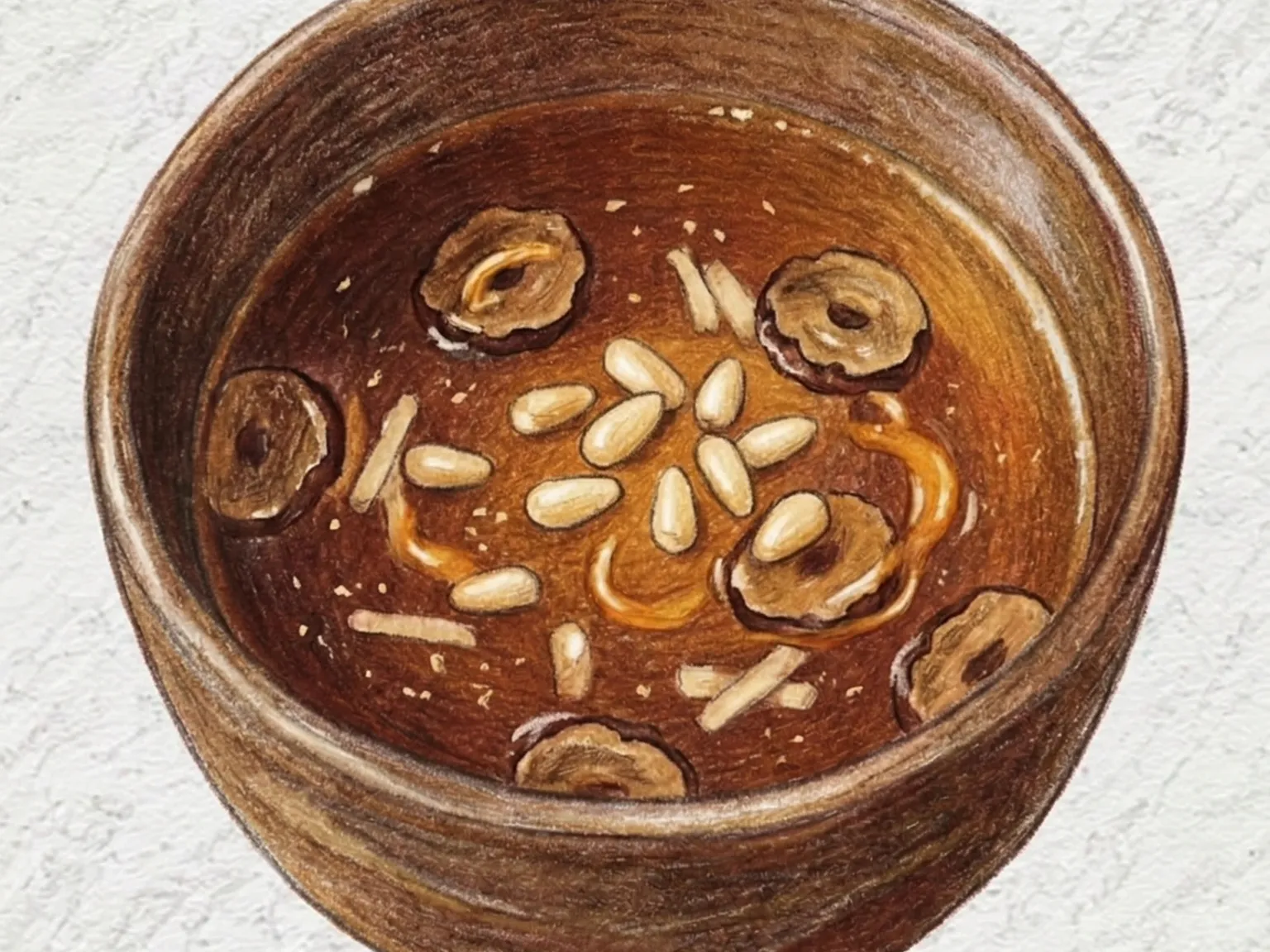
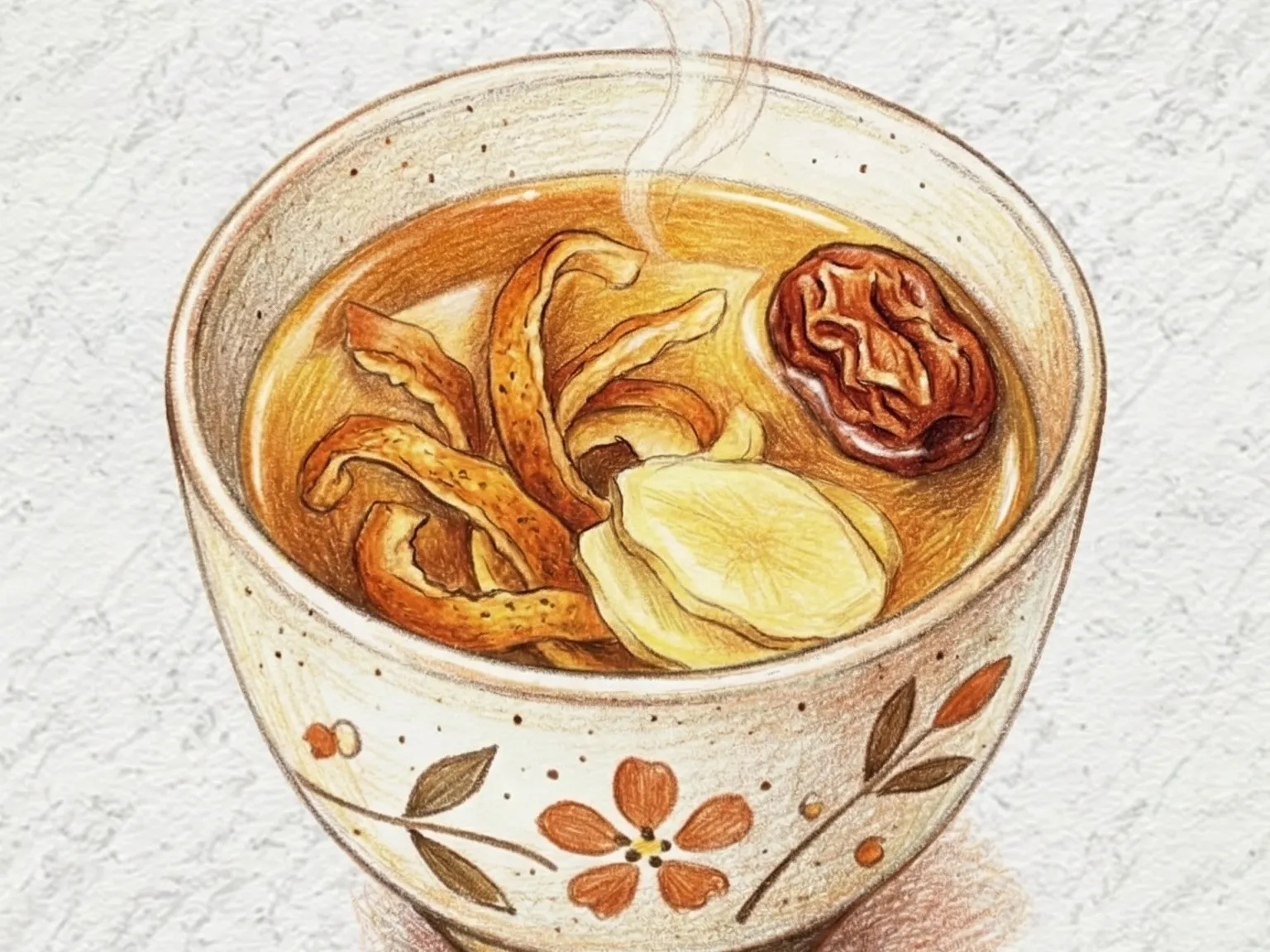
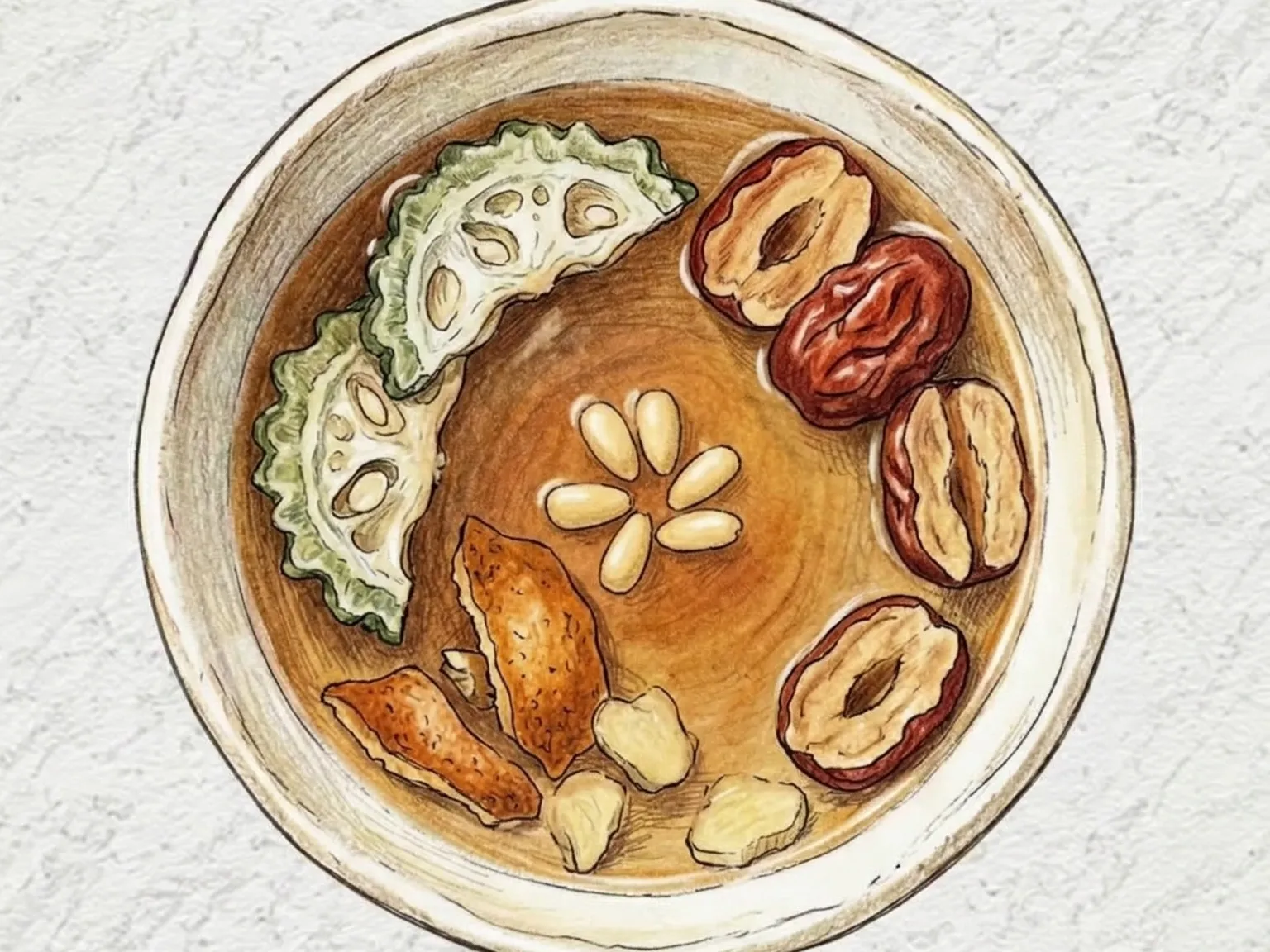
Yeoju-daechu-cha is a Korean herbal tea that steeps dried bitter melon, pitted jujubes, dried tangerine peel, and fresh ginger together for 25 minutes. The bitter melon provides a gentle, lingering bitterness that the jujubes counter with their natural sweetness, while the tangerine peel adds a citrus top note and ginger delivers a warm, peppery finish. Honey is dissolved after the heat is turned off to preserve its delicate fragrance, and a few pine nuts floated on the surface contribute a mild nuttiness. The tea is caffeine-free, and the bitter melon quantity can be reduced for those sensitive to its flavor.
Adjust Servings
Instructions
- 1
Soak dried bitter melon in cold water for 2 minutes to remove surface dust, then drain.
- 2
Halve and pit jujubes, then thinly slice ginger.
- 3
Combine water, bitter melon, jujubes, tangerine peel, and ginger in a pot and bring to a boil.
- 4
Reduce to low heat and simmer for 25 minutes to balance bitter and sweet notes.
- 5
Strain the tea and dissolve honey thoroughly.
- 6
Pour into cups and top with a few pine nuts for aroma.
As an Amazon Associate, we may earn from qualifying purchases.
Tips
Nutrition (per serving)
More Recipes

Korean Dandelion Root Tea
Mindeulle-cha is a Korean dandelion root tea made by dry-roasting dried dandelion root and barley in a pot before simmering them with water, sliced ginger, and licorice root for eighteen minutes. The initial roasting step transforms the earthy root into something toasty and grain-like, while licorice and ginger soften any remaining bitterness into a warm, smooth finish. Rice syrup stirred in at the end adds a malty sweetness that deepens the tea's body. Naturally caffeine-free, it can be enjoyed hot or chilled over ice at any hour.

Korean Roasted Sword Bean Tea
Jakdukong-cha is brewed from roasted sword beans - legumes three to four times larger than common beans - simmered with dried jujubes, fresh ginger, and a cinnamon stick for about twenty-five minutes. Roasting the sword beans browns their surface and develops a heavy, toasty grain aroma that forms the tea's base. Ginger and cinnamon build layered spice warmth on top of the roasted bean foundation, and dried jujubes contribute a fruity sweetness that counterbalances any residual bitterness. Honey is added at the end to fine-tune the sweetness, and the tea is caffeine-free.

Korean Houttuynia Herbal Tea
Sambaekcho-cha is a caffeine-free Korean herbal tea brewed by simmering dried houttuynia herb with dried apple slices and scored jujubes in water on low heat for 15 minutes. The herb is rinsed quickly under running water to remove dust, and the jujubes are scored so their sweetness seeps into the liquid during the simmer. The combination produces a clean, grassy base note from the houttuynia, layered with the mild fruit sweetness of dried apple and the rounded warmth of jujube. Lemon slices are steeped in the pot for two minutes after the heat is off, lending a light citrus lift that keeps the finish bright, and agave syrup adjusts the sweetness to taste.

Korean Jujube Tea (Simmered Dried Jujube Ginger Brew)
Daechucha is prepared by boiling pitted dried jujubes and sliced ginger in water over medium heat for thirty minutes, then pressing the softened jujubes through a strainer so only the smooth pulp returns to the pot. This technique gives the tea a naturally thick, sweet body without any added thickener. Ginger provides a quiet warmth underneath the jujube's dominant sweetness, honey is stirred in off the heat to keep its aroma intact, and floating pine nuts contribute a subtle oily richness that lingers after each sip.

Baesuk (Korean Poached Pear Punch)
Baesuk is a traditional Korean punch made by slowly simmering whole or large-cut Korean pear with ginger, whole black peppercorns, and dried jujubes. As the pear cooks over low heat, its juice gradually dissolves into the liquid, building a natural sweetness that forms the drink's backbone. Ginger contributes a warm, peppery sharpness that interlocks with the pear's sweetness, producing a flavor that is comforting yet clean. Whole peppercorns are used sparingly; they provide a subtle spice aroma in the background rather than actual heat. Jujubes add a faint reddish tint and a mild fruity undertone to the liquid. Honey is stirred in after the heat is turned off and the temperature has dropped slightly, preserving its fragrance; because the pear already contributes significant sweetness, the honey amount should start small and be adjusted by taste. Overnight refrigeration allows the ginger and pear flavors to meld more fully, rounding out the drink. Pine nuts floated on the surface before serving add a subtle oily richness to the finish of each sip.

Korean Melon Cucumber Perilla Salad
Korean melon cucumber perilla salad cuts chamae into half-moons and cucumber on the diagonal, centering the dish on their cool, crisp bite. Red onion is soaked in cold water for five minutes to tame its sharpness, and perilla leaves are rolled and chiffonaded to spread their distinctive fragrance evenly. The dressing combines lemon juice, olive oil, honey, and ground perilla seed, where the perilla's nuttiness and lemon's acidity draw out the melon's clean sweetness. Ground perilla is added just before serving to preserve its toasted aroma, and a 10-minute chill lets fruit juices blend with the dressing into a natural sauce.