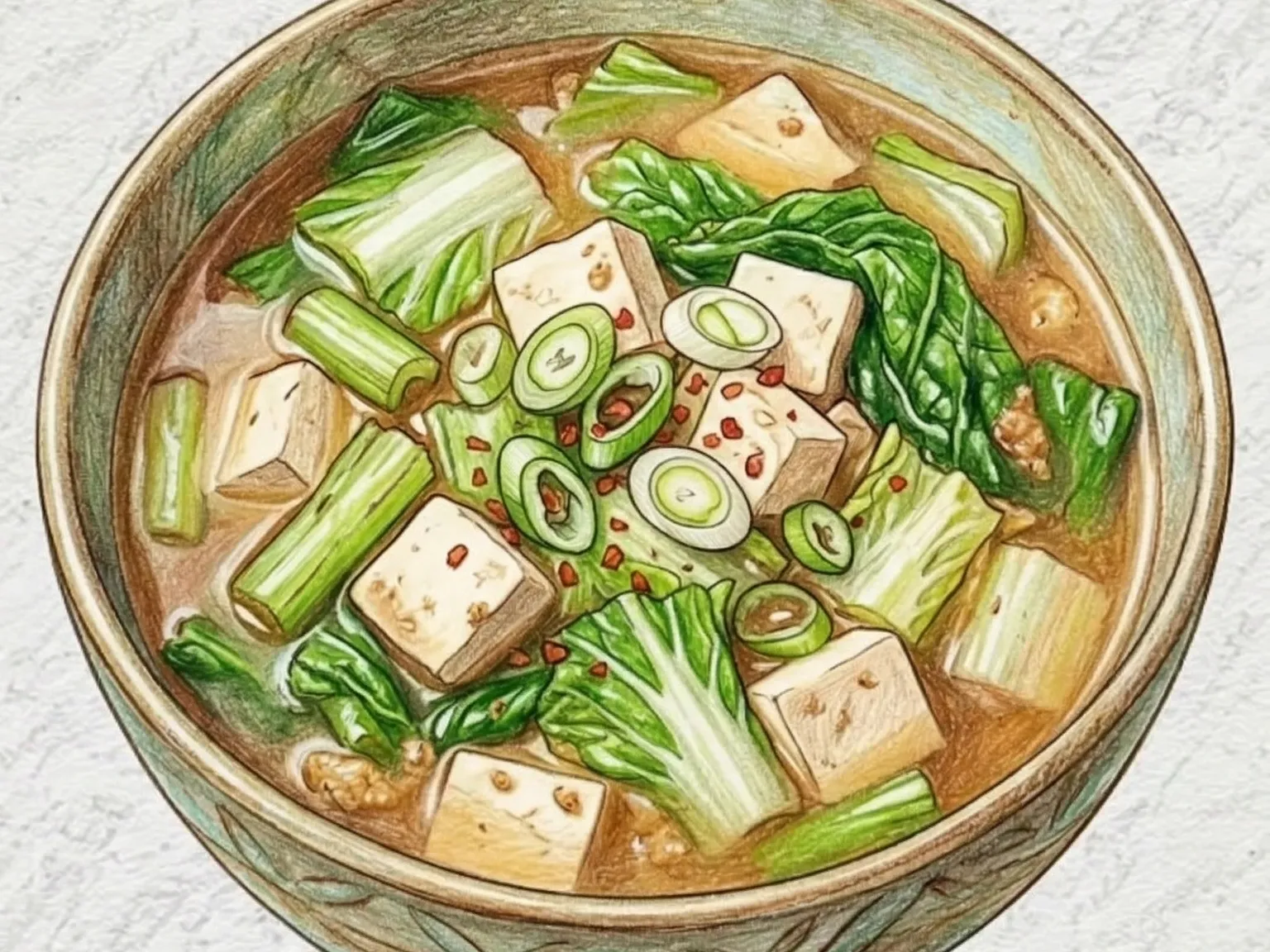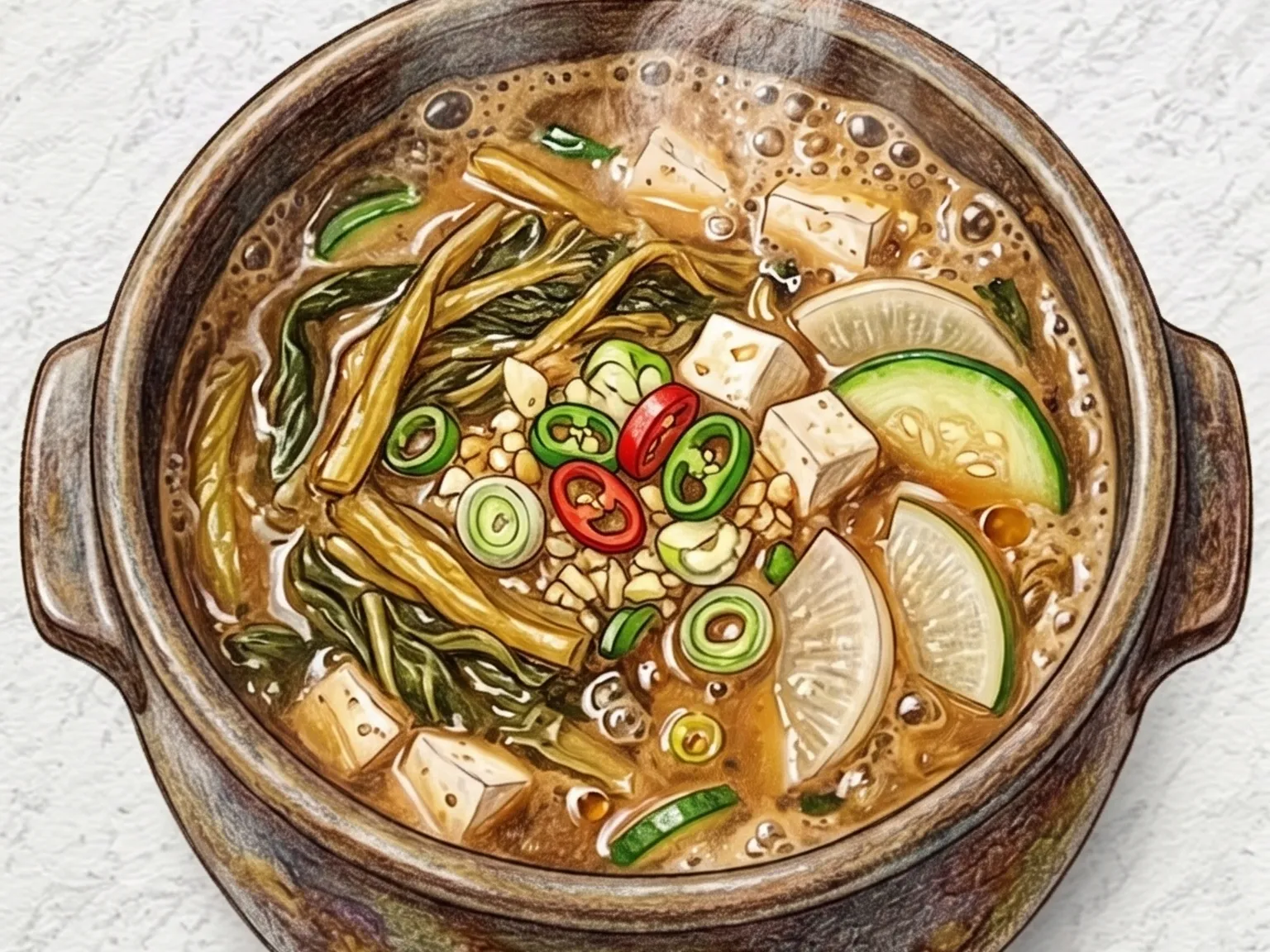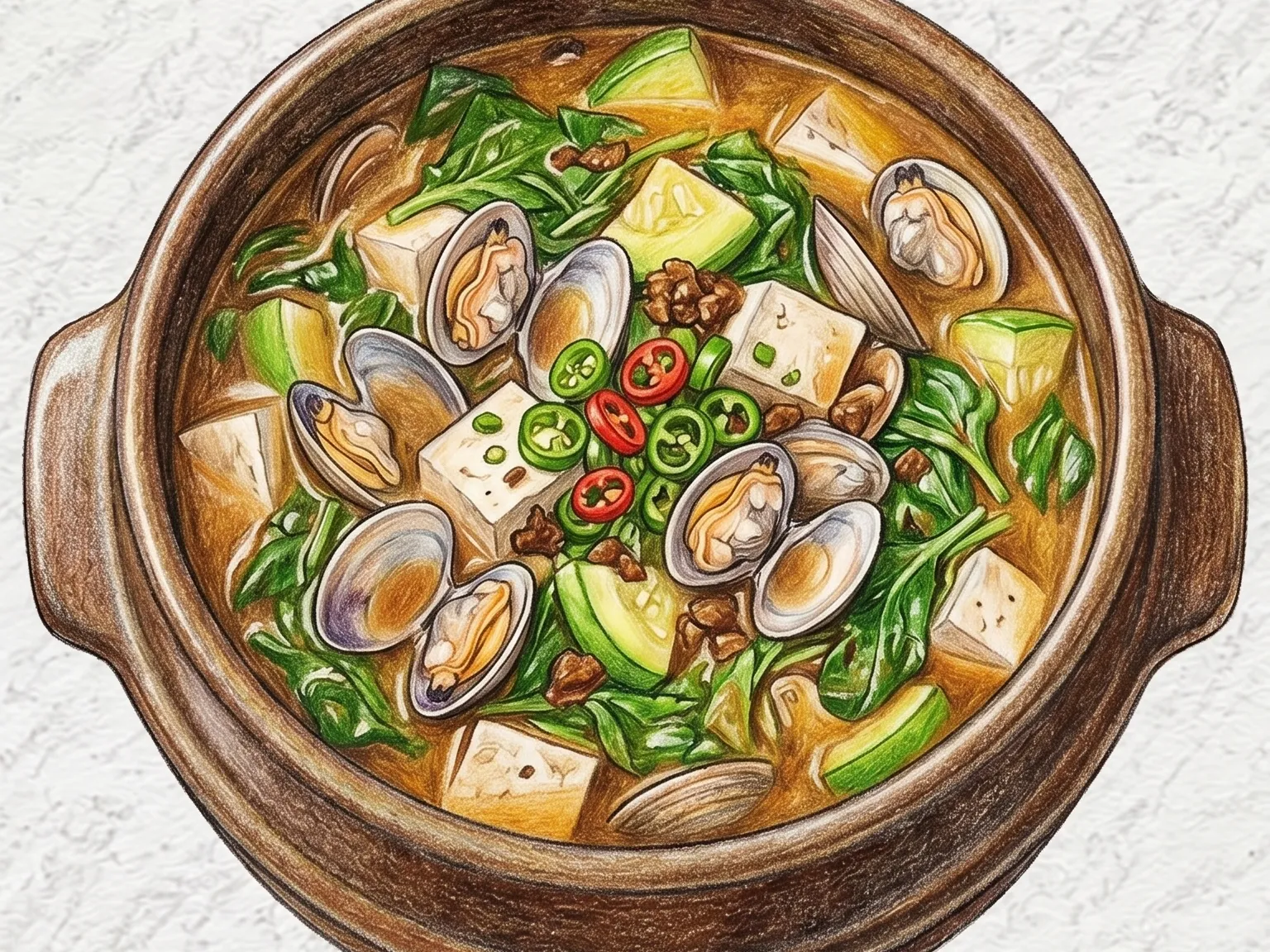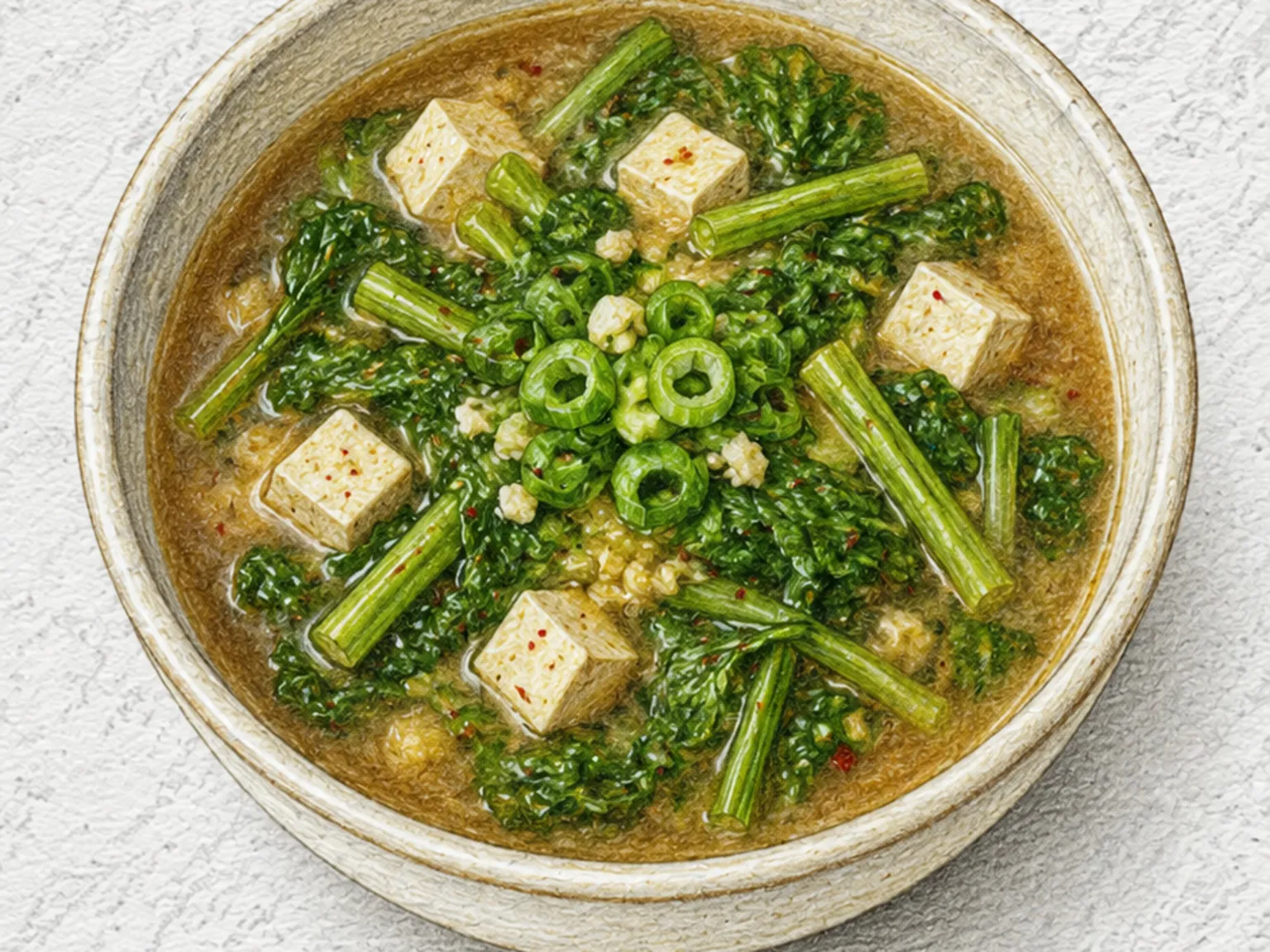
Korean Young Radish Doenjang Soup
Quick answer
Yeolmu doenjang-guk is a summer soybean paste soup that uses rice-rinse water as its base, giving the broth a smoother texture than plain water would.
What makes this special
- Young radish greens simmered in rice-rinse water create a smooth, earthy doenjang broth.
- Doenjang strained through a sieve into rice-washing water gives a clean, not gritty, broth
- Young radish simmered 8 minutes removes raw green smell before tofu and chili are added
Key ingredients
Core cooking flow
- 1 Rinse 250 g young radish greens under running water, removing any grit, then shake off excess water.
- 2 Cut 180 g firm tofu into bite-size cubes and slice the green onion thinly.
- 3 Pour 1200 ml rice-rinse water into a pot and bring it to a boil over medium-high heat.
Yeolmu doenjang-guk is a summer soybean paste soup that uses rice-rinse water as its base, giving the broth a smoother texture than plain water would. Young radish greens are cut into five-centimeter lengths and simmered for eight minutes until they soften and lose their raw grassy edge. Diced tofu, garlic, and a half tablespoon of chili flakes go in next, cooking for six more minutes so the tofu absorbs the fermented soybean flavor. Soup soy sauce and green onion finish the pot, resulting in a mellow, earthy soup that complements a simple rice-and-banchan meal.
Instructions
Read the steps as a cooking flow: prep, heat, seasoning, doneness control, and finish.
- 1Season
Rinse 250 g young radish greens under running water, removing any grit, then shake off excess water.
Split tough stems lengthwise, cut everything into 5 cm pieces, and lightly massage very firm greens with a pinch of salt.
- 2Control
Cut 180 g firm tofu into bite-size cubes and slice the green onion thinly.
Keep the tofu separate until later, because adding it after the greens soften helps the cubes stay intact in the simmering broth.
- 3Control
Pour 1200 ml rice-rinse water into a pot and bring it to a boil over medium-high heat.
Once it bubbles, press 2 tablespoons doenjang through a strainer into the liquid to prevent lumps and keep the broth clean.
- 4Control
When the broth boils evenly, add the young radish greens and lower the heat to medium.
Simmer for about 8 minutes, stirring once or twice so the bottom does not catch, until the stems look slightly translucent and less raw.
- 5Control
Add the tofu, 1 tablespoon minced garlic, and 0.5 tablespoon Korean chili flakes, then keep the soup at a gentle simmer.
Cook for 6 minutes, nudging only around the edges so the tofu absorbs broth without breaking.
- 6Finish
Season with 1 tablespoon soup soy sauce, then simmer a little longer only if the broth tastes thin.
Add the green onion, boil for 1 minute, and serve while the greens are tender and the tofu is hot.
After the steps
Pick a recipe that fits this dish.
Continue with shared ingredients, meal pairings, or a similar method.
Recipes That Go Well With This
More Soups →Based on shared ingredients and meal pairing
Korean Spring Cabbage Soybean Paste Soup
Bomdong doenjang-guk is a seasonal Korean home soup made by simmering spring cabbage and doenjang in rice-rinsing water, which adds a subtle starchy body to the broth and softens the saltiness of the paste. The thicker cabbage stems go in first to soften properly while retaining some bite, and the tender leaves are added at the end to hold their natural sweetness and color. Tofu, a pinch of red chili flakes, and green onion round out the bowl with depth and mild heat. A drop of sesame oil just before serving adds a nutty finishing aroma. Spring cabbage has a high water content and turns mushy quickly, so the leaves should be added less than two minutes before turning off the heat.
Korean Young Napa Soybean Paste Soup
Eolgari-doenjang-guk is a traditional Korean soup made with young napa cabbage and fermented soybean paste. The recipe uses rice-rinse water as the soup base instead of plain water, which helps reduce the sharpness of the soybean paste and adds a mild, rounded starchiness. Straining the doenjang through a sieve before boiling is recommended to ensure a smooth, lump-free broth. Once the soup comes to a boil, anchovy powder and minced garlic are stirred in to establish a rich umami depth. The young napa cabbage is added next and cooked briefly so the leaves retain their fresh flavor and crisp bite. In the final stage, sliced green onions and cheongyang chilies are added, simmering for just two minutes to infuse the broth with a clean, spicy finish. This comforting soup pairs naturally with a hot bowl of steamed rice.
Korean Napa Cabbage Tofu Porridge
A gentle Korean rice porridge built from napa cabbage and soft tofu - mild enough for a recovering stomach, substantial enough to be a proper meal. The rice is first stir-fried in sesame oil, coating each grain in a thin film of fat that releases a quiet, nutty fragrance as the grains slowly swell and break down. Minced garlic is added at this stage and cooked through so its raw sharpness disappears into the base. Vegetable stock and finely chopped cabbage follow, and the pot simmers at medium heat, stirring occasionally, until the grains dissolve completely into a thick, uniform porridge. During this process, the cabbage sheds its moisture into the broth, gently sweetening it without any added sugar. Tofu crumbled by hand is stirred in during the last five minutes, dispersing evenly to create a smooth, soft protein layer throughout. Seasoning is deliberately light - just guk-ganjang and salt - to let the cabbage sweetness and the tofu's quiet richness carry the flavor. No heavy oils or pungent spices. This is porridge for days when the body needs something undemanding, or when plain, clean food is exactly what the moment calls for.
Korean Dried Radish Greens Soup
Siraegi-guk is a Korean dried radish greens soup that transforms a humble preserved vegetable into something deeply flavorful through the medium of doenjang. The greens are dried in autumn, then reconstituted by boiling until soft - a process that concentrates their earthy, slightly bitter character. When simmered in stock with dissolved soybean paste, that concentrated flavor meets fermented umami and the result is a broth richer than the ingredient list would suggest. Adding ground perilla seeds pushes the soup further, turning the liquid creamy and nutty. Garlic and green onion form the aromatic backbone. The soup works well without meat, but many cooks stir-fry a small amount of beef in perilla oil before adding the liquid, which introduces a beefy depth that rounds out the overall profile. The critical step is managing the initial boiling of the dried greens: not enough, and the bitterness overwhelms; too much, and the greens become bland. Experienced Korean cooks leave just enough edge to give the soup its distinctive character - a pleasant astringency that makes doenjang taste more interesting rather than less. Siraegi-guk is pantry cooking at its finest, relying on dried goods and fermented paste to produce a bowl that tastes like slow, patient effort.
Serve with this
Korean Restaurant-Style Kkakdugi
Sikdang-style kkakdugi is the cubed radish kimchi served as a complimentary banchan at virtually every Korean restaurant, standing alongside baechu-kimchi as a permanent fixture on the Korean table. Cutting Korean radish into chunky 2 cm cubes preserves crunch deep into the flesh even after salting and fermentation. Twenty minutes in coarse salt draws out excess moisture, and the cubes are then coated in a seasoning mixture of gochugaru, anchovy fish sauce, garlic, ginger, and sugar. The fish sauce lays the umami foundation that develops further during fermentation, while ginger suppresses the raw edge of the radish and leaves a clean finish. One day at room temperature initiates lactic acid fermentation, producing the characteristic tingle of an active kimchi, after which refrigeration allows the flavor to mature steadily over two to three weeks. Winter radish carries more natural sugar, so the added sugar can be reduced without sacrificing sweetness. In summer, shortening the room-temperature rest to half a day before refrigerating prevents the kimchi from becoming overly sour. It pairs particularly well alongside grilled pork belly, rice noodle soup, and earthenware pot rice soup, where its acidity cuts through the richness of the main dish.
Korean Cheonggak Kimchi (Seaweed Kimchi)
Cheonggak kimchi uses cheonggak, a branching green seaweed, mixed with julienned radish and scallions in a paste of gochugaru, anchovy fish sauce, and sweet rice starch. The seaweed brings a firm, almost crunchy chew and a concentrated marine aroma absent from land-vegetable kimchi. Seasoning the radish first lets it absorb the brine, then the seaweed is tossed in briefly - prolonged handling toughens the strands. After one day of refrigeration, the seaweed's salinity merges with the fermented seasoning paste to produce a briny, sharp kimchi that sits naturally alongside seafood dishes and mild rice soups. Coastal households traditionally make this in autumn when fresh cheonggak comes into season.
Korean Radish & Shrimp Pancake
Julienned Korean radish and small peeled shrimp are combined in a pancake batter fortified with a measured amount of potato starch for added crispiness. Egg is mixed into the batter to improve binding and keep the pancake intact when flipped. Scallions are distributed throughout for a mild, grassy fragrance. Radish releases notable moisture as it cooks, so frying over high heat is essential to drive off that liquid quickly and achieve a crisp outer surface. The sharp, slightly bitter edge of raw radish disappears with heat and gives way to a gentle natural sweetness that pairs cleanly with the mild, delicate flavor of the shrimp. Pressing the center of the pancake down with a spatula while frying encourages even browning all the way through.
Similar recipes
Korean Sea Mustard Soybean Soup
Miyeok-doenjang-guk merges two foundations of Korean home cooking, seaweed soup and fermented soybean paste soup, into a single bowl that is earthier and more savory than either alone. Dried sea mustard is soaked, drained, and stir-fried briefly in sesame oil to develop a silky texture, then doenjang is dissolved directly into the pot rather than added at the end, which gives the fermented paste time to mellow and integrate with the seaweed's oceanic character. The result is something deeper and more complex than standard beef miyeok-guk, with a slightly funky, umami-saturated broth that reads as distinctly Korean even without meat. Anchovy-kelp stock used as the base amplifies the depth of the umami even further, while garlic and soup soy sauce keep the seasoning anchored. Because the protein and richness come from doenjang rather than beef, the soup leans naturally toward vegetarian territory and pairs well with a cube of soft tofu for added body. The broth thickens slightly from dissolved paste, which makes it cling to rice in a way that clear broths cannot match. Doenjang varies significantly in saltiness from brand to brand, so the final seasoning with soy sauce should be added gradually and tasted throughout.
Korean Young Radish Kimchi Stew
This recipe introduces a Korean kimchi stew made with young radish kimchi, called chonggak kimchi, instead of the traditional cabbage version. Ponytail radish pieces are unique because they retain their firm, crunchy bite even after long simmering. The preparation starts by sauteing pork shoulder with a portion of the kimchi brine for three minutes to eliminate gamey odors and keep the broth clear. Next, the sliced chonggak kimchi, water, and the remaining brine are added to simmer for fifteen minutes until the radish turns translucent. Onion, gochugaru, and minced garlic are then stirred in to deepen the red color and tanginess. Thick tofu slices and green onions are placed on top in the final three minutes of cooking. This stew combines the sourness of fermented radish and the savory richness of pork for a hearty meal.
Korean Seasoned Young Radish Greens
Preparing these young radish greens requires precision during the brief blanching stage to maintain their structural integrity. A quick ten to fifteen second dip in boiling water softens the leaves while keeping the stems firm. An immediate transition to a cold water bath locks in the pale green color and stops the cooking process. After squeezing out the excess moisture, the greens are tossed with soup soy sauce, minced garlic, sesame oil, and toasted sesame seeds. The soup soy sauce provides a subtle saltiness that highlights the natural grassy essence of the vegetable. Minced garlic contributes a sharp element to the mild base, and a light coating of sesame oil ensures a smooth mouthfeel. Each bite releases the toasted scent of sesame seeds. This side dish functions effectively as a palate cleanser when served alongside spicy stews or fatty grilled meats. Its appeal lies in a clean profile that avoids heavy seasonings, allowing the fresh character of the greens to remain central.