Korean Braised Pork Ribs with Young Radish Greens
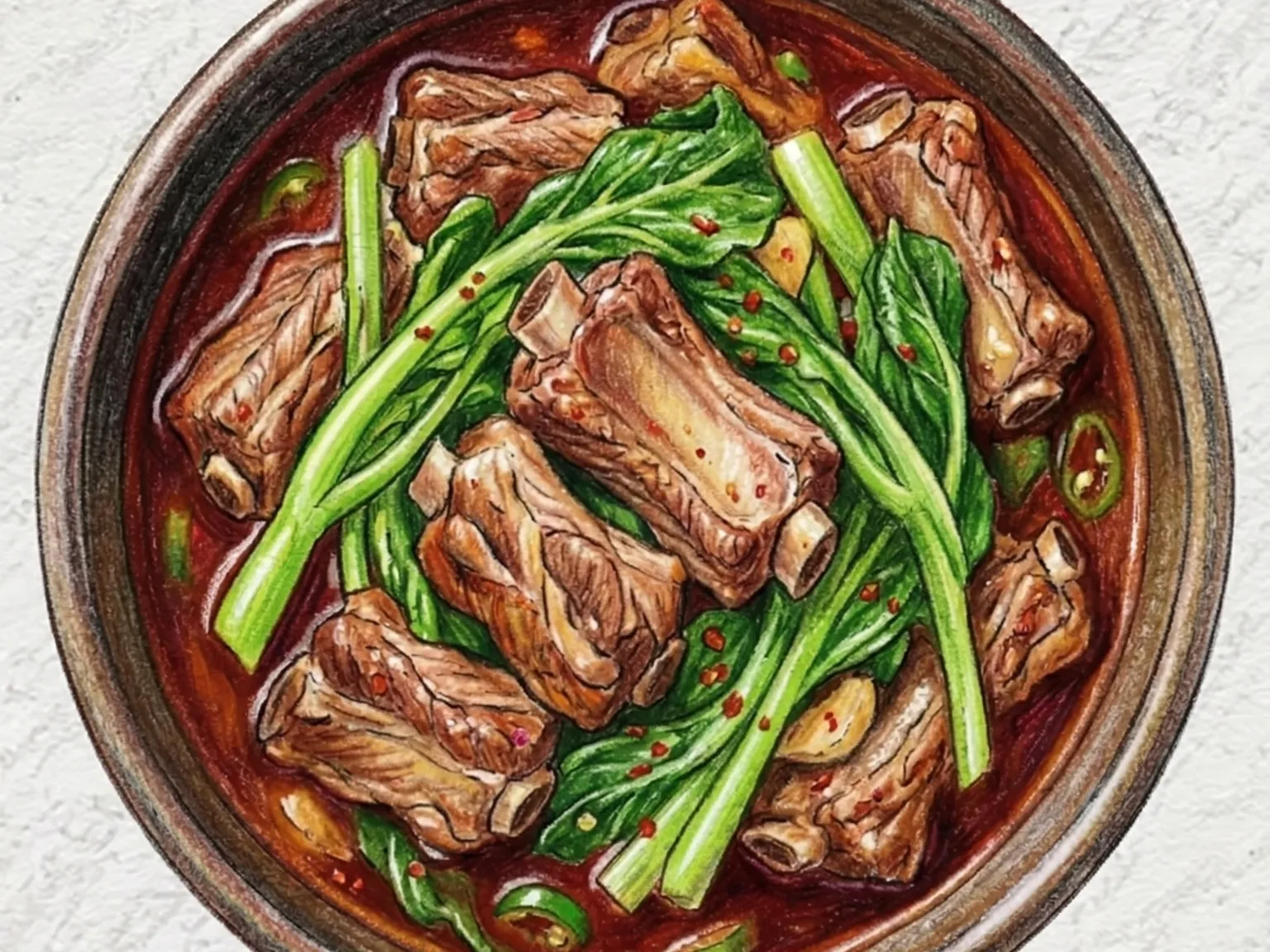
Yeolmu dwaeji galbi jjim is a Korean braised pork rib dish finished with young radish greens, cooked in a gochujang and soy sauce seasoning. The ribs simmer until the meat separates from the bone, building a concentrated, spicy braising liquid from the rendered pork stock and chili paste. Young radish greens are added only in the final minutes to preserve their crisp stems and fresh, slightly peppery aroma, which lightens the rich, heavy sauce. The combination of fall-off-the-bone pork and bright summer greens makes this a seasonal main course that bridges richness and freshness.
Adjust Servings
Instructions
- 1
Soak pork ribs in cold water for 20 minutes, then blanch for 3 minutes.
- 2
Cut young radish greens into 5 cm lengths and thickly slice onion.
- 3
Mix soy sauce, gochujang, chili flakes, garlic, plum syrup, and water for braising liquid.
- 4
Add ribs and braising liquid to a pot, boil on high, then simmer on medium for 40 minutes.
- 5
Add onion and greens, then cook 15 more minutes so vegetables absorb flavor.
- 6
Finish with perilla oil, reduce for 3 minutes, then turn off heat.
As an Amazon Associate, we may earn from qualifying purchases.
Tips
Nutrition (per serving)
More Recipes

Korean Braised Pork Ribs
Dwaeji galbi-jjim is a Korean braised pork rib dish simmered in a soy sauce base with Korean radish, carrots, and onion. The ribs cook low and slow until the meat practically falls off the bone, absorbing the ginger- and garlic-infused braising liquid along the way. The radish chunks turn translucent and soak up the seasoning, becoming as flavorful as the meat itself. Served with steamed rice, this dish is a hearty main course suited to cooler weather.

Korean Braised Pork Back Ribs with Aged Kimchi
Mukeunji deunggalbi jjim is a Korean braise of pork back ribs with well-aged kimchi in a sauce of gochugaru, gochujang, and soy sauce. The bones release a rich stock as they simmer, and the fermented tang of the aged kimchi layers a complex acidity on top of that savory base. Reducing the liquid to about one-third of its original volume concentrates the flavors and creates a thick glaze that clings to each rib. The kimchi softens during the long cook but keeps its assertive, funky character, and the meat eventually pulls cleanly from the bone. Served with steamed rice, this is a hearty, warming main course.

Korean Steamed Beef with Radish Greens
Mucheong sogogi jjim is a Korean braised beef dish where short rib meat is marinated in Korean pear juice and soy sauce, then slow-cooked with blanched radish greens and onion. The pear juice tenderizes the beef and lends a subtle fruit sweetness that deepens over the long braise. Radish greens are added near the end to preserve their earthy aroma and slight chew, bringing a rustic contrast to the soft meat. Ginger juice keeps the flavor clean, and sesame oil ties everything together with a toasted finish. The sauce reduces to a concentrated glaze meant to be spooned over rice.

Korean Braised Pork Backbone
Deungppyeo-jjim is pork backbone braised with potato and green onion in a sauce of doenjang, gochugaru, and soy sauce. After a long simmer, the meat and cartilage between the vertebrae pull away from the bone effortlessly. Doenjang lays a deep, fermented base note while chili flakes add a sharp heat on top. The potatoes cook until they are soft enough to break apart with a spoon, melding into the thick broth. Picking the meat from between the bones is part of the appeal, making this a popular dish to share over drinks.

Korean Braised Mackerel with Radish
This Korean braised mackerel dish layers radish at the bottom of the pot, pre-cooks it to absorb seasonings deeply, then places mackerel on top to simmer in a spicy soy-gochugaru sauce. Basting the fish with the braising liquid several times throughout cooking ensures the flavors penetrate evenly while the ginger in the sauce tames any fishiness. The radish turns soft and translucent, soaking up the spicy-savory broth and serving as a flavorful bed beneath the flaky fish. Green onion and onion, added toward the end, contribute a fresh lift. The slightly reduced sauce at the finish is rich enough to drizzle over rice.

Korean Seasoned Young Radish Greens
Young radish greens are blanched in boiling water for just ten to fifteen seconds and dressed with soup soy sauce, garlic, sesame oil, and toasted sesame seeds. The greens' summer abundance of moisture and tender fiber means they wilt quickly in hot water, so a brief dip is all that is needed; the stems stay crunchy while the leaves soften just enough to absorb the dressing. Soup soy sauce supplies a light salinity that lets the greens' fresh, grassy flavor come forward, and minced garlic adds a sharp note that anchors the mild base. Sesame oil coats the strands thinly, creating a smooth mouthfeel, and sesame seeds release a warm, nutty fragrance each time they are bitten. Rinsing in cold water immediately after blanching locks in the bright, pale green color, and squeezing out excess water ensures the seasoning clings tightly to the greens. This namul wins on clean, understated flavor rather than bold seasoning, making it an effective palate cleanser alongside spicy stews or rich grilled meats.