Korean Young Radish Pork Stir-fry
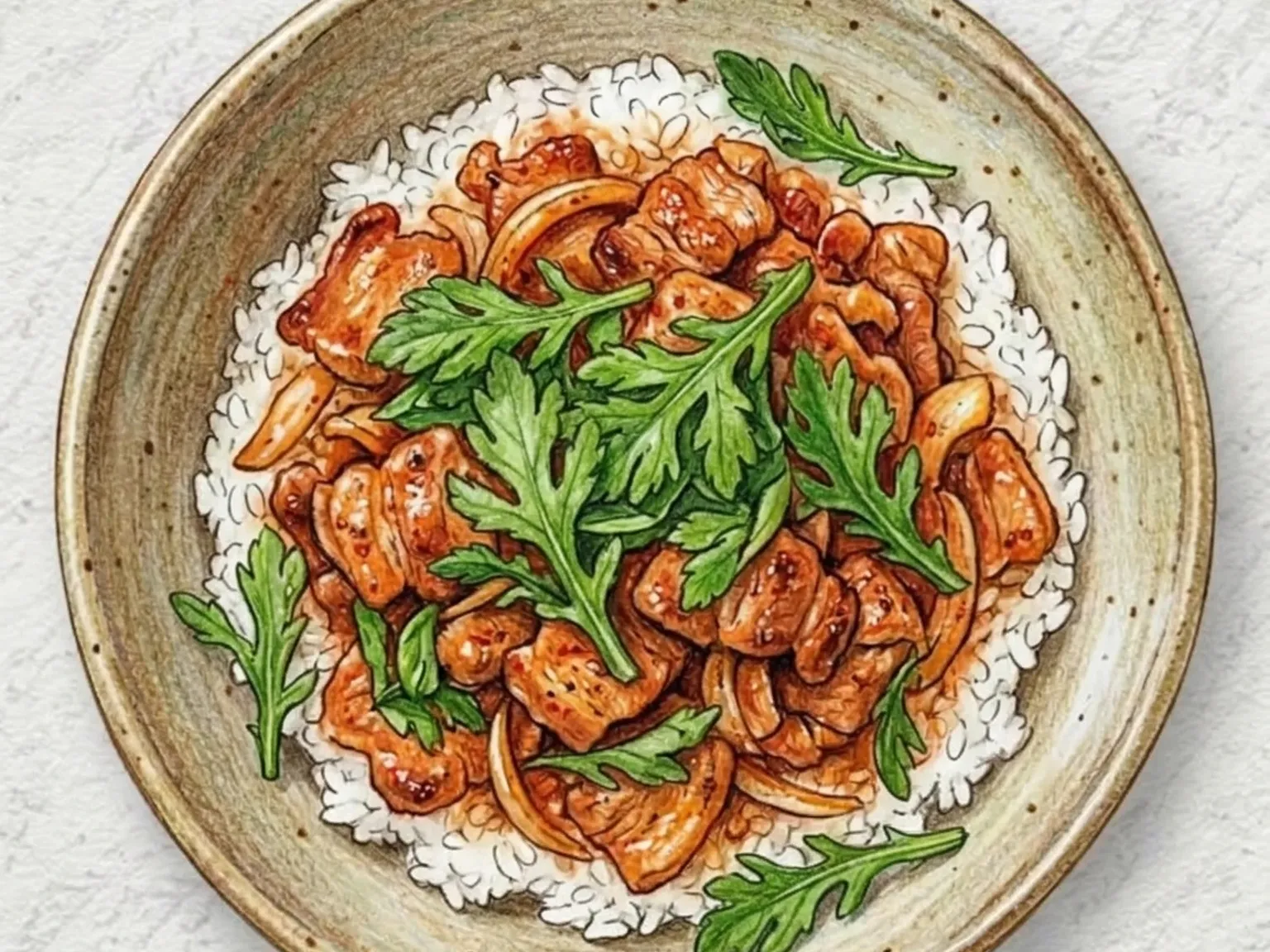
Yeolmu-dwaejigogi-bokkeum is a spicy Korean stir-fry of pork shoulder marinated in gochujang, gochugaru, and soy sauce, cooked together with young radish greens (yeolmu). The pork is seared first over high heat for four minutes, then the greens are added on medium heat for another four minutes - just long enough to wilt without losing their fresh bite. The gochujang heat contrasts with the crisp, slightly grassy stems of the yeolmu, and sesame oil ties the flavors together at the end. It is a seasonal dish best made when young radish greens are in peak supply during summer.
Adjust Servings
Instructions
- 1
Wash young radish greens and cut into 5 cm pieces; thickly slice onion.
- 2
Marinate pork for 10 minutes with gochujang, gochugaru, soy sauce, and garlic.
- 3
Heat oil and stir-fry onion for 1 minute to bring out sweetness.
- 4
Add marinated pork and stir-fry on high heat for 4 minutes.
- 5
Add greens and cook 4 minutes over medium heat until wilted but still textured.
- 6
Turn off heat, drizzle sesame oil, toss, and serve.
As an Amazon Associate, we may earn from qualifying purchases.
Tips
Nutrition (per serving)
More Recipes

Korean Pork & Wild Chive Stir-fry
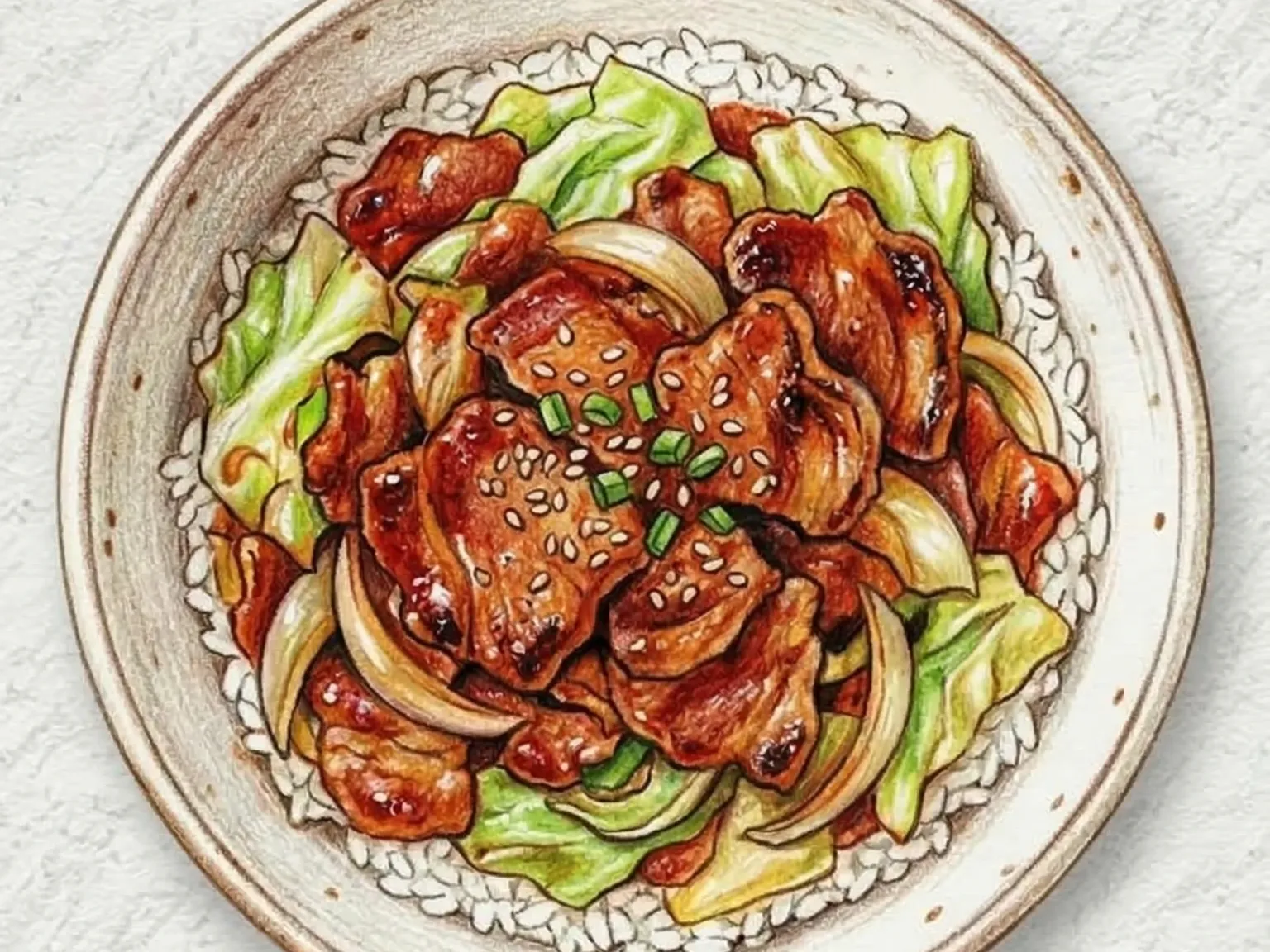
Dallae-dwaejigogi-bokkeum is a Korean springtime stir-fry of pork shoulder tossed in a gochujang and chili flake sauce, then topped generously with raw wild chives. The wild chives release a sharp, garlicky bite that cuts through the rich, spicy pork. Onions caramelize lightly during cooking, adding natural sweetness that rounds out the heat. The dish is cooked quickly over high heat to preserve the fresh aroma of the chives.

Korean Pork & Swiss Chard Stir-fry
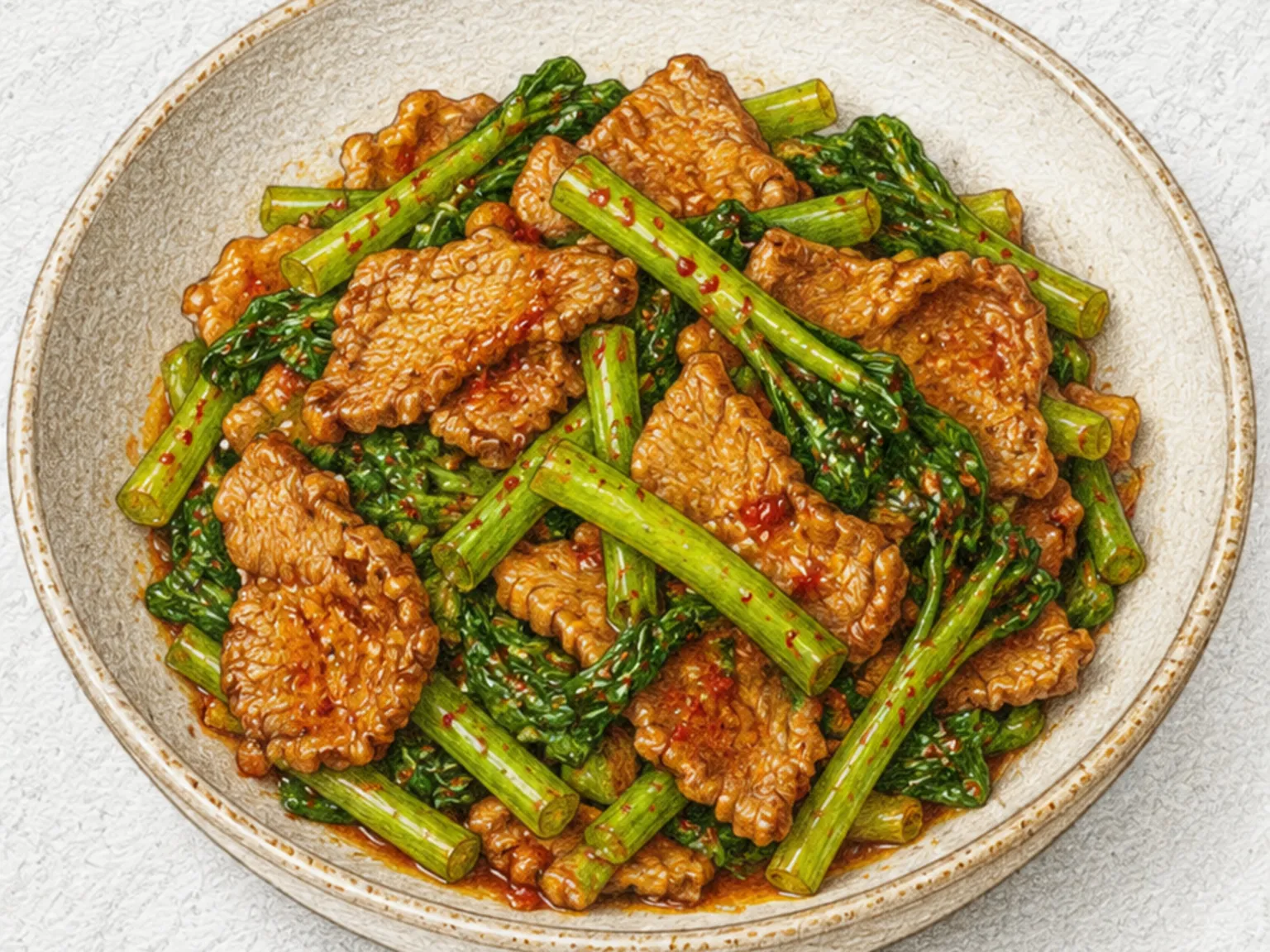
This hearty stir-fry combines pork shoulder and Swiss chard in a doenjang-based sauce that delivers deep, earthy umami. Separating the chard stems from the leaves and adding them at different times preserves contrasting textures: the stems remain snappy while the leaves wilt into tender ribbons. Doenjang neutralizes any gamey pork notes and builds a robust savory backbone, finished with sesame oil for a nutty warmth. A touch of Korean chili flakes introduces mild heat that rounds out the dish. It pairs naturally with a bowl of steamed rice for a complete, nourishing meal.

Korean Pork and Asparagus Stir-fry
A Korean weeknight stir-fry that pairs pork shoulder or belly with asparagus and red bell pepper in a soy-garlic sauce. The pork is sliced thin and marinated in soy sauce, minced garlic, and a pinch of sugar to coax out caramelization on the hot pan. Cooking the meat first over high heat renders out its fat, which becomes the medium for stir-frying the vegetables. Asparagus goes in next for barely a minute - just enough to turn its raw starchiness into a clean, grassy snap. Bell pepper adds pops of natural sweetness and color contrast. The sauce is restrained: soy, a touch of oyster sauce, and sesame oil, keeping the focus on the interplay between the pork's umami depth and the vegetables' brightness. The entire cook from cold pan to finished plate takes under twelve minutes, making it one of the fastest protein-and-vegetable banchan in the Korean home repertoire.

Korean Kimchi Pork Stir-fry
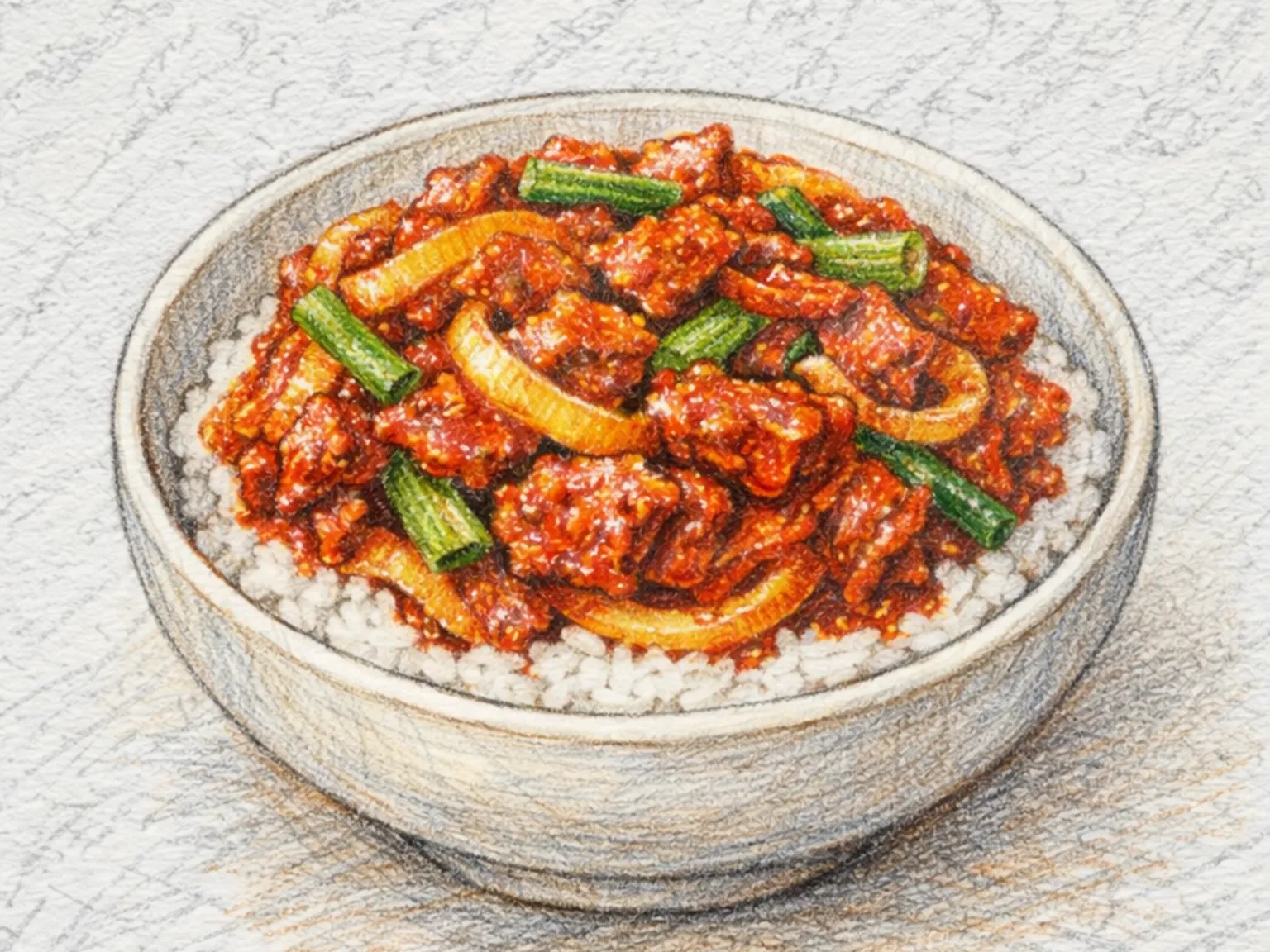
Kimchi jeyuk bokkeum is a Korean stir-fry of pork shoulder seasoned with gochujang, gochugaru, and soy sauce, then cooked over high heat with well-fermented aged kimchi. The kimchi's deep acidity tempers the pork fat while amplifying the spicy kick of the chili paste. Searing the pork first builds caramelized edges, and adding kimchi and onion afterward lets the sauce reduce into a concentrated glaze. Scallion and sesame oil finish the dish, and wrapping portions in lettuce leaves softens the heat.

Korean Spicy Gochujang Dried Squid Stir-Fry
Jinmichae - shredded dried squid - is a Korean pantry staple prized for its chewy texture and umami that intensifies the longer you chew. This preparation coats the strands in a gochujang glaze, making it one of the most widely kept banchan in Korean refrigerators. Briefly soaking the dried squid in water before squeezing softens the tough fibers and opens them to absorb the sauce. The sauce - gochujang, gochugaru, rice syrup, soy sauce, and garlic - is stir-fried first over low heat to mellow the raw chili edge, then the squid is tossed through quickly. Sesame oil and seeds finish the dish off heat, producing a sweet-spicy coated snack that keeps well for days.

Korean Ponytail Radish Kimchi
Chonggak kimchi is a classic Korean kimchi made with whole young ponytail radishes salted for two hours, then coated in a seasoning paste of gochugaru, anchovy fish sauce, garlic, ginger, and scallions. Blooming the chili flakes in fish sauce first softens their texture and intensifies the color before garlic and ginger are added for aromatic depth. Trimming the radish tops short prevents them from turning fibrous and keeps the eating experience crisp. One day of room-temperature fermentation produces a lively carbonation and refreshing tang, after which refrigeration preserves the crunchy texture and spicy umami for weeks. This is a year-round kimchi staple in Korean households.