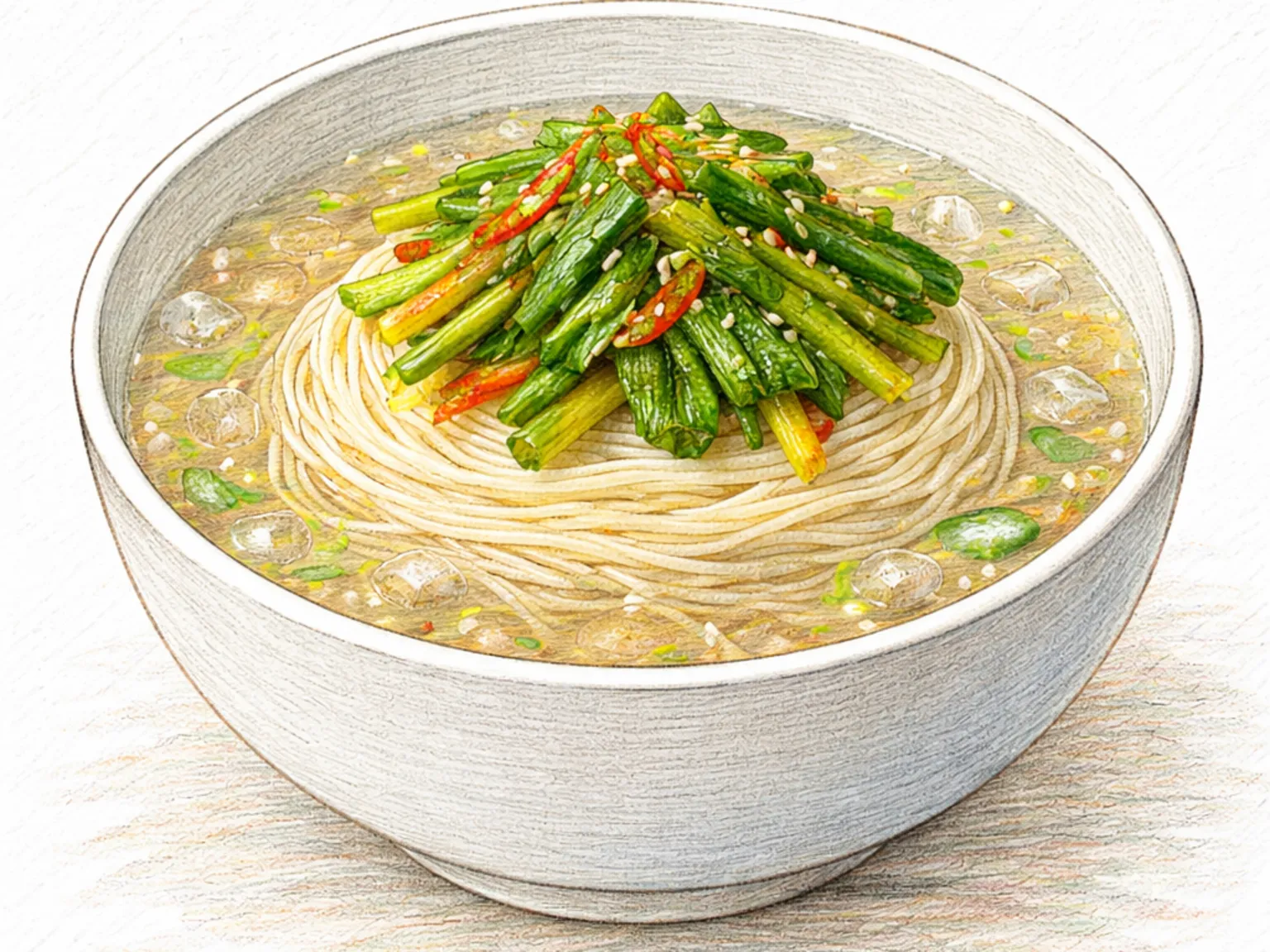
Korean Young Radish Cold Noodles
Yeolmu mul guksu is a Korean cold noodle soup where the broth comes directly from yeolmu kimchi liquid mixed with cold water or light stock. The fermented, tangy kimchi brine serves as the soup base, eliminating the need for separate seasoning. Chilled somyeon noodles sit in the broth, topped with crunchy yeolmu kimchi pieces and often a few ice cubes. A halved boiled egg and sesame seeds are standard garnishes. The dish takes about 25 minutes to prepare and is straightforward as long as yeolmu kimchi is available.
Adjust Servings
Instructions
- 1
Cut yeolmu kimchi into bite-size pieces and julienne cucumber; keep both chilled.
- 2
Mix kimchi brine, cold water, vinegar, sugar, and mustard, then chill thoroughly.
- 3
Boil somyeon for 3 minutes, rinse under cold water while rubbing, and drain.
- 4
Place noodles in bowls, top with yeolmu kimchi, and pour in the chilled broth.
- 5
Finish with cucumber and halved boiled egg, then serve immediately.
As an Amazon Associate, we may earn from qualifying purchases.
Tips
Nutrition (per serving)
More Recipes

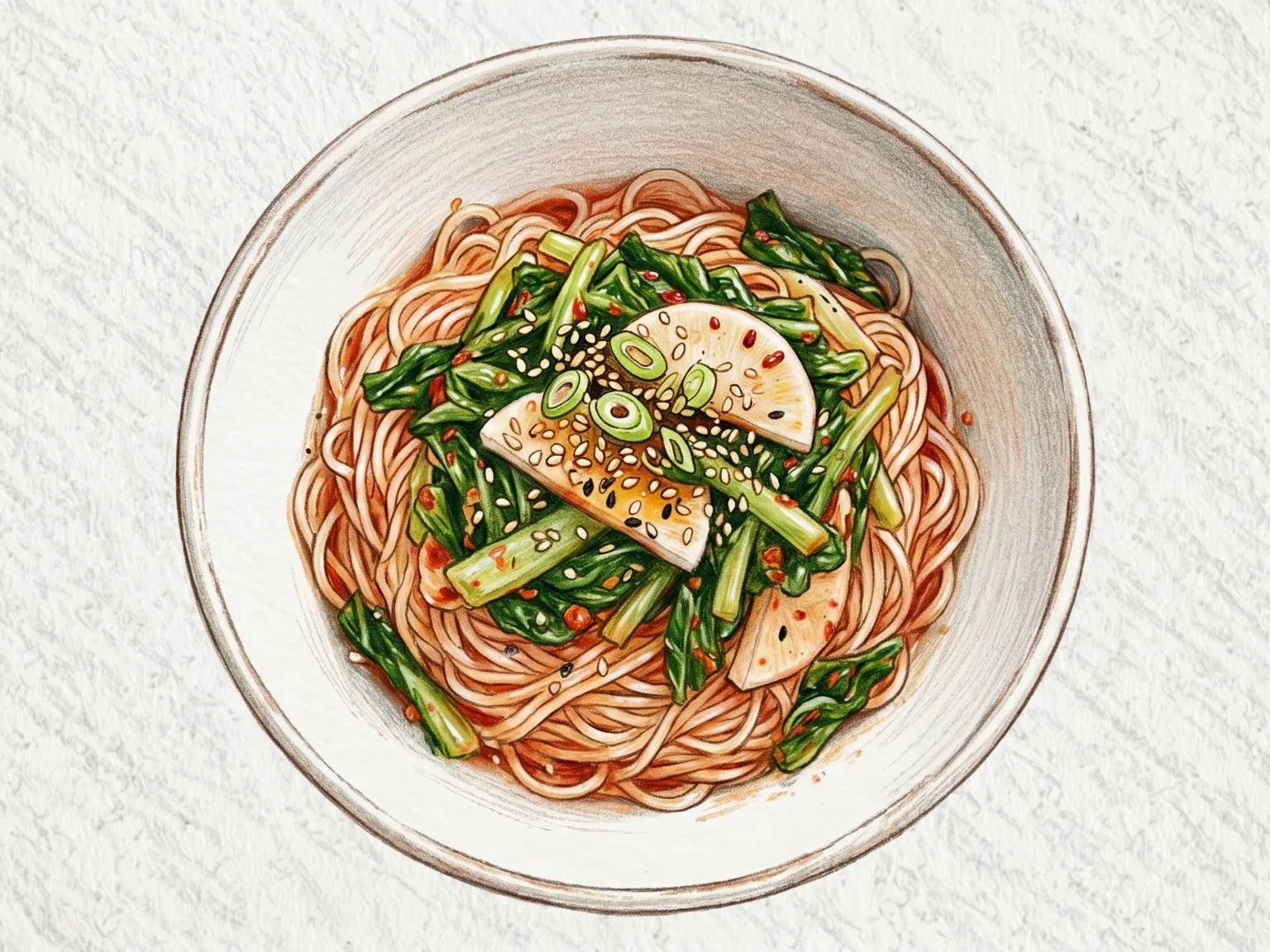
Korean Yeolmu Bibim Guksu
Yeolmu bibim guksu is a Korean mixed noodle dish built around young radish kimchi (yeolmu kimchi). The kimchi provides a crunchy texture and a fermented tanginess that anchors the bowl. Thin somyeon noodles are rinsed in cold water, then tossed with gochugaru or gochujang dressing, sesame oil, and sesame seeds. The heat level stays moderate, letting the kimchi's sourness come through. Total preparation is about 23 minutes, and the recipe requires no cooking beyond boiling the noodles.

Korean Kimchi Chilled Noodle Soup
Kimchi mari guksu is a Korean chilled noodle soup designed for hot weather. The broth is a simple mixture of aged kimchi juice, cold water, a touch of sugar, and vinegar, stirred together and refrigerated until thoroughly cold. Thin somyeon wheat noodles are boiled, rinsed under cold running water to remove surface starch, and placed in a bowl. Chopped kimchi and julienned cucumber go on top, then the ice-cold broth is poured over. The key to the dish is pre-chilling the broth rather than adding ice cubes, which would dilute the tangy kimchi flavor. Since kimchi fermentation levels vary, the vinegar can be adjusted by half-teaspoon increments to hit the right balance of sour and sweet.

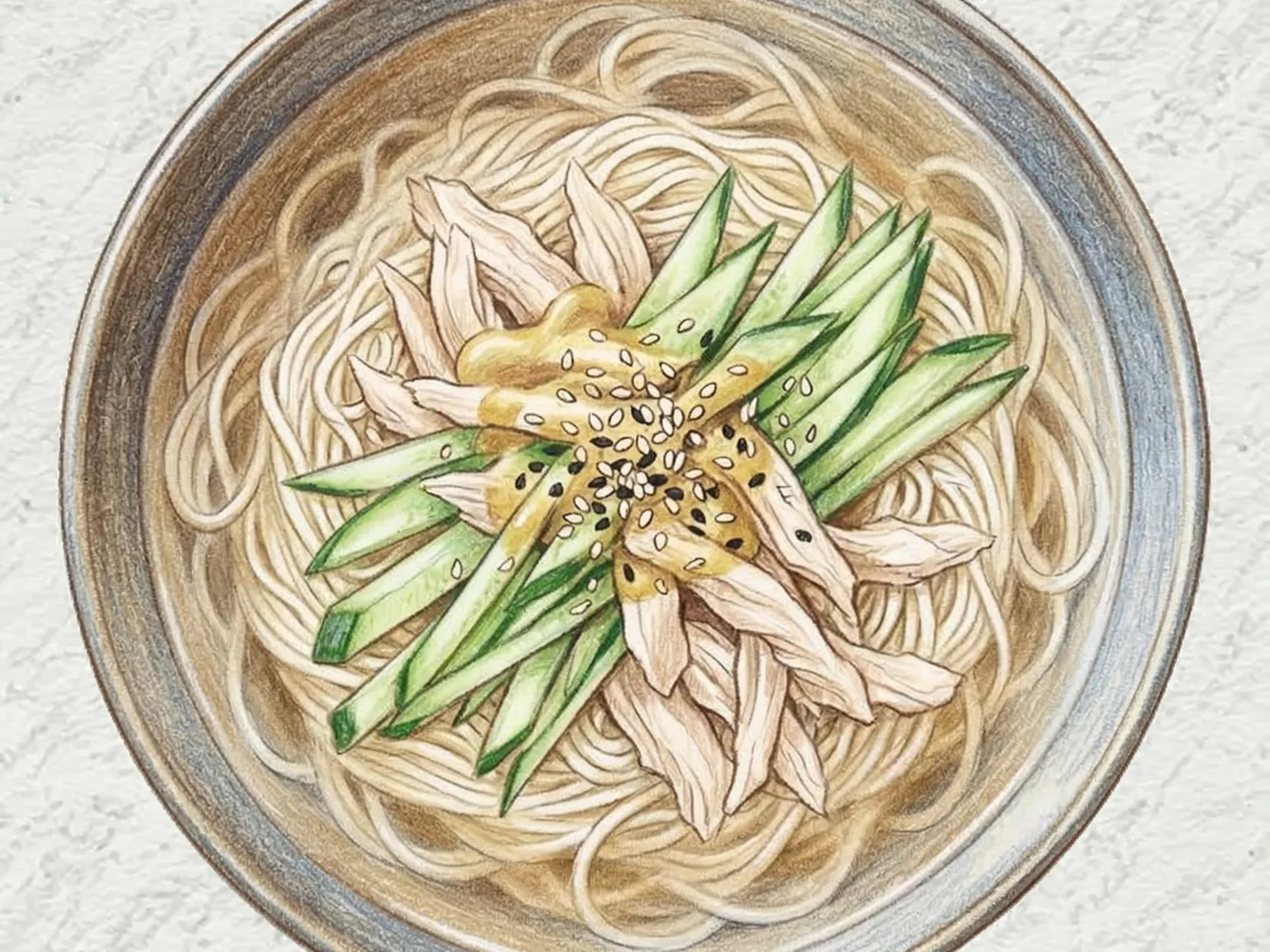
Korean Cold Buckwheat Noodles
Mul naengmyeon is a Korean cold noodle dish where chewy buckwheat noodles are served in an icy, clear broth chilled to a near-slushy state. Placing the broth in the freezer for about an hour creates a thin layer of ice crystals that maximizes the first-sip chill. The noodles are boiled briefly and rubbed under cold running water to strip away excess buckwheat starch and its distinctive odor, then rinsed once more in ice water for a firm, springy bite. Julienned cucumber and pickled radish contribute crunch, while a halved boiled egg adds a creamy yolk richness to the otherwise lean broth. Vinegar and Korean mustard are added at the table to taste, sharpening the overall flavor with bright acidity and a nasal kick.

Korean Dongchimi Buckwheat Noodles
Dongchimi makguksu is a Gangwon-do cold noodle dish of buckwheat noodles served in well-fermented dongchimi radish water kimchi broth. The broth is strained and chilled in the freezer until ice crystals begin to form, which sharpens its tangy, lactic acidity to its peak. The noodles must be rinsed several times in cold water after boiling to strip all surface starch and keep the broth clear. Julienned Korean pear adds a fruit sweetness, and Korean mustard delivers a nasal heat that punctuates the cold liquid. With no oil or fat anywhere in the bowl, this is an exceptionally clean and light dish, well suited to hot summers or as a palate cleanser after a meat-heavy meal.

Korean Seasoned Young Radish Greens
Young radish greens are blanched in boiling water for just ten to fifteen seconds and dressed with soup soy sauce, garlic, sesame oil, and toasted sesame seeds. The greens' summer abundance of moisture and tender fiber means they wilt quickly in hot water, so a brief dip is all that is needed; the stems stay crunchy while the leaves soften just enough to absorb the dressing. Soup soy sauce supplies a light salinity that lets the greens' fresh, grassy flavor come forward, and minced garlic adds a sharp note that anchors the mild base. Sesame oil coats the strands thinly, creating a smooth mouthfeel, and sesame seeds release a warm, nutty fragrance each time they are bitten. Rinsing in cold water immediately after blanching locks in the bright, pale green color, and squeezing out excess water ensures the seasoning clings tightly to the greens. This namul wins on clean, understated flavor rather than bold seasoning, making it an effective palate cleanser alongside spicy stews or rich grilled meats.

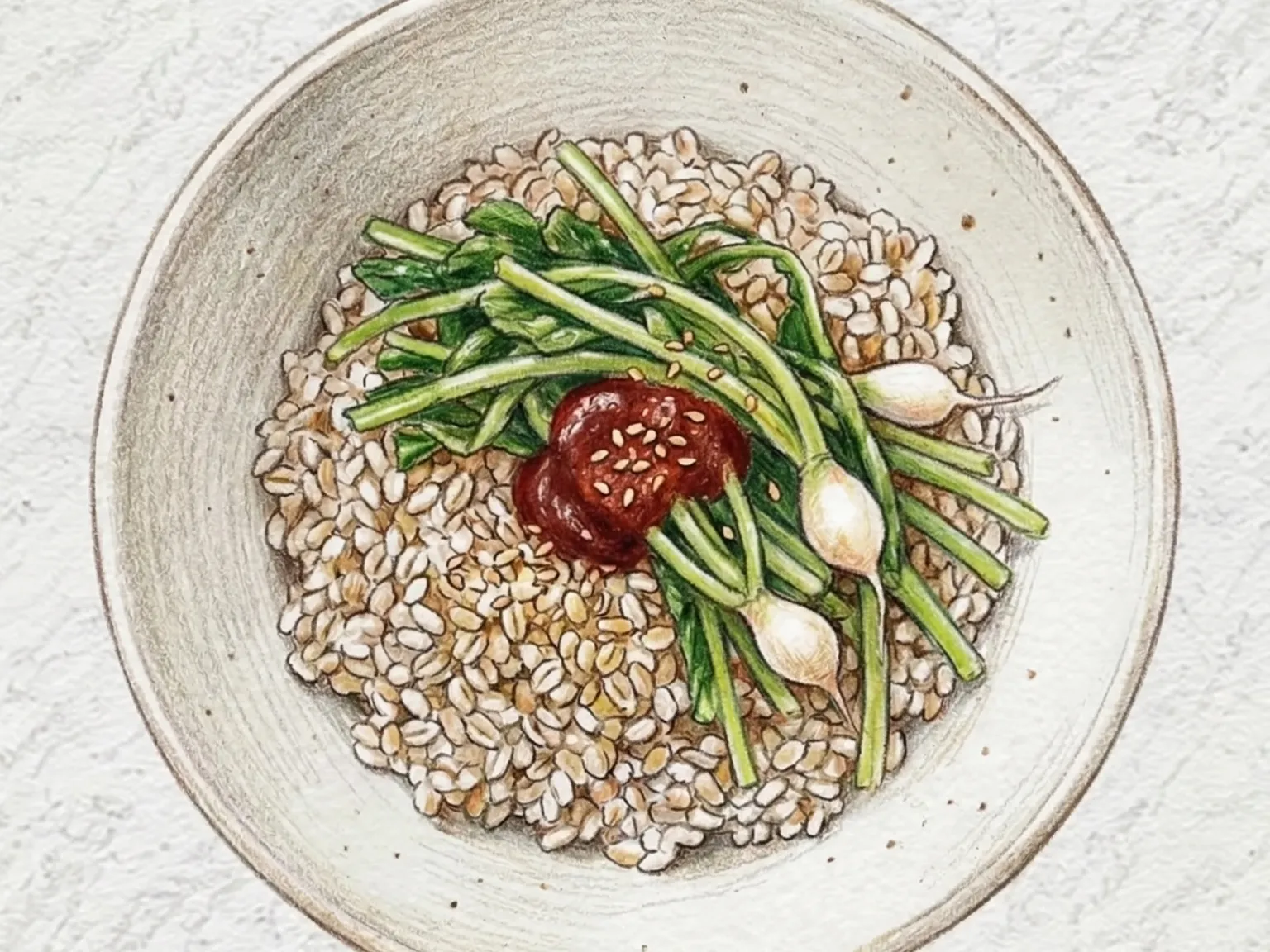
Korean Young Radish Barley Bibimbap
Barley-mixed rice has a hearty, popping texture and a nutty flavor that pairs naturally with the crisp, tart bite of freshly made young radish kimchi. The crunchy stems of the kimchi contrast with the chewy barley grains, and stirring in gochujang ties the tangy, spicy, and sweet elements together into a cohesive bowl. A spoonful of sesame oil folded in at the end adds a roasted fragrance that lifts the overall depth of flavor. This bibimbap is especially refreshing in the summer months as a cooling, appetite-stimulating meal.