Charim

2686 Korean & World Recipes

2686+ Korean recipes, clean and organized. Ingredients to instructions, all at a glance.

Korean Seasoned Young Radish Greens

Korean Seasoned Young Radish Greens

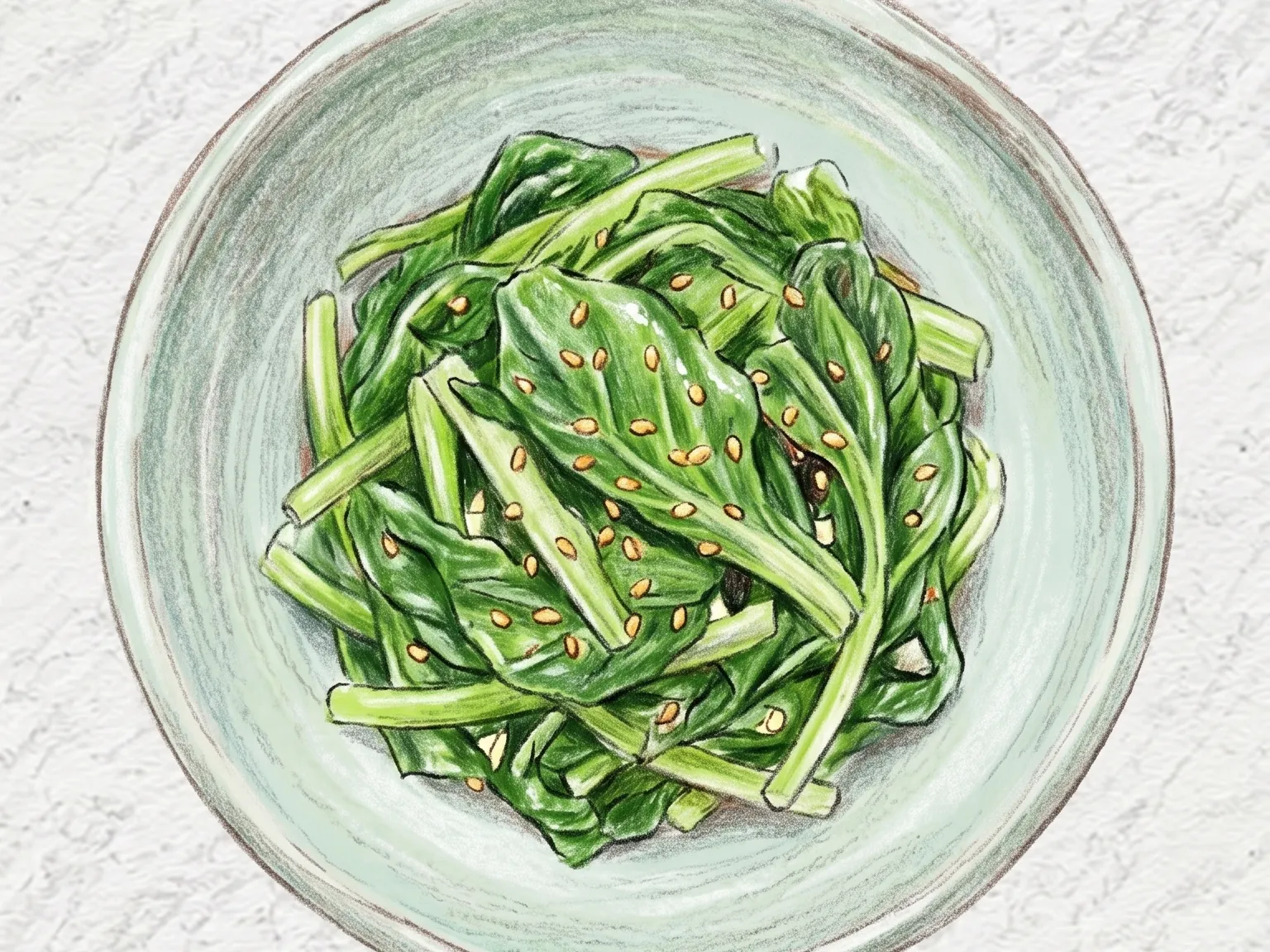
Young radish greens are blanched in boiling water for just ten to fifteen seconds and dressed with soup soy sauce, garlic, sesame oil, and toasted sesame seeds. The greens' summer abundance of moisture and tender fiber means they wilt quickly in hot water, so a brief dip is all that is needed; the stems stay crunchy while the leaves soften just enough to absorb the dressing. Soup soy sauce supplies a light salinity that lets the greens' fresh, grassy flavor come forward, and minced garlic adds a sharp note that anchors the mild base. Sesame oil coats the strands thinly, creating a smooth mouthfeel, and sesame seeds release a warm, nutty fragrance each time they are bitten. Rinsing in cold water immediately after blanching locks in the bright, pale green color, and squeezing out excess water ensures the seasoning clings tightly to the greens. This namul wins on clean, understated flavor rather than bold seasoning, making it an effective palate cleanser alongside spicy stews or rich grilled meats.

Prep 10min Cook 4min 4 servings

Adjust Servings

2servings
servings

Instructions

  1. 1

    Wash young radish greens and trim root ends.

  2. 2

    Blanch in salted boiling water for 1-2 minutes.

  3. 3

    Rinse in cold water and squeeze dry.

  4. 4

    Season with soup soy sauce, garlic, and sesame oil.

  5. 5

    Sprinkle sesame seeds and serve.

🛒Shop Ingredients on Amazon

As an Amazon Associate, we may earn from qualifying purchases.

Tips

If stems are thick, blanch 30 seconds longer.

Nutrition (per serving)

Calories
49
kcal
Protein
2
g
Carbs
4
g
Fat
3
g

More Recipes

Korean Seasoned Radish Greens Namul
Side dishesMedium

Korean Seasoned Radish Greens Namul

Dried radish greens are soaked, boiled until pliable, and dressed in a seasoning anchored by doenjang and ground perilla seeds. The drying process concentrates the fiber in the greens, giving them a satisfying chew that persists even after boiling: the outer layer turns silky while the inner stem retains a springy resistance. Doenjang supplies the salty, fermented backbone, and ground perilla seeds melt into a creamy coating that softens the roughness of the greens on the palate. A generous pour of perilla oil ties the dressing together, adding a glossy sheen and a rich, nutty fragrance. Minced garlic and chopped green onion introduce a sharp aromatic layer that cuts through the heaviness. Each bite releases more of the siraegi's own deep, vegetal flavor, a taste that builds rather than fades. Paired with steamed rice, the doenjang's salinity and the perilla's richness draw out the natural sweetness of the grain.

🏠 Everyday🍱 Lunchbox
Prep 20minCook 20min4 servings
Korean Seasoned Carrot Namul
Side dishesEasy

Korean Seasoned Carrot Namul

Carrot namul is one of the five-color banchan Koreans prepare for ancestral rites, where orange represents fire. Julienned thin, the carrots are salted briefly to shed water, then stir-fried with garlic for two to three minutes - just enough to soften the raw edge while keeping an audible crunch. No soy sauce or chili enters the pan; seasoning stays minimal to preserve natural sweetness. A final toss with sesame oil and seeds rounds out this clean, single-ingredient side.

🏠 Everyday🍱 Lunchbox
Prep 8minCook 6min2 servings
Korean Seasoned Mallow Greens
Side dishesEasy

Korean Seasoned Mallow Greens

Mallow greens have appeared in Korean cooking since the Joseon era, typically in doenjang-guk. For this namul, they are blanched just 40 seconds - supple but not collapsed. After squeezing dry, they are rubbed gently with doenjang, soup soy sauce, and garlic so the fermented paste penetrates the porous leaves. A finish of sesame oil adds a glossy coating. The distinctive mucilaginous quality - slightly slippery on the tongue - sets this apart from other Korean greens.

🏠 Everyday🍱 Lunchbox
Prep 9minCook 3min4 servings
Korean Seasoned Crown Daisy Namul
Side dishesEasy

Korean Seasoned Crown Daisy Namul

Crown daisy greens are blanched for no more than ten seconds, just long enough to wilt the stems while preserving the leaves' intense herbal fragrance. This chrysanthemum-family herb carries a distinctive aroma that can overwhelm if overcooked but captivates when handled briefly. The dressing is straightforward: soy sauce provides the salty base, sesame oil contributes richness, and toasted sesame seeds burst with a nutty flavor when bitten. Through this simple seasoning, the crown daisy's slightly bitter, almost medicinal character cuts clearly, making the dish taste more vivid than its ingredient list suggests. Minced garlic and chopped green onion layer additional aromatics without competing with the main ingredient. Shocking the greens in ice water immediately after blanching locks in their bright green color, and squeezing out excess moisture before dressing prevents the sauce from diluting. The result is a namul with a clean, sharp personality that pairs well with milder dishes on a Korean table.

🏠 Everyday🍱 Lunchbox
Prep 8minCook 2min4 servings
Korean Young Radish Cold Noodles
NoodlesEasy

Korean Young Radish Cold Noodles

Yeolmu mul guksu is a Korean cold noodle soup where the broth comes directly from yeolmu kimchi liquid mixed with cold water or light stock. The fermented, tangy kimchi brine serves as the soup base, eliminating the need for separate seasoning. Chilled somyeon noodles sit in the broth, topped with crunchy yeolmu kimchi pieces and often a few ice cubes. A halved boiled egg and sesame seeds are standard garnishes. The dish takes about 25 minutes to prepare and is straightforward as long as yeolmu kimchi is available.

🏠 Everyday
Prep 15minCook 10min2 servings
Korean Radish Greens Kimchi
KimchiEasy

Korean Radish Greens Kimchi

Mucheong kimchi is a Korean radish greens kimchi made by trimming tough parts, cutting greens into 5 cm pieces, brining in coarse salt, then dressing them in a paste of sweet rice flour, gochugaru, anchovy fish sauce, garlic, ginger, and onion. The fibrous stems absorb the seasoning deeply while retaining a substantial chew, and the rice paste acts as a binding agent that keeps the coating even throughout fermentation. Anchovy fish sauce contributes a deep seafood umami, and onion buffers the chili heat with natural sweetness. Beyond serving as a standalone side dish, this kimchi adds concentrated flavor when torn and stirred into siraegi soup or doenjang jjigae.

🍱 Lunchbox
Prep 35minCook 5min4 servings
More Side dishes →