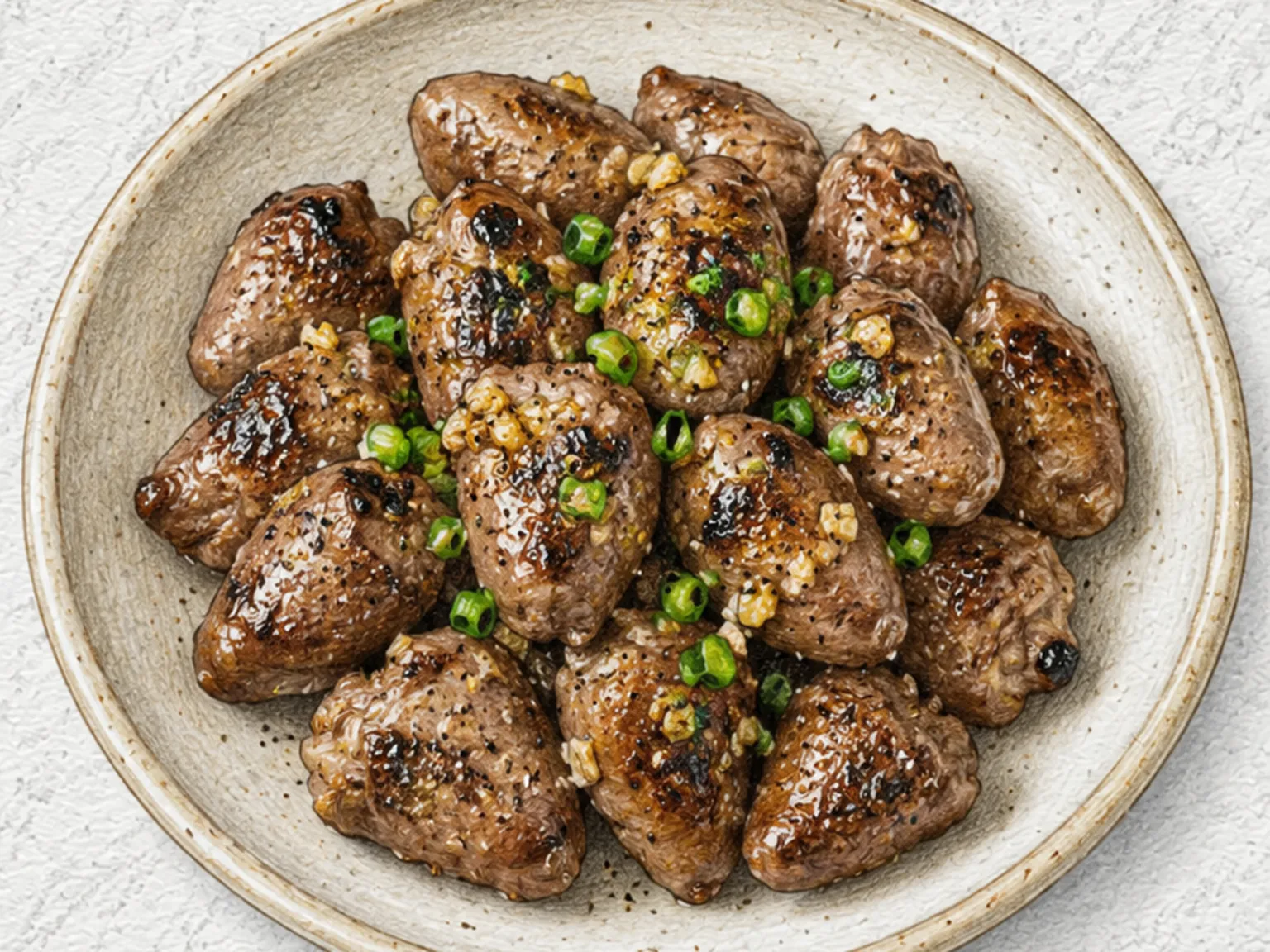
Korean Grilled Chicken Hearts
Quick answer
This recipe describes how to prepare chicken hearts by cleaning, seasoning, and searing them quickly over high heat.
What makes this special
- A mirin soak in Yeomtong-gui neutralizes gamey notes before searing the chicken hearts over high heat.
- 10-minute mirin soak removes the off-smell specific to chicken hearts before high-heat grilling
- Total cook time strictly 6 minutes; even slight overcooking turns the springy texture tough
Key ingredients
Core cooking flow
- 1 Split 400 g chicken hearts lengthwise and remove visible vessels and blood clots.
- 2 Place the hearts in a bowl with 2 tablespoons cooking wine and rest for only 10 minutes.
- 3 Add 3/4 teaspoon salt, 1/2 teaspoon black pepper, 1 teaspoon minced garlic, and 1 tablespoon neutral oil.
This recipe describes how to prepare chicken hearts by cleaning, seasoning, and searing them quickly over high heat. The process begins by splitting the hearts lengthwise to remove vessels and blood clots, which is necessary to ensure a pleasant texture. The hearts are soaked in cooking wine for ten minutes to neutralize any gamey smell, then patted dry. After a brief marinade with salt, black pepper, minced garlic, and neutral oil, they are added in a single layer to a very hot pan. Searing them without moving for three minutes colors the underside, after which they are flipped to cook for another two to three minutes. Keeping the total cooking time around six minutes prevents the chicken hearts from turning tough. The dish is finished with chopped scallions and is typically served warm as a side dish or drinking snack.
Instructions
Read the steps as a cooking flow: prep, heat, seasoning, doneness control, and finish.
- 1Season
Split 400 g chicken hearts lengthwise and remove visible vessels and blood clots.
Rinse under running water, then drain in a sieve so excess surface moisture does not dilute the seasoning.
- 2Heat
Place the hearts in a bowl with 2 tablespoons cooking wine and rest for only 10 minutes.
Lift them out and pat very dry with paper towels, since wet hearts steam instead of sear.
- 3Season
Add 3/4 teaspoon salt, 1/2 teaspoon black pepper, 1 teaspoon minced garlic, and 1 tablespoon neutral oil.
Toss by hand until every cut side is coated, then let stand for 3 minutes.
- 4Control
Heat the pan over high heat until the oil coating looks slightly rippled, then add the hearts in one layer.
Cook in batches if needed, because crowding drops the heat and prevents browning.
- 5Heat
Sear without moving for 3 minutes, until the underside turns brown and the edges tighten.
Flip once and cook 2-3 minutes more, keeping the total time close to 6 minutes.
- 6Finish
Cut the thickest piece and turn off the heat once the center is no longer red.
Scatter 1 sliced scallion over the hot hearts and serve immediately while the texture is still springy.
After the steps
Pick a recipe that fits this dish.
Continue with shared ingredients, meal pairings, or a similar method.
Recipes That Go Well With This
More Grilled →Based on shared ingredients and meal pairing
Manduguk (Korean Dumpling Clear Broth Soup)
Manduguk is a Korean dumpling soup in which hand-folded dumplings stuffed with ground pork, tofu, scallion, and garlic are dropped into a clear, simmering broth, typically anchovy-kelp stock or beef broth, and cooked until they float. As the dumplings cook, their thin wheat-flour wrappers release a subtle starch that gives the broth a barely perceptible body, while the filling leaks savory juices that enrich the liquid gradually. A thin drizzle of beaten egg stirred in near the finish creates silken wisps on the surface of the broth and gives the bowl a more finished appearance. Shredded egg strips and crumbled dried seaweed scattered on top add a pleasant contrast in color and a faint oceanic note to the flavor. Many Korean households serve manduguk on Lunar New Year as an alternative to tteokguk, and some combine the two by adding sliced rice cakes alongside the dumplings. Dumplings can be made in large batches and frozen raw, which means this soup can be pulled together quickly on weeknights without sacrificing any of the flavor that comes from homemade filling. A small dish of soy-vinegar dipping sauce served alongside lets each person adjust the seasoning at the table, and the light acidity of the sauce cuts through the mild broth in a way that makes the contrast between the two worth trying.
Korean Stir-Fried Sweet Potato Stems
Goguma julgi - sweet potato stems - are the above-ground vines of the sweet potato plant, a byproduct that Korean cooks transform into a summer namul rather than discarding. The most labor-intensive step is peeling each stem by hand, pinching the outer skin with a fingernail and pulling it away to reveal the tender core beneath. After blanching for two minutes and rinsing in cold water, the stems are stir-fried in perilla oil with garlic and seasoned with soup soy sauce. Perilla powder stirred in at the end thickens the remaining liquid into a nutty glaze. In season during summer, the stems are harvested from sweet potato fields before the tubers themselves are dug up.
Korean Beef Fried Rice (Soy-Marinated Ground Beef Stir-fried Rice)
Sogogi bokkeumbap stir-fries soy-marinated ground beef with diced vegetables and day-old rice over high heat for a deeply savory fried rice. The beef goes in first, rendering its fat and leaving behind a flavorful fond that coats the pan. Onion, carrot, and zucchini follow, cooking just until their edges soften and their natural sugars begin to caramelize. Cold rice is added and tossed vigorously to break up clumps, picking up the soy seasoning and meat juices as it fries. A final drizzle of sesame oil right before plating adds a fragrant, nutty finish. The beef infuses the rice with a meaty depth while the vegetables keep the dish from feeling heavy, making it a quick, satisfying meal from everyday pantry ingredients.
Korean Garlic-Grilled Chicken Gizzards
Dakttongjip-maneul-gui is a Korean dish of chicken gizzards grilled and stir-fried over high heat with whole garlic cloves and cheongyang chili peppers. Gizzards are dense, pure-muscle organs with a firm, satisfying chew that sets them apart from other chicken cuts. Scoring them deeply before cooking opens the compact tissue so heat penetrates evenly and seasoning reaches the interior; a ten-minute soak in cooking wine beforehand removes any off-odor and lets the flavors absorb. Whole garlic cloves cooked alongside the gizzards undergo a visible transformation - the exterior caramelizes to a golden brown while the inside softens and turns almost creamy, converting raw sharpness into a rounded, sweet depth. The seasoning stays deliberately minimal - only salt and black pepper - so the natural flavor of the gizzards remains the focus, with cheongyang chilies providing a brief, clean heat that punctuates each bite without overwhelming the palate. The dish works equally well as an anju with drinks or as a savory side with steamed rice.
Similar recipes
Korean Assorted Grilled Chicken
Dakgogi-gui-modeum is a Korean assorted chicken grill that brings breast, thigh, and wing pieces together on a single plate, each cut seasoned differently: salt for the breast, gochujang paste for the thigh, and soy-based glaze for the wings. Because each cut carries a different ratio of fat to muscle, cooking times must be calibrated individually rather than treating all three the same. Breast meat loses moisture quickly and needs the shortest time over heat, while wings benefit from longer cooking to render the fat under the skin. The salt-seasoned breast keeps its clean, mild flavor front and center; the gochujang thigh delivers fermented heat and a char at the edges; the soy-glazed wing balances sweet against salty in each sticky bite. Serving all three together lets diners compare three distinct outcomes from the same bird, making the role of seasoning and cut easy to taste side by side rather than just understand in theory.
Korean Daegu Doenjang Gui (Doenjang-Grilled Cod)
Daegu doenjang gui is a Korean grilled cod dish where fillets are coated with a paste of doenjang, minced garlic, and sesame oil, then cooked until the paste forms a thin, concentrated crust over the fish. Cod is mild-flavored white fish that accepts the deep, fermented soybean character of doenjang without conflict -- the seasoning defines the fish rather than overpowering it. As the paste dries slightly against the heat, a dark crust seals the surface while the flesh underneath stays moist and flakes cleanly. Controlling the amount of doenjang is critical because the paste can easily oversalt the delicate fish if applied too heavily. Serving with sliced green onion or perilla leaves provides a fresh, herbal counterpoint to the earthy, savory paste.
Korean Soy-Glazed Kabocha Grill
Danhobak-ganjang-gui is a Korean soy-glazed kabocha squash dish where thick half-moon slices are pre-steamed or microwaved until just tender, then pan-grilled with a glaze of soy sauce, corn syrup, minced garlic, and sesame oil. Pre-cooking the squash is essential: it eliminates the need for prolonged grilling, so the glaze can caramelize quickly over high heat without the interior remaining raw. The natural sugars in kabocha meet the salt of the soy sauce to create a pronounced sweet-salty contrast. The corn syrup melts into a shiny, lacquer-like coating on the surface. Sesame oil should be added only after removing from heat to preserve its fragrance, and a scattering of toasted sesame seeds finishes the dish with a crunchy, nutty accent. Kabocha squash skin is fully edible and becomes slightly crisp when grilled, creating a pleasant textural contrast with the soft, sweet interior. Substituting a spoonful of gochujang for part of the soy sauce produces a spicy variation, and minced cheongyang chili added to the glaze layers heat over the sweet-salty profile for a more intense side dish.
Korean Perilla Leaf Chicken Jeon
Perilla Leaf Chicken Jeon is a savory Korean pan-fried pancake stuffed with ground chicken and tofu. The filling is made by combining lean ground chicken with pressed, crumbled tofu, green onions, garlic, salt, and pepper, kneaded together until cohesive. This mixture is spread in a thin layer onto the floured side of perilla leaves, which are then folded in half and pressed to seal. To cook, the folded leaves are dusted with flour, dipped in beaten egg, and pan-fried over medium-low heat to ensure the egg coating does not burn while the interior cooks through. The mild flavor and soft texture of the chicken and tofu filling offer a balanced contrast to the herbal, aromatic qualities of the perilla leaves. To preserve the juices, the finished jeon should rest briefly and be cut into bite-sized pieces just before serving.
Korean Salt-Grilled Chicken Gizzards
Dak-ttongjip sogeum-gui involves trimming the silver skin from chicken gizzards, seasoning them with salt and black pepper for ten minutes, then searing them in a hot, garlic-scented pan for six to seven minutes. High heat is essential: it crisps the exterior while keeping the interior springy and chewy, and overcrowding the pan causes the gizzards to steam rather than sear, turning them soft and rubbery. Removing the silver skin thoroughly before cooking reduces the tough, chewy membrane that can make gizzards difficult to eat. Scallion is tossed in for the final minute, and a squeeze of lemon juice at the end cuts through the richness and brightens the finish. The dish pairs particularly well with soju or beer, and adding sliced Cheongyang chili during cooking gives a spicier variation for those who want extra heat.