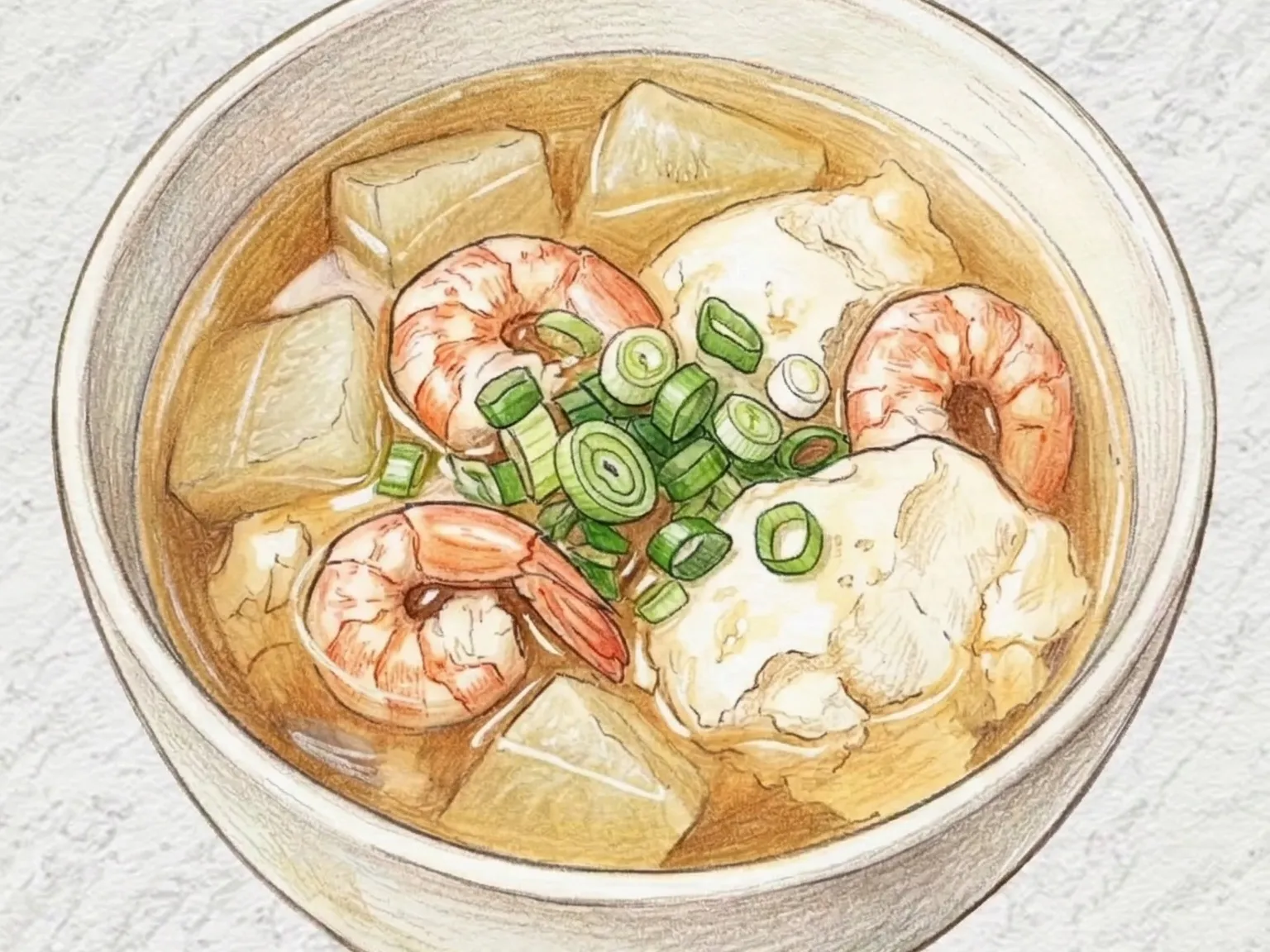
Korean Soft Tofu Shrimp Soup
Yeondubu-saeu-guk is a clear Korean soup where anchovy-kelp stock, radish, and shrimp provide the flavor, and soft tofu adds a creamy contrast. Radish simmers for eight minutes to release its natural sweetness, then peeled and deveined shrimp cook for three minutes, contributing a clean seafood taste without heaviness. Soft tofu is spooned in at the very end and heated for just two minutes so it stays intact and silky. Green onion and a touch of salt close out the seasoning, leaving a gentle, soothing bowl that works well as a light meal or alongside heavier dishes.
Adjust Servings
Instructions
- 1
Peel and devein the shrimp, rinse briefly in salted water, and drain.
- 2
Slice radish thinly into small squares and finely chop the green onion.
- 3
Add stock and radish to a pot and simmer over medium heat for 8 minutes.
- 4
Add shrimp and minced garlic, cook for 3 minutes, then season with soup soy sauce.
- 5
Add soft tofu in large spoonfuls, simmer 2 more minutes, then finish with green onion and salt.
As an Amazon Associate, we may earn from qualifying purchases.
Tips
Nutrition (per serving)
More Recipes

Korean Clam Soft Tofu Soup
Bajirak sundubu guk is a Korean soup where manila clam broth meets soft tofu for a texture that is simultaneously silky and full of marine flavor. Radish simmers first to release its cool sweetness into the water, and when the purged clams are added afterward, the radish sweetness wraps around the clams' saltiness, creating a balanced base. Once the shells open, soft tofu is scooped in with a large spoon and left largely undisturbed; stirring too vigorously dissolves the tofu completely and clouds the broth, while gentle placement preserves its pillowy, cloud-like texture. Soup soy sauce and minced garlic provide seasoning, and scallion goes in at the end for aroma. Each spoonful delivers the soft tofu holding a pocket of clam-infused broth, making the eating experience both mild and deeply flavored at once. Because clam meat toughens with prolonged cooking, the tofu should go in immediately after the shells open and the soup should finish within three minutes.

Korean Soft Tofu Soup (Mild Clear Broth with Silken Tofu)
Sundubu-guk is the gentler sibling of the more widely known sundubu-jjigae, trading the latter's fiery red broth for a clear, mild soup that puts silken tofu front and center. The base is a simple anchovy and kelp stock, seasoned with soup soy sauce and nothing more assertive, so the broth stays transparent and clean on the palate. Blocks of unpressed soft tofu are slipped into the simmering liquid and heated just until they are warmed through - overcooked sundubu loses the trembling, custard-like texture that defines the dish. Each spoonful collapses gently on the tongue, releasing a faint, sweet soybean flavor that pairs effortlessly with the umami-rich stock. A small addition of salted shrimp paste can be stirred in at the table to introduce a subtle marine depth without disrupting the soup's calm character. This is the soup Koreans turn to when appetite is low, digestion needs rest, or the body simply craves something warm and uncomplicated. It is equally suitable for young children and elderly diners, and its quiet simplicity is precisely its strength.

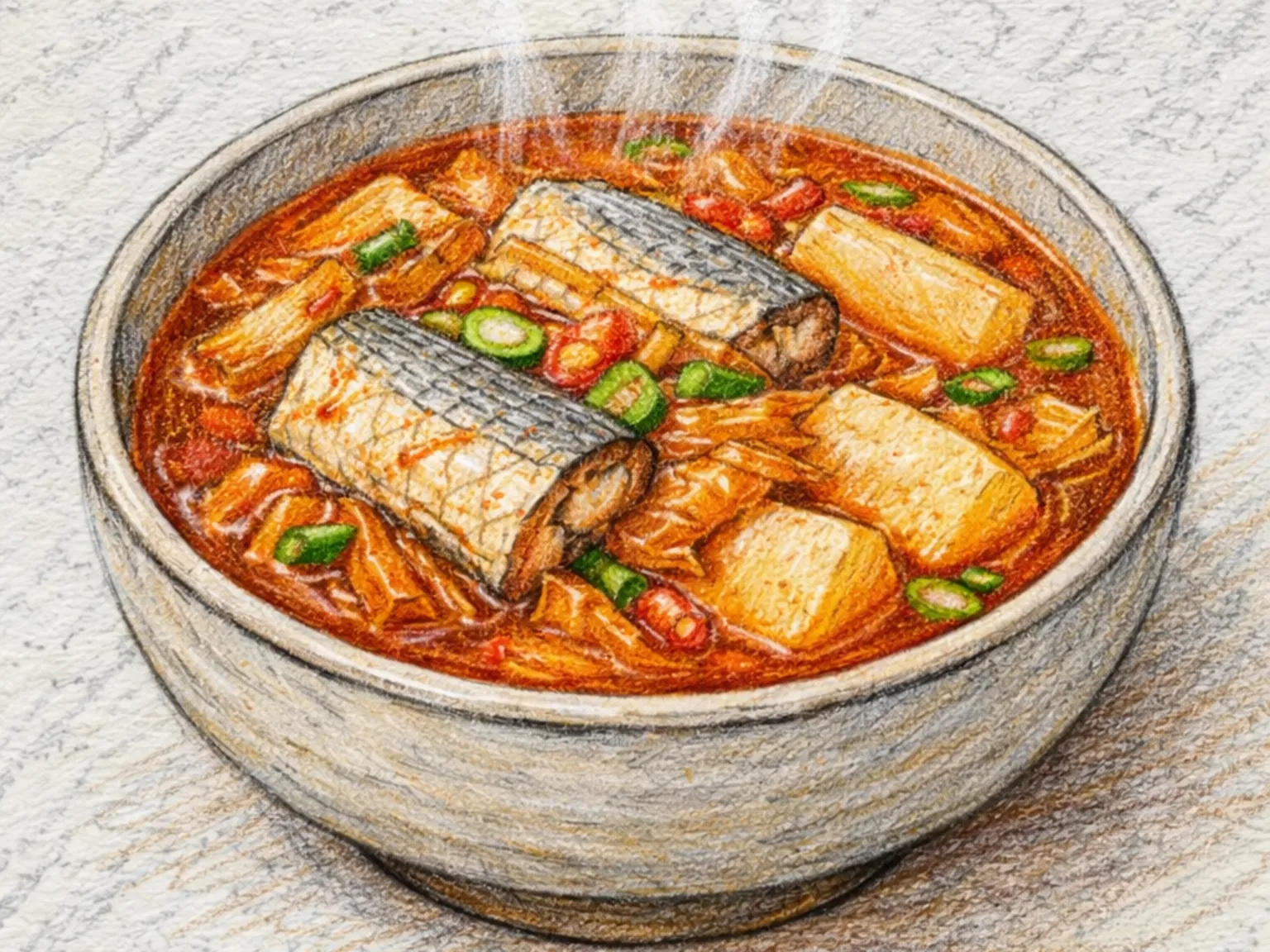
Gomchi-guk (Eelpout Fish Radish Soup)
Gomchi-guk is an East Coast Korean fish soup made with eelpout, a soft-fleshed deep-sea fish rich in natural gelatin. The fish is cut into chunks and simmered with radish in plain water, producing a broth that is remarkably clean yet carries a gentle marine richness and a slightly viscous body from the dissolved collagen. Radish tames any fishiness and adds a refreshing sweetness, while a splash of cheongju rice wine helps eliminate residual off-notes. As the soup cooks, the eelpout flesh breaks apart and melds into the liquid, making the broth and the fish nearly inseparable. Garlic and green onion provide the finishing aromatics. This is a regional specialty of the Gangwon and North Gyeongsang coastal towns, where it is typically served bubbling in a stone pot during the winter months. For those who live far from the coast, frozen or dried eelpout can approximate the experience.

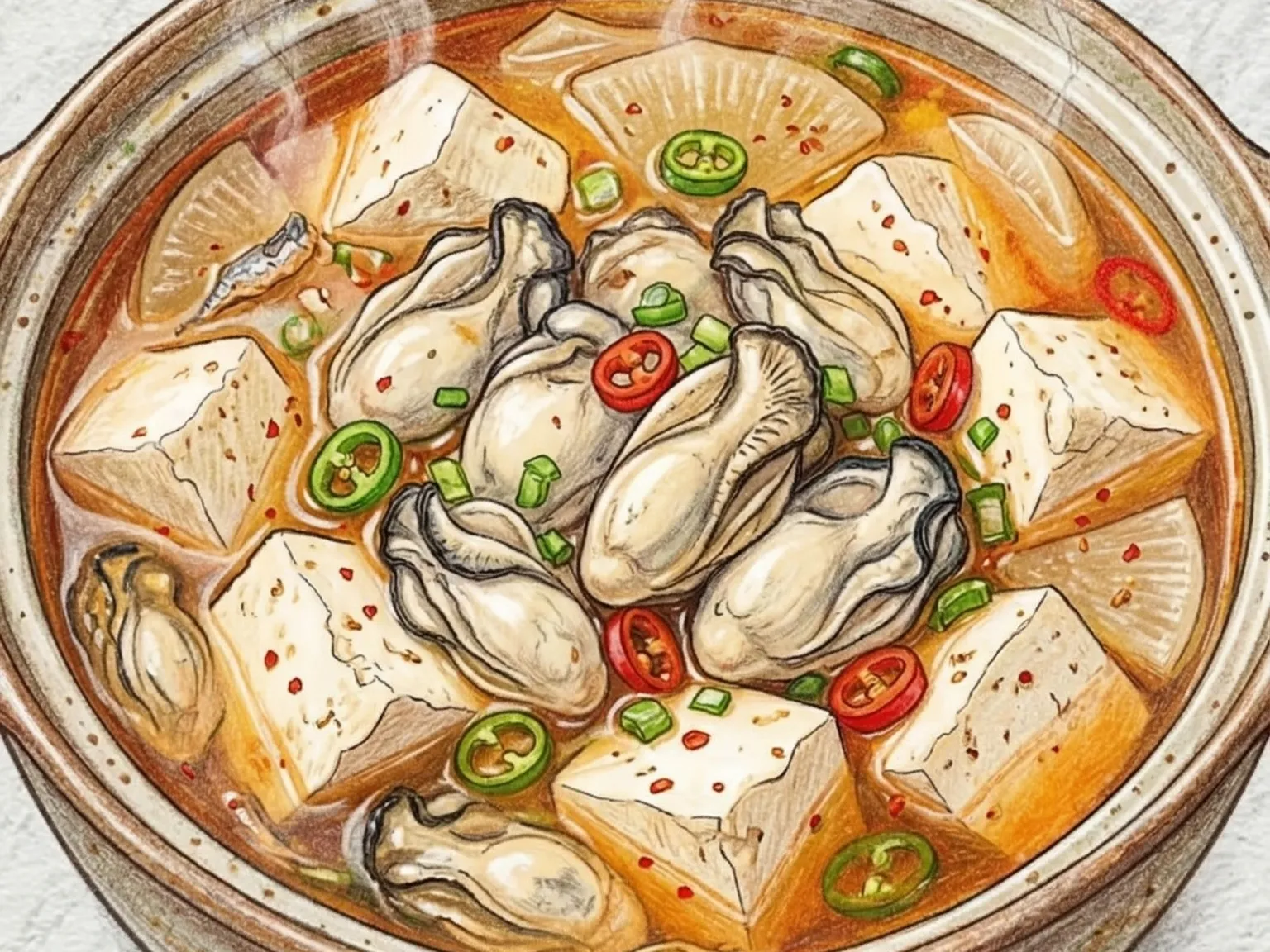
Korean Oyster Soft Tofu Soup
Gul-sundubu-tang is a Korean soup that brings together briny fresh oysters and silky soft tofu in a lightly spicy broth. The flavor base starts with garlic and gochugaru bloomed in sesame oil, which gives the entire pot a warm, aromatic heat. Sliced zucchini and onion go in next, contributing a natural sweetness that tempers the chili. Water is added, and once simmering, spoonfuls of wobbly sundubu tofu are dropped in, followed by the oysters at the very last moment so they stay plump rather than tough. Soup soy sauce adjusts the salt. The finished bowl is rust-red, gently spicy, and layered: the tofu melts on the tongue, the zucchini offers a mild crunch, and the oysters deliver bursts of sea flavor throughout.

Korean Clear Broth Tofu Stew
Tofu simmers in a deep beef stock alongside shiitake mushrooms and zucchini in this clean-flavored stew. The quality of the beef stock drives the entire dish, with shiitake mushrooms reinforcing the umami depth. Soft tofu cubes absorb the rich broth, while zucchini contributes a mild sweetness. Seasoned only with soup soy sauce and salt, this stew showcases a restrained, elegant approach to Korean jjigae without any chili heat.

Korean Soft Tofu Stew (Silken Tofu in Spicy Clam Broth)
Sundubu-jjigae is one of Korea's most iconic stews, featuring silken soft tofu in a fiery broth with clams, ground pork, and gochugaru. Sesame oil, chili flakes, and garlic are fried together first to create a fragrant base, then the liquid is added and brought to a rolling boil. Two eggs are cracked on top and left to set softly in the bubbling stew. The clams contribute a clean brininess while the pork grounds the dish with meaty depth, and it is traditionally served still boiling in an earthenware pot.