Korean Silken Tofu with Seasoned Soy Sauce
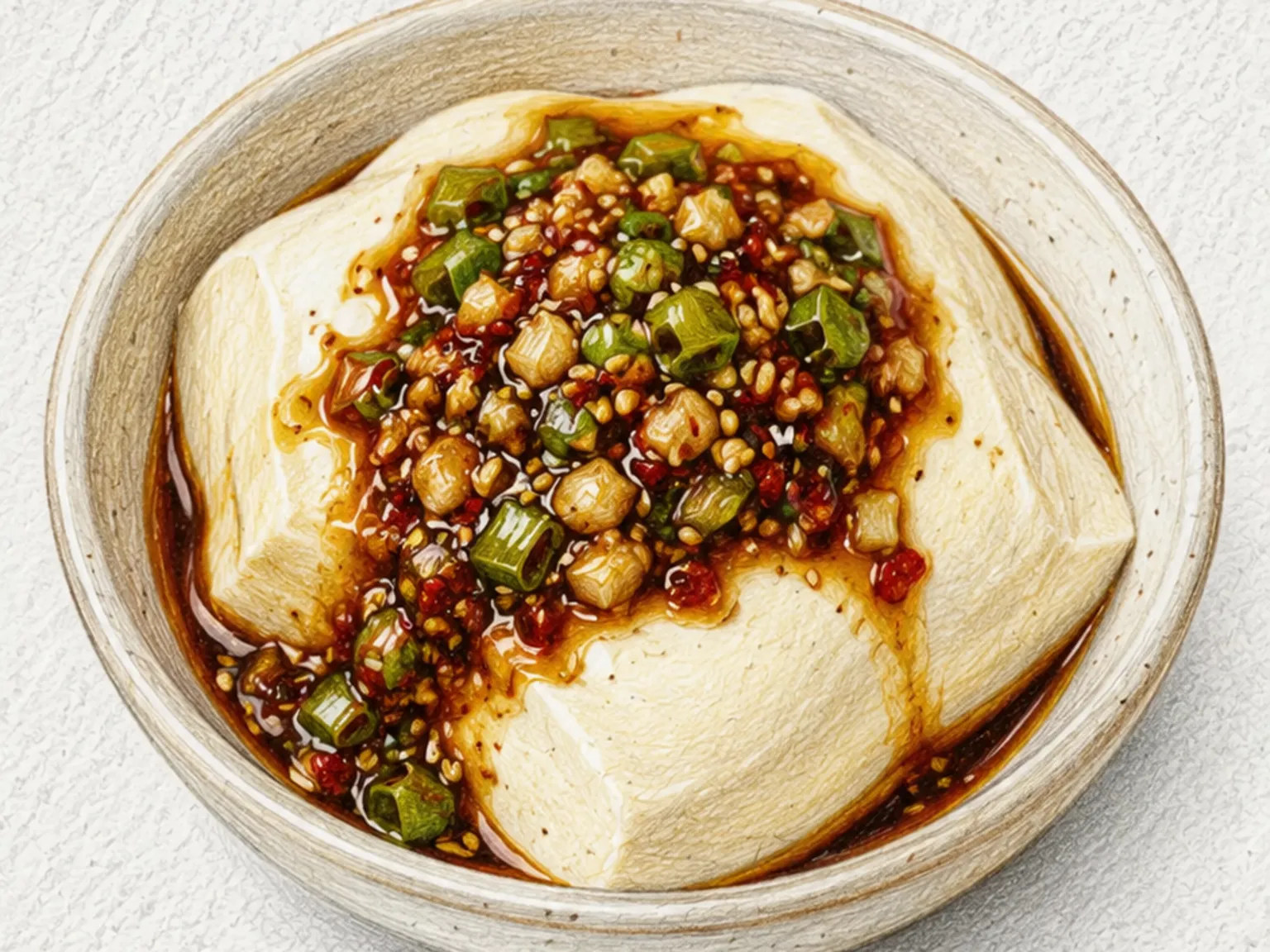
Chilled silken tofu is placed in a bowl and topped with a soy-based seasoning sauce that provides all the flavor the bland tofu needs. Silken tofu is coagulated with less agent than regular tofu, resulting in a custard-like texture that yields to a spoon and dissolves on the tongue. The sauce mixes soy sauce with gochugaru, minced garlic, chopped green onion, sesame oil, and toasted sesame seeds, concentrating salty, spicy, and nutty notes into a single spoonful. Each bite pairs the tofu's neutral softness with the sauce's concentrated punch, creating a rhythm of gentle and sharp that keeps the palate engaged. Sesame oil in the sauce adds a glossy sheen across the tofu's white surface, and the red flecks of chili powder provide a visual contrast that signals the heat to come. The soybean fragrance of the tofu itself acts as a quiet backdrop, grounding the louder flavors of the dressing. Because no cooking is required beyond mixing the sauce, this banchan comes together in minutes and is especially practical on busy evenings.
Adjust Servings
Instructions
- 1
Remove silken tofu from package, drain, and place on a plate.
- 2
Microwave for 1 minute or keep chilled, as preferred.
- 3
Mix soy sauce, water, chili flakes, and garlic.
- 4
Add minced green onion and sesame oil to finish the sauce.
- 5
Spoon the sauce evenly over the tofu.
- 6
Sprinkle sesame seeds and serve immediately.
As an Amazon Associate, we may earn from qualifying purchases.
Tips
Nutrition (per serving)
More Recipes

Korean Pan-Fried Tofu with Seasoned Soy Sauce
Dubu buchim yangnyeom is one of the most common Korean home-cooked banchan - a dish that every Korean learns to make early because the technique is forgiving and the ingredients are always on hand. Firm tofu is sliced thick, salted briefly to draw moisture from the surface, then pan-fried in a thin film of oil until both faces develop a golden crust that crackles against the still-soft interior. The seasoned soy sauce - yangnyeom-jang - is made tableside by mixing soy sauce with gochugaru, chopped scallion, garlic, and sesame oil, then spooned directly over the hot tofu. The residual heat of the tofu slightly wilts the raw scallion and blooms the sesame oil, releasing its fragrance. This banchan has been part of Korean temple cuisine for centuries, where it serves as a primary protein source in meat-free meals.

Korean Steamed Tofu with Soy Sauce
Dubu-jjim is firm tofu steamed and topped with a seasoning sauce of soy sauce, gochugaru, chopped green onion, garlic, and sesame oil. Cutting the tofu into thick slabs before steaming lets heat penetrate evenly, producing a surface with slight resistance and a silky interior. The soy-chili sauce drizzled on top seeps into the warm tofu, delivering salty and mildly spicy flavors in each bite. Sesame oil and seeds finish the dish with a toasted aroma. Cooked without any added oil, it is a clean, protein-rich banchan that works well on a vegetarian spread.

Korean Seasoned Garlic Chives
Unlike buchu kimchi, this raw chive muchim uses soy sauce and vinegar rather than fish sauce, producing a brighter, acidic result. The chives stay raw, tossed by hand under twenty seconds - longer and they bruise, releasing liquid. Gochugaru adds color and heat, while vinegar and sugar create a sweet-tart dressing contrasting with natural pungency. Must be eaten the same day before the chives wilt. A sharp, punchy side that cuts through oily main dishes.

Korean Stir-Fried Eggplant Banchan
Gaji bokkeum transforms eggplant - a vegetable Koreans have cultivated since the Goryeo period - into a quick, oil-glazed banchan where the cooking speed matters as much as the seasoning. The eggplant is sliced into half-moons, and the pan must be scorching hot before the pieces enter; any hesitation and the eggplant will steam rather than sear, turning it into a soggy mass. High heat with minimal oil produces lightly charred edges while the interior turns silky and almost custardy. Soy sauce, garlic, and sesame oil go in during the final thirty seconds, sizzling against the hot surface and coating each piece in a thin, caramelized layer. The dish has a concentrated, clean umami taste without the heaviness of a braised preparation. Korean home cooks make this as a weeknight banchan precisely because it takes under ten minutes from cutting board to table.

Korean Tofu with Spicy Soy Dressing
This banchan takes pan-fried tofu in a sharper direction than the classic dubu-buchim by building the dressing around cheongyang chili - Korea's hottest common pepper variety. The tofu is seared hard in a hot pan until a mahogany crust forms, creating a barrier that keeps the interior creamy while providing textural contrast. The dressing is raw - soy sauce, minced cheongyang chili, scallion, garlic, and a drop of sesame oil - poured over while the tofu is still steaming. Cheongyang peppers deliver a clean, immediate heat that dissipates quickly, unlike the slow burn of gochugaru. The dish works well alongside mild soups like miyeok-guk, where the chili's sharpness provides a counterpoint to the broth's gentleness.

Korean Spicy Braised Tofu
Spicy dubu-jorim pan-sears firm tofu slabs cut 1.5 centimeters thick until golden on both sides, then braises them in a sauce of soy sauce, gochugaru, garlic, and sugar. Searing first firms the tofu so it holds its shape through the eight-minute simmer, during which onion and green onion cook alongside in the reducing liquid. The chili flakes deliver a direct, persistent heat that penetrates the tofu as the sauce thickens, balanced by the sugar's sweetness. A final circle of sesame oil ties the flavors together with a roasted, nutty aroma.