Korean Grilled Salmon with Doenjang

Korean Grilled Salmon with Doenjang

Quick answer

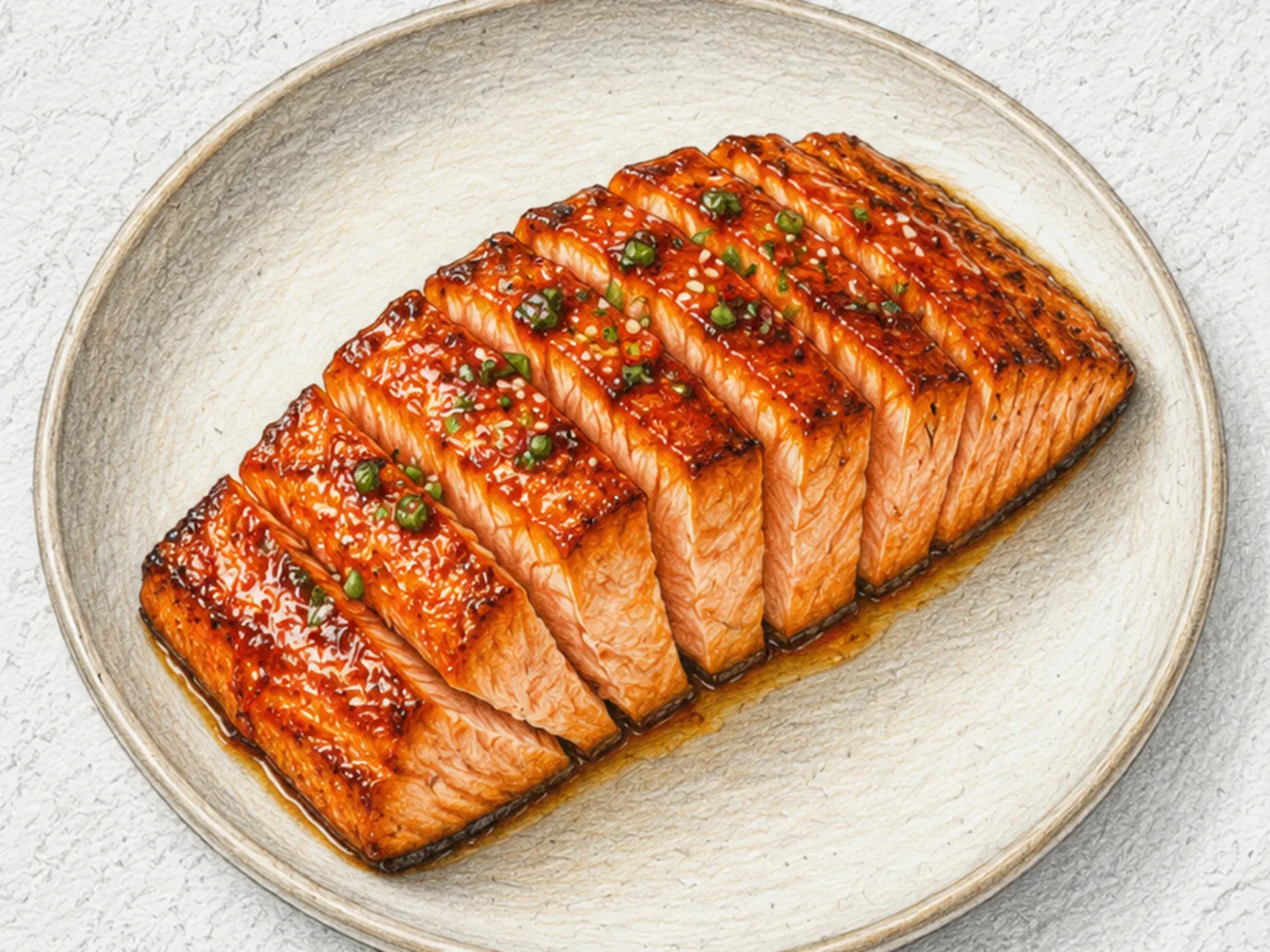
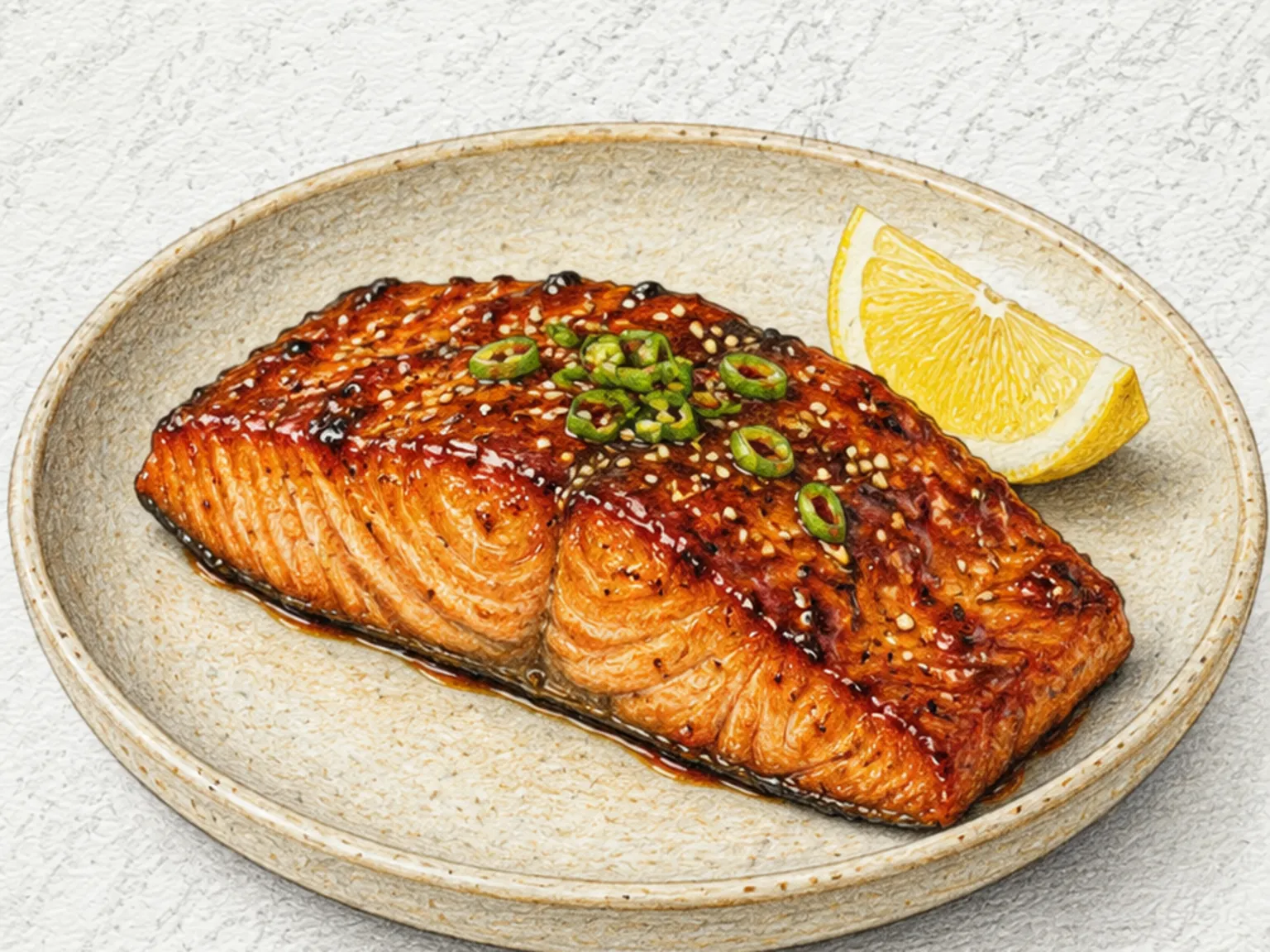
Yeoneo doenjang gui features salmon fillets coated in a sweet and savory doenjang glaze.

What makes this special

  • Yeoneo-doenjang-gui balances the richness of grilled salmon with a deep doenjang glaze and lemon.
  • Doenjang and honey balance the fattiness of salmon; lemon juice cleans the finish
  • Skin-side down on medium-low heat for 4 minutes achieves a glazed exterior without drying the flesh
Total time
27 min
Level
Easy
Servings
2 servings
Ingredients
8
Calories
410 kcal
Protein
31 g

Key ingredients

salmon filletdoenjanggochujanghoneyminced garlic

Core cooking flow

  1. 1 Pat 300 g salmon dry thoroughly with paper towels, then cut it into 2 portions.
  2. 2 Mix 1.5 tablespoons doenjang, 0.5 tablespoon gochujang, 1 tablespoon honey...
  3. 3 Brush two-thirds of the glaze thinly over the top and sides of the salmon.

Yeoneo doenjang gui features salmon fillets coated in a sweet and savory doenjang glaze. The earthy umami of doenjang pairs with honey to balance the rich fats of the salmon, while lemon juice cuts the oiliness for a clean finish. To prepare the dish, salmon is patted dry with paper towels so the glaze coats the fish evenly. A mixture of doenjang, gochujang, honey, garlic, sesame oil, and lemon juice forms the glaze. Two-thirds of this mixture is brushed onto the salmon to marinate for ten minutes. The fish is cooked skin-side down in a pan over medium-low heat for four minutes. Once turned, the remaining glaze is brushed on, and the salmon is cooked for three to four minutes until the glaze sets and the center is moist. Finely sliced scallions are added before serving.

Prep 15min Cook 12min 2 servings

Instructions

Read the steps as a cooking flow: prep, heat, seasoning, doneness control, and finish.

6 steps
  1. 1
    Season

    Pat 300 g salmon dry thoroughly with paper towels, then cut it into 2 portions.

    Press along the skin side as well, because extra surface moisture thins the glaze and keeps it from coating evenly.

  2. 2
    Season

    Mix 1.5 tablespoons doenjang, 0.5 tablespoon gochujang, 1 tablespoon honey, minced garlic, sesame oil, and lemon juice until smooth. If the doenjang tastes very salty, add 0.5 tablespoon more honey to balance the glaze.

  3. 3
    Season

    Brush two-thirds of the glaze thinly over the top and sides of the salmon.

    Avoid a thick layer, which can burn before the fish cooks, and marinate for only 10 minutes so the seasoning penetrates lightly.

  4. 4
    Control

    Preheat a pan or grill over medium-low heat, then place the salmon skin-side down.

    Leave it undisturbed for about 4 minutes so the skin firms up and the glaze sets instead of smearing.

  5. 5
    Season

    Turn the salmon carefully, then brush the remaining glaze thinly over the top.

    Cook 3 to 4 minutes more, stopping when the surface looks glossy and the center is still moist, not dry or flaky throughout.

  6. 6
    Finish

    Turn off the heat and let the salmon sit for 1 minute so the residual heat evens out the doneness.

    Top with 1 finely sliced scallion and serve immediately, before the glossy glaze dries on the surface.

After the steps

Pick a recipe that fits this dish.

Continue with shared ingredients, meal pairings, or a similar method.

Recipes That Go Well With This

More Grilled →

Based on shared ingredients and meal pairing

Korean Bollak Ganjang Gui (Soy-Glazed Rockfish Grill)
Shared ingredient: honey Grilled

Korean Bollak Ganjang Gui (Soy-Glazed Rockfish Grill)

Bolak-ganjang-gui is a Korean soy-glazed rockfish dish where fillets are brushed with a sauce of soy sauce, cooking wine, minced garlic, ginger juice, and honey, then grilled over medium-high heat. Half the glaze is applied first and left for just ten minutes, long enough for the salt and sweetness to penetrate the surface without pulling out moisture from the lean fish. Starting skin-side down for four minutes builds a crisp base, and brushing on the remaining glaze during the final minutes of cooking lets the honey caramelize into a glossy, dark-brown coating. A finish of sesame oil and sliced green onion adds a nutty, sharp layer on top of the savory-sweet glaze. Rockfish has very little fat, so the total cooking time should stay within eight to nine minutes to prevent the flesh from drying out.

Korean Ureok Doenjang Gui (Doenjang Grilled Rockfish)
Shared ingredient: honey Grilled

Korean Ureok Doenjang Gui (Doenjang Grilled Rockfish)

Rockfish fillets are patted dry, pin-boned, and brushed thinly with a paste of doenjang, gochujang, minced garlic, cooking wine, honey, and sesame oil before resting in the refrigerator for fifteen minutes. Cooking begins skin-side down for four minutes, then the fillet is flipped for three minutes, and a second thin coat of paste is applied for two final minutes. The key is thin, repeated applications - a thick layer burns before the fish is done. Rockfish's mild white flesh absorbs the complex, fermented savoriness of the doenjang-gochujang blend, producing a depth of flavor that plain grilled fish cannot match.

Korean Spicy Stir-Fried Anchovies
Serve together Side dishes

Korean Spicy Stir-Fried Anchovies

Spicy stir-fried anchovies (maeun myeolchi-bokkeum) toss medium-sized dried anchovies in a gochujang-gochugaru glaze, occupying the opposite end of the flavor spectrum from the sweet jiri-myeolchi version and targeting adult palates. Medium anchovies are larger and thicker than the tiny variety, requiring individual head-and-gut removal to eliminate bitterness - a tedious prep step that nonetheless determines the dish's clean finish. After dry-toasting to drive off moisture, the anchovies simmer in a sauce of gochujang, gochugaru, soy sauce, oligosaccharide, and minced garlic until each piece is coated in a rust-colored glaze. The gochujang's fermented heat combines with gochugaru's vivid red to create both flavor depth and visual appeal. The larger anchovy size delivers a satisfying crunch that lingers alongside a lasting savory umami. Heat intensity is adjustable via gochugaru quantity - adding chopped cheongyang chili ratchets it up another notch. This banchan doubles as a soju drinking snack, appearing as frequently on bar tables as on dinner tables.

Korean Grilled Spanish Mackerel
Similar recipe Grilled

Korean Grilled Spanish Mackerel

Samchi-gui is Korean grilled Spanish mackerel, a common home-style fish side dish where thick mackerel steaks are salted and peppered for ten minutes, dusted lightly with flour, and pan-fried in oil over medium heat for four minutes per side. Spanish mackerel belongs to the same family as regular mackerel but has milder odor and softer flesh, making simple salt seasoning sufficient. The thin flour coating serves two purposes: it seals in moisture during cooking and creates a crisp, golden exterior. Applying too much flour causes the fish to absorb excess oil and turn greasy, so shaking off the surplus through a sieve is an important step. A squeeze of lemon juice at the end binds with the fish oils and adds acidity that neutralizes any lingering fishy aftertaste, keeping the flavor clean when eaten over rice.

Serve with this

Korean Dakgalbi Fried Rice
Rice Easy

Korean Dakgalbi Fried Rice

Dakgalbi bokkeumbap is a fried rice made by stir-frying gochujang-marinated boneless chicken thigh with cabbage and onion over high heat, then adding day-old rice to the pan and frying until every grain absorbs the sweet-spicy marinade. The dish originated from the Chuncheon tradition of finishing a dakgalbi meal by stir-frying the leftover sauce and scraps with rice, effectively turning what remains in the pan into a second course. Day-old rice is essential: fresh rice holds too much moisture and clumps together, while refrigerated rice separates cleanly on the hot surface and makes sufficient contact with the pan to develop slightly charred bits at the bottom. These caramelized patches add a smoky crunch that contrasts with the sauced grains above and elevate the dish beyond a simple fried rice. Cabbage and perilla leaves added at the very end of cooking retain a faint crunch that cuts through the richness of the gochujang marinade. Plating the rice with a few perilla leaves laid on top and a scatter of sesame seeds over the surface finishes the dish without requiring anything further.

🏠 Everyday ⚡ Quick
Prep 12min Cook 14min 2 servings
Chicken Mu (Korean Fried Chicken Radish Pickle)
Kimchi Easy

Chicken Mu (Korean Fried Chicken Radish Pickle)

The crunchy, sweet-sour radish pickle served with every order of Korean fried chicken - now easy to make at home in under 15 minutes. Cubed radish is submerged in a cooled brine of vinegar, sugar, salt, and whole black peppercorns. Using fully cooled brine rather than hot is critical for maintaining the radish's firm, snapping crunch. Ready to eat after one day of refrigeration, its bright acidity cleanses the palate between bites of crispy chicken. Stored in a glass jar, this pickle keeps for over a week.

⚡ Quick 🏠 Everyday
Prep 10min Cook 5min 4 servings
Kongnamul-guk (Bean Sprout Anchovy Soup)
Soups Easy

Kongnamul-guk (Bean Sprout Anchovy Soup)

Kongnamul-guk is a clear Korean soup built on bean sprouts, water, soup soy sauce, and garlic, and its central technique is boiling the sprouts with the lid firmly closed for seven minutes. The reason behind the closed lid is a long-standing Korean kitchen belief: the compounds responsible for the raw, beany smell in soybean sprouts are volatile, and if the lid is left open, they do not escape with the steam but instead condense back into the pot. Whether the chemistry fully supports this, keeping the lid closed has been the standard method for generations and consistently produces a clean-tasting broth. Green onion goes in at the very end to keep its bright, mild bite without overcooking. Trimming the fine root tails from each sprout improves the texture and presentation, though it does not change the flavor and is often skipped on weekdays. Adding chili flakes and a cracked egg transforms the soup into a spicy, restorative hangover version, and a handful of clams deepens the broth with extra umami. From start to finish the soup takes about fifteen minutes, which makes it one of the fastest soups in the Korean repertoire, and the directness of its flavor -- clean, cool, and vegetal -- is exactly what makes it worth returning to.

🏠 Everyday ⚡ Quick
Prep 5min Cook 15min 2 servings

Similar recipes

Korean Horse Mackerel with Yuzu Soy Glaze
Grilled Easy

Korean Horse Mackerel with Yuzu Soy Glaze

Horse mackerel is marinated in a sauce of yuzu marmalade, soy sauce, cooking wine, and garlic, then grilled on a grill pan until the skin crisps and chars lightly. The citrus notes from the yuzu naturally suppress fishiness while harmonizing with the soy sauce saltiness. Brushing the remaining glaze in the final minute gives the skin a lacquered sheen. Sesame oil and sliced scallion complete the dish with a toasted, aromatic finish. The brevity of the ingredient list belies how decisively the yuzu transforms a grilled fish into something bright and fragrant.

🍺 Bar Snacks 🏠 Everyday
Prep 15min Cook 12min 2 servings
Korean Grilled Dried Pollock
Drinks Easy

Korean Grilled Dried Pollock

Nogari-gui is a classic Korean bar snack in which semi-dried young pollock is cut into pieces with scissors, then cooked in a buttered pan over medium-low heat until golden and crisp on both sides. The low-and-slow approach matters: the thin fish needs time to dry out evenly into a chewy-crisp texture without scorching on the surface. Butter melts into the fibrous dried flesh with each pass over the heat, coating the fibers with richness that plain dry-frying cannot replicate. The dipping sauce is a deliberate combination of gochujang and mayonnaise, loosened with lemon juice, sweetened with a pinch of sugar, and sharpened with minced garlic, producing a sauce that is spicy, creamy, tangy, and savory all at once. That sauce against the salty, umami-concentrated pollock is the reason one piece is never enough. Cutting with scissors rather than a knife exposes more cross-section of the dried fibers, helping the sauce cling more effectively. The snack is closely associated with the pojangmacha stalls of Noryangjin and remains one of the most requested accompaniments to cold draft beer in Korea.

🍺 Bar Snacks ⚡ Quick
Prep 8min Cook 10min 2 servings
Korean Salmon Pot Rice (Salmon Fillet Steamed Directly on Rice)
Rice Medium

Korean Salmon Pot Rice (Salmon Fillet Steamed Directly on Rice)

A whole salmon fillet is placed directly on top of rice in a heavy pot before cooking begins. As the rice steams, the salmon's oils melt downward and seep between the grains, lending a natural richness and sheen without any added fat. During the resting stage the fish finishes cooking gently, turning tender enough to flake apart with chopsticks and mix evenly through the rice. A soy-wasabi sauce drizzled over the bowl and stirred in adds a sharp, salty kick that carries through to the last spoonful.

🎉 Special Occasion 🏠 Everyday
Prep 10min Cook 25min 2 servings

Tips

Avoid overcooking salmon; stop when the center is still moist.
If your doenjang is salty, add 0.5 tbsp more honey to balance it.

Nutrition (per serving)

Calories
410
kcal
Protein
31
g
Carbs
10
g
Fat
27
g