Korean Lotus Root Chicken Breast Stir-fry
Stir-fry Medium

Korean Lotus Root Chicken Breast Stir-fry

Quick answer

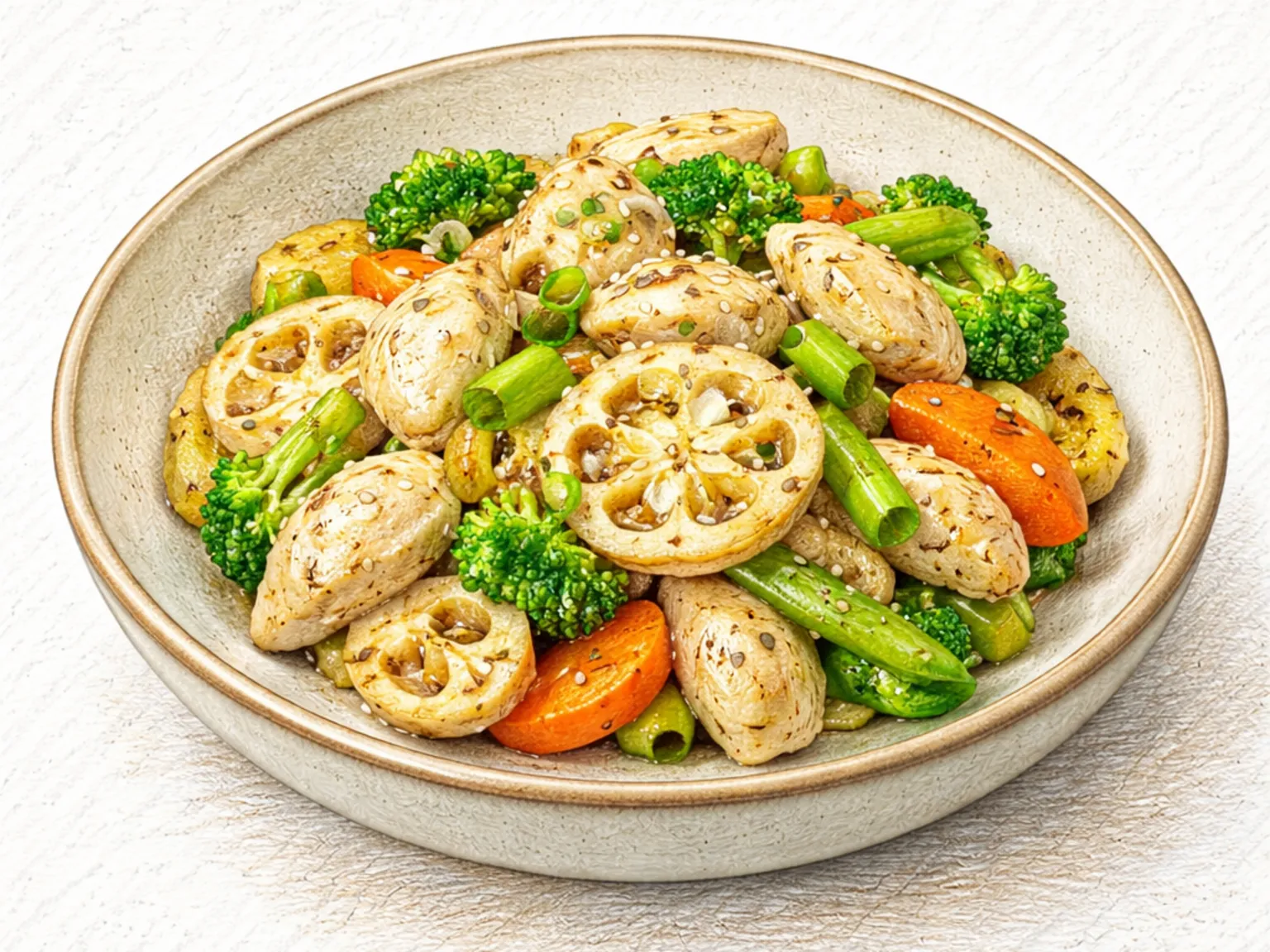
Yeongeun-dakgaseumsal-bokkeum stir-fries soy-and-wine-marinated chicken breast with lotus root, bell pepper, and onion.

What makes this special

  • Yeongeun-dakgaseumsal-bokkeum pairs 3mm sliced lotus root with chicken breast for a crisp, translucent stir-fry.
  • Lotus root sliced 3mm and acid-soaked stays crisp until translucent
  • Chicken breast on medium-high for just three minutes stays moist not dry
Total time
32 min
Level
Medium
Servings
4 servings
Ingredients
10
Calories
292 kcal
Protein
28 g

Key ingredients

chicken breastlotus rootbell pepperonionminced garlic

Core cooking flow

  1. 1 Cut 320 g chicken breast into even bite-size pieces so they cook at the same speed.
  2. 2 Slice 260 g lotus root about 3 mm thick, then soak it in vinegar water for 5 minutes to limit browning.
  3. 3 Slice 120 g onion and 100 g bell pepper into similar widths so the texture stays balanced.

Yeongeun-dakgaseumsal-bokkeum stir-fries soy-and-wine-marinated chicken breast with lotus root, bell pepper, and onion. The lotus root is sliced 3mm thick and soaked in vinegar water to prevent browning and keep its crunch, while the chicken is cooked quickly over medium-high heat to avoid drying out. Oligosaccharide syrup mixed with soy sauce creates a glossy glaze that coats the ingredients, and bell pepper adds color and sweetness. The crisp, starchy bite of the lotus root paired with the lean chicken makes this a protein-rich banchan that stays grease-free and packs well for lunches.

Prep 20min Cook 12min 4 servings

Instructions

Read the steps as a cooking flow: prep, heat, seasoning, doneness control, and finish.

6 steps
  1. 1
    Season

    Cut 320 g chicken breast into even bite-size pieces so they cook at the same speed.

    Marinate for 10 minutes with 1 tablespoon soy sauce, 1 tablespoon cooking wine, and 1/4 teaspoon black pepper.

  2. 2
    Prep

    Slice 260 g lotus root about 3 mm thick, then soak it in vinegar water for 5 minutes to limit browning.

    Rinse well and drain thoroughly so excess water does not splatter in the hot oil.

  3. 3
    Control

    Slice 120 g onion and 100 g bell pepper into similar widths so the texture stays balanced.

    Add 1.5 tablespoons cooking oil to a pan and preheat over medium-high heat until the oil moves easily.

  4. 4
    Heat

    Add the chicken in a single layer and stir-fry for about 3 minutes.

    When the outside turns white and the pieces are no longer sticking together, move on before the chicken breast starts to dry out.

  5. 5
    Heat

    Add 1 tablespoon minced garlic, the onion, and the drained lotus root, then stir-fry for 4 minutes.

    The timing is right when the lotus root edges look slightly translucent and the onion softens without browning deeply.

  6. 6
    Season

    Add the remaining 1 tablespoon soy sauce, 1 tablespoon oligosaccharide syrup, and the bell pepper, then stir-fry for 2 minutes.

    Turn off the heat once the sauce looks glossy and coats everything evenly, then toss once more.

After the steps

Pick a recipe that fits this dish.

Continue with shared ingredients, meal pairings, or a similar method.

Recipes That Go Well With This

More Stir-fry →

Based on shared ingredients and meal pairing

Korean Chicken Breast & Mugwort Stir-fry
Shared ingredient: chicken breast Stir-fry

Korean Chicken Breast & Mugwort Stir-fry

Spring mugwort offers its most tender texture and mildest bitterness immediately after harvest, making it a perfect companion for lean proteins. This stir-fry utilizes thinly sliced chicken breast to create a clean base where the herb's fragrance takes center stage. Minced garlic and soy sauce provide a light seasoning that emphasizes the natural characteristics of the ingredients without creating a heavy coating. Because chicken breast dries out quickly, the preparation requires a preheated pan and high heat to cook the meat just until it turns opaque. Adding the mugwort at the very end allows it to soften slightly through residual heat, preserving the fresh aroma that would otherwise turn harsh or overly bitter with prolonged cooking. A light application of sesame oil at the finish rounds out the profile with a subtle nuttiness. The combination of vitamin-rich mugwort and high-quality protein makes this a nutritionally balanced side dish. This preparation relies on minimal oil and the inherent quality of the seasonal ingredients, making it a suitable choice for a light meal served with rice or inside fresh lettuce wraps.

Korean Lotus Root & Duck Chili Stir-fry
Shared ingredient: lotus root Stir-fry

Korean Lotus Root & Duck Chili Stir-fry

Yeongeun-ori-gochu-bokkeum stir-fries lotus root separately first to lock in its crunch, then combines it with rendered smoked duck and cheongyang chili in a spicy-sweet finish. The duck is cooked on medium-high heat to draw out excess fat, and a sauce of soy sauce, gochujang, and oligosaccharide syrup is built in the pan. The cheongyang chili's direct heat cuts through the smokiness and richness of the duck, while the returned lotus root absorbs the sauce and retains its firm bite. Three distinct flavors - smoky duck, sharp chili heat, and nutty lotus root - remain clearly defined in each bite.

Korean Bulgogi Deopbap (Pork Rice Bowl)
Serve together Rice

Korean Bulgogi Deopbap (Pork Rice Bowl)

Dwaeji-bulgogi-ssukgat-deopbap is a Korean rice bowl of gochujang-marinated pork stir-fried with onion over high heat, mounded over steamed rice and finished at the last moment with crown daisy greens. The marinade builds from gochujang, chili flakes, soy sauce, sugar, and minced garlic into a sauce that is simultaneously spicy, sweet, and deeply savory. A small amount of pear or kiwi juice added to the marinade tenderizes the pork shoulder before cooking. High heat over a short cooking time is essential for developing a browned crust on the meat, which produces a roasted, smoky depth that low-and-slow cooking cannot replicate. Pork shoulder carries enough intramuscular fat that once it renders under heat, it mingles with the sauce and soaks down into the rice below, creating a rich, glossy base at the bottom of the bowl. The crown daisy -- ssukgat -- goes in during the last thirty seconds before the heat is cut. The timing window is narrow: add it too early and the aromatic oils cook off, leaving only bitterness; add it with the heat already off and the fragrance stays locked inside the leaves. At the right moment, heat releases ssukgat's distinctive chrysanthemum-family herbaceousness, a green, almost medicinal brightness that cuts cleanly through the heaviness of the pork and sauce. The finished bowl is complete without side dishes.

Korean Garlic Scape Chicken Breast Stir-fry
Similar recipe Stir-fry

Korean Garlic Scape Chicken Breast Stir-fry

Maneuljjong dakgaseumsal bokkeum is a stir-fry where soy-marinated chicken breast is cooked through with ginger and garlic first, then joined by garlic scapes cut to five-centimeter lengths and julienned carrot for a quick blast over high heat before the whole pan is finished in an oyster sauce and soy sauce glaze. Chicken breast is naturally lean and can easily read as flat on its own, but the oyster sauce compensates by delivering concentrated umami and coating the surface of each piece with a lacquered sheen. The garlic scapes provide a dual texture that is both crisp and slightly chewy, setting up a direct contrast with the smooth, tight grain of the chicken breast. Julienned carrot adds a gentle sweetness that softens the saltiness of the soy and oyster sauce base. Ginger pulls double duty, eliminating any poultry odor while contributing the aromatic lift characteristic of well-executed stir-fry. The high-protein, low-fat profile makes this a practical everyday banchan for anyone managing calories, and it also works well spooned over rice in a deopbap format. Keeping the garlic scapes in the pan for as short a time as possible is essential to preserving their signature crunch.

Serve with this

Manduguk (Korean Dumpling Clear Broth Soup)
Soups Easy

Manduguk (Korean Dumpling Clear Broth Soup)

Manduguk is a Korean dumpling soup in which hand-folded dumplings stuffed with ground pork, tofu, scallion, and garlic are dropped into a clear, simmering broth, typically anchovy-kelp stock or beef broth, and cooked until they float. As the dumplings cook, their thin wheat-flour wrappers release a subtle starch that gives the broth a barely perceptible body, while the filling leaks savory juices that enrich the liquid gradually. A thin drizzle of beaten egg stirred in near the finish creates silken wisps on the surface of the broth and gives the bowl a more finished appearance. Shredded egg strips and crumbled dried seaweed scattered on top add a pleasant contrast in color and a faint oceanic note to the flavor. Many Korean households serve manduguk on Lunar New Year as an alternative to tteokguk, and some combine the two by adding sliced rice cakes alongside the dumplings. Dumplings can be made in large batches and frozen raw, which means this soup can be pulled together quickly on weeknights without sacrificing any of the flavor that comes from homemade filling. A small dish of soy-vinegar dipping sauce served alongside lets each person adjust the seasoning at the table, and the light acidity of the sauce cuts through the mild broth in a way that makes the contrast between the two worth trying.

🏠 Everyday 🎉 Special Occasion
Prep 10min Cook 15min 4 servings
Korean Seasoned Chamnamul Greens
Side dishes Easy

Korean Seasoned Chamnamul Greens

Chamnamul - Korean pimpinella - grows wild in mountain valleys across central Korea and has been foraged since the Goryeo period. The leaves carry a celery-like fragrance layered with a faint, peppery finish that is unlike any other spring green. Blanched for under a minute to keep the stems crisp, the greens are cut to 5 cm lengths and tossed with soy sauce, sesame oil, and garlic. The thicker stems hold a slight crunch while thinner leaves soften just enough to take on the seasoning. Very young leaves are sometimes served raw without blanching. A spring-only banchan that is unavailable the rest of the year.

🏠 Everyday 🍱 Lunchbox
Prep 10min Cook 3min 4 servings
Korean Mushroom Dumpling Hot Pot
Stews Easy

Korean Mushroom Dumpling Hot Pot

Mandu jeongol is a generous hot pot of twelve large dumplings simmered with napa cabbage, shiitake mushrooms, oyster mushrooms, and bok choy in anchovy-kelp stock. The two varieties of mushroom add layers of umami to the clear broth, while the cabbage and bok choy soften and release their natural sweetness as they cook. The dumplings cook directly in the simmering stock, their wrappers gradually turning chewy as the filling flavors seep into the surrounding liquid. Soup soy sauce and garlic provide a clean, understated seasoning that keeps the broth from overshadowing any single ingredient. The right moment to eat is when the vegetables have wilted and the dumplings float to the surface, signaling they are cooked through. The absence of any spice or strong seasoning makes this one of the more universally approachable hot pots, suited for all ages. Leftover broth absorbs cooked rice or soaked glass noodles easily, turning what remains into a satisfying finish to the meal.

🏠 Everyday 🎉 Special Occasion
Prep 15min Cook 20min 4 servings

Similar recipes

Korean Lotus Root and Beef Stir-fry
Stir-fry Medium

Korean Lotus Root and Beef Stir-fry

Yeongeun-soegogi-bokkeum is a Korean stir-fry of thinly sliced lotus root and beef in a soy sauce and oligosaccharide syrup glaze. The lotus root is soaked in vinegar water to prevent browning, then stir-fried briefly to keep its distinctive crunch, while the beef is pre-seasoned in soy sauce for deeper flavor. The syrup creates a thin, glossy coating that carries the sweet-salty seasoning evenly across every piece. A finishing drizzle of sesame oil rounds out the dish with a nutty fragrance, making it a versatile side for everyday rice meals and packed lunches.

🏠 Everyday 🍱 Lunchbox
Prep 20min Cook 12min 3 servings
Korean Spicy Gochujang Dried Squid Stir-Fry
Side dishes Easy

Korean Spicy Gochujang Dried Squid Stir-Fry

Jinmichae, shredded dried squid, is a Korean pantry staple valued for its chewy texture and the umami that builds and intensifies the longer you chew. This preparation coats the strands in a gochujang glaze, making it one of the most reliably present banchan in Korean households. Briefly soaking the dried squid in water before squeezing it dry softens the tough fibers and opens them to absorb the sauce more evenly. The sauce of gochujang, gochugaru, rice syrup, soy sauce, and garlic is stir-fried first over low heat to mellow the raw chili sharpness, then the squid is tossed through quickly over the same heat. Sesame oil and toasted sesame seeds are added off the heat, coating the strands in a sweet, spicy glaze that keeps well at room temperature for several days.

🏠 Everyday 🍱 Lunchbox
Prep 8min Cook 7min 4 servings
Korean Lotus Root Beef Pancake
Pancakes Medium

Korean Lotus Root Beef Pancake

Sliced lotus root is sandwiched with seasoned ground beef, coated in pancake batter and egg, then pan-fried until golden. The lotus root keeps its crunch even after cooking, so the texture contrast with the soft beef filling is distinct in every bite. Soy sauce and minced garlic season the filling so the jeon is fully flavored on its own without a dipping sauce. Chopped green onion is worked into the beef for a fresh aromatic note. The lotus root hole pattern fills with meat during assembly, making each cross-section visually clean and precise. The egg coating browns smoothly around the outside, giving a tender rather than crisp exterior.

🍺 Bar Snacks 🍱 Lunchbox
Prep 25min Cook 18min 4 servings

Tips

Keep lotus root around 3 mm thick so it stays crisp.
Cook chicken breast quickly over higher heat to avoid dryness.

Nutrition (per serving)

Calories
292
kcal
Protein
28
g
Carbs
17
g
Fat
11
g