Korean Lotus Root Perilla Seed Stew
Stews Easy

Korean Lotus Root Perilla Seed Stew

Quick answer

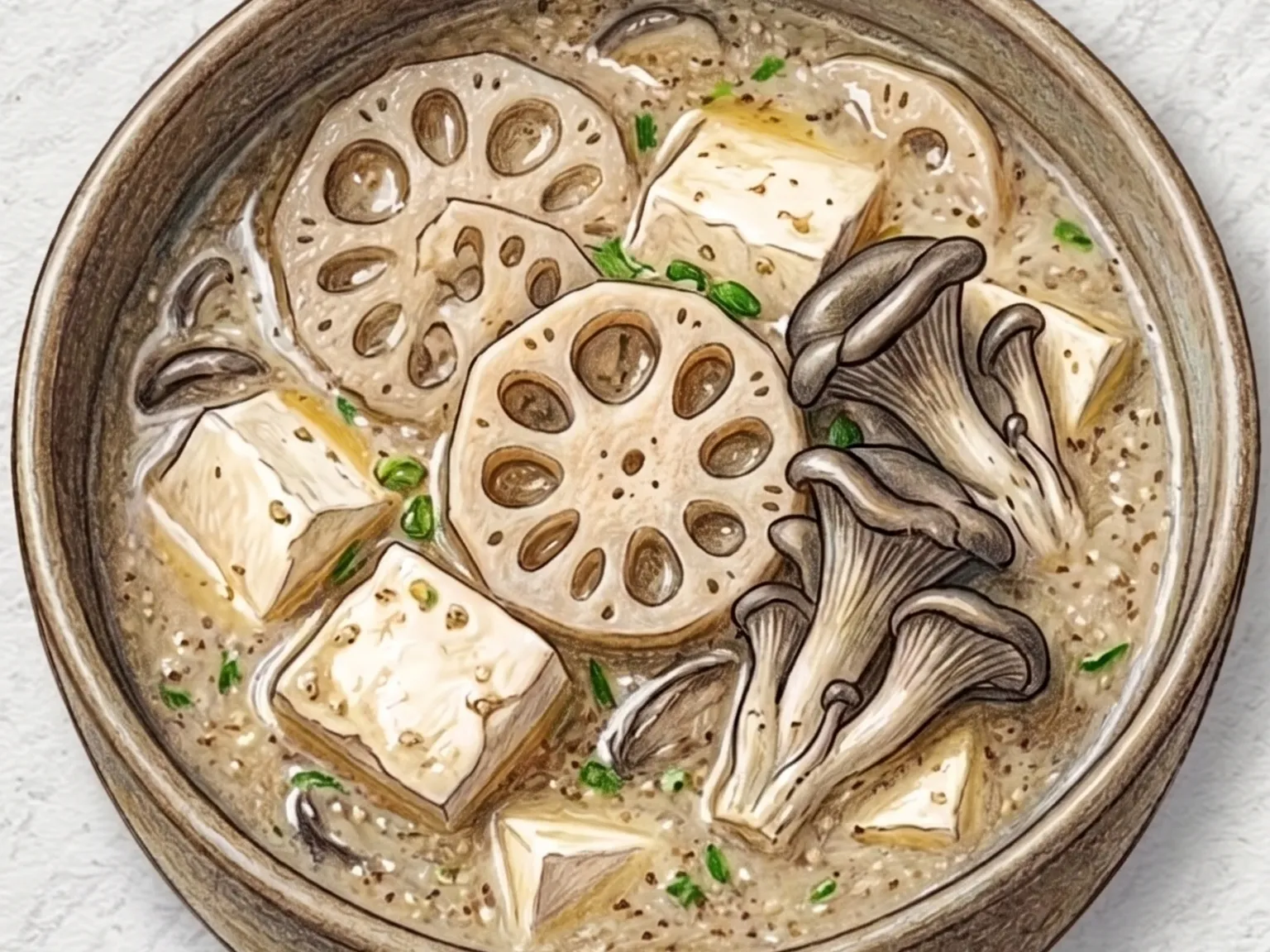
Korean lotus root perilla seed stew is a vegetable stew that features crisp lotus root and oyster mushrooms cooked in a thick perilla seed broth.

What makes this special

  • Yeongeun-deulkkae-jjigae submerges crunchy lotus root slices in a thick, plant-based broth enriched with generous amounts of perilla seed powder and soft oyster mushrooms.
  • Lotus root soaked 5 minutes in vinegar water to remove astringency and keep the crisp texture
  • Pure vegetable stock lets lotus root and perilla flavors come through undiluted
Total time
40 min
Level
Easy
Servings
4 servings
Ingredients
9
Calories
248 kcal
Protein
11 g

Key ingredients

lotus rootoyster mushroomsonionsoft tofuperilla seed powder

Core cooking flow

  1. 1 Peel 300g lotus root and slice it into even 0.5cm half-moons.
  2. 2 Cut 130g onion into coarse pieces and tear 150g oyster mushrooms along their natural grain.
  3. 3 Warm a pot over medium heat, then add 1 tablespoon sesame oil.

Korean lotus root perilla seed stew is a vegetable stew that features crisp lotus root and oyster mushrooms cooked in a thick perilla seed broth. The process begins by soaking sliced lotus root in vinegar water for five minutes to prevent browning and reduce astringency. Onion and oyster mushrooms are stir-fried in sesame oil before adding the lotus root and vegetable stock. After simmering until the lotus root is tender, soup soy sauce and minced garlic are stirred in. Finally, four tablespoons of perilla seed powder are dissolved into the soup along with tofu, and the stew is heated over low heat. Adding the perilla powder at the end preserves its rich, nutty aroma without making the broth chalky. Built on vegetable stock without meat or fish, this dish offers a clean taste and varied textures.

Prep 18min Cook 22min 4 servings

Instructions

Read the steps as a cooking flow: prep, heat, seasoning, doneness control, and finish.

6 steps
  1. 1
    Prep

    Peel 300g lotus root and slice it into even 0.5cm half-moons.

    Soak the slices in the vinegar water for 5 minutes, then rinse and drain well to limit browning and remove any harsh edge.

  2. 2
    Prep

    Cut 130g onion into coarse pieces and tear 150g oyster mushrooms along their natural grain.

    Cut 250g soft tofu into 2cm pieces and keep it separate so it does not break before it goes into the stew.

  3. 3
    Control

    Warm a pot over medium heat, then add 1 tablespoon sesame oil.

    Add the onion and mushrooms and stir-fry for about 3 minutes, until the onion edges turn translucent and the mushrooms begin to soften.

  4. 4
    Control

    Add the lotus root and 1000ml vegetable stock, then bring the pot to a boil over high heat.

    Once it bubbles steadily, lower to medium and simmer for 10 minutes, until a chopstick can enter the lotus root.

  5. 5
    Control

    Stir in 1.5 tablespoons soup soy sauce and 1 tablespoon minced garlic, then simmer for 3 more minutes.

    Skim off excess foam if it gathers so the broth stays clean and the seasoning spreads evenly.

  6. 6
    Step

    Dissolve 4 tablespoons perilla seed powder with a little hot broth, then stir it back into the pot and add the tofu.

    Keep the heat low and warm for 4 minutes, stopping when the broth smells nutty before it turns chalky.

After the steps

Pick a recipe that fits this dish.

Continue with shared ingredients, meal pairings, or a similar method.

Recipes That Go Well With This

More Stews →

Based on shared ingredients and meal pairing

Korean Mushroom Perilla Soup
Shared ingredient: oyster mushrooms Soups

Korean Mushroom Perilla Soup

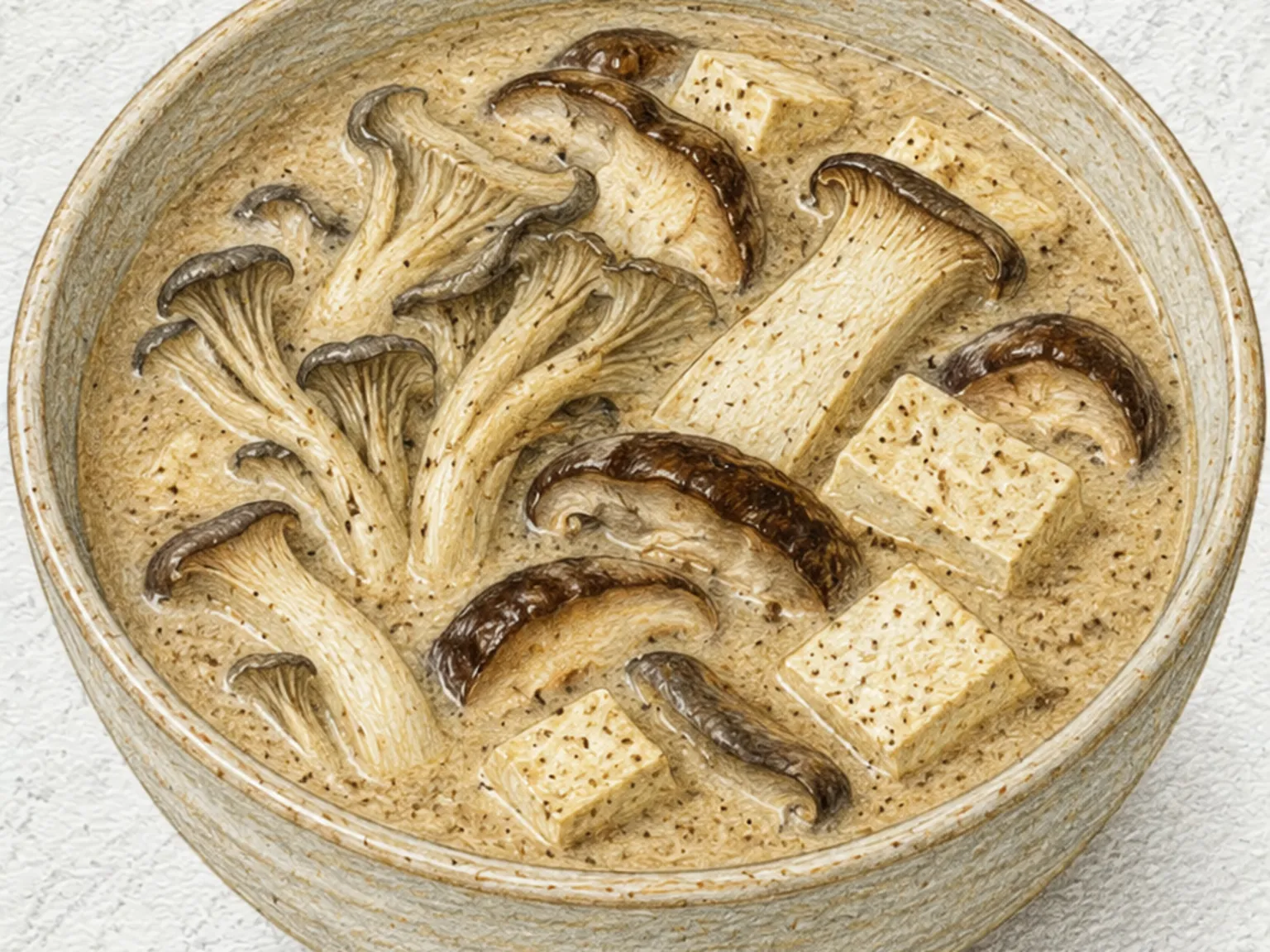
Three types of mushrooms - oyster, shiitake, and king oyster - simmer together in an onion-based vegetable stock before ground perilla seeds are stirred in to thicken the broth into a nutty, substantial soup. Cooking the mushrooms and garlic for ten minutes in the stock allows each variety's distinct aroma to build in layers: the fibrous texture of oyster mushrooms, the deep earthiness of shiitake, and the firm, meaty bite of king oyster mushrooms all hold their character in the finished bowl. Cubed tofu is added partway through and gently absorbs the surrounding broth as it warms. Adding the perilla powder in small increments rather than all at once prevents clumping and produces a smooth, even consistency; pulling the pot off the heat at the right moment also stops the broth from separating as it cools. The vegetable stock base delivers a satisfying, full-bodied result without any animal ingredients.

Korean Perilla Leaf Soft Tofu Stew
Shared ingredient: onion Stews

Korean Perilla Leaf Soft Tofu Stew

Kkaennip sundubu jjigae is a mild, gently seasoned stew of soft tofu and perilla leaves simmered in a light anchovy broth. The 350g of sundubu goes in as large, rustic pieces that hold their shape while cooking, then collapse into silky, cloud-like curds on the spoon. Twelve perilla leaves added stem-on release their aromatic oils gradually as the broth comes to a boil, giving the stew a distinctly herbal, faintly anise-like character that sets it apart from standard sundubu variations. Gochugaru and soup soy sauce provide just enough background seasoning to keep the perilla fragrance forward rather than overwhelmed by heat, and a drizzle of sesame oil at the finish adds a nutty warmth. Low in spice and gentle on the stomach, this is a practical choice on days when a soothing, unfussy bowl is what is needed.

Korean Spinach Soybean Paste Porridge
Serve together Rice

Korean Spinach Soybean Paste Porridge

Sigeumchi doenjang-juk is a Korean porridge built on the deep, fermented savoriness of doenjang and the clean, mild green flavor of finely chopped spinach. Soaked rice is toasted in sesame oil first, which coats each grain with a nutty warmth before anchovy stock is poured in. Doenjang and minced garlic are stirred in early in the cooking process, giving the porridge time to develop a rich, rounded base flavor as the grains slowly break down into a thick, spoonable consistency. Spinach goes in at the very end and stays in the heat for no longer than thirty seconds, which is exactly enough time for the leaves to wilt while keeping their bright color and delicate grassy aroma intact. The fermented paste wraps around the slight bitterness naturally present in raw spinach, smoothing it out so the finished bowl tastes clean rather than sharp. This is a porridge that works as a restorative meal when the body needs something gentle, and it doubles just as well as a light, warming breakfast that does not demand much from the stomach in the morning.

Korean Burdock Perilla Seed Stew
Similar recipe Stews

Korean Burdock Perilla Seed Stew

Ueong-deulkkae-jjigae is a Korean stew built on burdock root, potatoes, and oyster mushrooms simmered in an anchovy-kelp broth and thickened with perilla seed powder. The burdock root holds a firm, earthy crunch through the cooking while the potatoes soften and begin to break at the edges, and the oyster mushrooms add a pulling, fibrous chew that makes the stew feel substantial without any meat. Anchovy-kelp broth forms a clean, savory base, and a generous measure of perilla seed powder stirred in at the end creates a creamy, nutty consistency that coats every piece of vegetable and makes each spoonful feel round and warming. Soaking the burdock in cold water before cooking draws out bitterness and prevents the cut surfaces from darkening, which keeps the broth clear. Adding the potatoes after the burdock has partly cooked prevents them from collapsing entirely. Perilla seed powder should go in just before the heat is turned off so the toasted, nutty fragrance stays sharp rather than cooking away.

Serve with this

Korean Seasoned Kelp Strips
Side dishes Easy

Korean Seasoned Kelp Strips

Kelp strips are soaked in cold water for ten minutes to draw out excess salt, then blanched for twenty seconds, just long enough to turn them pliable without losing their snap. The strips are dressed with gochugaru, vinegar, soy sauce, sugar, and garlic while julienned cucumber adds a cool, refreshing contrast. The seasoning sits over the mineral-dense ocean flavor of the kelp, layering a bright, acidic kick onto each bite. Sesame oil and whole sesame seeds finish the dish. The strips keep a satisfying resistance between the teeth that sets them apart from softer Korean seaweed preparations. Best served cold; the texture and flavor hold up well in packed lunches. Blanching beyond twenty seconds causes the kelp to soften and lose the chew that defines this banchan.

🥗 Light & Healthy 🏠 Everyday
Prep 12min Cook 3min 2 servings
Korean Fresh Eggplant Kimchi
Kimchi Easy

Korean Fresh Eggplant Kimchi

Gaji kimchi is a fresh eggplant kimchi that requires no fermentation and can be eaten immediately after preparation. Eggplant is steamed until it becomes pliable and soft throughout, then torn by hand along the grain rather than cut with a knife. Tearing along the natural fibers creates a rough, open surface that allows the seasoning of gochugaru, fish sauce, garlic, and sesame oil to penetrate deep into the flesh rather than merely coating the outside. The result is an even distribution of spicy, salty flavor throughout every bite rather than concentrated only at the surface. Scallions folded in at the end add a fresh, sharp lift, and toasted sesame seeds provide a nutty, fragrant finish. Because no fermentation is involved, this kimchi is best suited to seasons when eggplant is at its peak, particularly summer, when the vegetable is widely available and a quick, no-cook banchan is most welcome. Piled over a bowl of cold leftover rice and mixed together, the seasoning soaks into the grains while the soft steamed eggplant adds body, making it a satisfying one-bowl meal without needing additional soup or side dishes.

🍱 Lunchbox 🏠 Everyday
Prep 20min Cook 10min 2 servings
Korean Dried Radish Greens Pancake
Pancakes Easy

Korean Dried Radish Greens Pancake

Boiled dried radish greens are combined with doenjang and pan-fried into a dense, rustic jeon with deep fermented character. The fibrous texture of the radish greens gives the pancake a satisfying chew, and the soybean paste saturates the batter so thoroughly that no dipping sauce is necessary. Buckwheat flour adds an earthy coarseness that suits the greens well. Cheongyang chili provides a spicy accent throughout. Minced garlic benefits from a brief saute in oil before being mixed into the batter-the raw edge cooks off and the garlic's savory depth integrates fully into the finished pancake. Cooking over low heat lets the inside set without burning the outside, producing a crisp surface and a tender, flavorful center.

🍺 Bar Snacks ⚡ Quick
Prep 18min Cook 10min 2 servings

Similar recipes

Korean Soybean Sprout Stew
Stews Easy

Korean Soybean Sprout Stew

Soybean sprout jjigae is a spicy home-style stew built around kongnamul, with tofu and pork adding substance to a broth seasoned with gochugaru and soup soy sauce. The sprouts release their own clean, slightly sweet liquid as they cook, and that natural base broth combines with the heat of the chili flakes to produce the sharp, refreshing character the dish is best known for. A critical technique rule applies to the sprouts: once the lid is placed, it should not be lifted during cooking. If the lid is removed and steam escapes, the sprouts develop an unpleasant grassy smell that cannot be reversed. If the lid is accidentally opened, the only correction is to leave it off and continue cooking without it until the end. Tofu absorbs the broth and provides a soft contrast to the crunchy sprouts, while the pork contributes fat and savory depth that enriches the broth. Green onion and minced garlic add aroma, and cracking a beaten egg into the pot as the broth comes to a full boil creates soft egg pieces throughout. The whole dish comes together in under twenty minutes from start to finish, making it a practical weeknight soup.

🏠 Everyday ⚡ Quick
Prep 10min Cook 15min 2 servings
Korean Clear Broth Tofu Stew
Stews Easy

Korean Clear Broth Tofu Stew

This clear Korean tofu stew is prepared by simmering tofu cubes, shiitake mushrooms, and zucchini in seasoned beef stock. The base relies on a rich beef broth, enhanced by the earthy umami of sliced shiitake mushrooms. Zucchini slices add a mild sweetness as they cook to a tender, translucent state. Seasoned simply with Korean soup soy sauce, salt, and minced garlic, the broth maintains a clean, savory taste without chili heat. To prevent the tofu from breaking, the cubes are gently settled into the pot and simmered over medium-low heat. Sliced green onions are added at the end of cooking to infuse a mild herbal note. Serving the stew hot after letting it rest briefly highlights the natural flavors of the ingredients. The tofu can be lightly pan-seared beforehand to add a nutty flavor and firmer texture.

🏠 Everyday ⚡ Quick
Prep 10min Cook 15min 2 servings
Korean Lotus Root Soup (Sliced Lotus Root in Anchovy Broth)
Soups Easy

Korean Lotus Root Soup (Sliced Lotus Root in Anchovy Broth)

Yeongeun-guk is a clear soup built around thinly sliced lotus root simmered in anchovy broth. The lotus root is peeled and soaked in cold water immediately to prevent browning, then cooked for twelve minutes, which softens it slightly while preserving the characteristic crunch. As the starch leaches out, the broth takes on a subtle thickness. Garlic, soup soy sauce, salt, and a dusting of black pepper are the only seasonings, letting the lotus root's gentle sweetness remain the focal point. Low in calories and high in dietary fiber, this soup fits comfortably into a lighter meal.

🥗 Light & Healthy 🏠 Everyday
Prep 15min Cook 22min 4 servings

Tips

Add perilla powder late to keep the broth nutty, not chalky.
Keep lotus root slices even for consistent cooking.

Nutrition (per serving)

Calories
248
kcal
Protein
11
g
Carbs
23
g
Fat
14
g