
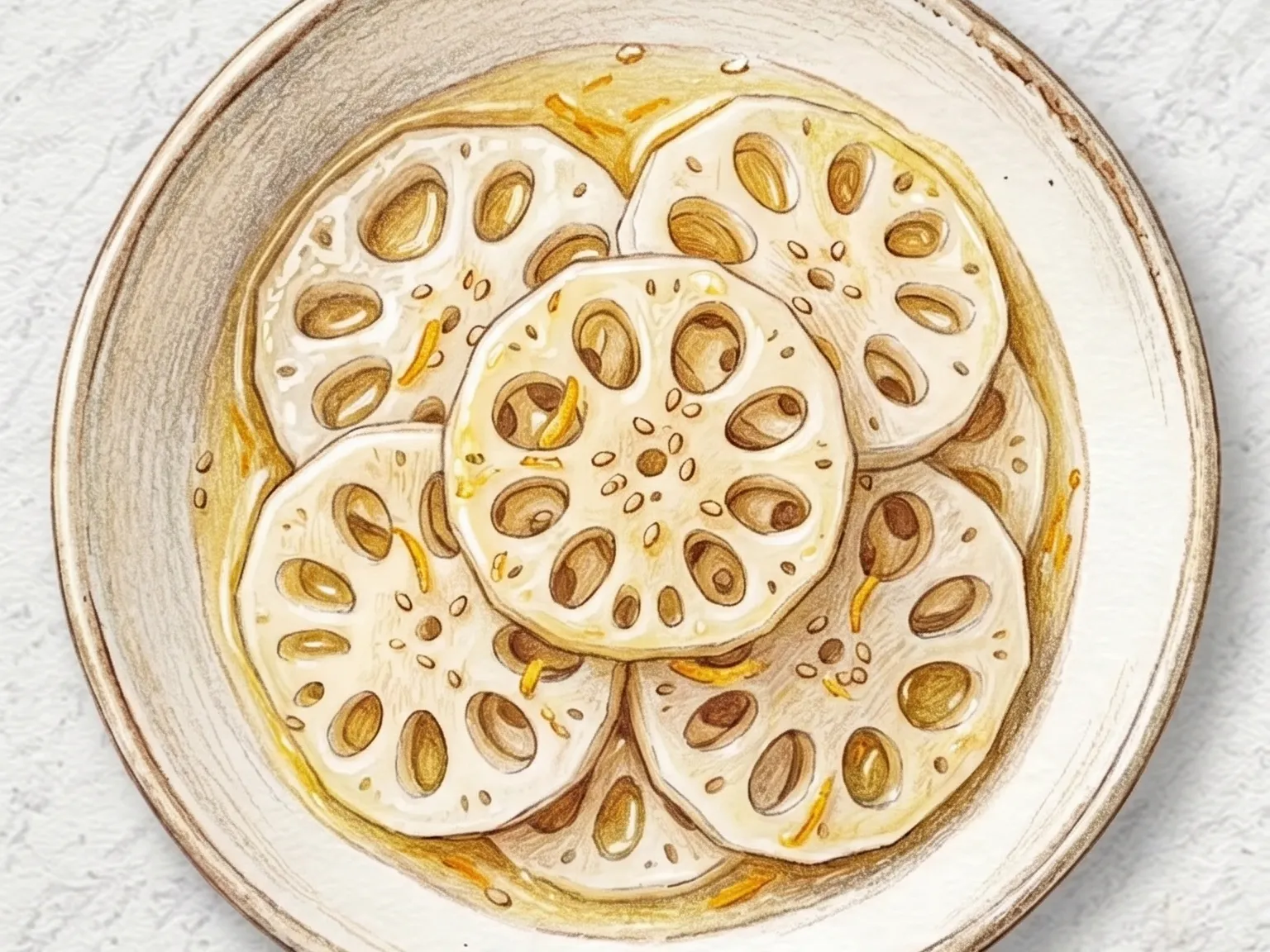
Korean Yeongeun Ganjang Jorim (Soy-Braised Lotus Root)
Slice 500 g peeled lotus root about 0.5 cm thick, soak in lightly vinegared water for 5 minutes, and blanch for 3 minutes before braising. Braise in 4 tbsp soy sauce, 300 ml water, 1 tbsp sugar, and 1 tbsp cooking wine over medium-low heat for about 15 minutes. Once the sauce has reduced to less than half, add 2 tbsp oligosaccharide syrup and 1 tbsp vinegar and simmer about 5 more minutes, stopping while the lotus root is still crunchy.
Quick answer
- Total time
- 40 min
- Level
- Easy
- Servings
- 4 servings
- Ingredients
- 9
About this dish
Thin, even slices of lotus root end up with a thin brown soy glaze outside and a crisp, lacy bite inside.
Read more
Cutting every slice to the same 0.5 cm is what lets them all cook to the same point in the same time. A quick blanch and a rinse in cold water before braising take off the surface starch and astringency, and skipping it leaves that rough edge under the glaze. A tablespoon of vinegar added with the rice syrup near the end keeps the sweetness light despite all that shine. Cooled completely and refrigerated, the slices keep drawing in seasoning and taste more even the next day.
Ingredients
Instructions
- 1
Trim and peel 500 g lotus root, then slice it evenly about 0.5 cm thick.
Soak the slices in lightly vinegared water for 5 minutes so the cut surfaces stay pale and do not brown before cooking.
- 2
Bring a generous pot of water to a full boil and blanch the lotus root for 3 minutes.
Rinse under cold water afterward to reduce astringency and surface starch, which helps the finished glaze stay clean.
- 3
Add 4 tablespoons soy sauce, 300 ml water, 1 tablespoon sugar, and 1 tablespoon cooking wine to a pot.
Bring it to a boil over medium heat, stirring until the sugar dissolves before adding the lotus root.
- 4
Add the blanched lotus root and wait until the sauce returns to a simmer, then lower to medium-low heat.
Braise for about 15 minutes, turning once or twice so both sides season evenly without breaking.
- 5
When the sauce has reduced to less than half, add 2 tablespoons oligosaccharide syrup and 1 tablespoon vinegar.
Simmer about 5 more minutes, spooning the sauce over the slices until the surface turns glossy.
- 6
Turn off the heat when only a shallow layer of sauce remains and the lotus root is cooked but still crunchy.
Toss with 1 teaspoon sesame oil and 1 teaspoon sesame seeds, then cool before refrigerating.
Use-up ingredient planner
Turn these ingredients into two more meals
The overlap excludes basic seasonings. Open the next recipe and your selected dishes will stay with you.

Korean Lotus Root Shiitake Pot Rice
lotus root, sesame seeds
Korean Lotus Root Yuzu Salad
lotus root, sesame seeds

Korean Braised Lotus Root
lotus root, sesame seeds