Korean Lotus Root Soup (Sliced Lotus Root in Anchovy Broth)
Soups Easy

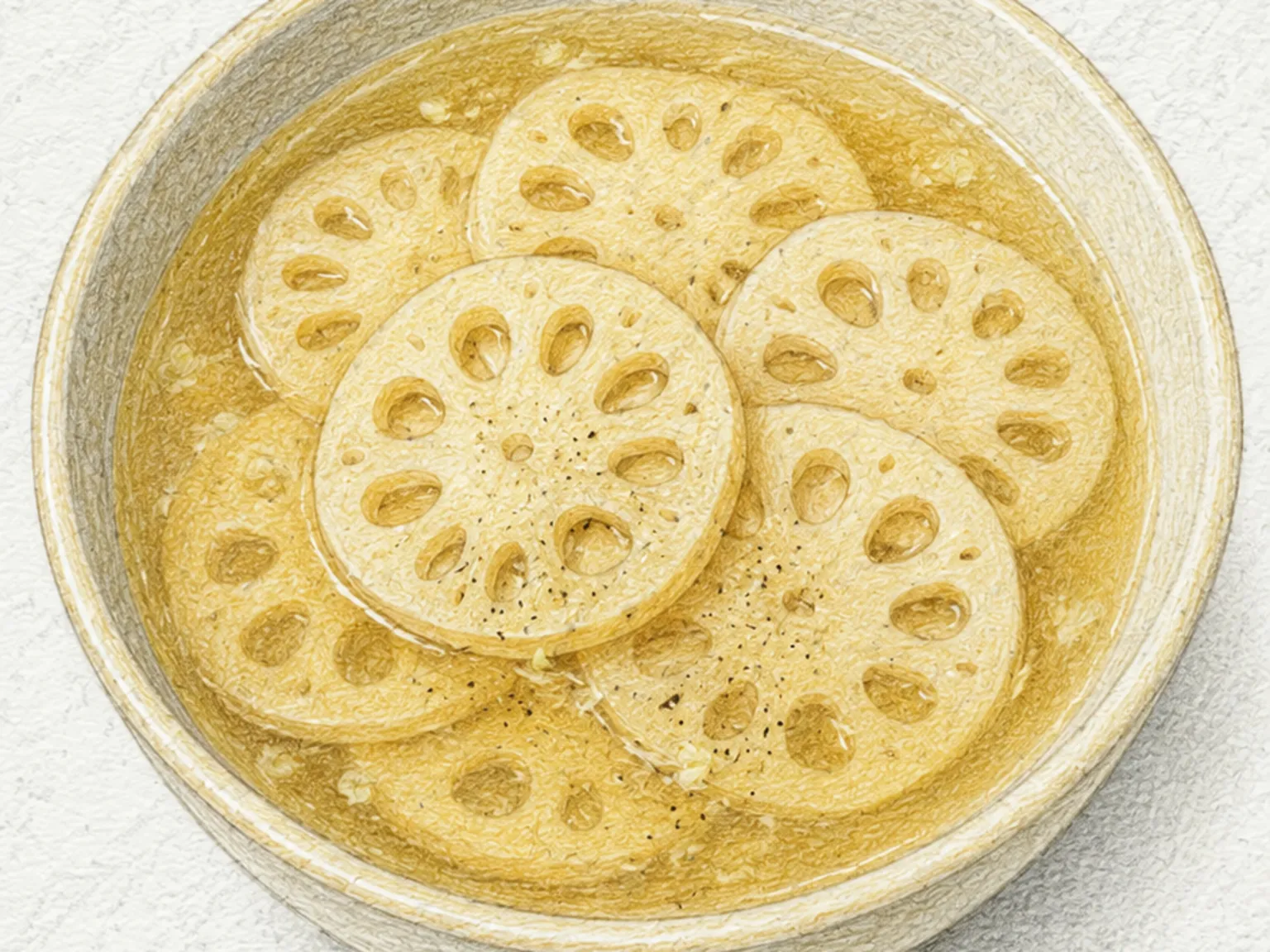
Korean Lotus Root Soup (Sliced Lotus Root in Anchovy Broth)

Quick answer

Yeongeun-guk is a clear soup built around thinly sliced lotus root simmered in anchovy broth.

What makes this special

  • Twelve minutes of cooking releases lotus root starch, giving the soup a subtle thickness.
  • Twelve minutes of cooking releases lotus root starch, giving the broth a subtle thickness
  • Immediate soaking in cold water prevents browning and maximizes natural sweetness in anchovy broth
Total time
37 min
Level
Easy
Servings
4 servings
Ingredients
7
Calories
105 kcal
Protein
4 g

Key ingredients

lotus rootanchovy brothsoup soy sauceminced garlicgreen onion

Core cooking flow

  1. 1 Peel 280 g lotus root, slice it thinly, and place it in cold water right away to prevent browning.
  2. 2 Drain the lotus root, rinse it lightly under running water, and let excess water drip off.
  3. 3 Add the lotus root when the broth boils and keep the heat high until it returns to a boil.

Yeongeun-guk is a clear soup built around thinly sliced lotus root simmered in anchovy broth. The lotus root is peeled and soaked in cold water immediately to prevent browning, then cooked for twelve minutes, which softens it slightly while preserving the characteristic crunch. As the starch leaches out, the broth takes on a subtle thickness. Garlic, soup soy sauce, salt, and a dusting of black pepper are the only seasonings, letting the lotus root's gentle sweetness remain the focal point. Low in calories and high in dietary fiber, this soup fits comfortably into a lighter meal.

Prep 15min Cook 22min 4 servings

Instructions

Read the steps as a cooking flow: prep, heat, seasoning, doneness control, and finish.

6 steps
  1. 1
    Finish

    Peel 280 g lotus root, slice it thinly, and place it in cold water right away to prevent browning.

    Slice 1/2 green onion and keep it ready so the finishing step moves quickly.

  2. 2
    Control

    Drain the lotus root, rinse it lightly under running water, and let excess water drip off.

    Bring 1500 ml anchovy broth to a full boil over high heat before adding the slices.

  3. 3
    Heat

    Add the lotus root when the broth boils and keep the heat high until it returns to a boil.

    Skim off any foam that rises so the soup stays clear and clean tasting.

  4. 4
    Control

    Lower the heat to medium and simmer for 12 minutes.

    The lotus root is ready when the edges look slightly translucent and the slices still keep a crisp bite when tasted.

  5. 5
    Control

    Stir in 1 teaspoon minced garlic and 1 tablespoon soup soy sauce, then simmer 5 more minutes.

    Avoid stirring aggressively, which can cloud the broth and break the delicate slices.

  6. 6
    Finish

    Season with 0.4 teaspoon salt and 0.2 teaspoon black pepper, then add the sliced green onion.

    Cook for just 1 minute and serve while the onion aroma is still fresh.

After the steps

Pick a recipe that fits this dish.

Continue with shared ingredients, meal pairings, or a similar method.

Recipes That Go Well With This

More Soups →

Based on shared ingredients and meal pairing

Korean Burdock Root Soup (Earthy Burdock and Beef Clear Broth)
Shared ingredient: green onion Soups

Korean Burdock Root Soup (Earthy Burdock and Beef Clear Broth)

Ueong-guk is a clear Korean soup that highlights the earthy, almost nutty character of burdock root. Julienned burdock is first stir-fried in sesame oil with thinly sliced beef until the root's raw edge mellows and a toasted aroma rises from the pan. Water is then added and the pot brought to a simmer, during which the burdock's tough fibers gradually soften while maintaining enough structure to provide a pleasant chew. The broth takes on a light brown tint from the initial stir-fry, carrying the sesame and caramelized burdock flavors through to the last spoonful. Soup soy sauce seasons the liquid with umami rather than straight salt, and minced garlic stirred in near the end adds a quiet warmth. Burdock is naturally high in dietary fiber, giving this soup a reputation as a digestive-friendly choice. The root is at its best from autumn through winter, when its sugars concentrate underground, and the soup's understated flavor makes it an easy complement to a multi-dish Korean meal.

Korean Fish Soup (White Fish and Radish Clear Broth)
Shared ingredient: green onion Soups

Korean Fish Soup (White Fish and Radish Clear Broth)

Saengseon-guk is a traditional Korean fish soup made with white-fleshed fish and radish in a clear broth. The radish simmers first, building a base of natural sweetness, before garlic and soup soy sauce are added for depth. The fish goes in once the radish is halfway cooked, and timing matters - it should cook only until the flesh turns opaque and begins to flake, as prolonged boiling would break it apart and cloud the broth. Tofu and sliced Korean chili peppers join near the end, adding soft texture and a mild kick. Green onion finishes the bowl with a fresh note. The result is a light, transparent soup where the fish's own clean, marine flavor does most of the work. It is the kind of straightforward home cooking that appears on Korean dinner tables throughout the year, requiring little more than fresh fish and basic pantry staples.

Korean Sesame Porridge (Toasted Sesame Silky Rice Porridge)
Serve together Rice

Korean Sesame Porridge (Toasted Sesame Silky Rice Porridge)

Kkaejuk is a traditional Korean porridge made by grinding toasted sesame seeds to a fine powder and simmering them with soaked rice, water, and milk until the mixture reaches a silky, cream-soup consistency. Toasting the seeds before grinding is not optional -- raw sesame lacks the deep, roasted fragrance that defines the dish, and the heat of toasting develops oils and aroma compounds that grinding alone cannot produce. Constant stirring over low heat prevents the mixture from scorching and coaxes the rice grains into breaking down completely, merging with the sesame base so no distinct texture remains. Milk enriches the body beyond what water alone provides and gives the finished porridge a warm ivory color. The simplest version is seasoned with nothing but salt and served with a drizzle of honey or rice syrup, letting the roasted sesame flavor carry the bowl without distraction. Easily digestible and gentle on the stomach, kkaejuk has a long tradition as a morning meal, a recovery food for the sick, and a postpartum nourishment dish in Korean households.

Korean Dried Pollock Potato Soup
Similar recipe Soups

Korean Dried Pollock Potato Soup

Hwangtae-gamja-guk is a clear Korean soup built around dried pollock strips that have been wind-dried and then sauteed in sesame oil before any liquid is added. That initial stir-fry step is what separates this soup from simpler broth dishes: the heat releases a toasty, nutty fragrance from the pollock that permeates the entire pot and melds with the anchovy-kelp stock poured in afterward. Potato slices simmer alongside radish, and as they soften their edges gradually break down, giving the broth a mild, natural body without the use of starch or thickener. Radish contributes a clean, cooling sweetness that tempers the concentrated umami of the dried pollock. Soup soy sauce and minced garlic handle the seasoning, keeping the flavor profile clear and uncluttered. The pollock itself stays pleasantly chewy even after prolonged simmering, providing a protein-rich bite that makes the bowl genuinely filling. This soup is a fixture on Korean breakfast tables, valued for its ability to settle the stomach and restore energy.

Serve with this

Korean Seasoned Cockle Salad
Side dishes Medium

Korean Seasoned Cockle Salad

Kkomak-muchim is a seasoned cockle banchan that has become inseparable from the town of Beolgyo in South Jeolla Province. Beolgyo sits at the meeting point of wide tidal flats with strong current flow, producing an environment rich in organic matter where true cockles (cham-kkomak) grow plump, sweet, and full. The season runs from November through March, the months when the meat is at its densest and most flavorful. Cooking precision determines the outcome: stirring only in one direction once the water reaches a boil ensures all the shells open evenly rather than at staggered intervals, and the cockles must be removed at the four-minute mark before the flesh contracts and turns rubbery. The shells are pried apart immediately after lifting, the meat collected and drained well so the dressing does not turn watery. The seasoning is built from gochugaru, soy sauce, vinegar, sugar, and minced garlic, all mixed into a tangy, spicy paste that coats each cockle in a bright, assertive layer. Sliced green onion adds freshness, sesame oil adds a roasted fragrance, and a ten-minute rest after mixing allows the dense cockle meat to absorb the dressing from the surface inward. This is among the most sought-after seasonal banchan in Korean cuisine and a central part of what makes Beolgyo food culture distinctive.

🏠 Everyday 🍱 Lunchbox
Prep 20min Cook 10min 2 servings
Korean Amaranth Greens Pickles
Kimchi Medium

Korean Amaranth Greens Pickles

Bireumnamul jangajji is a soy-vinegar pickle of amaranth greens made by submerging the tender leaves in a boiled brine of soy sauce, vinegar, and sugar with cheongyang chili and garlic. The soft leaves absorb the pickling liquid within a day, taking on a balanced sweet-salty flavor that makes them ready to eat as banchan. Vinegar neutralizes the grassy raw taste of the greens, and the chili and garlic deliver a sharp, spicy finish that builds at the back of the palate. The flavor deepens noticeably from the second day onward, so chilling the jar longer intensifies the pickle. Refrigerated, this keeps well for two to three weeks, making it a practical way to preserve in-season amaranth greens through the summer.

🏠 Everyday 🍱 Lunchbox
Prep 30min Cook 15min 4 servings
Korean Burdock Matchstick Pancake
Pancakes Easy

Korean Burdock Matchstick Pancake

Burdock root, julienned into thin matchstick strips and pan-fried with onion and cheongyang chili, is a jeon with texture as its main argument. The combination of Korean pancake mix and tempura flour in the batter produces a result that is crispier than standard jeon, particularly at the edges where the thin strips of burdock protrude from the batter and catch the heat. Burdock has an earthy, faintly bitter flavor that holds up in the pan, and the onion provides sweetness alongside it. Cheongyang chili cuts through with a slow-building, lingering heat. Cold water keeps the batter loose and inhibits gluten development, so the finished jeon stays light rather than dense. Hot from the pan, the edges shatter; cooled, they turn chewy.

🍺 Bar Snacks ⚡ Quick
Prep 18min Cook 10min 2 servings

Similar recipes

Korean Green Laver Soup (Seaweed Tofu Anchovy Broth)
Soups Easy

Korean Green Laver Soup (Seaweed Tofu Anchovy Broth)

Parae-guk is a Korean seaweed soup made with green laver and tofu simmered in a clear anchovy broth. The broth is brought to a gentle boil and seasoned with garlic and soup soy sauce before diced tofu is added and warmed through for three minutes. The green laver goes in at the very end, cooking for no more than 30 to 60 seconds, because extended heat strips away its vivid color and fresh ocean fragrance entirely. Since the recipe relies on so few ingredients, the quality of the anchovy stock determines the overall depth of flavor, so using dried anchovies with heads and innards removed, simmered for at least ten minutes, produces a noticeably cleaner and more savory base. The mineral-rich, briny character of the green laver contrasts well with the mild tofu, and the whole soup comes together in about fifteen minutes. Because green laver carries its own saltiness, it is best to add the soup soy sauce gradually and taste as the seasoning develops.

🏠 Everyday 🥗 Light & Healthy
Prep 10min Cook 15min 4 servings
Korean Lotus Root Perilla Seed Stew
Stews Easy

Korean Lotus Root Perilla Seed Stew

Korean lotus root perilla seed stew is a vegetable stew that features crisp lotus root and oyster mushrooms cooked in a thick perilla seed broth. The process begins by soaking sliced lotus root in vinegar water for five minutes to prevent browning and reduce astringency. Onion and oyster mushrooms are stir-fried in sesame oil before adding the lotus root and vegetable stock. After simmering until the lotus root is tender, soup soy sauce and minced garlic are stirred in. Finally, four tablespoons of perilla seed powder are dissolved into the soup along with tofu, and the stew is heated over low heat. Adding the perilla powder at the end preserves its rich, nutty aroma without making the broth chalky. Built on vegetable stock without meat or fish, this dish offers a clean taste and varied textures.

🏠 Everyday 🥗 Light & Healthy
Prep 18min Cook 22min 4 servings
Korean Lotus Root Shiitake Pot Rice
Rice Medium

Korean Lotus Root Shiitake Pot Rice

Yeongeun-pyogo-sotbap is a Korean pot rice dish that combines short-grain rice with crisp lotus root and chewy shiitake mushrooms. The process begins by soaking the rice for thirty minutes, then draining it. Minced garlic, diced shiitake, and carrots are sautéed in perilla oil to release moisture. The rice and thinly sliced lotus root are added next, coating the grains in oil to ensure a glossy texture and nutty flavor. Water and soy sauce are poured in, and the pot is simmered on low heat for fourteen minutes. Resting the covered pot off the heat for ten minutes is the key step to settle the aroma and finalize the texture. Before serving, fresh scallions and toasted sesame seeds are scattered over the top and fluffed gently to prevent crushing the rice.

🎉 Special Occasion
Prep 20min Cook 30min 4 servings

Tips

Do not overcook lotus root if you want crisp texture.
Soak sliced lotus root immediately to prevent browning.

Nutrition (per serving)

Calories
105
kcal
Protein
4
g
Carbs
19
g
Fat
1
g