Korean Lotus Root Pancakes
Quick answer
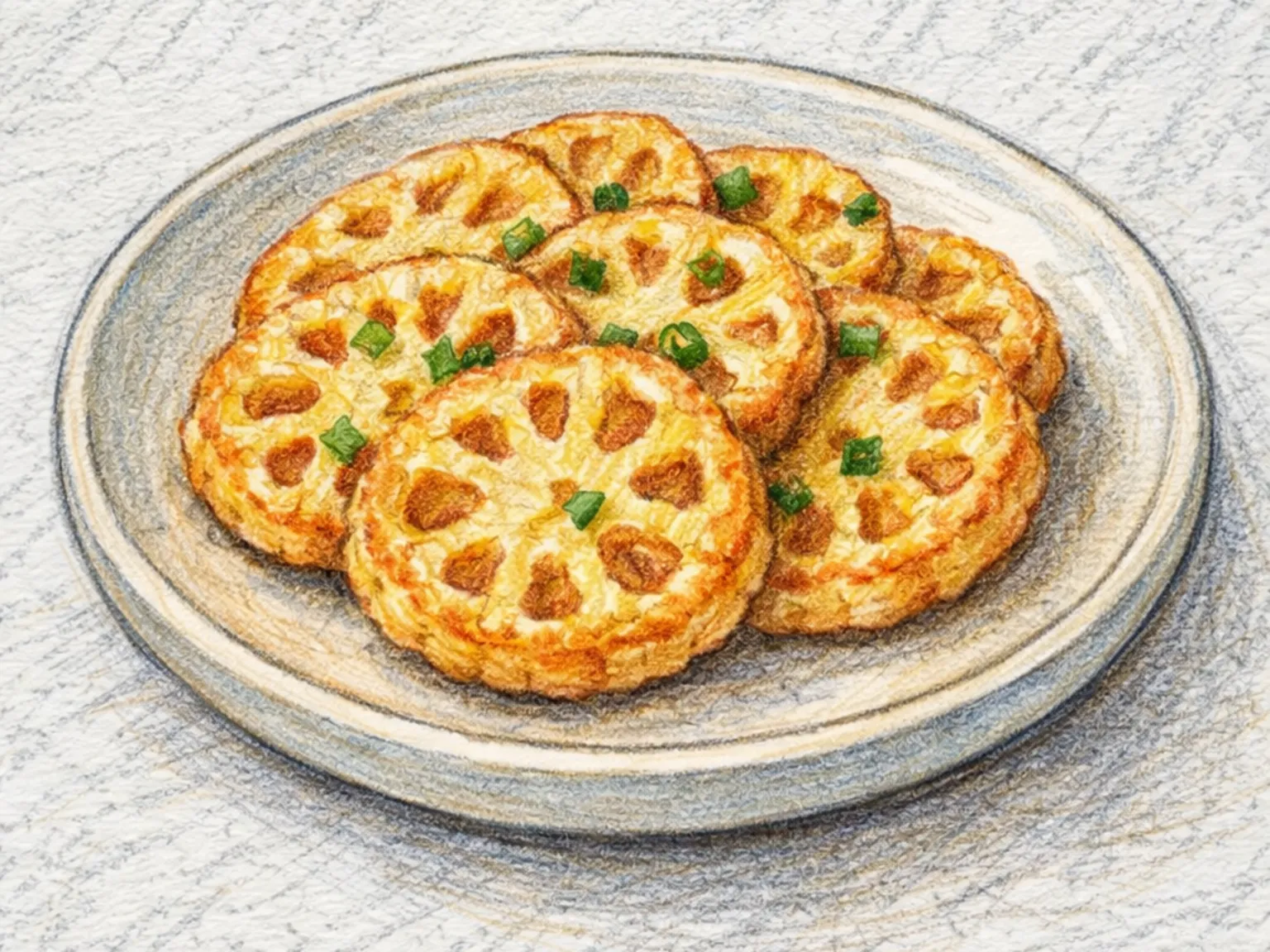
Lotus root is sliced into rounds and coated in a light batter of buchim flour and egg before being pan-fried until golden on both sides.
What makes this special
- Pan-fried lotus root rounds reveal a lace-like pattern through their light, golden coating of egg and flour.
- Lotus root holes visible through the batter make a striking pattern
- 5mm slices achieve crisp coating and crunchy interior together
Key ingredients
Core cooking flow
- 1 Peel 300 g lotus root, trim the ends, and slice it into 5 to 6 mm rounds.
- 2 Mix 1 tablespoon vinegar with 500 ml water and soak the lotus root for only 5 minutes.
- 3 Whisk 3/4 cup Korean pancake flour with 1 egg, 120 ml water, and 1/2 teaspoon salt.
Lotus root is sliced into rounds and coated in a light batter of buchim flour and egg before being pan-fried until golden on both sides. The root's characteristic perforations show through the thin batter, creating a lace-like appearance on each piece that makes this jeon visually distinctive. Biting through the crisp exterior reveals the lotus root's dual texture: an initial crunch from the starchy flesh followed by a slightly sticky chew that clings pleasantly to the teeth. Slicing to a thickness of five to six millimeters strikes the right balance between maintaining the crunch and ensuring the center cooks through. The egg-enriched batter adheres evenly to the root's smooth surface and sets immediately upon contact with hot oil, sealing in moisture. Minimal salt in the batter allows the lotus root's faint natural sweetness to emerge, and a dipping sauce of soy sauce and vinegar provides the acidity needed to cut through the fried exterior's richness. Commonly served during Korean holidays, this jeon is simple enough for everyday cooking as well.
Instructions
Read the steps as a cooking flow: prep, heat, seasoning, doneness control, and finish.
- 1Heat
Peel 300 g lotus root, trim the ends, and slice it into 5 to 6 mm rounds.
Keep the thickness even so the centers cook through while the slices stay crisp and do not break apart.
- 2Prep
Mix 1 tablespoon vinegar with 500 ml water and soak the lotus root for only 5 minutes.
When the water turns slightly cloudy, the excess starch has loosened, so drain before the texture softens.
- 3Season
Whisk 3/4 cup Korean pancake flour with 1 egg, 120 ml water, and 1/2 teaspoon salt.
Make the batter smooth and fairly thin, because a light coating crisps better than a heavy one.
- 4Heat
Drain the lotus root and pat each slice dry before dipping it into the batter one piece at a time.
Shake off heavy batter from the holes so the pattern stays clear and the coating cooks evenly.
- 5Control
Heat 2 tablespoons neutral oil in a pan over medium heat, then add the coated slices.
The batter should set as soon as it touches the pan. Fry for 2 to 3 minutes per side.
- 6Finish
When both sides are golden and the edges look crisp, lift the pieces out and stand them on paper towels to drain.
Serve while warm, with a soy vinegar dipping sauce if using.
After the steps
Pick a recipe that fits this dish.
Continue with shared ingredients, meal pairings, or a similar method.
Recipes That Go Well With This
More Side dishes →Based on shared ingredients and meal pairing
Korean Lotus Root Beef Pancake
Sliced lotus root is sandwiched with seasoned ground beef, coated in pancake batter and egg, then pan-fried until golden. The lotus root keeps its crunch even after cooking, so the texture contrast with the soft beef filling is distinct in every bite. Soy sauce and minced garlic season the filling so the jeon is fully flavored on its own without a dipping sauce. Chopped green onion is worked into the beef for a fresh aromatic note. The lotus root hole pattern fills with meat during assembly, making each cross-section visually clean and precise. The egg coating browns smoothly around the outside, giving a tender rather than crisp exterior.
Korean Eggplant Pancakes (Egg-Battered Pan-Fried Eggplant)
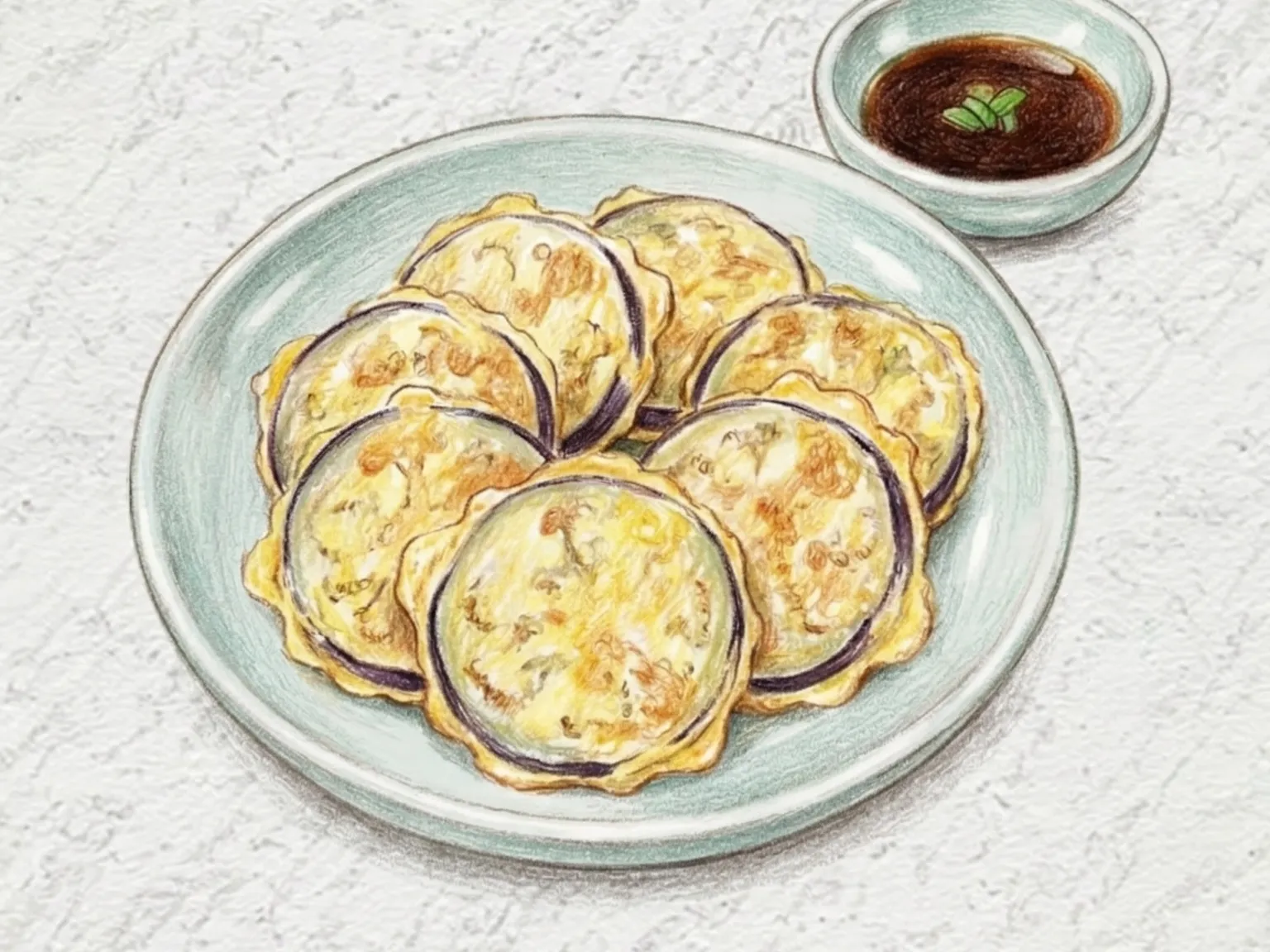
Gaji-jeon belongs to the Korean jeon tradition of vegetables dipped in egg wash and pan-fried in oil, a technique integral to ancestral rites and holiday tables. Eggplant is cut into rounds about 7mm thick, thin enough to cook all the way through but thick enough to keep a soft, yielding center. A light dusting of flour before the egg wash is necessary for the batter to adhere and stay intact in the pan. As the egg coating sets into a golden, lacy crust over the heat, the eggplant inside steams in its own moisture until it collapses into a custardy, almost dissolving texture. The appeal of this jeon lies entirely in the contrast between the crisp, faintly eggy exterior and the creamy interior that gives way with almost no resistance. Dipping each piece in a simple soy and vinegar sauce cuts through the richness of the egg crust and highlights the eggplant's subtle sweetness. Korean families commonly fry gaji-jeon alongside hobak-jeon and other vegetable jeon for Chuseok. It can be fried the day before and held at room temperature without the flavor deteriorating significantly.
Korean Braised Tofu with Kimchi
Dubu-kimchi-jorim is firm tofu braised with well-fermented aged kimchi in a sauce of soy sauce, gochugaru, minced garlic, and a pinch of sugar. The sharp acidity of the aged kimchi mellows during braising while its deep, fermented flavor remains fully intact. The tofu absorbs the chili-stained braising liquid like a sponge, carrying the kimchi flavor into every bite. Sugar takes the edge off the sourness just enough, and sesame oil stirred in at the end ties all the flavors together. Pressing the tofu before cooking prevents excess moisture from diluting the sauce, and pan-frying the pieces until golden on both sides before braising creates a firmer surface that holds together better. This dish is an efficient way to use kimchi that has sat in the refrigerator for months, as the stronger the sourness, the better suited it is for braising. Adding thinly sliced pork shoulder deepens the flavor considerably. It goes best spooned generously over a bowl of hot steamed rice.
Korean Lotus Root Kimchi (Crunchy Spiced Root Kimchi)
Starting with sliced lotus root boiled in vinegar water helps remove bitterness while keeping the vegetable pale and crisp. The seasoning combines gochugaru, minced garlic, and anchovy fish sauce with the addition of fresh pear juice. This pear juice provides natural sugars and necessary moisture so the chili paste coats each slice evenly without becoming dry or clumping. Even after the fermentation process begins, the lotus root maintains its signature firm and crunchy texture. Sliced scallions are tossed in to add a fresh aromatic quality that balances the spicy garlic paste. One full day of refrigeration allows the flavors to settle into the flesh before serving. Because the seasoning gets trapped inside the characteristic holes of the root, the paste should remain thick rather than watery to ensure consistent flavor. When left to ferment for a few more days, the developing acidity helps cut through the richness of grilled meats or fried dishes. A light addition of sesame oil and toasted sesame seeds at the end brings a toasted scent to every bite.
Serve with this
Korean Beurokolli Saeu Bokkeum (Broccoli Shrimp Stir-fry)
Peeled and deveined shrimp are seasoned with cooking wine and pepper, then stir-fried over high heat alongside blanched broccoli. The shrimp reach their ideal texture the instant they turn pink; cooking any further causes the proteins to contract and the flesh to toughen. Blanching the broccoli briefly beforehand means it releases less water once it hits the pan, keeping the sauce concentrated and clinging to the ingredients rather than pooling at the bottom. Soy sauce and oyster sauce form the savory backbone, while sliced garlic infused into the oil at the start builds a fragrant base that runs through every mouthful. Bell pepper adds a crisp snap and a vivid color. The whole dish takes under fifteen minutes and delivers a full plate of protein and vitamin C in a light, satisfying format. Served over steamed rice, it works just as well as a rice bowl.
Korean Spicy Grilled Gizzard Shad
Baendaengi yangnyeom gui is a Korean grilled fish dish in which scored gizzard shad are coated in a gochujang-based glaze and cooked over medium heat until caramelized. Scoring the fish achieves two things simultaneously: it lets the seasoning penetrate into the flesh rather than sitting only on the surface, and it severs the fine pin bones that run through the small fish so they become less noticeable when eating. The marinade combines gochujang, soy sauce, oligosaccharide syrup, gochugaru, and ginger juice. The ginger juice specifically targets the fishiness of the shad, neutralizing it while adding a warm, sharp note to the overall flavor. Sugar content in the glaze is high enough that high heat will char the coating before the fish cooks through, so medium heat is maintained throughout, with three to four minutes per side giving an even result. As the oligosaccharide heats, it caramelizes into a glossy amber coating that makes the finished fish look as good as it tastes. A scattering of toasted sesame seeds adds a nutty fragrance in the final step. Gizzard shad are small enough to be eaten whole, bones included, and the bold spicy-sweet glaze makes them as suitable alongside a bowl of rice as they are paired with soju at the table.
Korean Napa Cabbage Doenjang Soup
Baechu doenjang guk is a foundational Korean soup built on anchovy-kelp stock seasoned with fermented soybean paste and napa cabbage. Straining the doenjang through a fine sieve as it dissolves into the hot stock keeps the broth visually clear while extracting the full depth of its fermented, earthy flavor. The cabbage stalks go into the pot first and simmer for five minutes alone, drawing out their inherent sweetness before the leaf sections and cubed tofu are added. A small spoonful of gochujang introduced at this point gives the broth a gentle heat and a reddish cast that adds both visual contrast and flavor complexity beyond doenjang alone. Sliced cheongyang chili and scallion are stirred in during the final two minutes, contributing sharpness and aroma without turning limp. Doenjang saltiness varies significantly between brands and aged batches, so starting with a conservative amount and adjusting by taste prevents over-salting. As the cabbage softens fully, its natural sweetness seeps gradually into the broth, where it finds a natural balance with the deep fermented character of the paste. It is among the most accessible soups in Korean home cooking, requiring only the most common pantry and refrigerator ingredients.
Similar recipes
Korean Lotus Root Yuzu Salad
Blanched lotus root slices are dressed in a bright mixture of yuzu marmalade, rice vinegar, sesame oil, and a pinch of sugar. The citrusy yuzu lifts the otherwise neutral lotus root with floral tartness, while the 3 mm thick rounds keep a satisfying crunch even after boiling. Sesame seeds and oil round out the finish with a warm, nutty note. This banchan works especially well alongside richer main dishes, cutting through heaviness with its clean acidity. It can be served as a side dish with rice, with simple accompaniments chosen to match the sauce, broth, or topping.
Korean Crown Daisy Pancake
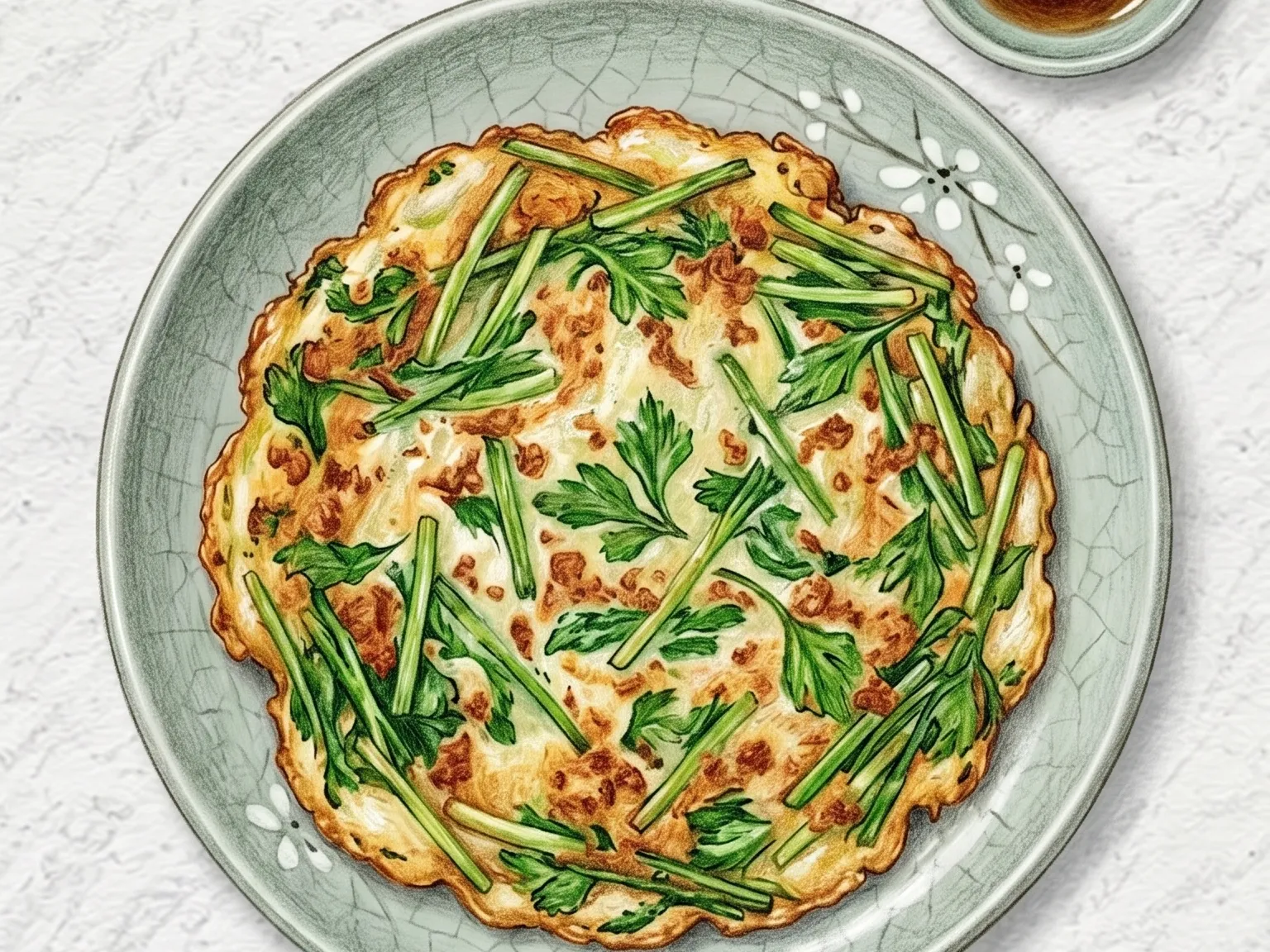
Fragrant crown daisy leaves are coated in a light pancake batter and pan-fried until the edges crisp and the herb's aroma intensifies. Heat amplifies the crown daisy's grassy, slightly bitter character, and the scent rises through the thin layer of batter as the jeon cooks. Egg in the batter provides structure, helping the exterior hold its crunch, while a small addition of potato starch keeps the texture light and prevents sogginess as the pancake cools. Sliced onion mixed into the batter introduces a gentle sweetness that offsets the herb's bitterness. Cooking over medium-low heat with ample oil ensures the interior sets evenly before the surface browns too deeply, and waiting until one side has fully firmed before flipping prevents the pancake from falling apart. The finished jeon is served with a dipping sauce of soy sauce and vinegar, whose acidity lifts the richness of the fried exterior and highlights the crown daisy's herbal notes.
Korean Lotus Root & Peanut Braise
Yeongeun ttangkong jorim is a Korean soy-braised side dish of lotus root and roasted peanuts glazed in soy sauce, oligosaccharide syrup, and cooking wine. The crunchy lotus root contrasts with the toasted, nutty peanuts, and the combination releases layers of savory, roasted flavor as you chew. Soy sauce provides the salty foundation while the syrup rounds it out with a soft sweetness and glossy finish. This banchan keeps well refrigerated for several days, making it a reliable addition to lunchboxes and everyday meals.