Korean Soy Sauce Stir-Fried Lotus Root and Bean Sprouts
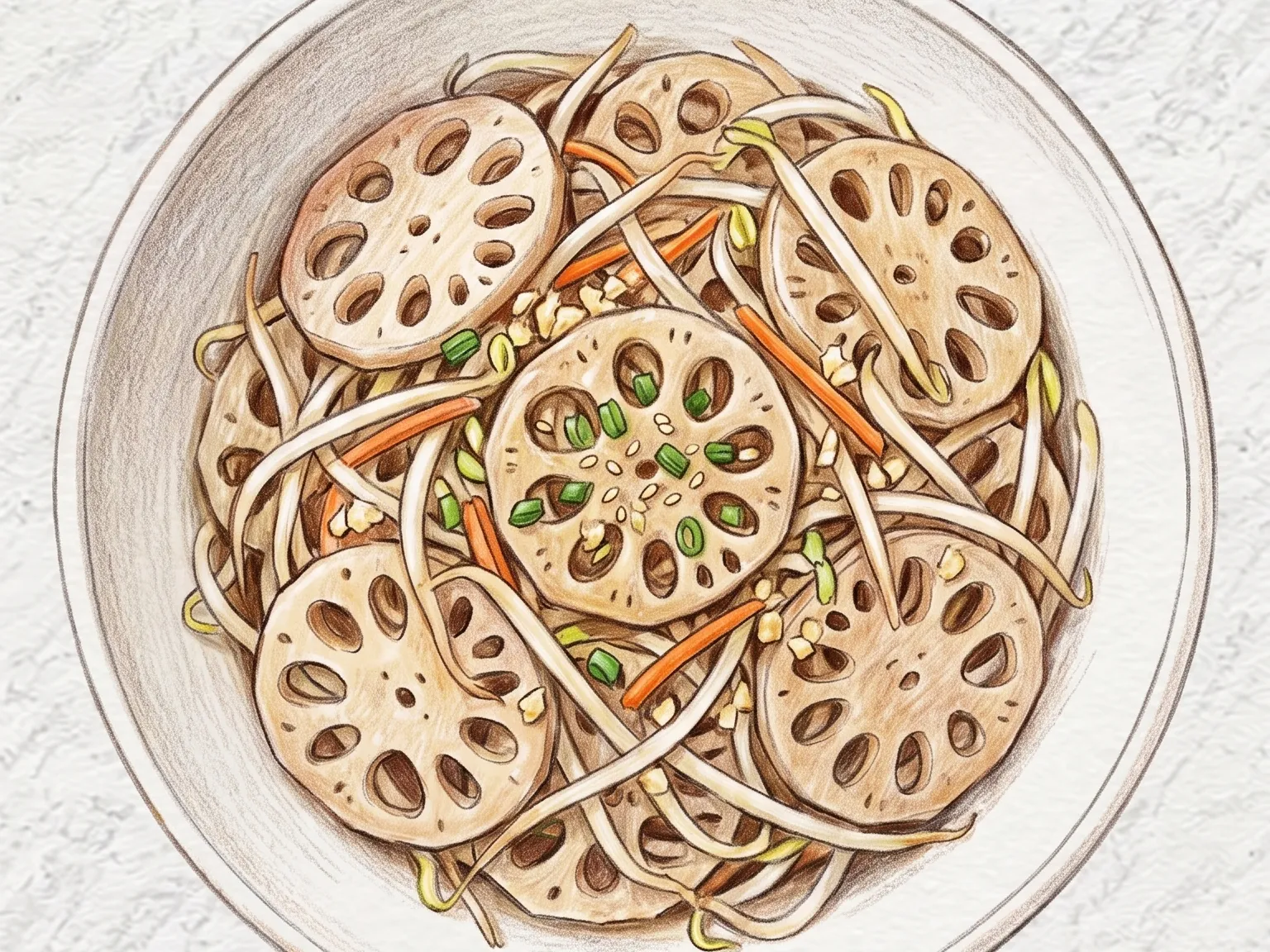
Yeongeun-kongnamul-ganjang-bokkeum stir-fries sliced lotus root and bean sprouts in a soy sauce and oligosaccharide glaze. The lotus root goes in first over medium heat for three minutes until slightly translucent, then carrot and garlic are added before the soy seasoning. Bean sprouts join last and cook on high heat for just two minutes to drive off moisture while staying crunchy. The starchy snap of the lotus root contrasts with the watery crispness of the bean sprouts, tied together by a light sweet-salty soy coating.
Adjust Servings
Instructions
- 1
Slice lotus root to 3 mm and soak in vinegar water for 5 minutes, then rinse.
- 2
Julienne the carrot and finely chop the green onion.
- 3
Heat oil and stir-fry lotus root over medium heat for 3 minutes until slightly translucent.
- 4
Add carrot and garlic for 1 minute, then pour in soy sauce and syrup.
- 5
Add bean sprouts and stir-fry over high heat for 2 minutes to evaporate moisture.
- 6
Add green onion and sesame seeds, toss 20 seconds, and turn off heat.
As an Amazon Associate, we may earn from qualifying purchases.
Tips
Nutrition (per serving)
More Recipes

Korean Lotus Root and Beef Stir-fry
Yeongeun-soegogi-bokkeum is a Korean stir-fry of thinly sliced lotus root and beef in a soy sauce and oligosaccharide syrup glaze. The lotus root is soaked in vinegar water to prevent browning, then stir-fried briefly to keep its distinctive crunch, while the beef is pre-seasoned in soy sauce for deeper flavor. The syrup creates a thin, glossy coating that carries the sweet-salty seasoning evenly across every piece. A finishing drizzle of sesame oil rounds out the dish with a nutty fragrance, making it a versatile side for everyday rice meals and packed lunches.

Korean Stir-Fried Mung Bean Sprouts and Mushrooms
Mung bean sprouts and oyster mushrooms are tossed together in a hot pan for a stir-fry that contrasts the sprouts' crisp snap with the mushrooms' tender chew. Speed is critical: the sprouts lose their crunch within seconds of overcooking, so the entire process finishes in under a minute once the ingredients hit the oil. Tearing the oyster mushrooms along their natural grain rather than chopping them exposes more surface area, allowing the seasoning to penetrate each strand. Soup soy sauce seasons the dish with depth while keeping the color clean and light, and minced garlic and sliced green onion provide an aromatic backbone that fills the kitchen as the pan sizzles. Sesame oil is added just before removing from heat so its fragrance survives intact, and a scattering of toasted sesame seeds supplies a nutty accent. Both ingredients release significant moisture, so either salting them briefly beforehand or ensuring the pan is blazing hot prevents the stir-fry from turning soggy.

Korean Stir-Fried Soybean Sprouts
Kongnamul-bokkeum is stir-fried soybean sprouts cooked over high heat for a result that differs fundamentally from the blanched-and-dressed kongnamul-muchim. While the muchim version is cold and gentle, the bokkeum version introduces direct contact with a hot oiled pan, creating a faint wok char on the sprout surfaces. The critical rule is to never cover the pan - trapped steam converts the stir-fry into a boiled dish and locks in the raw bean smell that proper cooking should eliminate. Garlic goes into the oil first for twenty seconds to build an aromatic foundation, then the sprouts are tossed for no more than two minutes on high heat to preserve their crunch. Soup soy sauce (gukganjang) seasons more lightly and keeps the color clean compared to regular soy sauce. When a bag of bean sprouts is the only vegetable in the refrigerator, this five-minute banchan is the pragmatic answer.

Korean Stir-fried Balloon Flower Root
Doraji - balloon flower root - has been cultivated in Korea for centuries, valued in cooking and herbal medicine. The raw root is bracingly bitter, so it must be shredded, rubbed vigorously with salt, and rinsed twice. This salt-scrub extracts saponins while preserving the root's signature crunch. Stir-fried with green onion, then glazed in gochujang, soy sauce, and oligosaccharide syrup, the strips turn glossy and slightly sticky with a sweet-spicy coating.

Korean Stir-fried Anchovies
Myeolchi-bokkeum is a foundational Korean banchan of small dried anchovies glazed in a sweet-salty coating of soy sauce and oligosaccharide syrup. The anchovies are first dry-roasted in a clean pan on low heat for three minutes to remove fishiness and build crunch. A sauce of garlic, soy sauce, and syrup is bubbled separately, and the anchovies are tossed back in for a quick, even coating. Sesame oil and toasted sesame seeds finish the dish; once fully cooled, the glaze sets firm, giving the anchovies a snappy texture that keeps well in an airtight container for over a week.

Korean Beef and Pimpinella Stir-fry
Beef sliced thin for bulgogi is marinated in soy sauce, cooking wine, minced garlic, and black pepper for ten minutes, then spread in a single layer across a hot pan so every piece browns without steaming. Crowding the pan drops the temperature and causes the meat to stew in its own liquid rather than sear. Sliced onion goes in next for two minutes to coax out its sweetness, followed by chamnamul, a Korean wild green with a distinctive herbal fragrance that sits somewhere between celery leaf and parsley. The chamnamul needs only forty seconds in the pan; any longer and the stems lose their snap while the leaves go limp and the aroma dissipates. Sesame oil stirred in after the heat is off wraps every piece in a smooth richness, and whole sesame seeds burst with a small pop of nutty oil when bitten. At 365 calories and 30 grams of protein, this is a nutrient-dense plate where the bright, almost grassy scent of the spring greens keeps the beefy weight from feeling heavy.