Korean Lotus Root and Beef Stir-fry
Stir-fry Medium

Korean Lotus Root and Beef Stir-fry

Quick answer

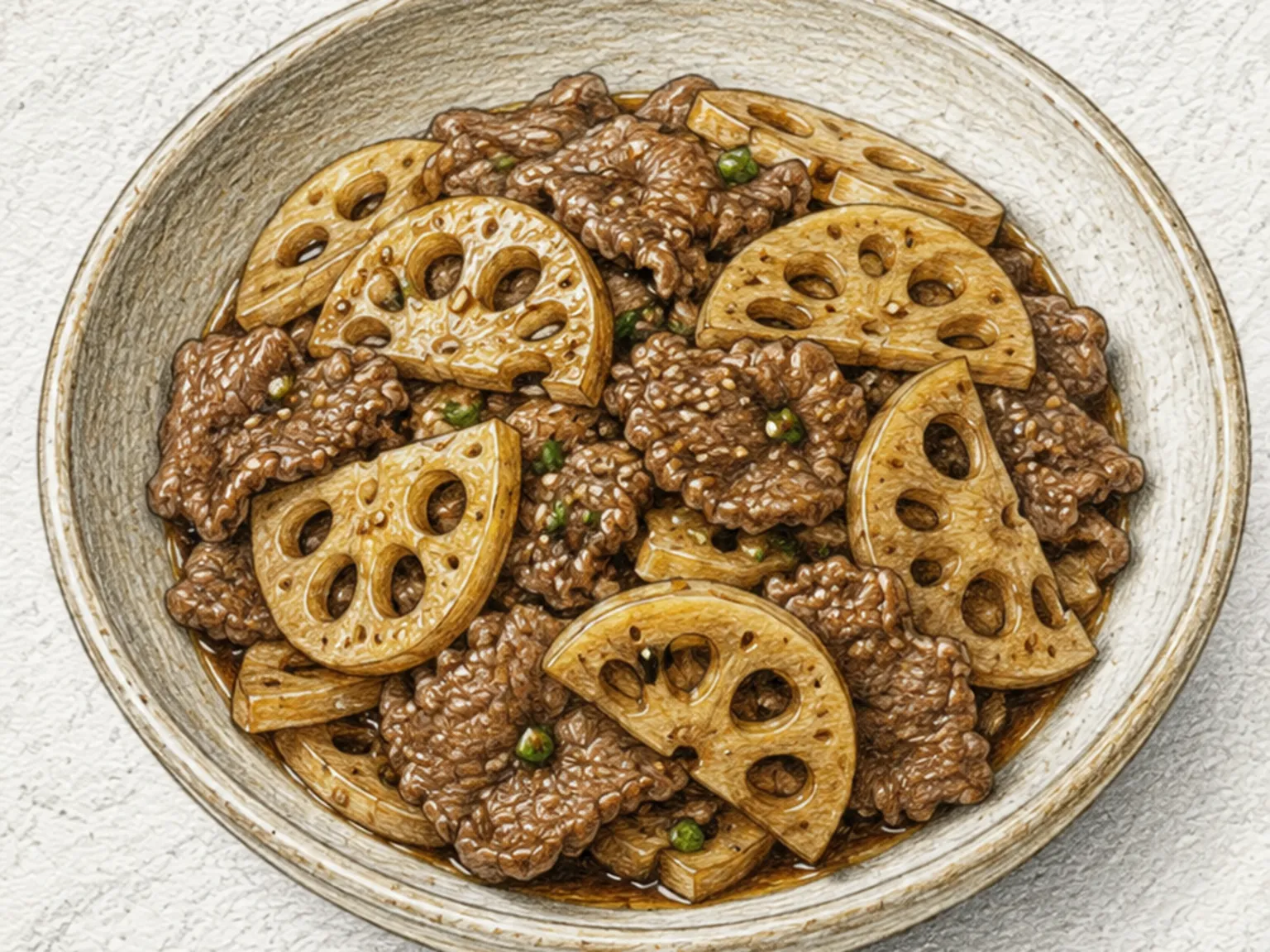
Yeongeun-soegogi-bokkeum is a Korean stir-fry of thinly sliced lotus root and beef in a soy sauce and oligosaccharide syrup glaze.

What makes this special

  • Yeongeun-soegogi-bokkeum coats sliced lotus root in savory beef fat and soy for a crunchy, umami finish.
  • Beef marinated in soy and seared first so its savory fat coats the lotus root
  • Ten minutes in vinegar water keeps lotus root crisp through stir-frying
Total time
32 min
Level
Medium
Servings
3 servings
Ingredients
8
Calories
330 kcal
Protein
18 g

Key ingredients

lotus rootbeef slicesonionsoy sauceoligosaccharide syrup

Core cooking flow

  1. 1 Slice 280 g lotus root thinly and evenly, then soak it in vinegar water for...
  2. 2 Cut 180 g beef slices into bite-size pieces and toss them with 1 tablespoon soy sauce for about 5 minutes.
  3. 3 Heat a pan over medium heat, add 1 tablespoon cooking oil, and spread the beef in a single layer.

Yeongeun-soegogi-bokkeum is a Korean stir-fry of thinly sliced lotus root and beef in a soy sauce and oligosaccharide syrup glaze. The lotus root is soaked in vinegar water to prevent browning, then stir-fried briefly to keep its distinctive crunch, while the beef is pre-seasoned in soy sauce for deeper flavor. The syrup creates a thin, glossy coating that carries the sweet-salty seasoning evenly across every piece. A finishing drizzle of sesame oil rounds out the dish with a nutty fragrance, making it a versatile side for everyday rice meals and packed lunches.

Prep 20min Cook 12min 3 servings

Instructions

Read the steps as a cooking flow: prep, heat, seasoning, doneness control, and finish.

6 steps
  1. 1
    Heat

    Slice 280 g lotus root thinly and evenly, then soak it in vinegar water for 10 minutes to prevent browning.

    Rinse well and drain thoroughly so the stir-fry does not turn watery in the pan.

  2. 2
    Season

    Cut 180 g beef slices into bite-size pieces and toss them with 1 tablespoon soy sauce for about 5 minutes.

    Slice 80 g onion slightly thick so it softens without collapsing during stir-frying.

  3. 3
    Control

    Heat a pan over medium heat, add 1 tablespoon cooking oil, and spread the beef in a single layer.

    Stir-fry for about 1 minute, just until about half of the red color disappears.

  4. 4
    Control

    Add the lotus root and onion, then keep tossing over medium heat for about 3 minutes.

    Stop this stage when the lotus root edges look slightly translucent and the onion smells sweet.

  5. 5
    Season

    Add the remaining 1.5 tablespoons soy sauce, 1 tablespoon oligosaccharide syrup, and 1 teaspoon minced garlic, then lower the heat to medium-low. Stir-fry for about 2 minutes until the seasoning clings glossily instead of pooling.

  6. 6
    Finish

    Taste one lotus root slice and check that the inside is still crisp while the outside is coated with sweet-salty seasoning.

    Turn off the heat, mix in 1 teaspoon sesame oil, and serve right away.

After the steps

Pick a recipe that fits this dish.

Continue with shared ingredients, meal pairings, or a similar method.

Recipes That Go Well With This

More Stir-fry →

Based on shared ingredients and meal pairing

Korean Lotus Root and Shrimp Stir-fry
Shared ingredient: lotus root Stir-fry

Korean Lotus Root and Shrimp Stir-fry

Yeongeun-saeu-bokkeum stir-fries vinegar-soaked lotus root and cleaned shrimp in a soy sauce and oligosaccharide glaze. The lotus root goes in the pan first for two minutes to start cooking, then shrimp are added and the soy-syrup seasoning goes in over high heat to build a glossy coating. The crunchy, starchy bite of the lotus root contrasts with the bouncy firmness of the shrimp in each mouthful, while the soy and syrup provide a simple salty-sweet balance. Finished with sesame oil, the dish holds its texture well even after cooling, making it well-suited for packed lunches.

Korean Lotus Root Chicken Breast Stir-fry
Shared ingredient: lotus root Stir-fry

Korean Lotus Root Chicken Breast Stir-fry

Yeongeun-dakgaseumsal-bokkeum stir-fries soy-and-wine-marinated chicken breast with lotus root, bell pepper, and onion. The lotus root is sliced 3mm thick and soaked in vinegar water to prevent browning and keep its crunch, while the chicken is cooked quickly over medium-high heat to avoid drying out. Oligosaccharide syrup mixed with soy sauce creates a glossy glaze that coats the ingredients, and bell pepper adds color and sweetness. The crisp, starchy bite of the lotus root paired with the lean chicken makes this a protein-rich banchan that stays grease-free and packs well for lunches.

Korean Stir-Fried Octopus Fried Rice
Serve together Rice

Korean Stir-Fried Octopus Fried Rice

Baby octopus is tossed with rice over high heat in a gochujang-and-red-pepper-flake sauce for a bold, spicy fried rice. The sauce coats each grain with a deep red glaze, and the octopus adds a springy, chewy bite throughout. Cleaning the octopus with flour before rinsing removes any sliminess, and a fast cook on high heat keeps the tentacles from toughening. Green onion and sesame oil go in at the very end for a fragrant finish. Controlling resting time and grain texture helps the ingredients cook evenly while keeping the final seasoning balanced.

Korean Soy Sauce Stir-Fried Lotus Root and Bean Sprouts
Similar recipe Stir-fry

Korean Soy Sauce Stir-Fried Lotus Root and Bean Sprouts

Yeongeun-kongnamul-ganjang-bokkeum stir-fries sliced lotus root and bean sprouts in a soy sauce and oligosaccharide glaze. The lotus root goes in first over medium heat for three minutes until slightly translucent, then carrot and garlic are added before the soy seasoning. Bean sprouts join last and cook on high heat for just two minutes to drive off moisture while staying crunchy. The starchy snap of the lotus root contrasts with the watery crispness of the bean sprouts, tied together by a light sweet-salty soy coating.

Serve with this

Manduguk (Korean Dumpling Clear Broth Soup)
Soups Easy

Manduguk (Korean Dumpling Clear Broth Soup)

Manduguk is a Korean dumpling soup in which hand-folded dumplings stuffed with ground pork, tofu, scallion, and garlic are dropped into a clear, simmering broth, typically anchovy-kelp stock or beef broth, and cooked until they float. As the dumplings cook, their thin wheat-flour wrappers release a subtle starch that gives the broth a barely perceptible body, while the filling leaks savory juices that enrich the liquid gradually. A thin drizzle of beaten egg stirred in near the finish creates silken wisps on the surface of the broth and gives the bowl a more finished appearance. Shredded egg strips and crumbled dried seaweed scattered on top add a pleasant contrast in color and a faint oceanic note to the flavor. Many Korean households serve manduguk on Lunar New Year as an alternative to tteokguk, and some combine the two by adding sliced rice cakes alongside the dumplings. Dumplings can be made in large batches and frozen raw, which means this soup can be pulled together quickly on weeknights without sacrificing any of the flavor that comes from homemade filling. A small dish of soy-vinegar dipping sauce served alongside lets each person adjust the seasoning at the table, and the light acidity of the sauce cuts through the mild broth in a way that makes the contrast between the two worth trying.

🏠 Everyday 🎉 Special Occasion
Prep 10min Cook 15min 4 servings
Korean Stir-Fried Dried Napa Cabbage Leaves
Side dishes Medium

Korean Stir-Fried Dried Napa Cabbage Leaves

Dried outer leaves of napa cabbage, known as ugeoji, are rehydrated, boiled, and stir-fried with doenjang and ground perilla seeds to create a deeply savory banchan. These tough outer leaves, too coarse to eat fresh, develop a satisfying chewy texture once dried and reconstituted, offering a bite that ordinary cabbage cannot match. Doenjang introduces its fermented umami during the stir-fry, layering complexity onto the cabbage's otherwise neutral flavor. Ground perilla seeds dissolve into the residual moisture, forming a creamy, pale coating that enriches every strand with a nutty warmth. A small amount of anchovy and kelp stock added mid-cook creates just enough liquid for the seasonings to soak into the fibrous leaves before evaporating. Perilla oil used as the cooking fat establishes a fragrant base from the first moment the pan heats, and minced garlic stirred in partway through adds a sharp accent that cuts through the richness. The finished dish pairs naturally with a bowl of steamed rice and a hot soup.

🏠 Everyday 🍱 Lunchbox
Prep 60min Cook 15min 4 servings
Korean Kimchi Mandu Jjigae (Kimchi Dumpling Stew)
Stews Easy

Korean Kimchi Mandu Jjigae (Kimchi Dumpling Stew)

Kimchi mandu jjigae drops whole frozen kimchi dumplings straight into a simmering pot of aged kimchi, tofu, and anchovy stock. The dumpling wrappers absorb the broth as they cook, swelling plump and moist, while the kimchi filling inside echoes the stew's tangy base and doubles the fermented depth. Gochugaru and soup soy sauce add a clean chili heat, and firm tofu cubes absorb the spiced broth for a softer textural contrast. Because the dumplings themselves carry seasoning, it is better to start with less sauce and adjust after tasting the broth. This is a filling, no-fuss meal that needs nothing more than a bowl of steamed rice alongside it.

🏠 Everyday ⚡ Quick
Prep 8min Cook 15min 2 servings

Similar recipes

Korean Lotus Root & Duck Chili Stir-fry
Stir-fry Medium

Korean Lotus Root & Duck Chili Stir-fry

Yeongeun-ori-gochu-bokkeum stir-fries lotus root separately first to lock in its crunch, then combines it with rendered smoked duck and cheongyang chili in a spicy-sweet finish. The duck is cooked on medium-high heat to draw out excess fat, and a sauce of soy sauce, gochujang, and oligosaccharide syrup is built in the pan. The cheongyang chili's direct heat cuts through the smokiness and richness of the duck, while the returned lotus root absorbs the sauce and retains its firm bite. Three distinct flavors - smoky duck, sharp chili heat, and nutty lotus root - remain clearly defined in each bite.

🏠 Everyday 🍱 Lunchbox
Prep 20min Cook 14min 4 servings
Korean Steamed Lotus Root
Steamed Easy

Korean Steamed Lotus Root

Yeongeun-jjim is Korean steamed lotus root where thick-cut slices are braised gently in a soy sauce, sugar, and cooking wine seasoning under a covered lid. The thick cross-sections absorb the sauce slowly, developing a sweet-salty coating on the outside while maintaining a crisp-chewy dual texture inside. Sesame oil added at the end lifts a toasted fragrance, and scattered sesame seeds provide visual contrast. With only a handful of ingredients, this side dish showcases the lotus root's natural starchy character in a clean, understated preparation.

🍱 Lunchbox 🏠 Everyday
Prep 15min Cook 22min 2 servings
Korean Lotus Root & Peanut Braise
Steamed Medium

Korean Lotus Root & Peanut Braise

Yeongeun ttangkong jorim is a Korean soy-braised side dish of lotus root and roasted peanuts glazed in soy sauce, oligosaccharide syrup, and cooking wine. The crunchy lotus root contrasts with the toasted, nutty peanuts, and the combination releases layers of savory, roasted flavor as you chew. Soy sauce provides the salty foundation while the syrup rounds it out with a soft sweetness and glossy finish. This banchan keeps well refrigerated for several days, making it a reliable addition to lunchboxes and everyday meals.

🏠 Everyday 🎉 Special Occasion
Prep 20min Cook 30min 4 servings

Tips

Do not overcook lotus root to keep crunch.
Thinly sliced beef cooks faster and stays tender.

Nutrition (per serving)

Calories
330
kcal
Protein
18
g
Carbs
24
g
Fat
17
g