Korean Octopus Clear Soup
Soups Medium

Korean Octopus Clear Soup

Quick answer

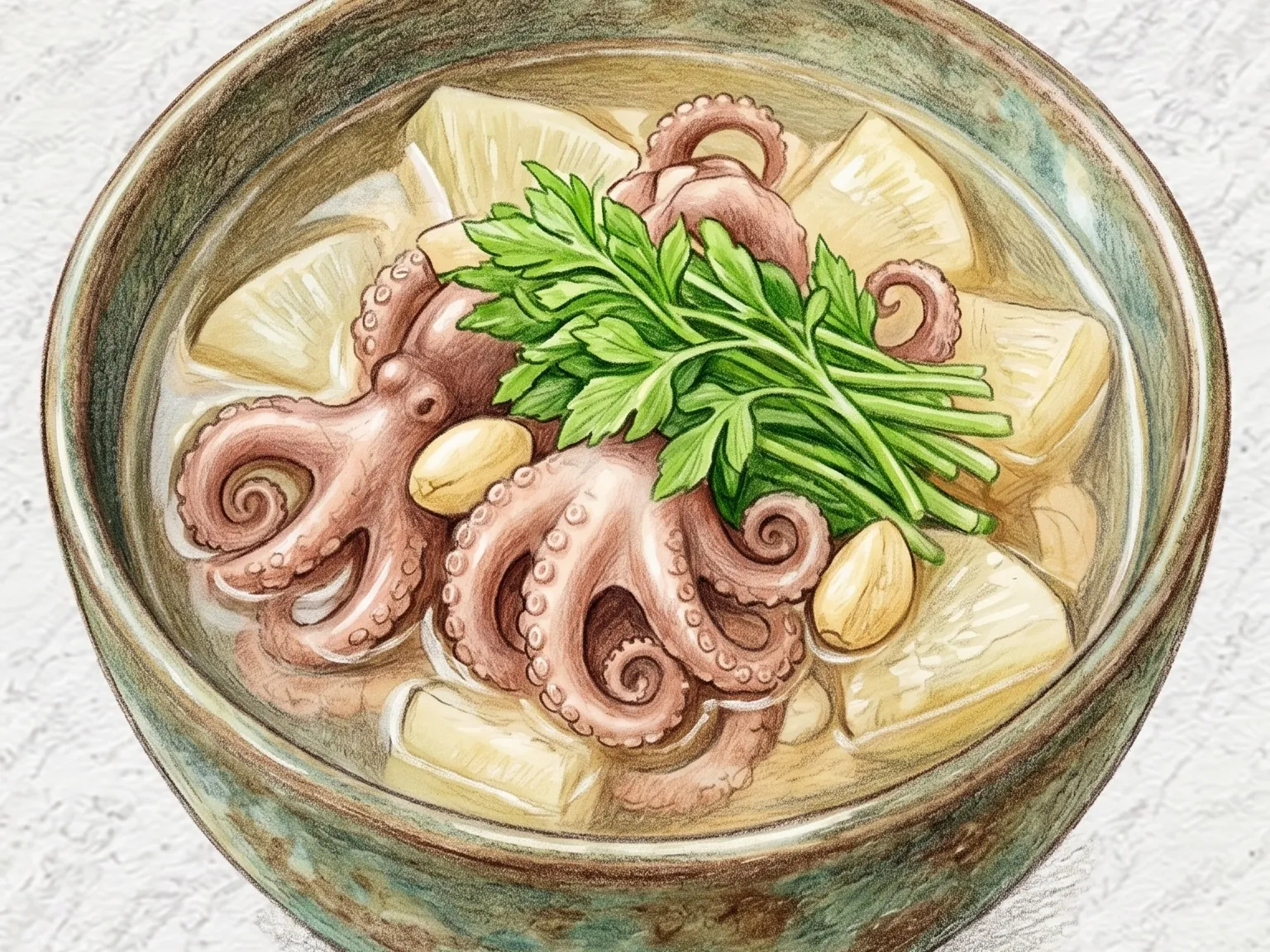
Yeonpo-tang is a Korean clear octopus soup cooked with minimal seasonings to highlight the natural qualities of its ingredients.

What makes this special

  • Watercress added just before serving layers fresh herb scent over the seafood notes.
  • Octopus cooked only 3 minutes stays springy without turning rubbery
  • Radish simmered 10 minutes first builds a sweet vegetable base without shellfish
Total time
45 min
Level
Medium
Servings
2 servings
Ingredients
7
Calories
210 kcal
Protein
29 g

Key ingredients

octopuskorean radishwater dropwortgreen onionminced garlic

Core cooking flow

  1. 1 Rub the 400 g octopus thoroughly with salt, especially between the suckers, then rinse and drain well.
  2. 2 Slice the 180 g Korean radish into pieces that are not too thick, so it sweetens the broth quickly.
  3. 3 Put the 1400 ml anchovy stock and radish in a pot and bring it to a boil over medium-high heat.

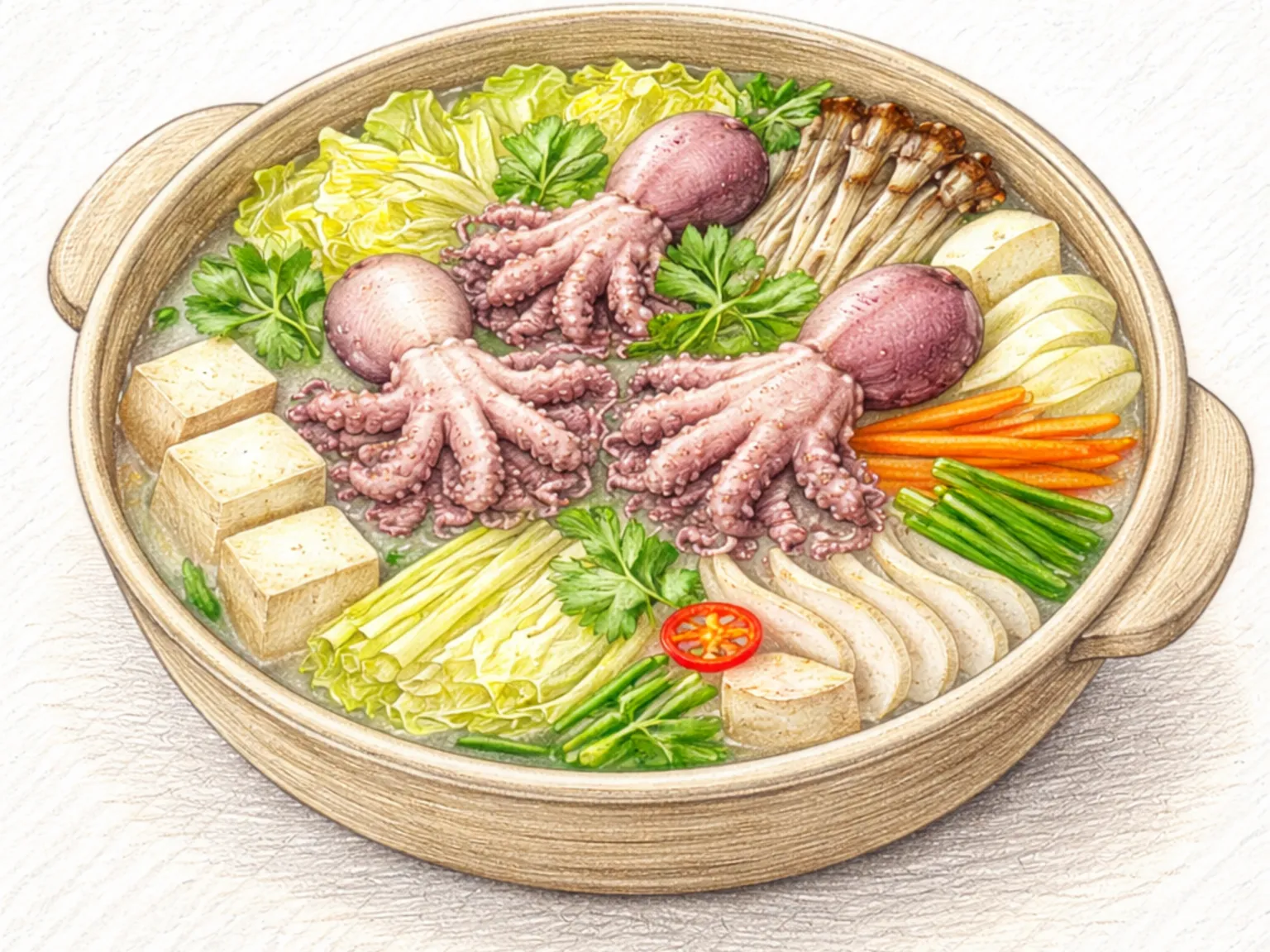
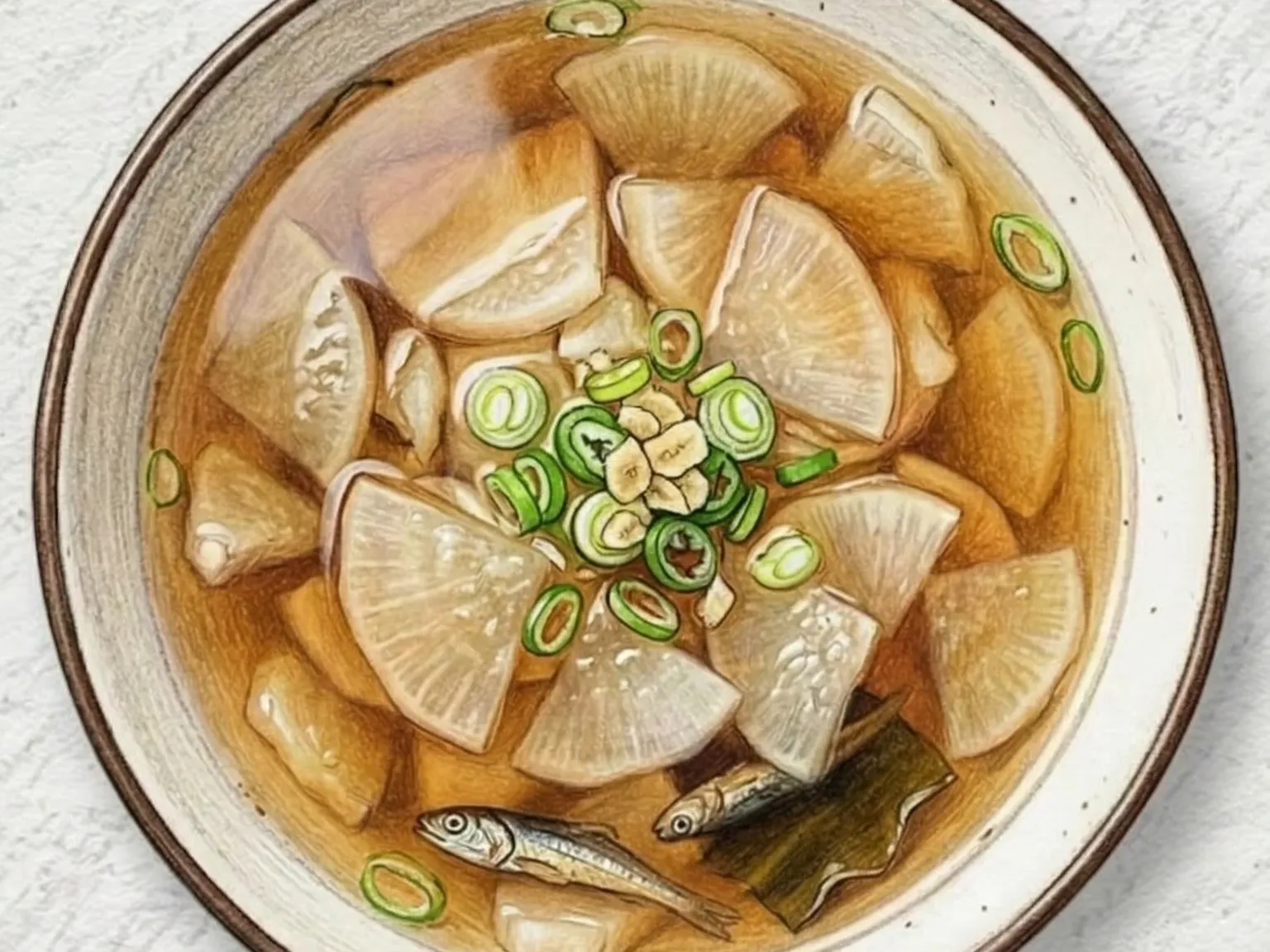
Yeonpo-tang is a Korean clear octopus soup cooked with minimal seasonings to highlight the natural qualities of its ingredients. The cooking process starts by simmering sliced Korean radish in anchovy stock for ten minutes to establish a clear and sweet vegetable base. Cleaned octopus pieces and minced garlic are then added to the boiling broth and cooked for only three minutes to prevent the seafood from turning rubbery. After adding green onions and skimming off any foam to keep the broth clear, the soup is seasoned with salt. Right before turning off the heat, water dropwort is added for twenty seconds to wilt. This introduces a fresh herbal aroma that complements the ocean flavor of the tender octopus.

Prep 20min Cook 25min 2 servings

Instructions

Read the steps as a cooking flow: prep, heat, seasoning, doneness control, and finish.

6 steps
  1. 1
    Season

    Rub the 400 g octopus thoroughly with salt, especially between the suckers, then rinse and drain well.

    Trim away any tough bits or innards if needed, and cut the tentacles into manageable bite-size lengths.

  2. 2
    Prep

    Slice the 180 g Korean radish into pieces that are not too thick, so it sweetens the broth quickly.

    Trim the green onion and water dropwort, keeping the dropwort separate for the very end.

  3. 3
    Control

    Put the 1400 ml anchovy stock and radish in a pot and bring it to a boil over medium-high heat.

    Once it boils, lower to medium and simmer for 10 minutes until the radish starts turning translucent.

  4. 4
    Control

    Stir in 1 tablespoon minced garlic, then add the octopus.

    When the broth returns to a boil, keep it at medium heat and cook for only 3 minutes so the octopus stays tender.

  5. 5
    Season

    Add the green onion and skim off any foam if the surface looks cloudy.

    Do not add all the salt at once; taste the broth and season until it is clean and lightly salty.

  6. 6
    Finish

    Right before turning off the heat, add the 60 g water dropwort and wilt it for about 20 seconds.

    Serve immediately while the octopus is springy, the broth is clear, and the herb aroma is still fresh.

After the steps

Pick a recipe that fits this dish.

Continue with shared ingredients, meal pairings, or a similar method.

Recipes That Go Well With This

More Soups →

Based on shared ingredients and meal pairing

Korean Monkfish Soup (Spicy Southern Coastal Fish Broth)
Shared ingredient: korean radish Soups

Korean Monkfish Soup (Spicy Southern Coastal Fish Broth)

Agwi-tang is the soup form of Korea's monkfish repertoire, originating along the fishing villages of the southern coast where the fish - known as agwi or agu depending on dialect - is caught and sold fresh daily. Where braised preparations like agwi-jjim build intensity through reduction and heavy sauce, the tang prioritizes the broth. Anchovy stock is the base; radish simmers in it for eight minutes to release its sweetness before the monkfish enters. As the fish cooks gently over medium heat, its collagen dissolves into the liquid and gives it body. The monkfish flesh itself is mild and gelatinous, a texture unlike most white fish. Bean sprouts go in at the end to contribute crunch against the soft fish. Sliced green onion and a hit of gochugaru cloud the broth red and add spice. In coastal towns this was morning food - hangover soup served steaming at predawn markets to fishermen and dock workers before the day started.

Dongjuk-tang (Korean Surf Clam Broth)
Shared ingredient: korean radish Soups

Dongjuk-tang (Korean Surf Clam Broth)

Dongjuk-tang is a Korean surf clam soup where purged clams simmer with radish in plain water to produce a briny, naturally sweet broth that needs almost no added seasoning. The radish goes in first and cooks for six minutes to build a sweet, mild base, then the clams are added for three to four minutes -- they are done the moment their shells open wide, and cooking any longer tightens and toughens the meat. Any clam that remains shut after cooking must be discarded without exception. Water dropwort stirred in at the end contributes a fresh, herbaceous fragrance that lifts the broth, and a single cheongyang chili pepper adds a mild, lingering heat that tempers the ocean flavor without masking it. The combination of clam brine, radish sweetness, and perilla creates a broth that tastes far more complex than its short ingredient list suggests.

Korean Sesame Porridge (Toasted Sesame Silky Rice Porridge)
Serve together Rice

Korean Sesame Porridge (Toasted Sesame Silky Rice Porridge)

Kkaejuk is a traditional Korean porridge made by grinding toasted sesame seeds to a fine powder and simmering them with soaked rice, water, and milk until the mixture reaches a silky, cream-soup consistency. Toasting the seeds before grinding is not optional -- raw sesame lacks the deep, roasted fragrance that defines the dish, and the heat of toasting develops oils and aroma compounds that grinding alone cannot produce. Constant stirring over low heat prevents the mixture from scorching and coaxes the rice grains into breaking down completely, merging with the sesame base so no distinct texture remains. Milk enriches the body beyond what water alone provides and gives the finished porridge a warm ivory color. The simplest version is seasoned with nothing but salt and served with a drizzle of honey or rice syrup, letting the roasted sesame flavor carry the bowl without distraction. Easily digestible and gentle on the stomach, kkaejuk has a long tradition as a morning meal, a recovery food for the sick, and a postpartum nourishment dish in Korean households.

Korean White Clam Clear Soup
Similar recipe Soups

Korean White Clam Clear Soup

Baekhap jogae tang is a clear Korean clam soup built entirely on the flavor of hard clams, with no additional stock of any kind. The clams are soaked in salted water until fully purged of sand, then transferred to cold water in the pot and heated gradually. This slow climb from cold allows the clams to release their maximum flavor into the surrounding liquid before they even open, producing a more richly flavored broth than rapid boiling ever could. Daikon radish simmers in the same water, lending a cool, clean sweetness that tempers the clams inherent saltiness while absorbing broth flavor itself, softening into bite-sized pieces that are worth eating alongside the shellfish. A tablespoon of cheongju, Korean clear rice wine, is added early to neutralize any briny off-notes that might otherwise linger, leaving a cleaner, lighter finish. Garlic appears in small amounts only, deliberately restrained so it does not compete with the delicate shellfish flavor that is the whole point of the dish. Scallion and red chili are placed on top at the very end, contributing color and fragrance rather than direct seasoning. Salt is kept to an absolute minimum since the clam liquor itself provides all the salinity required. The soup is a lesson in simplicity: no anchovy, no kelp, no premade stock. The clams do all the work, and the result is a broth that is simultaneously light and deeply satisfying.

Serve with this

Korean Seasoned Cockle Salad
Side dishes Medium

Korean Seasoned Cockle Salad

Kkomak-muchim is a seasoned cockle banchan that has become inseparable from the town of Beolgyo in South Jeolla Province. Beolgyo sits at the meeting point of wide tidal flats with strong current flow, producing an environment rich in organic matter where true cockles (cham-kkomak) grow plump, sweet, and full. The season runs from November through March, the months when the meat is at its densest and most flavorful. Cooking precision determines the outcome: stirring only in one direction once the water reaches a boil ensures all the shells open evenly rather than at staggered intervals, and the cockles must be removed at the four-minute mark before the flesh contracts and turns rubbery. The shells are pried apart immediately after lifting, the meat collected and drained well so the dressing does not turn watery. The seasoning is built from gochugaru, soy sauce, vinegar, sugar, and minced garlic, all mixed into a tangy, spicy paste that coats each cockle in a bright, assertive layer. Sliced green onion adds freshness, sesame oil adds a roasted fragrance, and a ten-minute rest after mixing allows the dense cockle meat to absorb the dressing from the surface inward. This is among the most sought-after seasonal banchan in Korean cuisine and a central part of what makes Beolgyo food culture distinctive.

🏠 Everyday 🍱 Lunchbox
Prep 20min Cook 10min 2 servings
Korean Amaranth Greens Pickles
Kimchi Medium

Korean Amaranth Greens Pickles

Bireumnamul jangajji is a soy-vinegar pickle of amaranth greens made by submerging the tender leaves in a boiled brine of soy sauce, vinegar, and sugar with cheongyang chili and garlic. The soft leaves absorb the pickling liquid within a day, taking on a balanced sweet-salty flavor that makes them ready to eat as banchan. Vinegar neutralizes the grassy raw taste of the greens, and the chili and garlic deliver a sharp, spicy finish that builds at the back of the palate. The flavor deepens noticeably from the second day onward, so chilling the jar longer intensifies the pickle. Refrigerated, this keeps well for two to three weeks, making it a practical way to preserve in-season amaranth greens through the summer.

🏠 Everyday 🍱 Lunchbox
Prep 30min Cook 15min 4 servings
Korean Burdock Matchstick Pancake
Pancakes Easy

Korean Burdock Matchstick Pancake

Burdock root, julienned into thin matchstick strips and pan-fried with onion and cheongyang chili, is a jeon with texture as its main argument. The combination of Korean pancake mix and tempura flour in the batter produces a result that is crispier than standard jeon, particularly at the edges where the thin strips of burdock protrude from the batter and catch the heat. Burdock has an earthy, faintly bitter flavor that holds up in the pan, and the onion provides sweetness alongside it. Cheongyang chili cuts through with a slow-building, lingering heat. Cold water keeps the batter loose and inhibits gluten development, so the finished jeon stays light rather than dense. Hot from the pan, the edges shatter; cooled, they turn chewy.

🍺 Bar Snacks ⚡ Quick
Prep 18min Cook 10min 2 servings

Similar recipes

Gul-guk (Clear Oyster Radish Soup)
Soups Easy

Gul-guk (Clear Oyster Radish Soup)

Gul-guk is a clear Korean oyster soup built on the simplest possible base: water, radish, and fresh winter oysters. Radish goes in first and simmers long enough to give the broth a clean, cool sweetness before the oysters are added near the end to keep them plump and springy. Seasoning is deliberately restrained; soup soy sauce and minced garlic are sufficient because the oysters themselves deliver an intense, briny depth that needs no reinforcement. The marine aroma of the oysters and the refreshing quality of the radish combine to produce a broth that is light in appearance but full in flavor. A bowl spooned over hot rice makes a restorative breakfast or hangover remedy, and along Korea's southern coast this soup is one of the most common preparations during the winter oyster harvest.

🏠 Everyday 🥗 Light & Healthy
Prep 15min Cook 20min 2 servings
Korean Mussel Soup Noodles
Noodles Easy

Korean Mussel Soup Noodles

Honghap tangmyeon is a mussel noodle soup where a generous quantity of mussels is simmered to produce a deeply briny, clear broth that serves as the foundation of the entire dish without the use of prepared stock. The mussels release their concentrated sea flavor directly into the pot, and this self-made broth is what distinguishes the dish from simpler seafood noodle soups. Korean radish is cooked alongside from the start, lending a natural sweetness and a refreshing clarity to the liquid as it breaks down gently. Soup soy sauce and cooking wine adjust the seasoning and temper the salt that the mussels contribute, pulling the flavor into balance. Minced garlic and green onion build an aromatic layer that keeps any fishiness in check, leaving only a clean, deep savoriness in its place. A generous crack of black pepper over the steaming bowl sharpens the marine character of the broth and warms the palate. The noodles should not be overcooked; they need enough bite to hold up against the rich, hot liquid. A few slices of cheongyang chili on top add a brisk heat that makes the broth feel simultaneously cool and fiery, the defining sensation of good Korean seafood soup.

🍺 Bar Snacks 🌙 Late Night
Prep 18min Cook 20min 2 servings
Korean Clear Broth Tofu Stew
Stews Easy

Korean Clear Broth Tofu Stew

This clear Korean tofu stew is prepared by simmering tofu cubes, shiitake mushrooms, and zucchini in seasoned beef stock. The base relies on a rich beef broth, enhanced by the earthy umami of sliced shiitake mushrooms. Zucchini slices add a mild sweetness as they cook to a tender, translucent state. Seasoned simply with Korean soup soy sauce, salt, and minced garlic, the broth maintains a clean, savory taste without chili heat. To prevent the tofu from breaking, the cubes are gently settled into the pot and simmered over medium-low heat. Sliced green onions are added at the end of cooking to infuse a mild herbal note. Serving the stew hot after letting it rest briefly highlights the natural flavors of the ingredients. The tofu can be lightly pan-seared beforehand to add a nutty flavor and firmer texture.

🏠 Everyday ⚡ Quick
Prep 10min Cook 15min 2 servings

Tips

Do not overcook octopus; it toughens quickly.

Nutrition (per serving)

Calories
210
kcal
Protein
29
g
Carbs
9
g
Fat
6
g