Charim

2686 Korean & World Recipes

2686+ Korean recipes, clean and organized. Ingredients to instructions, all at a glance.

Korean Seasoned Rapeseed Greens

Korean Seasoned Rapeseed Greens

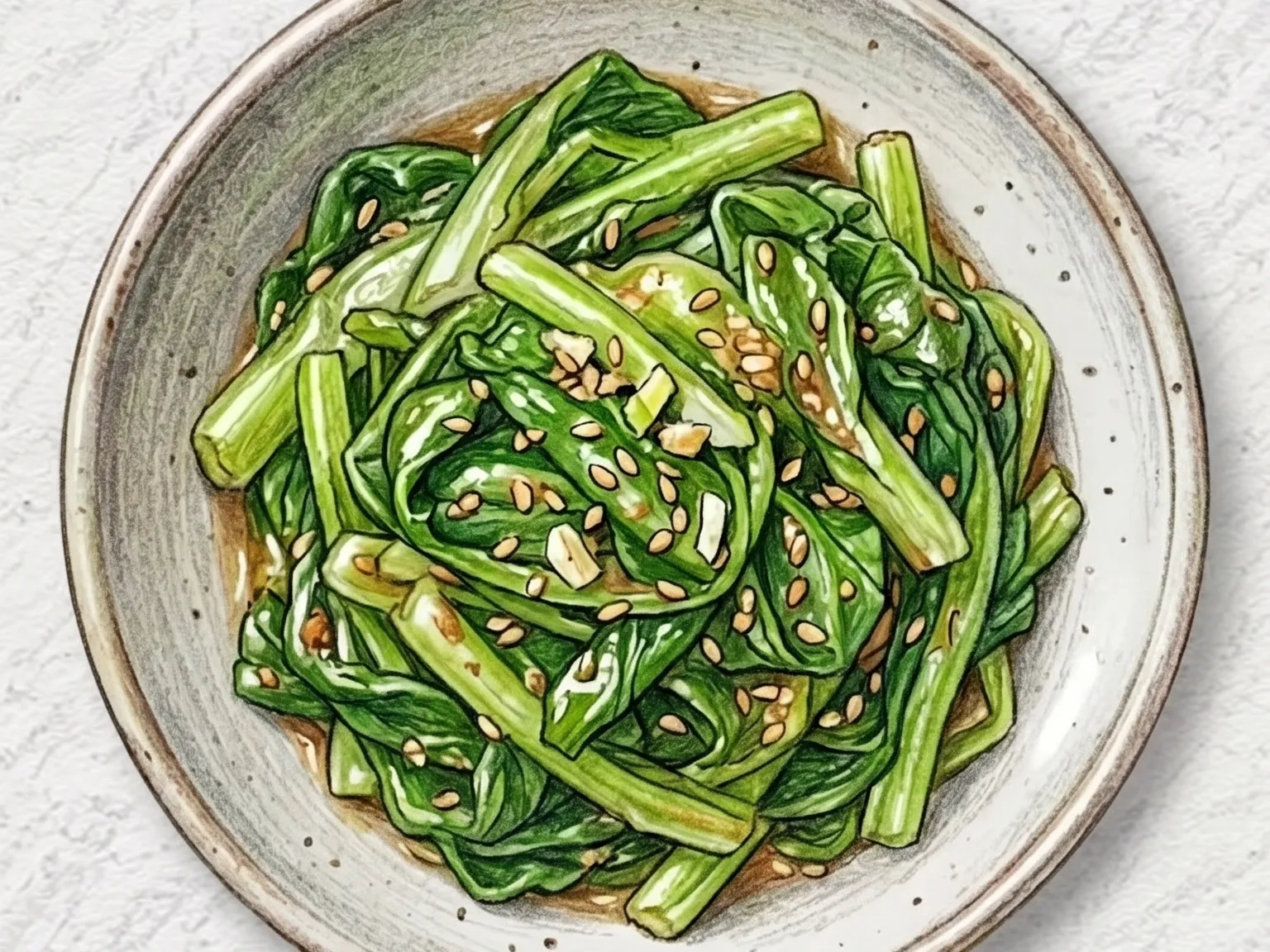
Young rapeseed greens are blanched for just 40 seconds in salted water, then squeezed dry and tossed with doenjang, minced garlic, green onion, sesame oil, and ground sesame. The brief blanching preserves the stems' gentle snap, and the fermented soybean paste brings an earthy depth that pairs naturally with the greens' mild grassy flavor. Squeezing out excess water before seasoning keeps the dressing concentrated on each piece rather than pooling at the bottom. From prep to plate, this banchan takes under fifteen minutes.

Prep 8min Cook 3min 4 servings

Adjust Servings

2servings
servings

Instructions

  1. 1

    Trim yellow leaves from the greens and wash well.

  2. 2

    Blanch in salted boiling water for 40 seconds, rinse cold, and squeeze.

  3. 3

    Cut into 3 to 4 cm pieces and place in a bowl.

  4. 4

    Make dressing with doenjang, garlic, green onion, sesame oil, and sesame.

  5. 5

    Toss the greens with dressing until evenly coated.

🛒Shop Ingredients on Amazon

As an Amazon Associate, we may earn from qualifying purchases.

Tips

Adjust doenjang gradually since saltiness varies by brand.
Squeeze well after blanching so the seasoning stays concentrated.

Nutrition (per serving)

Calories
42
kcal
Protein
2
g
Carbs
3
g
Fat
3
g

More Recipes

Korean Chwinamul with Doenjang
Side dishesEasy

Korean Chwinamul with Doenjang

This variation pairs blanched chwinamul with doenjang - Korea's fermented soybean paste - creating a banchan where two strong flavors meet. Greens are boiled two minutes, squeezed, and cut before dressing with doenjang, soup soy sauce, garlic, sesame oil, and perilla powder. The paste's funky, salty depth clings to porous leaves, amplifying natural bitterness into something complex. Five minutes of resting lets seasoning penetrate fully. Often made with dried chwinamul reconstituted in winter.

🏠 Everyday🍱 Lunchbox
Prep 18minCook 7min4 servings
Korean Seasoned Bok Choy Namul
Side dishesEasy

Korean Seasoned Bok Choy Namul

Unlike the high-heat stir-fried version, this bok choy namul uses a gentler blanch-and-dress method from Korea's traditional namul vocabulary. One minute in boiling water wilts the leaves while keeping pale stalks firm. Squeezed dry and cut short, the greens are rubbed with doenjang, soup soy sauce, and garlic. The fermented paste's funky, earthy depth transforms the mild vegetable into something more layered. Sesame seeds scattered on top add a final crunch against the soft leaves.

🏠 Everyday🍱 Lunchbox
Prep 8minCook 4min2 servings
Korean Seasoned Swiss Chard Namul
Side dishesEasy

Korean Seasoned Swiss Chard Namul

Geundae - Swiss chard in Korean kitchens - has been used in doenjang soup and namul for generations. Because the stems are substantially thicker than the leaves, they are blanched separately: stems go in first for thirty seconds, then leaves join for another thirty. After squeezing dry, the greens are hand-dressed with doenjang, soup soy sauce, garlic, and perilla oil, allowing the fermented paste's earthy depth to merge with chard's faintly bitter, mineral flavor. Perilla powder stirred in last thickens the dressing into a clinging coating without adding liquid. Chard leaves hold up better than spinach after dressing, making this namul a sturdy banchan that does not wilt quickly.

🏠 Everyday🍱 Lunchbox
Prep 10minCook 4min4 servings
Korean Seasoned Amaranth Greens
Side dishesEasy

Korean Seasoned Amaranth Greens

Amaranth greens - biryeom - are a summer vegetable with deep green, purple-tinged leaves that bleed reddish into the blanching water. Blanched one minute, squeezed, and dressed with doenjang, soup soy sauce, garlic, and scallion. Perilla oil replaces sesame oil, lending a herbal note matching amaranth's mineral taste. The leaves hold firmer than mallow or spinach, gripping the dressing without collapsing. A countryside banchan tied to the short summer harvest.

🏠 Everyday🍱 Lunchbox
Prep 10minCook 4min4 servings
Korean Stir-fried Radish Greens with Perilla
Stir-fryEasy

Korean Stir-fried Radish Greens with Perilla

Siraegi deulkkae-bokkeum is a Korean stir-fry of pre-boiled dried radish greens seasoned with soup soy sauce and garlic, then cooked in perilla oil and finished with generous perilla powder. The greens are first tossed in the seasoning to let the flavors penetrate, stir-fried for three minutes, then simmered briefly with water and perilla powder until a thick, nutty sauce coats every strand. Green onion added at the end provides a fresh aromatic lift. Compared to the doenjang-based siraegi jorim, this version leans lighter and more distinctly nutty from the perilla.

🏠 Everyday🍱 Lunchbox
Prep 15minCook 20min4 servings
Korean Shepherd's Purse Kimchi
KimchiMedium

Korean Shepherd's Purse Kimchi

Naengi kimchi is a seasonal Korean side dish where shepherd's purse - an early-spring wild herb - is blanched for just twenty seconds in salted boiling water to remove bitterness without killing its distinctive herbal fragrance. The cooled, squeezed greens are dressed in a paste of gochugaru, anchovy fish sauce, minced garlic, and sweet rice paste, which provides enough viscosity to coat each stem evenly. The fish sauce's fermented depth meets the herb's green, earthy character to build a layered flavor that neither ingredient achieves alone. Sesame seeds scattered on top add a quiet toasted crunch. Resting the kimchi in the refrigerator for at least two hours lets the seasoning settle and deepen before serving.

🍱 Lunchbox
Prep 25minCook 1min2 servings
More Side dishes →