Yuja Basque Cheesecake (Korean Citrus Burnt Cheesecake)
Quick answer
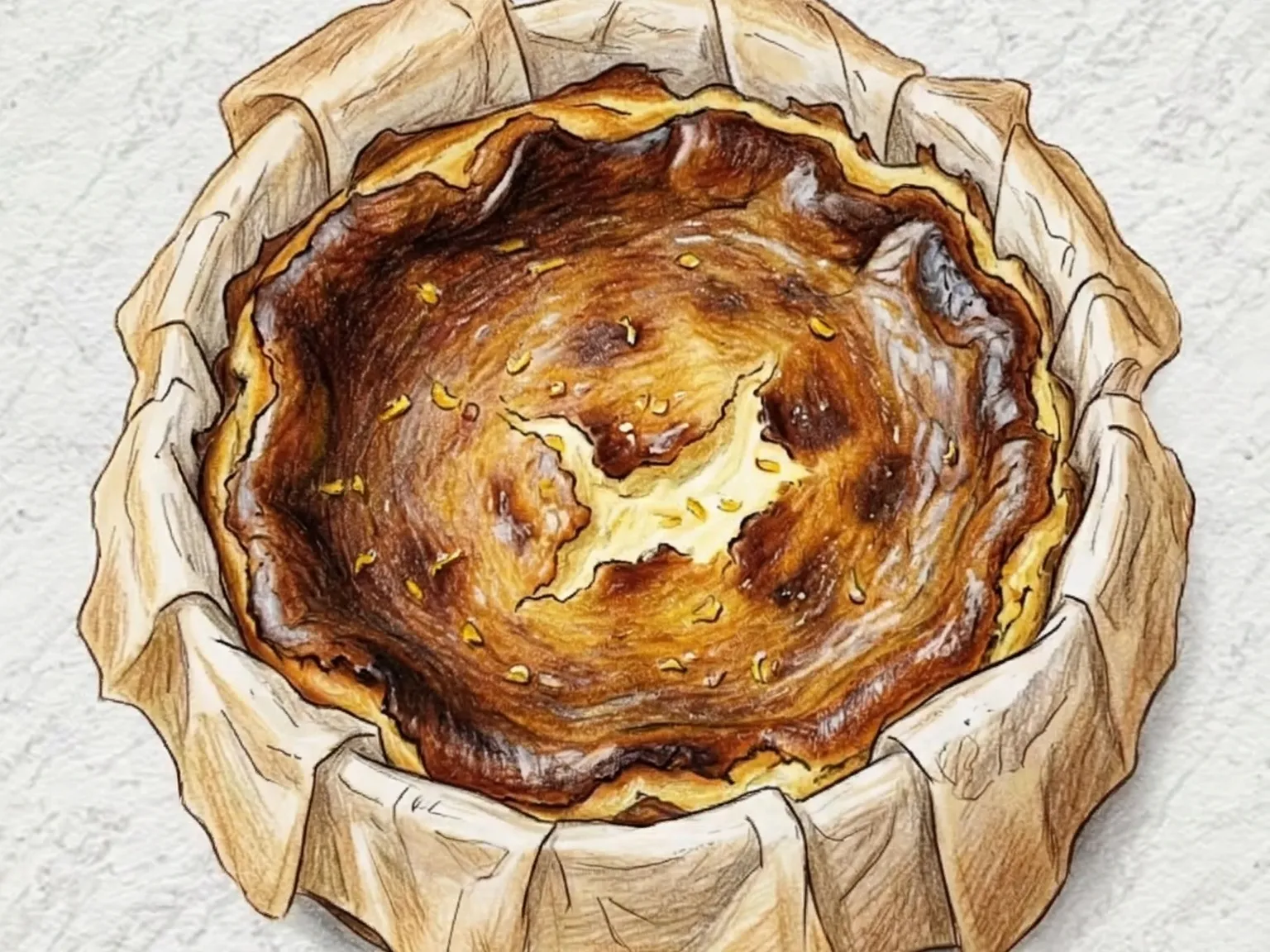
Cream cheese batter is infused with yuja marmalade and zest, then baked at very high heat until the surface blisters into a dark, almost burnt crust while the interior re...
What makes this special
- Very high heat blisters a dark crust on Yuja Basque Cheesecake while the citron center stays spoonable.
- 230C scorches the surface fast while leaving the center barely set and creamy
- 60g yuja-cheong lifts the heavy cream cheese richness with citrus brightness
Key ingredients
Core cooking flow
- 1 Preheat the oven fully to 230 degrees Celsius and crumple parchment before l...
- 2 Soften 350 g cream cheese at room temperature, then beat in 95 g sugar by pressing and scraping the bowl.
- 3 Add the 2 eggs one at a time, mixing fully after each addition.
Cream cheese batter is infused with yuja marmalade and zest, then baked at very high heat until the surface blisters into a dark, almost burnt crust while the interior remains a barely set, spoonable cream. The yuja - a Korean citrus prized for its intense fragrance - lifts the dense richness of the cream cheese with a bright, floral acidity that lingers on the palate. This citrus note distinguishes the cake from standard Basque cheesecake, which relies solely on dairy richness. Oven temperature must reach at least 230 degrees Celsius to achieve the rapid caramelization on the outside before the center has time to firm. Crumpled parchment lining the pan creates the characteristic wrinkled edges. After baking, the cake is cooled and then refrigerated, which gradually thickens the center from a flowing custard to a dense, mousse-like consistency. Served cold, each slice holds its shape on the plate while still feeling creamy and yielding on the fork.
Instructions
Read the steps as a cooking flow: prep, heat, seasoning, doneness control, and finish.
- 1Step
Preheat the oven fully to 230 degrees Celsius and crumple parchment before lining the round pan higher than the rim.
The wrinkled paper helps form the rustic edges and protects the batter as it rises.
- 2Season
Soften 350 g cream cheese at room temperature, then beat in 95 g sugar by pressing and scraping the bowl.
Continue until no hard lumps remain, because small pieces will bake into a grainy texture.
- 3Prep
Add the 2 eggs one at a time, mixing fully after each addition.
Avoid whipping in too much air, and scrape the sides and bottom so the batter stays even and does not separate.
- 4Prep
Mix in 180 ml heavy cream and 60 g yuja marmalade on low speed.
Finely chop any peel pieces in the marmalade first so the citrus flavor spreads evenly instead of gathering in one area.
- 5Season
Sift in 10 g cake flour and 1 g salt, then mix only until the dry streaks disappear.
Stop as soon as the batter looks smooth, since overmixing can make the center heavy.
- 6Heat
Pour the batter into the lined pan and bake for 30-32 minutes until the top is deeply browned.
Remove while the center still jiggles slightly, cool at room temperature, then chill at least 4 hours before slicing.
After the steps
Pick a recipe that fits this dish.
Continue with shared ingredients, meal pairings, or a similar method.
Recipes That Go Well With This
More Baking →Based on shared ingredients and meal pairing
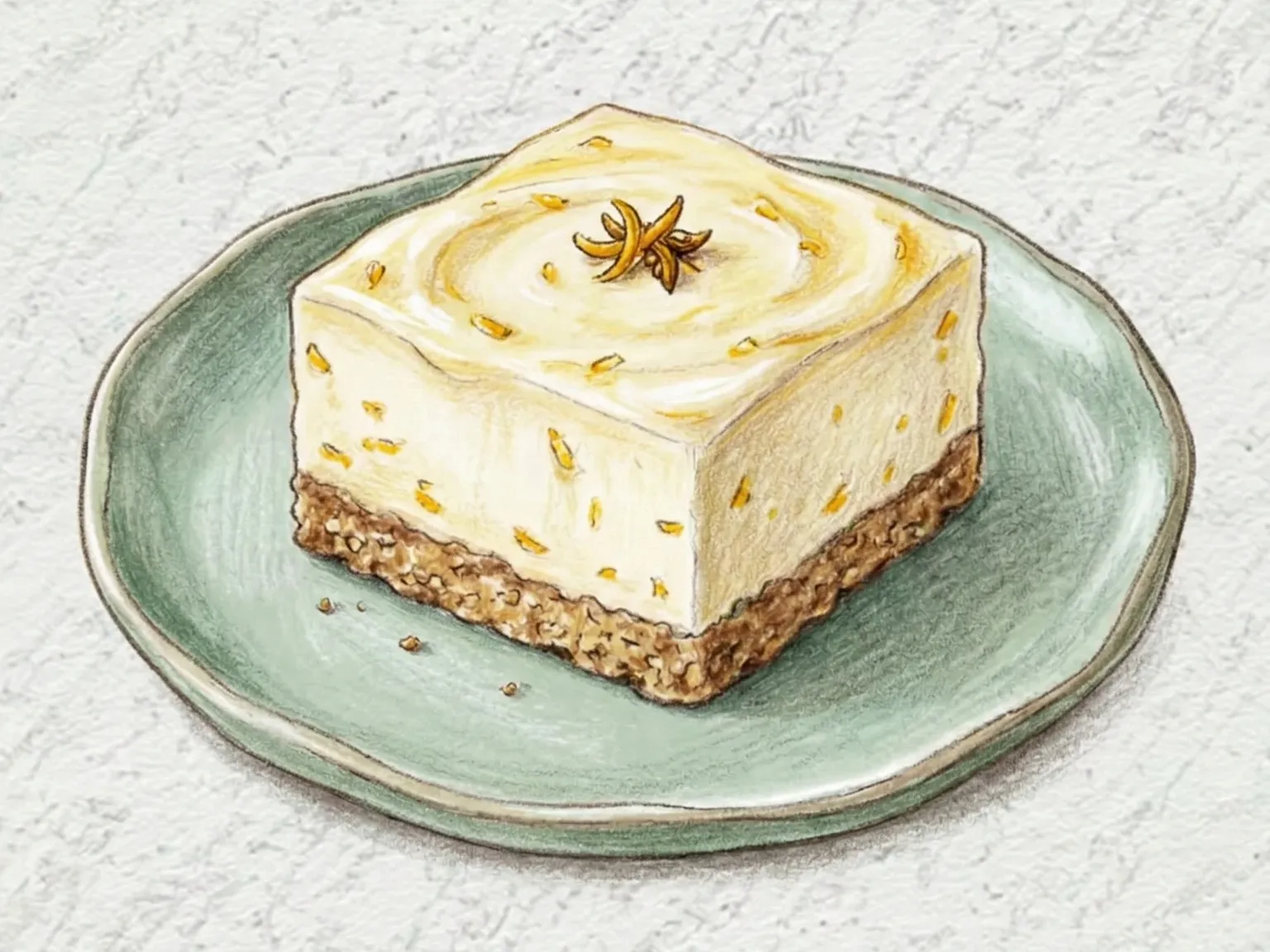
Yuja Cheesecake Bars (Citron Cheesecake)
Yuja cheesecake bars are a baked dessert that begins with a pressed crust of cracker crumbs and melted butter, pre-baked for eight minutes to set a firm base before the filling goes in. The filling combines softened cream cheese, eggs, sugar, and yuja citron marmalade, poured over the crust and baked at 170 degrees Celsius until just set. Pre-baking the crust is essential for keeping the layers distinct, and room-temperature cream cheese is non-negotiable for a batter free of lumps. Seventy grams of yuja marmalade introduces the fruit's sharp, floral citrus fragrance alongside clean acidity that cuts through the dense richness of the cheese layer, preventing the aftertaste from feeling heavy or cloying. Chilling for two full hours in the refrigerator before slicing produces straight, clean edges on each bar, and the texture sits between dense and silky, dissolving slowly once it hits the palate.
Basque Burnt Cheesecake
Basque burnt cheesecake originates from La Vina bar in San Sebastian, Spain, and is defined by a deliberately scorched top and an intentionally underset center. Cream cheese, sugar, eggs, heavy cream, and a small amount of flour are blended smooth, poured into a parchment-lined pan, and baked at above 220 degrees Celsius until the surface reaches a deep, near-black caramelization. That blackened layer contributes a pronounced bittersweet edge that cuts through the richness underneath. The interior remains loose and custardy - closer in texture to a very dense panna cotta than to a conventional baked cheesecake. Served at room temperature, the contrast between the firm, caramelized shell and the barely-set, creamy core is at its sharpest and most satisfying.
Beef Empanadas
Beef empanadas wrap a cumin-and-paprika-seasoned filling of ground beef, onion, olives, and boiled egg inside flour dough, folded into a half-moon shape and baked until the crust turns golden and flaky. The oven heat crisps the outer shell while the meat filling steams inside, staying moist against the dry exterior. Cumin gives the beef a deep, earthy warmth that distinguishes these from other stuffed pastries; olives add pockets of briny saltiness, and sliced boiled egg introduces a softer texture throughout the interior. Pressing the edges firmly with a fork before baking is essential to keep the juices sealed inside. Compact enough to eat with one hand, each empanada delivers a burst of concentrated, layered flavor the moment the crust breaks, earning its place as both a convenient snack and a genuinely satisfying one.
Yuja Saenggang Baked Donuts (Yuja Ginger Baked Donuts)
The preparation of these doughnuts involves folding yuja marmalade and finely grated fresh ginger into a light batter base. The mixture is then transferred to a doughnut pan and baked in the oven rather than being fried in oil. This specific cooking method produces an oil-free doughnut characterized by a soft and fluffy crumb that is highly fragrant with citrus notes. The yuja component contributes a floral and complex citrus profile that offers a perfumed quality more intricate than the flavor of a standard lemon or orange. Complementing this, the ginger provides a mild and warm spiciness that persists quietly in the background of each bite. Because the doughnuts are baked, the internal structure stays light, which ensures that the specific flavor of the yuja is not masked by the presence of frying oil. While the doughnuts are still warm from the oven, a thin honey glaze is brushed over the surface. This application creates a glossy appearance and adds a layer of sweetness that functions to seal in the moisture of the crumb. During the preparation of the batter, the ingredients should be combined only until the dry components are just incorporated. Mixing the batter too much will lead to a finished product that is tough and dense. Filling the pan cavities to eighty percent of their capacity allows for an even rise and prevents the batter from spilling over the edges during baking. Finally, the doughnuts require a five-minute rest period within the pan after they are removed from the oven. This time allows the structure to firm up, ensuring that each doughnut can be removed cleanly from the mold.
Serve with this
Spanish Orange Cod Salad (Spanish Salt Cod Salad)
Remojon is a traditional spring festival salad from Andalusia in southern Spain, built around salt cod that has been soaked in cold water for at least twenty-four hours to draw out the preserved brine before the fish is shredded along the grain into chewy, light flakes. Thick-cut orange segments provide a burst of sweet, juicy acidity that stands in direct contrast to the residual saltiness of the fish, creating the tension at the center of the dish. Thinly sliced red onion and whole black olives add layers of pungent sharpness and deep brininess that widen the overall flavor profile without competing with each other. Good-quality extra virgin olive oil draws every element together into a cohesive whole, coating each piece with a smooth, fruity richness. A measured splash of white wine vinegar tightens the entire salad and gives it a clean definition, while flat-leaf parsley scattered over the top provides a final note of fresh, green fragrance. The salad is well suited to being served tapas-style alongside wine or dry sherry, and because all the components can be prepared in advance, it assembles quickly at the table and makes a composed, elegant starter for guests.
Walnut Cakes (Korean Bite-Sized Red Bean Walnut Pastries)
Hodu-gwaja are bite-sized Korean walnut cakes baked in a dedicated walnut-shaped cast iron mold, made from a batter of cake flour, baking powder, eggs, milk, and melted butter. Each cavity is half-filled with batter, then topped with sweet red bean paste and a toasted walnut half, sealed with a second pour of batter, and cooked over medium-low heat for six to eight minutes per side. The result is a thin, lightly browned shell encasing a moist, soft interior. Toasting the walnut halves at 160 degrees Celsius for five minutes beforehand makes a noticeable difference: the finished cakes carry a deeper, more fragrant nut aroma compared to those made with untoasted walnuts. Resting the batter for ten minutes before using it relaxes the gluten, which reduces air pockets during pouring and produces a smoother exterior surface. The cake originated as a regional specialty of Cheonan in South Chungcheong Province and has since become one of the most recognized snacks sold at highway rest stops and traditional markets across the country.
Korean Banana Milk
Banana milk is a homemade version of one of Korea's most consistently popular packaged beverages, sold in its distinctive small barrel-shaped bottle since 1974. Fresh ripe bananas are blended with cold milk, a spoonful of condensed milk, and a drizzle of honey to hit the characteristic level of sweetness. A small amount of vanilla extract bridges the fruit flavor and the dairy base, smoothing out any sharpness. Blending with ice produces a thick, smoothie-like consistency, while leaving out the ice gives a thinner, pourable drink closer to the original product. Unlike the commercial version, the homemade result contains no artificial flavoring or coloring, so the color stays a natural pale yellow rather than the vivid shade of the packaged drink. The sweetness varies with banana ripeness, and honey can be adjusted accordingly. Using frozen bananas in place of fresh ones plus ice delivers a cold, creamy texture without dilution. The whole preparation takes under five minutes, making it a practical option for a quick snack or light breakfast.
Similar recipes
Yuja Ricotta Tea Cake (Korean Citron Ricotta Loaf Cake)
Yuja ricotta tea cake pairs the gentle creaminess of ricotta cheese with the bright citrus punch of yuja marmalade in a single tender loaf. Ricotta replaces much of the butter found in traditional pound cakes, keeping the crumb exceptionally moist and giving it a soft, almost custard-like quality. Pieces of yuja peel and pulp are folded into the batter, creating pockets of fragrant sourness that cut through the richness with each bite. Once baked, the top develops a thin golden crust while the interior remains plush and yielding. The cake pairs naturally with black tea or green tea, where the yuja's aromatic acidity complements the tannins in the brew. It keeps well for a day or two without drying out.
Hallabong Marmalade Madeleines
Hallabong marmalade madeleines are shell-shaped baked treats that combine melted butter with sweet citrus marmalade. The batter is prepared by whisking eggs and sugar, folding in sifted cake flour and baking powder, and incorporating milk, honey, and hallabong marmalade. Melted unsalted butter is added in portions until the batter is glossy. Resting the batter in the refrigerator for thirty minutes before baking is essential, as the cold batter helps form the characteristic hump on top. The cakes are baked at 200°C for four minutes, then at 180°C for eight minutes. This temperature shift ensures a proper rise. The finished madeleines feature a soft texture with chewiness from the bits of candied citrus rind. The contrast between the bitter rind and sweet pulp complements the rich butter aroma. These pastries pair well with black tea or Earl Grey.
Chocolate Lava Cake
Chocolate lava cake bakes a batter of melted dark chocolate, butter, whole eggs, egg yolks, sugar, and a small measure of flour in buttered ramekins at 220 degrees Celsius for ten to twelve minutes, producing a set crust and molten center from a single brief baking window. The high oven temperature firms the outside and top of the batter into cake while the core stays liquid, so breaking the surface with a spoon releases a slow pour of concentrated warm chocolate. High-cacao dark chocolate provides a complex, bittersweet depth that pairs with the richness of butter fat, and vanilla extract softens and rounds the overall aroma. Timing controls everything in this recipe: overbaking by even two minutes sets the center solid and destroys the signature flow. The edges of each ramekin should feel just firm when pressed lightly through a towel at the ten-minute mark. Ramekins can be filled ahead and refrigerated, but the baking time then needs an extra one to two minutes to account for the colder starting temperature. Serving with a scoop of vanilla ice cream or a spoonful of cold heavy cream creates a striking contrast between the hot, dense chocolate interior and the chilled, lighter dairy.