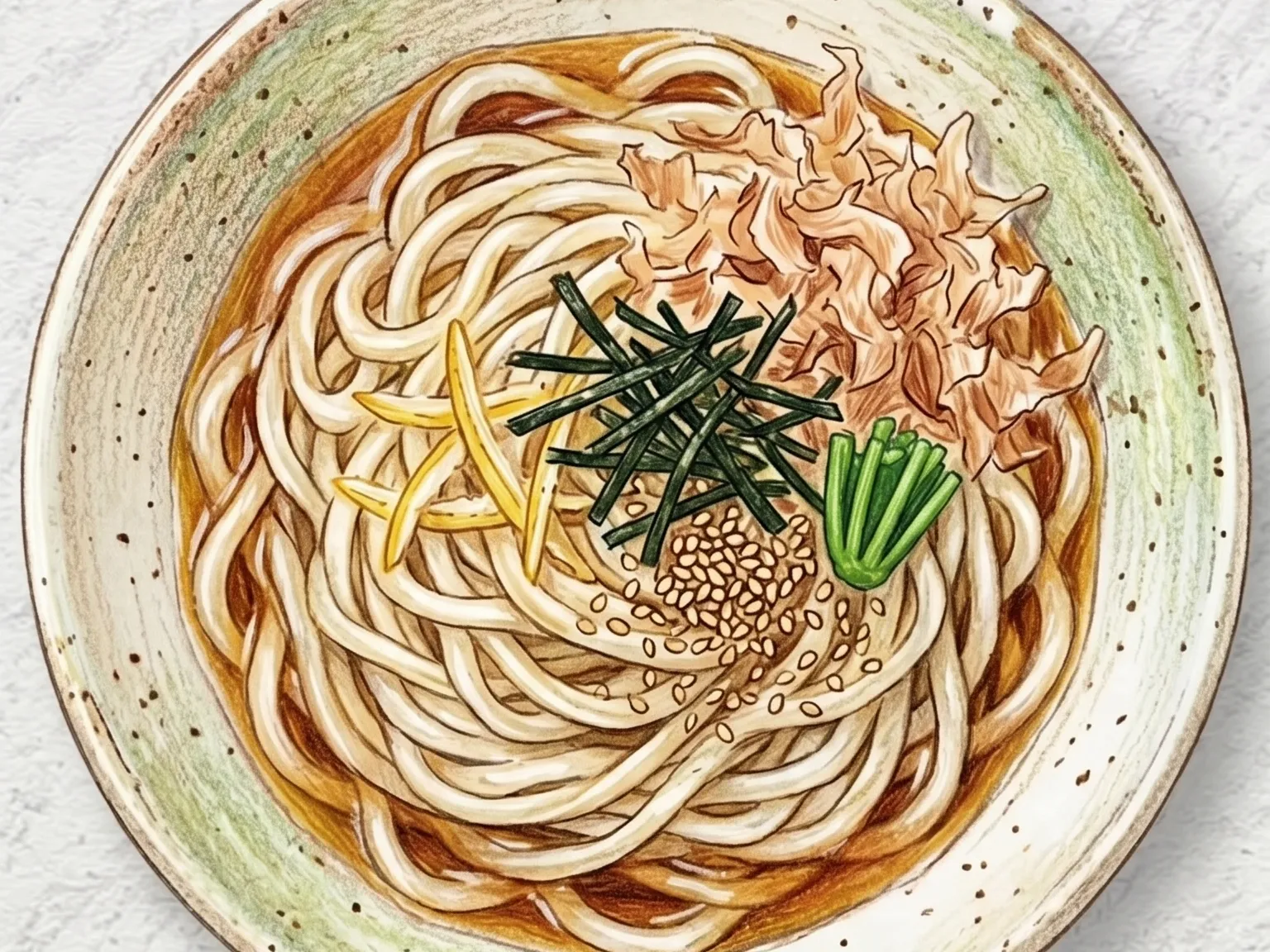
Korean Chilled Udon with Yuzu Soy Sauce
Yuja ganjang naeng udon is a chilled udon dish dressed in a sauce made from yuja (citron) syrup, soy sauce, and tsuyu. The sauce balances bright citrus fragrance with salty depth, and the tsuyu rounds out the umami. Frozen udon noodles are boiled and rinsed in cold water, which keeps them firm and allows the sauce to coat evenly. Bonito flakes, shredded nori, and sesame seeds are common toppings. The entire recipe takes about 19 minutes and requires no advanced technique.
Adjust Servings
Instructions
- 1
Mix yuja marmalade, soy sauce, tsuyu, water, and lemon juice; chill in the fridge.
- 2
Boil udon for 2-3 minutes, then rinse thoroughly in cold water to remove starch.
- 3
Drain noodles well and place over ice briefly to chill further.
- 4
Thinly slice cucumber and prepare seaweed and sesame for garnish.
- 5
Place noodles in bowls and pour over the chilled yuja soy sauce.
- 6
Top with cucumber, seaweed, and sesame, then serve immediately.
As an Amazon Associate, we may earn from qualifying purchases.
Tips
Nutrition (per serving)
More Recipes

Korean Yuja Chicken Cold Somyeon
Yuja chicken naeng somyeon is a Korean cold noodle dish served in a clear chicken-radish broth brightened with yuja (citron) syrup. The broth is chilled before serving, and its combination of mild chicken flavor and floral citrus aroma sets it apart from other cold noodle soups. Shredded poached chicken breast is placed on top of the cold somyeon along with cucumber or cherry tomatoes. The broth is deliberately kept lean, with no heavy oils. If the broth is prepared in advance, the final assembly takes under 30 minutes.

Korean Soy Udon with Scallion Salad
Pajeori ganjang bibim udon is a Korean mixed udon dish topped with crisp shredded scallion salad in a soy-vinegar dressing. The scallion is soaked in cold water for five minutes to soften its sharp bite while keeping its crunch. A dressing of soy sauce, vinegar, sugar, chili flakes, and sesame oil creates a sweet-salty-tangy-spicy base. The udon noodles are tossed with half the dressing first for an even base coating, then the drained scallion and remaining dressing are folded in. The pungent, fresh scallion against the seasoned noodles produces a flavor that is more complex than its few ingredients suggest. Keeping the udon slightly underdone preserves its bouncy texture, and sesame seeds add a nutty finish.

Kongguksu-Style Cold Linguine
Kongguksu-style cold linguine reinterprets Korea's chilled soy noodle soup using Italian linguine instead of wheat noodles. Unsweetened soy milk is blended with toasted sesame seeds and peanut butter into a thick, nutty broth that is served cold. The linguine is cooked al dente, then shocked in ice water to firm up its texture and chill it completely before the broth is poured over. Julienned cucumber and halved cherry tomatoes add fresh crunch and color on top. Salt and sugar are adjusted to balance the broth's natural bean flavor. The entire preparation takes about 10 minutes, with stovetop time limited to boiling the pasta.

Korean Kimchi Chilled Noodle Soup
Kimchi mari guksu is a Korean chilled noodle soup designed for hot weather. The broth is a simple mixture of aged kimchi juice, cold water, a touch of sugar, and vinegar, stirred together and refrigerated until thoroughly cold. Thin somyeon wheat noodles are boiled, rinsed under cold running water to remove surface starch, and placed in a bowl. Chopped kimchi and julienned cucumber go on top, then the ice-cold broth is poured over. The key to the dish is pre-chilling the broth rather than adding ice cubes, which would dilute the tangy kimchi flavor. Since kimchi fermentation levels vary, the vinegar can be adjusted by half-teaspoon increments to hit the right balance of sour and sweet.

Korean Dongchimi Cold Naengmyeon
Dongchimi naengmyeon is a Korean cold noodle dish where chewy naengmyeon noodles sit in a broth made by blending fermented dongchimi radish water with chilled beef or chicken stock. The dongchimi's lactic fermentation acidity meets the stock's savory depth, producing a clear broth that tastes both refreshing and complex. The colder the serving temperature, the more vivid the radish-fermented tang becomes. Sliced boiled beef on top provides a lean protein contrast to the icy liquid, while half a boiled egg and julienned pear add visual appeal and gentle sweetness. Cutting the noodles a few times with scissors before serving prevents clumping and helps the broth reach every strand.

Korean Horse Mackerel with Yuzu Soy Glaze
Horse mackerel is marinated in a blend of yuzu marmalade, soy sauce, cooking wine, and garlic, then grilled on a grill pan. The citrus notes from the yuzu naturally suppress fishiness while harmonizing with the soy sauce saltiness. Brushing the remaining glaze in the final minute gives the skin a lacquered sheen. Sesame oil and sliced scallion complete the dish with a toasted, aromatic finish.