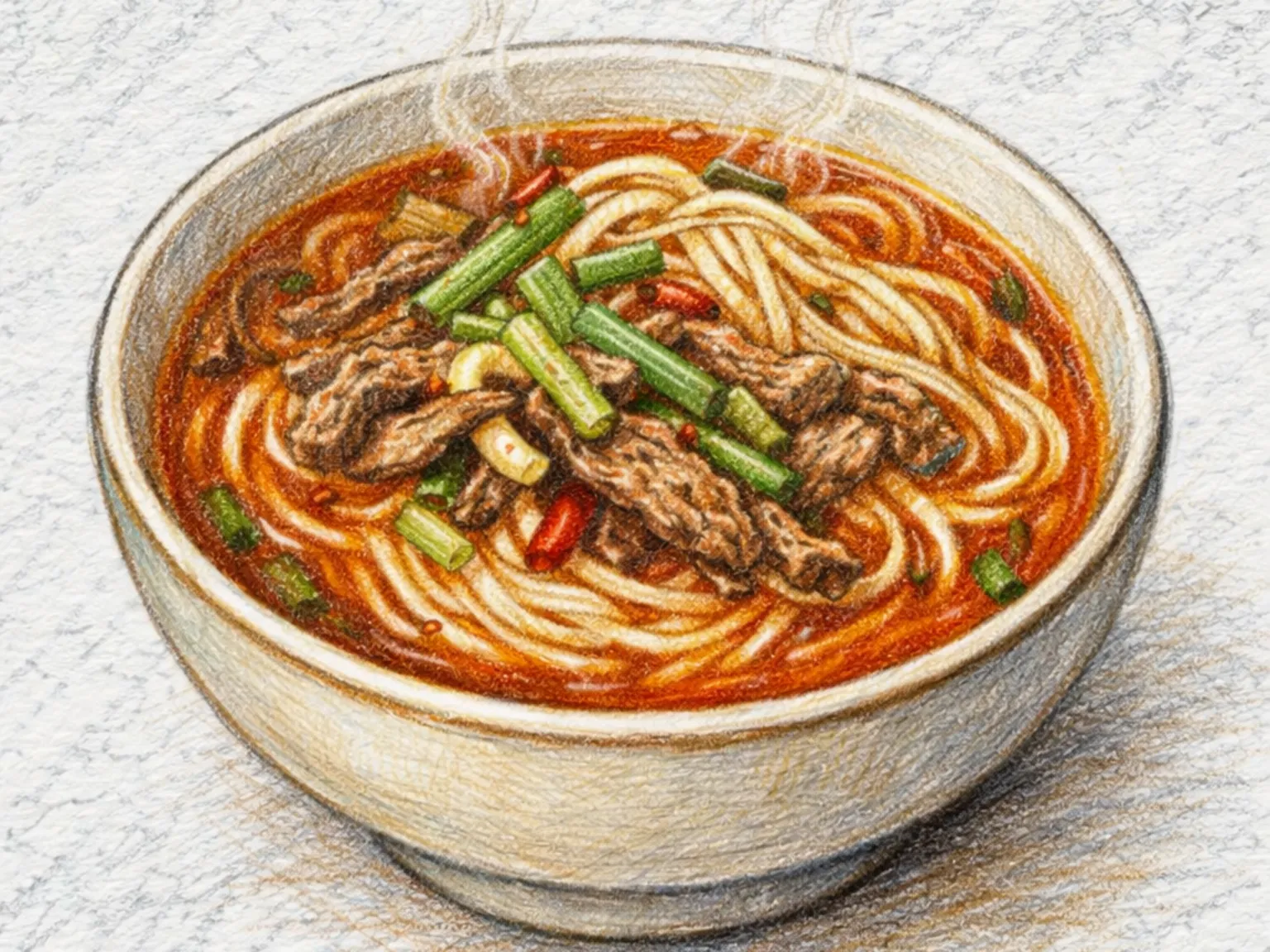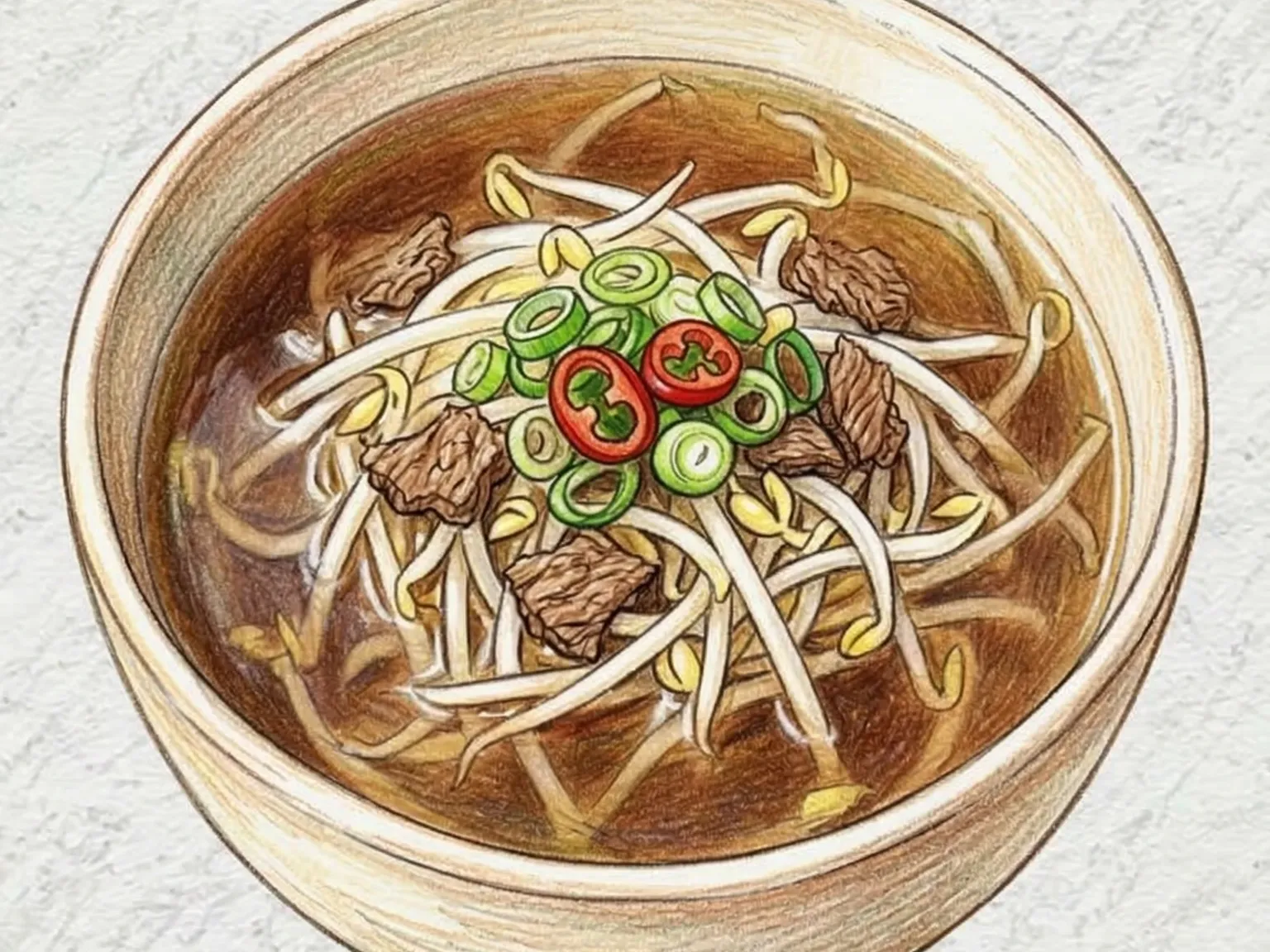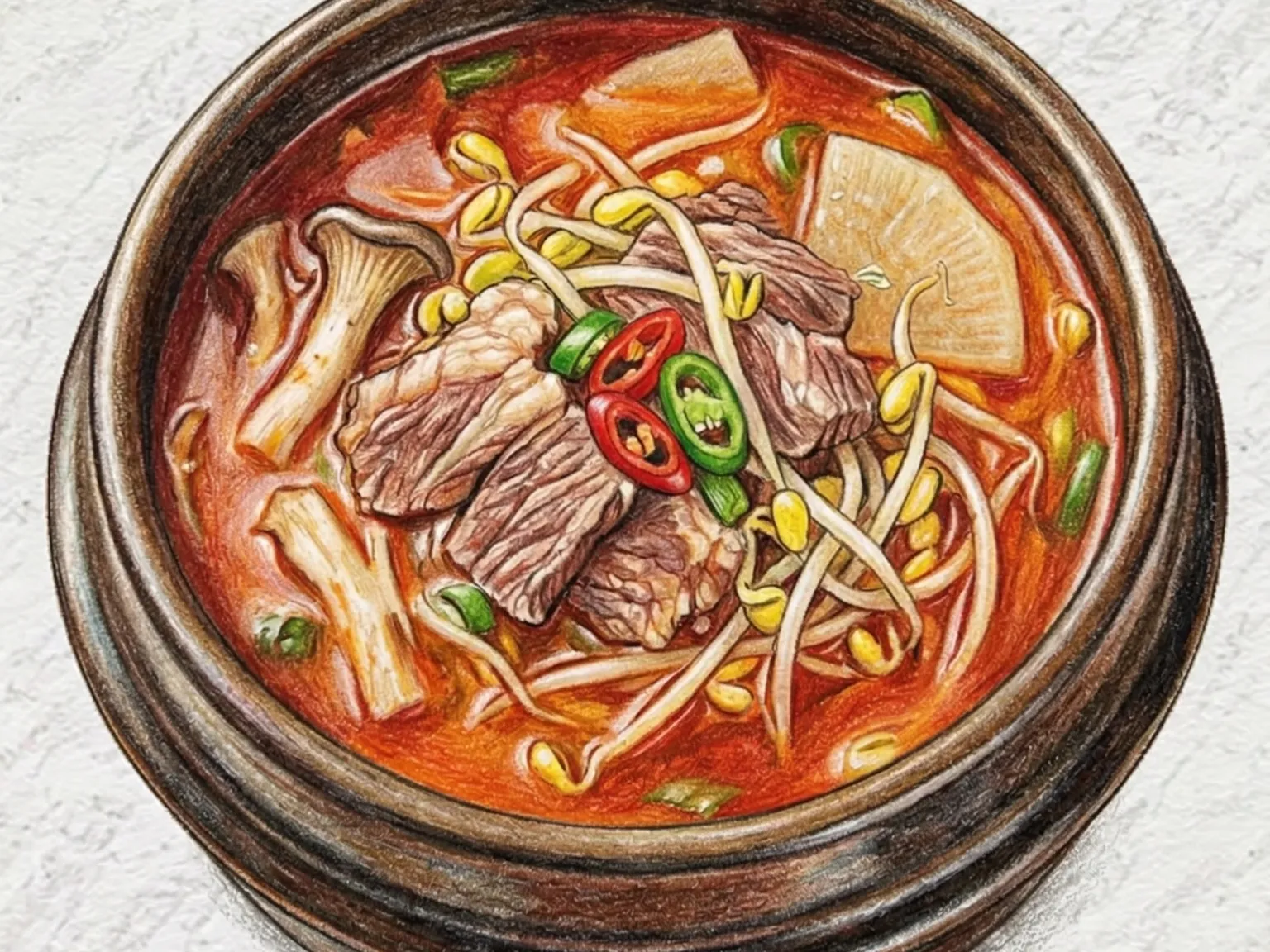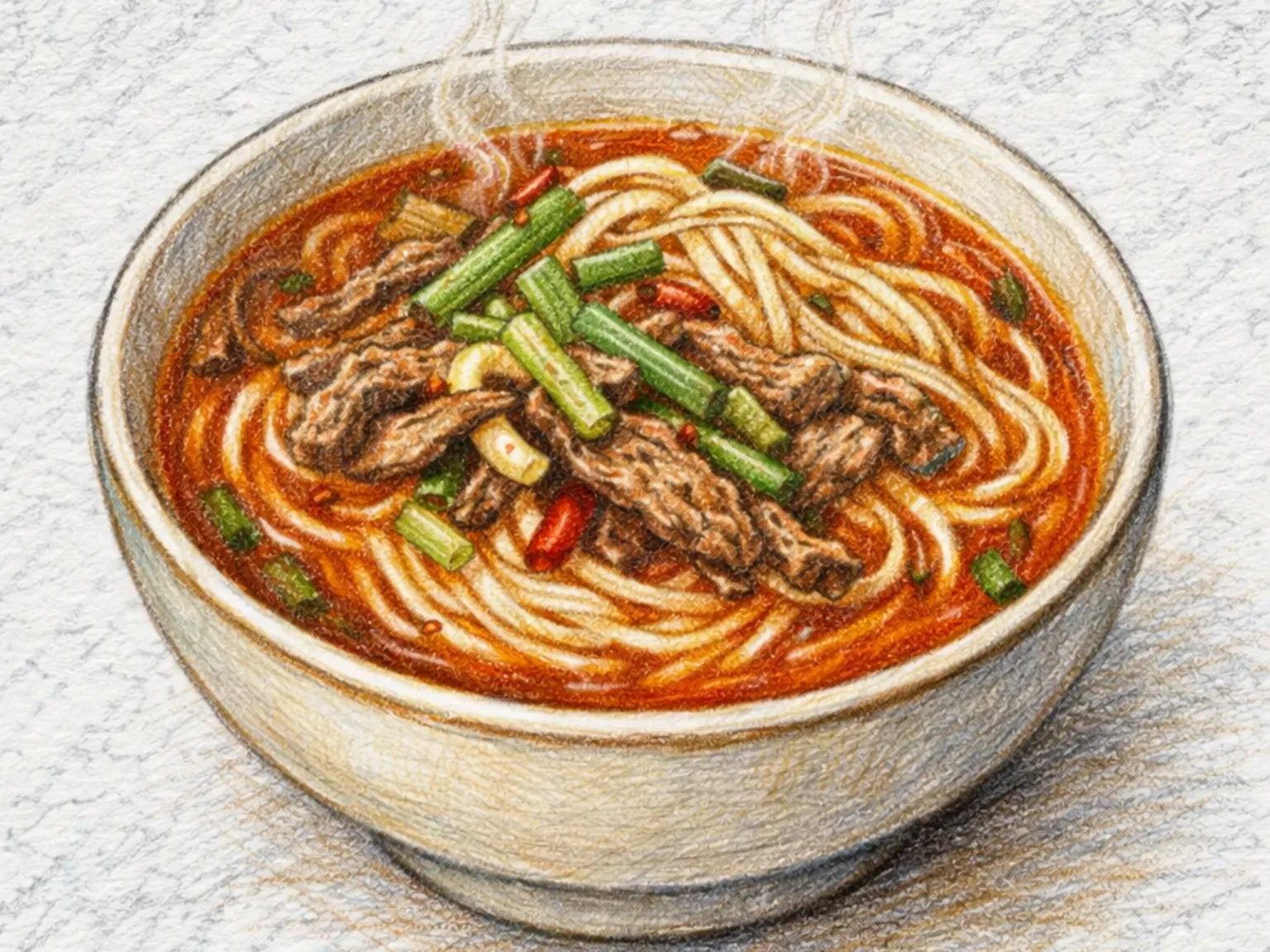
Korean Spicy Beef Soup Noodles
Yukgaejang guksu starts with a deep broth made by simmering beef brisket until the liquid turns rich and full-bodied. The meat is shredded along the grain and returned to the pot alongside fernbrake, bean sprouts, and green onion that have been seasoned with gochugaru, sesame oil, and garlic before a brief stir-fry. This pre-seasoning step lets the chili heat dissolve into the oil, producing a rounded spiciness rather than raw powder burn. Korean soup soy sauce adjusts the salt level without clouding the broth's color. Thin wheat somyeon noodles are boiled separately and added at the end so they absorb the broth without turning mushy. Swapping in glass noodles changes the texture to a chewier, more slippery bite that holds onto the soup longer.
Adjust Servings
Instructions
- 1
Simmer beef in 1.5L water; shred meat along the grain.
- 2
Season fernbrake, sprouts, and green onion with chili flakes, sesame oil, and garlic; stir-fry briefly.
- 3
Add vegetables and beef to stock, season, simmer 10 minutes.
- 4
Add noodles and cook until done.
- 5
Serve immediately.
As an Amazon Associate, we may earn from qualifying purchases.
Tips
Nutrition (per serving)
More Recipes

Yukgaejang (Fiery Shredded Beef and Vegetable Soup)
Yukgaejang is a fiery Korean beef soup that starts with brisket simmered until it can be pulled apart along the grain into long, thin shreds. The shredded meat is then hand-mixed with red pepper flakes, soup soy sauce, sesame oil, and minced garlic so the seasoning penetrates each strand before the final cook. Bracken fern, bean sprouts, and generous lengths of green onion join the pot, and everything boils together for thirty minutes in the brisket stock, which turns a deep red from the chili. The fern contributes an earthy chew, the sprouts add a clean crunch, and the green onion breaks down into the broth, lending natural sweetness that tempers the heat.

Korean Knife-cut Noodle Soup
Kalguksu is a Korean noodle soup made with hand-cut wheat noodles simmered in anchovy-kelp broth. The noodles are rolled flat and sliced with a knife, giving them a rough surface that absorbs broth and a satisfying chew distinct from machine-made pasta. Sliced potato, half-moon zucchini, and onion go into the pot, with the potato releasing starch that naturally thickens the broth as it cooks. Seasoning stays minimal - soup soy sauce, salt, minced garlic, and green onion added at the end - so the clean, savory depth of the stock comes through clearly. The dish is traditionally associated with rainy days in Korea, and adding clams turns it into a popular seafood variation.

Korean Bulgogi Jjolmyeon (Marinated Beef on Chewy Spicy Noodles)
Bulgogi jjolmyeon tops springy, chewy jjolmyeon noodles with thinly sliced beef that has been marinated in soy sauce, sugar, and sesame oil, then quickly stir-fried over high heat. The noodles' intense elasticity and the beef's sweet-savory glaze come together for a bowl that satisfies on both texture and flavor. A spicy-tangy sauce of gochujang, soy sauce, and vinegar coats the noodles, counterbalancing the sweetness of the bulgogi. Shredded cabbage and carrot add crisp contrast, while a halved boiled egg tempers the overall heat. Cooking the beef fast over high flame minimizes moisture loss and keeps the slices from toughening.

Vietnamese Spicy Beef Noodle Soup
Born in the central Vietnamese city of Hue, this spicy beef noodle soup builds its character from a broth simmered low and slow with beef shank, lemongrass stalks, fermented shrimp paste, and dried chilies. A slick of bright-red chili oil floats on the surface, signaling the heat that follows. Each spoonful delivers the shrimp paste's deep umami alongside the citrusy lift of lemongrass, creating a layered spiciness that lingers without overwhelming. The noodles used are bun, a round rice vermicelli thicker and chewier than the flat strands found in pho, giving each strand enough body to hold up against the robust broth. Bean sprouts, shredded banana flower, and a squeeze of lime are added at the table, introducing crisp texture and acidity that cut through the richness. Adding sliced pork blood sausage brings the bowl closer to the version served on Hue's streets.

Korean Spicy Chewy Noodles
Jjolmyeon is a Korean cold noodle dish built around unusually thick, springy wheat noodles that were accidentally invented at an Incheon noodle factory in the 1970s. The noodles are boiled, rinsed in ice water to firm up their chewy texture, then dressed in a sweet-sour-spicy sauce made from gochujang, vinegar, sugar, soy sauce, and sesame oil. Shredded cabbage and julienned cucumber are chilled separately and piled on top, giving each bite a crisp contrast to the bold sauce. A halved boiled egg adds a creamy counterpoint to the heat. The dish is served cold and eaten after thorough mixing, making it a go-to summer meal and late-night snack across Korea.

Naejang-tang (Spicy Mixed Beef Tripe Soup)
Naejang-tang is a Korean offal soup that simmers a medley of beef innards - tripe, large intestine, abomasum, and omasum - in a robust broth seasoned with gochugaru, gochujang or doenjang, garlic, and green onion. Each organ brings a different texture to the bowl: tripe is chewy and ridged, large intestine is fatty and tender, and the stomach linings offer a firm, almost crunchy bite. As the innards cook for an extended period, their rendered fat and natural gelatin melt into the broth, producing a thick, savory liquid with a distinctive richness that leaner soups cannot approach. Some versions include seonji, coagulated ox blood, which darkens the broth and adds a mineral, iron-forward depth. The soup is characteristically spicy and served at near-boiling temperature, often in a stone pot that keeps it bubbling at the table. In Korea, naejang-tang is strongly associated with early-morning hangover recovery - specialized restaurants near traditional markets and drinking districts begin serving it well before dawn. The combination of fat, heat, and protein makes it one of the most physically restorative soups in the Korean repertoire.