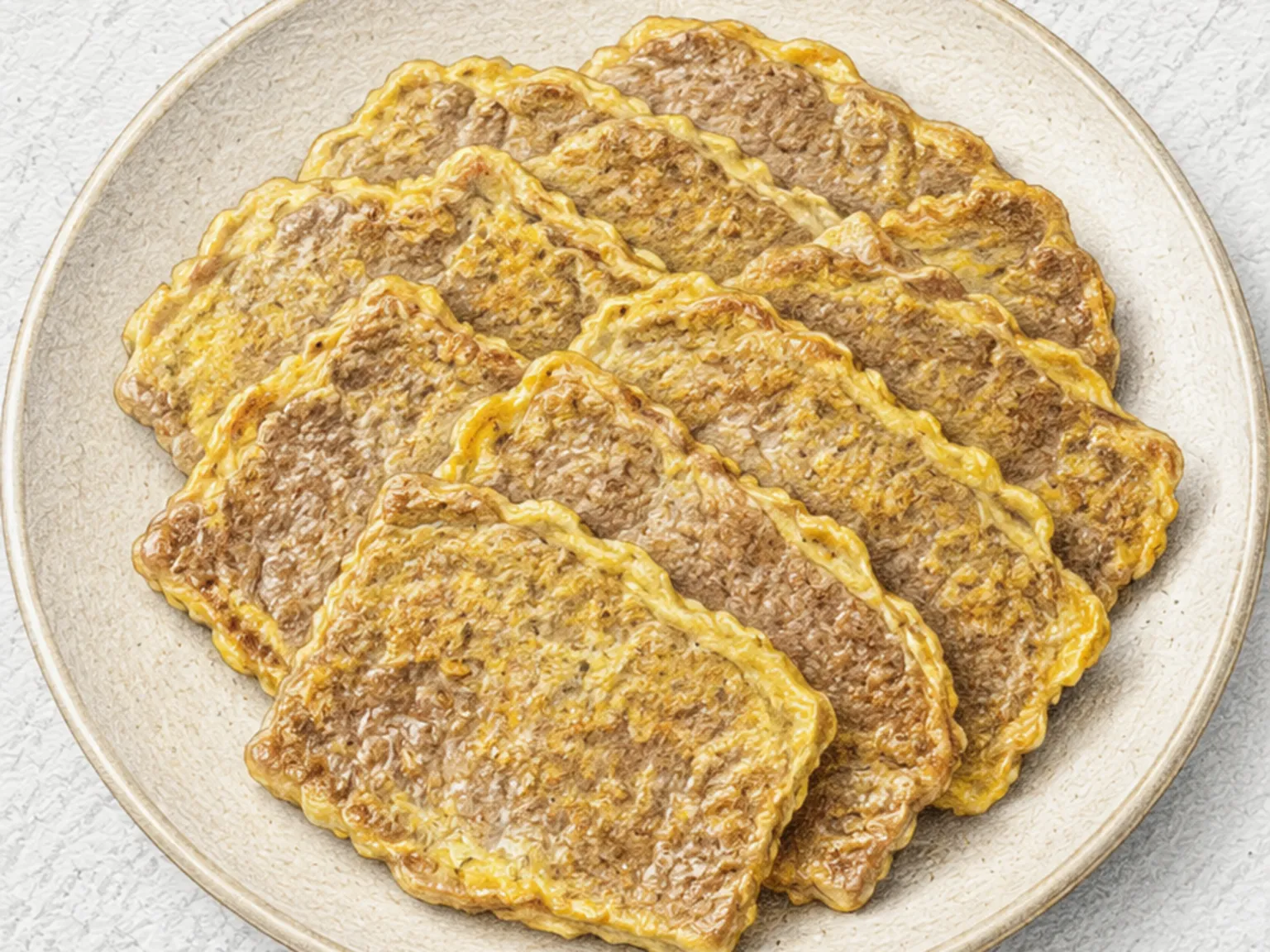
Korean Beef Jeon (Egg-Coated Pan-Fried Thin Beef Slice)
Quick answer
This classic Korean dish consists of thinly sliced lean beef round that is lightly seasoned, coated in flour and egg, and pan-fried.
What makes this special
- Golden Yukjeon uses a flour adhesive to bond the egg coating to thin slices of lean beef during frying.
- Flour layer between egg and lean beef slices acts as adhesive so the coating holds through pan-frying
- No overcooking rule; medium heat for short time preserves the beef's natural tender grain
Key ingredients
Core cooking flow
- 1 Spread 300 g of lean beef slices in a single layer without overlapping.
- 2 Spread 4 tablespoons flour on a wide plate and coat each beef slice thinly, one at a time.
- 3 Beat 2 eggs until the whites are no longer streaky.
This classic Korean dish consists of thinly sliced lean beef round that is lightly seasoned, coated in flour and egg, and pan-fried. The process begins by seasoning the beef slices with salt, black pepper, and minced garlic. Each slice is dusted with a thin layer of flour, shaking off any excess to prevent clumping and to ensure the egg batter adheres securely during cooking. The floured beef is dipped in beaten egg and cooked in a preheated pan with oil over medium heat. It is crucial to avoid high heat, which can scorch the egg coating and toughen the meat. Pan-frying each side briefly until the egg sets preserves the natural tenderness of the beef. The cooked slices feature a delicate golden coating and are typically served warm. Yukjeon is a staple for holiday feasts, ancestral rites, and housewarming gatherings.
Instructions
Read the steps as a cooking flow: prep, heat, seasoning, doneness control, and finish.
- 1Season
Spread 300 g of lean beef slices in a single layer without overlapping.
Season both sides evenly with 1/2 teaspoon salt, 0.3 teaspoon black pepper, and 1 teaspoon minced garlic, then let them stand for about 5 minutes.
- 2Finish
Spread 4 tablespoons flour on a wide plate and coat each beef slice thinly, one at a time.
Shake off excess flour, because a thick layer makes the egg coating clump and cook unevenly.
- 3Heat
Beat 2 eggs until the whites are no longer streaky.
Just before frying, dip the floured beef into the egg, lift it out, and let the extra egg drip off so the coating stays thin.
- 4Control
Add 2 tablespoons cooking oil to a pan and preheat over medium heat for about 1 minute.
When a drop of egg sets gently without smoking, lay in the beef slices without overlapping.
- 5Control
Pan-fry for about 1 minute, until the underside egg coating turns pale yellow and sets.
Flip when the edges look dry, and avoid high heat so the coating does not burn before the beef cooks.
- 6Finish
Cook the second side for only 40 seconds to 1 minute, just until the beef is cooked through.
Remove before the meat firms up, let it settle briefly, and serve while still warm.
After the steps
Pick a recipe that fits this dish.
Continue with shared ingredients, meal pairings, or a similar method.
Recipes That Go Well With This
More Grilled →Based on shared ingredients and meal pairing
Korean Tofu Jeon (Golden Egg-Coated Pan-Fried Tofu)
Dubu-jeon is a Korean pan-fried tofu dish and a standard side dish in everyday home cooking as well as a fixture on ancestral rite tables. Firm tofu is sliced to about 1 cm thickness, seasoned with salt and pepper, dusted in a thin layer of flour to help the coating adhere, dipped in beaten egg, then fried on each side in a lightly oiled pan until the exterior turns golden and set. Pressing the tofu before cooking is the most important preparatory step: wrapping the slices in paper towels and placing a heavy object on top for at least fifteen minutes removes enough moisture to prevent the oil from splattering and allows the egg coating to bond tightly to the surface. Three to four uninterrupted minutes per side over medium heat are needed to develop an even golden crust without burning the egg; turning the pieces too often strips the batter away and leaves patches of bare tofu. The fried tofu is mild and nutty on its own, but a dipping sauce of soy sauce mixed with a small amount of vinegar and red pepper flakes adds salt, acidity, and heat that transform the simple base into something more complex. Eaten hot, the egg coating is thin and slightly crisp; as it cools the exterior softens while the interior remains tender.
Korean Meatball Jeon (Beef and Tofu Pan-Fried Meatball Patty)
Ground beef is kneaded with pressed tofu, minced onion, chopped scallion, and soy sauce until the mixture becomes sticky enough to hold its shape. Bite-sized balls are flattened slightly, dredged in flour, dipped in beaten egg, and pan-fried on both sides over medium heat. The egg wash forms a thin golden casing that seals in moisture, and the tofu in the filling makes each bite softer and lighter than an all-meat patty. Wanja-jeon is a fixture on Korean holiday tables and ancestral rite spreads, and it travels well in lunch boxes since the flavor and texture hold up at room temperature.
Korean Seafood Hot Pot Soup
Haemul-tang is a Korean seafood hot pot that throws together crab, shrimp, clams, and squid in a fiery, brick-red broth. The liquid starts with gochugaru and plenty of garlic, building a spicy base that the seafood then amplifies with its own briny juices. Radish chunks soften as the pot bubbles, thickening the broth slightly and adding a cool sweetness behind the heat. Green onions and cheongyang peppers go in toward the end for a sharp, vegetal bite. The magic of haemul-tang lies in the convergence of flavors: crab shells release a sweet, crustacean stock; clams open to spill their liquor; shrimp and squid contribute distinct textures from snappy to chewy. The pot is brought to the table still at a rolling boil, and diners pick through the shells and tentacles while the broth continues to concentrate.
Korean Chive Seafood Pancake
Buchu-haemul-jeon is a Korean chive and seafood pancake that combines garlic chives cut to five-centimeter lengths with sliced squid and peeled shrimp in a batter of Korean pancake mix, water, and salt. The garlic chives release a sharp, aromatic fragrance as they cook, which infuses the pancake from edge to edge. Squid provides a dense chew while shrimp adds a snappier, springier bite, so each piece of the finished pancake has a slightly different texture depending on what's in it. Because both seafood and chives release moisture during cooking, the batter needs to start thicker than for a plain vegetable jeon - otherwise the center will stay wet and fail to brown properly. Spreading it thin across the pan and maintaining steady medium heat crisps the edges into a lacy, oil-fried border while keeping the seafood-laden interior moist. Flipping cleanly in one motion preserves the structure. A dipping sauce of brewed soy sauce, vinegar, and gochugaru brings out the natural sweetness of the shellfish.
Serve with this
Korean Grilled Eel Rice Bowl
Jangeeo deopbap is a bowl of grilled freshwater eel over steamed rice, where the key technique is building up a thick, lacquered glaze through multiple applications of a sweet-salty sauce reduced from soy sauce, mirin, sugar, and ginger juice. The eel starts skin-side down on the grill over medium heat for around five minutes to crisp the skin, then is flipped and basted repeatedly with the sauce as it finishes cooking. A single coat of sauce produces a pale, thin color, so at least two applications and ideally three or more are needed to build the characteristic glossy surface. With each additional coat, the sugars in the sauce react with heat through both Maillard browning and caramelization, layering flavor with every pass. Because freshwater eel is naturally fatty, fat drips during grilling can cause flare-ups, so heat control is important throughout the process. Sansho pepper dusted on at the end cuts through the eel's inherent richness with a sharp, numbing fragrance that balances the sweet glaze and keeps the dish from feeling heavy.
Korean Seasoned Bracken Fern
Gosari, the Korean name for bracken fern, is one of the oldest foraged vegetables in Korean cooking, with consumption records tracing back to the Three Kingdoms period. It is a mandatory component of bibimbap and a required dish on jesa, the ancestral rite table set for ceremonies honoring the dead. Dried gosari must soak overnight in cold water and then boil until the tough, wiry fibers relax into a distinctively springy, almost elastic chew that no fresh vegetable can replicate. The rehydrated fern is stir-fried in perilla oil with minced garlic until fragrant, then a small amount of soup soy sauce and water goes in and the pan is covered to let the liquid absorb and the fern braise briefly. This short braising step is what rounds the flavor and ensures the seasoning penetrates the fibrous strands rather than sitting only on the surface. Perilla oil is the traditional fat of choice rather than sesame oil because its green, herbal quality pairs more naturally with the woodsy, forest-floor flavor of gosari, amplifying rather than competing with it. Large batches are typically made during Chuseok or Seollal and eaten over several days, as the flavor improves and deepens as the dish sits.
Korean Cherry Tomato Jangajji
Peeling cherry tomatoes by hand serves as the foundation for creating tomato jangajji, a Korean soy-preserved dish. Removing the skins allows the brine of soy sauce, rice vinegar, and sugar to permeate the flesh quickly and consistently. A critical step involves boiling the liquid and then letting it cool to room temperature before combining it with the fruit. This cooling period prevents the tomatoes from softening or becoming soggy, ensuring they remain firm throughout the pickling process. Thinly sliced onions included in the jar absorb the liquid, contributing a savory and tangy character. Fresh basil leaves introduce an herbal scent that distinguishes this preparation from standard soy pickles. One full day of refrigeration helps the acidity of the vinegar settle and highlights the natural sweetness of the tomatoes. This side dish functions effectively alongside rice or grilled meats, where its tartness acts as a cleanser for the palate after eating oily foods. The texture remains intact for about a week when kept cold. For a different profile, small amounts of cinnamon or star anise can be added to the brine to provide a warm spice fragrance. It also pairs well with cheese and crackers as an unconventional snack or finger food.
Similar recipes
Korean Julienned Potato Pancake
Gamja-chae-jeon is a Korean julienned potato pancake where the potatoes are cut into thin matchsticks rather than grated, producing a texture fundamentally different from the mashed-style gamja-jeon. The intact strands create an open lattice that crisps at every exposed edge while maintaining a firm, slightly resistant bite in the center. Potato starch mixed dry into the julienned potatoes acts as a binder that holds the strands together during frying and flipping without adding moisture that would soften the crust. Adding a small amount of julienned onion contributes sweetness to the flavor, but the onion releases water as it cooks - water that will steam the pancake from underneath instead of letting it fry. Squeezing the onion dry in a kitchen towel before adding it solves this problem. The batter should be no wetter than what the potato's own natural moisture provides after the starch is mixed in, and adding no further liquid keeps the surface from turning soggy. Generous oil in the pan and constant pressing with a spatula over medium heat ensure that the entire underside maintains full contact with the cooking surface, frying the strands to an even, crackling golden crust that holds together cleanly when sliced.
Korean Lotus Root Beef Pancake
Sliced lotus root is sandwiched with seasoned ground beef, coated in pancake batter and egg, then pan-fried until golden. The lotus root keeps its crunch even after cooking, so the texture contrast with the soft beef filling is distinct in every bite. Soy sauce and minced garlic season the filling so the jeon is fully flavored on its own without a dipping sauce. Chopped green onion is worked into the beef for a fresh aromatic note. The lotus root hole pattern fills with meat during assembly, making each cross-section visually clean and precise. The egg coating browns smoothly around the outside, giving a tender rather than crisp exterior.
Korean Perilla Leaf Chicken Jeon
Perilla Leaf Chicken Jeon is a savory Korean pan-fried pancake stuffed with ground chicken and tofu. The filling is made by combining lean ground chicken with pressed, crumbled tofu, green onions, garlic, salt, and pepper, kneaded together until cohesive. This mixture is spread in a thin layer onto the floured side of perilla leaves, which are then folded in half and pressed to seal. To cook, the folded leaves are dusted with flour, dipped in beaten egg, and pan-fried over medium-low heat to ensure the egg coating does not burn while the interior cooks through. The mild flavor and soft texture of the chicken and tofu filling offer a balanced contrast to the herbal, aromatic qualities of the perilla leaves. To preserve the juices, the finished jeon should rest briefly and be cut into bite-sized pieces just before serving.