Mixed Seafood and Vegetable Stir-fry
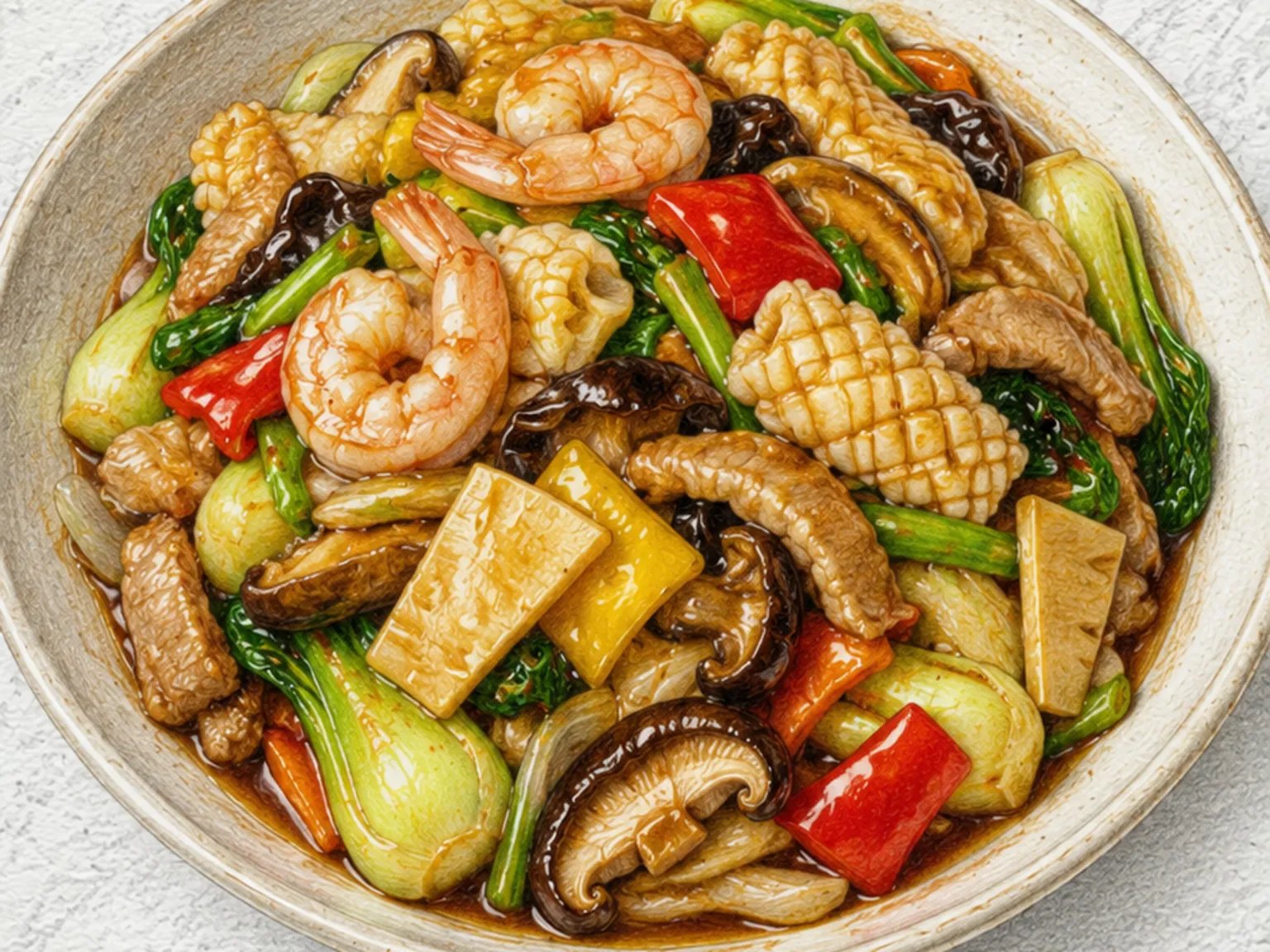
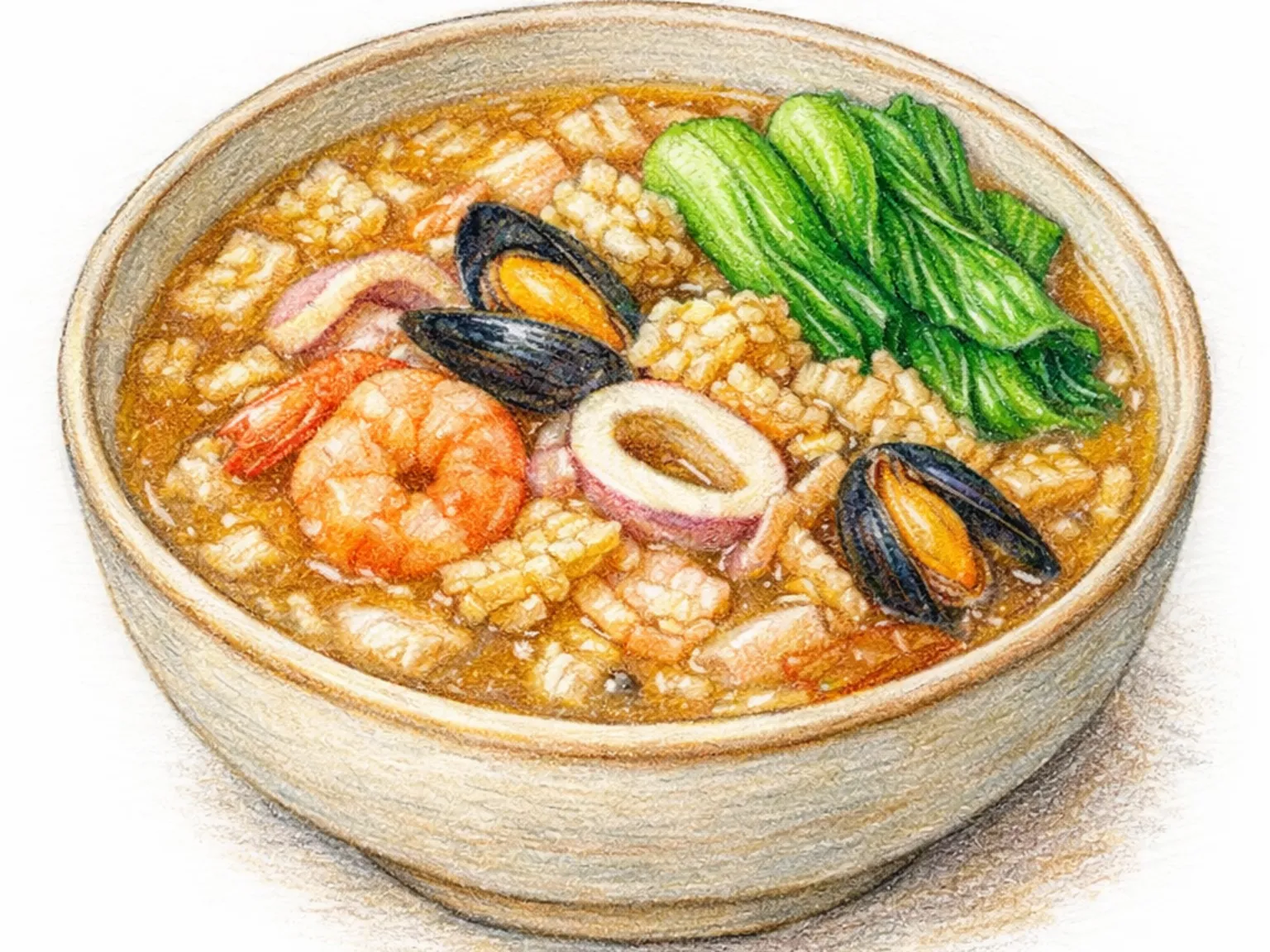
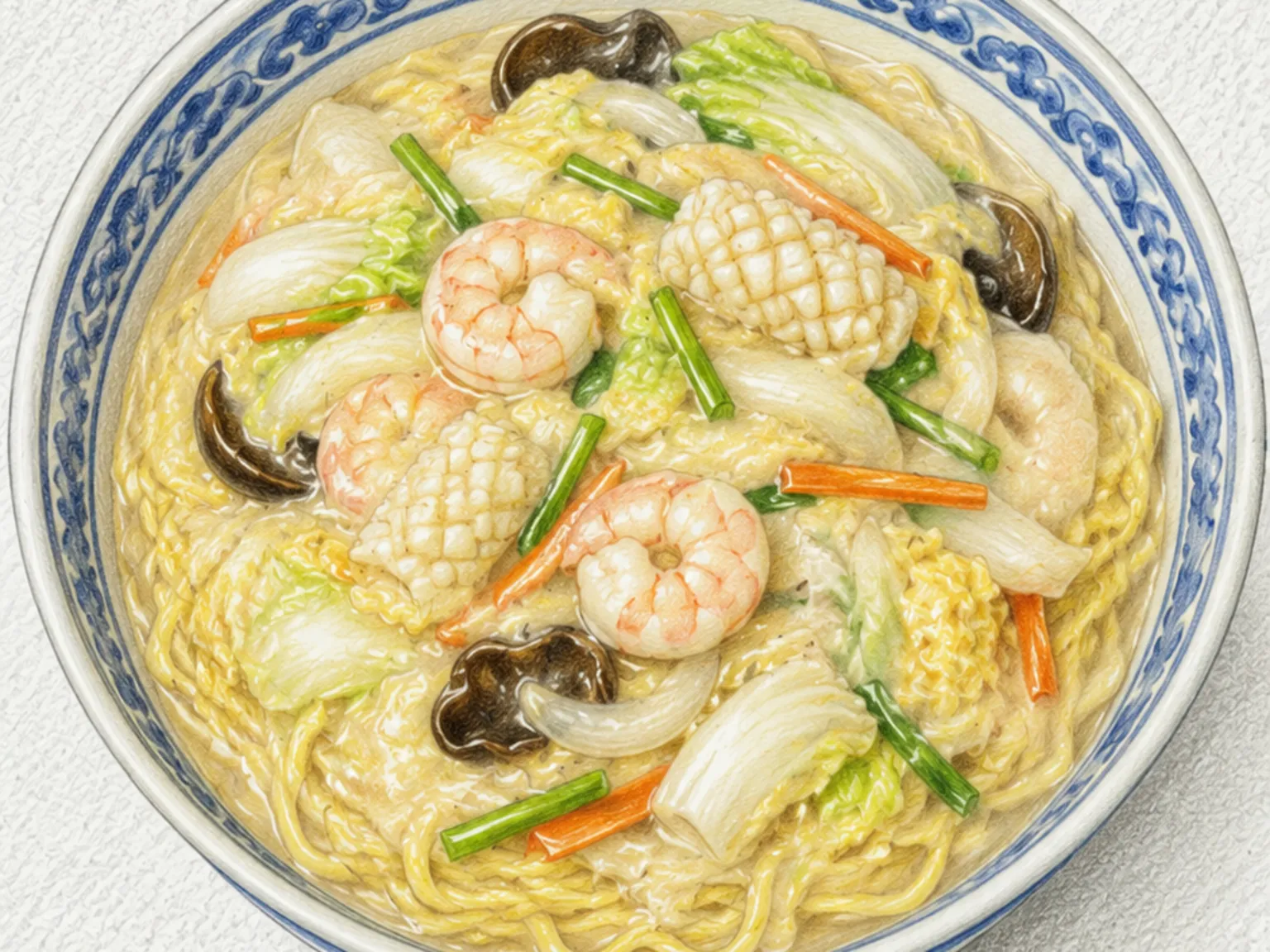
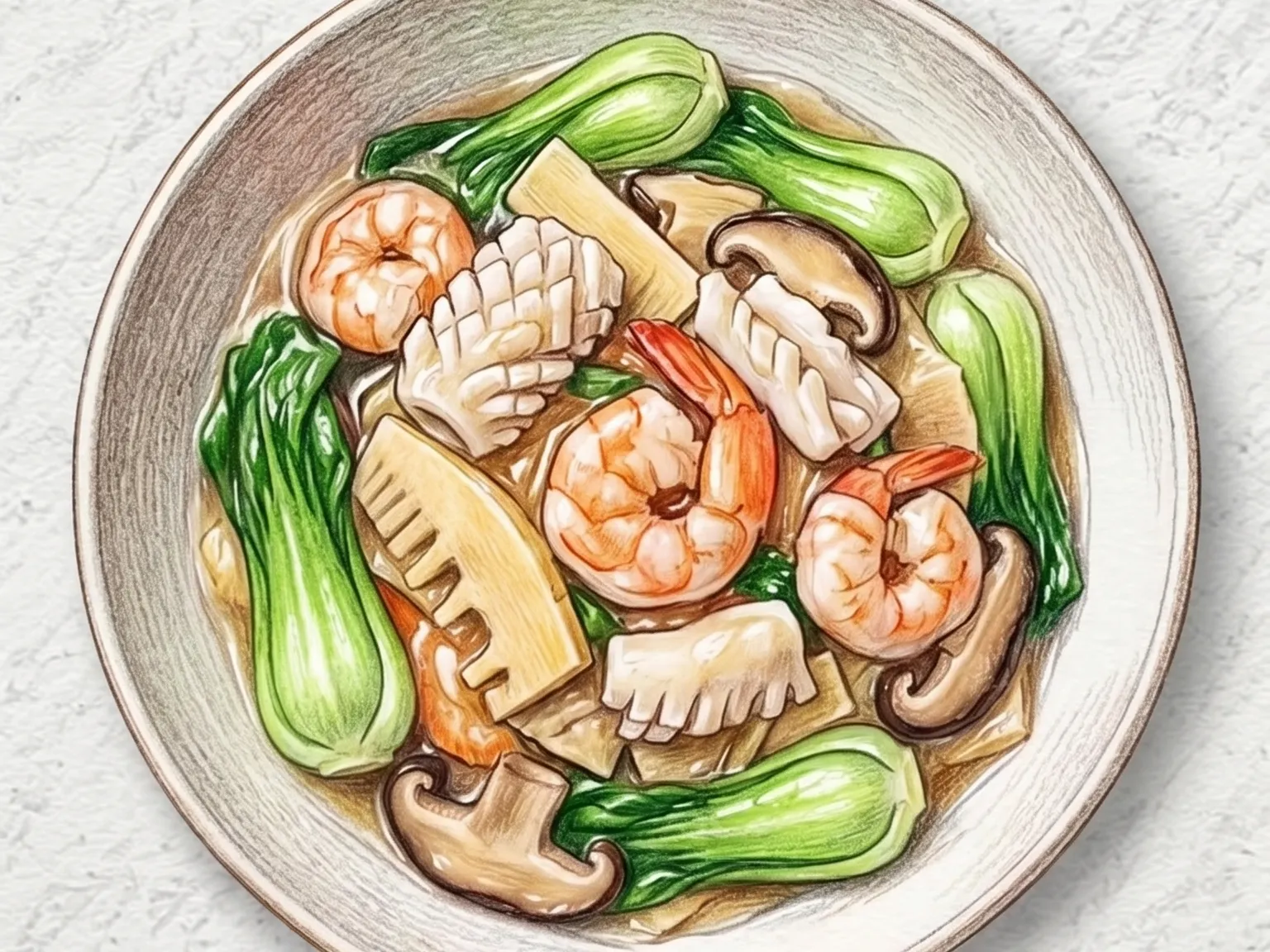
Yusanseul is a Korean-Chinese stir-fry of shrimp, squid, bamboo shoots, shiitake mushrooms, and bok choy, finished with a light cornstarch sauce. The seafood is seared quickly over high heat to maintain a springy bite, while chicken stock and oyster sauce build a clean umami backbone. A starch slurry binds everything in a silky, translucent glaze that clings to each ingredient without heaviness. Bamboo shoots and bok choy retain their crunch, giving the dish textural contrast that makes it well-suited for a special occasion table.
Adjust Servings
Instructions
- 1
Prepare seafood and cut vegetables into similar lengths.
- 2
Stir-fry seafood in oil for about 2 minutes.
- 3
Add bamboo shoots, mushrooms, and bok choy; stir-fry on high heat.
- 4
Add stock and oyster sauce and simmer for 2 minutes.
- 5
Add starch slurry to thicken and serve immediately.
As an Amazon Associate, we may earn from qualifying purchases.
Tips
Nutrition (per serving)
More Recipes

Eight Treasure Seafood Stir-fry
Palbochae is a Korean-Chinese banquet stir-fry that brings together shrimp, squid, pork, bamboo shoots, shiitake mushrooms, and bok choy in a single wok. Each ingredient is added in sequence according to its cooking time, then finished in an oyster-sauce glaze thickened with a light cornstarch slurry. The high-heat technique imparts a pronounced wok char, while the variety of proteins and vegetables creates contrasting textures in every bite. It is a dish traditionally reserved for special occasions, built on the interplay of seafood brine, pork fat, and crisp greens.

Pepper and Pork Stir-fry (Chinese-Style Julienned Bell Pepper and Pork)
Gochu-japchae is a Korean-Chinese stir-fry of julienned bell peppers and pork loin cooked fast over high heat in a soy-oyster sauce base. The pork is pre-marinated with starch and soy sauce to lock in moisture, ensuring each strip stays tender through rapid cooking. Keeping the stir-fry time short preserves the peppers' crunch and vibrant color. Served alongside steamed flower buns or wrapped in a tortilla, it makes a quick, flavorful meal. The dish captures the wok-seared character of Chinese-Korean cooking in under 30 minutes.

Stir-fried Bok Choy (Bok Choy with Garlic and Oyster Sauce Glaze)
Halved bok choy is stir-fried with sliced garlic over high heat for two minutes, then finished with oyster sauce and soy sauce in a one-minute reduction that glazes every leaf and stem. The thick white stalks need more heat than the tender green leaves, so placing them cut-side down first or adding the leaves halfway through prevents the greens from turning to mush while the stems stay undercooked. Oyster sauce lends a concentrated umami depth to the otherwise mild vegetable, and a splash of 40 milliliters of water helps the sauce flow between the tightly packed stems so seasoning reaches every layer. Black pepper and sesame oil are added only after the pan leaves the flame so their volatile aromas stay intact on the plate. Bok choy continues to release moisture after plating, so serving immediately is critical to preserving the contrast between crisp stalks and just-wilted leaves. At 105 calories per serving, this is a light side dish that still delivers meaningful amounts of vitamin A and calcium.

Spicy Fried Chicken Stir-fry
Rajogi is a Korean-Chinese dish of chicken thigh pieces coated in potato starch and deep-fried at 170 degrees Celsius until golden, then tossed in a sauce built from gochujang, ketchup, and vinegar. Onion and bell pepper are stir-fried separately to form the sauce base before the crispy chicken is folded in. The coating absorbs just enough glaze to deliver sweetness, tanginess, and chili heat simultaneously while retaining crunch underneath. Timing is critical -- the chicken must be tossed in sauce moments before serving to preserve its texture.

Chinese Chow Mein
Chinese chow mein stir-fries boiled noodles with vegetables and protein over fierce wok heat. The noodles are parboiled, lightly oiled, then tossed in a screaming-hot wok until the exterior crisps while the interior stays chewy. A sauce of soy, oyster sauce, and sesame oil lacquers each strand with salty depth and umami, while bean sprouts, cabbage, and carrot contribute crunch. The hallmark smoky flavor, known as wok hei, comes only from sustained high heat, so home cooks achieve the closest result by working in small batches and letting the pan recover between additions. Chicken, shrimp, or beef can replace one another as the main protein, making chow mein endlessly adaptable. A squeeze of lime at the table brightens the overall flavor.

Hakka Noodles (Indo-Chinese Stir-Fried Noodles)
Hakka noodles belong to the Indo-Chinese tradition, a culinary fusion born in Kolkata's Chinese community that has since spread across India. Egg noodles are boiled just short of fully done, rinsed in cold water, and tossed with a little oil so they stay separate during stir-frying. The vegetables, julienned into matchstick-thin strips of cabbage, carrot, and bell pepper, are tossed in a smoking-hot wok for barely two minutes to keep their crunch. Seasoning is deliberately minimal: soy sauce for saltiness, rice vinegar for a faint tang, and black pepper for warmth. The speed of the cooking matters more than the ingredient list; the intense wok heat creates a smoky char on the noodles that no amount of seasoning can replicate at lower temperatures. Spring onions are stirred in only after the heat is off, keeping their bite and fresh aroma intact.