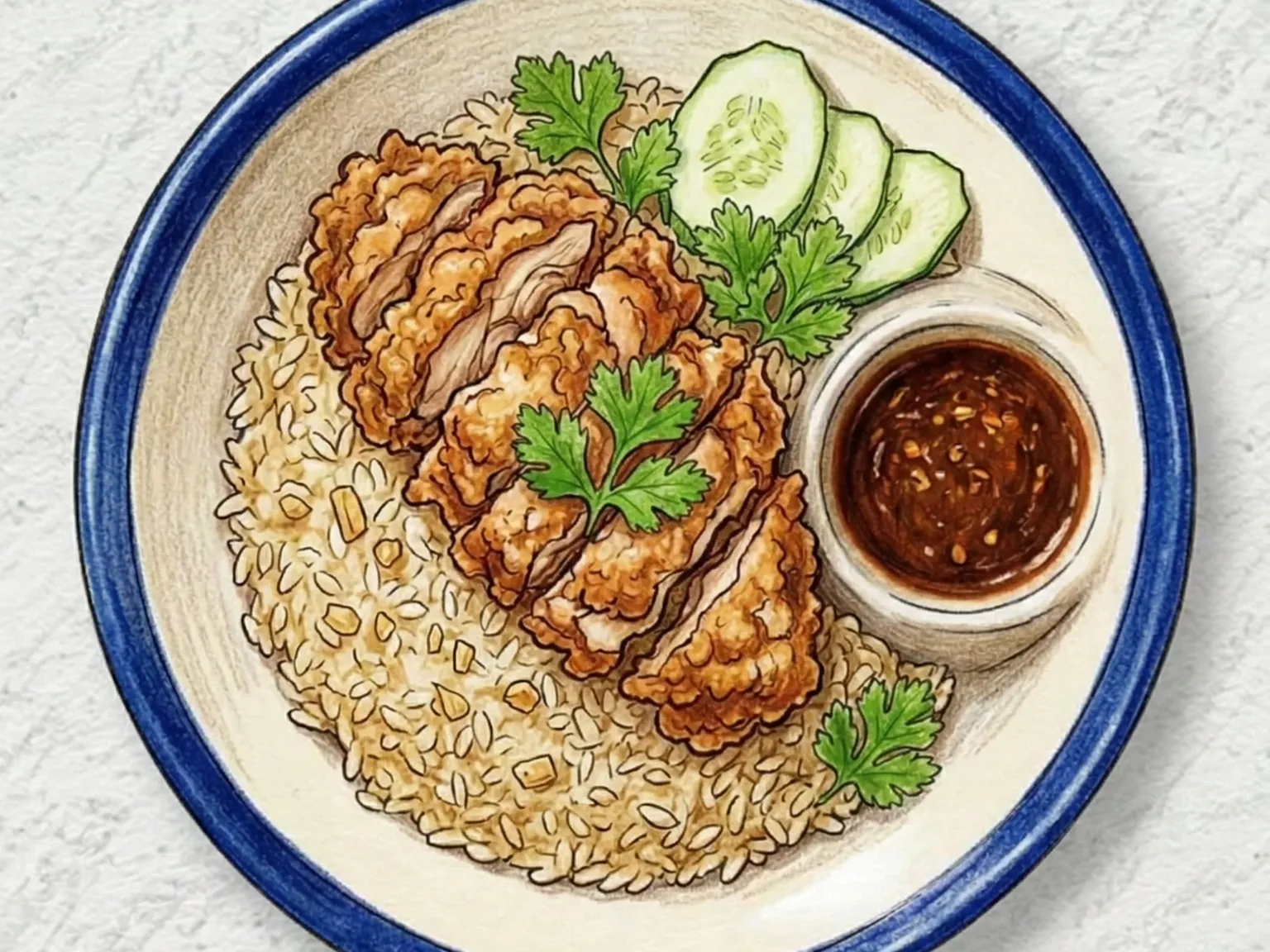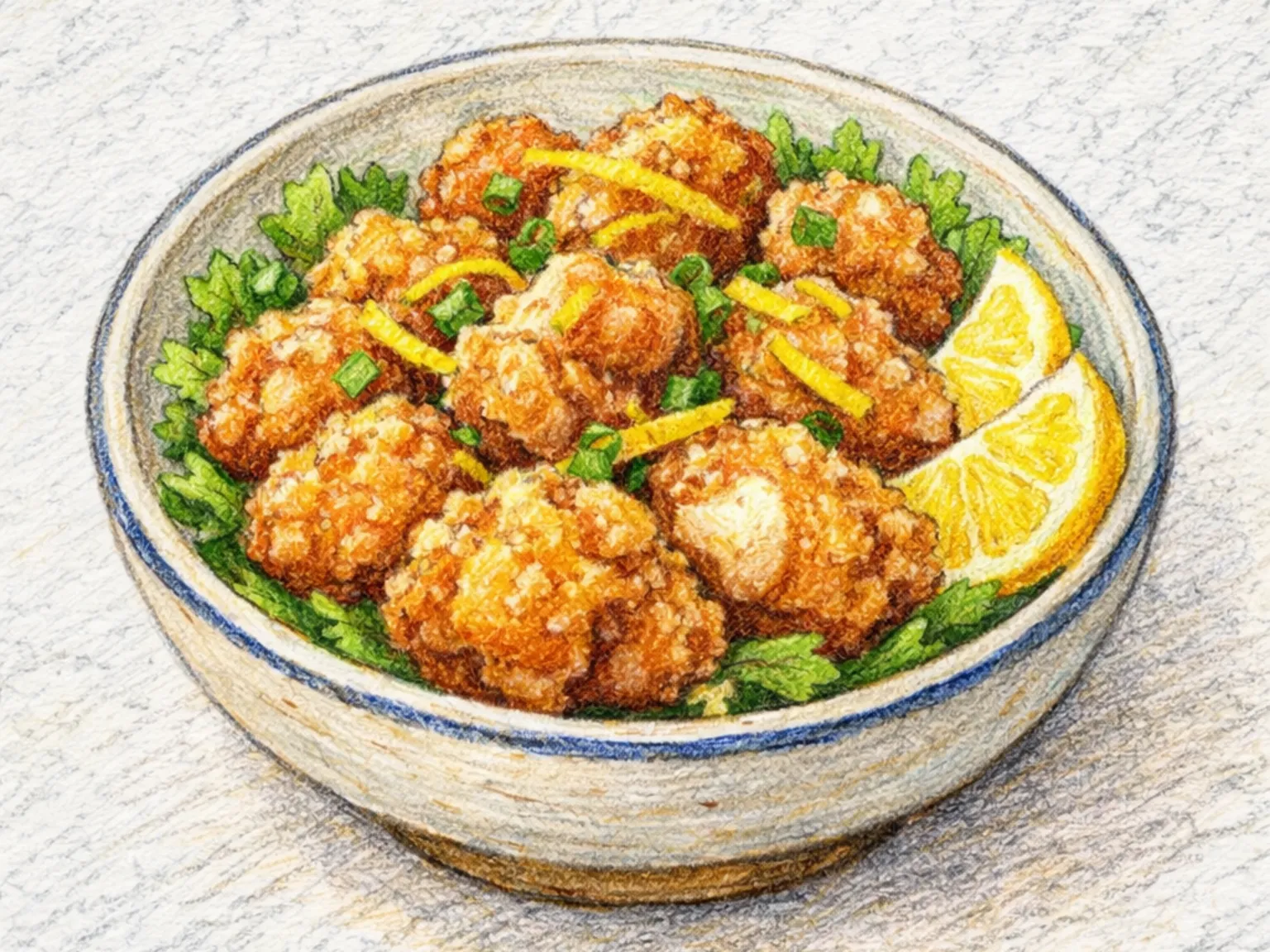
Yuzu Karaage (Japanese Citrus-Marinated Fried Chicken)
Yuzu karaage is a citrus-accented variation of Japanese fried chicken that incorporates yuzu into the traditional soy-ginger marinade. Boneless chicken thighs are marinated in soy sauce, cooking sake, garlic, ginger, and yuzu marmalade, which infuses the meat with a floral citrus fragrance distinct from lemon or lime. After marinating, the pieces are coated in potato starch and deep-fried until the exterior turns shatteringly crisp while the inside stays moist and well-seasoned. The yuzu adds a bright, aromatic acidity that lifts the richness of the fried coating and dark soy marinade, giving each bite a clean finish rather than a heavy aftertaste.
Adjust Servings
Instructions
- 1
Cut chicken thighs into bite-size pieces and pat dry.
- 2
Marinate chicken in soy sauce, sake, yuzu marmalade, garlic, and ginger for 15 minutes.
- 3
Coat marinated chicken evenly with potato starch.
- 4
Fry at 170C for 4 minutes, then rest briefly.
- 5
Refry at 190C for 1-2 minutes until extra crisp.
- 6
Drain excess oil and serve immediately.
As an Amazon Associate, we may earn from qualifying purchases.
Tips
Nutrition (per serving)
More Recipes

Japanese Karaage (Soy-Ginger Fried Chicken)
Karaage is Japanese fried chicken where bite-sized pieces of boneless thigh are marinated in soy sauce, mirin, grated ginger, and minced garlic for fifteen minutes before being coated in potato starch and double-fried. The ginger in the marinade neutralizes any gaminess in the dark meat, while mirin adds a subtle sweetness. Potato starch produces a lighter, crispier shell than cornstarch or wheat flour, and excess coating must be shaken off for even browning. The first fry at 170 degrees Celsius cooks the chicken through in three to four minutes, followed by a two-minute rest. The second fry at 180 degrees for one to two minutes drives off residual surface moisture, producing a shatteringly crisp exterior that holds up even as the chicken cools. This double-fry technique is the reason karaage stays crunchy far longer than single-fried chicken.

Ebi Fry (Japanese Panko-Crusted Shrimp)
Ebi fry emerged during Japan's Meiji-era adoption of Western cuisine, evolving into a signature dish of yoshoku - the Japanese reinterpretation of European food. Preparation begins by snipping the tendons on the shrimp's belly side and pressing it flat so it holds a straight, elongated shape during frying rather than curling. The three-stage coating - flour, egg wash, then coarse panko breadcrumbs - is essential: panko's jagged, irregular flakes puff up in hot oil to create a golden, airy crunch distinctly lighter than fine Western breadcrumbs. Because the shrimp fries briefly at high temperature, the interior stays moist and springy, snapping cleanly when bitten. Tartar sauce, with its creamy acidity, counterbalances the richness of the fried coating, while tonkatsu sauce offers a sweeter, fruitier alternative dip. Ebi fry appears in bento boxes, perched atop curry rice as ebi fry curry, or tucked into soft bread as an ebi katsu sando - a versatility that makes it one of Japan's most enduring yoshoku dishes.

Yakitori (Japanese Charcoal-Grilled Chicken Skewers)
Yakitori is a Japanese grilled chicken skewer preparation where bite-sized pieces of chicken are threaded onto bamboo sticks and cooked over bincho charcoal. Tare-style yakitori involves repeatedly brushing the skewers with a glaze of soy sauce, mirin, sake, and sugar as they rotate over the coals, building a glossy, caramelized coating. The direct flame chars the edges of the meat while keeping the interior moist, and sections of leek placed between the chicken pieces caramelize into soft, sweet counterpoints. An alternative preparation uses only salt - shio yakitori - which strips the flavor back to the quality of the chicken itself and the smokiness of the grill.

Agedashi Tofu (Japanese Crispy Fried Tofu in Dashi Broth)
Agedashi tofu is a staple of Japanese izakaya menus, dating back to Edo-period cookbooks where it appeared as a way to elevate plain tofu into a drinking snack. Firm tofu is patted dry, dusted in potato starch, and fried until a paper-thin golden shell forms around the still-custard interior. The crust holds up just long enough against a hot dashi-soy-mirin broth ladled over at serving, softening at the edges while the center stays crisp. Grated daikon on top cuts through the oil with a sharp, cooling bite. The dish lives in the tension between textures - eat too slowly and the crust dissolves entirely into the broth.

Chicken Soboro Rice Bowl (Ground Chicken and Scrambled Egg over Rice)
Soboro-don is a Japanese-style rice bowl that tops steamed rice with two side-by-side mounds: savory minced chicken and sweet scrambled egg. The chicken is seasoned with soy sauce, sugar, mirin, and ginger juice, then stirred constantly with chopsticks over medium heat until it breaks into fine, crumbly grains that are individually coated in glaze. The egg is treated the same way - beaten, poured into a pan, and stirred into soft, fluffy curds. Arranged half-and-half on the rice, the brown chicken and bright yellow egg create a visual contrast that makes the bowl inviting. Both toppings share a gentle sweetness balanced by soy umami, and their fine, loose texture means every bite blends effortlessly with the rice beneath.

Chicken and Egg Rice Bowl
Oyakodon simmers bite-size chicken thigh and sliced onion in a soy-mirin broth, then binds everything with a soft-set egg before sliding it over steamed rice. The name means 'parent and child,' referring to the chicken and egg sharing the same bowl. Onion goes into the broth first to release its natural sweetness, followed by the chicken, which cooks just until tender. Beaten eggs are poured in a circular motion and the lid goes on briefly, leaving the egg custardy rather than fully set. That half-cooked egg absorbs the savory-sweet broth and coats each grain of rice. Despite using only a handful of ingredients, the layered umami from soy sauce and mirin gives the dish a satisfying depth.