Yuzu Cold Soba (Chilled Buckwheat Noodles with Citrus Dipping Sauce)

Yuzu Cold Soba (Chilled Buckwheat Noodles with Citrus Dipping Sauce)

Quick answer

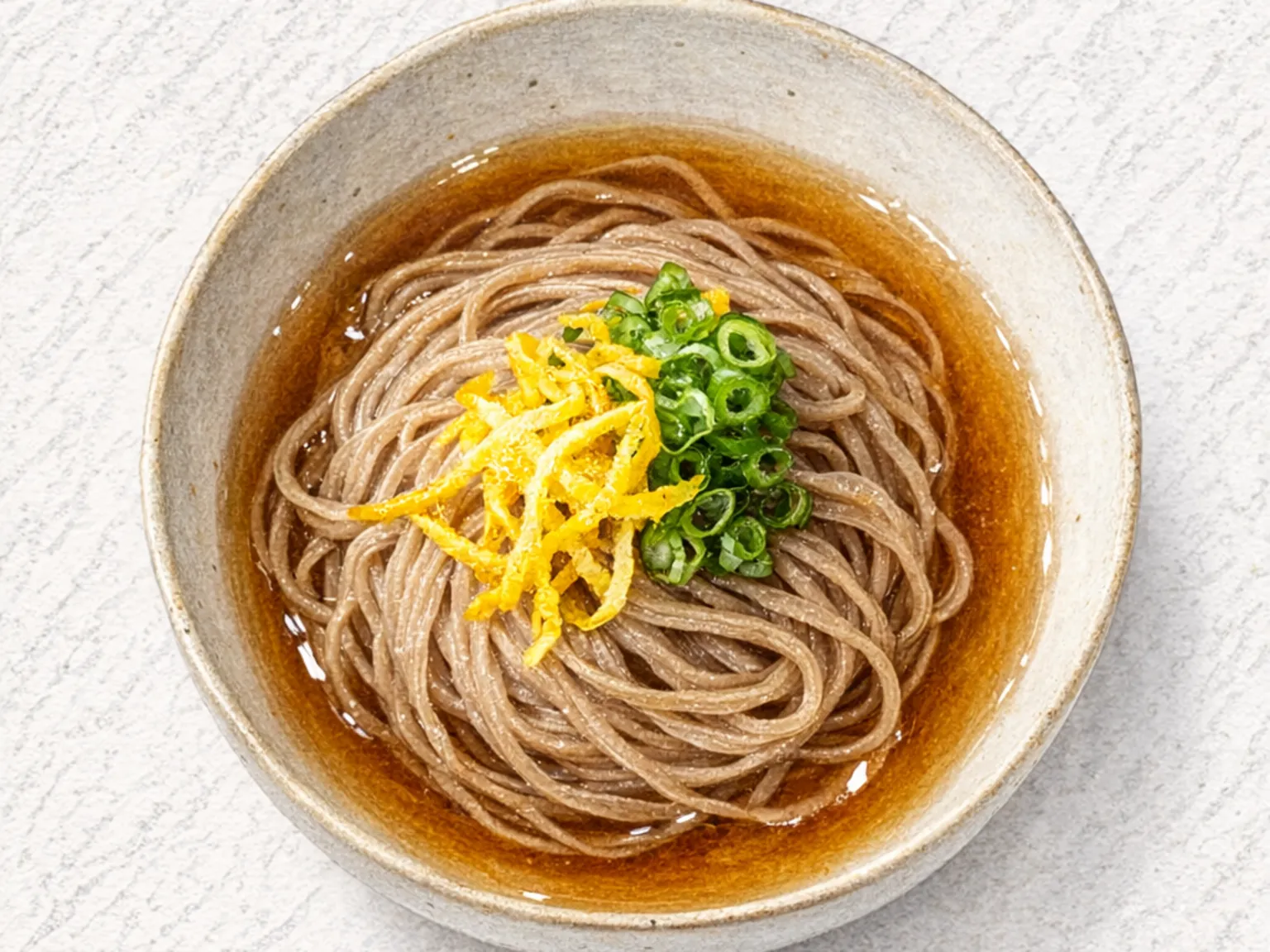
Yuzu memil soba is a cold buckwheat noodle dish served with a citrus-infused dipping sauce made from tsuyu, cold water, and yuzu marmalade.

What makes this special

  • Yuzu memil soba infuses cold buckwheat noodles with a citrus-based tsuyu dipping sauce.
  • Rinsing soba at least three times strips the starch so strands stay separate
  • A brief ice-water bath after boiling firms up the noodle's elasticity noticeably
Total time
20 min
Level
Easy
Servings
2 servings
Ingredients
8
Calories
360 kcal
Protein
11 g

Key ingredients

Soba noodlesTsuyuWaterYuzu marmaladeGrated radish

Core cooking flow

  1. 1 Combine 120 ml tsuyu, 240 ml cold water, and 1 tablespoon yuzu marmalade fir...
  2. 2 Refrigerate the sauce so it becomes thoroughly cold before serving.
  3. 3 Cook 220 g soba noodles in boiling water according to the package time.

Yuzu memil soba is a cold buckwheat noodle dish served with a citrus-infused dipping sauce made from tsuyu, cold water, and yuzu marmalade. The soba must be rinsed at least three times in cold water after boiling to strip off surface starch, which prevents clumping and gives each strand a clean bite. A brief dip in ice water firms the texture further. The yuzu marmalade lifts the salty-savory tsuyu with bright citrus fragrance, while freshly grated daikon radish adds a peppery, cooling sharpness. Shredded seaweed contributes a subtle ocean note, and wasabi provides a nasal heat that cuts through the nuttiness of the buckwheat.

Prep 12min Cook 8min 2 servings
Recipes by ingredient → scallions

Instructions

Read the steps as a cooking flow: prep, heat, seasoning, doneness control, and finish.

6 steps
  1. 1
    Control

    Combine 120 ml tsuyu, 240 ml cold water, and 1 tablespoon yuzu marmalade first, stirring until the marmalade loosens into the liquid. For a less sweet dipping sauce, reduce the yuzu marmalade to 1/2 tablespoon.

  2. 2
    Season

    Refrigerate the sauce so it becomes thoroughly cold before serving.

    While the noodles cook later, slice 20 g scallion finely and prepare 3 tablespoons grated radish so the toppings stay fresh and ready.

  3. 3
    Heat

    Cook 220 g soba noodles in boiling water according to the package time.

    Stir soon after adding them so the strands do not stick, then drain when the centers are no longer hard but the noodles still feel springy.

  4. 4
    Heat

    Move the cooked noodles straight into cold water and rub them gently with your hands.

    Change the water and rinse at least three times, washing until the surface starch is gone and the water feels less cloudy.

  5. 5
    Step

    Briefly dip the rinsed noodles in ice water to firm their texture.

    Do not leave them soaking too long, or the flavor can dull; once the noodles feel cold, drain them immediately in a sieve.

  6. 6
    Finish

    Drain the noodles well, arrange them on a plate, and serve with 1/4 cup shredded seaweed.

    Add grated radish, scallion, and a little wasabi to the chilled yuzu tsuyu as you eat, adjusting each bite.

After the steps

Pick a recipe that fits this dish.

Continue with shared ingredients, meal pairings, or a similar method.

Recipes That Go Well With This

More Noodles →

Based on shared ingredients and meal pairing

Soy Butter Udon (Pan-Tossed Udon in Caramelized Soy Butter)
Shared ingredient: scallions Noodles

Soy Butter Udon (Pan-Tossed Udon in Caramelized Soy Butter)

Ganjang butter udon is a quick pan-fried noodle dish that delivers deep, satisfying flavor in roughly ten minutes. Boiled udon noodles go into a pan with melted butter, and as soon as they hit the hot surface the butter releases a toasted, nutty fragrance. Soy sauce added to the pan caramelizes almost immediately against the heat, forming a savory-sweet glaze that coats every strand of the thick, springy noodles. The fat from the butter helps the glaze adhere evenly and rounds out the soy's saltiness with richness. Katsuobushi piled on top at the finish adds a layer of smoky umami that deepens the overall flavor, and an egg yolk placed in the center and stirred through transforms the dish with a creamy, silky texture. It is an ideal solution for a late-night craving or a satisfying solo meal when time is short.

Cold Buckwheat Noodles
Shared ingredient: wasabi Noodles

Cold Buckwheat Noodles

Mori soba is a Japanese cold noodle preparation where buckwheat noodles are boiled, rinsed under cold running water until firm, and served on a bamboo draining mat alongside a chilled tsuyu dipping broth. The nutty, slightly grainy character of buckwheat is the foundation of the dish, with each mouthful releasing an earthy, grain-forward fragrance. Tsuyu, concentrated from katsuobushi, kombu, soy sauce, and mirin and then chilled, is rich in umami and strong enough that a brief dip coats the noodles completely without drowning them. Wasabi and thin-sliced scallion stirred directly into the broth add sharp heat and a clean green note, while a pinch of shredded nori over the noodles introduces a subtle oceanic undertone. After boiling, the noodles must be cooled thoroughly in ice water to lock in their elasticity and prevent them from turning soft before serving.

Wafu Daikon Salad (Shredded Radish with Japanese Soy Dressing)
Serve together Salads

Wafu Daikon Salad (Shredded Radish with Japanese Soy Dressing)

Wafu daikon salad shreds daikon radish into very fine julienne strips and dresses them with a Japanese wafu dressing made from soy sauce, rice vinegar, and sesame oil, finished with bonito flakes and torn nori. Soaking the shredded daikon in cold water for five minutes draws out excess starch and maximizes its crisp, snappy texture - draining and drying thoroughly afterward prevents the dressing from becoming diluted. The dressing layers soy salt over the gentle acidity of rice vinegar and the nuttiness of sesame oil, giving depth to the otherwise neutral radish. Bonito flakes placed on top wave gently in the residual heat and release a smoky umami that permeates the salad. Shredded nori adds a briny crunch that creates textural contrast throughout the bowl.

Dipping Ramen (Japanese Thick Noodles with Concentrated Dipping Broth)
Similar recipe Noodles

Dipping Ramen (Japanese Thick Noodles with Concentrated Dipping Broth)

Tsukemen is a Japanese dipping ramen where thick noodles and a concentrated broth are served separately. The broth - typically tonkotsu or seafood-soy based - is reduced to roughly double the intensity of standard ramen soup. Noodles are rinsed in cold water after boiling, which firms their texture and creates a temperature contrast when dipped into the hot broth. Toppings such as chashu pork, soft-boiled egg, and nori are arranged alongside the noodles. The recipe takes about 50 minutes, with most time spent building and reducing the dipping broth.

Serve with this

Korean Seasoned Hijiki Seaweed
Side dishes Easy

Korean Seasoned Hijiki Seaweed

Fresh hijiki seaweed is blanched and dressed in a chogochujang sauce - gochujang, vinegar, and sugar combined - that highlights the sea vegetable's briny character. Hijiki's slender, dark strands turn deeper black after blanching, and their texture firms into a distinctive pop that crunches lightly between the teeth. The dressing's tangy heat meets the seaweed's subtle ocean salinity, producing a refreshing umami interplay that makes this banchan especially appealing in warmer months. Sugar tempers the vinegar's sharpness, rounding the overall flavor into something balanced rather than aggressive. Thinly sliced raw onion mixed in adds a crisp contrast to the seaweed's softer chew, and minced garlic contributes a pungent depth beneath the sauce's bright surface. Rinsing the hijiki in cold water immediately after blanching and draining it thoroughly prevents the strands from turning tough. The finished dish is rich in iron and calcium, making it as nutritionally substantial as it is flavorful.

🏠 Everyday 🍱 Lunchbox
Prep 12min Cook 3min 4 servings
Korean Dried Radish Greens Pancake
Pancakes Easy

Korean Dried Radish Greens Pancake

Boiled dried radish greens are combined with doenjang and pan-fried into a dense, rustic jeon with deep fermented character. The fibrous texture of the radish greens gives the pancake a satisfying chew, and the soybean paste saturates the batter so thoroughly that no dipping sauce is necessary. Buckwheat flour adds an earthy coarseness that suits the greens well. Cheongyang chili provides a spicy accent throughout. Minced garlic benefits from a brief saute in oil before being mixed into the batter-the raw edge cooks off and the garlic's savory depth integrates fully into the finished pancake. Cooking over low heat lets the inside set without burning the outside, producing a crisp surface and a tender, flavorful center.

🍺 Bar Snacks ⚡ Quick
Prep 18min Cook 10min 2 servings
Korean Pickled Radish Wraps
Kimchi Easy

Korean Pickled Radish Wraps

Ssam-mu is a Korean sweet-and-sour pickled radish made by slicing Korean radish into very thin two-millimeter rounds and submerging them in a warm brine of water, vinegar, sugar, salt, and bay leaves. The slices must be thin enough to wrap around grilled meat without tearing, and the brine is cooled to lukewarm before pouring - boiling hot liquid would cook the radish and destroy its crunch. Ready after one day of refrigeration, the pickle reaches its peak on day three when the vinegar tang and sugar sweetness have fully penetrated each slice. Adding a lemon slice to the jar introduces a fresh citrus note. Wrapped around a piece of grilled pork belly or fried chicken, the sweet-sour radish provides an immediate contrast that lifts the fatty richness of each bite.

🍱 Lunchbox ⚡ Quick
Prep 15min Cook 5min 4 servings

Similar recipes

Cold Ramen Salad
Noodles Medium

Cold Ramen Salad

Hiyashi chuka is a Japanese chilled noodle dish where ramen noodles cooked and thoroughly cooled in ice water are topped with colorful shredded garnishes and drizzled with a tangy soy-vinegar dressing. The dressing of soy sauce, rice vinegar, sugar, and sesame oil combines salt, sharpness, and sweetness; because it is poured over rather than used as a broth, the individual character of each topping stays distinct. The noodles must be chilled in ice water after boiling to achieve the firm, springy texture that holds up against the dressing without going limp, and tossing them lightly with sesame oil prevents clumping before plating. Thin strips of egg crepe, ham, cucumber, and tomato arranged by color create a visually striking presentation, and each chopstickful delivers several contrasting textures at once. In Japan this dish is a summer fixture, and at home it is a practical way to use leftover ingredients. A variation whisks mayonnaise into the dressing, which softens the acidity and adds a creamy body to the sauce.

🎉 Special Occasion 🌙 Late Night
Prep 20min Cook 10min 2 servings
Soba Sesame Salad (Chilled Buckwheat Noodle Sesame Dressing)
Salads Easy

Soba Sesame Salad (Chilled Buckwheat Noodle Sesame Dressing)

Soba sesame salad is a cold noodle dish in which cooked buckwheat noodles are rinsed repeatedly in cold water to remove surface starch, then tossed with julienned cucumber, carrot, and red cabbage in a dressing of soy sauce, rice vinegar, sesame oil, and sesame seeds. The earthy, nutty character of buckwheat pairs naturally with toasted sesame, and rice vinegar's light acidity keeps the dish from feeling heavy despite the sesame oil. Thorough rinsing in cold water is the technical cornerstone of this recipe: residual starch left on the noodles dilutes the dressing on contact and causes the strands to clump into an uneven mass, disrupting the balance of flavors in every bite. Cucumber and red cabbage introduce a fresh crunch that contrasts the springy noodle texture, and julienned carrot threads a mild sweetness through the bowl that offsets the saltiness and acidity of the dressing. Cutting the vegetables into thin, uniform strips allows them to distribute evenly among the noodles so that each forkful carries a balanced mix. The dressing should be mixed in advance but added to the noodles only just before serving, since soaking too long causes the noodles to absorb the liquid and soften. A light and satisfying single-bowl meal, particularly well suited to warmer months.

🥗 Light & Healthy ⚡ Quick
Prep 12min Cook 8min 2 servings
Hayashi Rice (Japanese Beef and Onion Brown Sauce Rice)
Rice Easy

Hayashi Rice (Japanese Beef and Onion Brown Sauce Rice)

Hayashi rice is a Japanese home-cooking dish in which thinly sliced onions are caramelized in butter for at least eight minutes until deeply golden, then simmered with thin-cut beef, tomato paste, Worcestershire sauce, and flour into a glossy, thick brown sauce served over warm rice. The caramelization of the onions is the single most important step in the recipe. Rushing this stage produces onions that have lost moisture but not developed sweetness, resulting in a flat sauce with no depth. Extended browning converts the onion's natural sugars into a rich, almost candy-like sweetness that forms the foundation of the entire dish and cannot be replicated by any shortcut. Tomato paste adds acidity and deepens the color, Worcestershire sauce contributes a layered spice complexity, and flour gives the sauce enough body to sit on top of the rice without running. The sauce is spooned generously over one side of the rice in the same manner as curry rice, and the complete absence of spicy heat makes it a mild, accessible dish that appeals to both children and adults.

🏠 Everyday 🧒 Kid-Friendly
Prep 15min Cook 25min 2 servings

Tips

Rinse soba at least three times to remove starch.
Reduce yuzu marmalade to 1/2 tbsp for a less sweet profile.

Nutrition (per serving)

Calories
360
kcal
Protein
11
g
Carbs
66
g
Fat
5
g