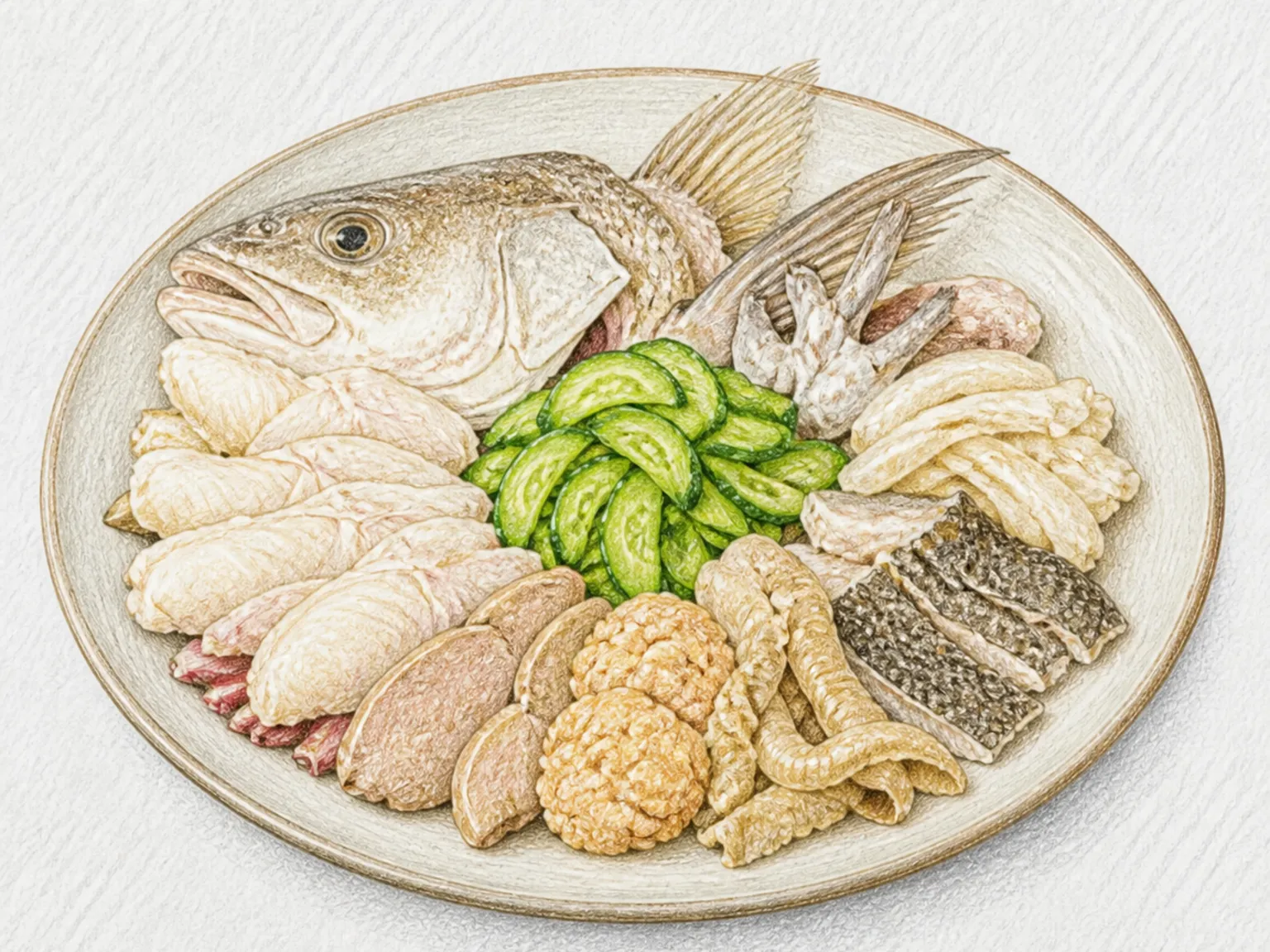
Atama Ryori (Blanched Large Fish Head and Offal Platter)
Quick answer
- Total time
- 210 min
- Level
- Hard
- Servings
- 12 servings
- Ingredients
- 6
About this dish
Cheek meat, fin meat, skin, stomach, liver and roe from one large white-fleshed fish are each blanched or boiled separately, then arranged together on a big platter with seasonal vegetables such as cucumber.
Read more
This feast dish comes from Taketa in Oita Prefecture, where large sea fish were scarce and nothing from one was wasted. Kabosu, a tart Oita citrus, is squeezed into vinegar-soy sauce for dipping, and each part brings its own texture in turn. Each part needs its own cooking time, which is why nothing shares a pot.
Ingredients
Instructions
- 1
Order a verified edible large white fish from a fishmonger and ask for cheek and fin meat, skin, stomach, liver, roe or milt, plus cleaned gills and jaws when suitable. Remove clotted blood and small scales. Never use an unidentified species or any organ that the fishmonger has not approved as edible.
- 2
Keep every part refrigerated and separated.
Slice cheek and fin meat 5mm thick, turn stomach and intestine inside out, and rinse under running water. Rub gills and edible organs generously with coarse salt, rest 30 minutes, and rinse several times in cold water.
- 3
Bring enough water to a boil in a large pot and salt it to about 1 percent.
Blanch meat and thin skin separately for 30 seconds to 1 minute, verify a center temperature of at least 63C, and transfer immediately to ice water. Drain as soon as cool.
- 4
Boil stomach, intestine, and liver separately in fresh salted water for 8 to 20 minutes according to size, until the thickest point reaches at least 74C. Chill each in clean ice water and drain. Keep cooked organs away from bowls and utensils that held raw fish.
- 5
Wrap roe and milt separately in muslin or bamboo sheath so they hold their shape.
Simmer in fresh salted water for about 60 minutes until the center reaches at least 74C, then chill in fresh ice water. Boil thick jaw and head-bone sections separately until their edible meat releases easily.
- 6
Using a clean knife and board, cut every fully cooked part into 1 to 2cm pieces.
Cut the seasonal vegetables for serving. Juice two kabosu and mix with 300ml nihaizu or sanbaizu; cut the remaining kabosu into wedges.
- 7
Arrange the chilled fish parts by type on a large platter and add the vegetables and kabosu wedges.
Divide the kabosu vinegar sauce into individual dishes and serve at once. Do not leave out longer than 2 hours; refrigerate leftovers within that time and reheat thoroughly by the next day.
References checked
These references were consulted when this page was prepared or corrected. A source check does not mean the recipe was independently kitchen-tested.
- 일본 농림수산성 うちの郷土料理
「次代に残したい大分の郷土料理」 · Checked: 2026-08-11
Use-up ingredient planner
Turn these ingredients into two more meals
The overlap excludes basic seasonings. Open the next recipe and your selected dishes will stay with you.
Salt-Brined Korean Cucumber Pickles
coarse salt
Korean Salt-Grilled Eel
coarse salt
Ago Chikuwa Grilled Flying Fish Cake
ice water