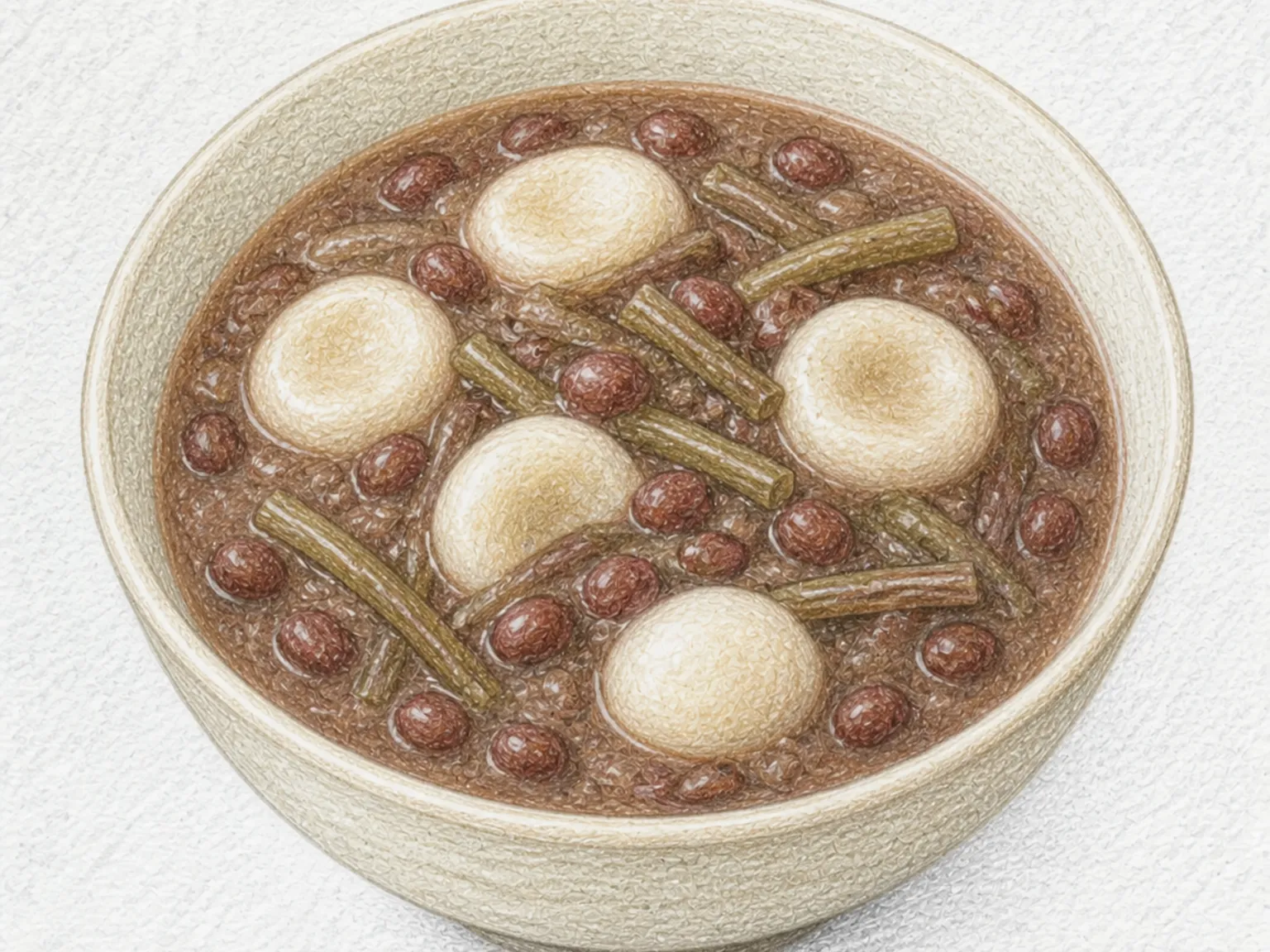
Chobo-jiru (Cowpea, Taro Stem, and Rice Dumpling Soup)
Quick answer
- Active time
- 110 min
- Waiting
- See the steps
- Level
- Medium
- Servings
- 4 servings
- Ingredients
- 8
About this dish
With its thick, reddish broth, chobo-jiru looks at first like sweet red bean soup, yet one spoonful says otherwise: miso and bonito flakes make it fully savory.
Read more
On Awaji Island in Hyogo, families have cooked big pots of it since the Edo period to celebrate a birth or a child's first shrine visit, sharing bowls with relatives and neighbors. The small sticky-rice dumplings were sometimes shaped round, pointed or dimpled as wishes for the child.
Ingredients
Instructions
- 1
Rinse 160g dried cowpeas and soak them for 3 hours in 600ml of the 1200ml water.
Bring the beans and soaking water to one boil, drain completely, and rinse both beans and pot once to remove the first harsh liquid and foam.
- 2
Add the remaining 600ml fresh water to the cowpeas and return to a boil.
Reduce to low and simmer for 35 to 50 minutes, until a bean crushes easily between the fingers. Drain away the cooking liquid and cover the beans so they do not dry out.
- 3
Rinse 20g dried taro stems several times and soak in warm water for 30 minutes.
Boil in fresh water for 10 minutes, drain, and rinse until a tasted piece has no acrid throat irritation. Cool, squeeze firmly, and cut into 1cm lengths.
- 4
Add the 50ml dough water gradually to 50g glutinous rice flour rather than all at once.
When the dough is soft like an earlobe, roll it into a 1.5cm-thick rope, cut at 1.5cm intervals, and shape small ovals.
- 5
Bring 700ml dashi to a boil and add the cooked cowpeas and taro stems.
Simmer over medium-low heat for 8 minutes, stirring the bottom occasionally, until some beans soften into the stock and the taro stems are tender.
- 6
Keep the soup boiling and add the rice dumplings one at a time so they do not stick.
After all have floated, cook for 2 minutes more. Split the largest one and confirm that no dry flour remains and the center is cooked and translucent.
- 7
Reduce the heat to low, loosen 80g miso with a ladleful of soup, and stir it into the pot.
Heat gently for 2 minutes without a hard boil, divide among bowls, and top evenly with 8g hana-katsuo before serving hot.
References checked
These references were consulted when this page was prepared or corrected. A source check does not mean the recipe was independently kitchen-tested.
- 일본 농림수산성 うちの郷土料理
淡路市健康増進課 · Checked: 2026-08-11
Use-up ingredient planner
Turn these ingredients into two more meals
The overlap excludes basic seasonings. Open the next recipe and your selected dishes will stay with you.
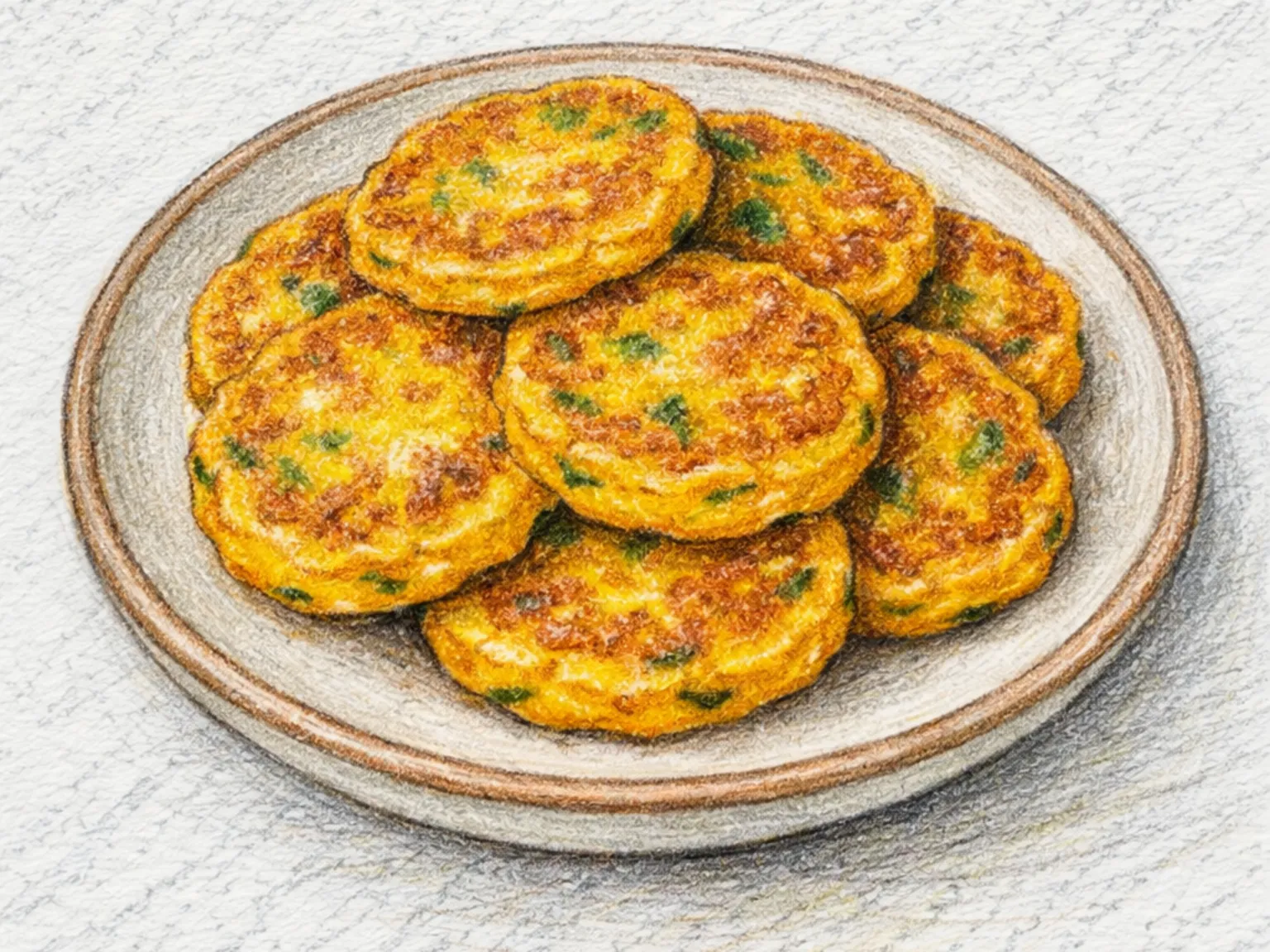
Korean Sweet Pumpkin Pancake
glutinous rice flour
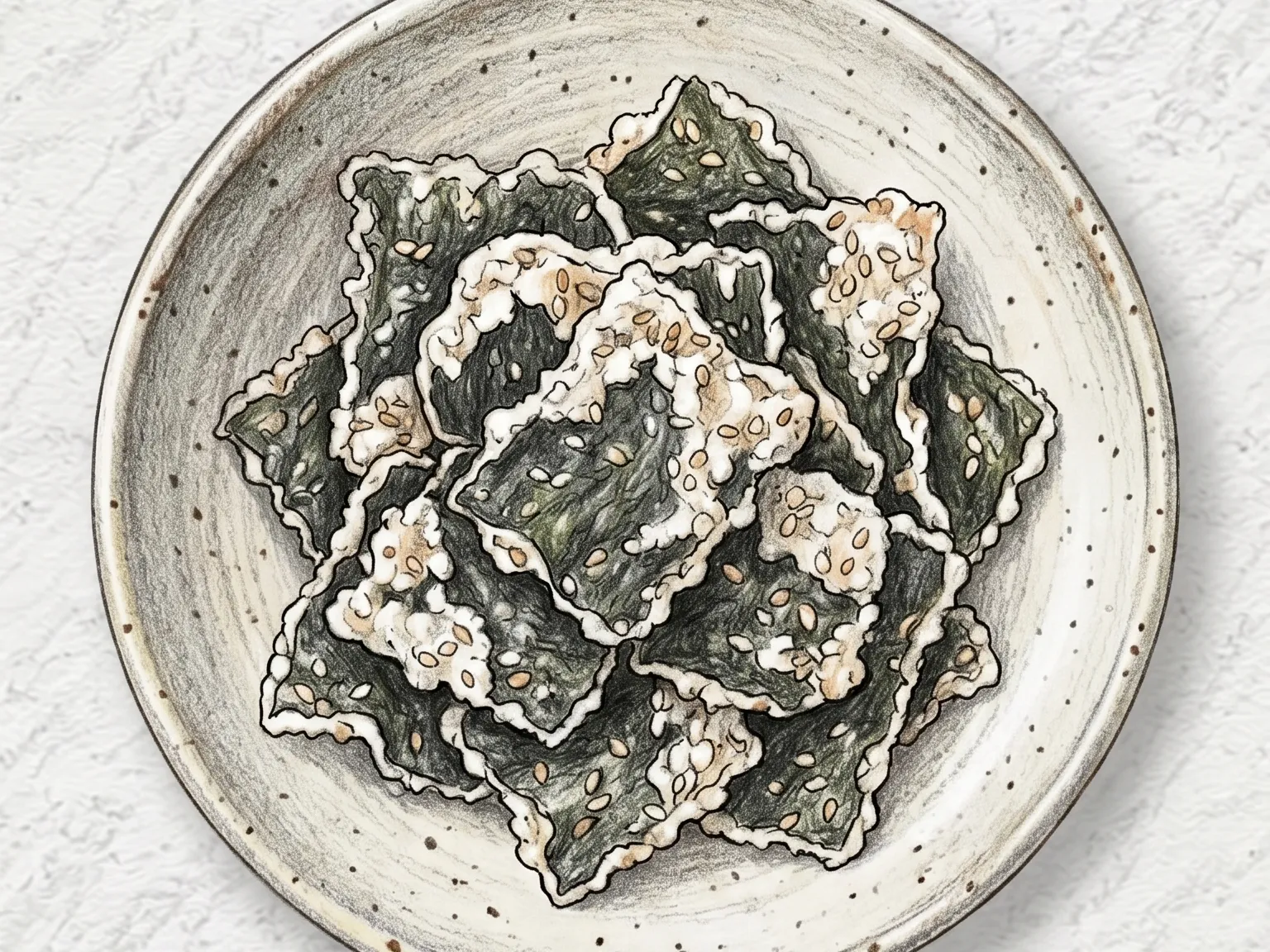
Crispy Seaweed Chips
glutinous rice flour
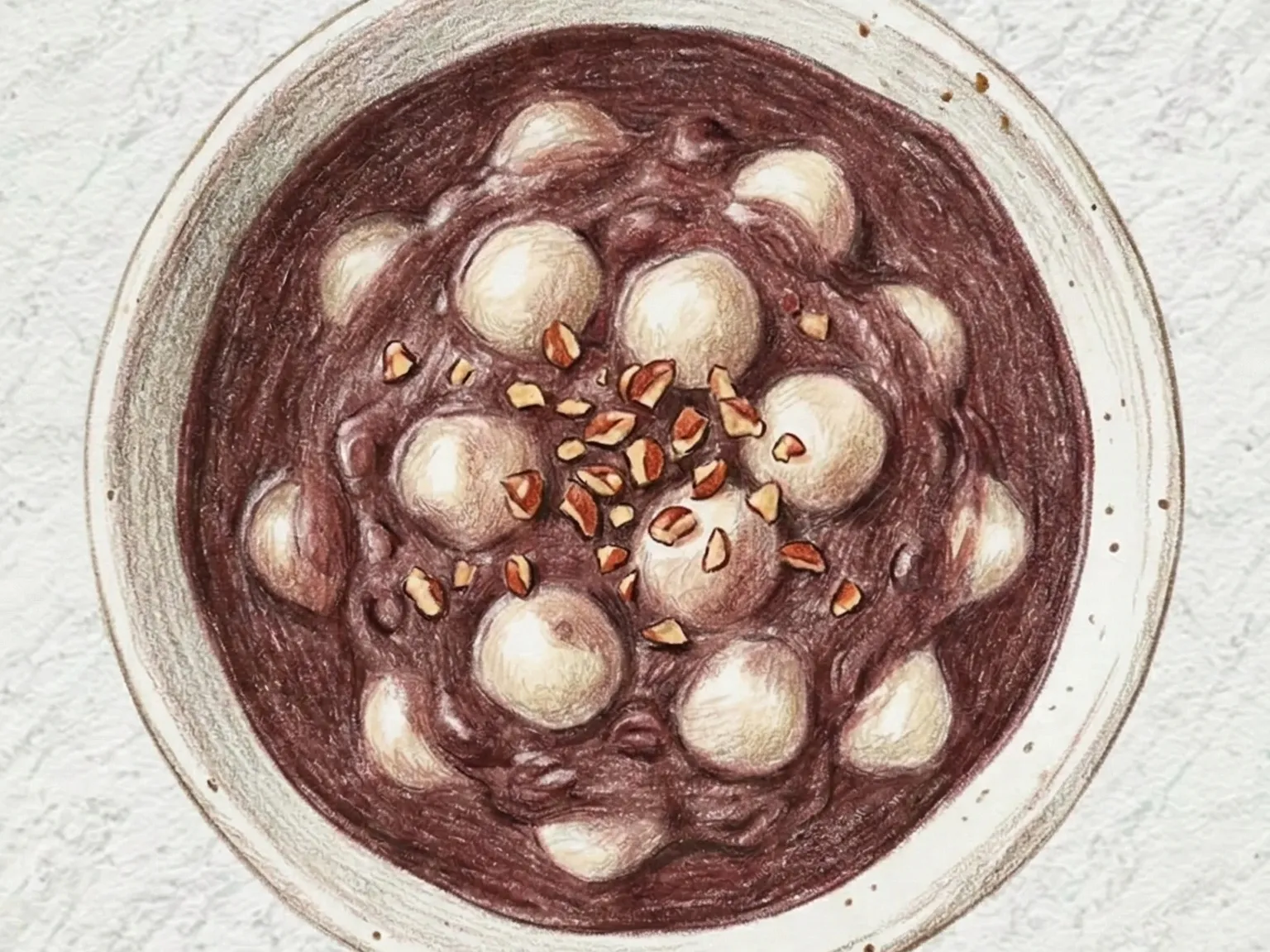
Sweet Red Bean Porridge (Korean Adzuki Rice Dessert Soup)
glutinous rice flour