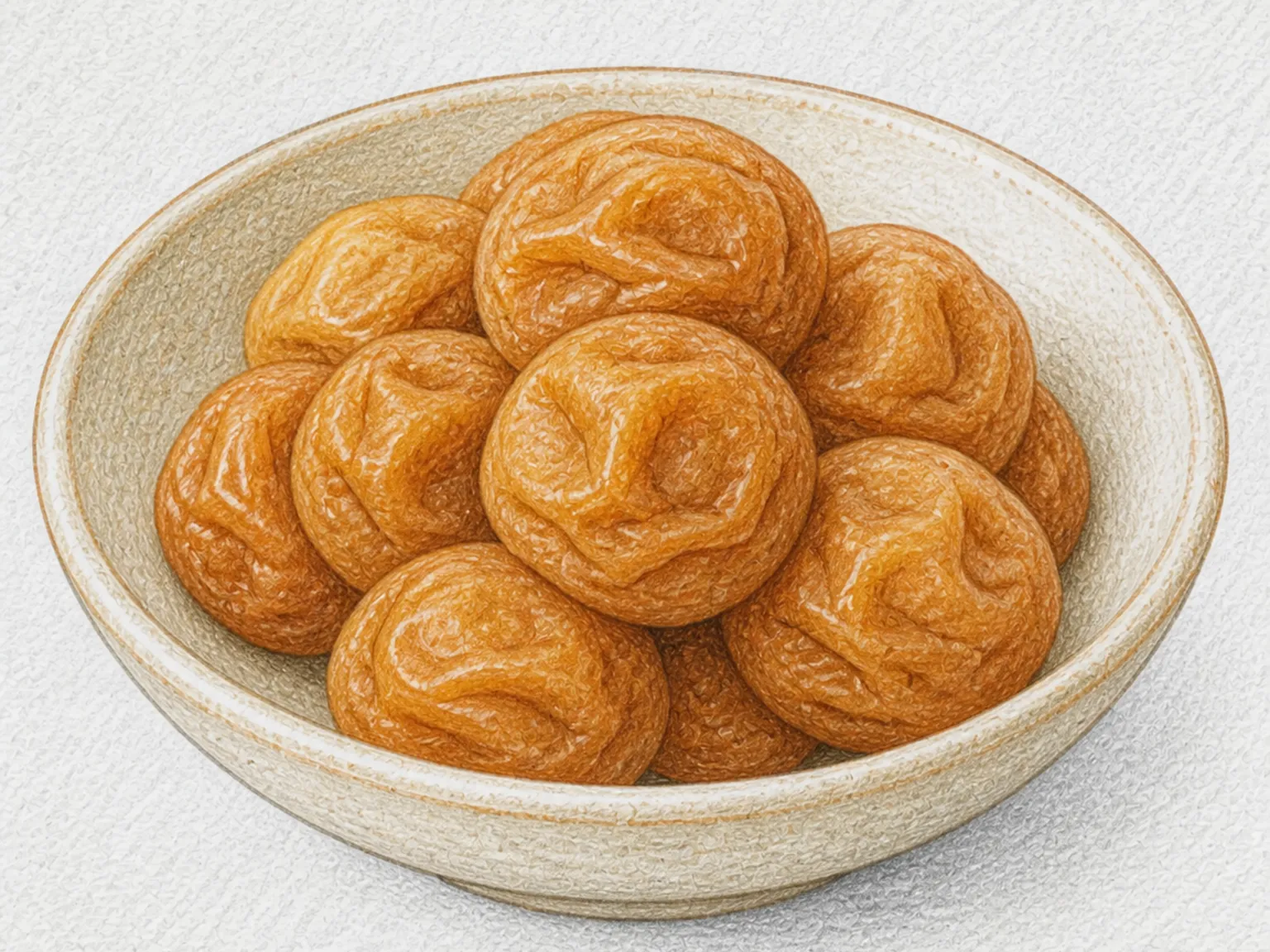
Umeboshi (Salt-Cured Sun-Dried Ume)
Quick answer
- Active time
- 90 min
- Waiting
- See the steps
- Level
- Hard
- Servings
- 20 servings
- Ingredients
- 3
About this dish
Fully ripe yellow ume are packed with coarse salt at 20 percent of their weight, aged for about a month in the plum vinegar that rises, then dried in direct sun, which leaves them intensely sour and salty with chewy flesh.
Read more
Throughout aging every plum has to stay wet with brine. Drying happens only on rain-free days, and the fruit comes back into the refrigerator each night.
Ingredients
Instructions
- 1
Discard any of the 1000g ume that are bruised, split, or moldy.
Rinse the remaining ripe fruit gently in cold water, remove each stem with a bamboo pick, and dry in one layer on a clean cloth until no moisture remains in the cavities.
- 2
Wipe the interiors of two heavy food-storage bags, the catch tray, and tongs evenly with 30ml shochu and air-dry completely.
Wash hands and put on disposable gloves.
- 3
Layer the ume and all 200g coarse salt alternately in the first sanitized bag, then roll gently so salt coats every surface.
Expel as much air as possible, seal, place inside the second bag, seal again, and lay flat on the catch tray.
- 4
Set a sanitized flat board and a 1kg weight, equal to the plum weight, evenly over the bag.
Keep it in a dark, cool place at 15°C to 22°C. Turn twice daily. When ume vinegar rises to the fruit level within 2 to 3 days, remove the weight and expel air again.
- 5
Reseal the bag and turn it gently once daily so every plum stays wetted with ume vinegar.
Age for about 1 month. Each time, inspect for leaks, fuzzy mold, slimy pink or orange discoloration, or rotten odor. If any appears, do not open or taste; discard the entire sealed batch.
- 6
When 3 to 4 rain-free clear days are forecast, spread the plums without touching on sanitized drying racks.
Sun-dry for 6 hours daily, turning once midway, and transfer to a clean container at 4°C or below overnight. Repeat for 3 to 4 days.
- 7
When surfaces are dry and flesh is soft and chewy, pack plums into a sanitized, fully dry glass jar.
Store at 4°C or below, remove one at a time with clean dry tongs, and do not crack or chew the pits.
References checked
These references were consulted when this page was prepared or corrected. A source check does not mean the recipe was independently kitchen-tested.
- 일본 농림수산성 うちの郷土料理
和歌山県農業協同組合連合会 · Checked: 2026-08-11
Use-up ingredient planner
Turn these ingredients into two more meals
The overlap excludes basic seasonings. Open the next recipe and your selected dishes will stay with you.
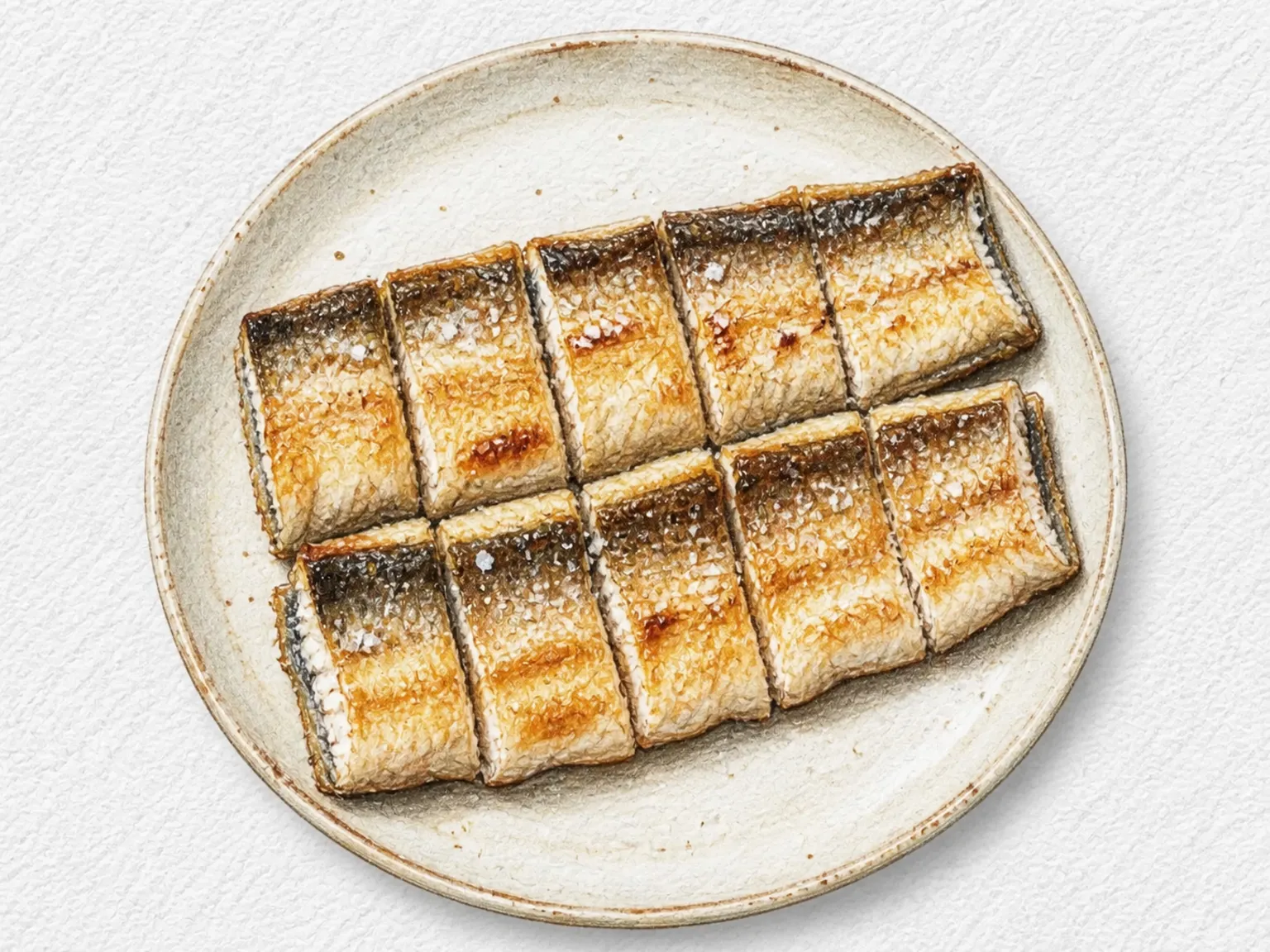
Korean Salt-Grilled Eel
coarse salt
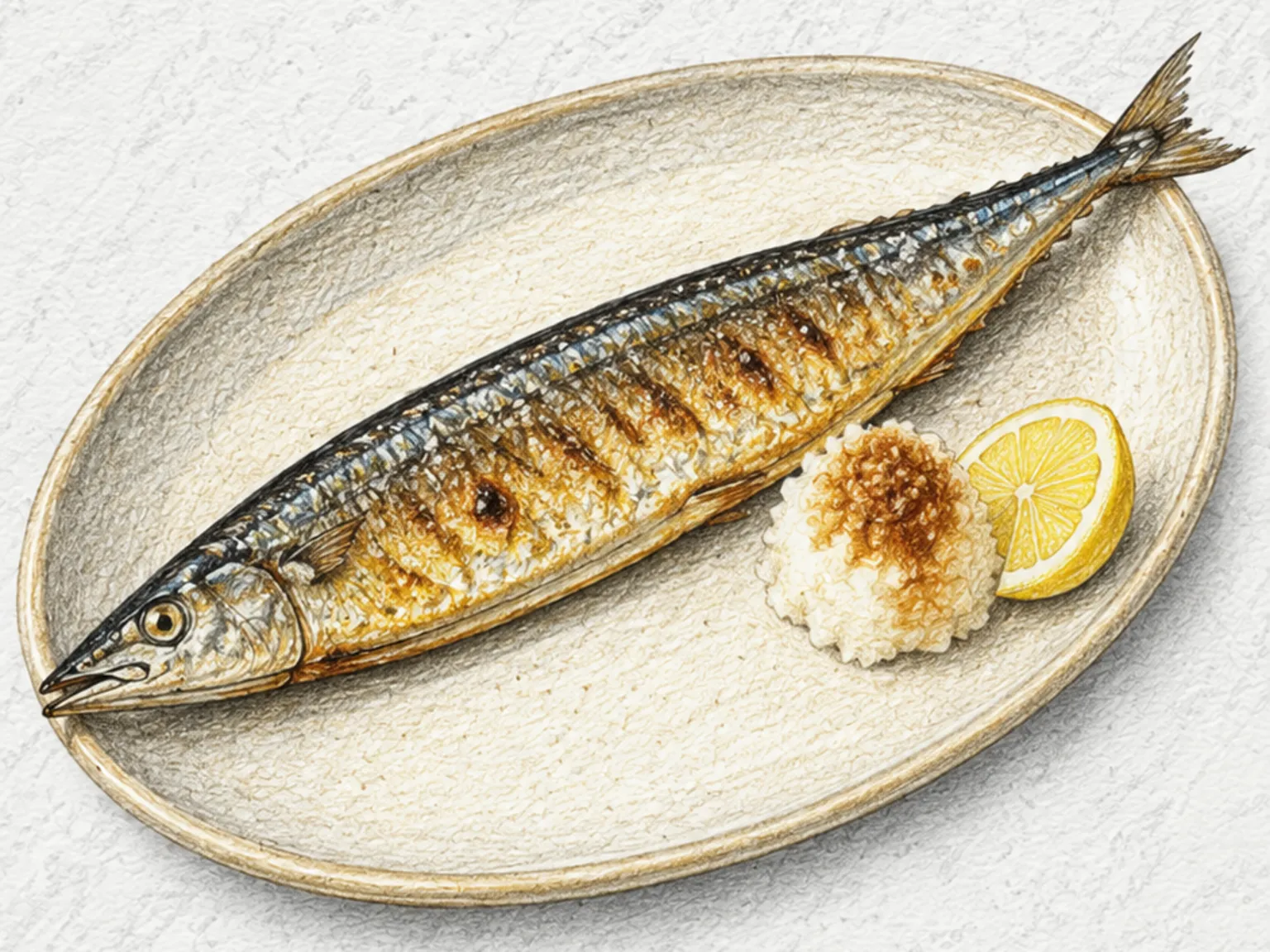
Korean Grilled Pacific Saury
coarse salt
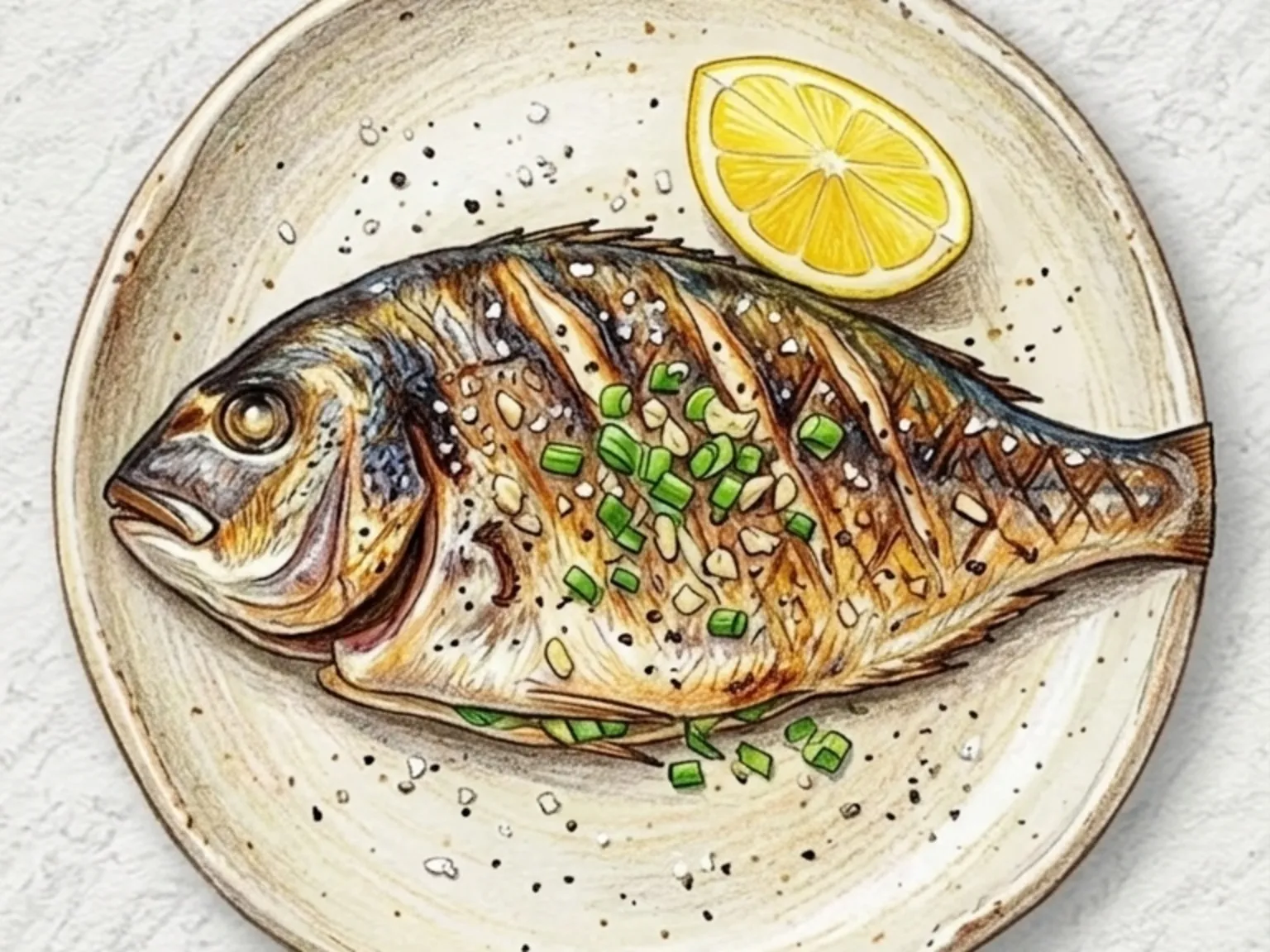
Korean Domi Sogeum Gui (Salt-Grilled Sea Bream)
coarse salt