Chicken Parmesan
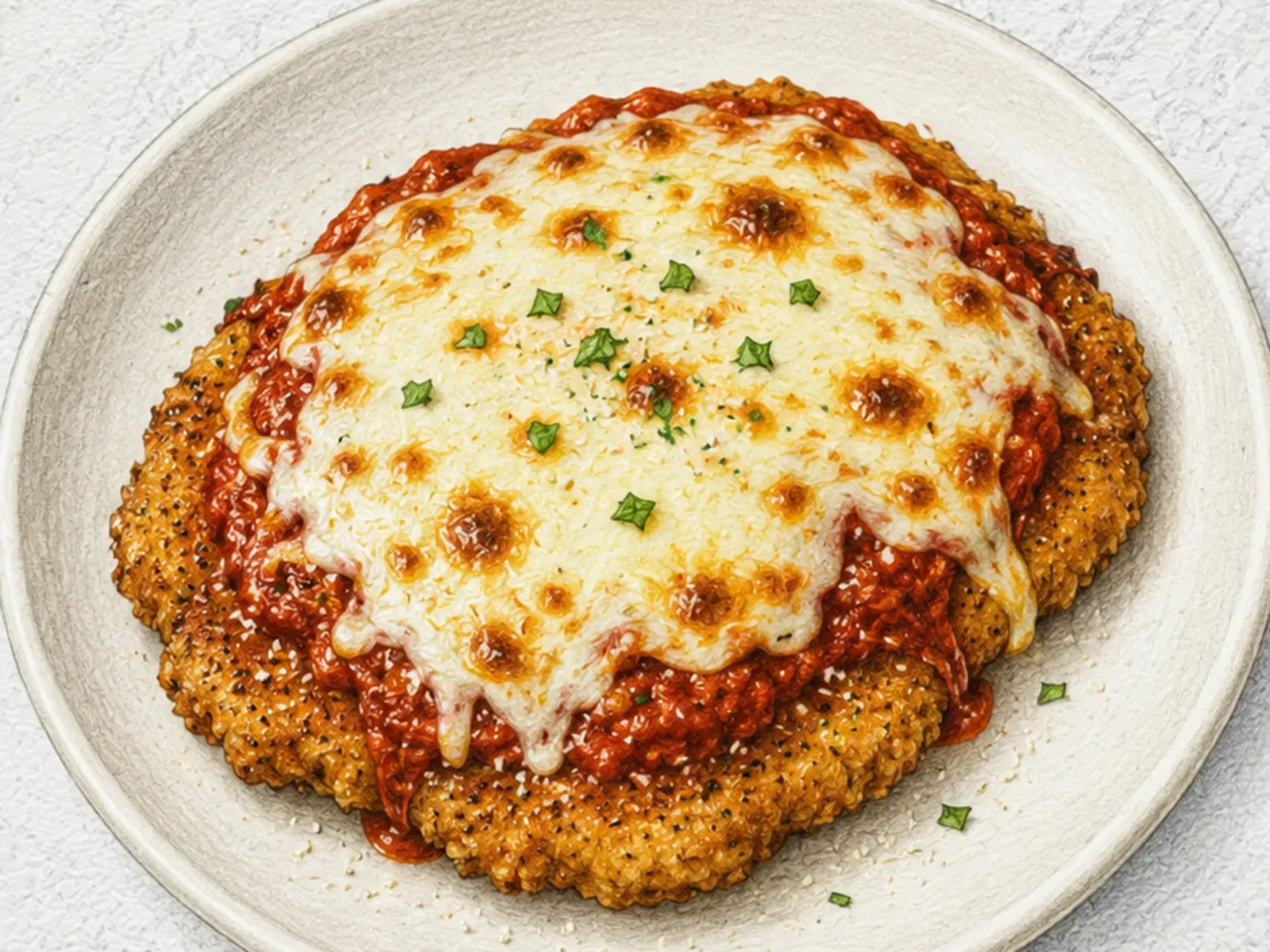
Chicken Parmesan coats pounded chicken breast in a mixture of breadcrumbs and grated Parmesan, pan-fries it until golden on both sides, then tops it with tomato sauce and mozzarella before baking until the cheese melts and browns at the edges. The preparation begins by pounding the breast to a uniform thickness of no more than 1.5 centimeters - consistent thickness is what allows both sides to reach the same golden color in the pan without one side burning while the other stays underdone. After breading, the cutlet should rest for about five minutes before going into the hot pan. This brief rest allows the coating to bind to the surface of the meat, so it remains intact when sauce and cheese are layered on top and the dish goes into the oven. The cross-section of a finished piece shows the layered structure clearly: a crisp breadcrumb shell, the lean white meat beneath, the bright acidity of tomato sauce, and the pull of melted mozzarella. Ten to twelve minutes at 200 degrees Celsius is enough for the mozzarella to melt completely and develop light caramelization at its edges while leaving the chicken inside moist rather than dried out.
Chicken Pot Pie
Chicken pot pie fills a butter pie crust with a mixture of cooked chicken, carrots, potatoes, and peas bound in a thick, creamy roux-based sauce, then bakes until the top crust turns golden and the filling visibly bubbles at the edges. The roux begins with butter and flour cooked together over medium heat until the raw flour smell disappears, at which point chicken broth and heavy cream are whisked in gradually to form a smooth, rich sauce that coats every piece of filling without clumping. Pre-boiling the carrots and potatoes is important because the oven time alone is not sufficient to cook dense root vegetables through, while peas are stirred in at the final moment to keep their bright green color and slight resistance when bitten. Brushing the top crust with beaten egg before it goes into the oven produces the characteristic glossy, deeply golden surface that distinguishes a well-made pot pie. After 35 minutes at 200 degrees Celsius, the filling should be audibly bubbling and the crust should be firm enough to hold its shape when the pie is cut. Breaking through the flaky top layer with a spoon releases the thick cream sauce and a cloud of steam carrying the aroma of braised chicken and cooked vegetables.
Chicken Saltimbocca (Prosciutto and Sage Italian Chicken Sauté)
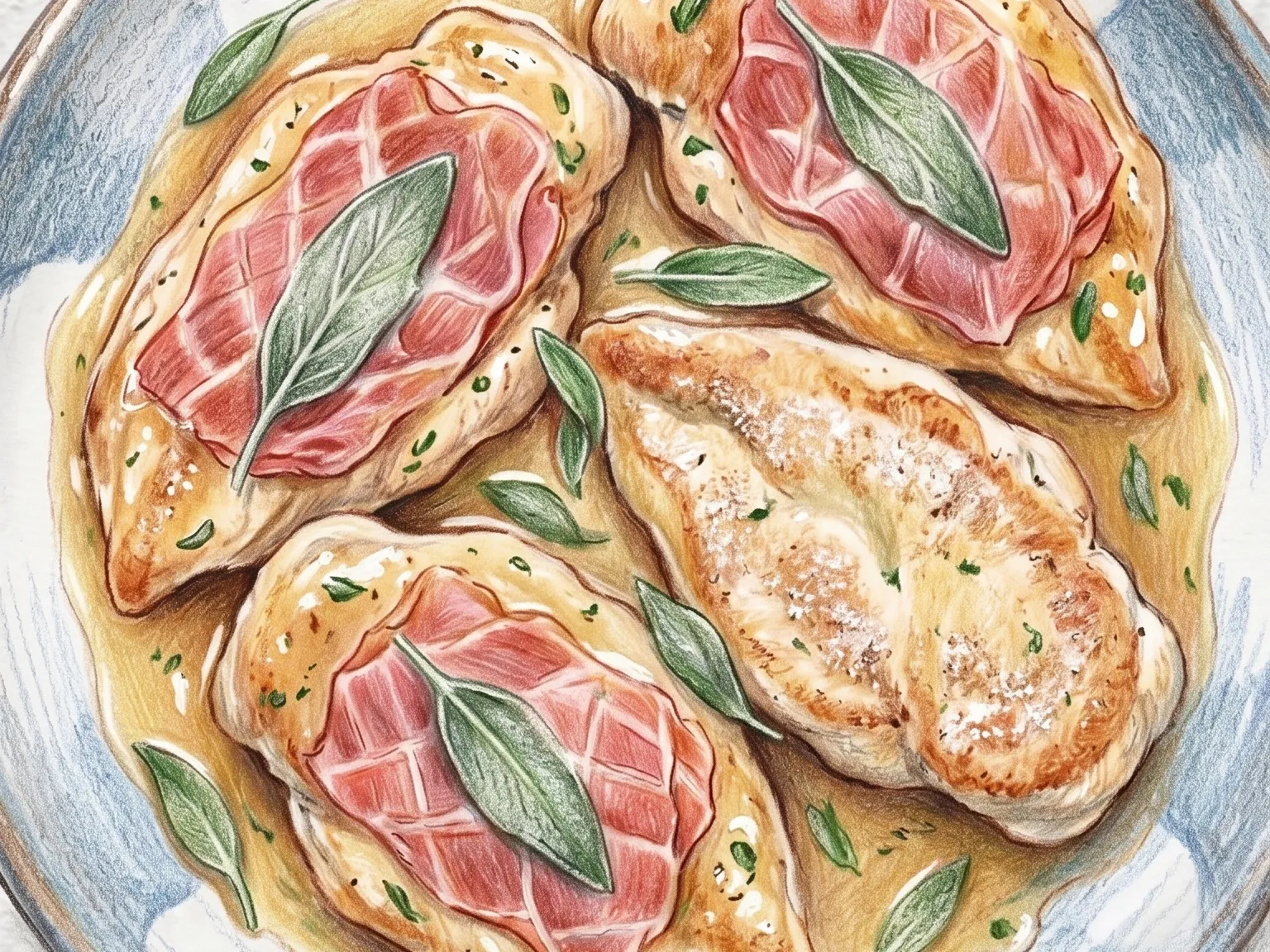
Chicken saltimbocca is an Italian preparation that layers fresh sage leaves and cured prosciutto over pounded chicken breast, sears the whole assembly in one pan, and finishes the plate with a sauce reduced from white wine, chicken stock, and cold butter. The name translates from Italian as 'jumps in the mouth,' which captures how the salty intensity of prosciutto and the resinous punch of sage announce themselves against the neutral backdrop of the chicken breast. Dusting only the bare underside with flour before placing it prosciutto-side up in the pan creates a light crust on the floured surface while the prosciutto crisps directly against the heat and the sage leaf fries in the rendered fat between the meats. Deglazing with white wine lifts all the caramelized fond from the pan base, and simmering it down with chicken stock by roughly half concentrates the liquid into a sauce with real body. Whisking cold butter in small pieces into the reduced sauce off the heat emulsifies it into a glossy, smooth coating that pools around the chicken on the plate. Pounding the breast to a uniform thickness before cooking ensures it cooks evenly without drying out the thinner edges.
Club Sandwich
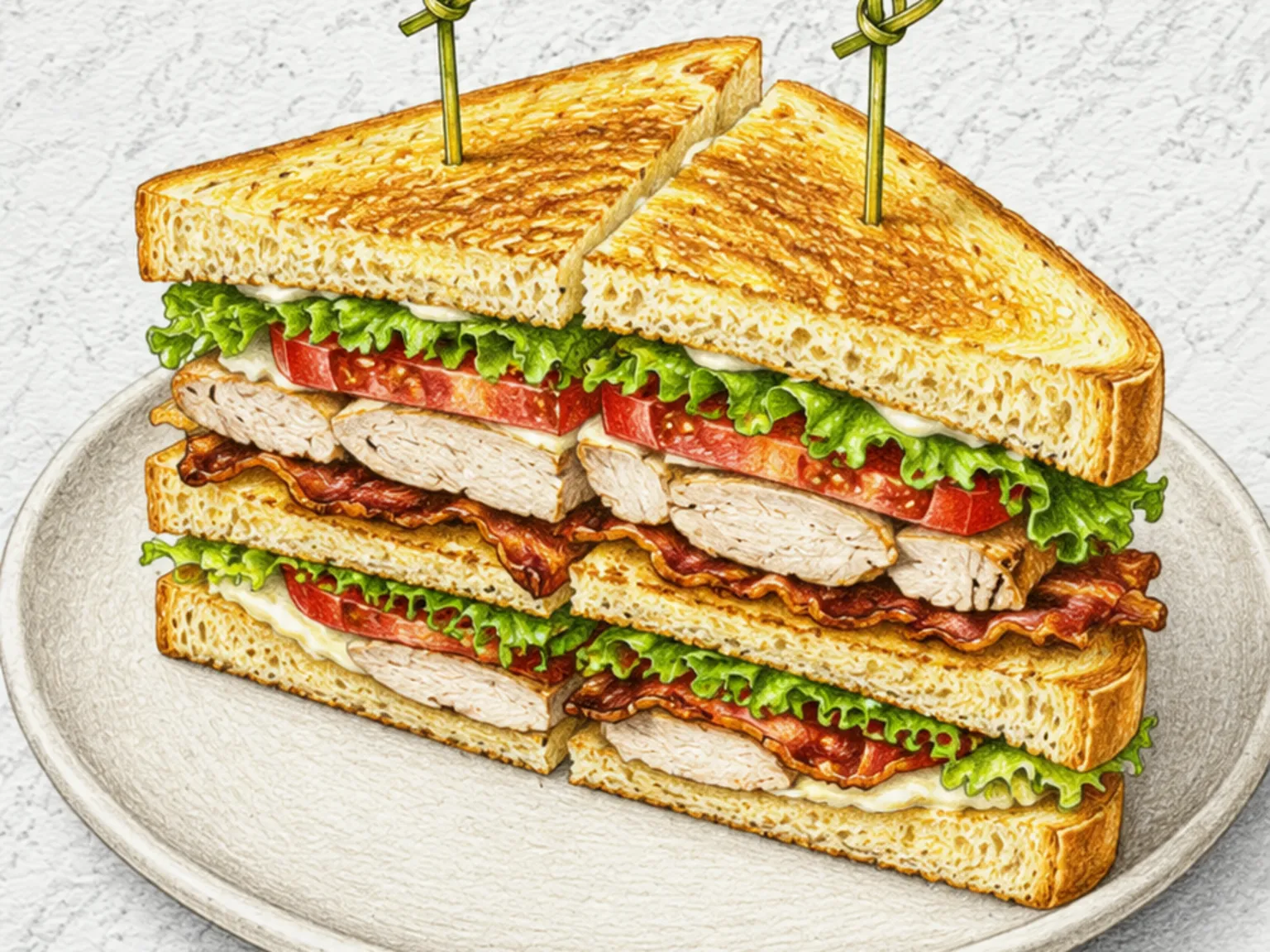
A club sandwich is built across three slices of buttered, golden-toasted bread with sliced chicken breast, crisp bacon, fresh lettuce, and tomato arranged in two distinct layers. The salty crunch of bacon meets the lean, mild protein of chicken breast, and juicy tomato slices and crisp lettuce introduce freshness and textural contrast throughout. Mayonnaise spread on each bread layer functions as a binder that smooths each bite and brings the savory components into balance. Drying the lettuce completely before assembly is essential - any residual moisture will soften the toast within minutes. Securing all layers with cocktail picks and cutting diagonally produces clean cross-sections and keeps the layers from sliding during eating. The order of fillings and the degree of toasting both affect the final texture noticeably.
Creamy Tuscan Chicken
Creamy Tuscan chicken begins by searing seasoned chicken breasts in olive oil until a deep golden crust forms on both sides, locking in juices. Minced garlic is sauteed briefly in the same pan drippings, then chicken stock deglazes the fond for extra savory depth. Heavy cream and grated Parmesan simmer on low heat for three minutes, thickening into a velvety sauce. Sun-dried tomatoes bring concentrated sweetness while fresh spinach wilts into the sauce, adding color and a mild vegetal note. Returning the chicken for a final four-minute simmer ensures the breast cooks through to a safe internal temperature while absorbing the sauce's rich flavor. Adding more Parmesan thickens the sauce further, and a few drops of lemon juice stirred in at the end lifts the cream's weight and brings it into balance with the acidity of the sun-dried tomatoes.