Recipes with eggplant

52 recipes. Page 3 of 3

Buy eggplant
Edo-Style Tendon (Japanese Tempura Rice Bowl with Sweet Soy Tare)
Asian Medium

Edo-Style Tendon (Japanese Tempura Rice Bowl with Sweet Soy Tare)

Edo-style tendon is a Japanese rice bowl that crowns steamed rice with freshly fried tempura-typically shrimp, sweet potato, and eggplant-glazed in a warm, sweet-salty tare sauce. The shrimp are scored along the belly to prevent curling, then dipped in a lightly mixed batter and fried at 170 degrees Celsius until the coating turns golden and crisp. The tare is a simple reduction of tsuyu, soy sauce, and sugar, simmered for just two minutes to concentrate its flavor into a glossy, mahogany liquid. The sauce is drizzled over the tempura the moment it lands on the rice, so the batter absorbs just enough to glisten without losing its crunch entirely. This tension between the crisp tempura coating and the sticky-sweet tare is the defining characteristic of the Edo style, which favors bold, direct flavors over subtlety. The rice beneath soaks up any sauce that runs off, becoming deeply seasoned and intensely satisfying in its own right.

🎉 Special Occasion 🍱 Lunchbox
Prep 18min Cook 16min 2 servings
Go-ae (Eggplant with Crushed Edamame Dressing)
Side dishes Easy

Go-ae (Eggplant with Crushed Edamame Dressing)

Go-ae is a local dish from Nichinan in Tottori. Boiled edamame is crushed into a thick soybean dressing called go, seasoned with sugar, miso, and dashi, then folded around briefly cooked, firmly squeezed eggplant and fine strips of myoga. When young soybeans are in season, the dressing has a vivid green color that contrasts with the soft eggplant and crisp aromatic myoga. In mountainous Nichinan, where arable land was limited, soybeans were an important source of protein, and households used ground boiled beans to coat vegetables or mushrooms. The eggplant may be boiled, grilled, or microwaved, but it must always be pressed dry so the bean dressing remains dense rather than watery. Served cool, the mild soybean richness makes a gentle summer side dish for rice.

⚡ Quick 🏠 Everyday
Prep 20min Cook 10min 4 servings
Tsukemono Miso-ni (Pickled Cabbage Simmered in Red Miso)
Steamed Easy

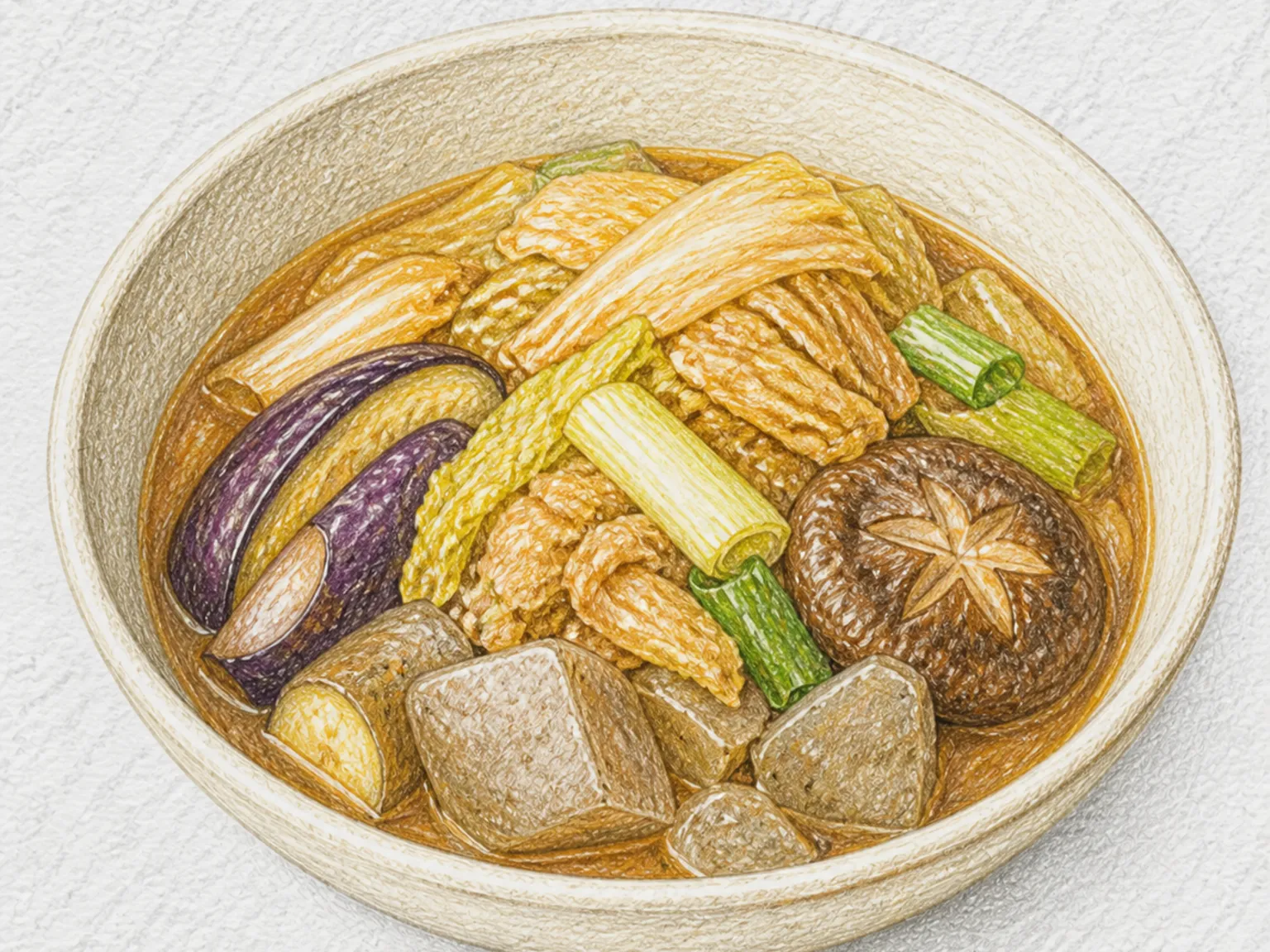
Tsukemono Miso-ni (Pickled Cabbage Simmered in Red Miso)

Tsukemono miso-ni is a Gujo, Gifu dish that rescues mature pickled Chinese cabbage after it has become sharply sour and salty. The cabbage is soaked to remove excess salt, then simmered for 20 to 30 minutes over low heat with red miso, water, sake, mirin, sugar, white onion, eggplant, shiitake, and konnyaku. Historical household versions sometimes did use niboshi stock when recooking winter pickles. Salting the cabbage once and then cooking it again in miso reflects a mountain practice of using preserved food without waste. Water, mirin, sake, and sugar soften the forceful saltiness and edge of the red miso.

🏠 Everyday
Prep 15min Cook 30min 3 servings
Thai Green Curry with Shrimp
Asian Medium

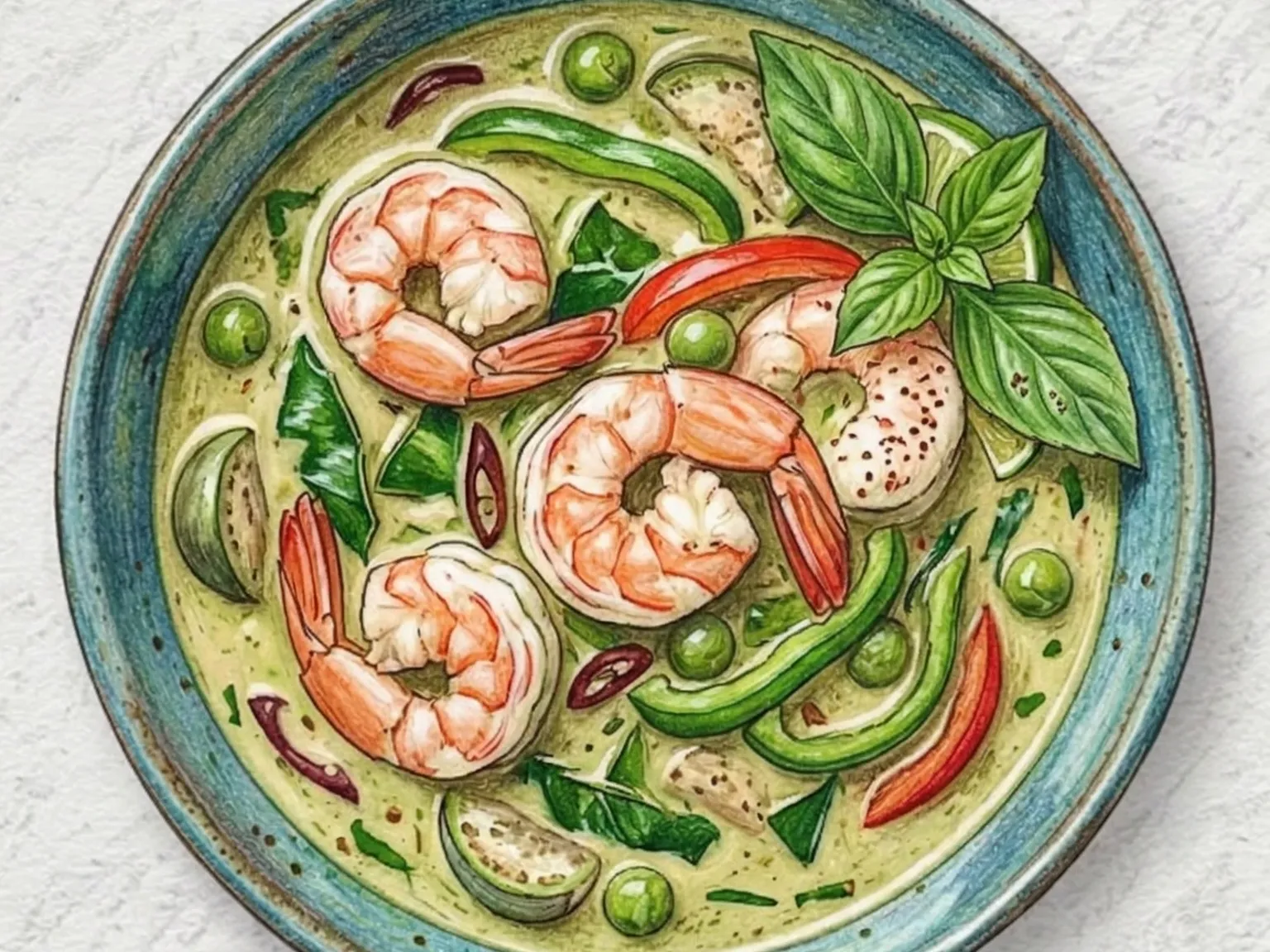
Thai Green Curry with Shrimp

Thai green curry with shrimp is a dish built on a coconut milk base that combines the spicy and aromatic characteristics of green curry paste with the natural sweetness of fresh shrimp. The cooking process begins by splitting the coconut milk, which involves heating the thicker coconut cream in a pan until the oil begins to separate from the solids. The green curry paste is then fried directly in this extracted fat to allow the flavors of lemongrass, galangal, green chili, and kaffir lime to bloom and release their essential oils into the mixture. Once the aromatics are developed, the remaining coconut milk is poured into the pan along with pieces of eggplant. The eggplant is simmered in the liquid until it reaches a soft consistency. After the eggplant is cooked, bell peppers and shrimp are added to the curry for a brief period of approximately three to four minutes. This short cooking window ensures that the shrimp stay plump and maintain a curled shape without becoming tough. The seasoning is adjusted using fish sauce to provide salinity and palm sugar to round out the sharp edges of the spices. After removing the pan from the heat, a handful of fresh Thai basil is stirred into the curry, which introduces a scent reminiscent of anise. A squeeze of fresh lime juice is added just before the dish is served to provide a bright acidity that balances the richness of the coconut milk. The finished curry is traditionally served by spooning it over jasmine rice.

🎉 Special Occasion
Prep 20min Cook 20min 4 servings