Recipes with eggplant

52 recipes. Page 2 of 3

Buy eggplant
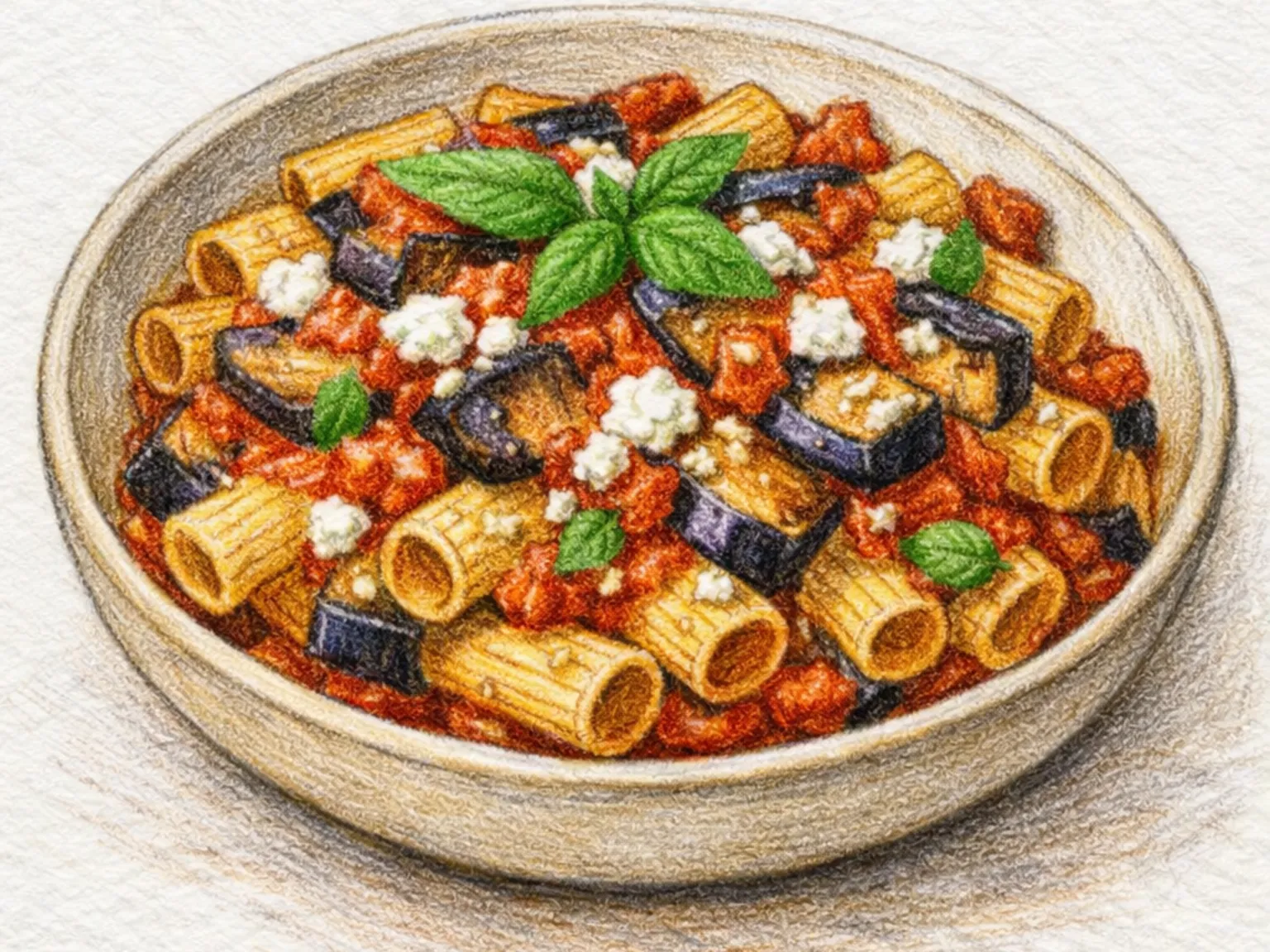
Sesame Soy Eggplant Tomato Penne
Pasta Medium

Sesame Soy Eggplant Tomato Penne

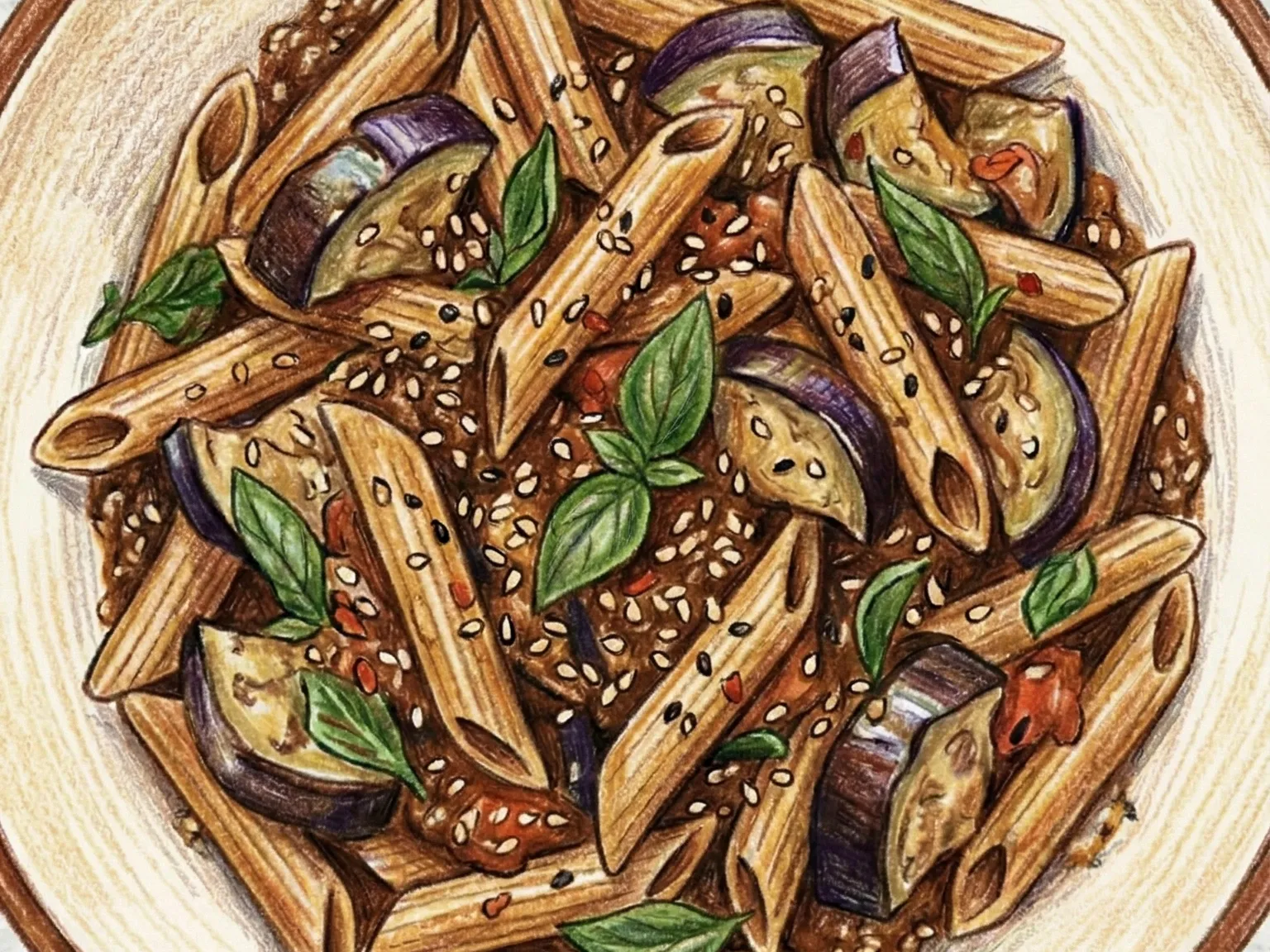
Sesame soy eggplant tomato penne is a Korean-Italian fusion pasta that combines salt-sweated eggplant with fresh diced tomato, soy sauce, and penne for a meat-free dish with genuine depth. Salting the eggplant and allowing it to rest for at least fifteen minutes draws out both water and any residual bitterness, so the flesh cooks down softer and more concentrated when sauteed in olive oil. Once the eggplant has absorbed the oil fully, it behaves like a sponge for the surrounding sauce, pulling flavor into each dense, yielding piece. Soy sauce brings a fermented, savory quality that layers directly on top of tomato's own natural glutamates, creating a double-umami effect that gives the sauce a richness typically associated with meat-based preparations. Sesame oil is added off the heat at the very end to preserve its raw, toasted fragrance - cooking it destroys the volatile compounds that make it distinctive. Toasted sesame seeds scattered over the finished pasta provide a nutty crunch that contrasts the soft eggplant. Fresh basil introduces a herbal brightness at the finish, and the base of onion and garlic cooked at the start gives the sauce its aromatic foundation.

🥗 Light & Healthy
Prep 18min Cook 25min 4 servings
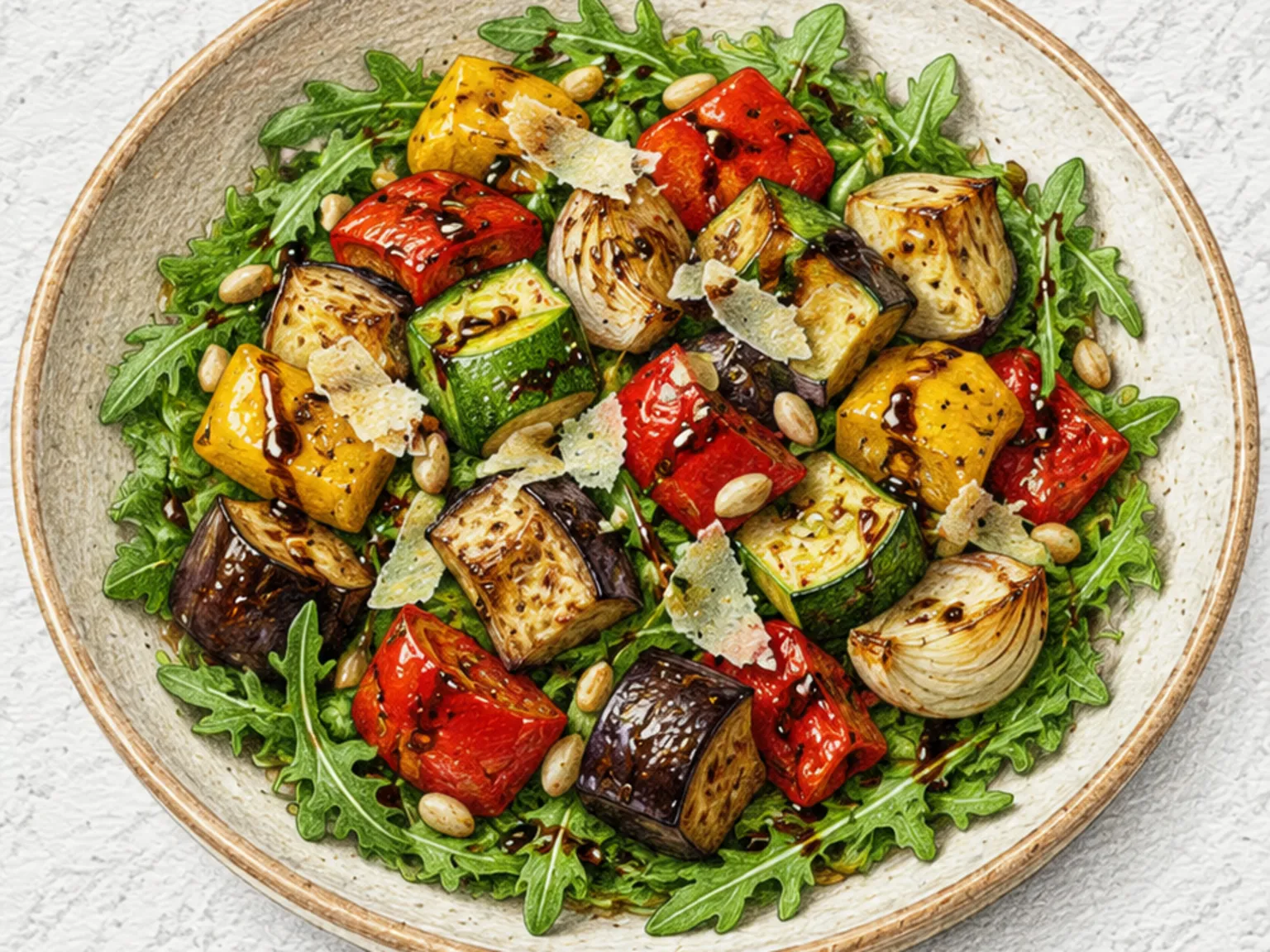
Roasted Vegetable Salad
Salads Easy

Roasted Vegetable Salad

Roasted vegetable salad cuts bell pepper, zucchini, eggplant, and onion into evenly sized pieces, roasts them at 200 degrees Celsius for 20 to 25 minutes, and serves them over peppery arugula with a drizzle of balsamic vinegar. At high oven heat the surface moisture evaporates rapidly, triggering both the Maillard reaction and caramelization simultaneously, so the vegetables develop concentrated natural sweetness alongside scattered charred edges that carry a smoky depth. The bitter, peppercorn-like bite of arugula provides a direct counterpoint to the caramelized sweetness of the roasted vegetables, keeping each forkful from feeling one-dimensional. Balsamic vinegar's thick, concentrated acidity pulls the disparate flavors together into a single coherent whole. Maintaining a thickness of 1.5 to 2 centimeters for each piece is important because thinner cuts dry out completely in the oven's dry heat and turn leathery, losing the interior moisture that makes roasted vegetables satisfying. Shaving Parmigiano-Reggiano over the top or scattering pine nuts adds a savory, nutty layer that makes the salad more substantial.

🥗 Light & Healthy 🏠 Everyday
Prep 12min Cook 25min 2 servings
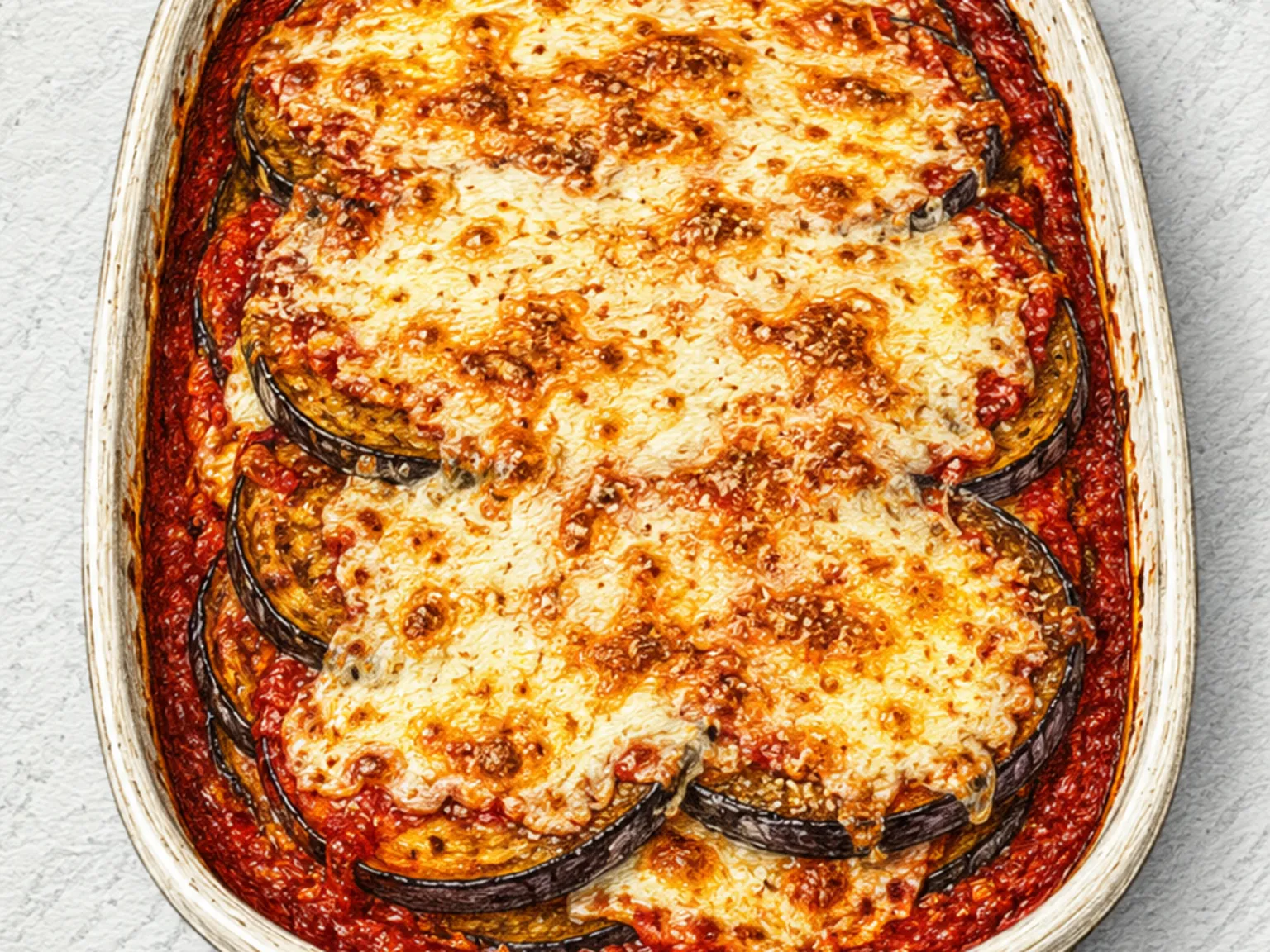
Eggplant Parmesan
Western Medium

Eggplant Parmesan

This Eggplant Parmesan recipe follows the actual preparation, main cooking method, and finish in order. Slice the eggplants into even one-centimeter rounds and sprinkle lightly with salt. Let them stand for 10 minutes, then press the surface dry once moisture beads appear so bitterness and excess water are reduced. Preheat the oven to 200C and spread a thin layer of tomato sauce over the baking dish. Add eggplant, part of the 220 g mozzarella, and part of the 60 g Parmesan in that order. Bake at 200C for 20 minutes, until the cheese melts and the edges bubble and brown lightly. Remove the dish, rest it for 5 minutes so the layers settle, then cut and serve warm.

🎉 Special Occasion 🍺 Bar Snacks
Prep 25min Cook 35min 4 servings
Eggplant Curry
Asian Easy

Eggplant Curry

A flavorful vegetarian curry made with pan seared eggplant simmered in a rich and creamy spiced coconut milk sauce.

🏠 Everyday 🥗 Light & Healthy
Prep 15min Cook 25min 2 servings
Korean Eggplant Pancakes (Egg-Battered Pan-Fried Eggplant)
Side dishes Easy

Korean Eggplant Pancakes (Egg-Battered Pan-Fried Eggplant)

Gaji-jeon belongs to the Korean jeon tradition of vegetables dipped in egg wash and pan-fried in oil, a technique integral to ancestral rites and holiday tables. Eggplant is cut into rounds about 7mm thick, thin enough to cook all the way through but thick enough to keep a soft, yielding center. A light dusting of flour before the egg wash is necessary for the batter to adhere and stay intact in the pan. As the egg coating sets into a golden, lacy crust over the heat, the eggplant inside steams in its own moisture until it collapses into a custardy, almost dissolving texture. The appeal of this jeon lies entirely in the contrast between the crisp, faintly eggy exterior and the creamy interior that gives way with almost no resistance. Dipping each piece in a simple soy and vinegar sauce cuts through the richness of the egg crust and highlights the eggplant's subtle sweetness. Korean families commonly fry gaji-jeon alongside hobak-jeon and other vegetable jeon for Chuseok. It can be fried the day before and held at room temperature without the flavor deteriorating significantly.

🏠 Everyday 🍱 Lunchbox
Prep 12min Cook 10min 2 servings
Korean Eggplant Rice Bowl
Rice Easy

Korean Eggplant Rice Bowl

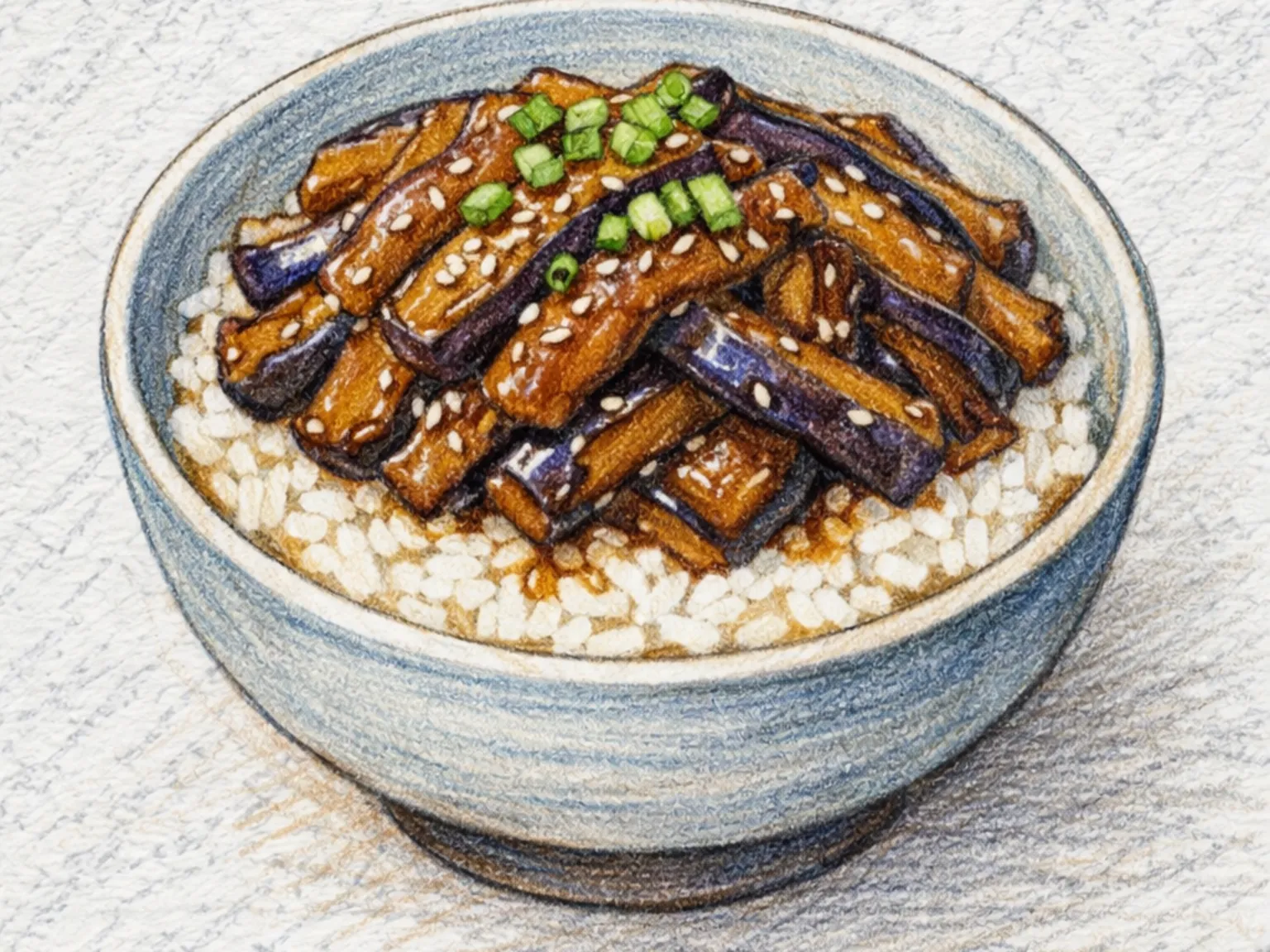
Gaji deopbap is a Korean eggplant rice bowl where sliced eggplant is pan-fried quickly in generous oil and then braised briefly with ground pork in a soy-based sauce. Soaking the eggplant in salted water for five minutes before cooking draws out bitterness and moisture. High heat is essential - eggplant absorbs oil rapidly, and fast searing creates a lightly crisp exterior while the inside collapses into a silky, almost creamy texture. The soy, sugar, and garlic sauce reduces in two minutes into a dark glaze that coats each piece, while the ground pork adds a savory depth that makes the dish feel more substantial. The sauce pools around the base of the rice and soaks into the grains, ensuring consistent flavor throughout the bowl. Green onion and sesame oil finish the dish. Summer eggplant, when the flesh is at its softest and most yielding, produces the best results. Kept cold, the eggplant holds its texture well enough to pack as a side dish for lunch.

🏠 Everyday ⚡ Quick
Prep 10min Cook 10min 2 servings
Korean Soy Braised Eggplant
Stir-fry Easy

Korean Soy Braised Eggplant

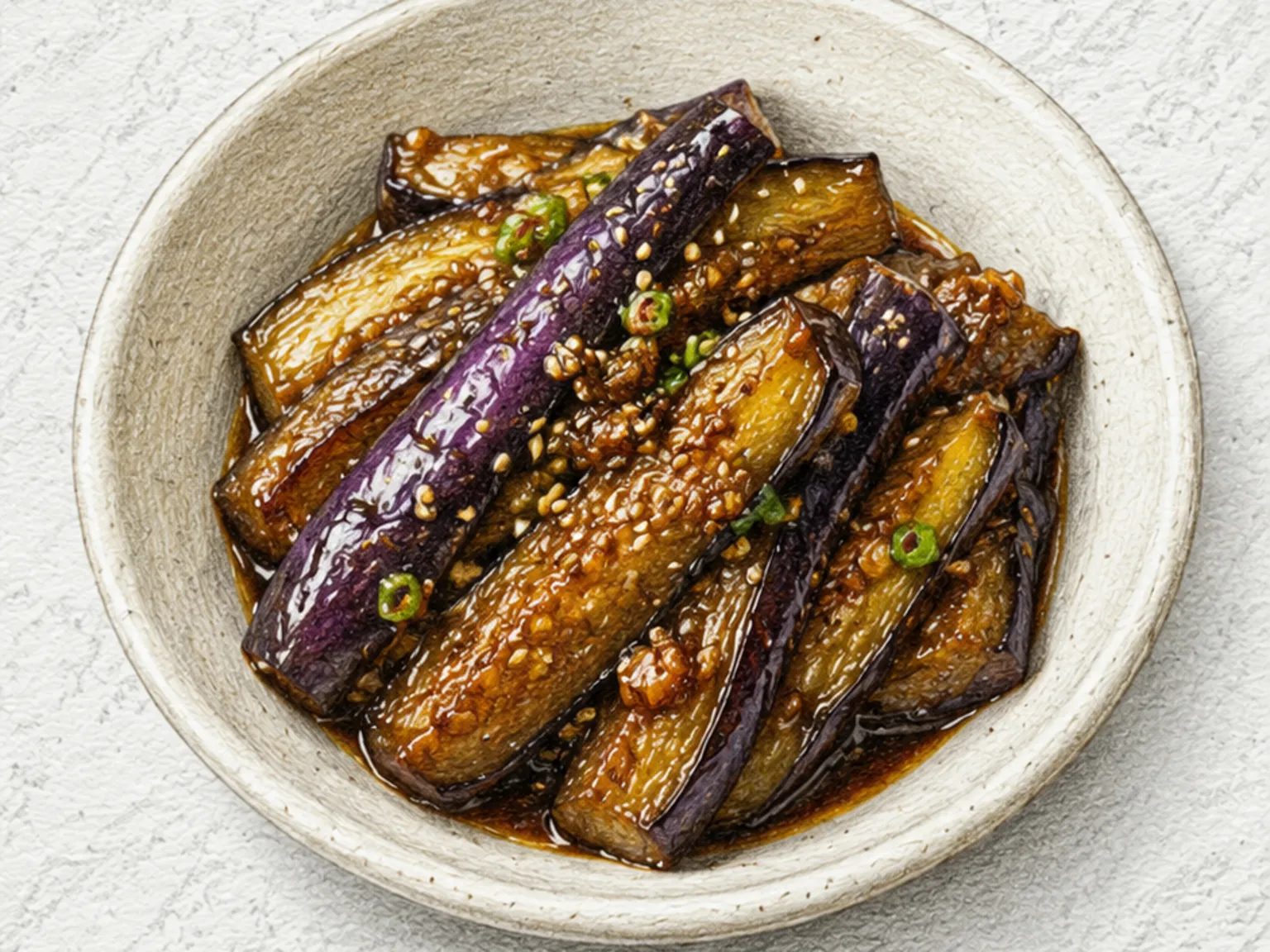
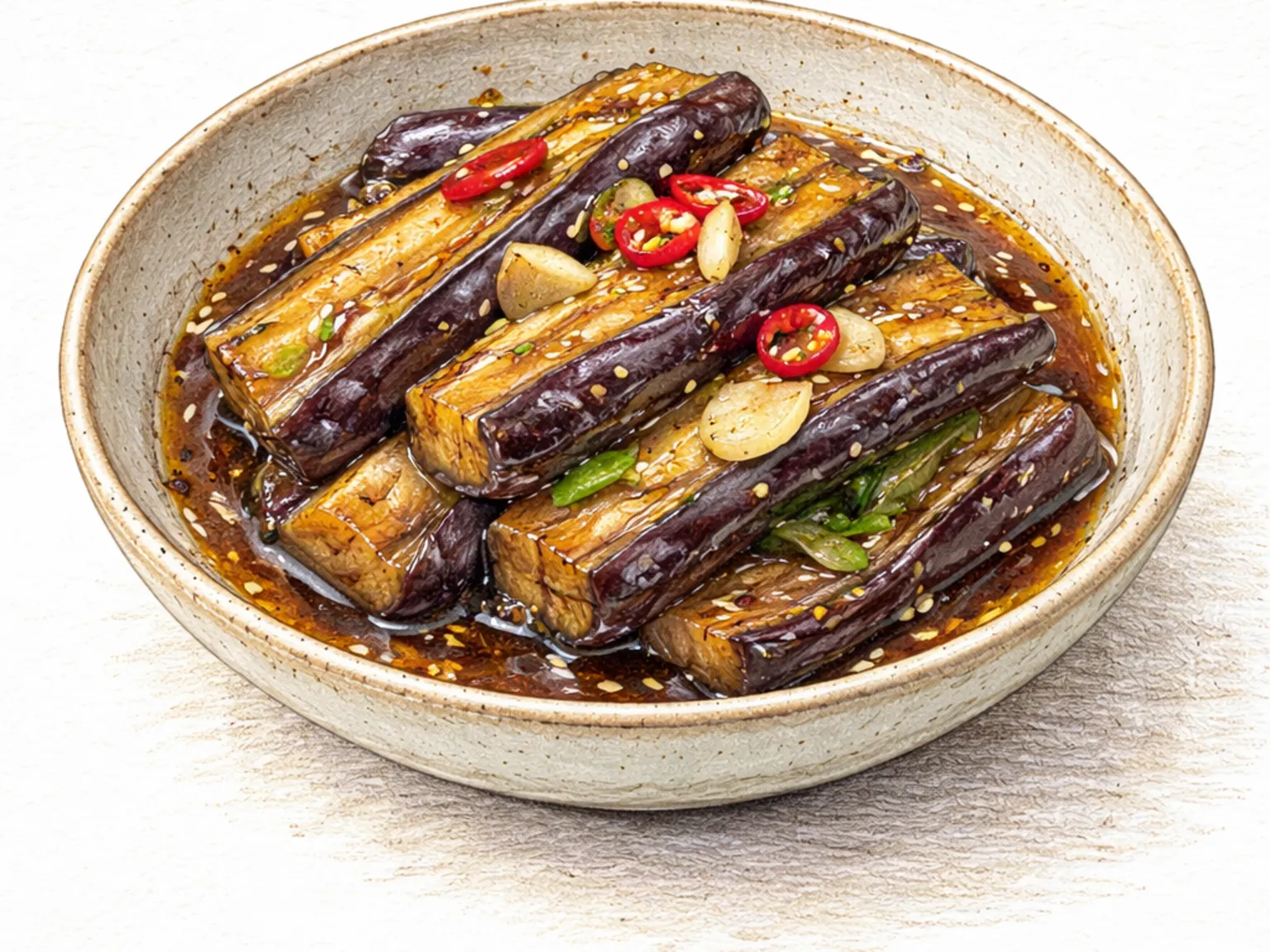
Gaji-jorim is a Korean braised eggplant dish where the eggplant is simmered in a soy sauce-based seasoning until the flesh becomes thoroughly tender and saturated with flavor throughout. Eggplant has a sponge-like cellular structure that draws in liquid as it cooks, and the longer it simmers in the seasoning, the deeper the sweet-salty flavor penetrates into each piece. The sauce reduces as the eggplant cooks, concentrating around the flesh rather than pooling at the bottom of the pan, which means every bite carries the full seasoning. A finishing drizzle of sesame oil and a scattering of sesame seeds add a nutty aroma that rounds out the savory base. Despite using only eggplant as the main ingredient, the slow braising process concentrates the flavors into a compelling side dish that makes plain rice easy to eat in quantity. The seasoning adheres to the eggplant even after cooling, making it a practical addition to a packed lunch as well as a fresh rice accompaniment.

🏠 Everyday 🍱 Lunchbox
Prep 10min Cook 12min 2 servings
Hokkaido Jingisukan Lamb Grill
Grilled Medium

Hokkaido Jingisukan Lamb Grill

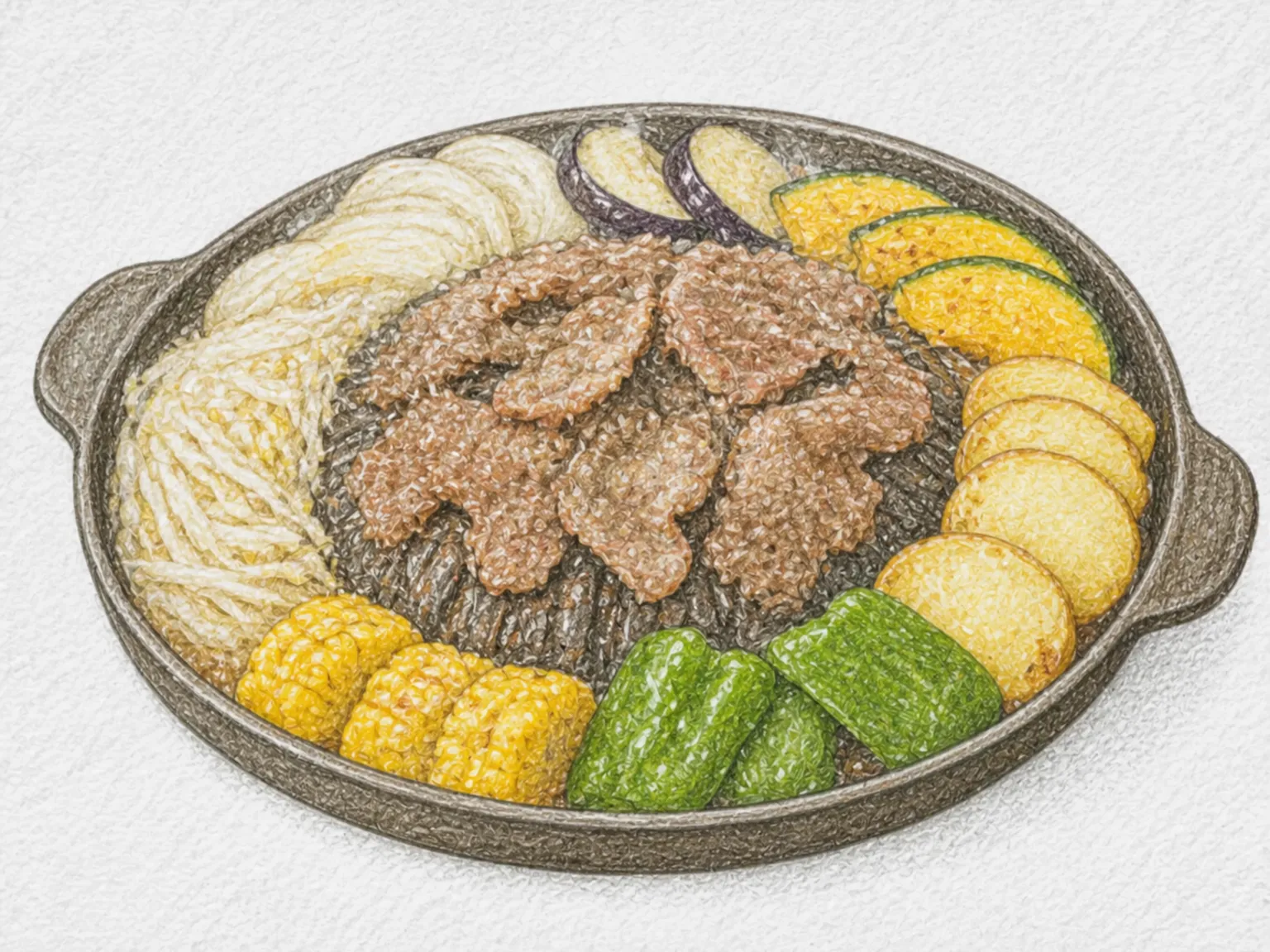
Jingisukan is a Hokkaido grill cooked on a domed, grooved pan. Thinly sliced lamb cooks on the raised center while onion, eggplant, pumpkin, potato, green pepper, corn, and bean sprouts surround it, catching the juices that run down the grooves. The cooked meat and vegetables are dipped in a sauce of sake, soy sauce, vinegar, grated fruit, garlic, and ginger. Sheep raising expanded in Hokkaido during the Taisho era when wool imports became difficult, and eating lamb began in that setting; the dish later took root as meat production replaced the focus on wool. It is eaten at home year-round and outdoors at spring blossom gatherings and summer barbecues.

🎉 Special Occasion 🍺 Bar Snacks
Prep 30min Cook 20min 4 servings
Chilled Eggplant Soup
Soups Easy

Chilled Eggplant Soup

A refreshing summer soup featuring soft steamed eggplants in a tangy, chilled broth. Light and cooling.

🏠 Everyday ⚡ Quick
Prep 15min Cook 10min 2 servings
Korean Steamed Eggplant with Seasoning
Steamed Easy

Korean Steamed Eggplant with Seasoning

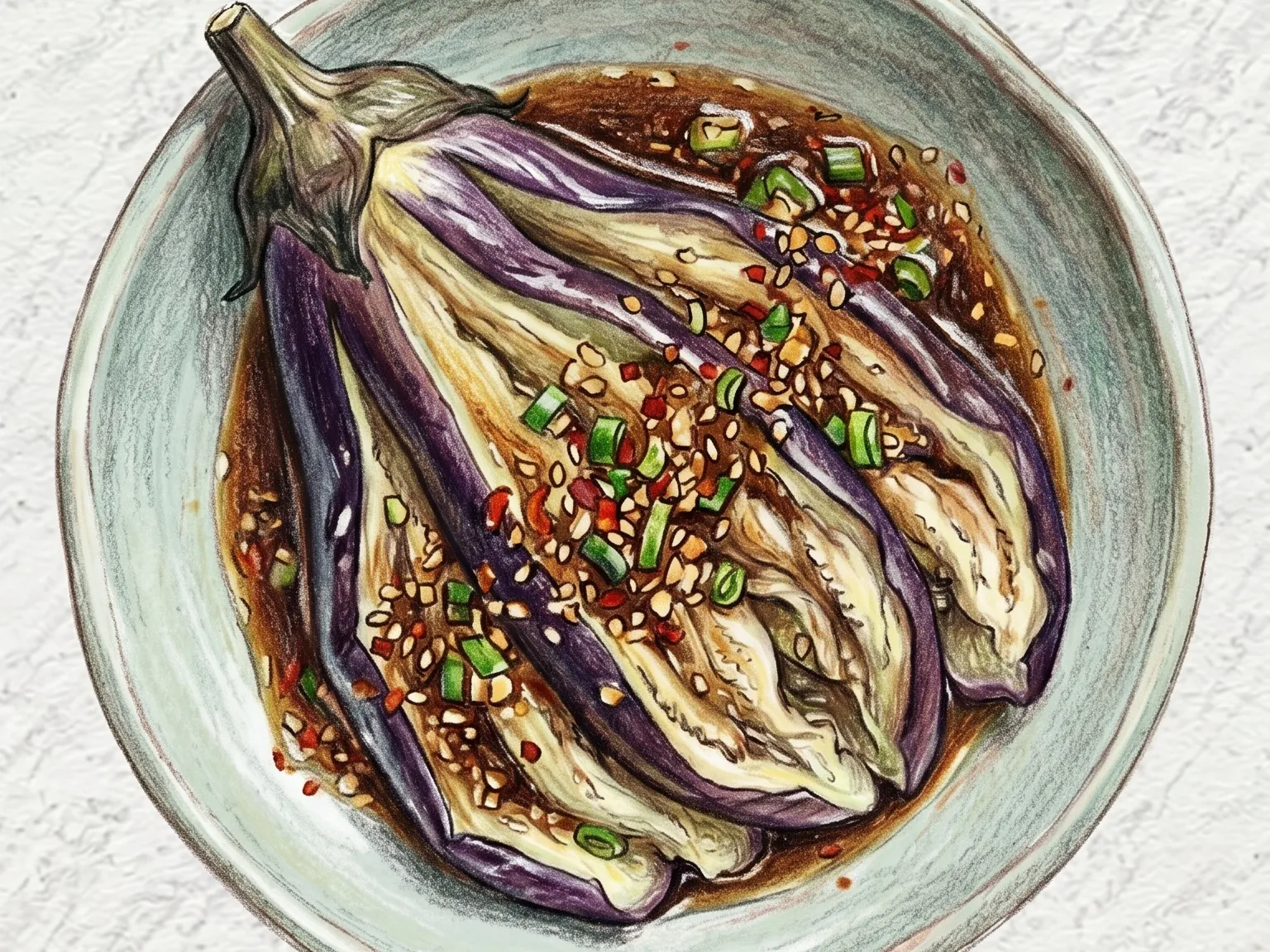
Steaming whole eggplants preserves the moisture trapped inside the purple skin, creating a silky and soft texture that sliced pieces cannot replicate. This traditional Korean side dish relies on the technique of tearing the cooked eggplant by hand along its natural grain rather than using a knife. The resulting irregular surface area allows the dressing of soy sauce, garlic, and red pepper flakes to cling effectively to every fiber. Sesame oil and toasted seeds contribute a nutty fragrance while sliced green onions provide a fresh finish to the light seasoning. Adding perilla powder increases the nuttiness, and incorporating canned tuna provides enough protein to serve the dish as a primary component of a meal. Adding minced cheongyang chilies into the sauce increases the heat for a spicier version. Since the preparation takes less than thirty minutes, it remains a common choice during hot summer months. The dish keeps its consistency well in the refrigerator for about twenty-four hours after cooling.

🏠 Everyday 🍱 Lunchbox
Prep 10min Cook 8min 2 servings
Korean Fresh Eggplant Kimchi
Kimchi Easy

Korean Fresh Eggplant Kimchi

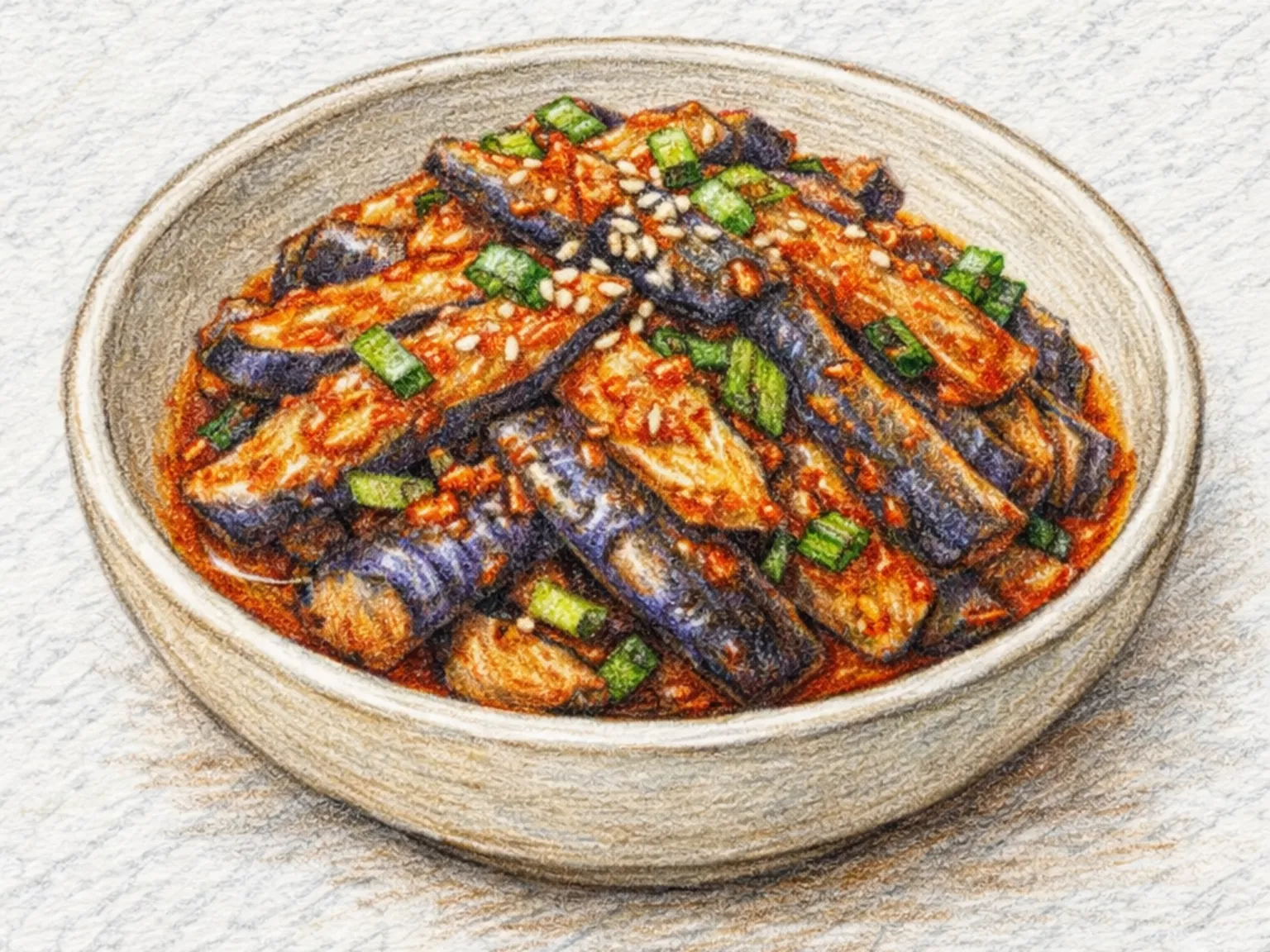
Gaji kimchi is a fresh eggplant kimchi that requires no fermentation and can be eaten immediately after preparation. Eggplant is steamed until it becomes pliable and soft throughout, then torn by hand along the grain rather than cut with a knife. Tearing along the natural fibers creates a rough, open surface that allows the seasoning of gochugaru, fish sauce, garlic, and sesame oil to penetrate deep into the flesh rather than merely coating the outside. The result is an even distribution of spicy, salty flavor throughout every bite rather than concentrated only at the surface. Scallions folded in at the end add a fresh, sharp lift, and toasted sesame seeds provide a nutty, fragrant finish. Because no fermentation is involved, this kimchi is best suited to seasons when eggplant is at its peak, particularly summer, when the vegetable is widely available and a quick, no-cook banchan is most welcome. Piled over a bowl of cold leftover rice and mixed together, the seasoning soaks into the grains while the soft steamed eggplant adds body, making it a satisfying one-bowl meal without needing additional soup or side dishes.

🍱 Lunchbox 🏠 Everyday
Prep 20min Cook 10min 2 servings
Ricotta-Stuffed Eggplant Rolls
Western Medium

Ricotta-Stuffed Eggplant Rolls

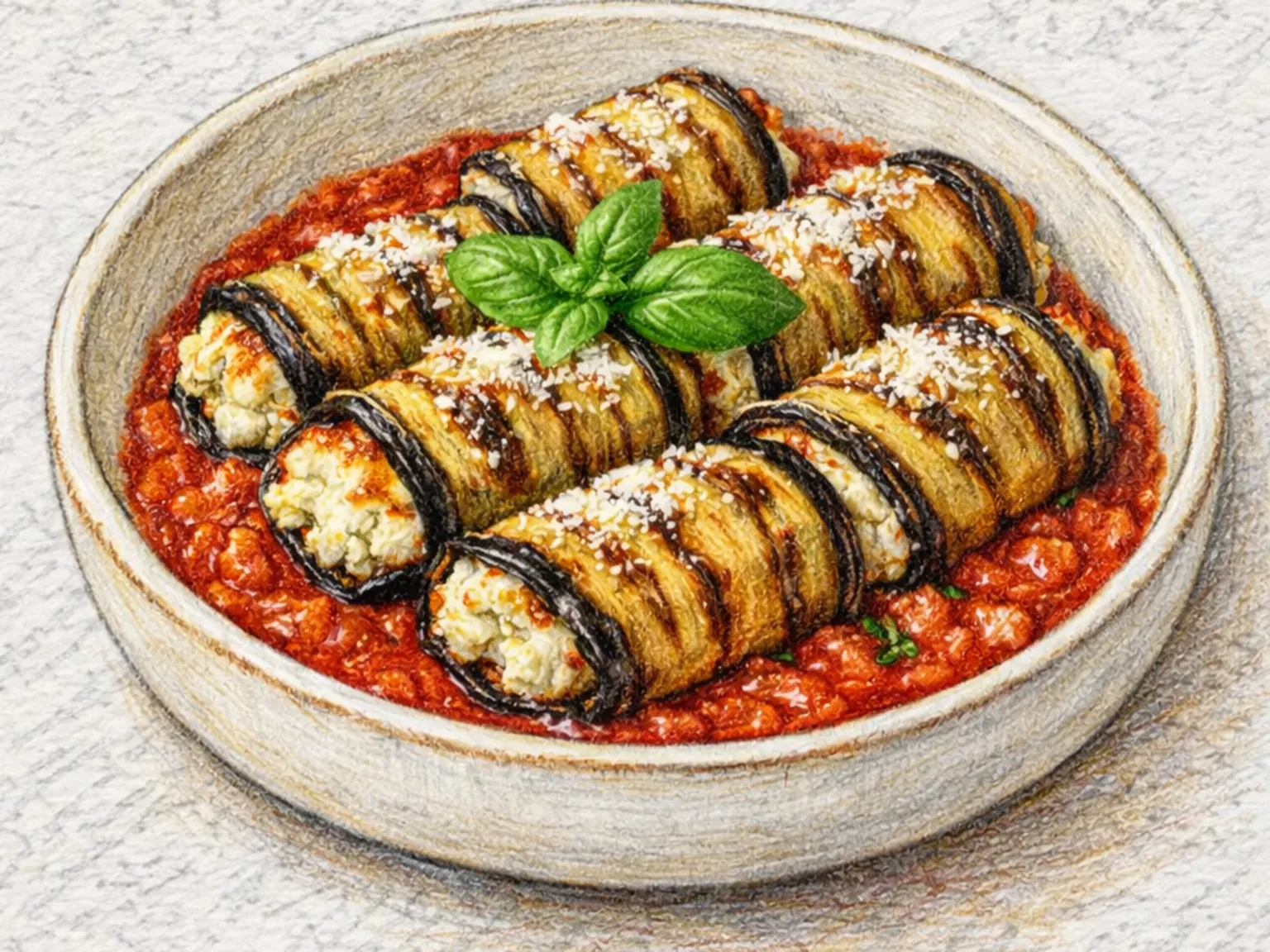
This Ricotta-Stuffed Eggplant Rolls recipe follows the actual preparation, main cooking method, and finish in order. Trim the eggplants and slice them lengthwise into 5 mm strips. Sprinkle the 1 teaspoon salt evenly over the slices, let them stand for 15 minutes, then pat both sides very dry so the sauce will not turn watery. Stir the 250 g ricotta with 1 egg, half of the Parmigiano Reggiano, 10 chopped basil leaves, and 1/2 teaspoon black pepper. Mix until thick and spreadable, not loose enough to run out of the rolls. Lower the oven to 200 C and bake for 20 to 25 minutes, until the cheese is melted and the edges are lightly browned. Rest the dish for 5 minutes before serving so the filling sets and the rolls hold their shape.

🎉 Special Occasion 🍺 Bar Snacks
Prep 30min Cook 35min 4 servings
Kare-Kare (Filipino Peanut Beef Shank Stew)
Asian Hard

Kare-Kare (Filipino Peanut Beef Shank Stew)

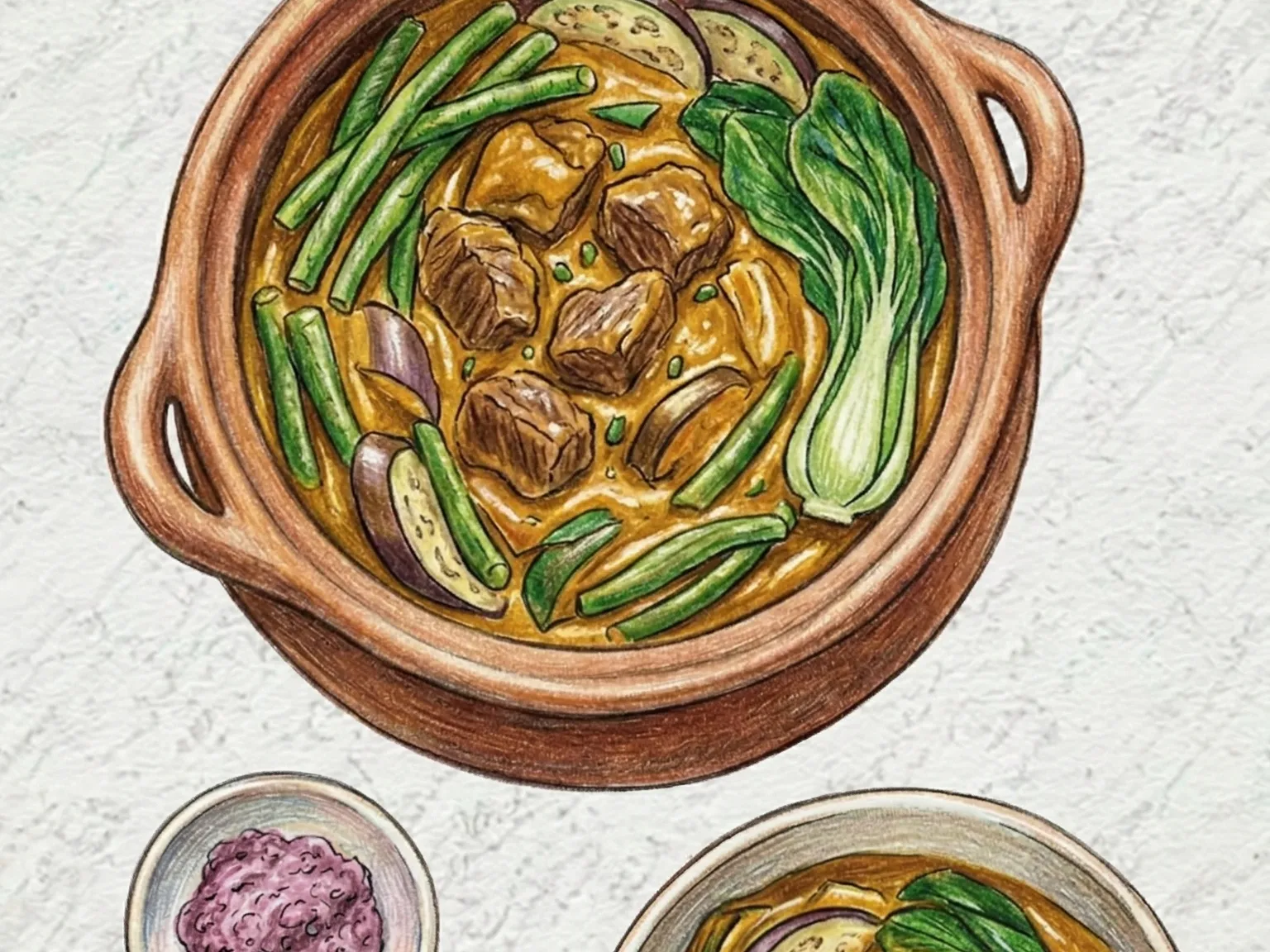
Kare-kare is a Filipino celebration stew built around beef shank braised until every strand of connective tissue has melted into gelatin, leaving meat that falls away from the bone at the touch of a spoon. The shank needs a minimum of sixty minutes at a steady simmer for this transformation to happen fully, and the resulting braising liquid becomes the backbone of the sauce. Glutinous rice flour is dry-toasted in a wide pan, stirred constantly until it turns pale gold and smells nutty, then whisked directly into the strained broth where it acts simultaneously as a thickener and a flavoring agent. Peanut butter is dissolved into the broth next, forming a sauce that is rich and creamy without any heaviness, because the toasted rice flour gives body more cleanly than cornstarch ever could. The braised meat goes back in and simmers together with the sauce for fifteen minutes so the flavors merge completely. Eggplant, yardlong beans, and bok choy are added in the final five to seven minutes, long enough to soften but short enough to keep their individual textures. The dish is always served alongside bagoong, a Filipino fermented shrimp paste, whose concentrated salt and pungent funk contrast forcefully with the mild, nutty sauce and elevate every spoonful.

🎉 Special Occasion
Prep 25min Cook 90min 4 servings
Korean Steamed Eggplant Namul
Side dishes Easy

Korean Steamed Eggplant Namul

Gaji namul strips eggplant down to its most restrained form, a banchan dressed with nothing more than soy sauce, garlic, and sesame oil. The eggplant is halved and steamed for around seven minutes until the flesh is uniformly tender throughout, then pulled into long shreds by hand along the grain. Tearing rather than cutting creates a rougher, more uneven surface that grips the minimal seasoning more effectively than clean knife edges would. There is no chili powder, no vinegar, no fermented paste. The soy sauce and sesame oil soak into the porous, spongy flesh, staining it a deep, glossy color and pulling the flavors in without competing with the eggplant itself. The texture is softer than almost any other Korean namul, collapsing gently when pressed and practically dissolving when stirred into warm rice. Gaji namul is a traditional dish in Korean Buddhist temple food, a cuisine where the absence of strong flavors is a deliberate choice rather than an oversight, and where simplicity is the point.

🏠 Everyday 🍱 Lunchbox
Prep 10min Cook 8min 4 servings
Koneri (Thickened Eggplant and Pepper Stir-Fry)
Stir-fry Easy

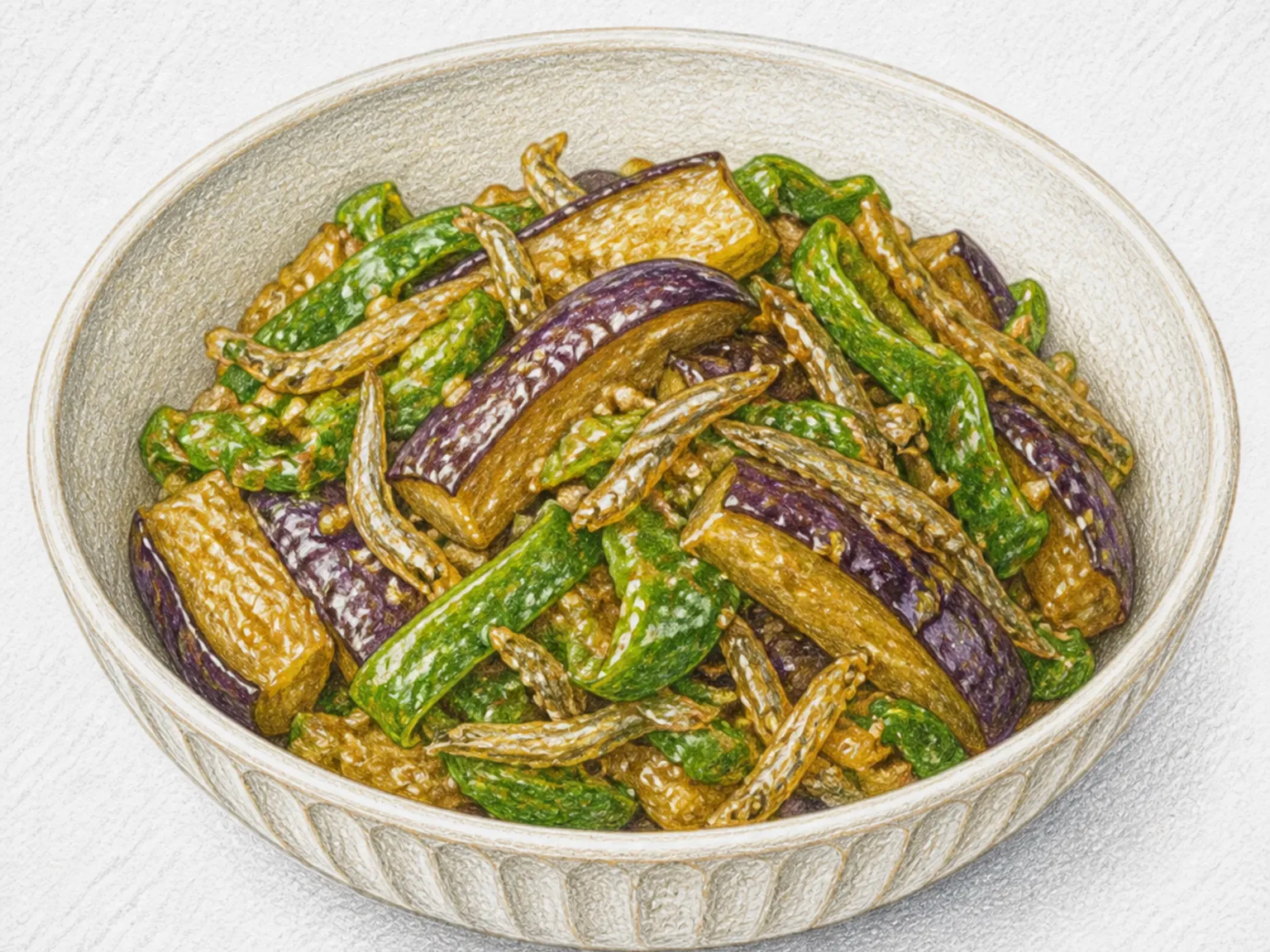
Koneri (Thickened Eggplant and Pepper Stir-Fry)

Koneri is a summer home dish from Bungo Ono in Oita, where fried vegetables are bound with a thick mixture of miso and wheat flour. This version uses eggplant and green peppers with small dried sardines, which season the oil before the vegetables soften. Flour, miso, sugar, and water are whisked together and stirred into the pan over low heat until the raw flour cooks away and the sauce clings to every piece. The flour captures the moisture released by the vegetables instead of leaving liquid in the pan. Its name is linked to the kneading and stirring action, and related household versions often use the region's abundant bitter melon.

🏠 Everyday
Prep 15min Cook 15min 4 servings
Tsugani-jiru Mitten Crab Soup
Soups Hard

Tsugani-jiru Mitten Crab Soup

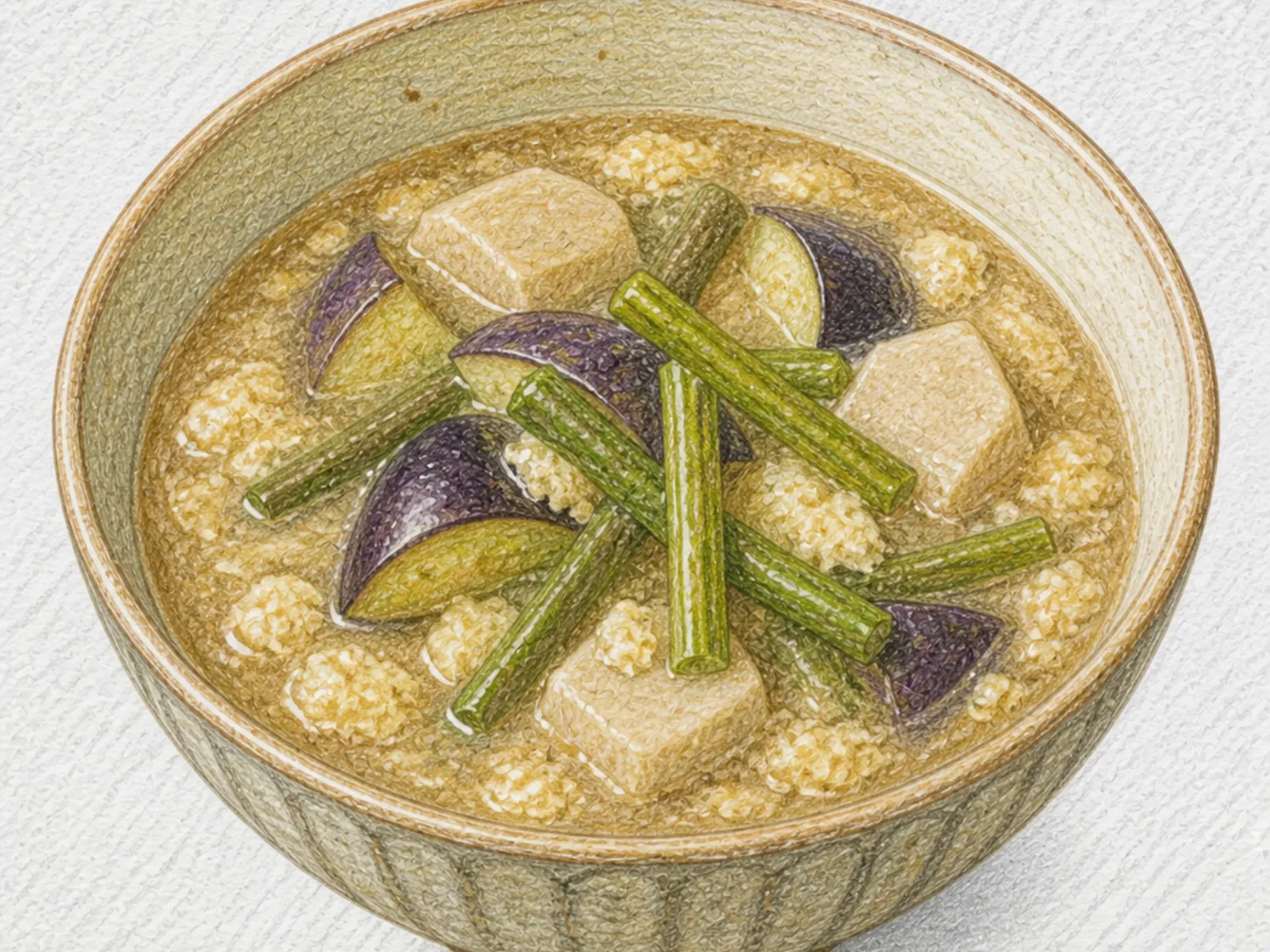
Tsugani-jiru is a river-basin soup from Kochi made by finely crushing Japanese mitten crab with its shell, diluting and straining it, then heating the liquid until crab proteins gather into soft curds. It was eaten in autumn when crabs moved downstream through the Shimanto, Niyodo, and Monobe rivers, with eggplant and the peeled stalk called ryukyu. Raw freshwater crab can carry parasites and environmental contaminants and can spread microbes through splashes. Use only fresh crab sold for cooking by a licensed food supplier, never self-caught crab. Keep a separate raw-crab work zone, strain without splashing, and immediately bring the liquid to a full boil for at least five minutes before finishing the vegetables.

🎉 Special Occasion 🏠 Everyday
Prep 45min Cook 30min 4 servings
Korean Braised Eggplant with Shrimp
Steamed Easy

Korean Braised Eggplant with Shrimp

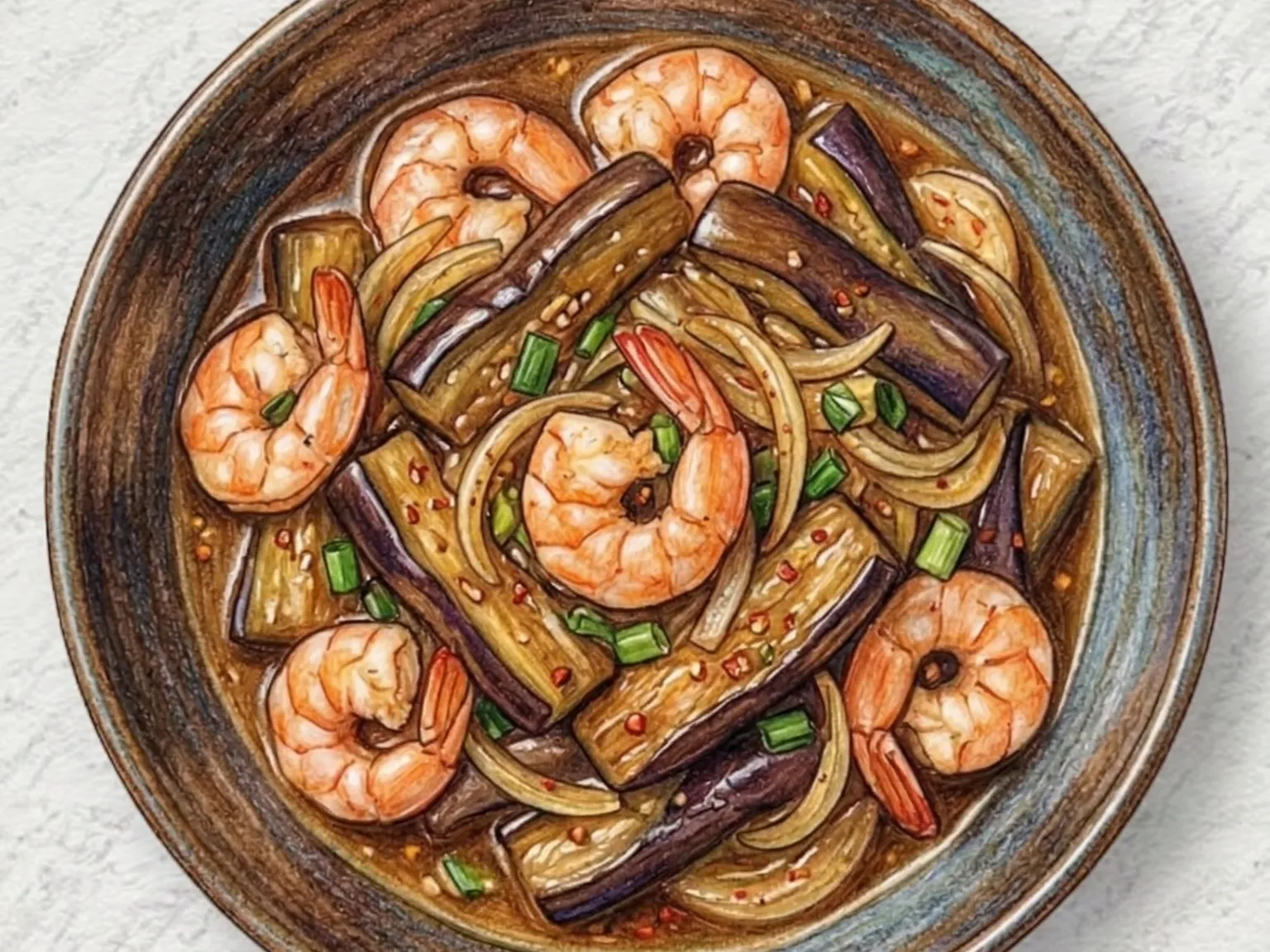
Gaji saeu jorim is a Korean braised side dish pairing eggplant with shrimp in a sauce of soy sauce and oyster sauce. Lightly stir-frying the eggplant in oil before braising coats the surface and prevents the slices from turning mushy, helping them hold their shape and develop a slight gloss as the sauce reduces. The natural umami from the shrimp combines with the dense savory character of the oyster sauce to deepen the overall flavor, and the eggplant draws all of that into its flesh as it braises slowly. Gochugaru adds a gentle warmth without masking the seafood, onion contributes background sweetness, and green onion lifts the aroma. The soft, juicy texture of the eggplant against the firm bounce of the shrimp gives the dish an appealing contrast, and the glossy dark sauce spooned over rice makes for a satisfying, complete meal with minimal effort.

🍱 Lunchbox 🏠 Everyday
Prep 14min Cook 16min 2 servings
Shibazuke (Eggplant and Red Shiso Fermented Pickle)
Kimchi Hard

Shibazuke (Eggplant and Red Shiso Fermented Pickle)

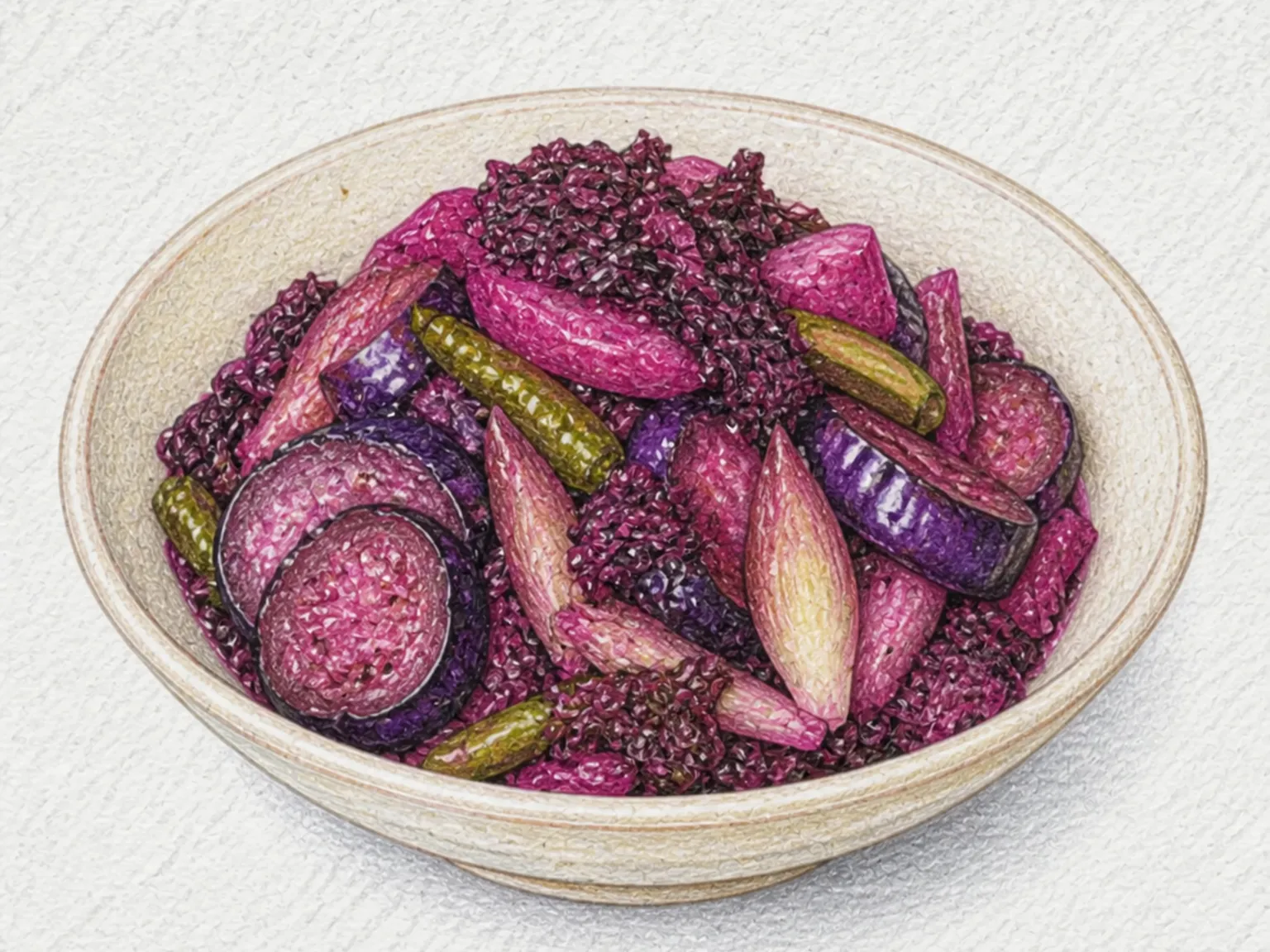
Shibazuke is a representative Kyoto pickle made by salt-fermenting summer vegetables with red shiso from the Ohara area of Kyoto City. Ten kilograms of eggplant are cut 5 mm thick, while cucumber, green chili, and myoga are prepared separately. Red shiso sprigs are washed, the leaves are removed and roughly chopped, and they are mixed with the eggplant. About a 10 cm layer of that mixture is packed into a pickling container and salted, then the myoga, cucumber, and green chili are alternated through subsequent layers. A generous covering of shiso goes on top, followed by a weight equal to the total ingredient weight. After one full day and night, the first black liquid is poured away. The pickle is then kept pressed so clean liquid stands 3 to 4 cm above the drop lid while fermentation continues for several days. The resulting purple, sour vegetables are served with rice or sake.

🏠 Everyday 🍺 Bar Snacks
Prep 120min Cook 10min 100 servings
Moussaka (Greek Eggplant Lamb Bechamel Bake)
Western Hard

Moussaka (Greek Eggplant Lamb Bechamel Bake)

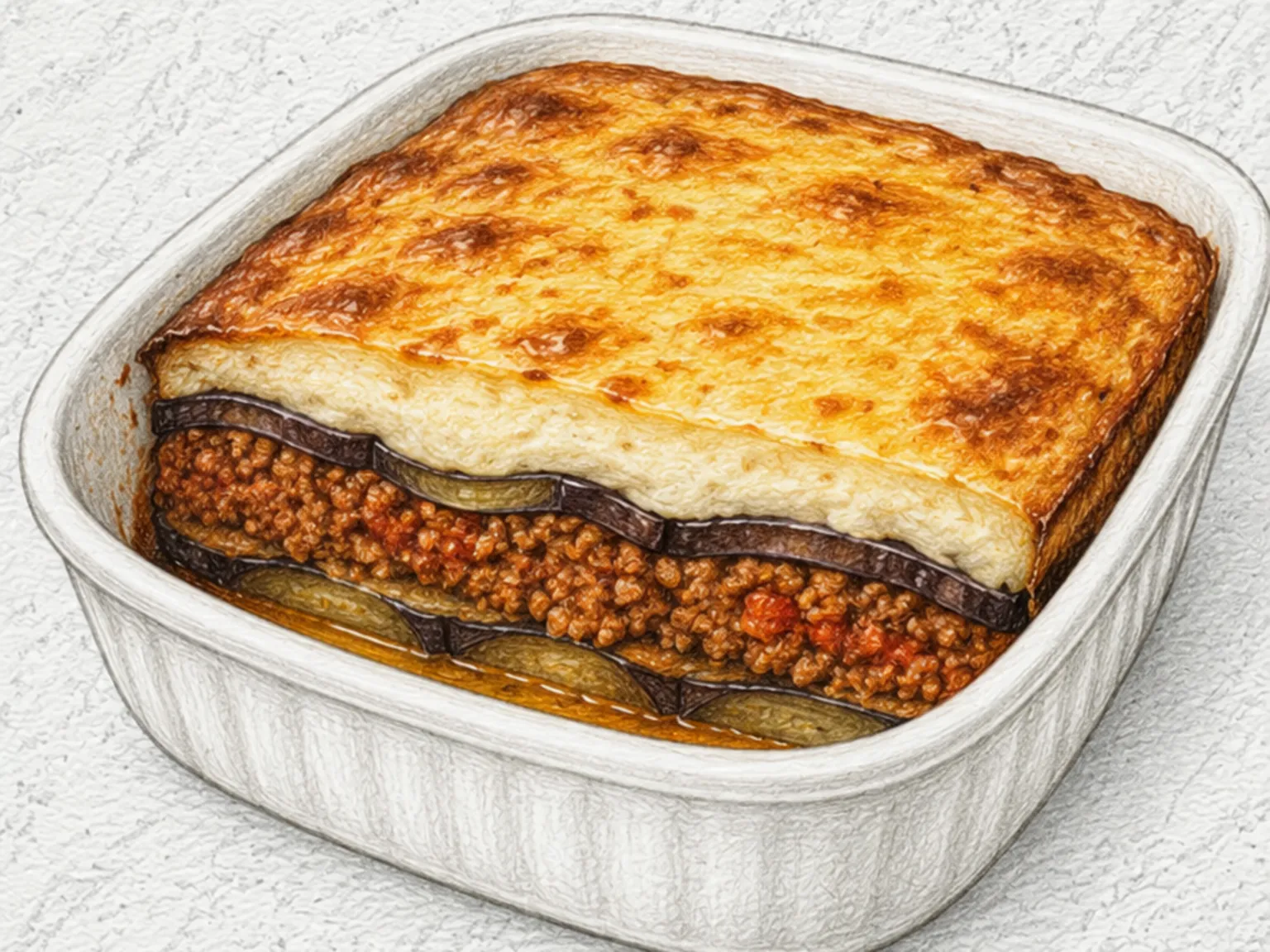
Layers of pan-fried eggplant, cinnamon-scented lamb sauce, and a thick bechamel topping define the structure of this Greek oven-baked casserole. The preparation begins by salting the eggplant slices for thirty minutes to draw out moisture and bitterness, which prevents the vegetable from absorbing excess oil and helps it retain its shape during baking. Inside the meat sauce, ground lamb is simmered with tomatoes and a touch of cinnamon, an addition that tempers the natural gamey scent of the lamb with warm Mediterranean aromatics. To complete the assembly, a layer of bechamel enriched with egg yolks and Parmesan cheese is spread over the top before the dish enters a 180-degree Celsius oven for 40 minutes. The inclusion of egg yolks allows the creamy sauce to set firmly, creating a golden crust that holds the internal components together when the dish is sliced. This structural stability results in clean, visible layers in each serving. Options for customization include replacing or mixing the eggplant with potatoes or zucchini, or substituting the lamb with ground beef. Allowing the moussaka to rest for 15 to 20 minutes after baking ensures the layers settle properly for ideal presentation. Since the flavors intensify when kept in the refrigerator for a day or two, this dish functions well as a make-ahead option for gatherings.

🎉 Special Occasion 🍺 Bar Snacks
Prep 40min Cook 60min 6 servings
Assorted Japanese Tempura
Asian Medium

Assorted Japanese Tempura

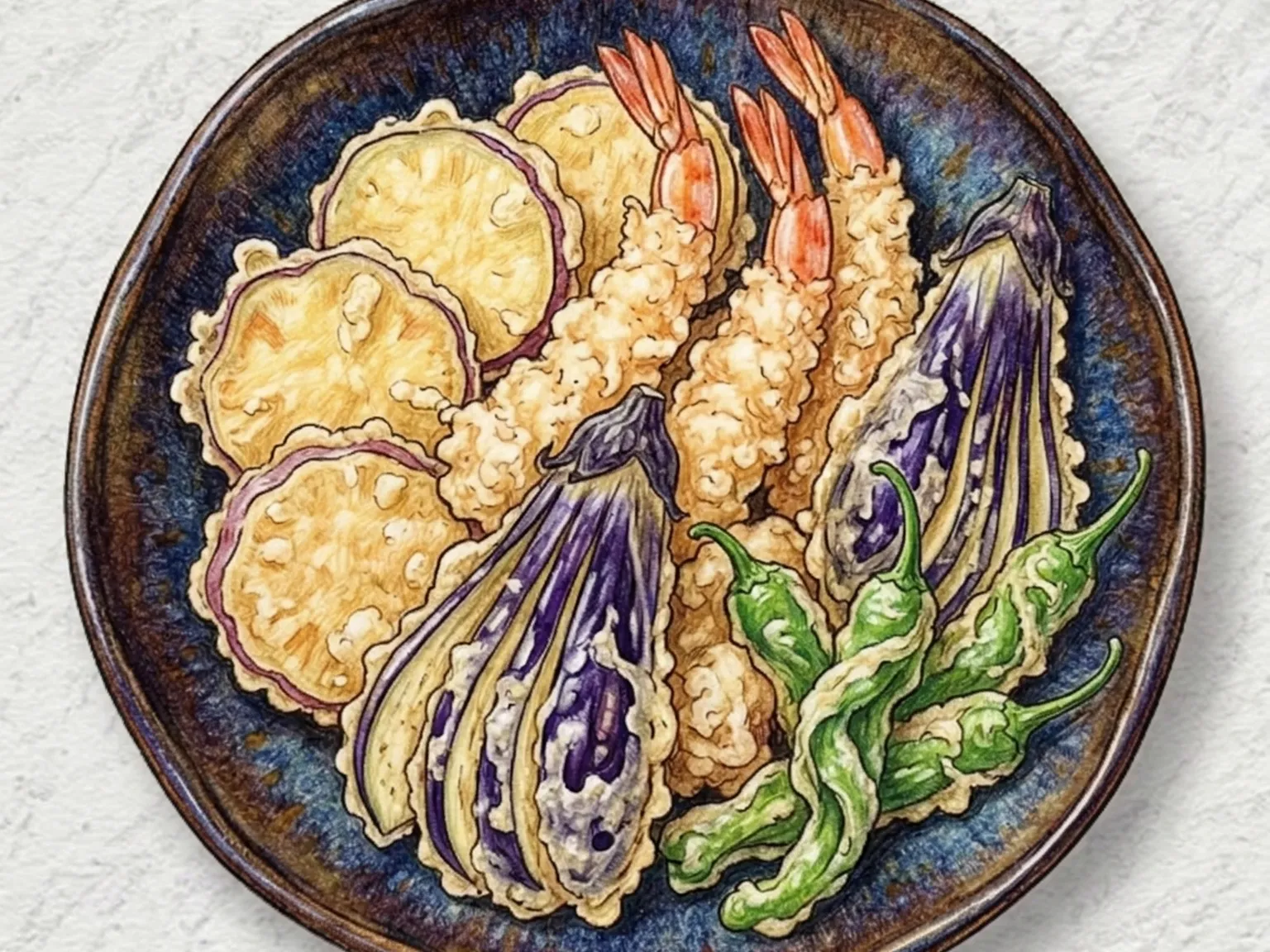
Tempura moriawase is an assorted platter of Japanese tempura featuring shrimp, sweet potato, eggplant, and shishito peppers, each coated in a light, shatteringly crisp batter. The batter is the heart of the technique: egg and ice-cold water are combined with cake flour and stirred only a few times with chopsticks, leaving visible lumps. This minimal mixing prevents gluten development, which is what keeps the coating featherlight rather than dense. Each piece is fried at 170 to 180 degrees Celsius for a short time-long enough to cook the interior while the batter puffs into an airy, lacy crust. Patting ingredients dry before dipping ensures the batter adheres properly. The tentsuyu dipping sauce, made from dashi, soy sauce, and mirin, is served with freshly grated daikon radish, whose mild sharpness cuts through the oil and refreshes the palate between bites. Tempura moriawase is meant to be eaten immediately after frying, when the contrast between the crackling exterior and the just-cooked filling is at its peak.

🍺 Bar Snacks 🎉 Special Occasion
Prep 20min Cook 15min 2 servings
Korean Stuffed Eggplant Seon
Side dishes Medium

Korean Stuffed Eggplant Seon

Gaji-seon is a Joseon-era royal court banchan belonging to the seon category, a class of preparations in which vegetables are stuffed with a seasoned filling and steamed. The eggplant is scored at regular intervals with deep cuts that stop short of the bottom, creating accordion-like pockets along the length of the vegetable. A filling of minced pork or beef combined with crumbled tofu, scallion, and sesame oil is pressed firmly into each slit, then the stuffed eggplant is steamed for fifteen minutes. During steaming, the juices from the filling soak into the softening eggplant flesh, and the two components merge into a single flavor. The labor of stuffing each eggplant individually made this a dish historically reserved for guests and formal occasions rather than everyday meals. After steaming, a light soy-based sauce is spooned over the top. The sharp textural contrast between the near-dissolving eggplant skin and the firm, savory filling produces a refinement that clearly separates seon from ordinary stir-fried or braised eggplant preparations.

🏠 Everyday 🎉 Special Occasion
Prep 25min Cook 20min 4 servings
Yu Xiang Eggplant (Sichuan Spicy Garlic Pork Eggplant)
Stir-fry Medium

Yu Xiang Eggplant (Sichuan Spicy Garlic Pork Eggplant)

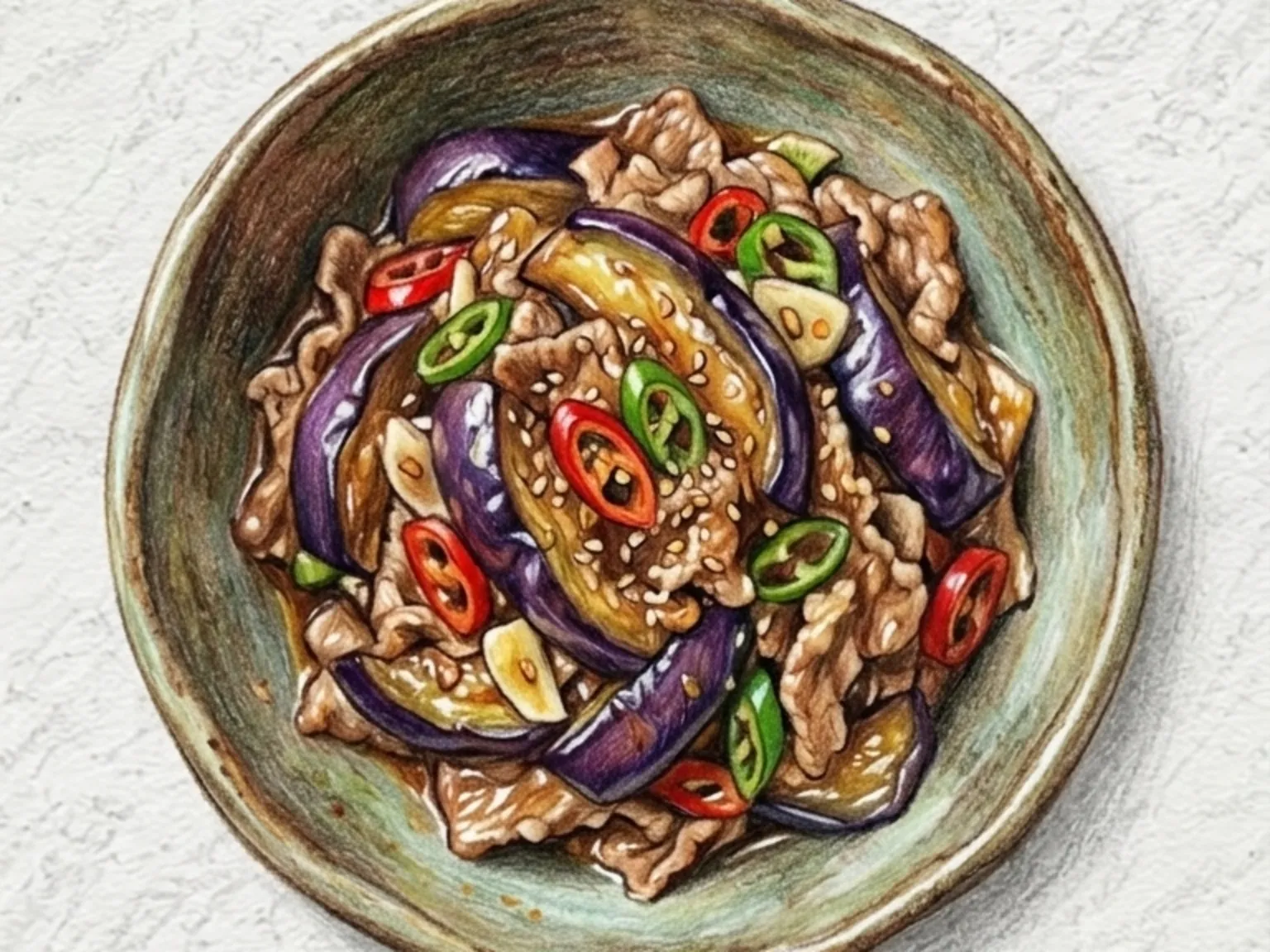
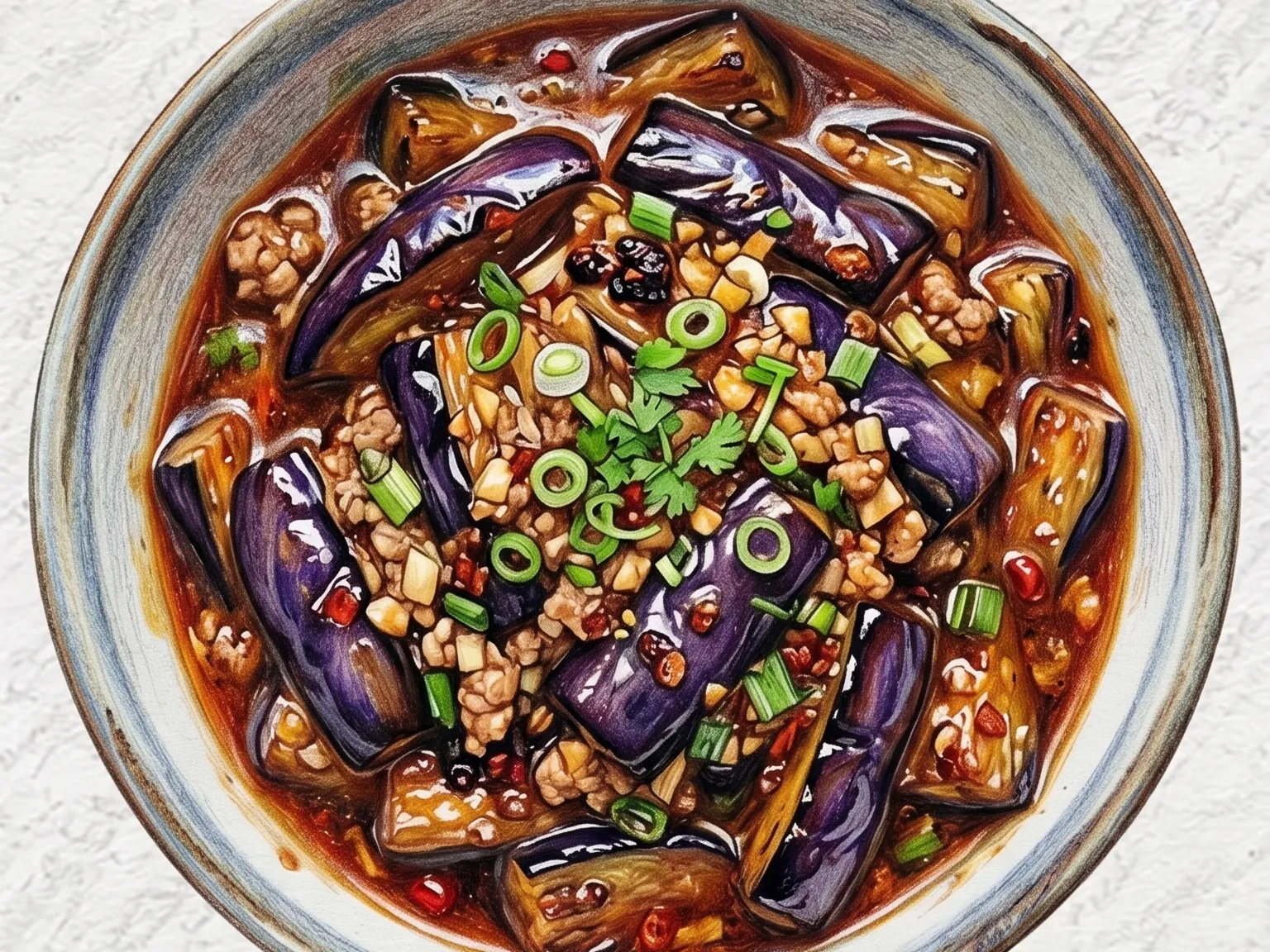
Yu Xiang Qiezi is a Sichuan-style eggplant stir-fry with ground pork, doubanjiang, black vinegar, and sugar. The eggplant is pre-fried to firm it up so it holds its shape in the sauce, while the pork and doubanjiang create a spicy, aromatic oil base. Soy sauce, vinegar, and sugar layer sweet and sour notes over the heat, producing the characteristic Yu Xiang flavor profile. Garlic and ginger add fragrance, and the eggplant absorbs the sauce deeply so every bite releases a concentrated burst of seasoning.

🏠 Everyday 🌙 Late Night
Prep 15min Cook 12min 2 servings
Korean Braised Eggplant in Seasoned Soy Sauce
Steamed Easy

Korean Braised Eggplant in Seasoned Soy Sauce

Gaji yangnyeom jorim is a Korean braised eggplant side dish made with soy sauce, gochugaru, garlic, and sesame oil. Briefly sauteing the eggplant in oil before adding the braising liquid is important: pre-cooking the surface prevents the eggplant from releasing too much water into the sauce, which keeps the seasoning concentrated and helps it penetrate evenly. A small amount of sugar or plum extract is added to the sauce, giving the finished dish its characteristic glossy sheen. Scallions are stirred in only after the heat is off to preserve their color and texture. The result is a compact, salty-spicy banchan with a deep lacquered surface on each piece. Keeping a batch in the refrigerator means it is available as a side dish for three or more days, and the leftover braising liquid works well as seasoning in bibimbap.

🥗 Light & Healthy 🏠 Everyday
Prep 10min Cook 15min 2 servings
Ratatouille
Western Medium

Ratatouille

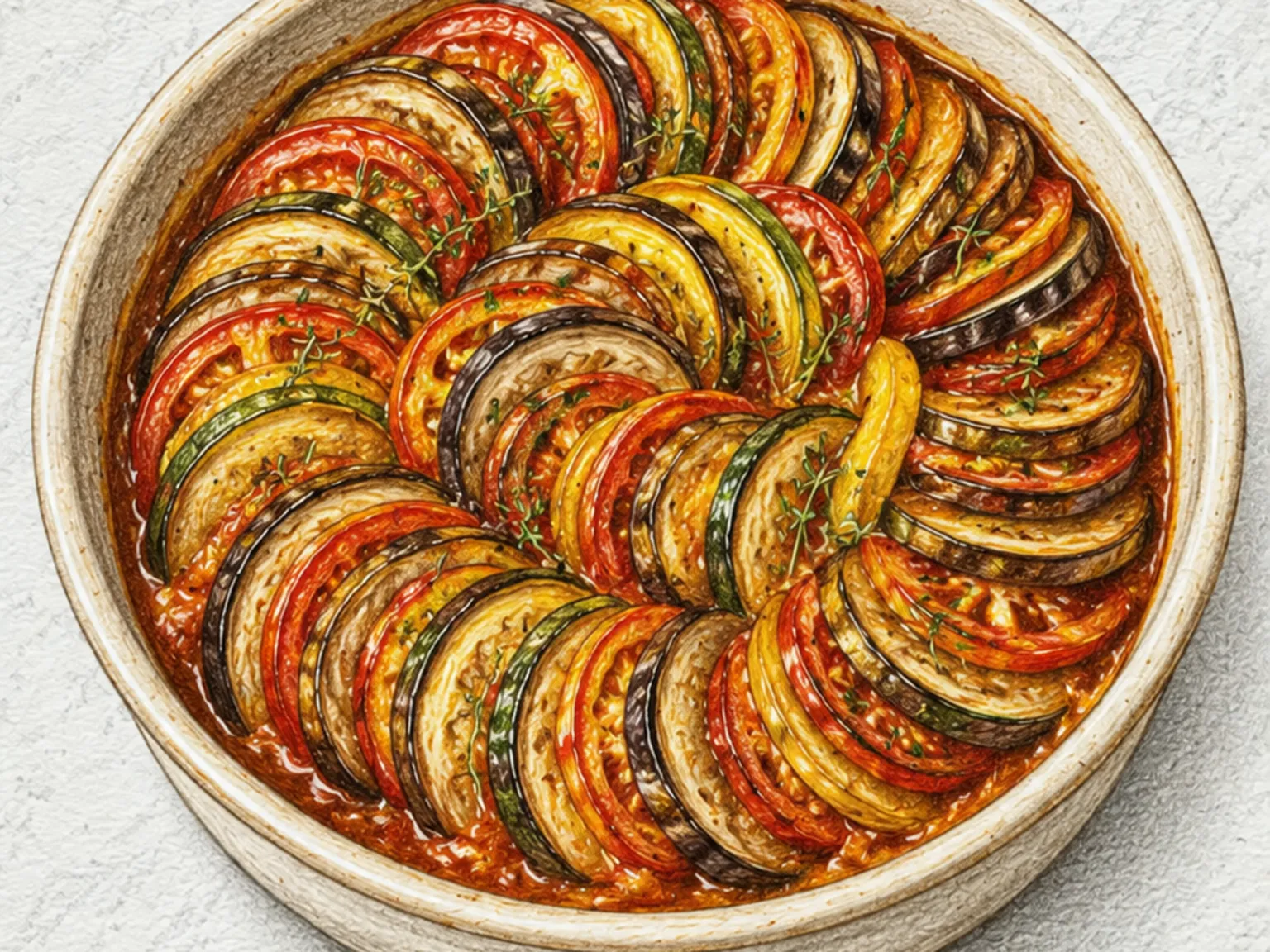
Ratatouille is a vegetable dish originating from the Provence region of France. It consists of eggplant, zucchini, tomato, and bell pepper, all of which are sliced into thin rounds. These vegetables are layered in overlapping circular patterns on top of a prepared sauce base before being placed in an oven for slow baking. The foundational sauce for this preparation begins by sauteing a combination of onion, garlic, and finely diced bell pepper in olive oil. As the dish cooks in the oven, the moisture that is naturally released from the layered vegetables combines with this sauteed base. This process results in the formation of a sauce that thickens naturally without the need for additional agents. Ensuring that every vegetable is cut to a precise and uniform thickness is a critical part of the preparation process. When the slices are inconsistent in size, the cooking results will be uneven, causing some thinner pieces to become overly soft or mushy while thicker pieces remain insufficiently cooked. The addition of thyme provides a subtle herbal quality that serves to enhance the inherent sweetness found in the various vegetables. While the dish can be eaten immediately, placing it in the refrigerator overnight and reheating it the following day allows the vegetable juices to integrate more thoroughly with the sauce. This resting period leads to a significant deepening of the overall flavor profile as the components merge together.

🥗 Light & Healthy 🎉 Special Occasion
Prep 20min Cook 40min 4 servings