Choose a eggplant recipe
Start with recipes grouped by cooking time and how they fit the meal.
Within 30 minutes
Easy recipes
As a side dish
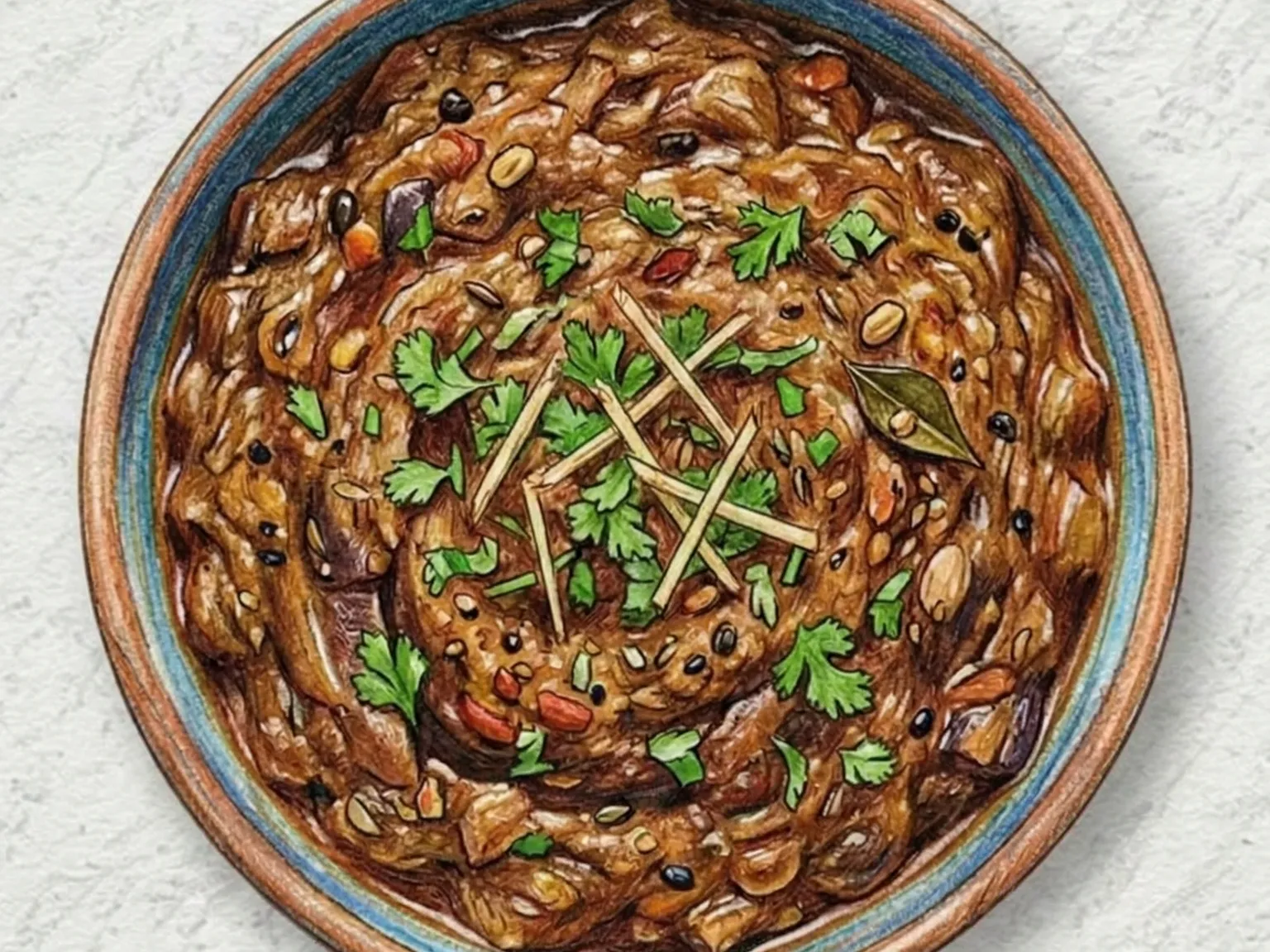
Baingan Bharta (Punjabi Flame-Roasted Smoky Eggplant Mash)
Baingan bharta roasts whole eggplant over a flame until the skin is black, then cooks the softened flesh with onion, tomato, garlic, ginger, cumin, and garam masala. Pierce the eggplant several times before roasting so steam can escape. When all the skin is charred and the center has collapsed, cool it briefly, peel it, and mash it coarsely. Cook the onion, garlic, and ginger, then add the tomato and continue until its moisture evaporates and the mixture becomes a dense paste. Add the spices and eggplant and cook until no loose moisture remains, keeping small pieces of eggplant instead of making a smooth puree.
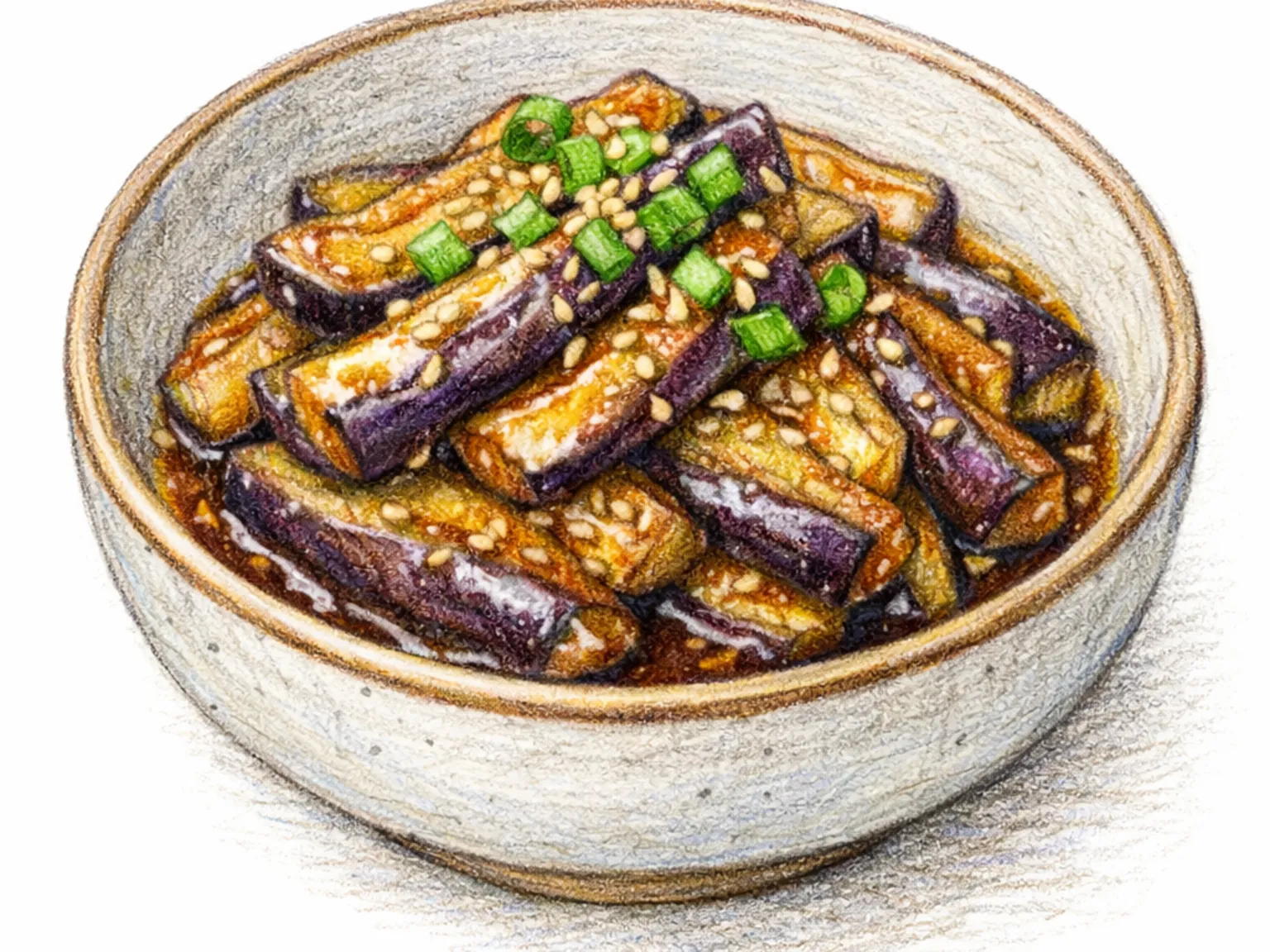
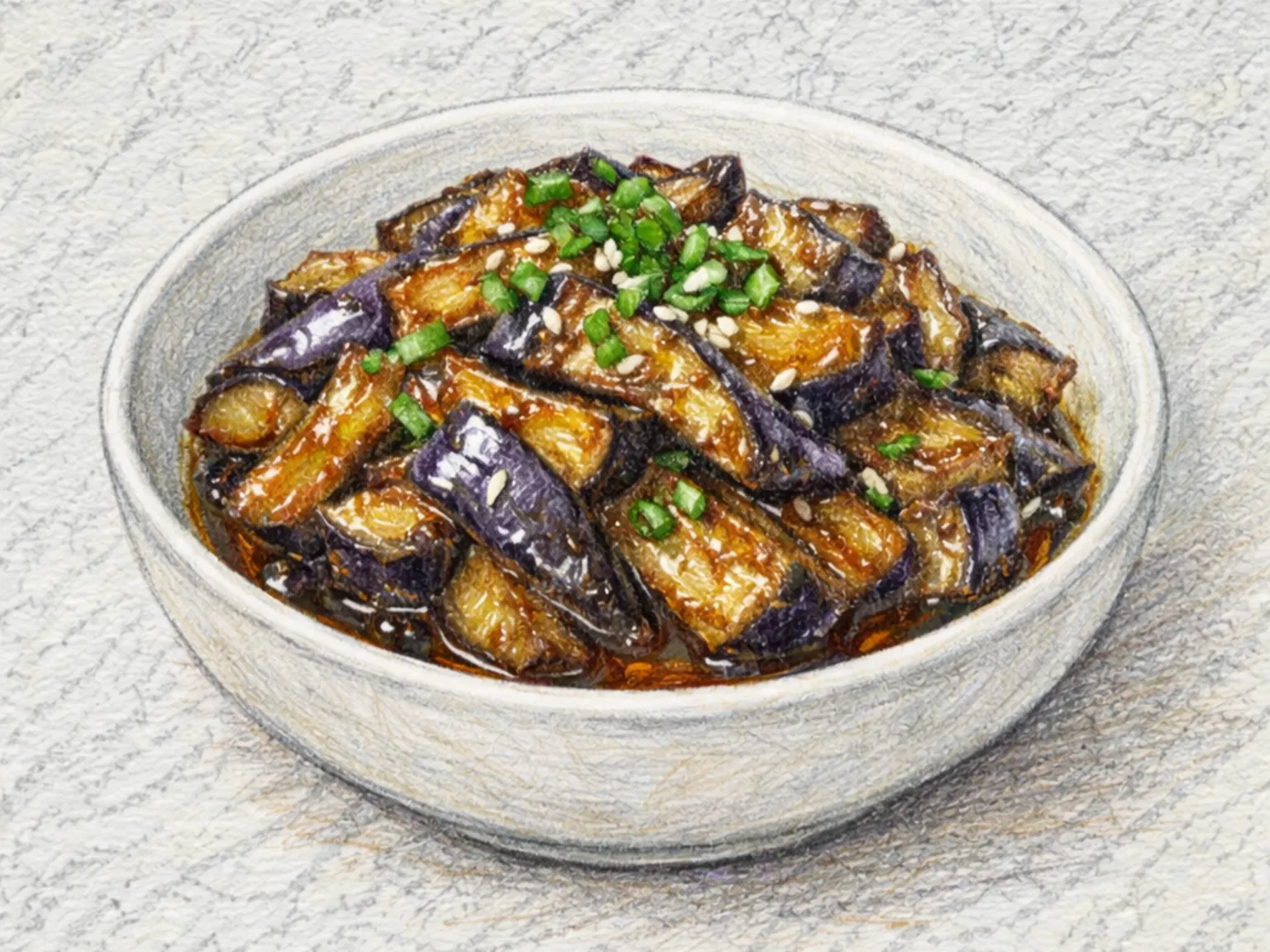
Korean Stir-Fried Eggplant Banchan
Gaji bokkeum turns eggplant, a vegetable Koreans have cultivated since the Goryeo period, into a quick, oil-glazed banchan where cooking speed matters as much as the seasoning. The eggplant is sliced into half-moons, and the pan must be smoking hot before they go in - any hesitation and the pieces steam rather than sear, collapsing into a soggy mass. High heat with restrained oil produces lightly charred edges while the interior becomes silky and almost custardy, two contrasting textures in the same bite. Soy sauce, garlic, and sesame oil go in during the final thirty seconds, sizzling against the hot surface and coating each piece in a thin, caramelized glaze. The result has a concentrated, clean umami quality that a braised preparation cannot match. Because the spongy cellular structure of eggplant absorbs oil rapidly, starting with too much fat leaves each piece greasy rather than glazed - the dish relies on pan temperature, not oil volume. Korean home cooks return to this recipe as a weeknight banchan precisely because the whole process, from cutting board to table, takes under ten minutes, and the payoff is consistently good.
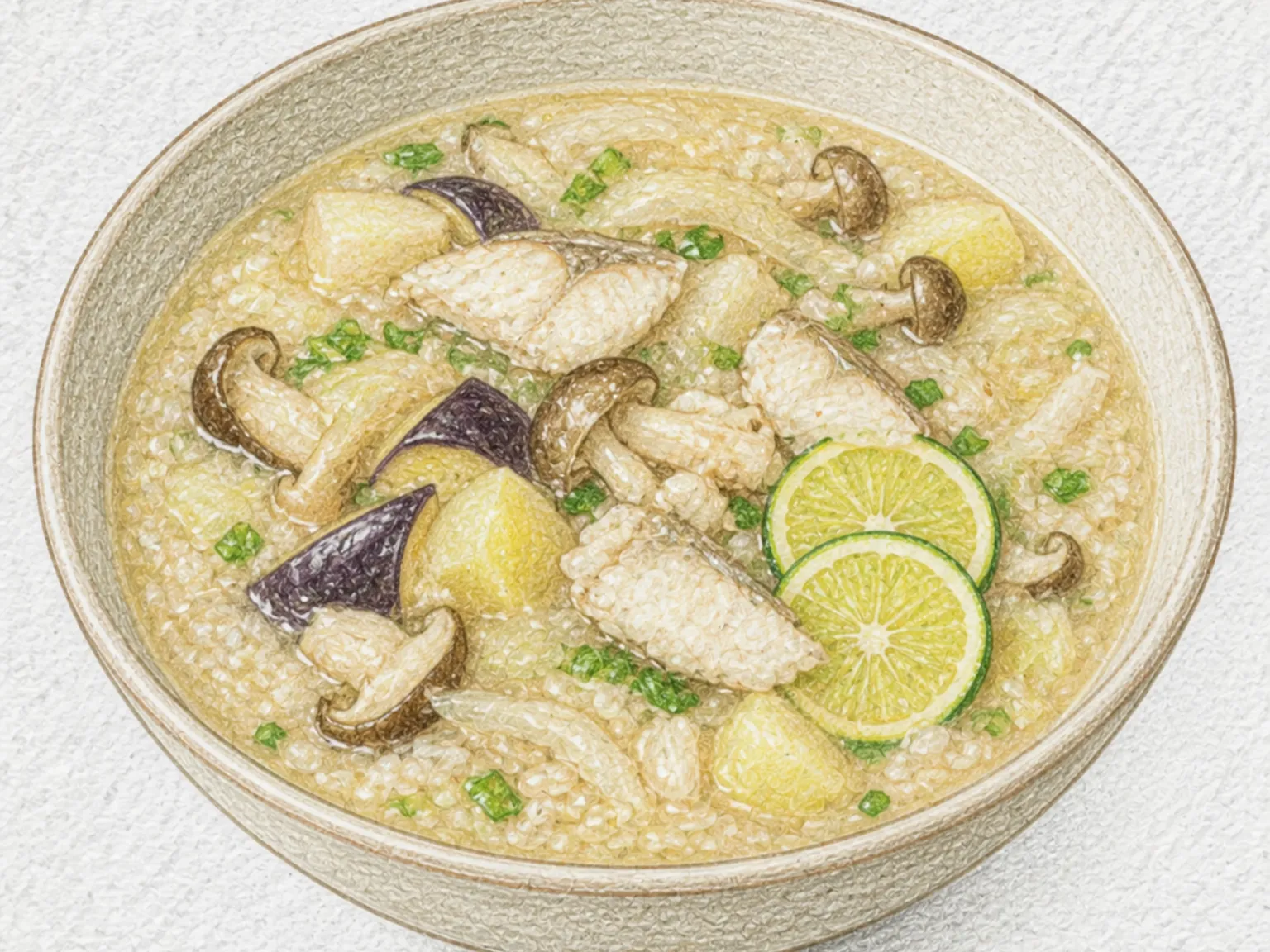
Ayu Rousui (Tokushima Sweetfish and Vegetable Rice Porridge)
Ayu rousui is a rice porridge from the Katsuura area of Tokushima. Rice, potato, eggplant, onion, and shimeji simmer in ample water before whole sweetfish are laid on top and cooked, allowing the fish to season both broth and vegetables. Rousui is regarded as a local form of the word zosui, meaning rice porridge. This recipe uses 150g rice and 1600ml water so the grains can expand fully. Four cleaned ayu enter only after the vegetables begin softening. Once cooked, their heads, bones, and fins are removed carefully and only the flesh returns to the pot. Nesashi miso, garlic chives, thin sudachi slices, and a little shichimi finish the porridge with salty soybean depth, green aroma, citrus, and gentle heat.
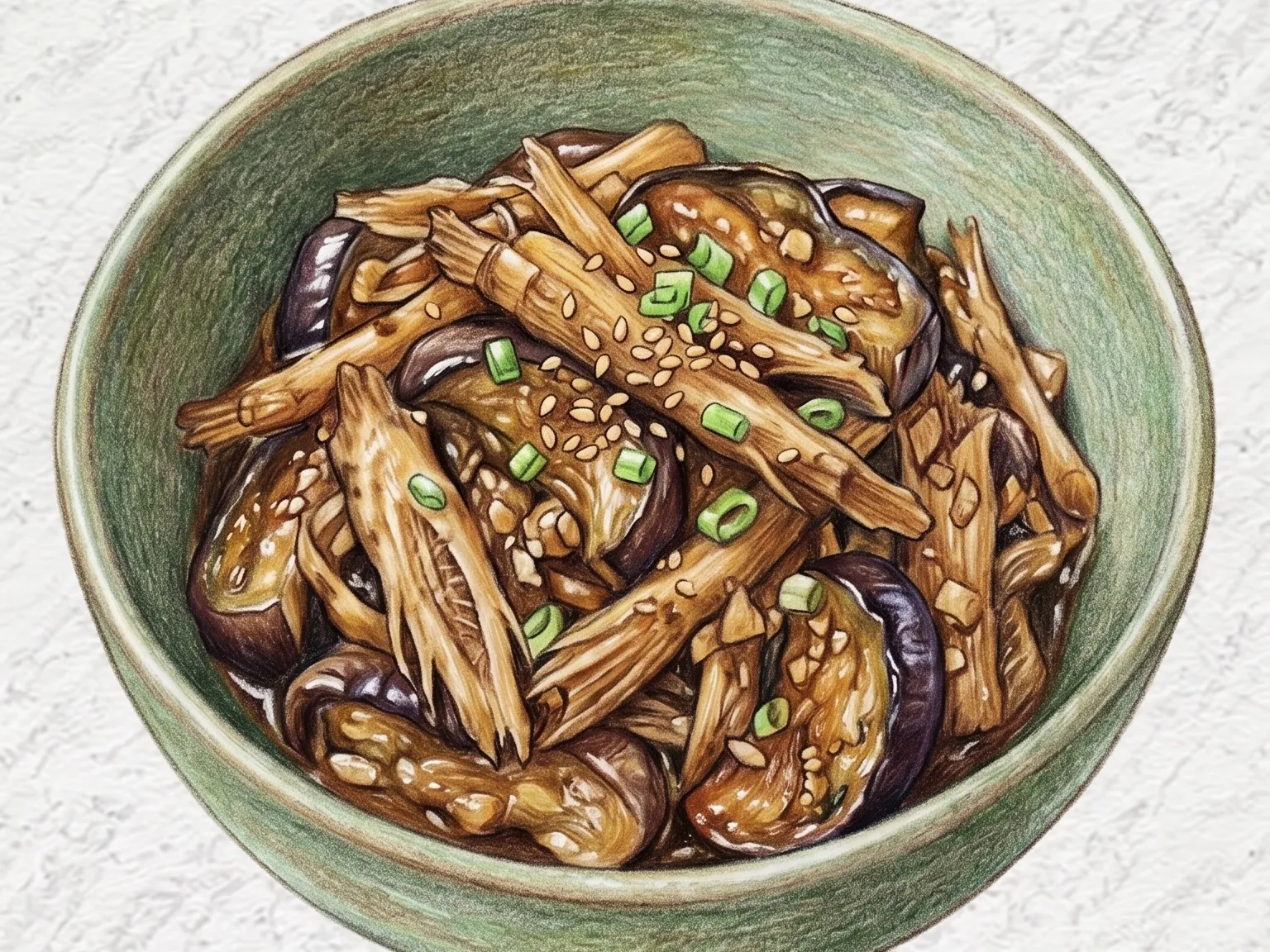
Korean Bellflower Root & Eggplant Soy Stir-fry
Deodeok gaji ganjang bokkeum is a Korean vegetable stir-fry that brings together deodeok root and eggplant in a soy-based seasoning sauce. The two main ingredients offer a clear textural contrast: deodeok has a firm, fibrous chew that resists the heat and holds its structure throughout cooking, while eggplant softens and collapses into a silky, yielding mass as it cooks. A dressing of soy sauce, sesame oil, and minced garlic ties the two together, tempering the slightly earthy, mildly bitter quality of the deodeok while drawing out the natural sweetness latent in both vegetables. The order in which the ingredients go into the pan matters. Eggplant absorbs oil readily and needs more time to soften properly, so it goes in first. Adding deodeok too early would leave it overdone by the time the eggplant reaches the right texture. The fermented umami of soy sauce and the glutamates naturally present in both vegetables layer together to produce depth in the finished dish without any meat. If the deodeok tastes particularly bitter, soaking the peeled pieces in lightly salted water for ten minutes before cooking draws out a significant portion of the bitterness. Salting the eggplant and letting it sit briefly before cooking removes excess moisture, reducing the amount of oil it absorbs and producing a cleaner, firmer texture in the finished stir-fry. The dish can be served directly over hot rice or presented as a standalone banchan. Like most soy-seasoned vegetable preparations, the flavors deepen and mellow overnight in the refrigerator, making leftovers worth keeping.
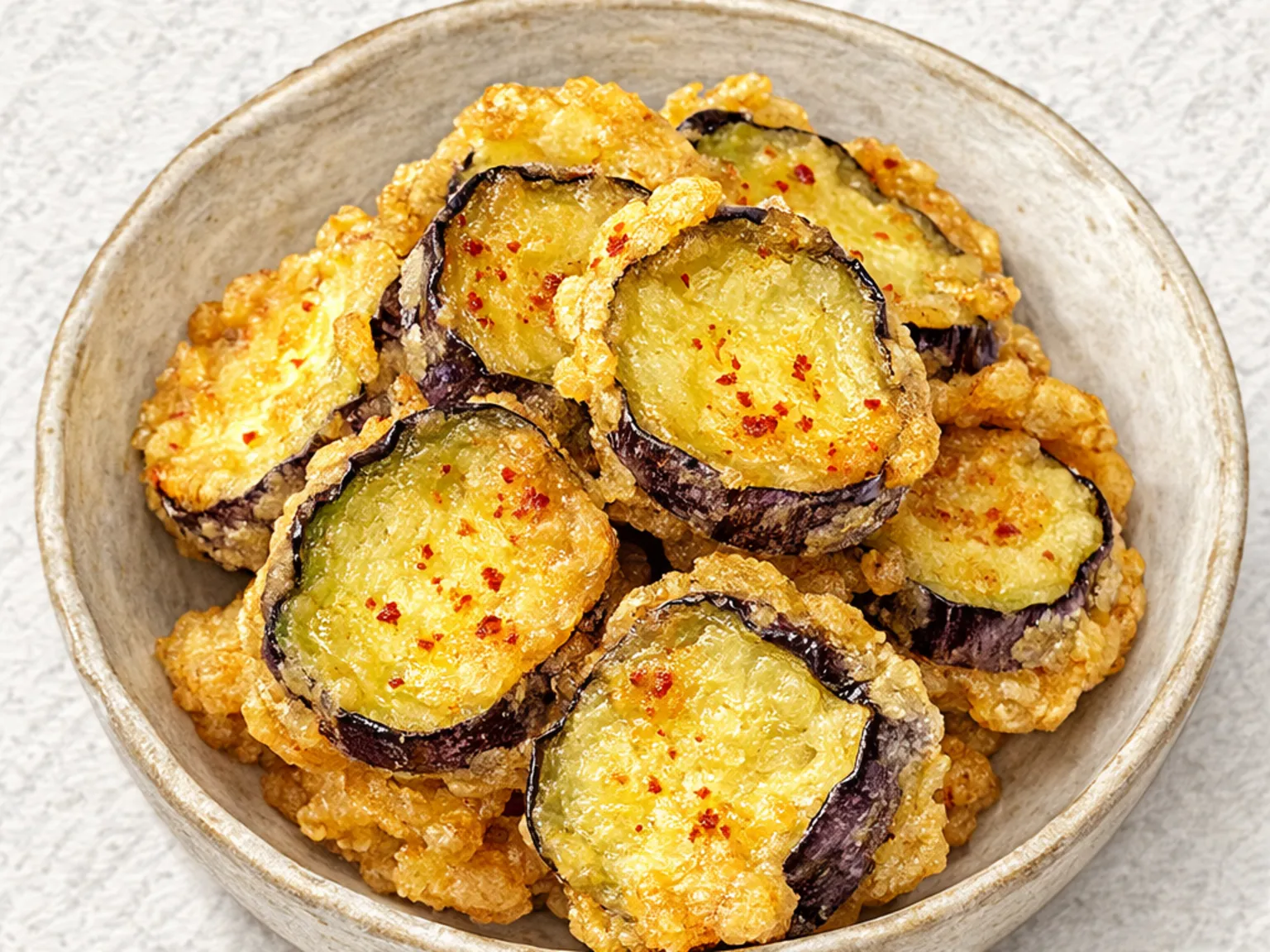
Korean Gaji Twigim Bites (Crispy Eggplant Bites)
Gaji-twigim-bites cuts eggplant into bite-sized pieces and fries them in a cold batter made with sparkling water. The carbonation in the batter creates air pockets within the coating as it hits the hot oil, producing a crust that is notably lighter and crisper than one made with plain water. The eggplant's high moisture content means the interior steams gently within the crust, turning silky soft without collapsing. The batter should be mixed just before frying and kept cold throughout -- allowing it to sit and warm up causes the bubbles to dissipate and the coating to turn dense. A small addition of gochugaru to the frying mix gives the crust a subtle, even heat that offsets the eggplant's natural mildness and the richness of the frying oil. The purple skin of the eggplant remains partially visible through the golden coating after frying, making these bites visually distinctive from standard vegetable tempura. A dipping sauce of soy sauce and a few drops of sesame oil pairs cleanly with the lightly seasoned batter.
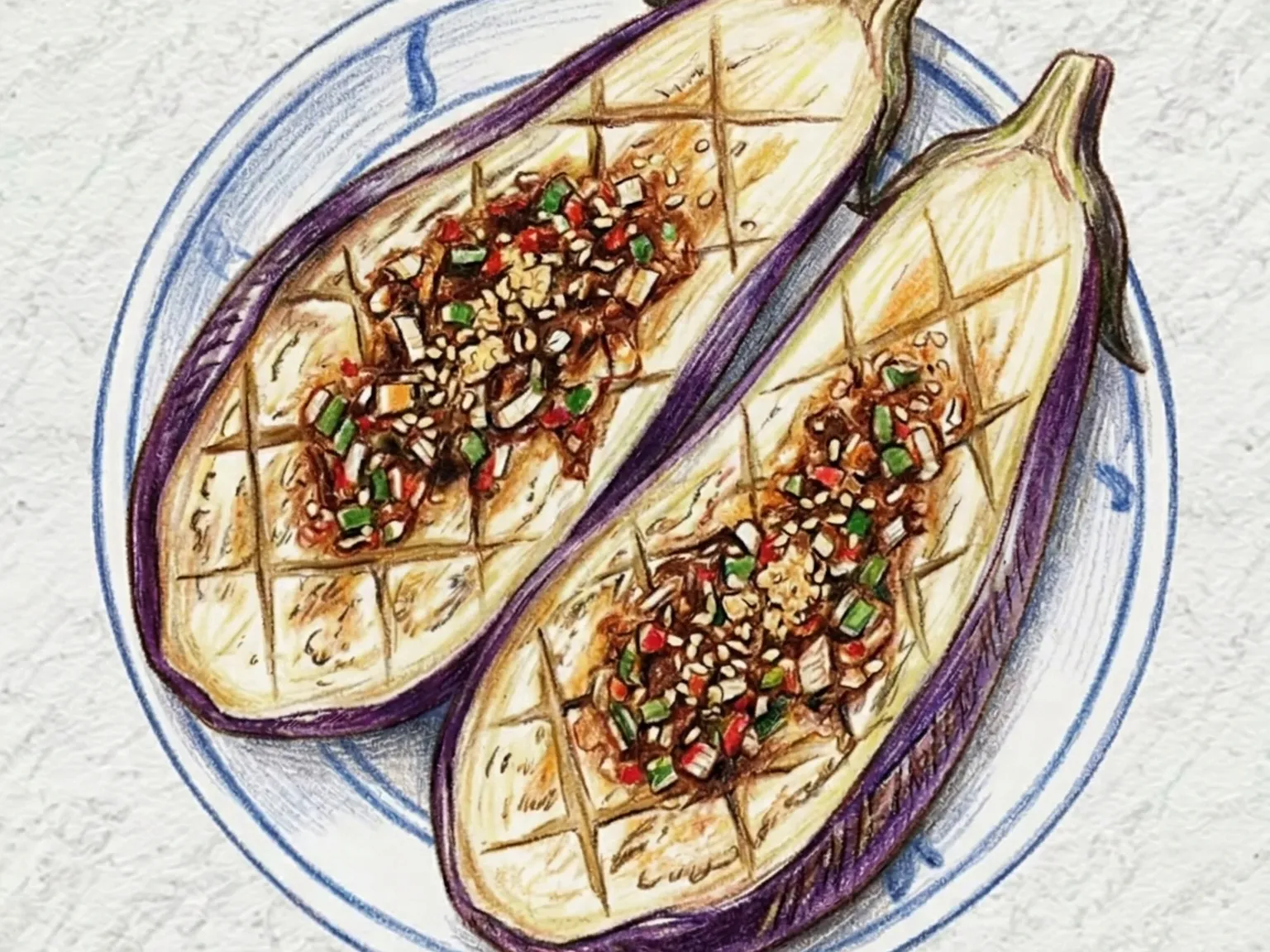
Korean Grilled Eggplant (Soy Garlic Glazed Charred Eggplant)
Gaji-gui is Korean grilled eggplant, halved lengthwise, scored, and cooked slowly over medium heat until the flesh turns soft and creamy while the skin side holds a slight firmness. Salting the cut surface and resting it for ten minutes before cooking pulls out bitter moisture through osmosis and also reduces how aggressively the eggplant absorbs oil during grilling. The scoring pattern is functional as well as visual, creating channels that allow heat to penetrate into the thick interior so the eggplant cooks through evenly rather than remaining hard at the center while the outside chars. Covering the pan after laying the eggplant cut-side down traps steam and gently cooks the flesh from within. A sauce of soy sauce, sesame oil, Korean chili flakes, minced garlic, and sliced green onion is spooned over the grilled surface while the eggplant is still hot, and the residual heat releases the fragrance of garlic and sesame oil while the liquid seeps into the scored channels and seasons the interior. Toasted sesame seeds scattered over the top add a final layer of nuttiness that gives the otherwise mild eggplant the complexity needed to hold its own as a proper banchan.
Dojo-jiru Loach and Udon Soup
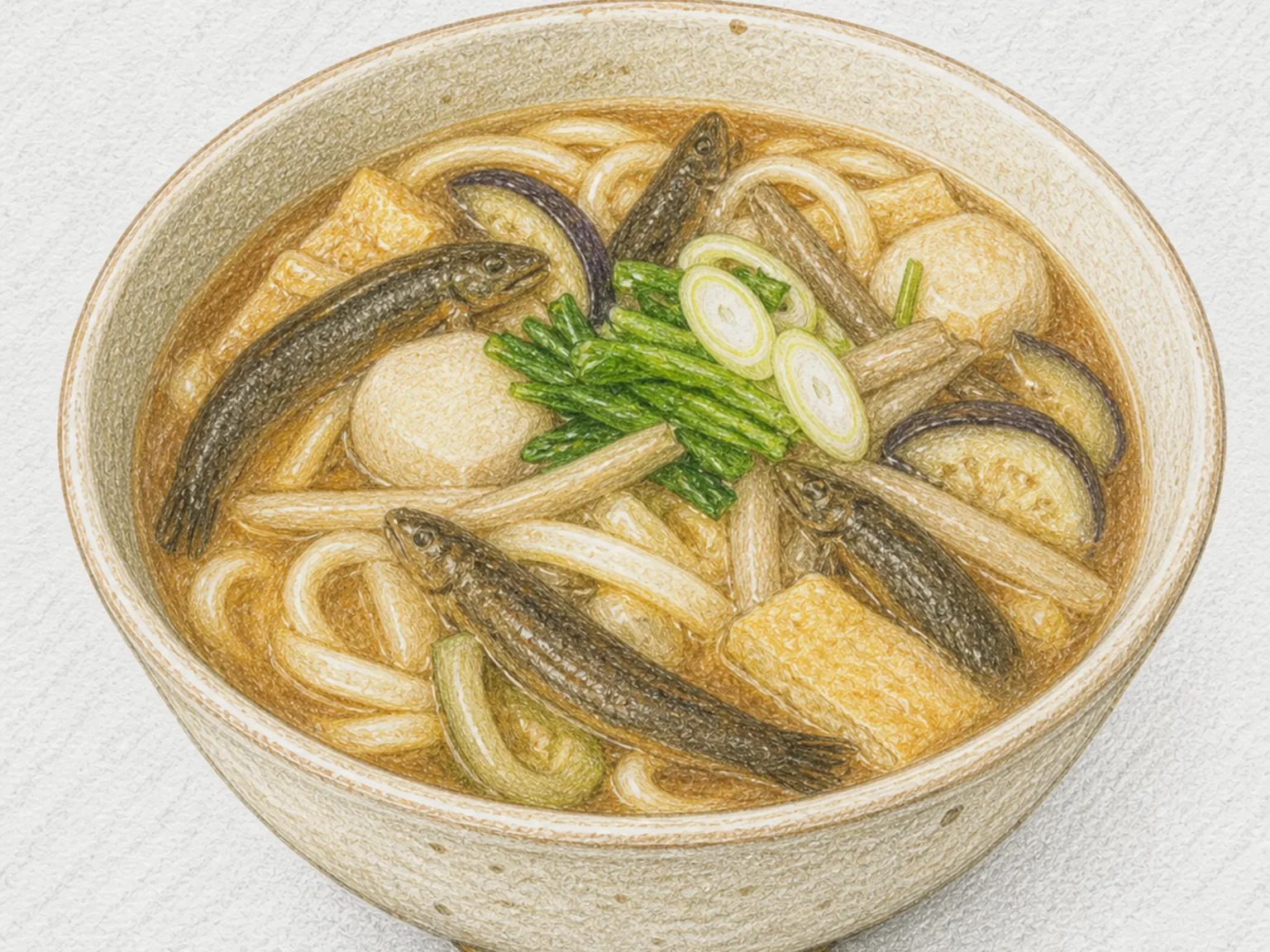
Dojo-jiru is a Kagawa summer soup from the Chusan region and part of Tosan, simmering whole loach with burdock, eggplant, taro, fried tofu, leek, and fresh udon in miso broth. After rice planting, men once caught loaches from ponds and rivers and cooked them in large cauldrons to share with neighbors, making the dish part of communal work and gatherings. Thoroughly simmered fish that can be eaten with its fine bones and noodles cooked directly in the broth create a substantial bowl. Raw freshwater fish can carry parasites and environmental contaminants. Never use self-caught fish; obtain only farmed, professionally purged and processed cooking-grade loach from a licensed supplier, cook it the same day, separate raw-fish tools, and heat every fish completely in the soup.
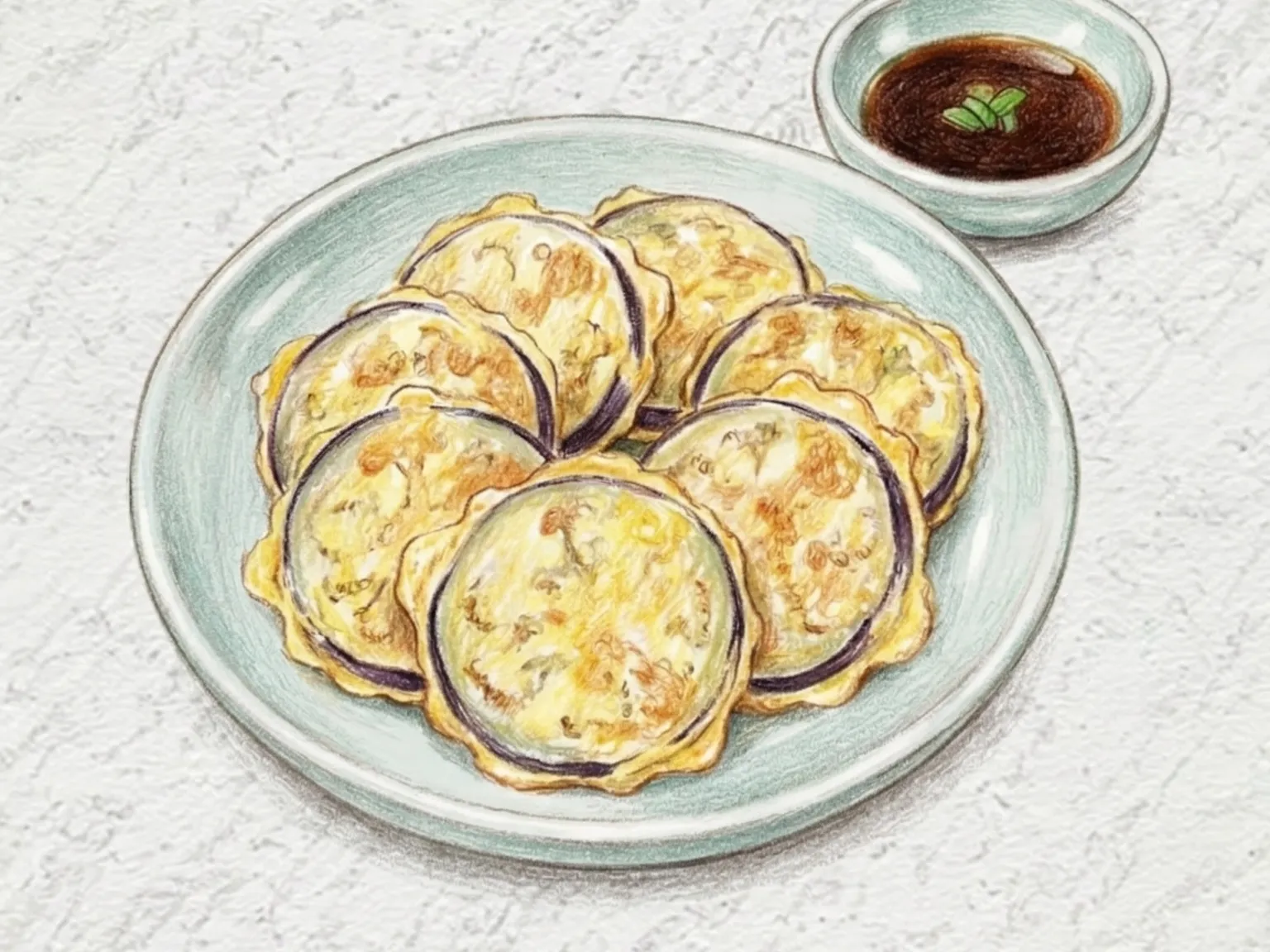
Korean Eggplant & Pork Pancake
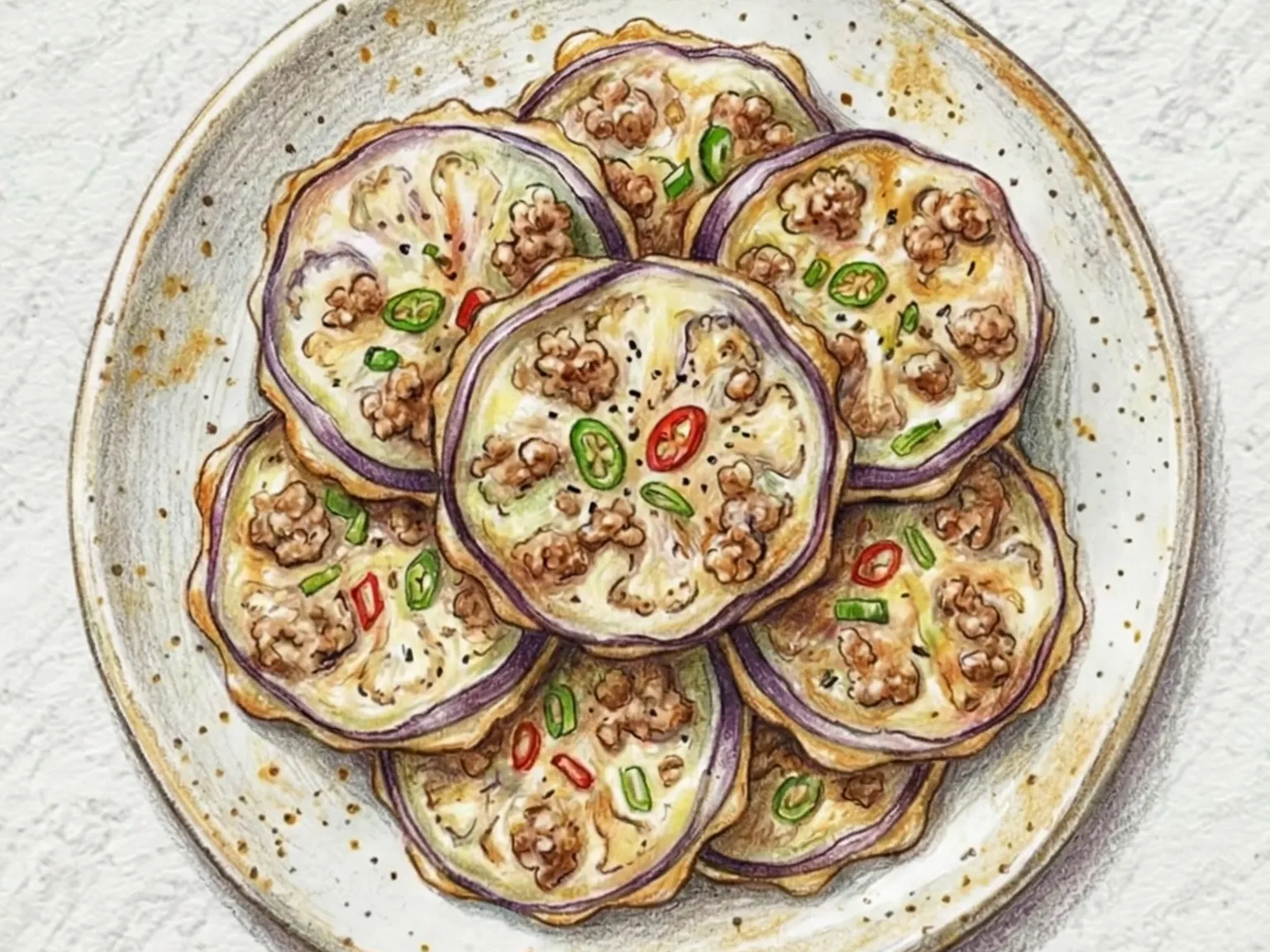
Thick eggplant slices are topped with seasoned ground pork, coated in Korean pancake batter, dipped in beaten egg, and pan-fried until golden on both sides. As the eggplant absorbs oil over heat, it cooks through to a silky, yielding texture, and the pork filling stays juicy inside the batter crust. Minced garlic and onion season the pork mixture and mask any gaminess, while the egg coating forms a thin, evenly browned exterior. A soy-based dipping sauce sharpens the mild eggplant and savory pork into a balanced bite.
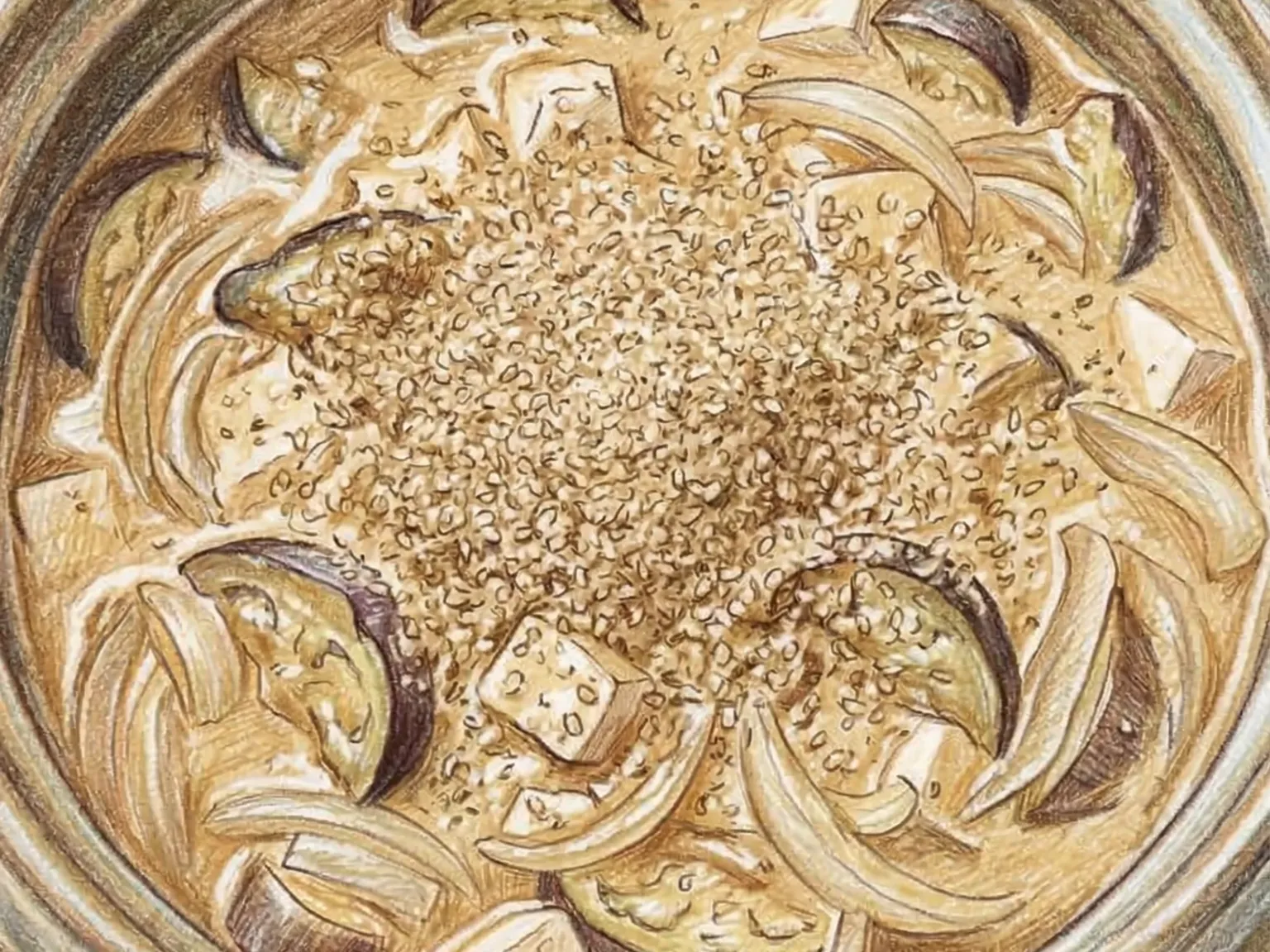
Korean Eggplant, Perilla & Tofu Stew
Gaji deulkkae dubu jjigae is a Korean stew of eggplant and tofu simmered in a broth thickened with ground perilla seeds. Ground perilla stirred into anchovy-kelp stock creates a creamy, nutty liquid as heat activates the oils in the seeds. Eggplant cooks slowly in this broth, breaking down until completely soft and absorbing the surrounding perilla flavor. Dicing the tofu into small cubes increases its surface area and allows the broth to penetrate from more angles. Gochugaru adds a layered warmth to the richness of the perilla, and soup soy sauce provides the salt structure. The textural contrast between the silky, yielding eggplant and the firmer tofu gives the stew a variety that makes each spoonful interesting. Even without meat, the fatty acids in perilla provide enough body and satiety to make this a substantial main-course stew, particularly well suited to vegetarian cooking.
Korean Braised Eggplant and Tofu
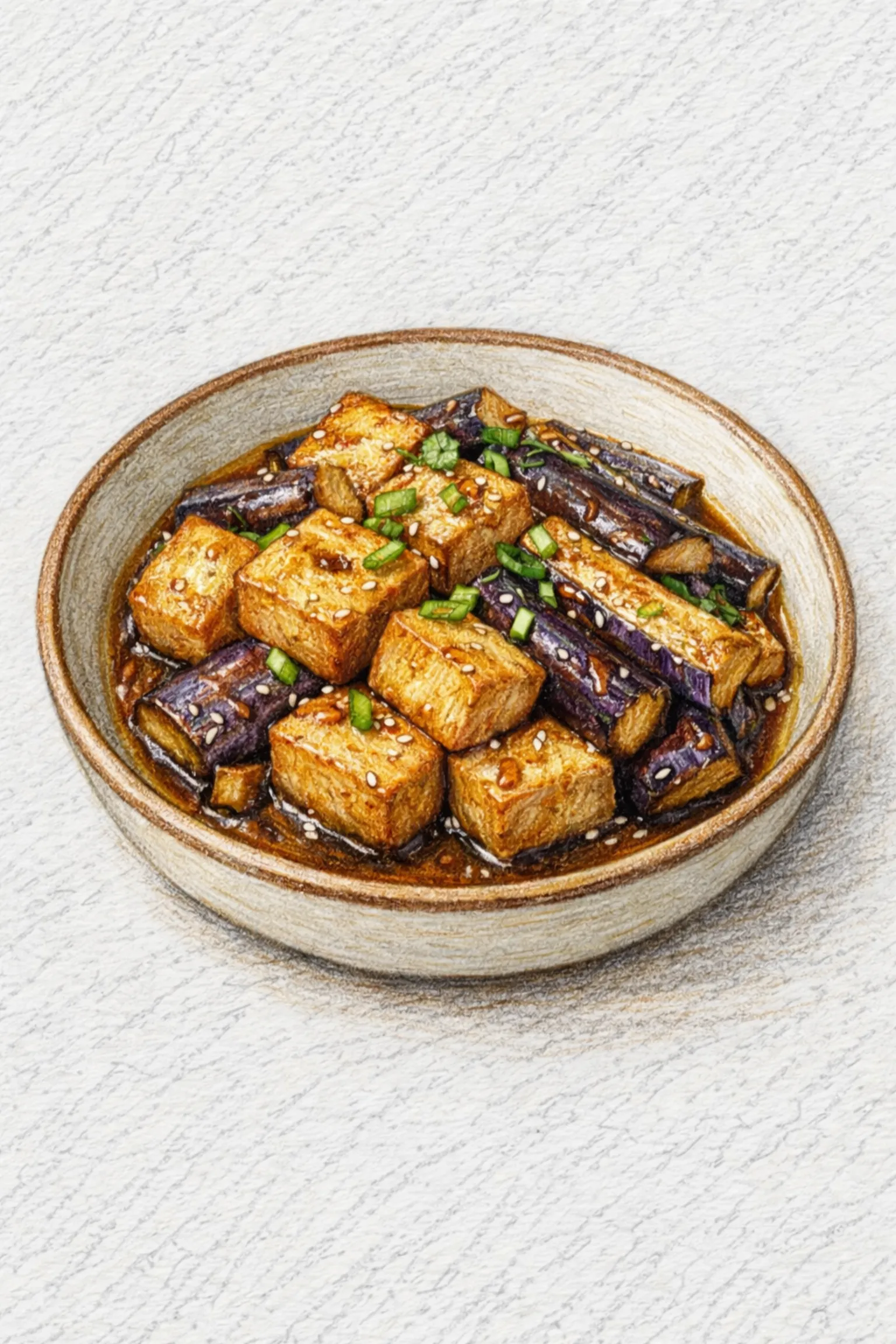
Gaji dubu jorim combines eggplant and firm tofu braised together in a soy sauce and gochugaru seasoning. The eggplant soaks up the sauce and turns silky soft, while the pan-seared tofu holds its shape with a slight firmness on the outside. Garlic and green onion round out the flavor, creating a lightly spicy, umami-rich side dish. Salting the eggplant briefly before cooking draws out excess moisture so the pieces absorb the seasoning more deeply without falling apart during braising. Draining the tofu and pan-frying it on both sides before adding it to the sauce keeps the blocks intact and gives the surface a slightly chewy resistance against the tender eggplant. A practical vegetarian-friendly banchan that delivers both protein and vegetables without any meat.
Achara-zuke Pickles
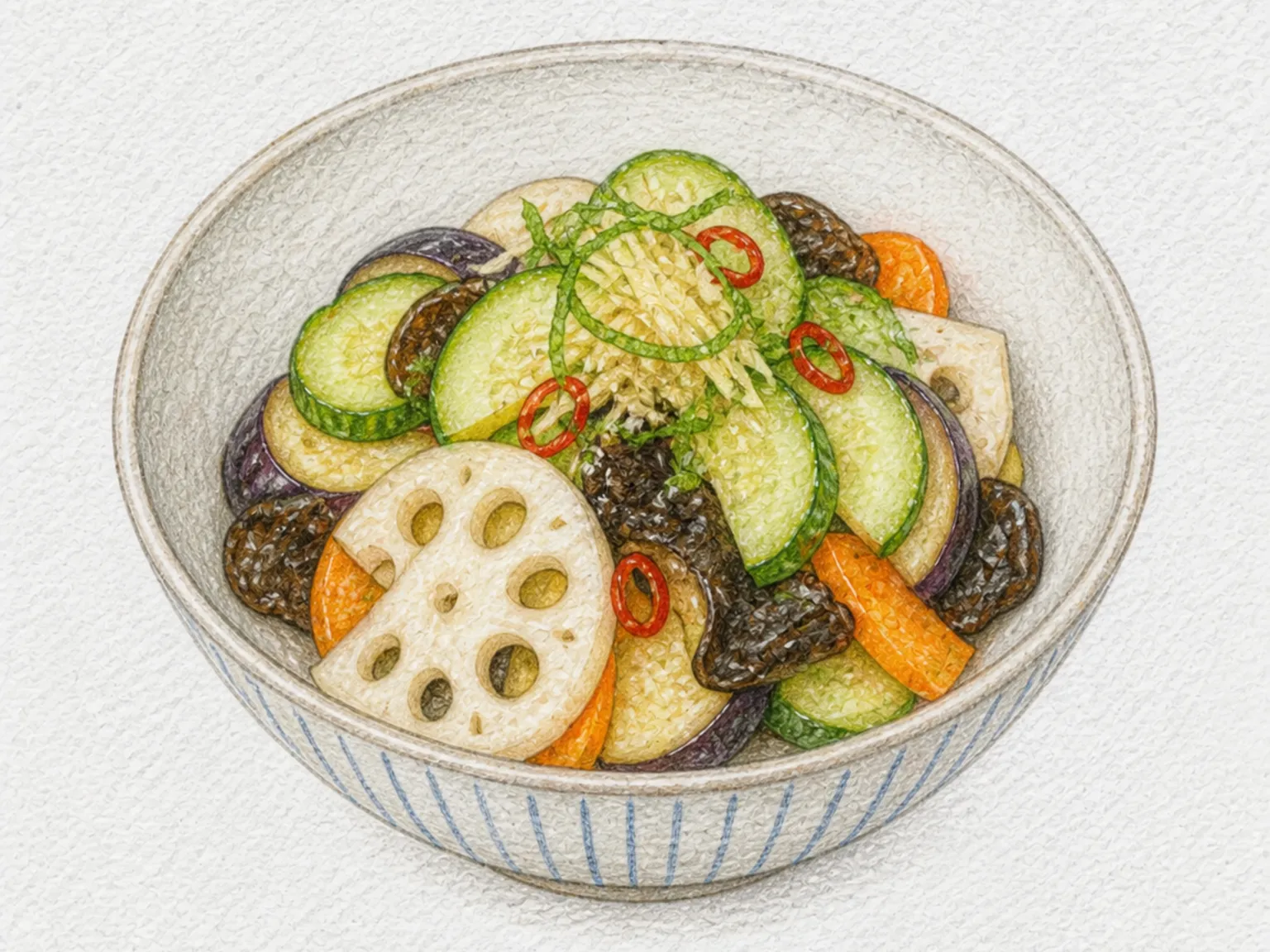
Achara-zuke is a Fukuoka mixed pickle made from thinly cut cucumber, eggplant, lotus root, carrot, and wood ear mushroom in sweet vinegar with red chili. The cucumber and eggplant are salted to release water, while the firm vegetables are briefly boiled so each keeps a distinct bite. The vinegar mixture is brought to a boil, cooled completely, then combined with shiso and ginger before resting. It was prepared as a durable summer and Bon Festival dish before refrigeration and is now also served as an everyday side dish.
Pasta alla Norma (Sicilian Fried Eggplant Tomato Pasta)
Pasta alla Norma originates from Catania in Sicily and combines fried eggplant cubes with a simple tomato passata sauce. Salting the eggplant beforehand draws out moisture and bitterness, resulting in firmer pieces that absorb less oil during cooking. Garlic provides aromatic depth, while fresh basil added off-heat preserves its fragrance. The dish is named after Vincenzo Bellini's opera Norma, a tribute to its status as a Sicilian culinary masterpiece. It can be served as a noodle dish, with simple accompaniments chosen to match the sauce, broth, or topping.
Gochujang Eggplant Ricotta Lasagna Rolls
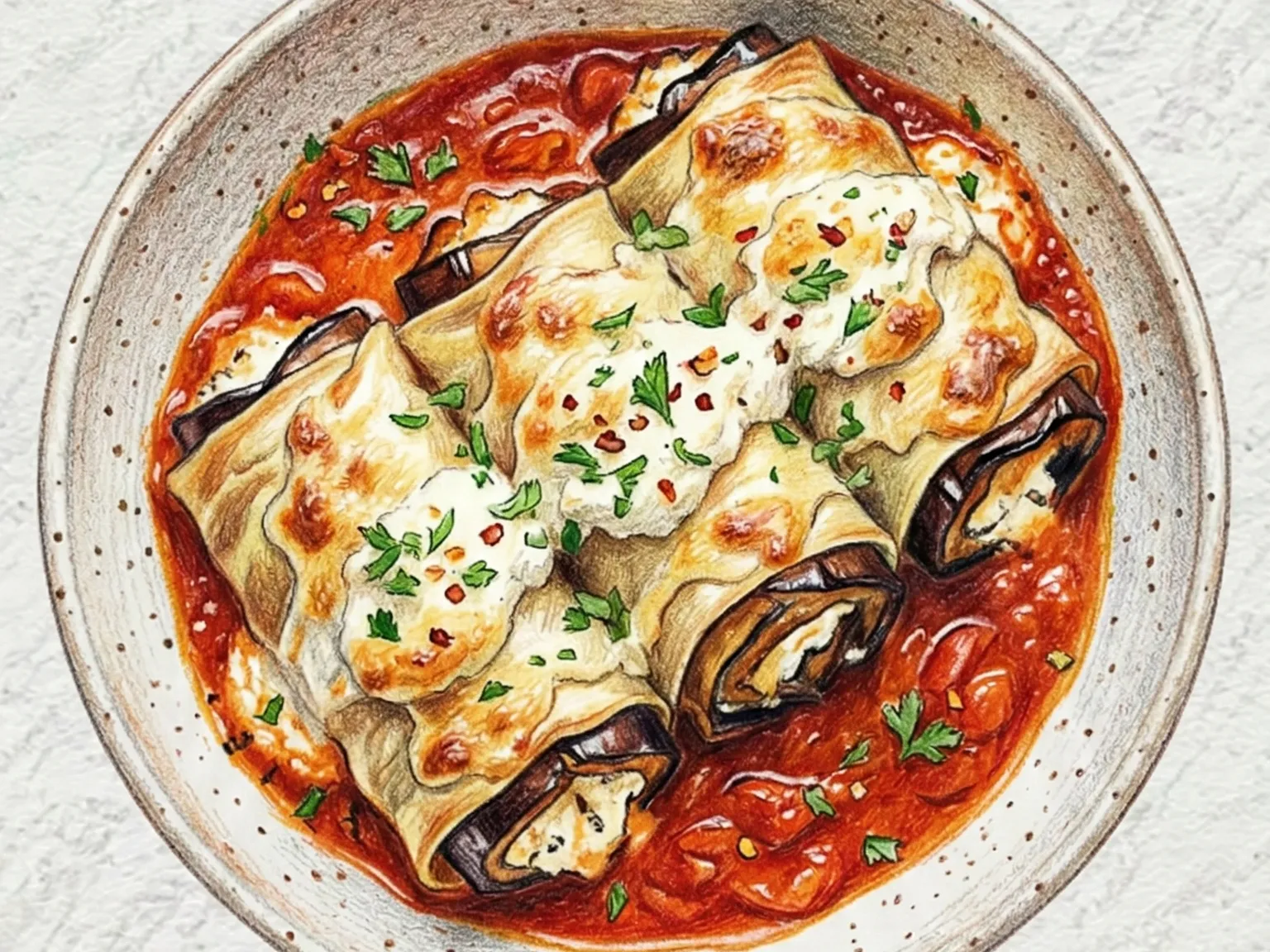
Gochujang eggplant ricotta lasagna rolls begin by roasting diced eggplant with olive oil and salt at 200 degrees Celsius. Fifteen minutes in the oven drive out moisture and collapse the flesh into a soft, dense interior. The roasted eggplant is combined with ricotta and spread across boiled lasagna sheets, which are rolled tight and arranged in a baking dish.
Roasted Eggplant Pomegranate Salad
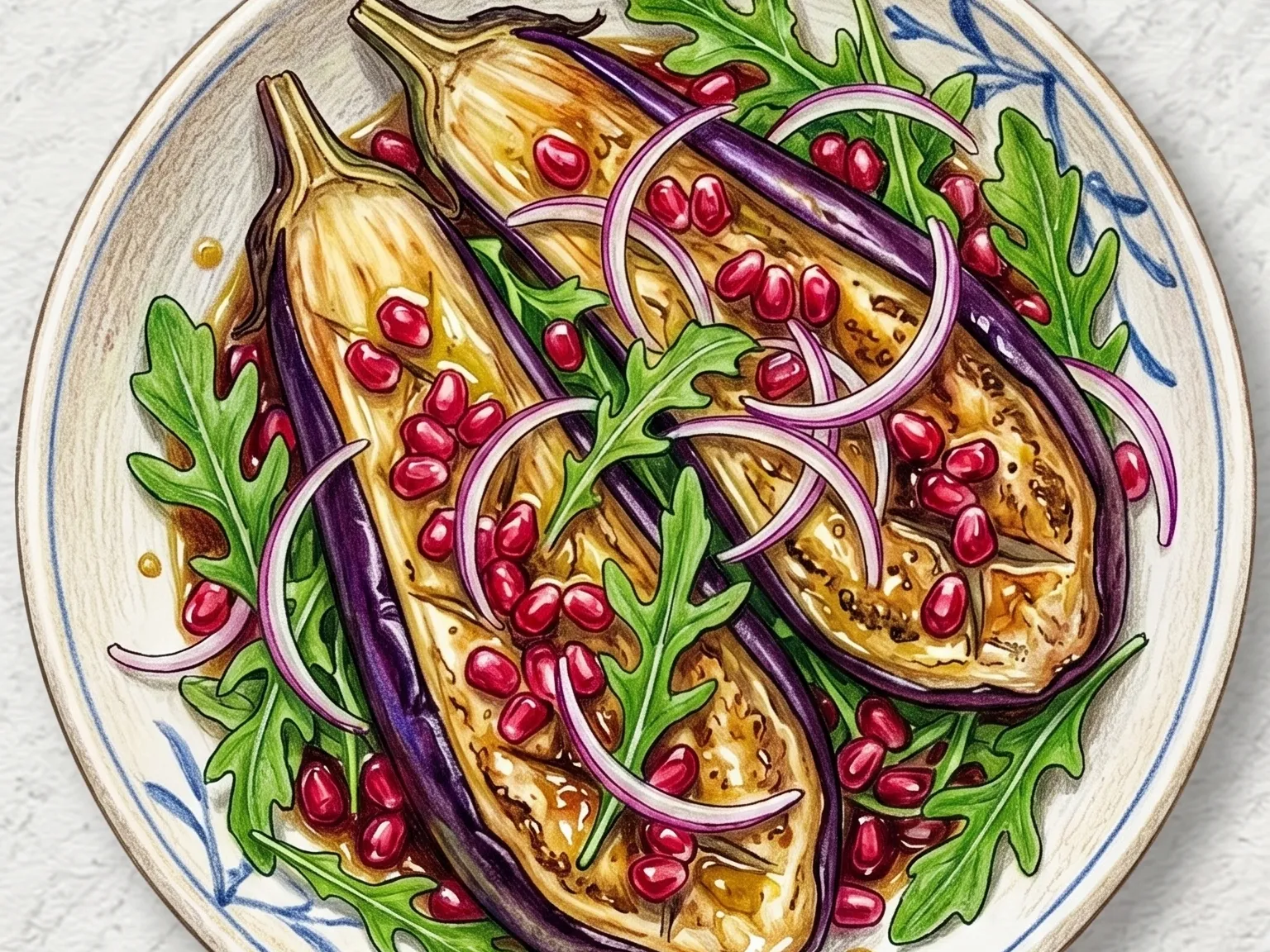
Eggplant is halved and roasted until the flesh turns silky-sweet and almost cream-like. Pomegranate seeds burst with tart juice that cuts through the eggplant's rich depth. Arugula adds peppery bitterness preventing sweetness from dominating, and red onion contributes a sharp, lingering bite. A vinaigrette of red wine vinegar and honey layers sweet-acid notes across the plate, while the contrast of ruby pomegranate, purple onion, and green arugula makes the dish visually striking. It can be served as a light side dish, with simple accompaniments chosen to match the sauce, broth, or topping.
Caponata (Sicilian Sweet and Sour Eggplant Stew)
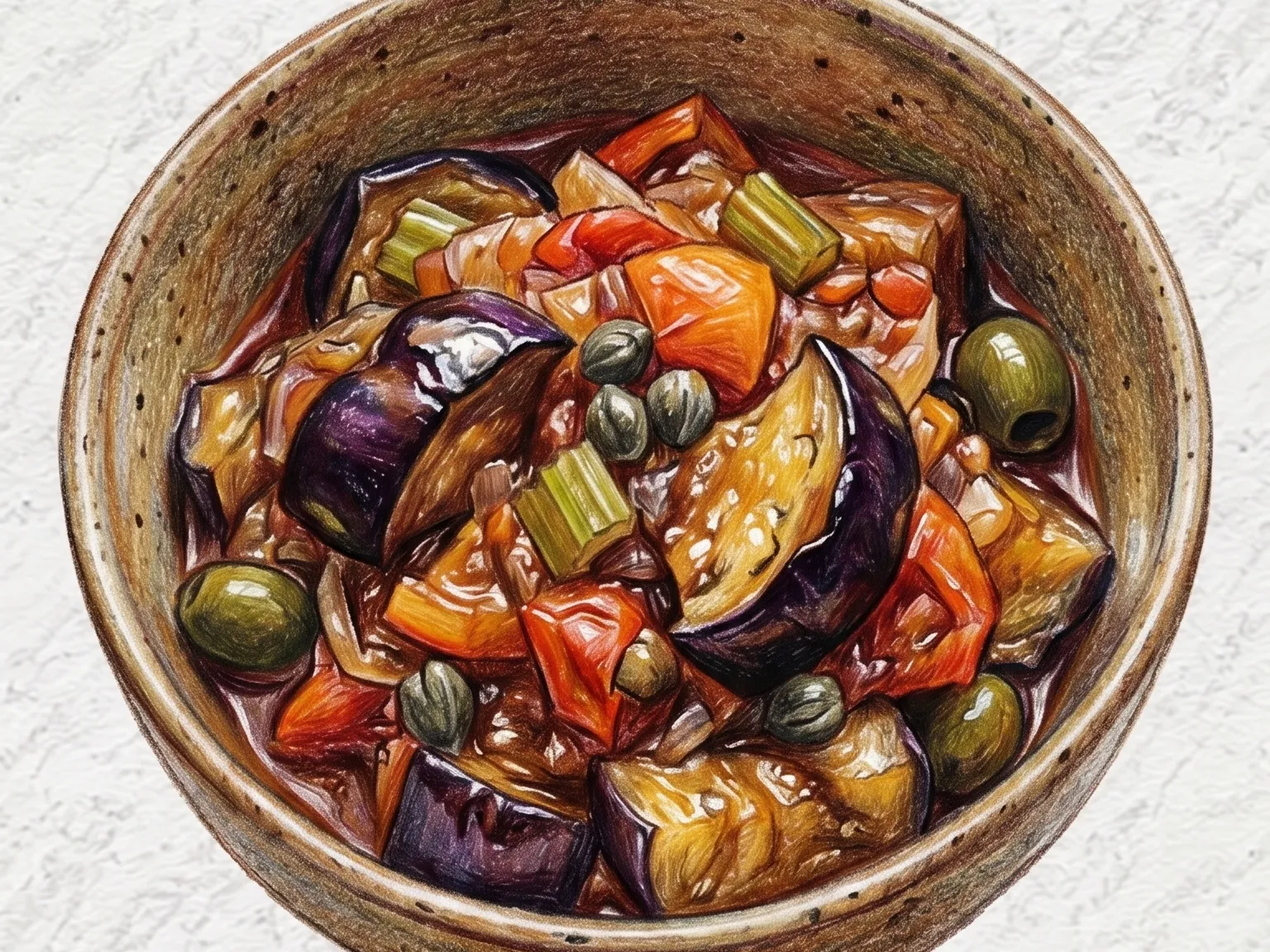
Caponata is a Sicilian sweet-and-sour vegetable dish centered on eggplant, with a flavor profile built around the concept of agrodolce - a deliberate balance of vinegar tartness and sugar sweetness that defines much of southern Italian cooking. Diced eggplant is fried in generous amounts of olive oil until the edges color and the interior becomes silky, having absorbed enough fat to create a soft, yielding texture. Celery, added later and cooked only briefly, stays crisp throughout, providing a textural contrast that keeps the dish from becoming uniformly soft. Tomatoes, capers, and green olives go in together, forming the braising base into which the fried eggplant is returned and simmered until the liquid thickens. Red wine vinegar and sugar are stirred in at the end and adjusted to taste - the vinegar should be assertive but not sharp, the sugar present but not sweet. The briny depth from the olives and capers layers over the tomato acidity, producing a complexity that would seem to require more ingredients than it actually does. Like most braises and marinades, caponata is considerably better after an overnight rest in the refrigerator, when the separate flavors meld into a unified whole. Serve at room temperature on toasted bread as an antipasto, or alongside grilled meat or fish as a condiment.
Fish Head Curry (Coconut Tamarind Curry)
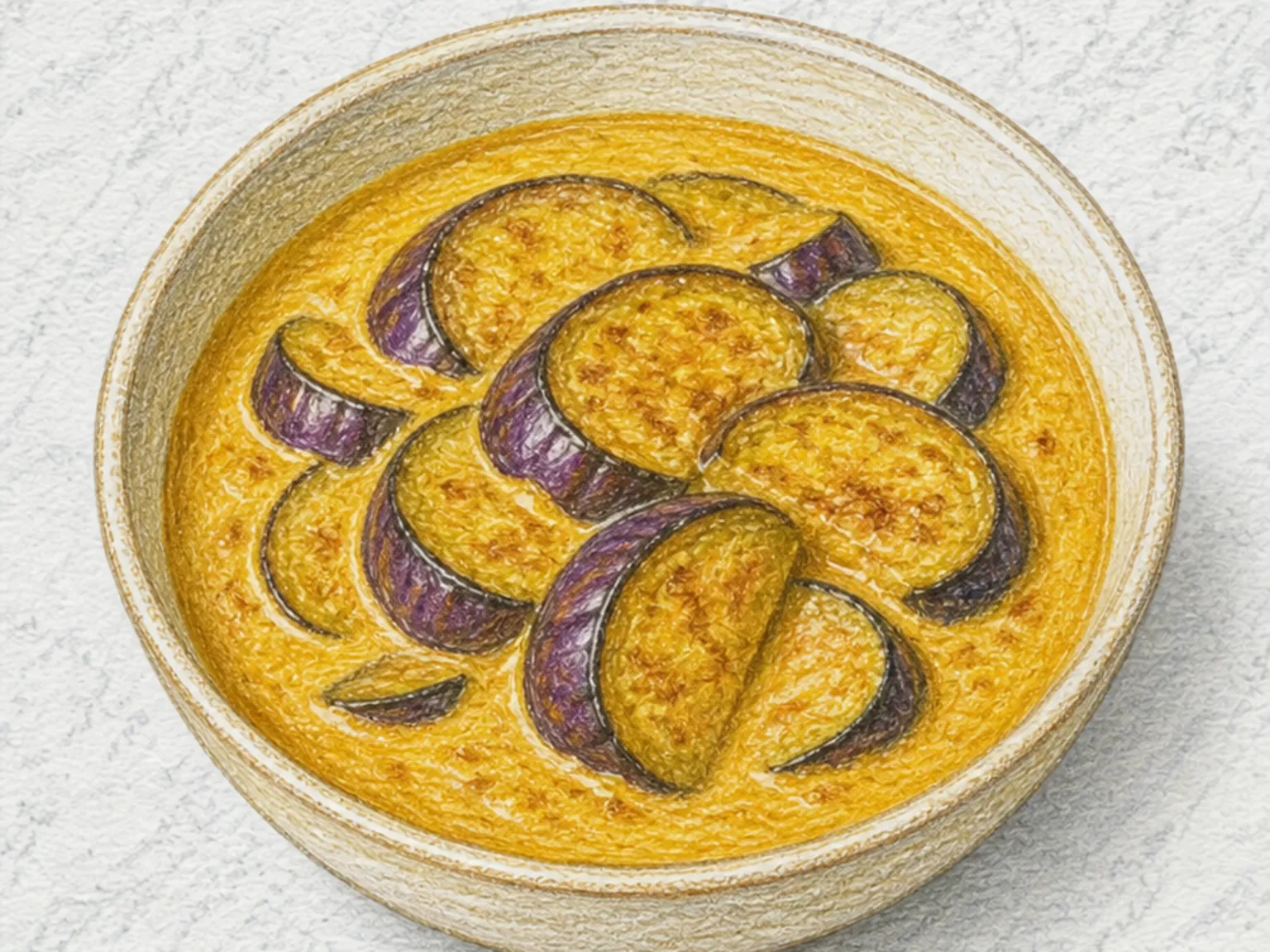
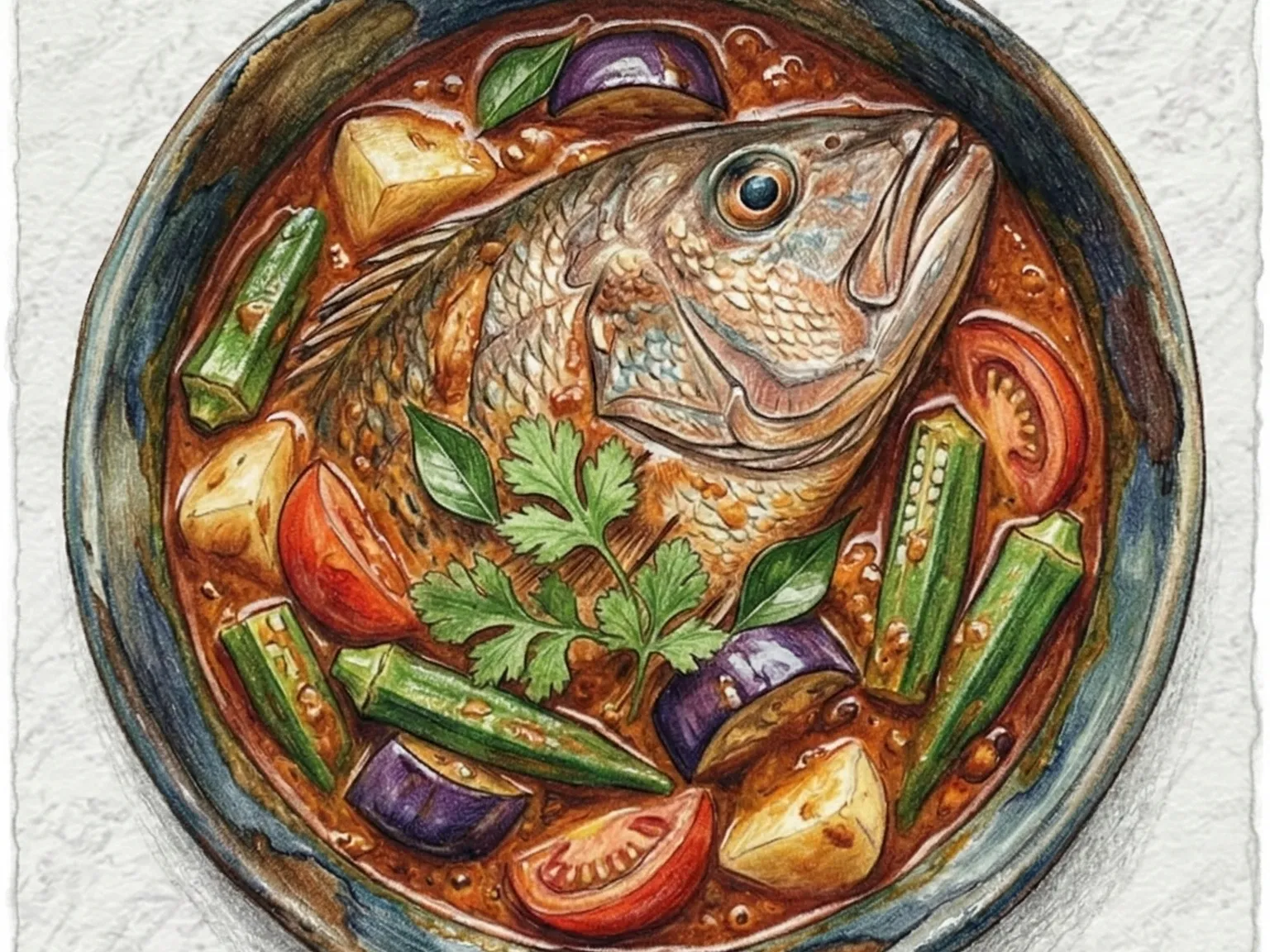
Fish head curry was born in 1940s Singapore when M.J. Gomez, a Keralite immigrant, noticed his Chinese customers' preference for fish heads and merged it with a South Indian curry base, creating a dish that belongs to no single culture yet has become distinctly Singapore's own. A whole snapper head, sometimes weighing over a kilogram, simmers in a thick gravy of coconut milk, tamarind, curry leaves, fennel seeds, and fish curry powder. The collagen from the head dissolves into the broth and gives it a sticky, lip-coating richness. The cheek meat and the gelatinous flesh around the eyes absorb the most curry and are the most prized portions at the table, claimed first by Indian, Malay, and Chinese diners alike. Okra, eggplant, and tomato stew alongside, and each vegetable interacts with the gravy differently: okra thickens, eggplant absorbs like a sponge, and tomato contributes fruity acidity. The dish is traditionally served on a banana leaf with steamed rice at restaurants along Singapore's Little India, where the head arrives in a clay pot still bubbling from the kitchen.
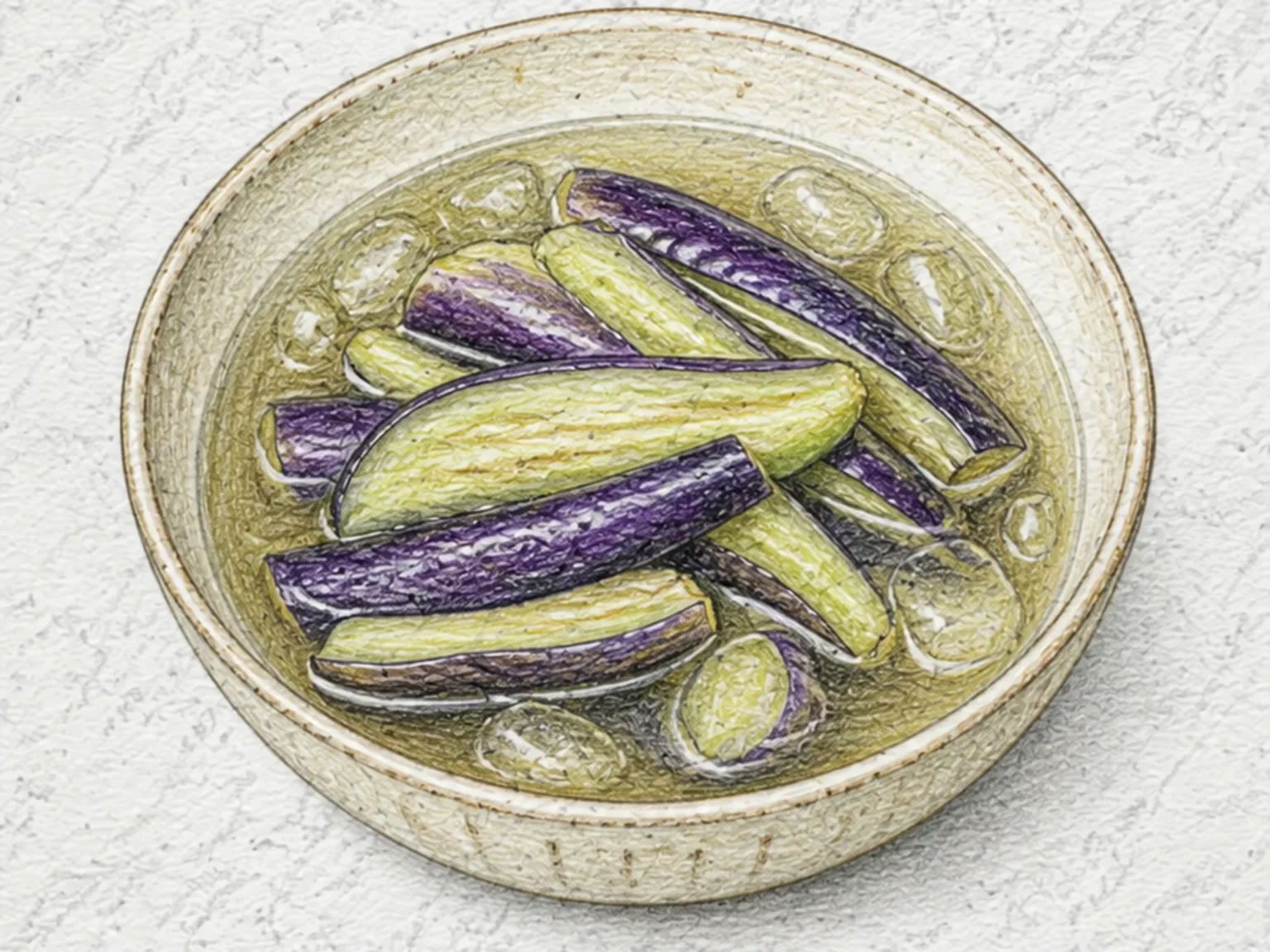
Korean Steamed Eggplant Vinegar Salad
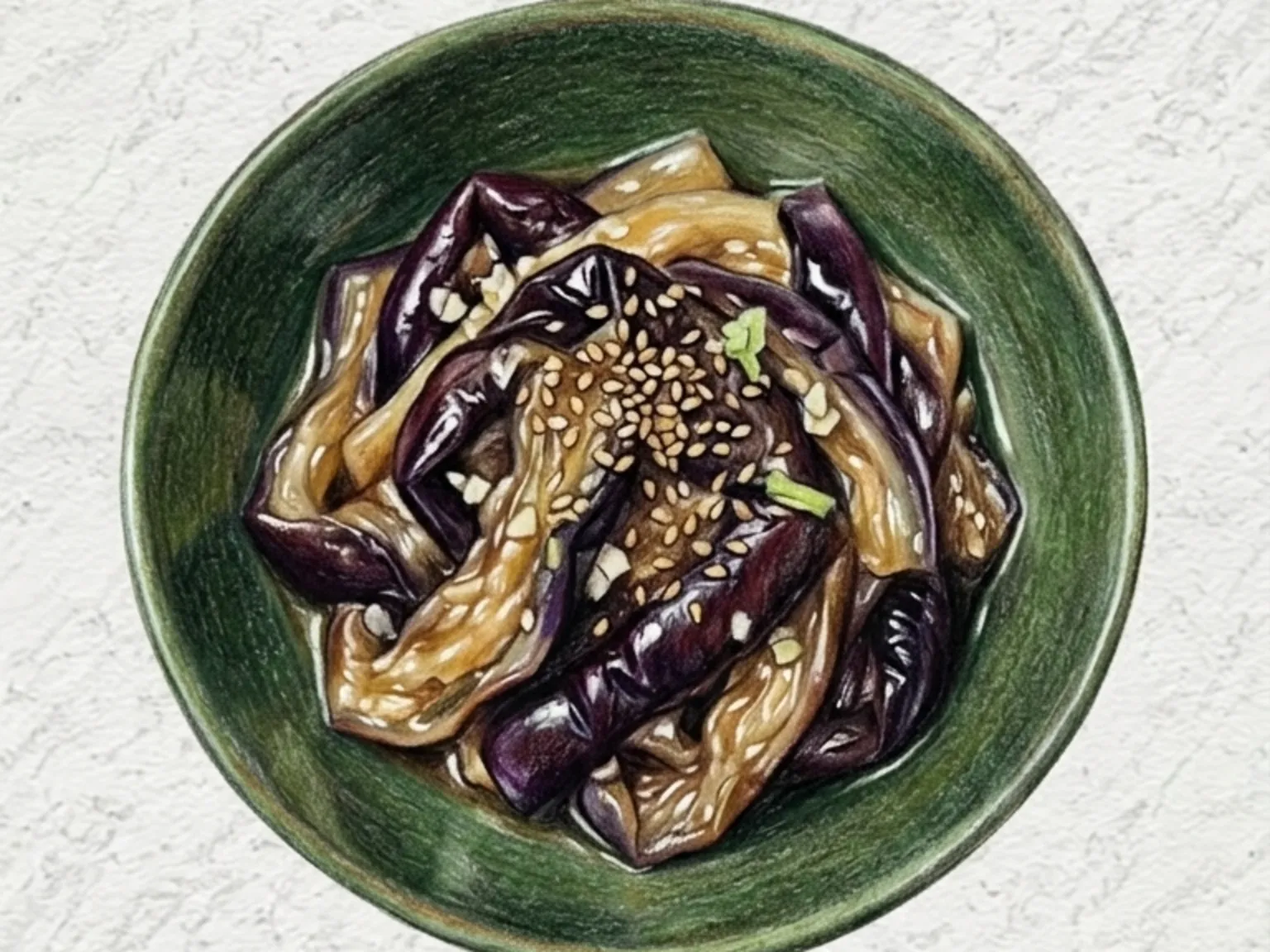
Gaji-chorim-muchim takes eggplant in the opposite direction from bokkeum preparations, which rely on high heat and oil. Here, the eggplant is gently steamed and chilled before being dressed cold with a vinegar-forward sauce. The eggplant is halved lengthwise, scored on the flesh side, and steamed for eight minutes until the interior turns translucent and completely soft. After cooling fully, it is torn by hand along the grain into long strips, exposing a rough, irregular surface that grips the dressing. Soy sauce, rice vinegar, sugar, minced garlic, and gochugaru combine into a bright, tangy-spicy dressing that lifts the eggplant's subtle natural sweetness rather than masking it. Steamed eggplant torn into strips has a silky, almost slippery quality that is entirely distinct from stir-fried or grilled eggplant. The dressing can be made more generous to serve the dish as a refreshing cold salad style. A few drops of sesame oil and a scatter of sesame seeds finish it off with a nutty note. This banchan is especially well suited to Korea's hot and humid summer months.
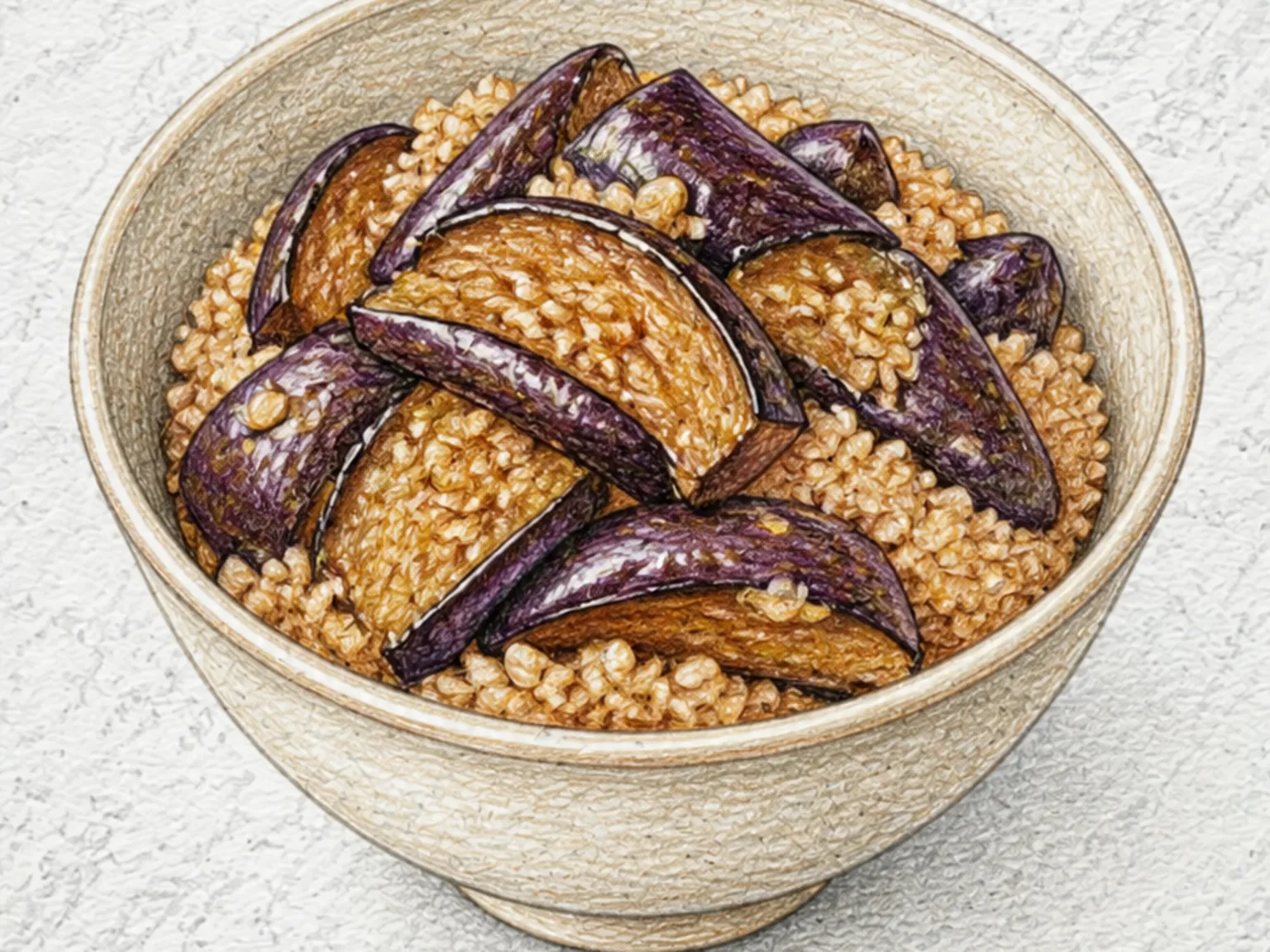
Eggplant Rice
A comforting one pot rice dish cooked with eggplants sautéed in a savory soy sauce seasoning. Warm, soft, and rich in flavor.
Korean Gaji Dwaejigogi Bokkeum (Eggplant Pork Stir-fry)
Gaji-dwaejigogi-bokkeum is a Korean stir-fry of eggplant and thinly sliced pork seasoned with garlic and fresh chili. The eggplant absorbs oil and sauce as it cooks, turning silky and melding seamlessly with the pork. Garlic infuses the dish with an intense aroma while the chili adds a clean, sharp heat throughout. Heat management is the key technique: cooking over medium or low heat draws too much moisture from the eggplant and turns the stir-fry into a braise, so keeping the flame high from the start is what gives the eggplant a lightly seared exterior. A combination of soy sauce and gochujang balances salt and spice, and a final drizzle of sesame oil rounds out the flavor with a nutty finish. It is especially flavorful in summer when eggplant is at its seasonal peak, and it is substantial enough to serve over rice as a complete meal.
Amego Hirara-yaki (Miso Trout Hot-Plate Grill)
Amego hirara-yaki is an Iya-region dish from Tokushima in which grilled freshwater trout, tofu, chicken, konjac, potatoes, mushrooms, and vegetables cook together over a sweet miso sauce. A heated flat stone called a hirara served as the original griddle; a covered electric hot plate provides a practical home method. The dish is ready when the trout and potatoes are cooked through and the miso mixture has reduced from a loose liquid to a thin glaze around the ingredients.
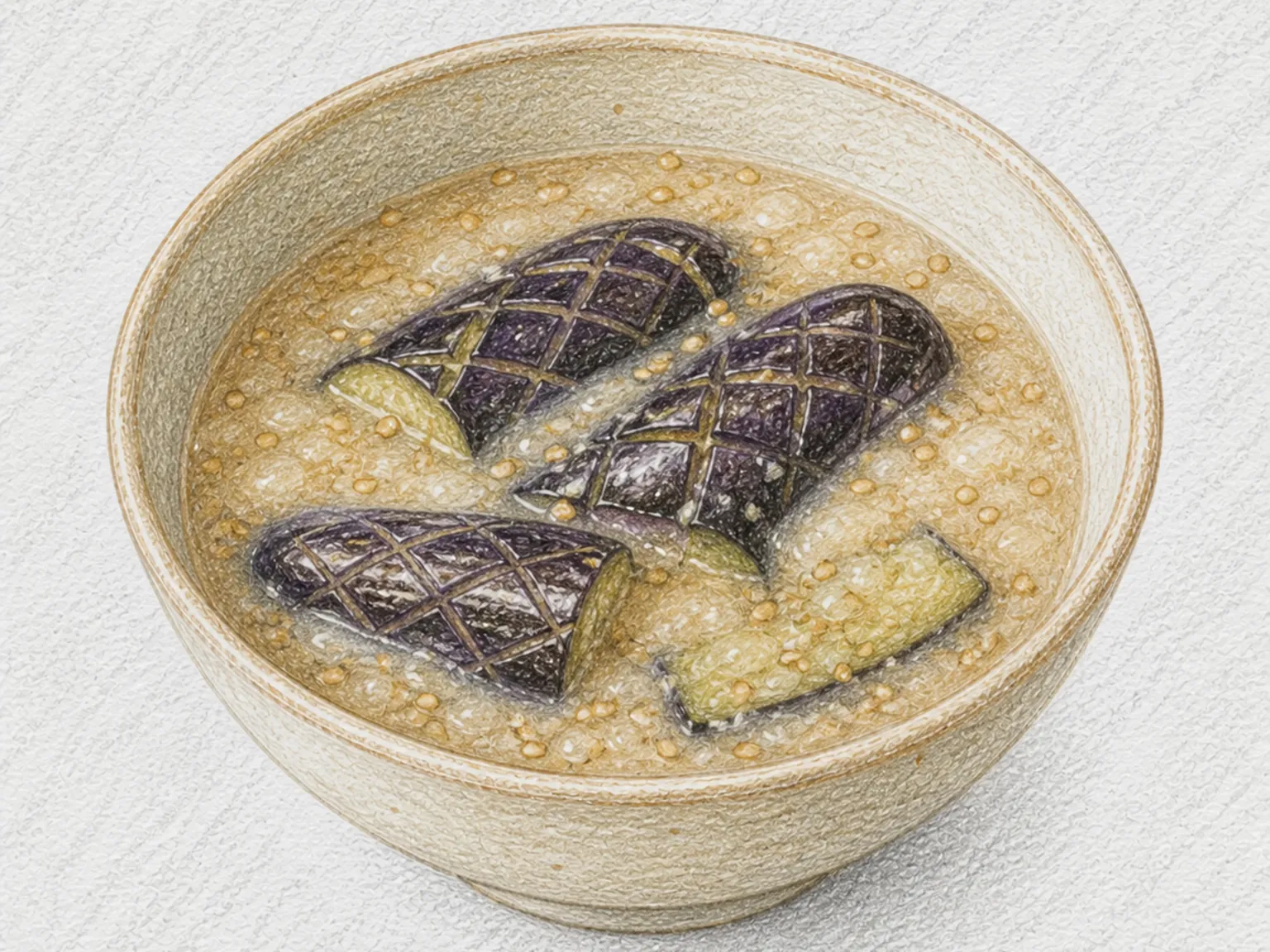
Dongame-jiru (Eggplant and Sesame Miso Soup)
Dongame-jiru is a summer soup from the Koto region of Shiga. Eggplants are halved and crosshatched diagonally through the skin, soaked, then simmered in dashi with finely ground rice porridge until tender. Miso and a large amount of toasted ground sesame finish the soup. The scored purple skin resembles a turtle shell, while sesame dispersed through the broth looks like mud, giving the name mud turtle soup. Ground porridge gives slight body and slows the sesame from settling immediately. Add miso and sesame only after the eggplant is fully soft and do not return the soup to a hard boil, which dulls their aroma.
Korean Gaji Saewoo Jjigae (Eggplant Shrimp Stew)
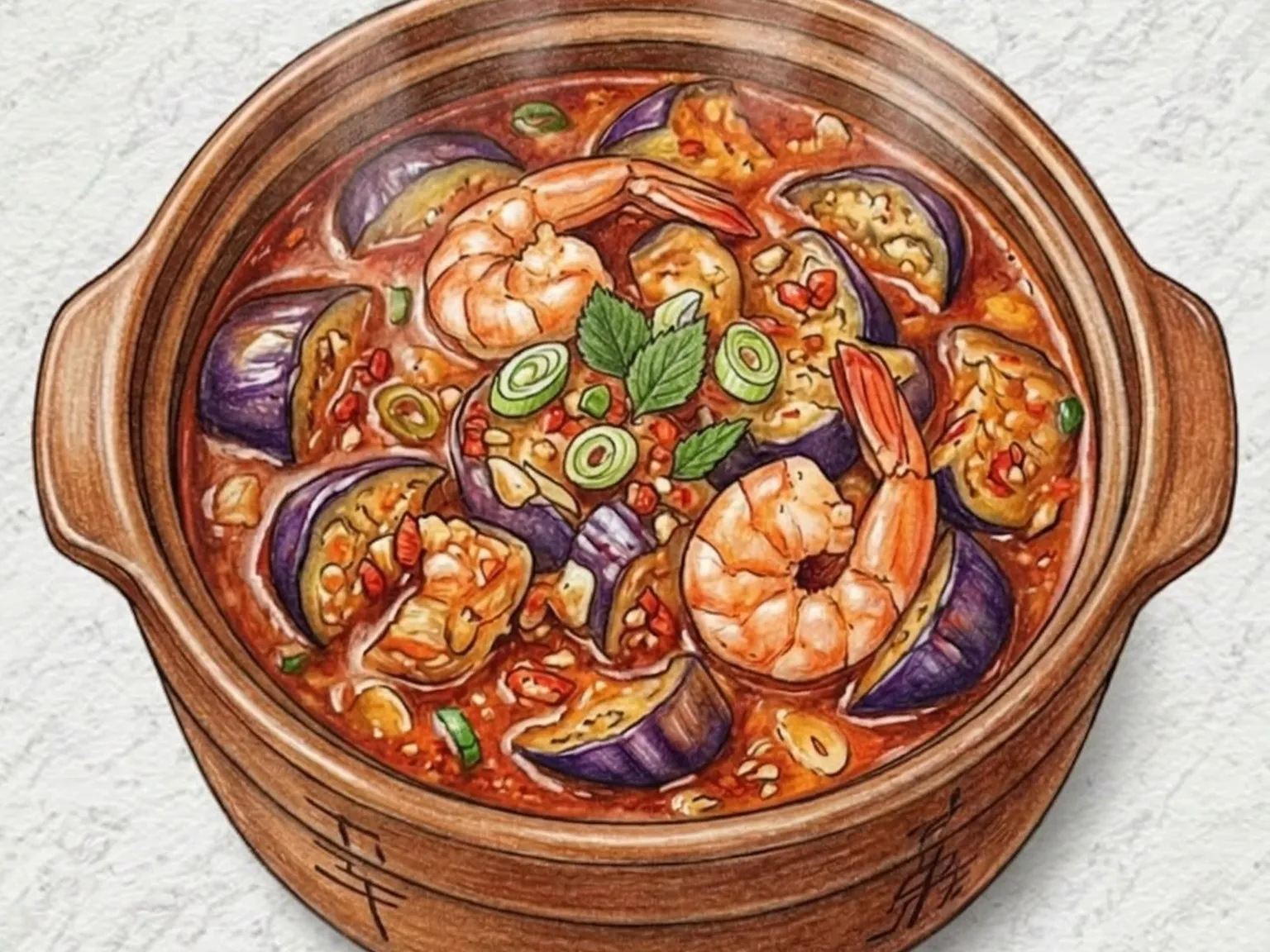
Gaji-saewoo-jjigae is a spicy Korean stew of eggplant and shrimp simmered in a gochujang-based broth seasoned with perilla oil and tuna fish sauce. The vegetables and shrimp are stir-fried in perilla oil first to develop fragrance, then water is added and the whole pot brought to a boil. Eggplant cut in thick lengthwise slices or on the bias presents a large surface area that soaks up the spicy, savory broth, so each bite releases a burst of liquid from inside the softened flesh. The shrimp cook quickly and contribute a sweet, briny flavor that lifts the fermented chili paste. Tuna fish sauce adds depth and umami without any fishy edge, and the perilla oil's distinctive nutty fragrance runs through the entire broth. The soft, yielding eggplant and the firm, springy shrimp create a textural contrast in each bowl, and the characteristic sweetness built into gochujang-based broths makes this a summer dish that stimulates appetite even in the heat.
Korean Braised Eggplant with Pork
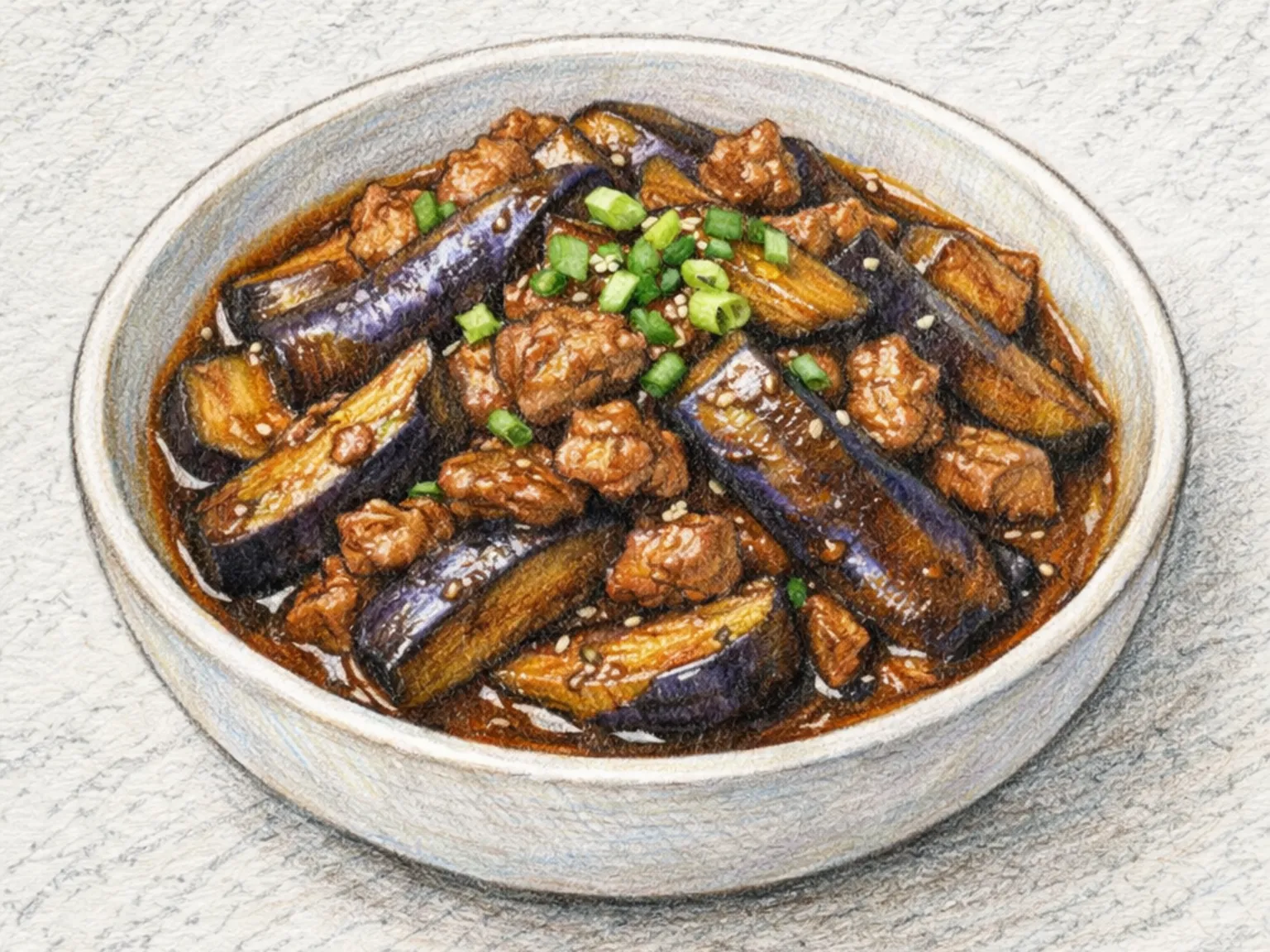
Gaji dwaejigogi jorim is a Korean braised dish of eggplant and pork shoulder simmered in a soy sauce and gochugaru seasoning base. The pork slowly renders its fat into the eggplant as they cook together, giving the vegetable a rich, meaty depth. Cooking wine mellows the pork and removes any gamey notes, while the soy and garlic combination builds deep, layered flavor throughout the braise. Briefly stir-frying the eggplant in oil before braising coats the surface and helps it hold its shape while drawing the seasoning inward more effectively. A final drizzle of sesame oil finishes the dish with a nutty fragrance, and this recipe is at its best in summer when eggplants are in peak season with thin, tender skins.
Korean Soy-Pickled Eggplant
Gaji jangajji is a Korean-style pickled eggplant that starts by blanching the eggplant in boiling water for just over a minute to soften only the outer surface, leaving the inside intact. The briefly cooked eggplant is submerged in a pickling brine of soy sauce, vinegar, and sugar that has been brought to a boil and then cooled. The eggplant absorbs the brine rapidly and deeply, like a sponge, while holding a soft, yielding texture at its core. Vinegar sharpens the eggplant's otherwise flat flavor, and garlic together with cheongyang chili pressed into the brine build a low heat and quiet complexity that goes beyond basic preservation. Ready to eat after a single day in the refrigerator, this jangajji holds its texture for more than ten days when kept cold, which makes it a practical banchan to prepare in advance and pull out over multiple meals.