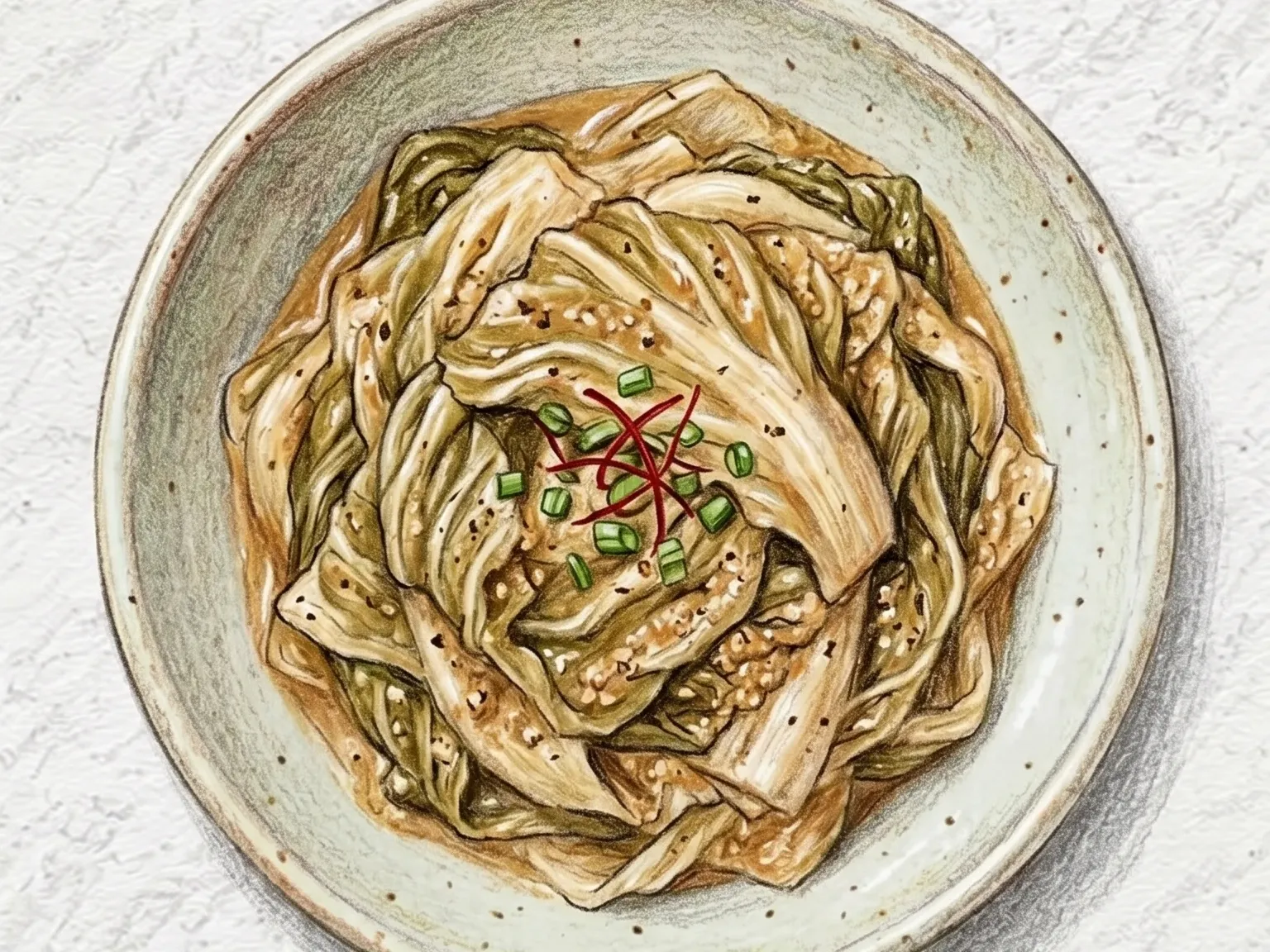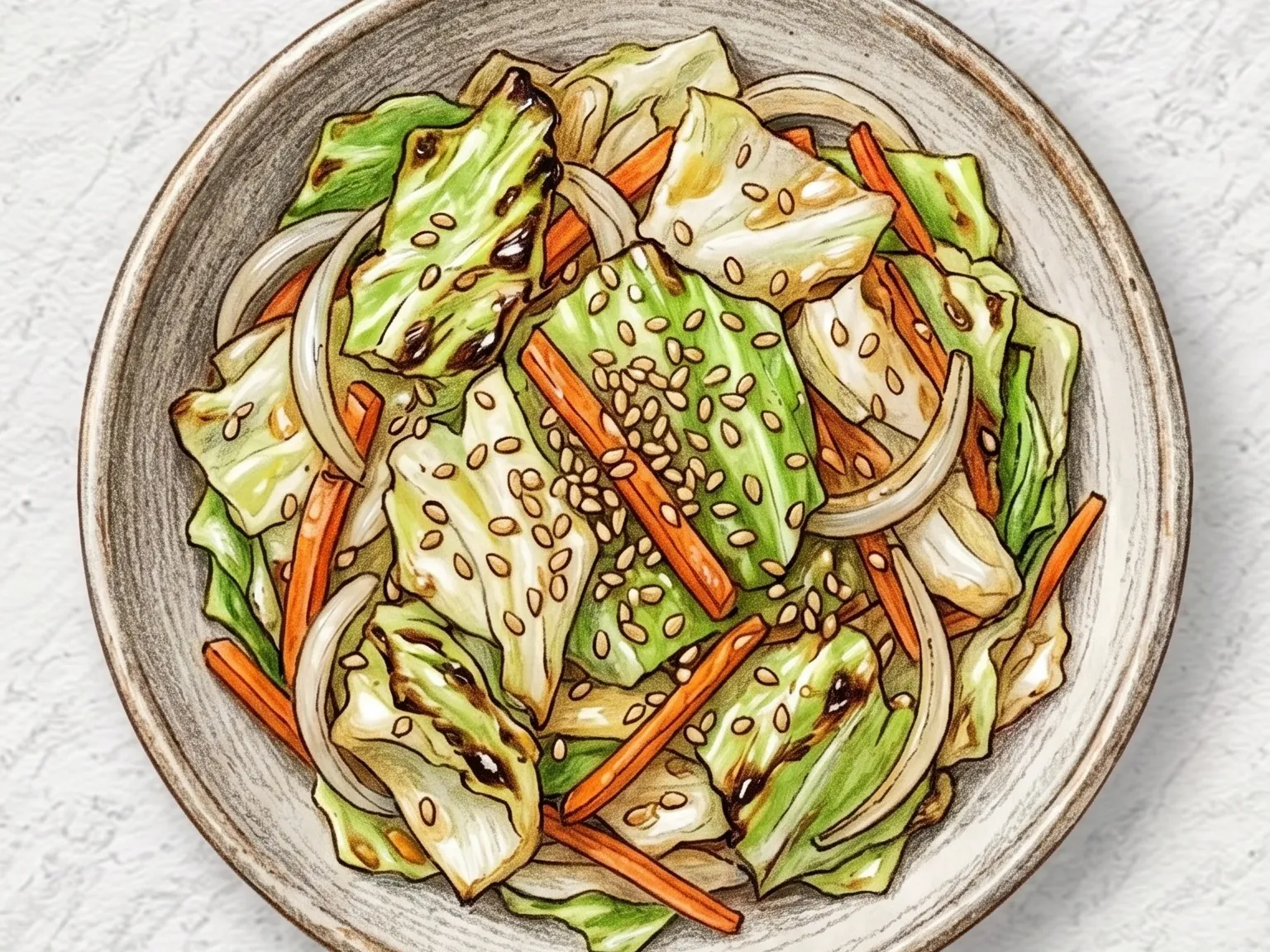
Korean Seasoned Radish Greens
Mucheong-namul is a Korean banchan made from the leafy stems attached to daikon radish, blanched and dressed with doenjang and perilla oil. Unlike fully dried siraegi, fresh or semi-dried mucheong retains a grassy vitality that carries through to the finished dish. Radish greens emerge as a byproduct of the autumn kimjang harvest, when whole radishes are pulled from the ground, and rural Korean kitchens have long turned these tops into namul or hung them to dry for winter. Fresh mucheong requires at least five minutes of boiling to break down its tough stem fibers so they soften properly. A thorough rinse in cold water follows, washing away the bitter, astringent edge that develops during cooking. Seasoning with doenjang and soup soy sauce layers the fermented paste's earthy depth over the greens' faintly bitter, grassy character, creating a contrast that makes each bite more interesting than either ingredient alone. Perilla oil is preferred over sesame because its lighter, quieter fragrance complements the greens' natural flavor rather than overpowering it. Stirring in ground perilla seeds at the end thickens the dressing and wraps each strand of mucheong in a nutty coating, producing a noticeably deeper-flavored version than mucheong-namul made without them. A hearty, clean-tasting winter banchan tied to the rhythm of the radish harvest.

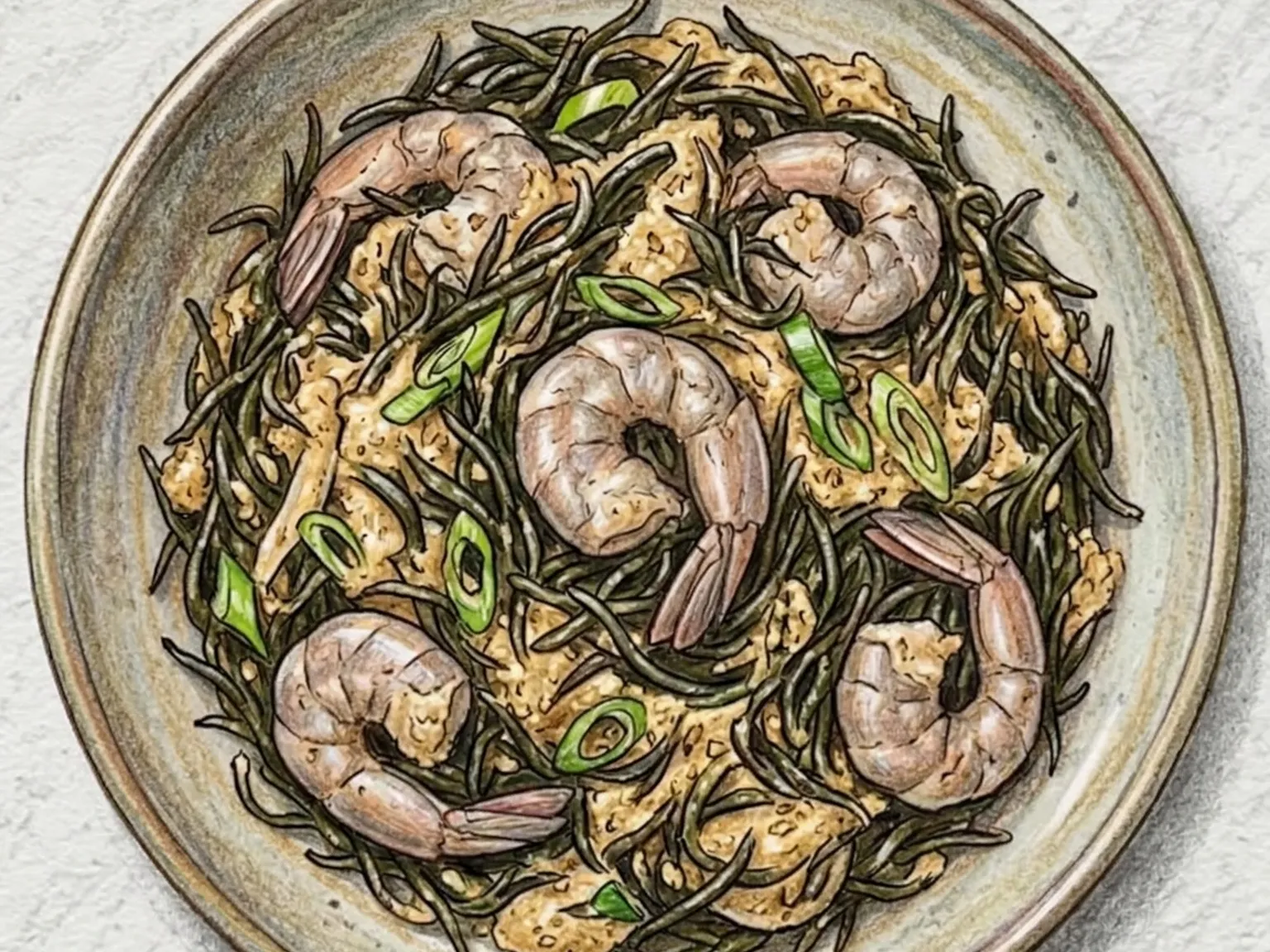
Korean Seasoned Bracken Fern
Gosari, the Korean name for bracken fern, is one of the oldest foraged vegetables in Korean cooking, with consumption records tracing back to the Three Kingdoms period. It is a mandatory component of bibimbap and a required dish on jesa, the ancestral rite table set for ceremonies honoring the dead. Dried gosari must soak overnight in cold water and then boil until the tough, wiry fibers relax into a distinctively springy, almost elastic chew that no fresh vegetable can replicate. The rehydrated fern is stir-fried in perilla oil with minced garlic until fragrant, then a small amount of soup soy sauce and water goes in and the pan is covered to let the liquid absorb and the fern braise briefly. This short braising step is what rounds the flavor and ensures the seasoning penetrates the fibrous strands rather than sitting only on the surface. Perilla oil is the traditional fat of choice rather than sesame oil because its green, herbal quality pairs more naturally with the woodsy, forest-floor flavor of gosari, amplifying rather than competing with it. Large batches are typically made during Chuseok or Seollal and eaten over several days, as the flavor improves and deepens as the dish sits.