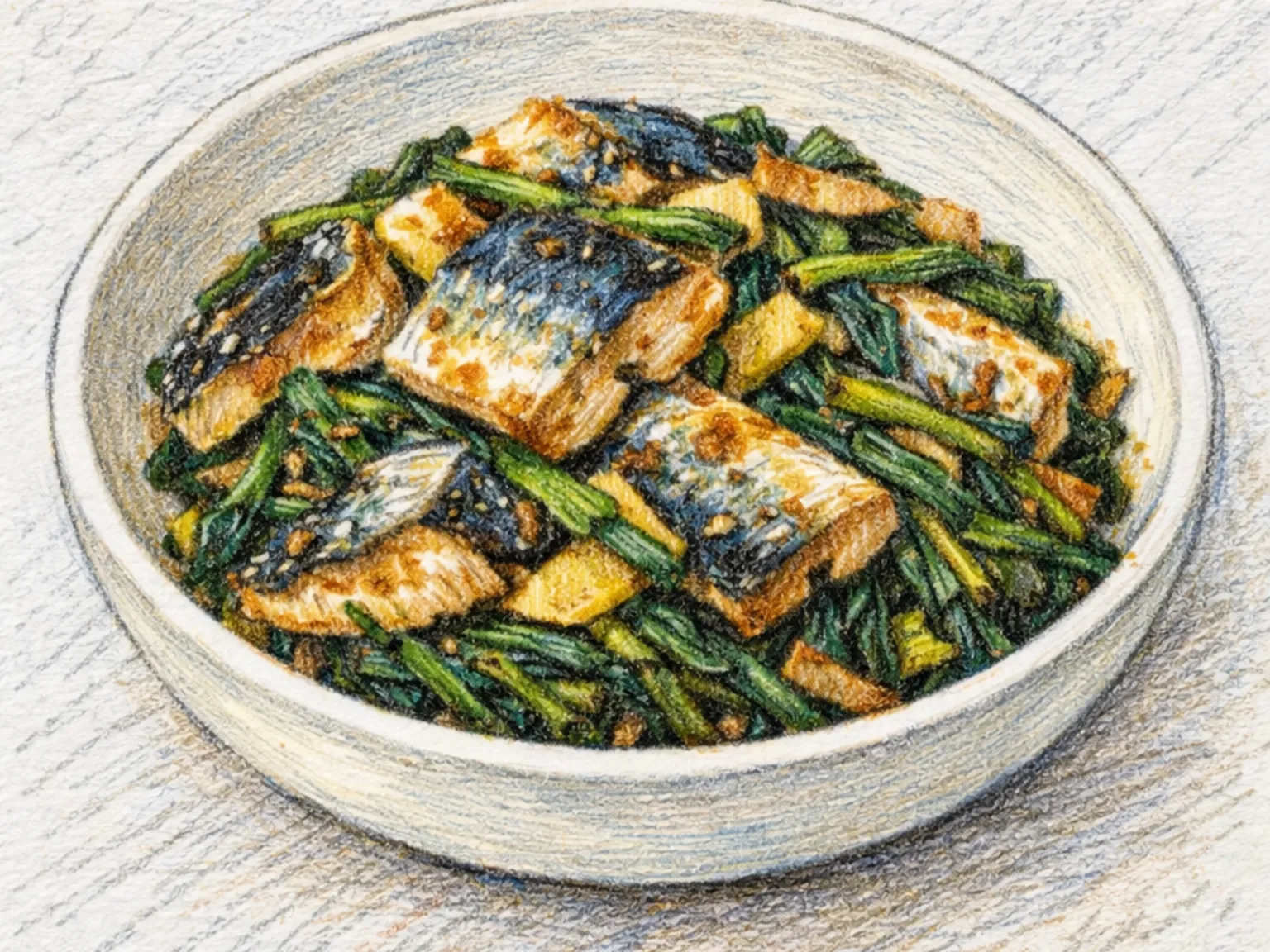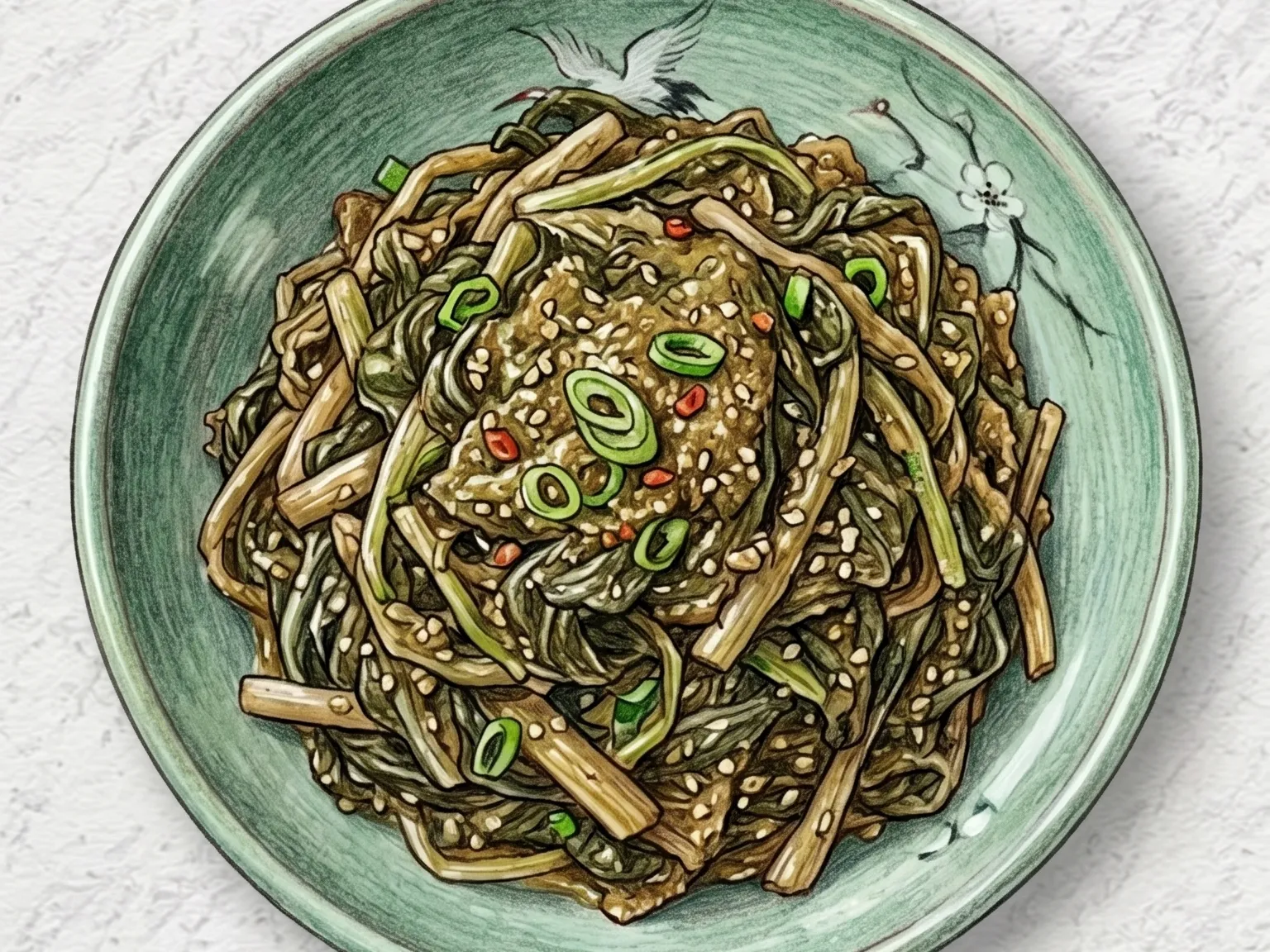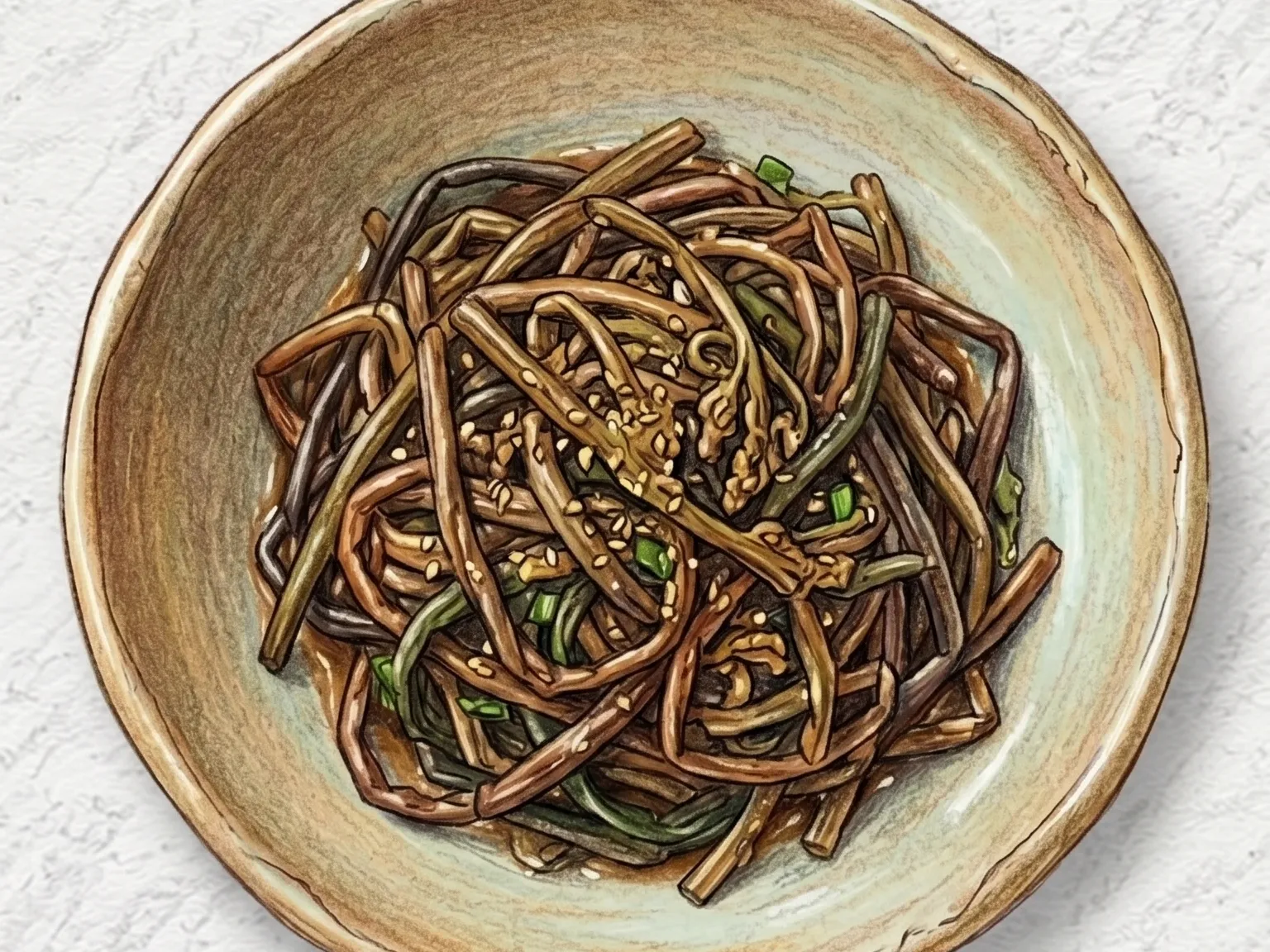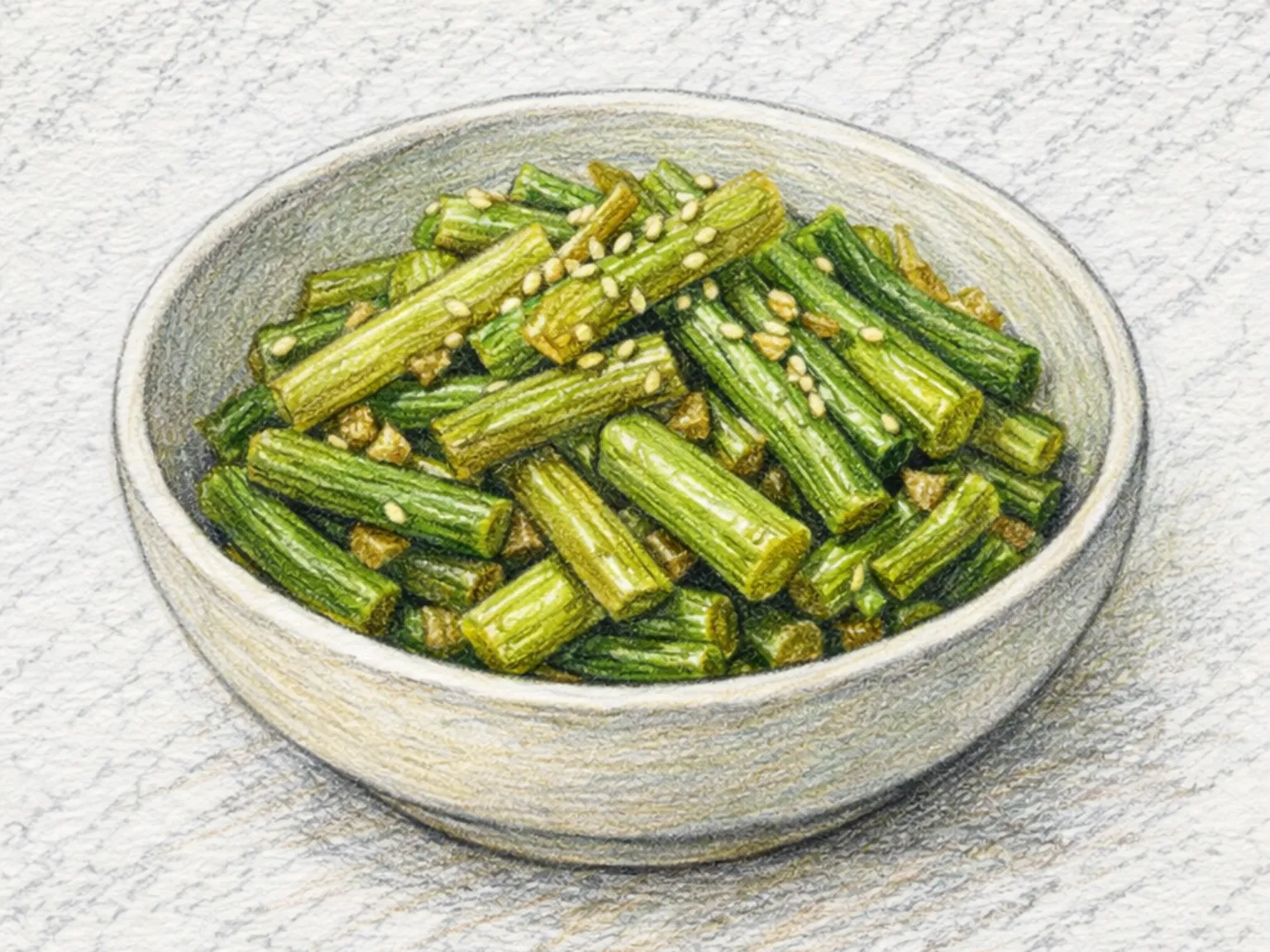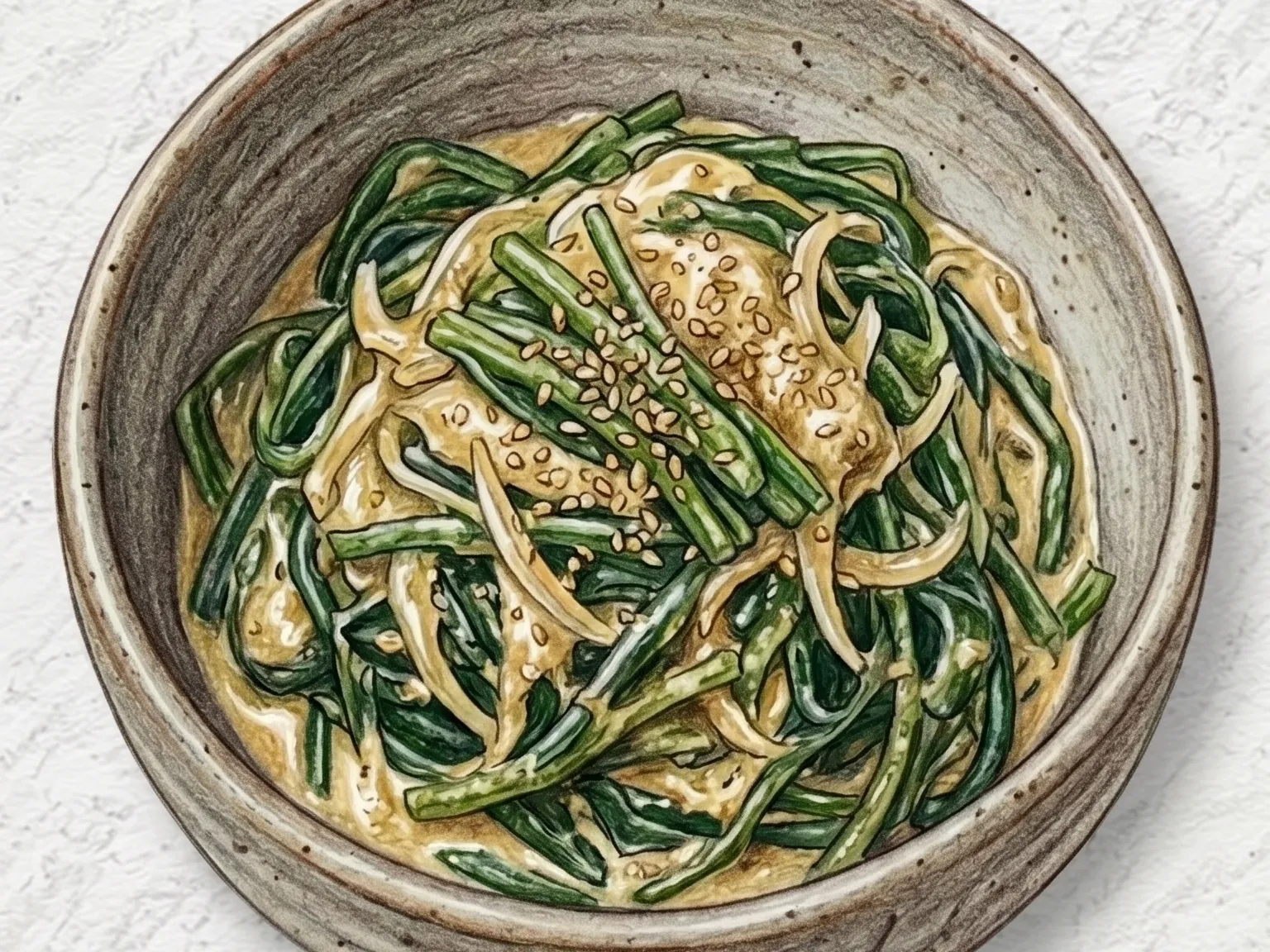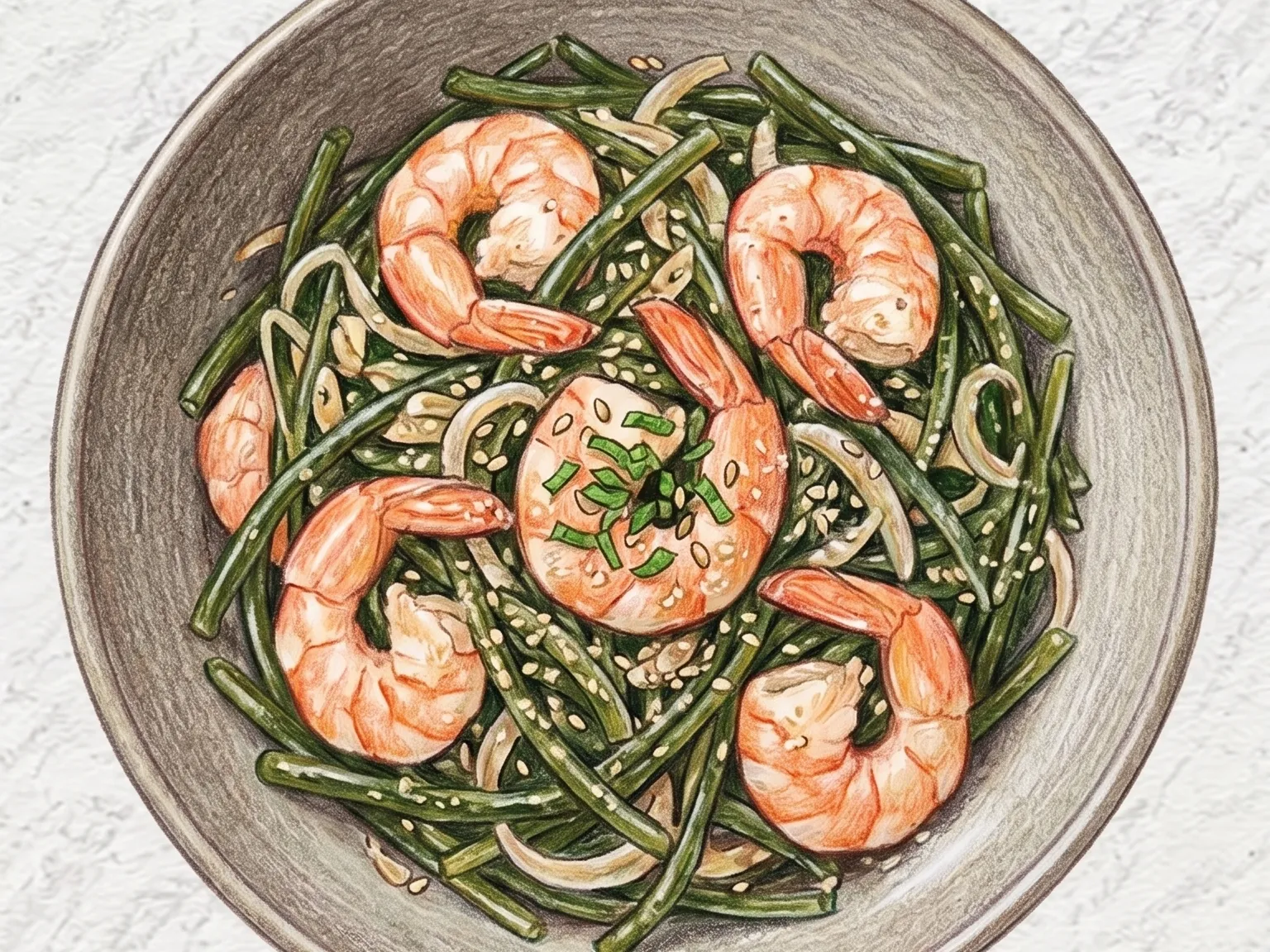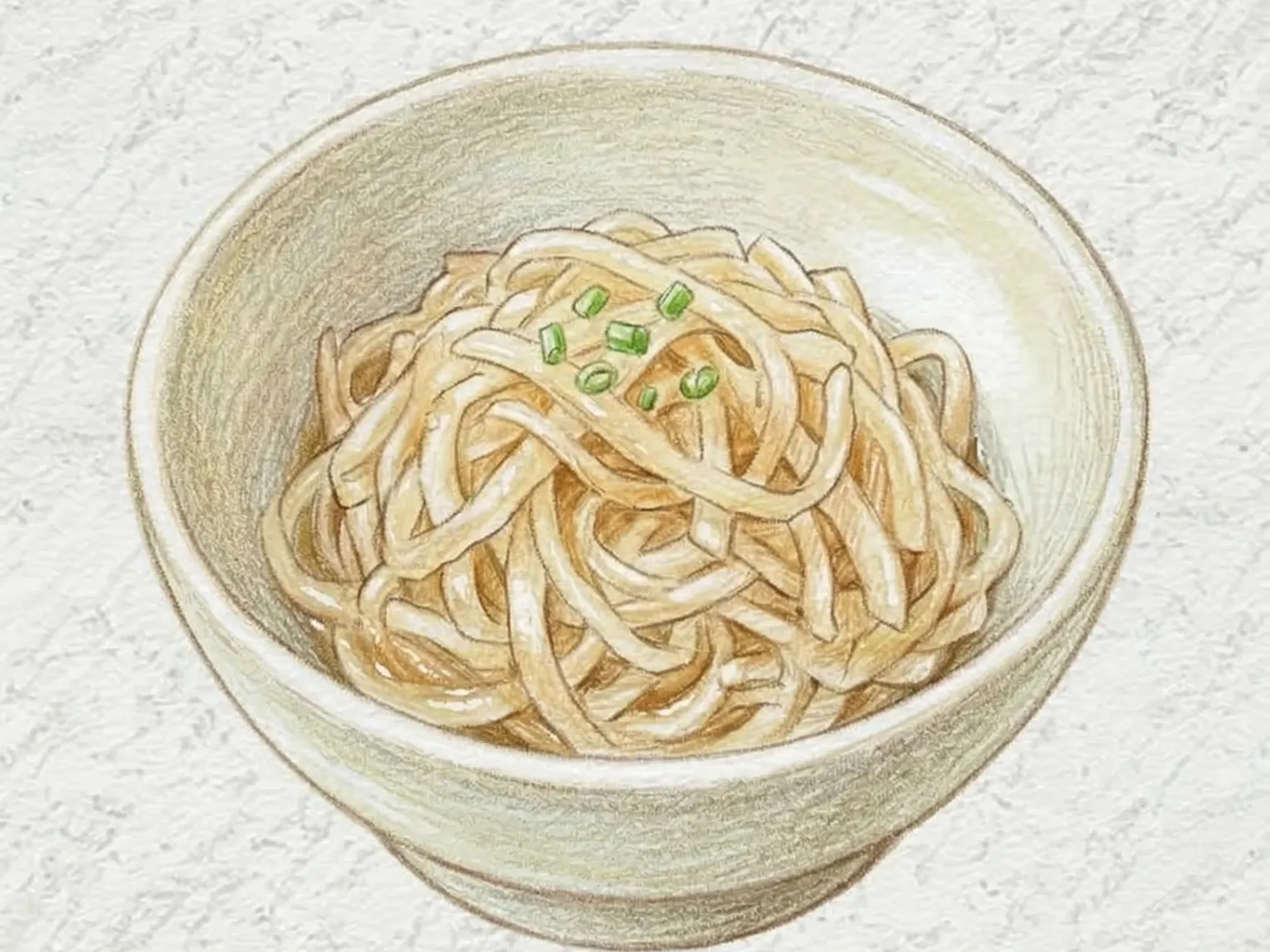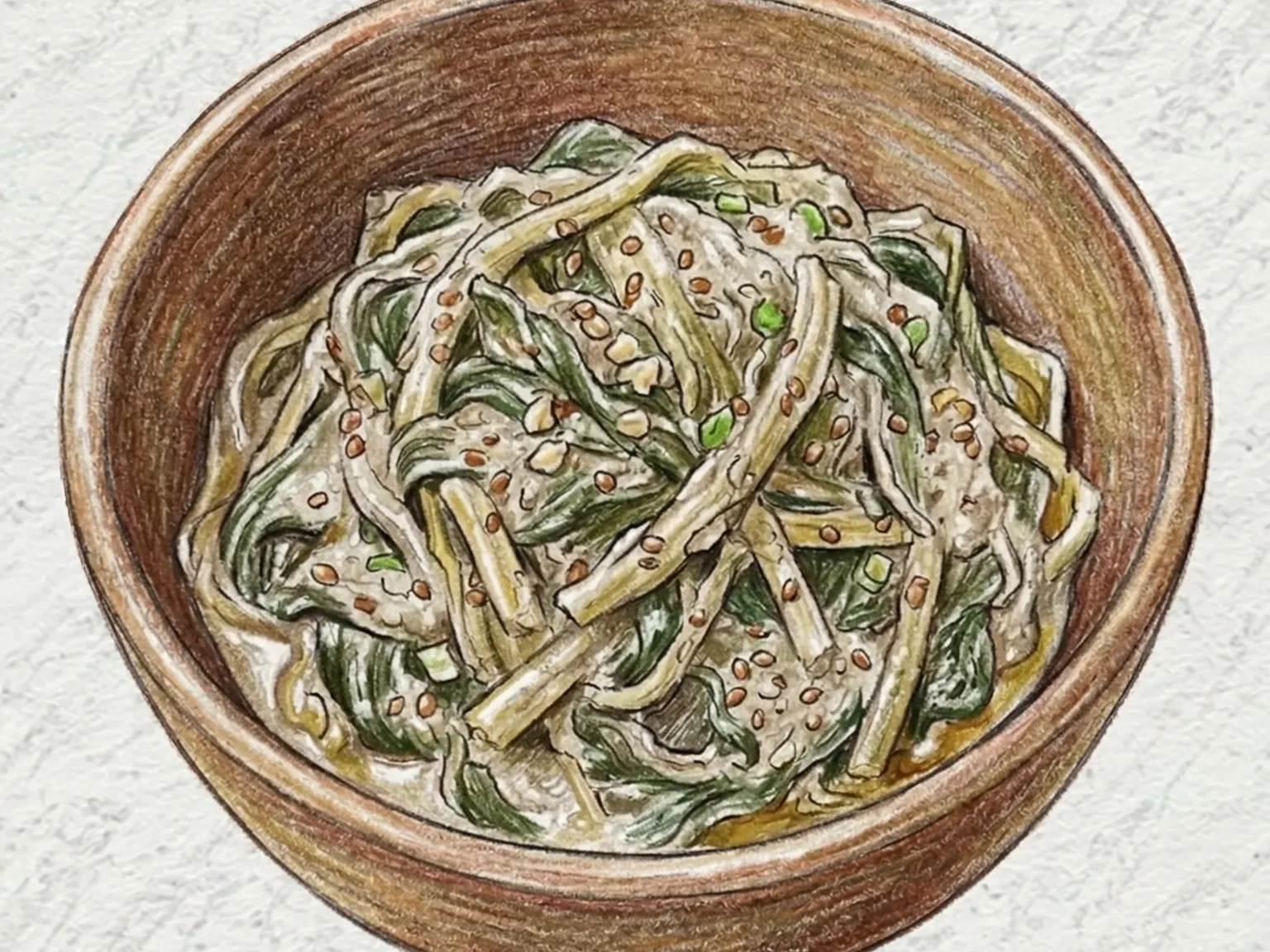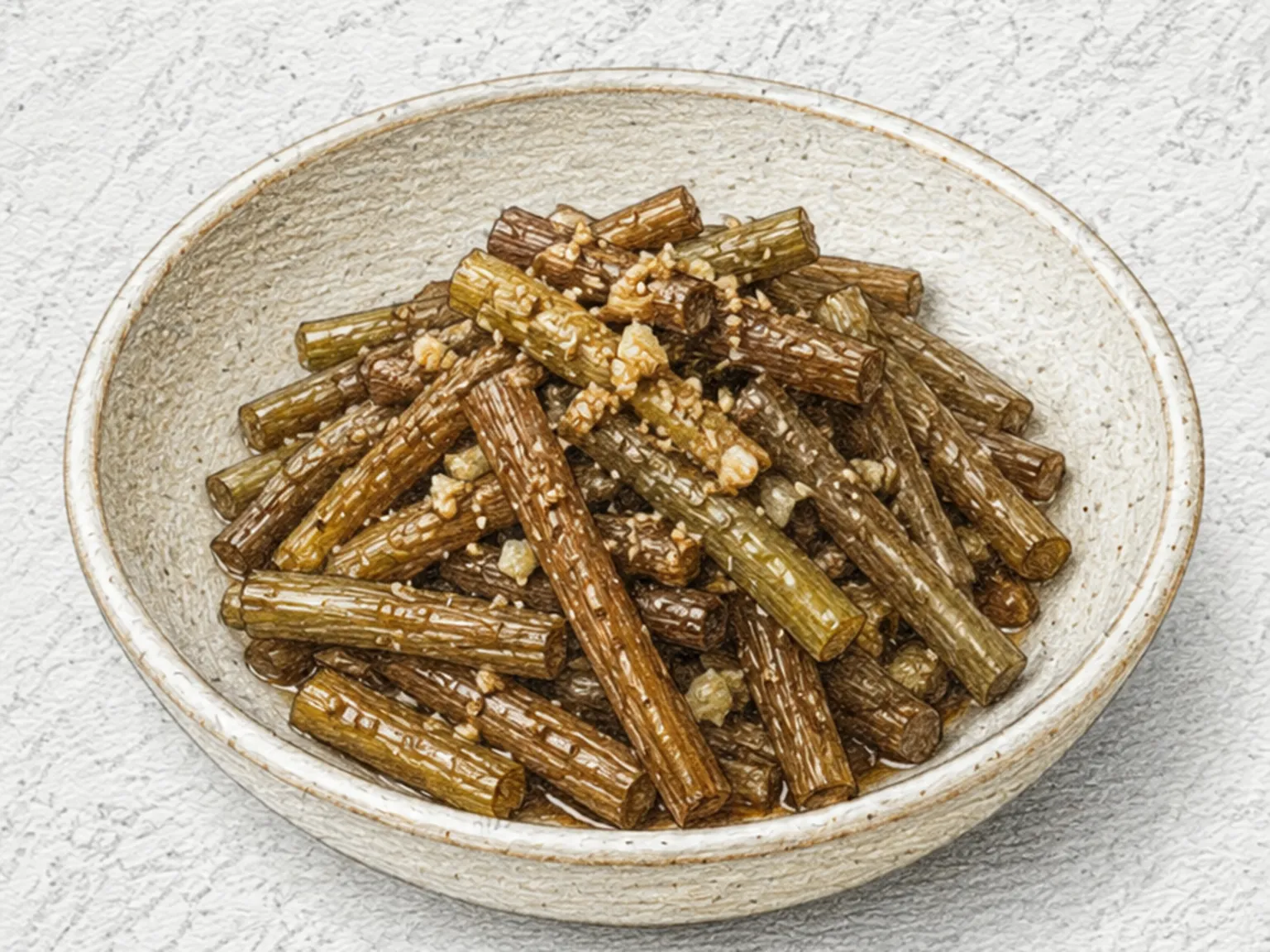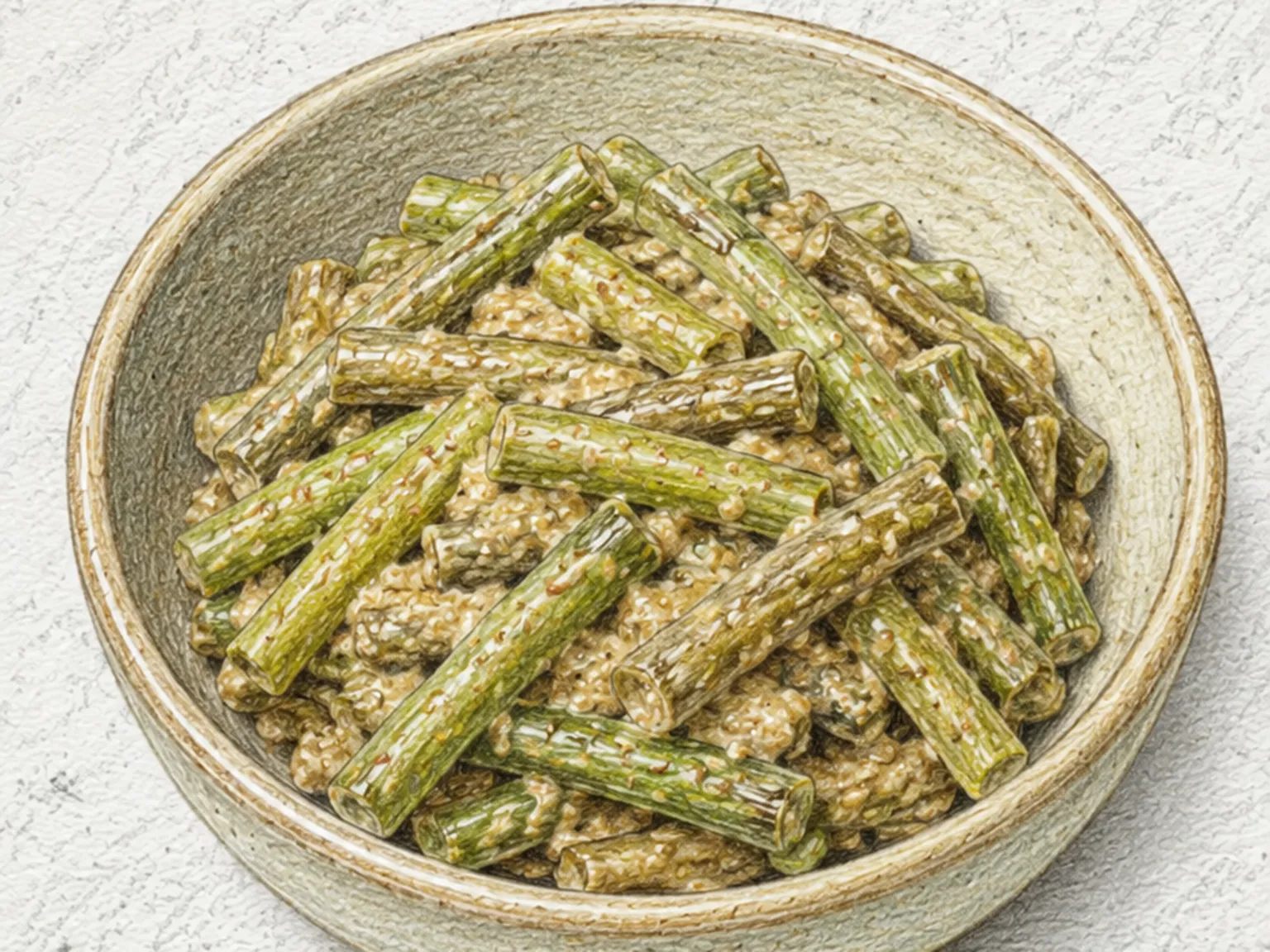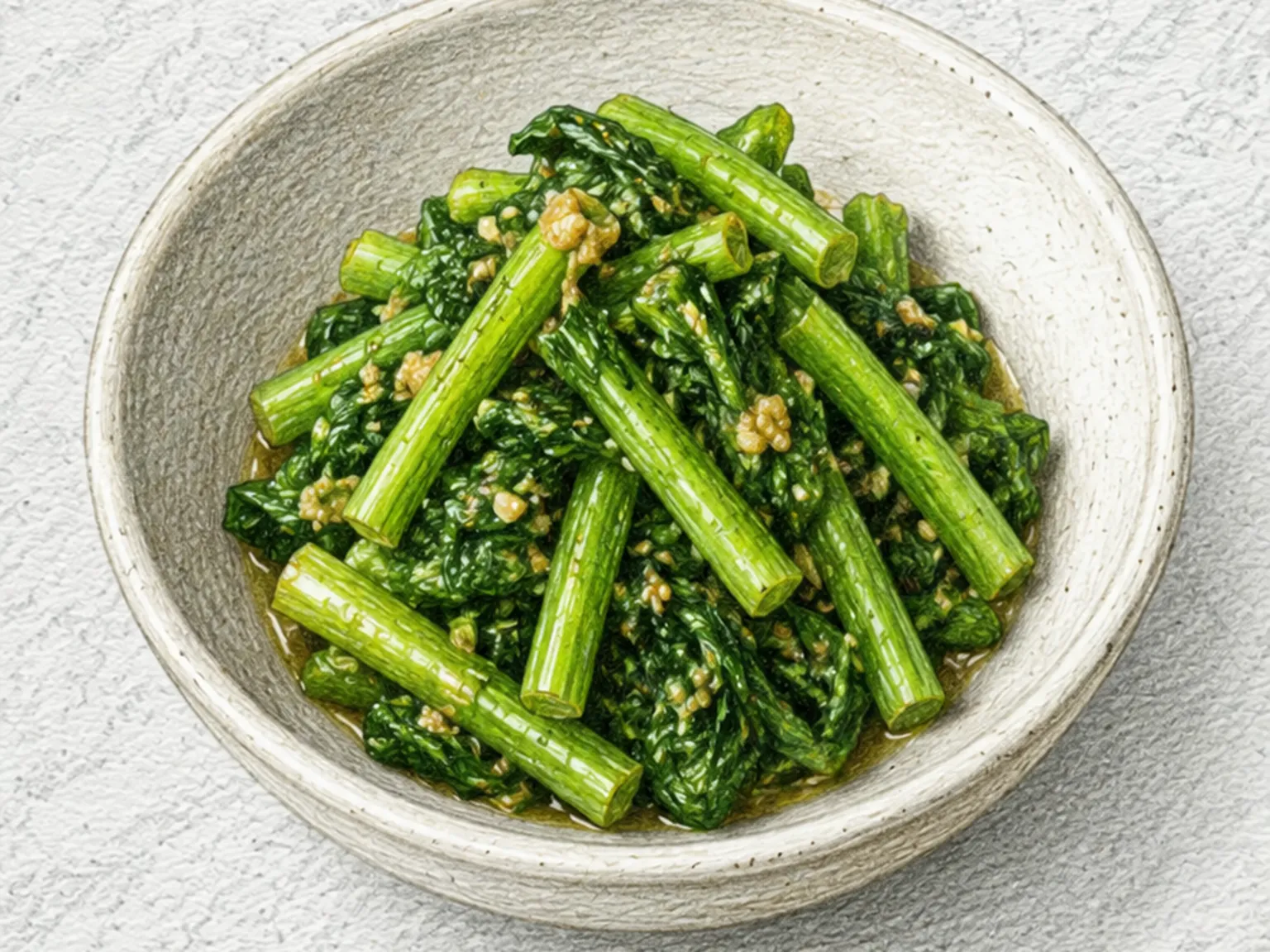
Roasted Sweet Potato Chwinamul Salad
Roasted sweet potato chwinamul salad combines skin-on sweet potato cubes roasted at 200 degrees Celsius for 22 minutes with chwinamul blanched for just 20 seconds to preserve its distinctive herbaceous bitterness. A dressing of perilla oil, soy sauce, rice vinegar, and minced garlic delivers a rich nuttiness underscored by sharp acidity, which frames the sweet potato's natural sugars without masking them. Chickpeas contribute a mild, starchy body that balances the sweetness, while sunflower seeds and sesame seeds add scattered crunch throughout. Tossing the salad while the sweet potato is still warm rather than fully cooled allows the dressing to absorb into the starchy surface rather than sliding off. Blanching chwinamul longer than 20 seconds causes it to lose its characteristic bitter note and turn dull in color, so transferring it immediately to cold water after blanching is necessary to preserve both flavor and appearance.

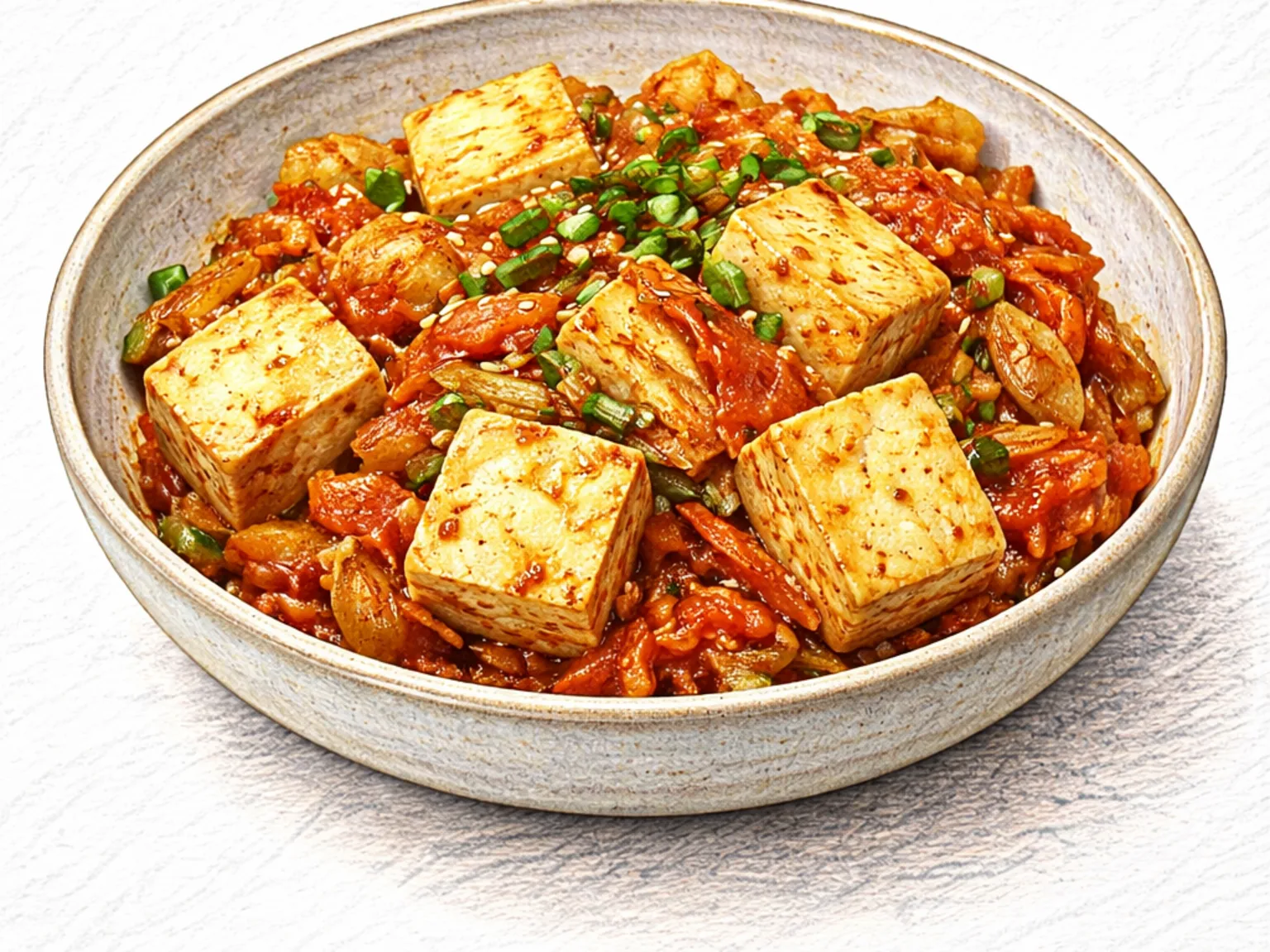
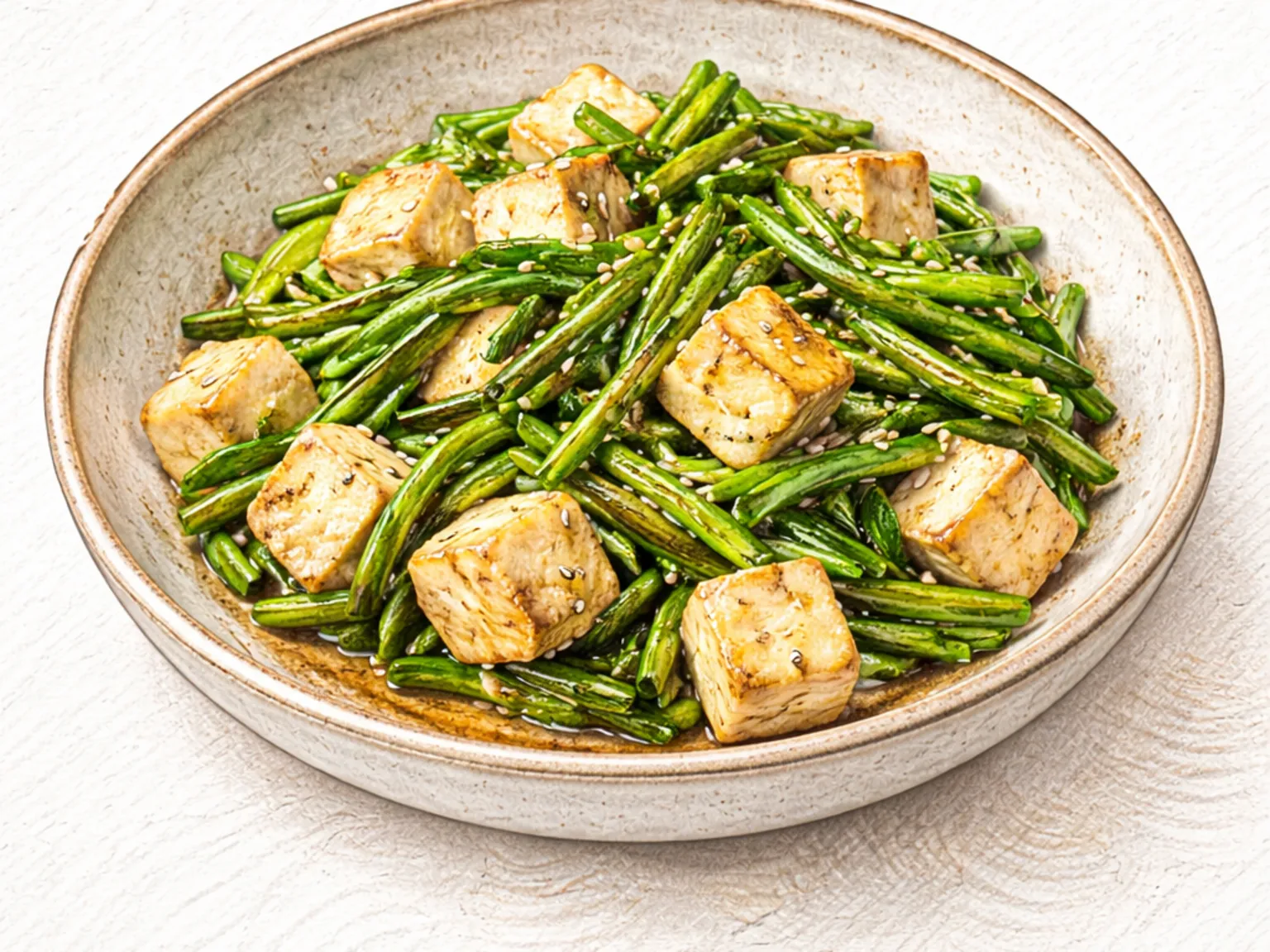
Korean Gondre Dubu Doenjang Bokkeum (Thistle Tofu Doenjang Stir-fry)
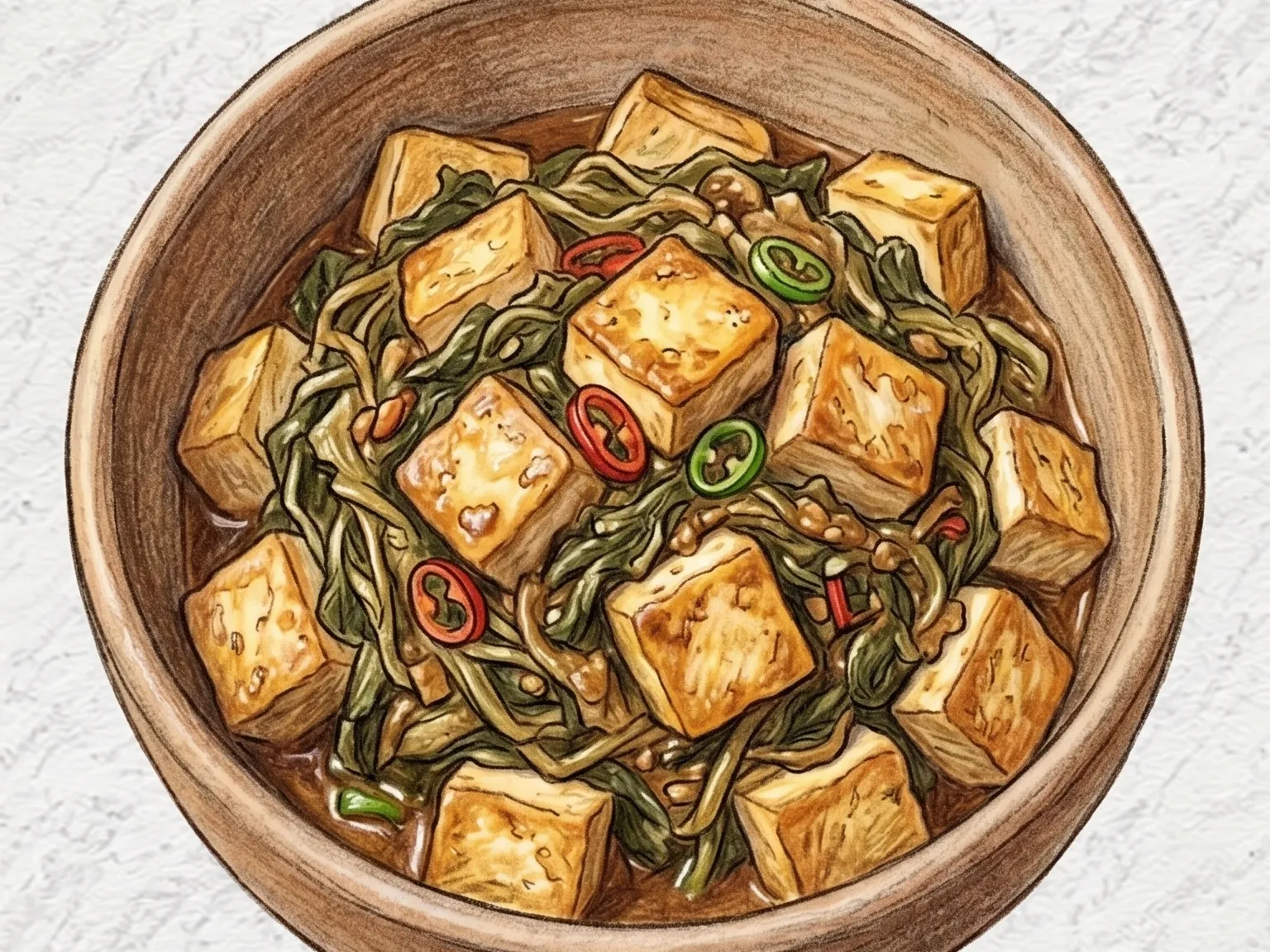
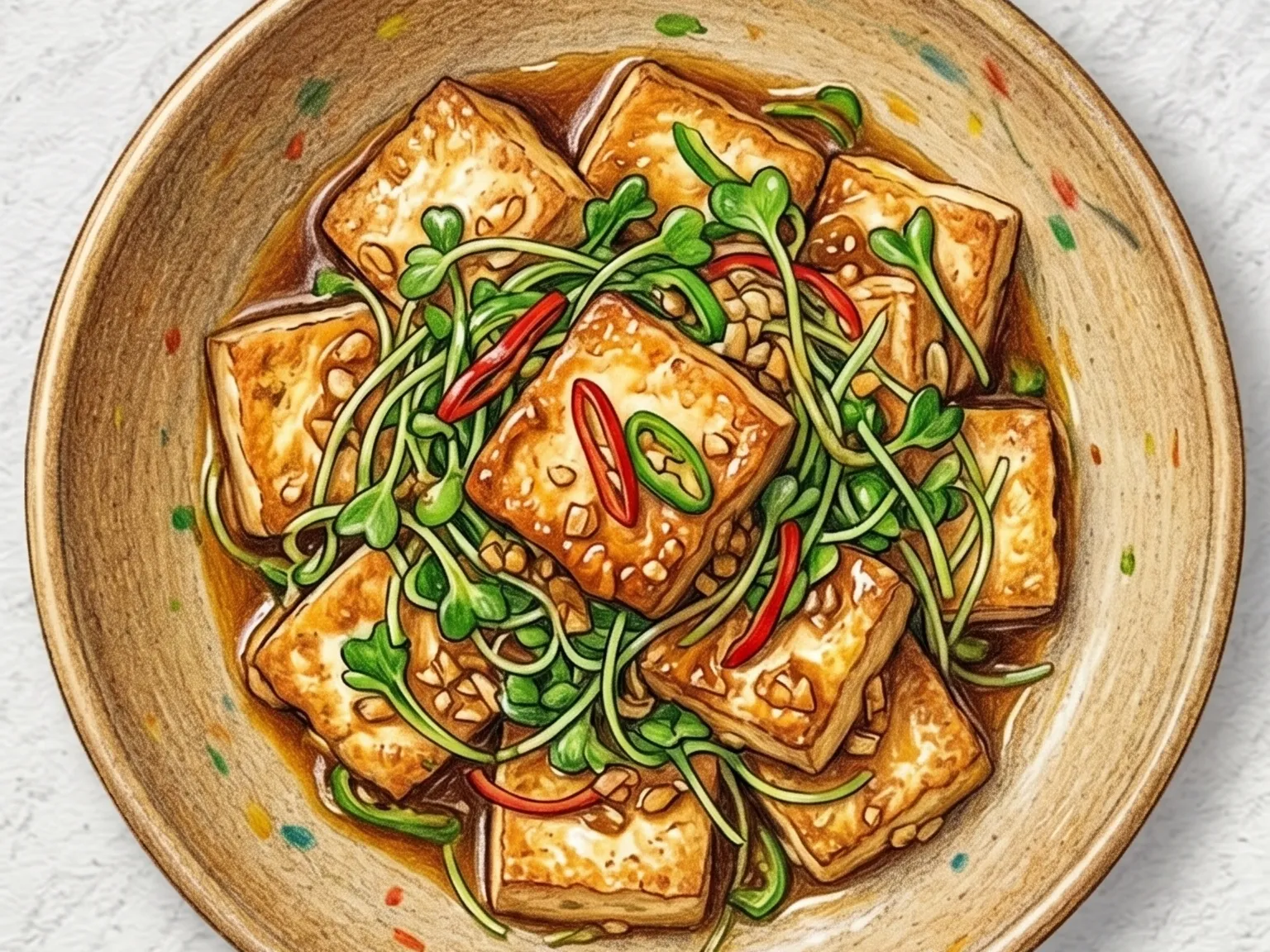
Gondre dubu doenjang bokkeum is a stir-fried side dish that pairs pan-seared firm tofu with blanched gondre thistle greens in a doenjang-based sauce. Searing the tofu separately in perilla oil before combining it with the greens is the step that makes the difference: the firm, lightly crisped surface that forms holds its shape through the subsequent stir-frying and absorbs the seasoning without breaking down into chunks. Doenjang dissolved in a small amount of water is stirred through the gondre so the fermented paste coats every strand evenly, and a small addition of soup soy sauce deepens the savory character without pushing the salt level too high. Sliced cheongyang chili adds a gentle heat that lingers at the finish. Perilla oil, with its nutty, herbal scent, binds the flavors and gives the dish its distinctive aromatic character. Gondre is a thistle variety grown in the Gangwon mountain region and pairs particularly well with doenjang because its earthy, slightly sweet fragrance complements the depth of the fermented paste.

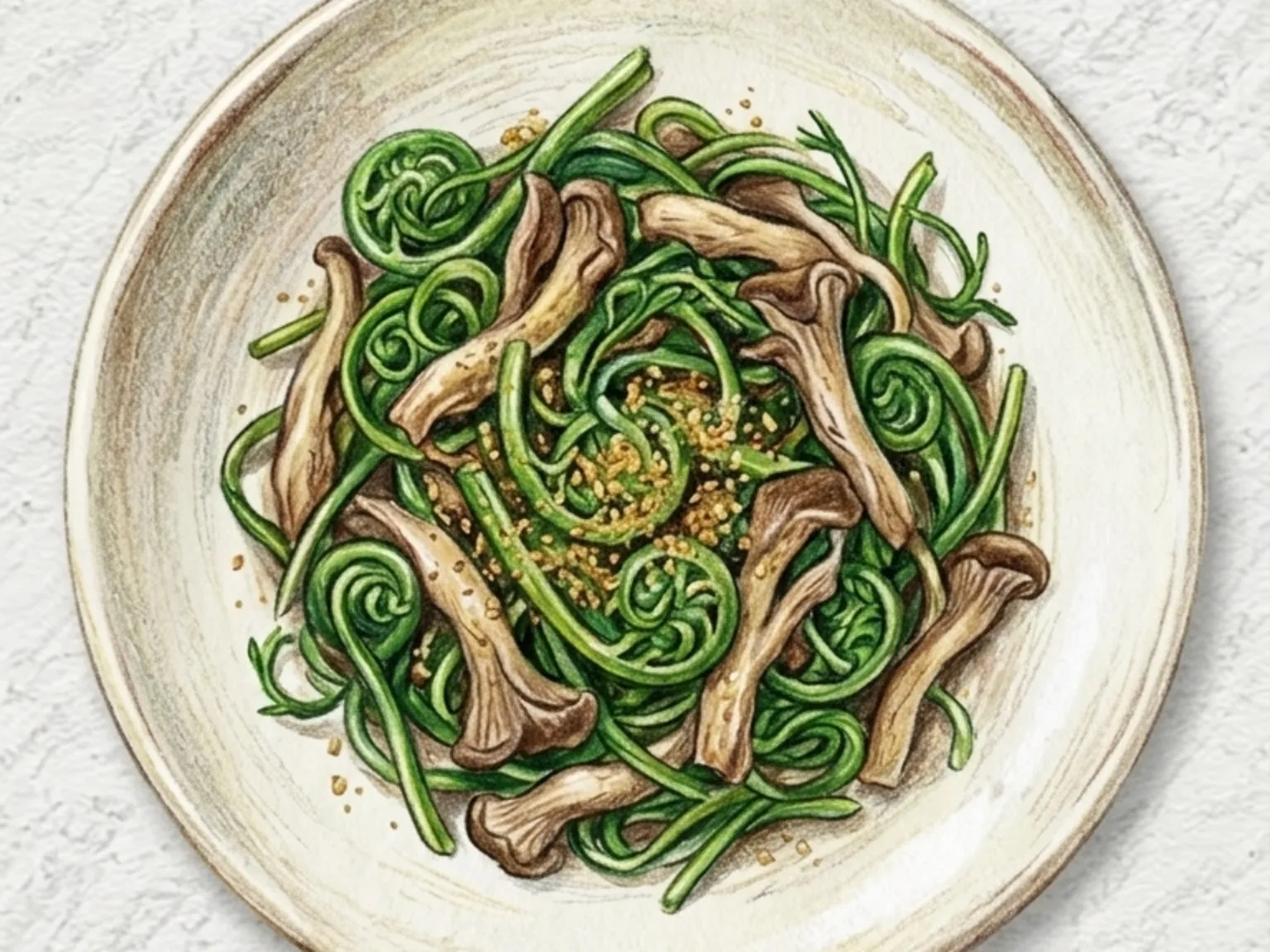
Korean Perilla Noodles with Aster Leaves
Chwi namul, a wild aster green gathered in spring, is blanched and rinsed in cold water to temper its bitterness before being seasoned lightly with soup soy sauce. Ground perilla seeds are stirred into the broth, turning the liquid a milky white and giving it a toasted, nutty weight that holds against the herbaceous bite of the greens. The perilla richness subdues the sharpest edge of the bitterness while leaving the wild mountain aroma intact so each mouthful reads clearly as foraged rather than cultivated. Soup soy sauce adds only enough seasoning to tie the elements without masking any of the natural fragrance. Somyeon wheat noodles, soft and fine-stranded, bridge the greens and the broth without competing with either. Spring-harvested chwi namul carries the most pronounced aroma, and a thorough rinse after blanching controls the bitterness to a palatable level. The resulting bowl is understated and seasonal, built on the flavor of a single wild ingredient.

Korean Kkaennip Gamja Bokkeum (Perilla Potato Stir-fry)
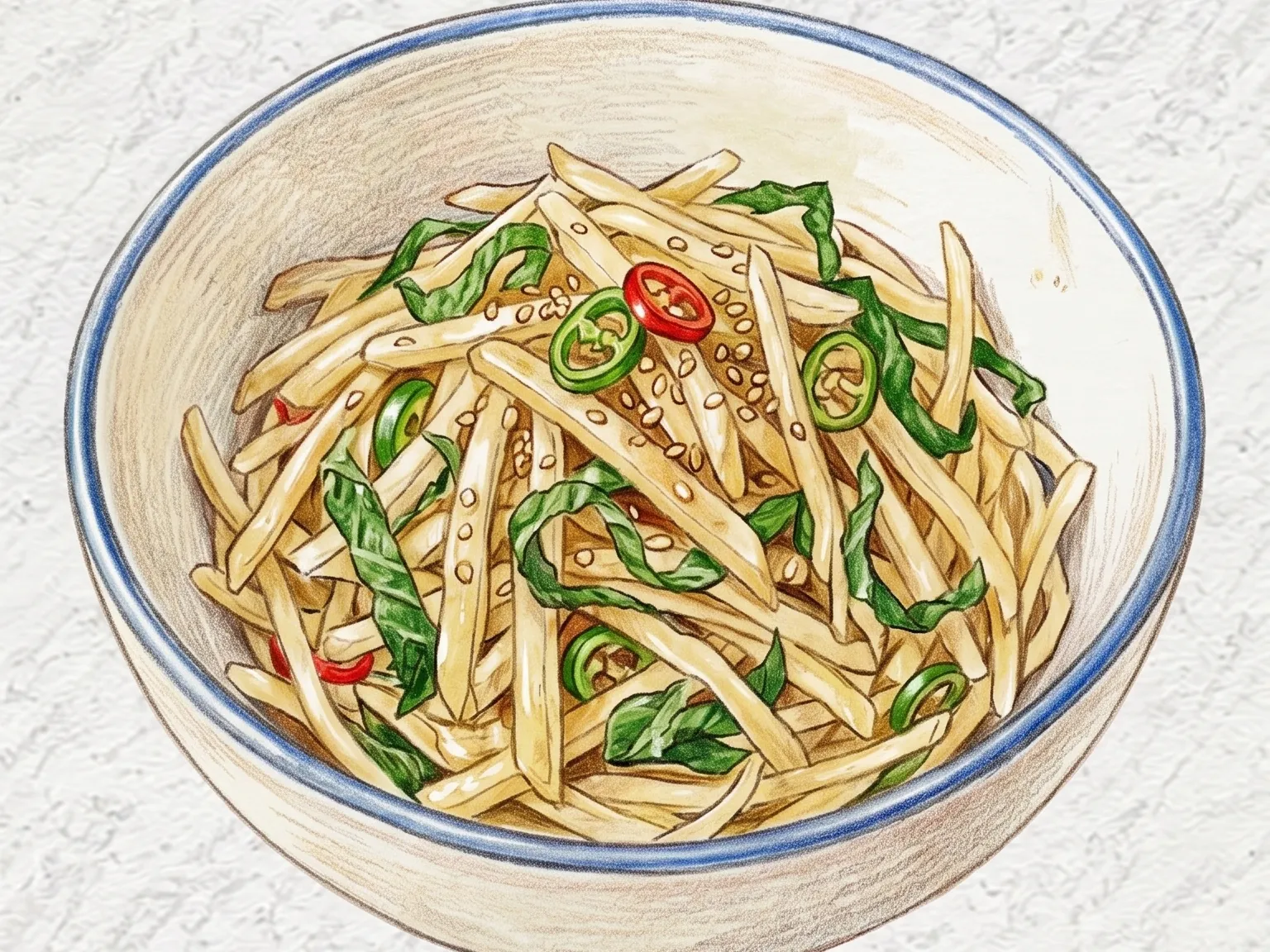
High heat and a well-preheated pan are the keys to achieving the distinct texture of these stir-fried potato matchsticks. Before cooking, soaking the cut potatoes in cold water is a critical step to remove surface starch, ensuring the pieces stay separate and do not stick to the pan. Once thoroughly dried to prevent oil splattering, the potatoes are tossed quickly until the edges become translucent while the centers retain a subtle firmness. Overcooking results in a mushy consistency that lacks the intended character of the dish. Pouring the soy sauce around the perimeter of the pan allows it to caramelize against the hot surface before it is incorporated into the vegetables, adding a layer of savory complexity. Fresh perilla leaves should be tossed in just before the heat is turned off to preserve their bright green color and herbal fragrance. A final drizzle of perilla oil complements the leaves with its toasted scent, and a sprinkle of sesame seeds provides a light crunch. Sliced Cheongyang chilies can be included during the initial sautéing for a gentle heat. This combination pairs the carbohydrates of potatoes with the vitamin K and calcium found in perilla leaves, creating a nutritionally rounded side dish that tastes even better the next day after the flavors have settled.

Charred Cabbage Gamtae Salad
Charred cabbage gamtae salad quarters baby napa cabbage lengthwise, brushes the cut sides with perilla oil, and sears them on a hot pan for 3-4 minutes per side until deeply browned. The intense heat replaces raw cabbage's grassy bite with caramelized sweetness and smoky char, and gamtae seaweed crumbled by hand at the very end adds a crisp texture and concentrated ocean depth. A dressing of dark soy sauce, maesil syrup, brown rice vinegar, and perilla oil provides a salty-tangy base, while halved cherry tomatoes contribute juicy acidity. Serving the salad warm preserves both the cabbage's char aroma and the seaweed's crispness.

Korean Dried Radish Greens Soup
Siraegi-guk is a Korean dried radish greens soup that transforms a humble preserved vegetable into something deeply flavorful through the medium of doenjang. The greens are dried in autumn, then reconstituted by boiling until soft - a process that concentrates their earthy, slightly bitter character. When simmered in stock with dissolved soybean paste, that concentrated flavor meets fermented umami and the result is a broth richer than the ingredient list would suggest. Adding ground perilla seeds pushes the soup further, turning the liquid creamy and nutty. Garlic and green onion form the aromatic backbone. The soup works well without meat, but many cooks stir-fry a small amount of beef in perilla oil before adding the liquid, which introduces a beefy depth that rounds out the overall profile. The critical step is managing the initial boiling of the dried greens: not enough, and the bitterness overwhelms; too much, and the greens become bland. Experienced Korean cooks leave just enough edge to give the soup its distinctive character - a pleasant astringency that makes doenjang taste more interesting rather than less. Siraegi-guk is pantry cooking at its finest, relying on dried goods and fermented paste to produce a bowl that tastes like slow, patient effort.

Korean Seasoned Radish Greens Namul
Dried radish greens are soaked, boiled until pliable, and dressed in a seasoning anchored by doenjang and ground perilla seeds. The drying process concentrates the fiber in the greens, giving them a satisfying chew that persists even after boiling: the outer layer turns silky while the inner stem retains a springy resistance. Doenjang supplies the salty, fermented backbone, and ground perilla seeds melt into a creamy coating that softens the roughness of the greens on the palate. A generous pour of perilla oil ties the dressing together, adding a glossy sheen and a rich, nutty fragrance. Minced garlic and chopped green onion introduce a sharp aromatic layer that cuts through the heaviness. Each bite releases more of the siraegi's own deep, vegetal flavor, a taste that builds rather than fades. Paired with steamed rice, the doenjang's salinity and the perilla's richness draw out the natural sweetness of the grain.

Korean Stir-fried Aster Scaber with Garlic
Chwinamul-maneul-bokkeum stir-fries rehydrated aster scaber greens with garlic, soup soy sauce, and perilla oil, keeping the distinctive bitter-herbal aroma of the wild greens intact. Chwi-namul, also called cham-chwi, is one of Korea's most recognized spring mountain greens; dried after the spring harvest, it can be stored and cooked year-round. Perilla oil is the preferred fat here -- it carries a heavier, more earthy character than sesame oil and matches the pronounced flavor of dried mountain greens without getting lost. Ground perilla seeds added during cooking deepen the nuttiness further. Green onion contributes a mild sweetness that balances the greens' inherent bitterness, and as the rehydrated greens lose their soaked moisture in the hot pan, they firm up into a chewy, satisfying texture rather than going limp. The strong herbal flavor is concentrated enough that a small portion alongside steamed rice carries a full bowl.

Korean Stir-fried Bracken Fern
Gosari-bokkeum is a classic Korean side dish of rehydrated bracken fern stir-fried with soy sauce, minced garlic, and perilla oil. The fern absorbs the nutty perilla aroma during cooking, while soy sauce layers in a deep, earthy savoriness. Its texture stays tender with a slight bite, making it easy to eat alongside other dishes. Gosari-bokkeum is a staple component of bibimbap and appears on nearly every Korean holiday table as one of the essential namul dishes. It is often paired with other seasonal greens like wild garlic or chamnamul to round out a traditional spread.

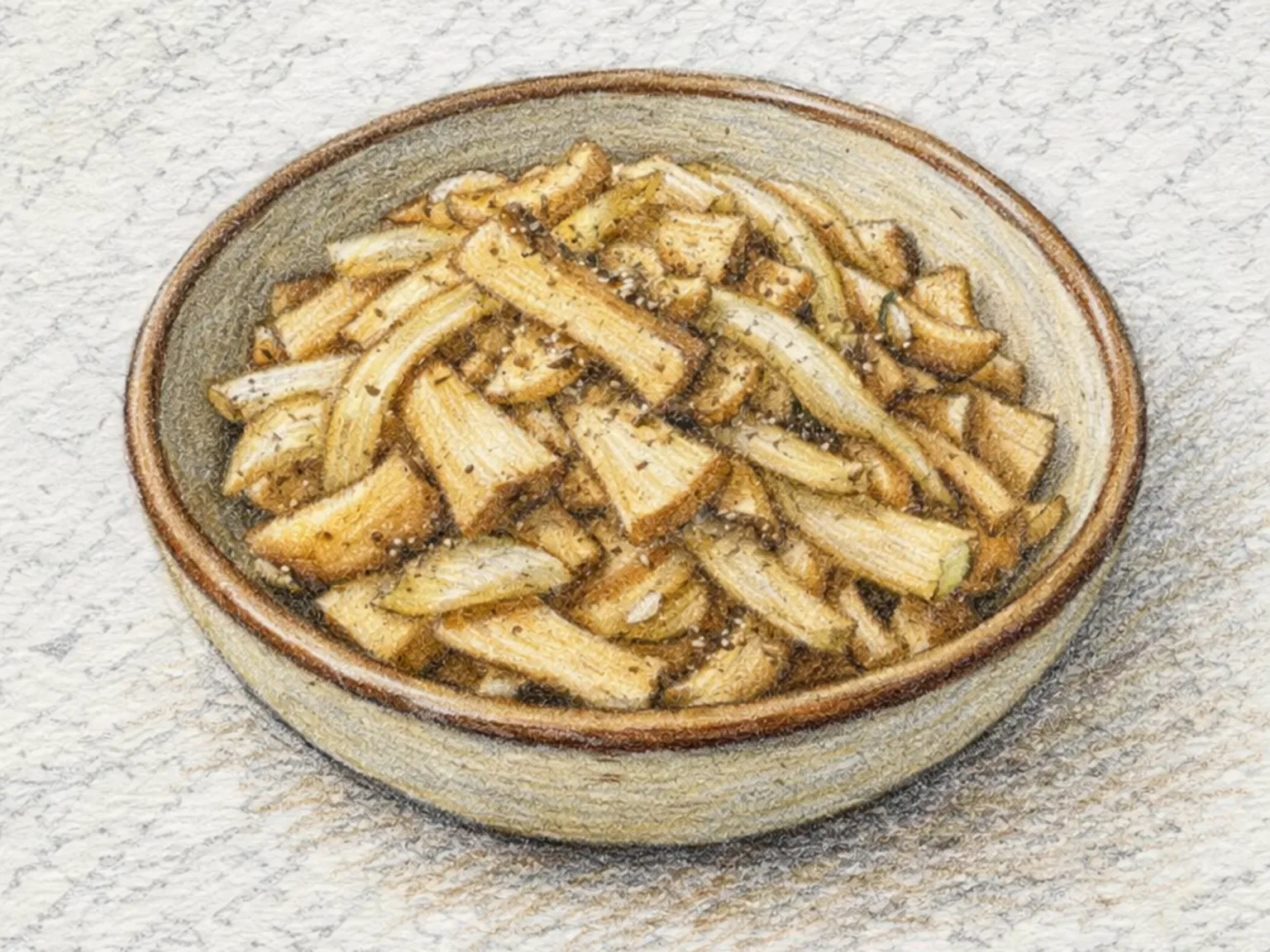
Korean Stir-Fried Dried Napa Cabbage Leaves
Dried outer leaves of napa cabbage, known as ugeoji, are rehydrated, boiled, and stir-fried with doenjang and ground perilla seeds to create a deeply savory banchan. These tough outer leaves, too coarse to eat fresh, develop a satisfying chewy texture once dried and reconstituted, offering a bite that ordinary cabbage cannot match. Doenjang introduces its fermented umami during the stir-fry, layering complexity onto the cabbage's otherwise neutral flavor. Ground perilla seeds dissolve into the residual moisture, forming a creamy, pale coating that enriches every strand with a nutty warmth. A small amount of anchovy and kelp stock added mid-cook creates just enough liquid for the seasonings to soak into the fibrous leaves before evaporating. Perilla oil used as the cooking fat establishes a fragrant base from the first moment the pan heats, and minced garlic stirred in partway through adds a sharp accent that cuts through the richness. The finished dish pairs naturally with a bowl of steamed rice and a hot soup.

Korean Gourd Namul Stir-fry
Baknamul deulkkae bokkeum is a Korean stir-fried side dish made from rehydrated dried bottle gourd strips coated in ground perilla seed. The dried gourd strips - thin slices of the gourd's inner flesh dried until pale and brittle - need at least thirty minutes of soaking to recover their characteristic chewy bite. Minced garlic is sauteed in perilla oil first to build a fragrant base, then the soaked strips go in along with soup soy sauce and small additions of water to braise them through. Ground perilla seed is added generously at the end, stirred in while the heat reduces the remaining liquid. As the moisture disappears, the perilla powder binds into a clinging, sauce-like coating on each strip rather than sitting as dry powder. This is the key technique: the coating should be smooth and adherent, not dusty. The whole dish is done in about ten minutes and offers a mild, chewy counterpoint to stronger-flavored banchan on the table.

Korean Braised Dried Radish Greens with Doenjang
Dried radish greens, once rehydrated and boiled tender, are braised in a doenjang-based seasoning until the liquid reduces to a concentrated glaze. The fermented soybean paste melts into the coarse fibers of the greens, infusing each strand with deep, earthy umami. A splash of anchovy stock is added after the initial stir-fry in perilla oil, and the pan is covered so the greens can absorb the broth slowly over low heat. As the liquid evaporates, the seasoning thickens and clings to every piece, producing a chewy, salty-savory bite that releases its flavors gradually when chewed. Gochugaru contributes a mild, lingering warmth rather than sharp heat, while garlic softens into a mellow sweetness that rounds out the intensity of the doenjang. Patience during the final reduction is essential: only when the braising liquid has nearly disappeared does the dish reach the dense, flavorful consistency that makes it an ideal topping for steamed rice.

Korean Butterbur Stem Stir-fry with Perilla
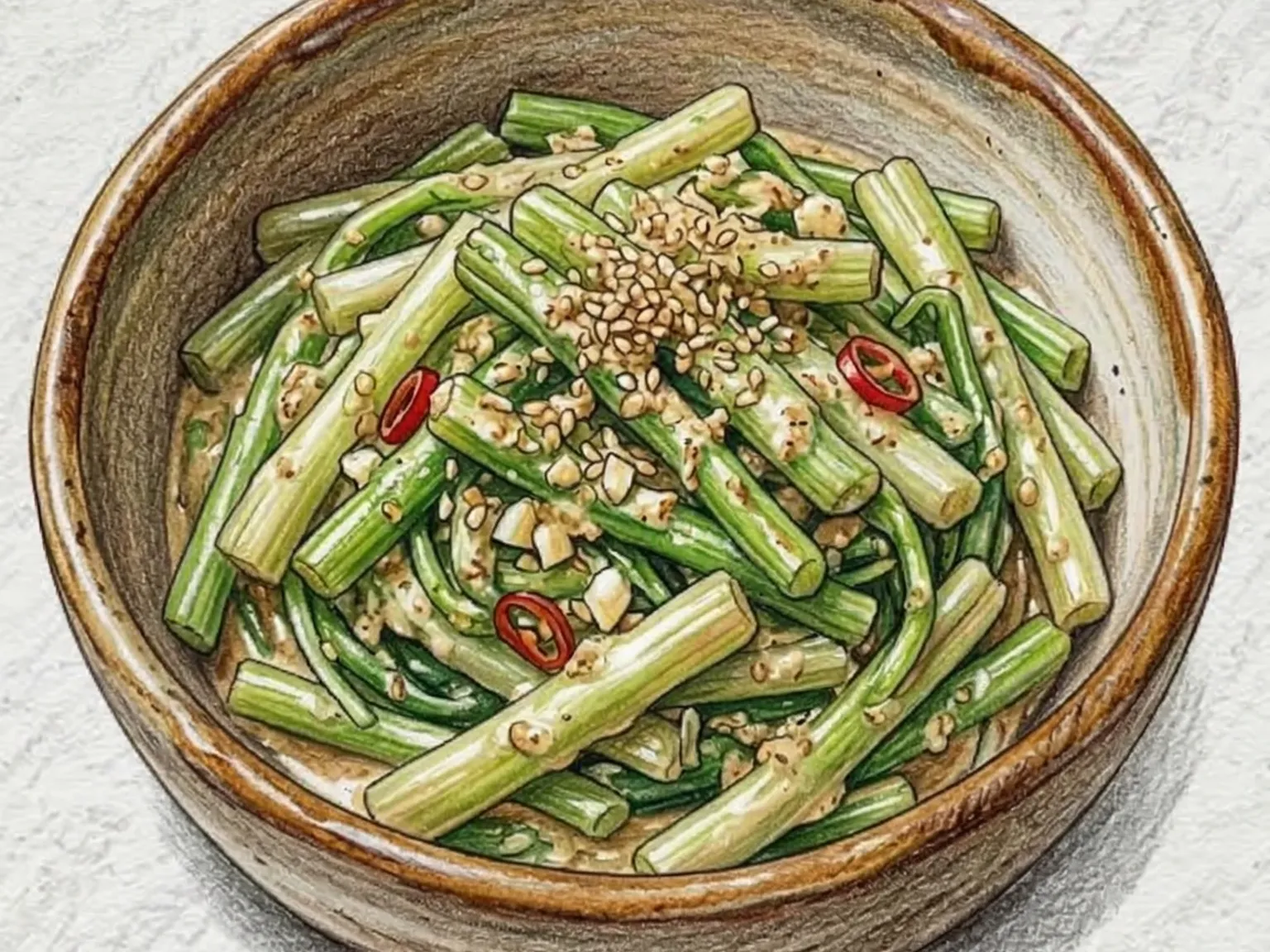
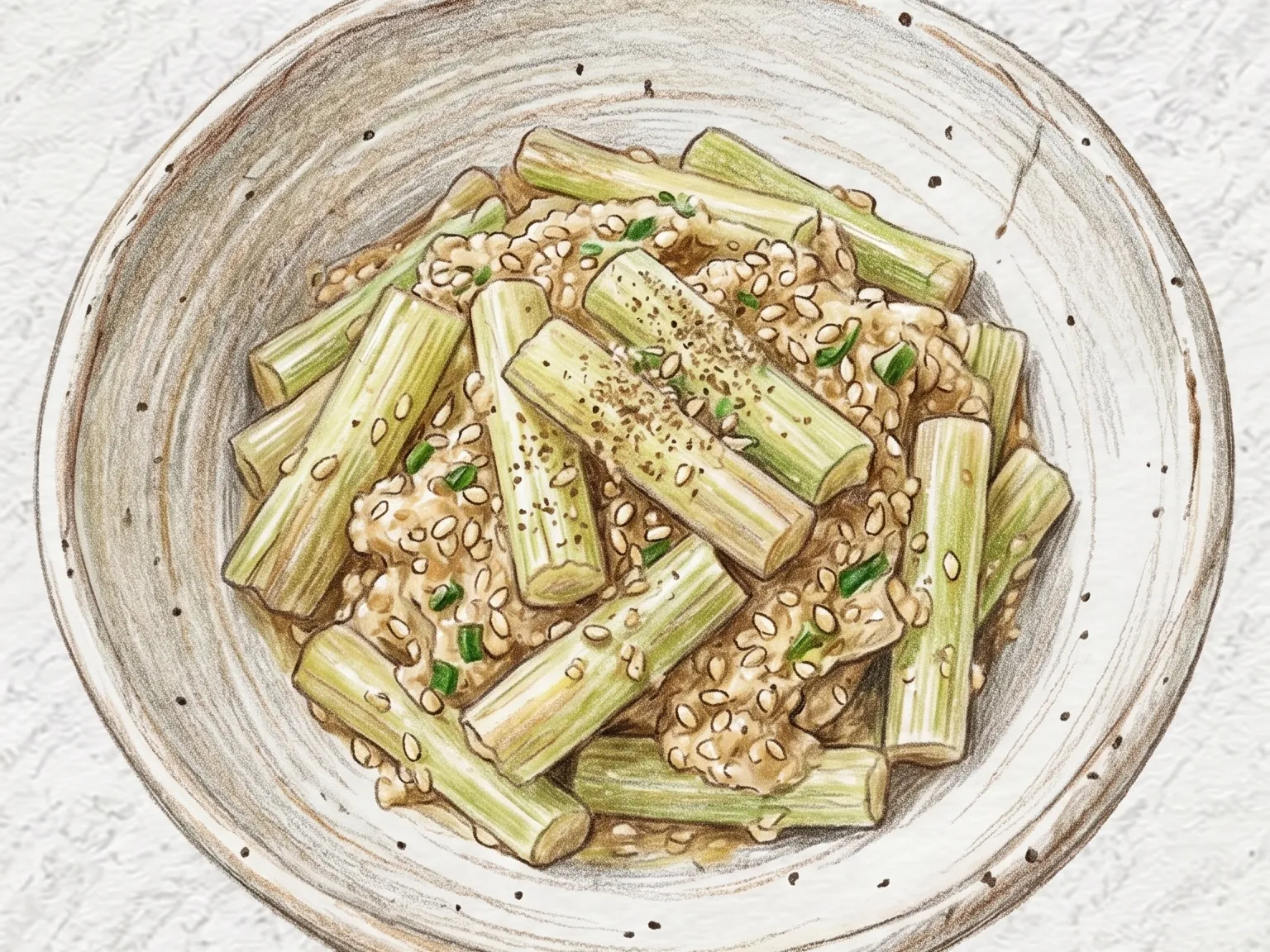
Meowi-dae-deulkkae-bokkeum is a seasonal Korean stir-fry of boiled butterbur stems coated in perilla seed powder and perilla oil. The stems are peeled of their tough outer fibers and cut into 5 cm lengths before a brief boil removes their natural bitterness, leaving a soft, slightly slippery texture. Soup soy sauce seasons the base, and perilla powder is folded in at the end to preserve its nutty, toasty fragrance. This dish appears most often in spring, when fresh butterbur is in season across Korean markets.

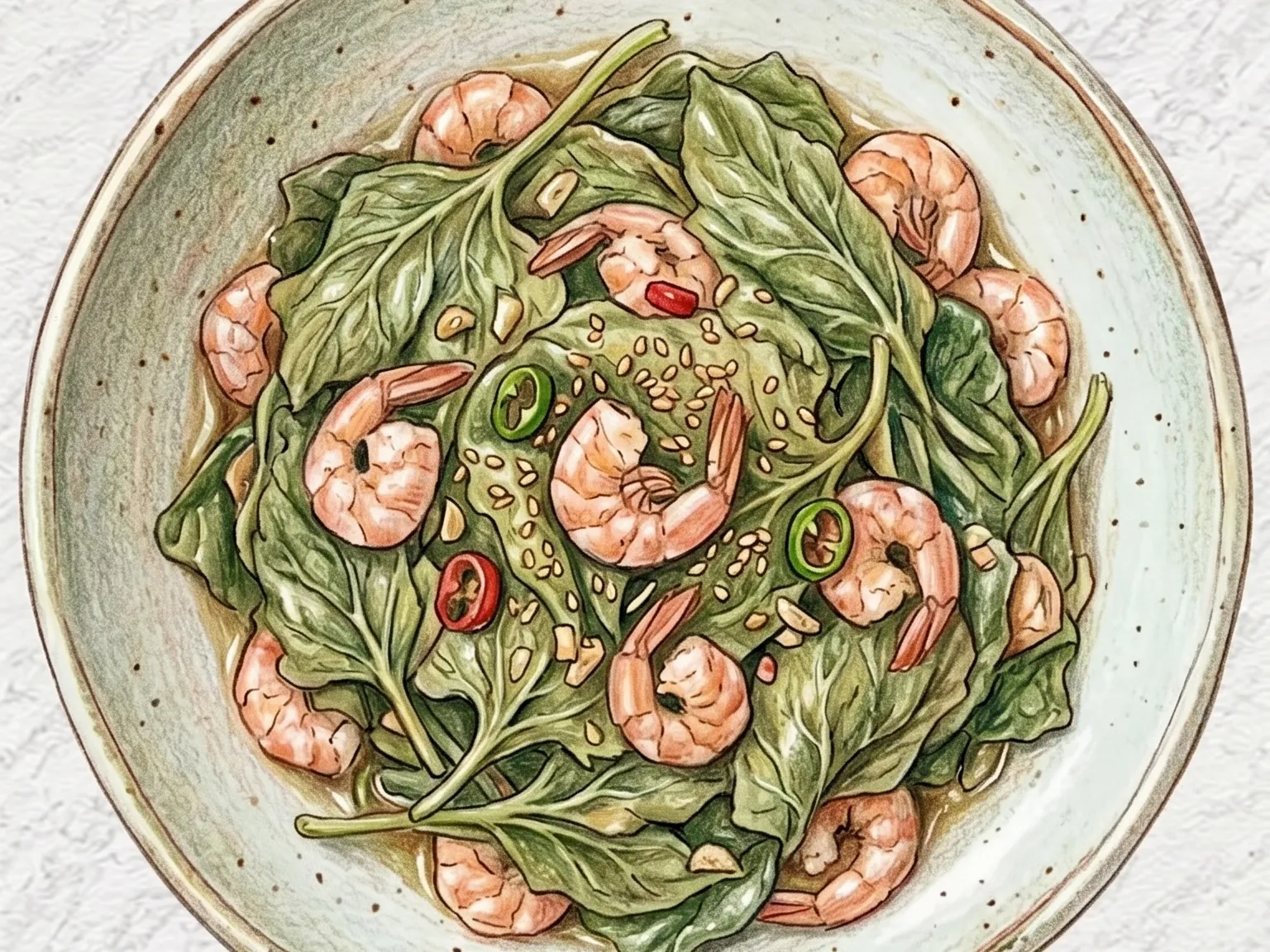
Korean Stir-fried Pumpkin Leaves and Shrimp
Hobakip-saeu-bokkeum is a Korean summer stir-fry that pairs blanched pumpkin leaves with fresh shrimp in perilla oil, seasoned lightly with soup soy sauce. Blanching the leaves before anything else goes into the pan is not optional. The coarse, fuzzy surface that characterizes raw pumpkin leaves softens through the brief heat exposure, but the leaf itself retains enough structure so that it does not collapse into a slippery, formless mass when it hits the hot pan. The mild, grassy aroma that defines the vegetable comes through intact after the blanching step. Shrimp brings a clean, oceanic savory quality that pairs well with the herbaceous character of the leaves rather than overwhelming it. Perilla oil holds the two together with its distinctively nutty and faintly herbal fragrance, which complements both the sea-forward shrimp and the green quality of the pumpkin leaves in a way that plain vegetable oil would not. A sliced cheongyang chili pepper adds a thread of gentle heat that keeps the dish from tasting flat without pushing the spice level high enough to obscure the delicate flavors of the main ingredients. Clam meat or finely minced pork can substitute for the shrimp, each producing a different but equally satisfying version. This is a seasonal dish that depends on pumpkin leaves at their youngest and most tender, which occurs in summer. Larger, older leaves are tougher and more fibrous, and the flavor is less delicate. After blanching, the leaves need to be squeezed thoroughly to remove excess water before they go into the pan. Skipping this step causes steam to build as they hit the hot oil, which leads to uneven cooking and a watery, diluted finish. Spooning the finished stir-fry over a bowl of hot rice and mixing it in is the most direct way to eat the dish well.

Korean Taro Stem Stir-fry with Perilla Powder
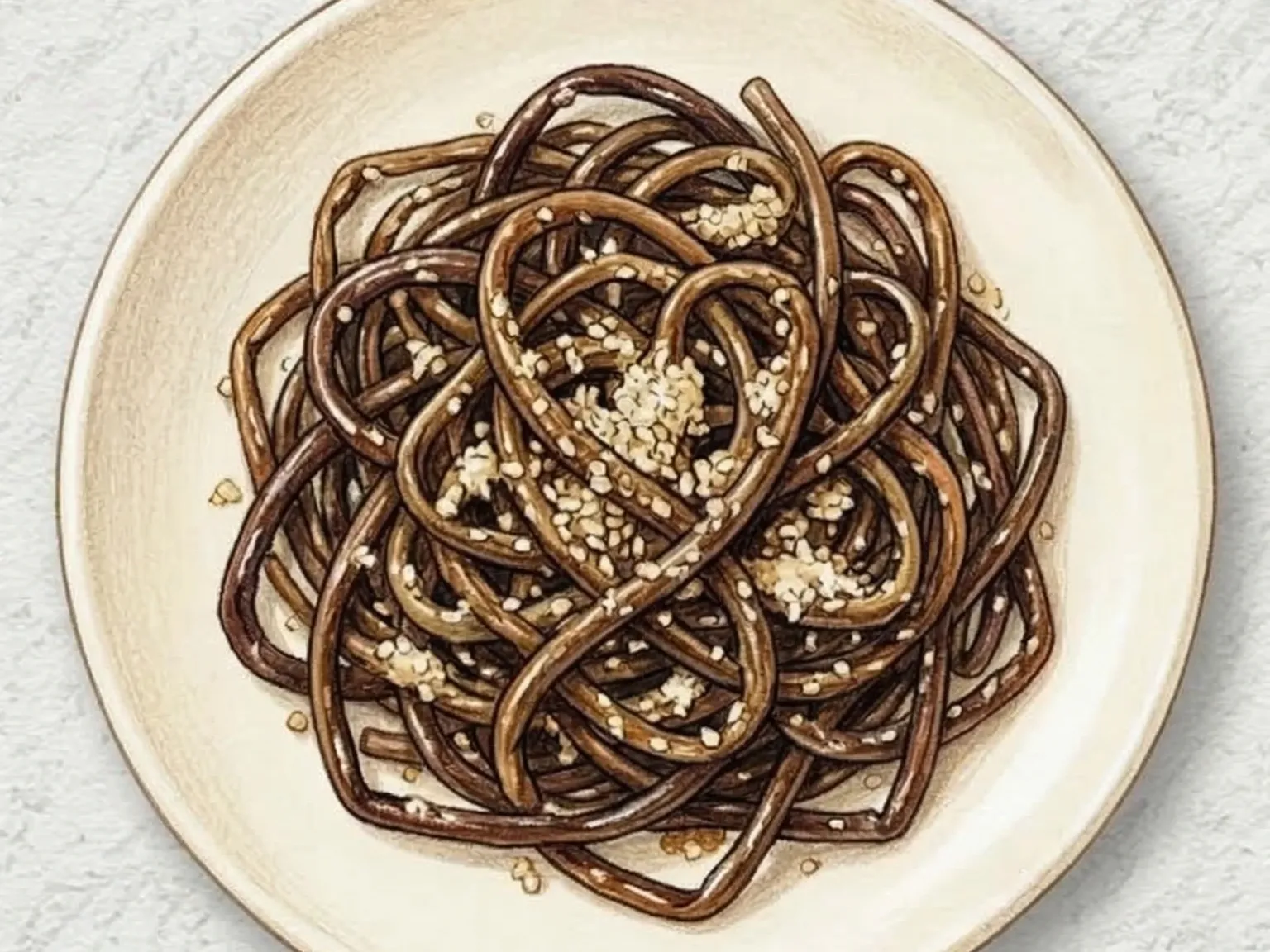
Torandae-deulkkae-bokkeum is a traditional Korean side dish of boiled taro stems stir-fried in perilla oil and thickened with ground perilla seeds. The taro stems have a tender texture with a subtle fibrous chew, and the perilla powder absorbs the simmering liquid of soup soy sauce and water to form a creamy coating. Double use of perilla - both the oil and ground seeds - builds a pronounced nutty aroma throughout the dish. It is a seasonal home-style banchan that highlights the taro stem's distinctive slippery mouthfeel paired with rich perilla depth.

Korean Beef Cabbage Leaf Soup
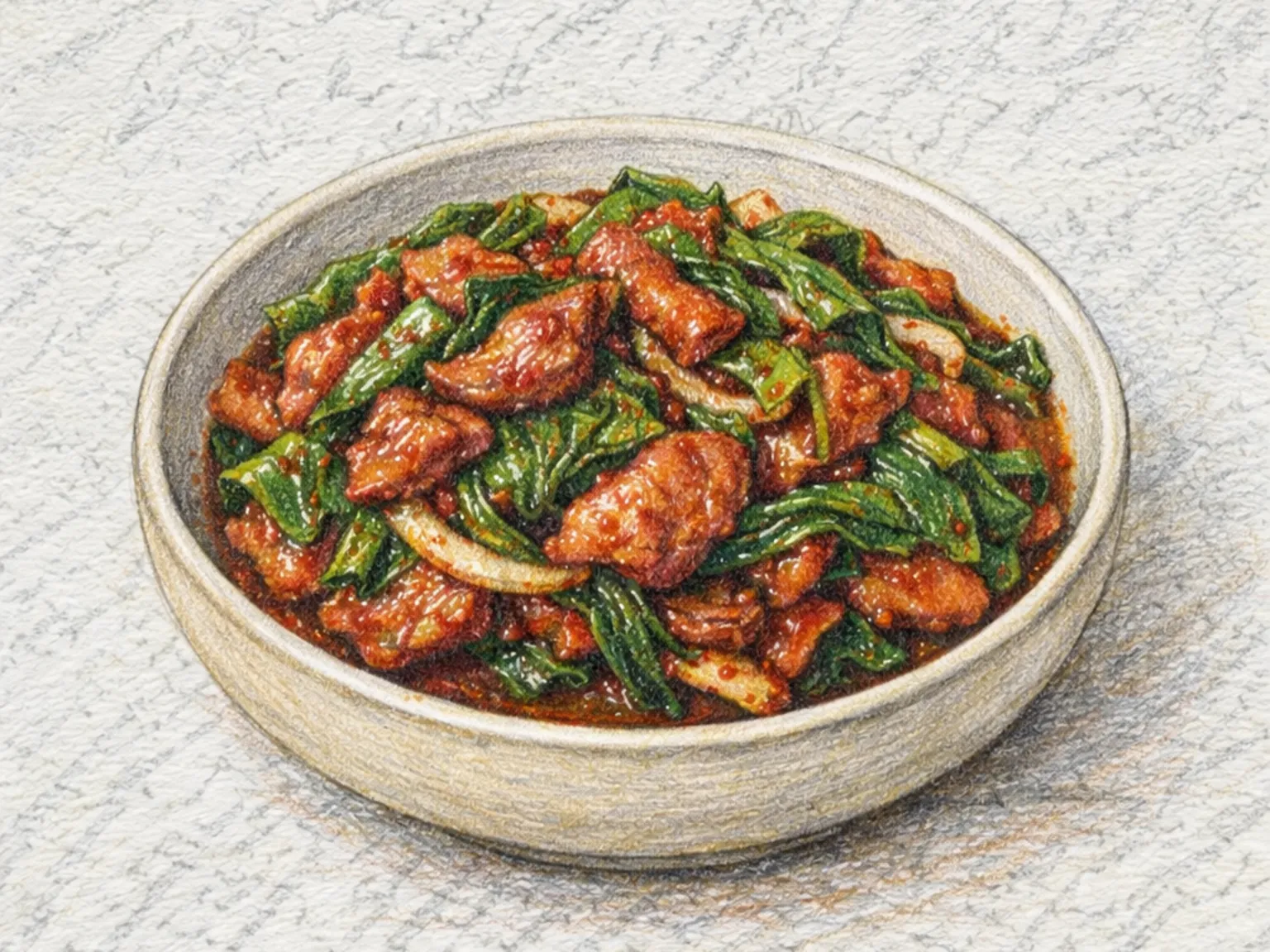
Ugeoji soegogi-guk is a spicy, savory Korean beef soup that draws its character from pre-seasoned napa cabbage outer leaves and a brisket-based broth. The ugeoji is rubbed with doenjang and gochugaru before it enters the pot, so when it meets the simmering beef stock, it releases both fermented soybean depth and a steady chili warmth that stains the broth a ruddy brown. The brisket, simmered until the fibers separate easily, is shredded and returned to the pot, adding lean, clean beef flavor throughout. As the ugeoji softens over extended cooking, it absorbs the surrounding liquid like a sponge, so each bite delivers a concentrated burst of the combined seasoning. Daikon radish, if included, tempers the heat with its natural sweetness, while generous amounts of sliced scallion perfume the entire bowl. The overall effect is a soup that is warming and substantial without being aggressive - the spice level is calibrated to soothe rather than overwhelm, which makes it a go-to choice on cold days when the body needs both heat and substance.

Korean Ugeoji Doenjang Stew
Ugeoji-doenjang-jjigae simmers the tough outer leaves of napa cabbage in rice-rinse water with doenjang and a spoonful of gochujang into a deeply savory, comforting stew. The outer leaves are blanched in salted water, rinsed in cold water, and squeezed out firmly before use, a step that removes bitterness and opens the fibrous leaves to absorb the seasoning. The starchy rice-rinse water gives the broth a naturally smooth and slightly thickened body without any added starch, and adjusting the amount of rice water controls the final consistency. Korean radish, zucchini, and tofu contribute natural sweetness that balances the saltiness of the fermented paste, while garlic and cheongyang green chili add heat and depth. A tablespoon of perilla oil added just before the pot comes off the heat releases a distinctive nutty fragrance that permeates the entire stew and deepens its character. Served in a dolsot earthenware pot that keeps the stew bubbling at the table, every spoonful stays hot to the last. The longer the ugeoji simmers, the more it softens and melds with the doenjang broth, producing the layered, slow-cooked depth that defines this classic Korean home-cooked stew.

Korean Bellflower Root & Eggplant Soy Stir-fry
Deodeok gaji ganjang bokkeum is a Korean vegetable stir-fry that brings together deodeok root and eggplant in a soy-based seasoning sauce. The two main ingredients offer a clear textural contrast: deodeok has a firm, fibrous chew that resists the heat and holds its structure throughout cooking, while eggplant softens and collapses into a silky, yielding mass as it cooks. A dressing of soy sauce, sesame oil, and minced garlic ties the two together, tempering the slightly earthy, mildly bitter quality of the deodeok while drawing out the natural sweetness latent in both vegetables. The order in which the ingredients go into the pan matters. Eggplant absorbs oil readily and needs more time to soften properly, so it goes in first. Adding deodeok too early would leave it overdone by the time the eggplant reaches the right texture. The fermented umami of soy sauce and the glutamates naturally present in both vegetables layer together to produce depth in the finished dish without any meat. If the deodeok tastes particularly bitter, soaking the peeled pieces in lightly salted water for ten minutes before cooking draws out a significant portion of the bitterness. Salting the eggplant and letting it sit briefly before cooking removes excess moisture, reducing the amount of oil it absorbs and producing a cleaner, firmer texture in the finished stir-fry. The dish can be served directly over hot rice or presented as a standalone banchan. Like most soy-seasoned vegetable preparations, the flavors deepen and mellow overnight in the refrigerator, making leftovers worth keeping.

Korean Stir-Fried Taro Stems
Boiled taro stems are stir-fried in perilla oil with soy sauce and garlic to create a banchan prized for its uniquely chewy texture. Dried taro stems, once soaked and simmered, lose their rawness but retain a springy, almost rubbery bite along the center of each stalk, setting them apart from softer namul greens. Stir-frying in perilla oil first builds a nutty base note, and soy sauce with minced garlic layers savory depth onto the stems' neutral flavor. A splash of stock added mid-cook allows the seasoning to penetrate the fibrous interior during a brief simmer. Sliced green onion introduces a fresh aromatic accent, and a finishing spoonful of ground perilla seeds dissolves into the residual moisture, creating a creamy coating that clings to each piece. Mixed into a bowl of steamed rice, the chewy stems provide satisfying resistance with every bite, and their mild character lets them complement bolder dishes like doenjang jjigae without competing for attention.

Korean Seasoned Amaranth Greens
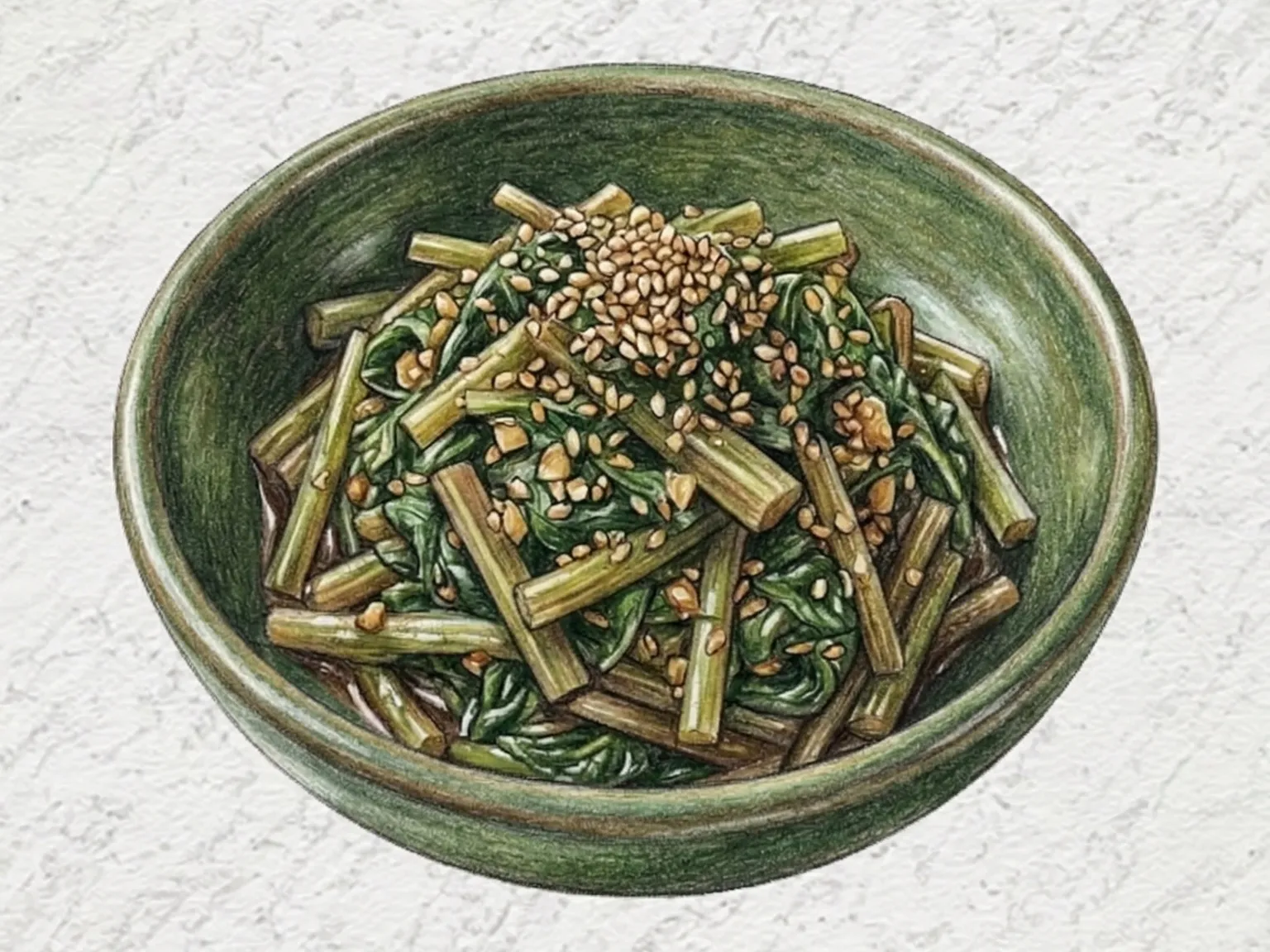
Amaranth greens, biryeom in Korean, are a short-season summer vegetable with deep green, purple-tinged leaves that bleed red into the blanching water. They need to come out in under a minute or the leaves lose their structure. After squeezing out the water, the greens are dressed with doenjang, soup soy sauce, garlic, and scallion. Perilla oil stands in for sesame oil, lending a herbal, grass-edged nuttiness that matches the mineral character of amaranth. The leaves are firmer than spinach or mallow, so the dressing clings without the greens collapsing into a wet mass. The unsaturated fats in perilla oil also increase the nutritional density of the dish. A countryside banchan available only during its brief summer window.

Korean Ox Bone Broth with Napa Outer Leaves
Sagol-ugeoji-guk is a hearty Korean soup that combines milky ox bone broth with seasoned outer napa cabbage leaves. The ugeoji is pre-mixed with doenjang, gochugaru, garlic, and perilla oil, then stir-fried in the pot for three minutes to develop its aroma before the bone broth is poured in. Simmering over medium heat for thirty-five minutes softens the fibrous greens completely while the doenjang seasoning dissolves into the broth, building layers of fermented depth. The collagen-rich, white bone stock provides a heavy, lingering richness, and the fermented doenjang character of the greens layers on top of that foundation, so each spoonful coats the palate with something dense and warming. Soup soy sauce adjusts the final salt level, and sliced green onion goes in just before serving. Blanching the ugeoji before seasoning it removes any bitterness and off-odors, which keeps the finished broth cleaner and more balanced. This soup belongs to the restorative end of the Korean soup tradition, substantial enough to anchor a cold-weather meal on its own.

Multigrain Salad
Brown rice, barley, and lentils are each boiled separately and cooled before being combined, so that every grain contributes its own distinct size and texture to the finished bowl. The brown rice stays chewy, the barley holds a thick bite, and the lentils offer a soft give that rounds out the contrast. Julienned cucumber and red onion introduce crunch and a mild sharpness that keep the heavier grains from feeling dense. Halved cherry tomatoes release juice as a natural supplement to the dressing, and a mixture of perilla oil and apple cider vinegar ties the bowl together with nuttiness and clean acidity. Adding sliced red chili or diced bell pepper extends the color and sweetness without changing the character of the dish. It holds well at room temperature, which makes it practical for meal prep and packed lunches. The combination of dietary fiber and plant protein means a moderate portion keeps hunger at bay for several hours.

Korean Dried Radish Greens Pork Soup
Siraegi-dwaejigogi-guk is a hearty Korean soup that marries dried radish greens with pork in a broth deepened by doenjang and warmed with a moderate dose of gochugaru. The dried greens are first boiled until pliable, then dressed with soybean paste so the fermented flavor works its way into every fiber. Pork shoulder or neck, cut into bite-sized pieces, simmers alongside, releasing rendered fat that enriches the broth and adds a full-bodied mouthfeel. The chili flakes turn the liquid a dark reddish-brown and introduce a gentle heat that prevents the pork fat from feeling heavy. Garlic and green onion build the aromatic base, and some cooks add a splash of perilla oil at the end for an extra layer of nuttiness. The greens keep a pleasant chew even after long cooking, providing textural contrast to the tender pork. Served over rice with plenty of broth ladled on top, each spoonful delivers doenjang, pork, and radish greens in a single, satisfying combination. This soup is at its best during winter, when dried radish greens from the autumn harvest are at peak flavor and the cold weather demands something hot and substantial.

Korean Kkaennip Deulgireum Gyeran Bap (Perilla Egg Rice)
Kkaennip-deulgireum-gyeran-bap is a simple one-bowl rice dish built on three main flavors: the deep roasted-nut aroma of perilla oil, the herb-like fragrance of fresh perilla leaves, and the richness of soft scrambled eggs. The eggs are cooked low and slow in butter, set aside, and then rice is stir-fried briefly in perilla oil over moderate heat. Perilla oil has a low smoke point, so high heat rapidly destroys its distinctive aroma. Soy sauce drizzled along the hot rim of the pan picks up a faint caramel char as it hits the surface, adding depth beyond straightforward saltiness. The scrambled eggs and the rice are folded together with thinly sliced perilla leaves off the heat, because the leaves lose their volatile oils quickly when exposed to sustained warmth. Finishing with a generous amount of whole sesame seeds adds a repeated crunch and further layers of nuttiness through every bite. With ingredients this minimal, the quality of the perilla oil and the freshness of the leaves determine the final result.