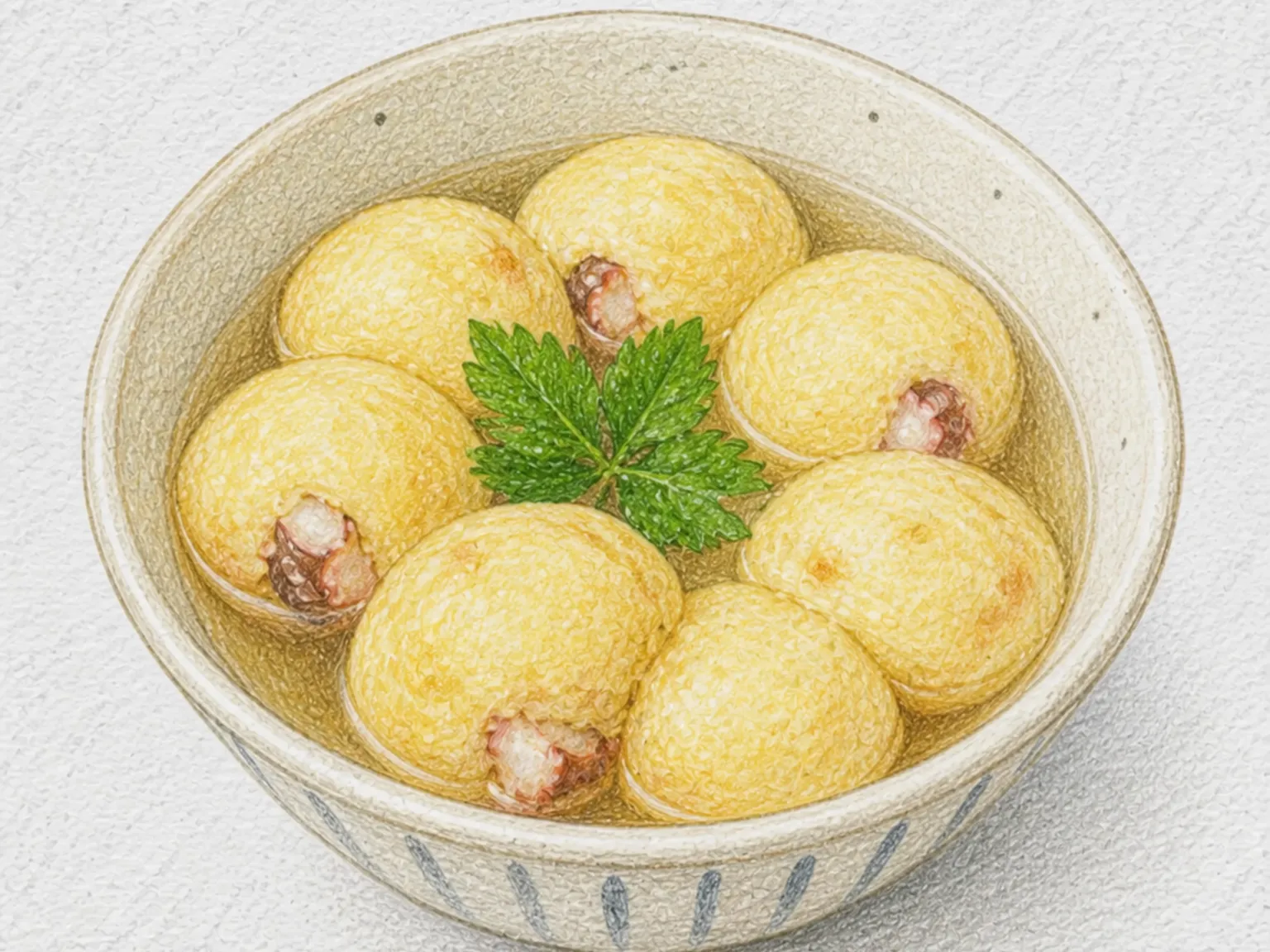
Akashiyaki (Soft Egg-Dashi Octopus Dumplings)
Quick answer
- Total time
- 45 min
- Level
- Medium
- Servings
- 4 servings
- Ingredients
- 9
About this dish
Soft rounds of egg-rich batter, each holding a piece of boiled octopus, are dipped into clear dashi, warm or cold, in this specialty of Akashi in Hyogo.
Read more
The batter uses refined wheat starch alongside flour, and because that starch stays tender when heated and the batter is heavy with egg and dashi, the result is far softer and moister than takoyaki. Locals long called it tamagoyaki. One story traces it to egg yolks left over from making Akashi-dama, imitation coral ornaments that used the whites, cooked with octopus caught just offshore.
Ingredients
Instructions
- 1
Sprinkle the raw octopus with cleaning salt and rub firmly for 2 to 3 minutes, working between the suckers to remove slime.
Rinse repeatedly under cold running water until no salt or slime remains.
- 2
Bring 1 liter water to a boil in a large pot and add the octopus.
Once boiling resumes, cook over medium heat for 5 to 8 minutes, until the flesh is opaque and the center reaches at least 63°C. Cool briefly and cut into 1 cm pieces.
- 3
Combine the wheat flour and refined wheat starch and sift them twice through a fine sieve.
Gradually whisk in the cold batter dashi to make a very loose batter with no flour lumps.
- 4
Beat the eggs in a separate bowl just until whites and yolks combine.
Pour them into the dashi batter and stir slowly until even without creating excessive foam.
- 5
Heat a round-holed copper akashiyaki pan thoroughly over medium heat and brush it lightly with oil.
Stir the batter once to lift settled starch, fill each well about 80 percent, and add one octopus piece to each.
- 6
When the edges set but the centers still wobble, loosen each piece with two picks and turn it halfway.
Tuck in spilled batter and rotate repeatedly to form a sphere. Cook gently for 6 to 8 minutes, until no liquid egg batter remains and the center reaches at least 71C.
- 7
Divide the dipping dashi among four small bowls.
Transfer the akashiyaki to a wide board without crushing them, then dip one at a time in warm or cold broth before eating.
References checked
These references were consulted when this page was prepared or corrected. A source check does not mean the recipe was independently kitchen-tested.
- 일본 농림수산성 うちの郷土料理
明石観光協会 · Checked: 2026-08-11
Use-up ingredient planner
Turn these ingredients into two more meals
The overlap excludes basic seasonings. Open the next recipe and your selected dishes will stay with you.
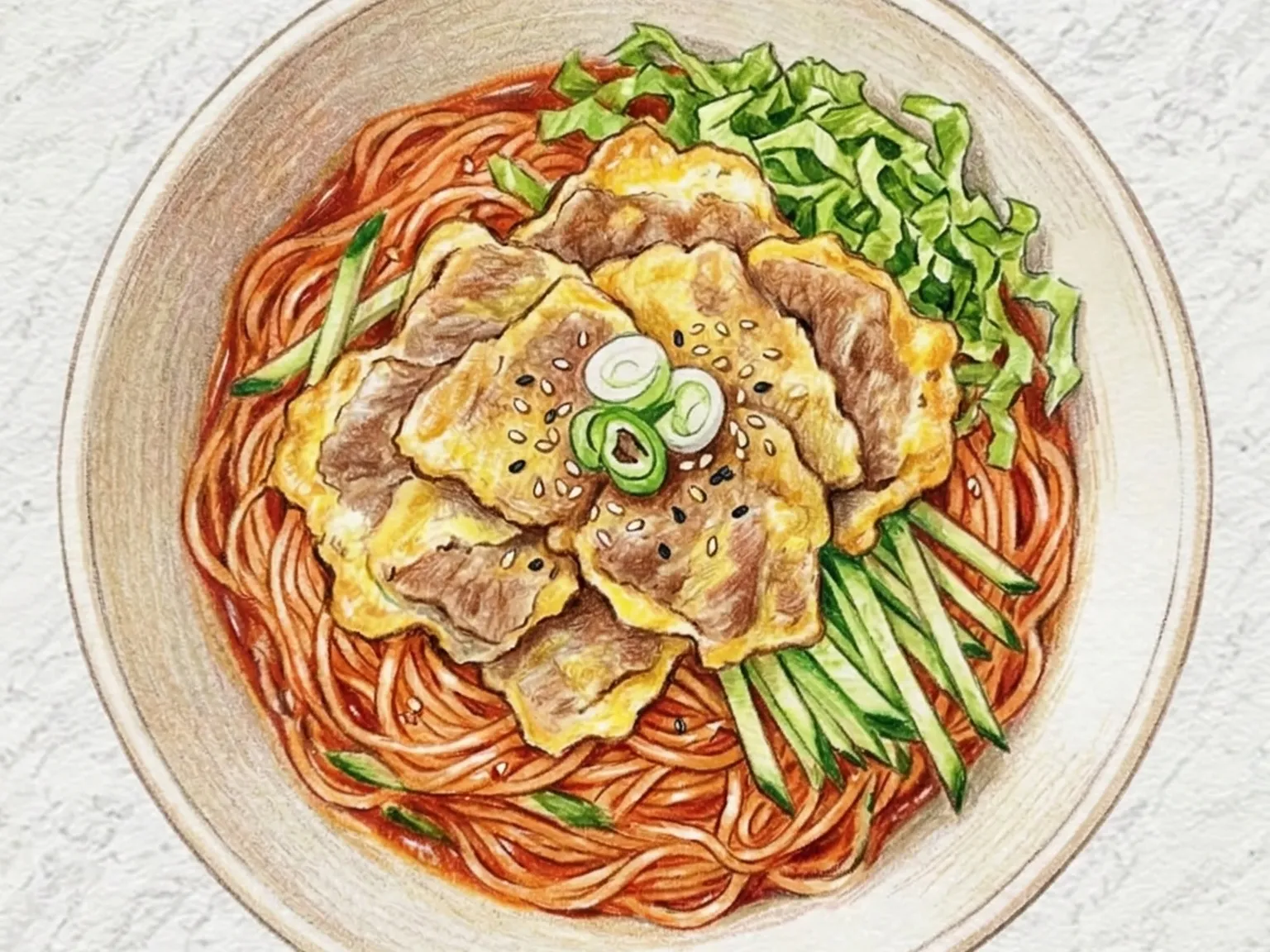
Korean Spicy Noodles with Beef Pancake
eggs, wheat flour

Arancini (Crispy Sicilian Risotto Balls with Melted Cheese)
eggs, wheat flour
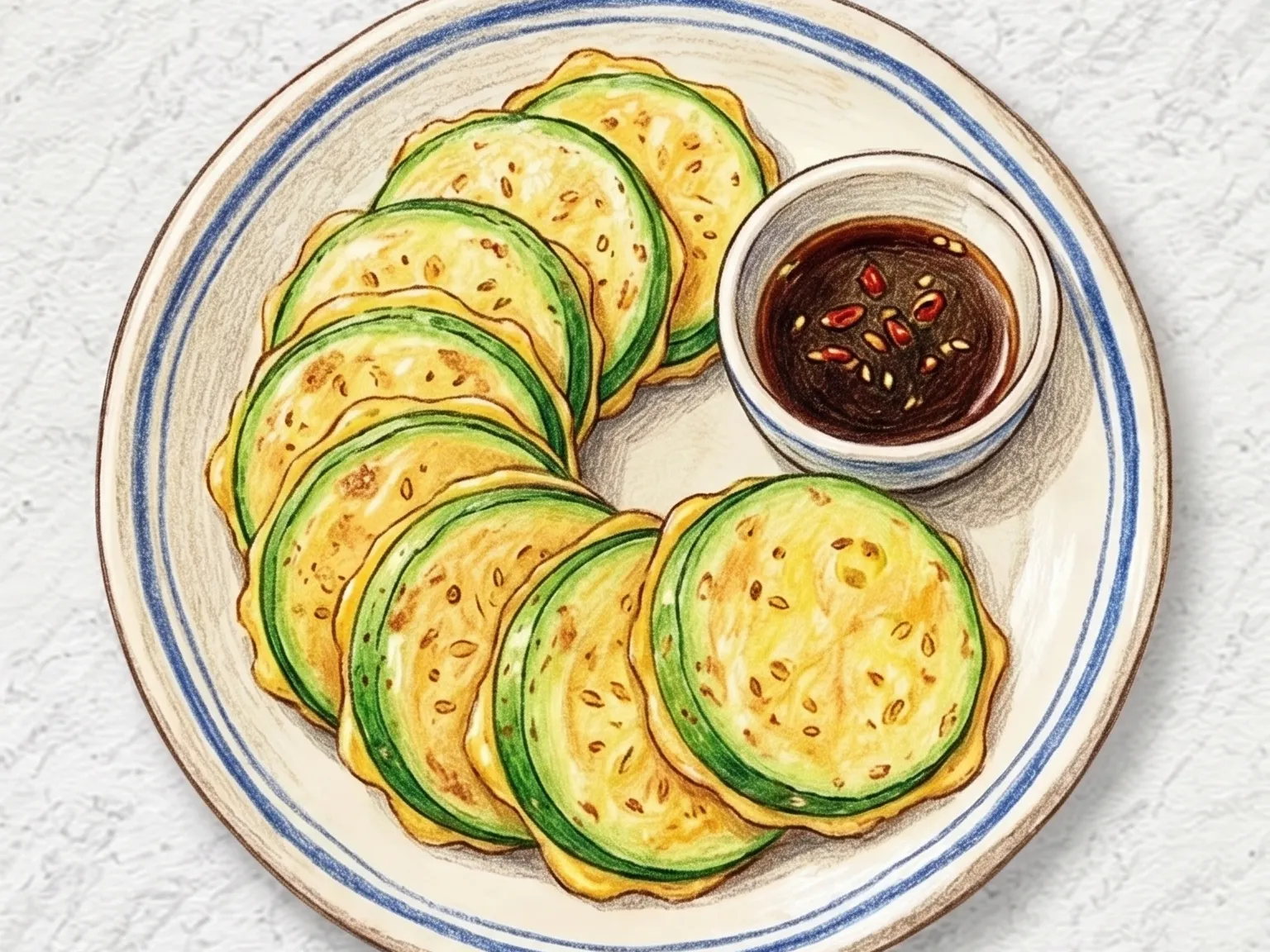
Korean Pan-fried Zucchini Jeon
eggs, wheat flour