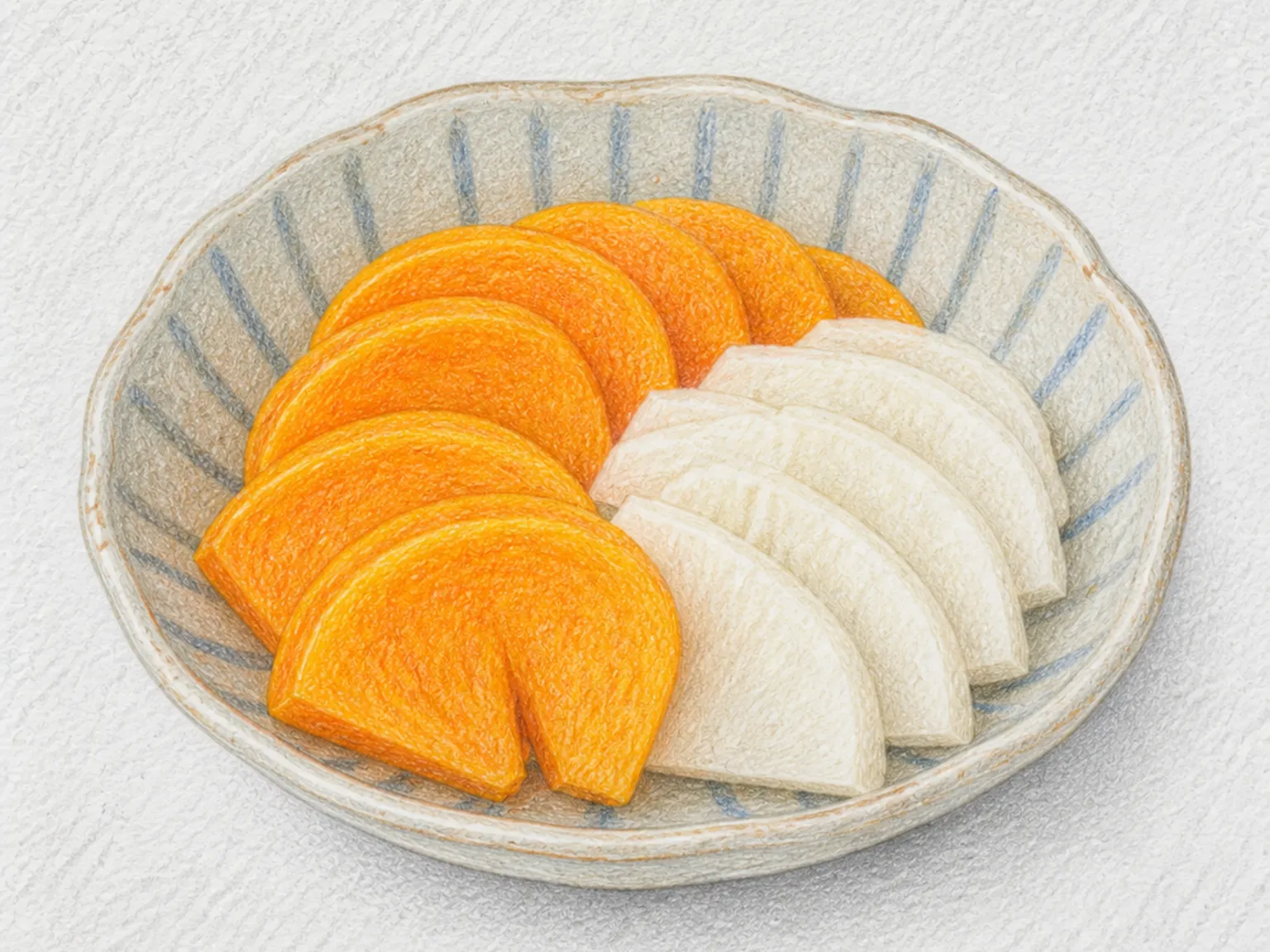
Kaki-zuke Persimmon Daikon Pickle
Quick answer
- Active time
- 135 min
- Waiting
- See the steps
- Level
- Hard
- Servings
- 40 servings
- Ingredients
- 5
About this dish
Daikon buried in astringent persimmon puree takes on the fruit's flavor while staying crisp.
Read more
The traditional month-long barrel cure is unsafe to copy at uncontrolled home temperatures, so this version heats the persimmon puree, adds vinegar, tests the pH and keeps every stage refrigerated. A calibrated food-grade pH meter belongs on the equipment list.
Ingredients
Instructions
- 1
Sanitize the crock, weight, and tongs with boiling water and dry completely; confirm the refrigerator is at 4°C or colder.
Scrub 4kg daikon under running water, cut away damaged areas generously, and dry fully.
- 2
Rub 150g salt evenly over the daikon, pack tightly, and add a sanitized plate with about 8kg weight.
Hold at 4°C or colder for 2 days, turn top and bottom with sanitized tongs, and refrigerate 7 more days for a 9-day first cure.
- 3
Drain daikon in a sanitized colander and refrigerate the first brine.
Remove stems from 2.2kg persimmons, wash, discard damaged flesh, and crush with skins on. Wash and sanitize the raw-fruit board and knife afterward.
- 4
Mix persimmon puree with 200g sugar and 200ml rice vinegar, stirring to at least 85°C, and hold 5 minutes.
Cool the pan over ice water to 10°C or below within 2 hours and refrigerate the remaining 100ml vinegar for pH adjustment.
- 5
Layer daikon and cold persimmon puree in the sanitized crock and add enough refrigerated first brine to submerge.
Add a sanitized weight and measure liquid pH at several points with a calibrated food meter. If the highest value exceeds 4.2, mix in reserved vinegar in 50ml additions and retest. If still above 4.2 after 100ml, do not cure; discard.
- 6
Refrigerate an accepted crock immediately at 4°C or colder for 14 more days.
Record temperature daily and every 3 days turn with sanitized tools and resubmerge. Confirm pH remains 4.2 or below at 24 hours, day 7, and day 14.
- 7
On day 23, when daikon is crisp and persimmon-flavored, remove with clean tongs and slice.
Discard without tasting after pH rise, refrigeration failure, mold, gas, bubbles, slime, or foul odor. Consume an accepted pickle within 7 days or portion and freeze immediately.
References checked
These references were consulted when this page was prepared or corrected. A source check does not mean the recipe was independently kitchen-tested.
- 일본 농림수산성 うちの郷土料理
『あきた郷味風土記』(秋田県農山漁村生活研究グループ協議会) · Checked: 2026-08-11
Use-up ingredient planner
Turn these ingredients into two more meals
The overlap excludes basic seasonings. Open the next recipe and your selected dishes will stay with you.
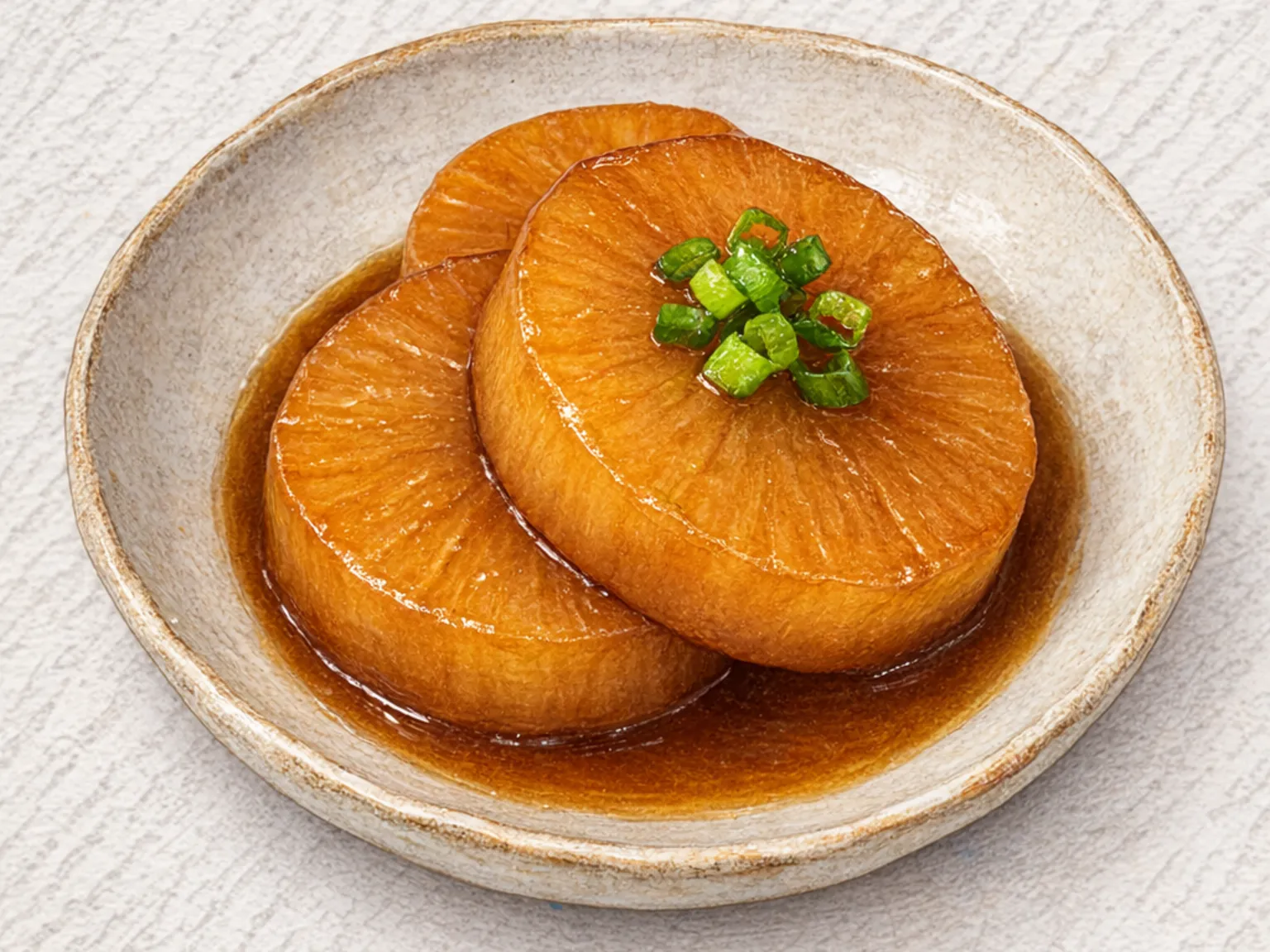
Braised Korean Radish (Soy Garlic Slow-Cooked Side)
daikon
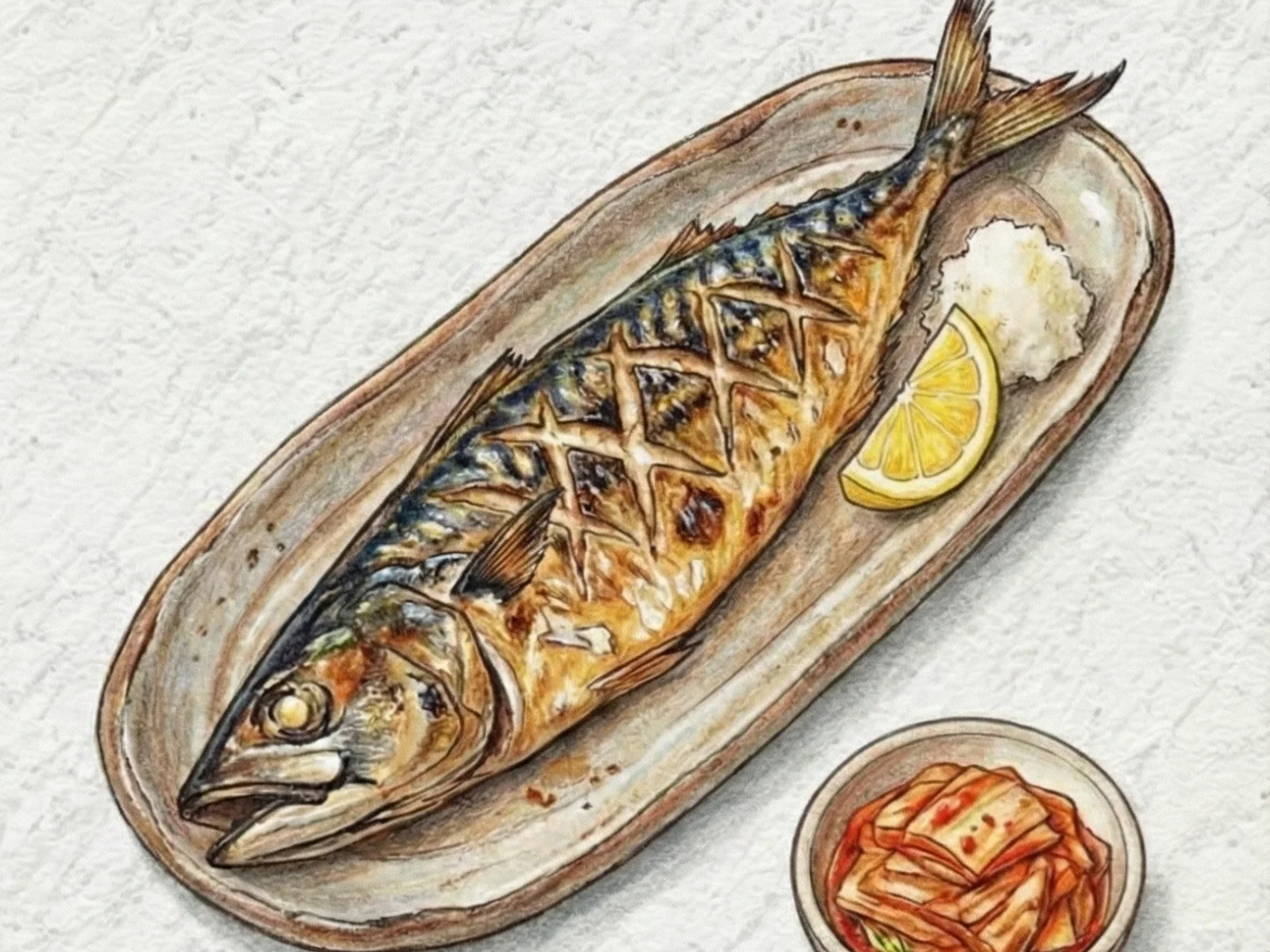
Korean Grilled Mackerel (Crispy Skin Salt-Grilled Blue Fish)
daikon
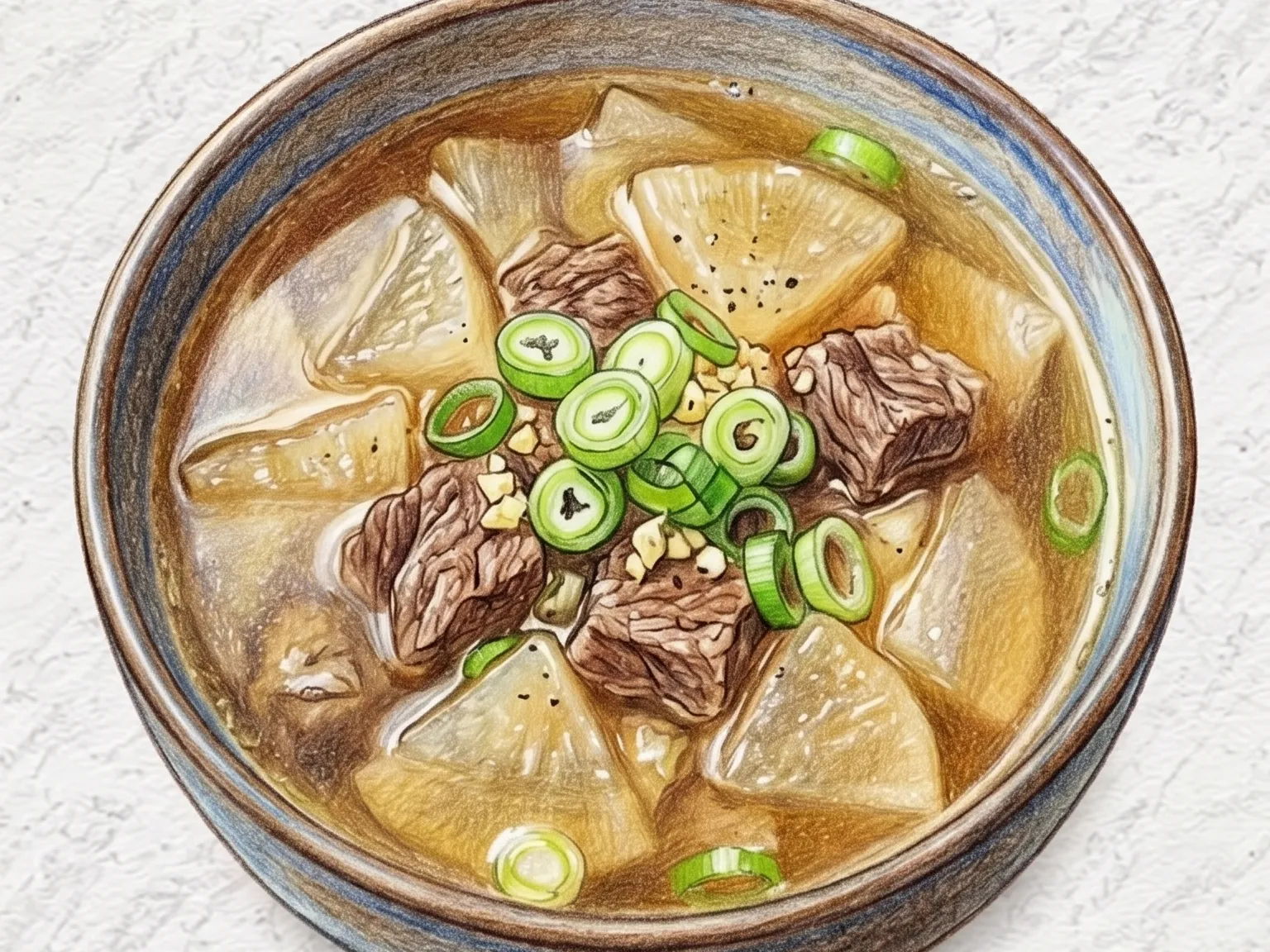
Korean Beef and Daikon Stew
daikon